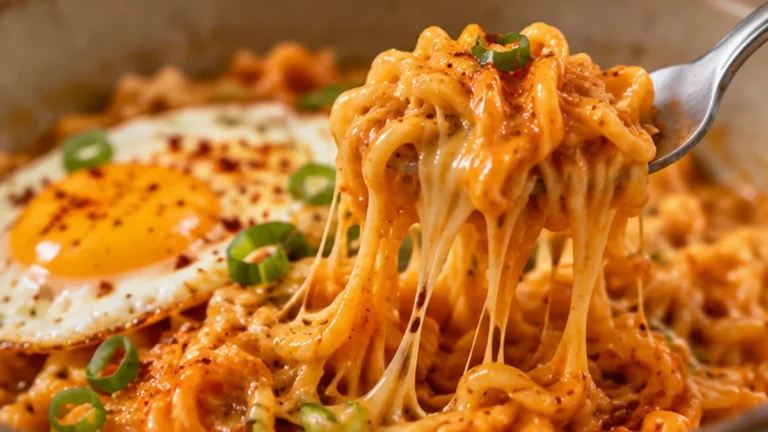
Ingredients
Scale
- 1 (3-ounce / 85 g) package instant wheat ramen noodles, seasoning packet discarded; choose vegetarian-labeled noodles if needed
- 1 large egg (use a pasteurized shell egg if planning a soft-yolk variation)
- 1 teaspoon (5 ml) neutral oil, divided between pans
- 1 small garlic clove, finely minced
- 2 teaspoons (10 g) gochujang, or 1 teaspoon for milder heat
- 1 teaspoon (5 ml) reduced-sodium soy sauce
- 1/3 cup (80 ml) 2% milk
- 1/4 cup (60 ml) reserved hot ramen cooking water, plus a little more only as needed
- 1 slice (about 3/4 ounce / 21 g) American cheese
- 1/4 cup (about 1 ounce / 28 g) shredded low-moisture part-skim mozzarella
- 1 scallion, thinly sliced
- Optional: 1/4 teaspoon crushed red pepper flakes
- Optional: 1/2 teaspoon toasted sesame seeds
Instructions
- Bring water to a boil in a small saucepan. Heat a nonstick skillet over medium-low heat with about half the measured oil. Fry the egg gently until its white and yolk are set; cover the skillet briefly if needed. Transfer the cooked egg to a clean plate.
- Add the ramen block to boiling water. Cook until the noodles separate and are just shy of tender, usually 2 to 3 minutes or about 1 minute less than the package direction.
- Reserve at least 1/4 cup of the hot, starchy noodle water. Drain the noodles without rinsing.
- In the same skillet over medium-low heat, add the remaining oil and minced garlic. Stir for about 20 seconds, then add gochujang and reduced-sodium soy sauce. Stir until fragrant but not browned.
- Add the milk and 2 tablespoons reserved hot noodle water. Whisk gently until the gochujang is fully dissolved, keeping the mixture at a gentle simmer rather than a hard boil.
- Reduce heat to the lowest setting. Tear in the American cheese and stir until smooth; add mozzarella a little at a time and stir to melt. Add extra reserved noodle water 1 teaspoon at a time if it becomes thick.
- Add the drained ramen, toss for about 1 minute until hot and coated, then turn off the heat. Taste and adjust spice; do not add extra salt before tasting.
- Transfer to a bowl, top with the fully cooked egg, scallion, and optional pepper flakes or sesame seeds. Serve immediately.
Notes
- Yield is one large bowl. Times are based on overlapping the egg and noodle cooking; individual stoves and noodle brands vary.
- The seasoning packet is not used. Check noodle, gochujang, soy sauce, and cheese labels for sodium and wheat/soy/milk/egg allergens.
- USDA/FDA guidance for ordinary shell eggs recommends cooking both white and yolk until firm. If choosing a runny-yolk presentation, use pasteurized eggs and follow their product instructions.
- For a vegetarian bowl, choose vegetarian-labeled noodles, gochujang and cheeses made without animal rennet. The standard dish is not gluten free, dairy free, or low sodium.
- Best eaten immediately. Refrigerate leftovers promptly at 40°F or below, ideally use within 1 to 2 days for texture, and reheat thoroughly with a little liquid. Freezing is not recommended.
- Nutrition is an illustrative estimate for one full bowl with a standard 3-ounce instant ramen block, 2% milk, a 21g American cheese slice, 28g mozzarella, one egg, gochujang, reduced-sodium soy sauce and 1 teaspoon oil; brand labels can materially change the result.
- Prep Time: 5 minutes
- Cook Time: 10 minutes
- Category: Dinner
- Method: Stovetop
- Cuisine: Korean-Inspired American
- Diet: Vegetarian (check labels)