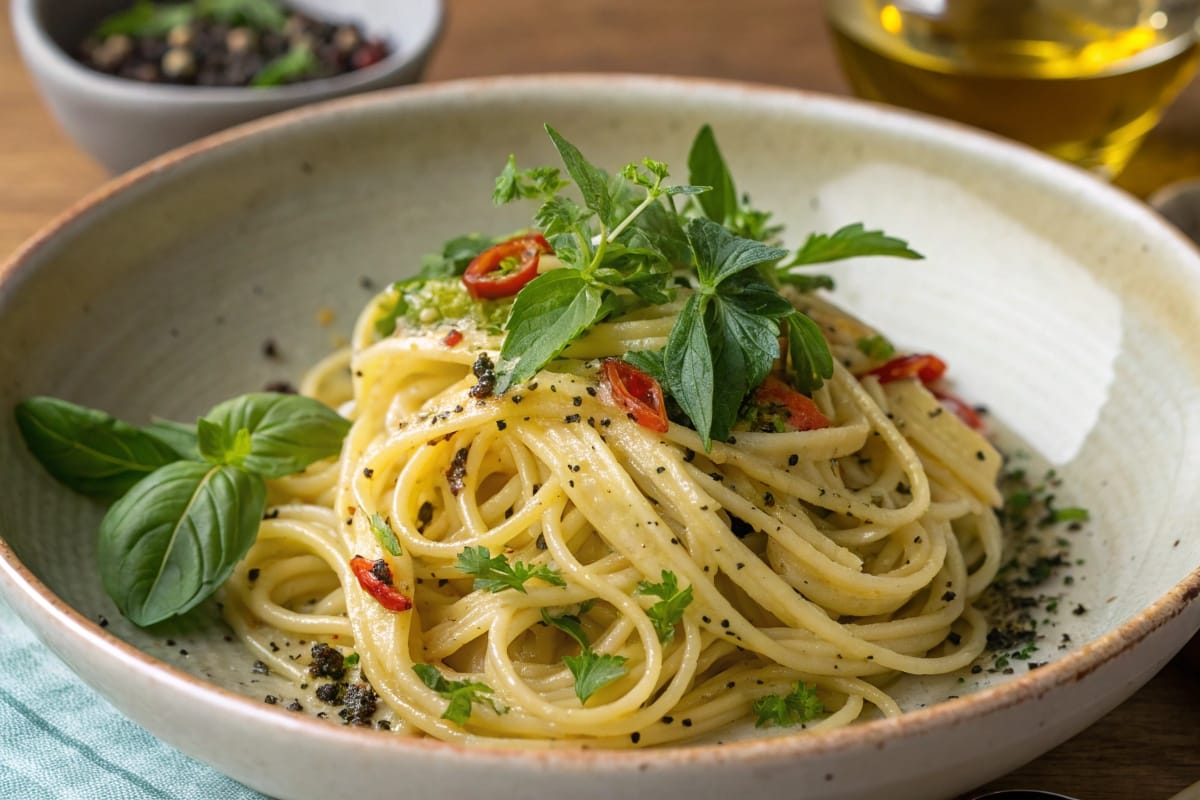
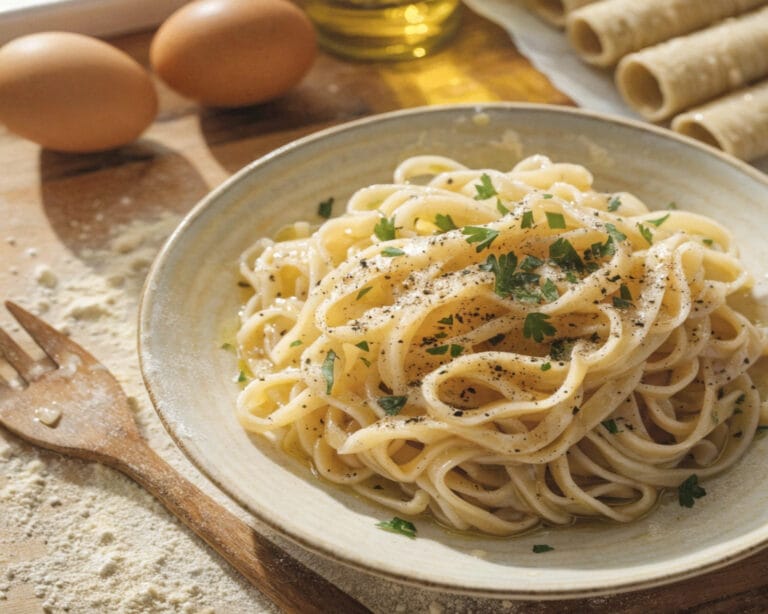
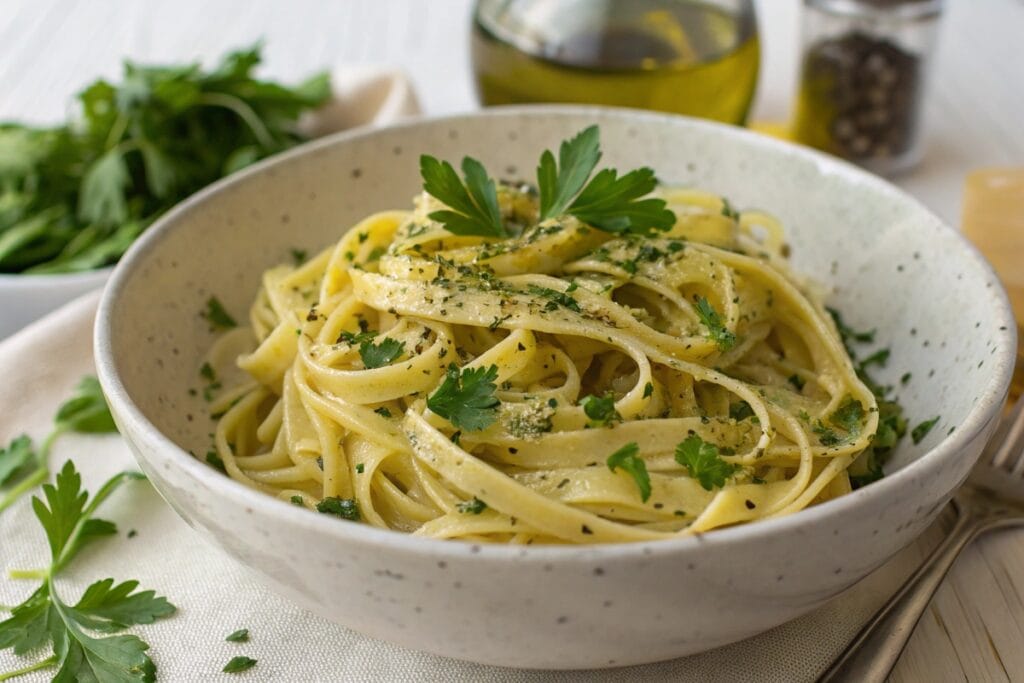
These homemade gluten free egg noodles are tender, easy to cut, and ready for soups, casseroles, or simple buttered noodle dishes. The dough uses a gluten-free flour blend, eggs, olive oil, and salt—no complicated flour mixture required.
Working without wheat gluten changes the way the dough behaves, but the process is still straightforward. The most important steps are choosing a flour blend that contains xanthan gum, letting the dough rest, rolling it thinly, and watching the noodles closely as they cook.
Table of Contents
If you are new to gluten-free cooking, start with our gluten-free recipes guide for practical ingredient and meal ideas.
Why You’ll Love This Recipe
It uses a short list of everyday ingredients.
You do not need a pasta machine.
The dough can be cut into narrow noodles or wider ribbons.
Fresh noodles cook in only a few minutes.
They work in soups, casseroles, sauces, and skillet meals.
You can freeze the uncooked noodles for later.
Unlike many packaged gluten-free pastas, these noodles contain eggs. The eggs provide richness, moisture, and structure, helping the dough hold together without wheat gluten.
Are Egg Noodles Gluten Free?
Traditional egg noodles are not gluten free. They are normally made with wheat flour and eggs, so the presence of eggs does not make them suitable for a gluten-free diet.
Gluten free egg noodles replace wheat flour with a gluten-free flour blend. Because different flour blends absorb moisture differently, the dough may need a small amount of water to reach the right consistency.
Always check the package rather than assuming a product is gluten free. Words such as “egg noodles,” “rice noodles,” or “multigrain noodles” do not automatically mean that the product is free from gluten.
Choosing the Right Gluten-Free Flour Blend
For the most reliable texture, use a gluten-free 1-to-1 or all-purpose flour blend that already contains xanthan gum. A balanced blend typically combines one or more gluten-free flours with starches that help create a softer, more flexible dough.
Check the ingredient list before adding extra xanthan gum. If the blend already contains it, adding more can make the noodles gummy.
Avoid replacing the flour blend with coconut flour or almond flour in this recipe. These flours absorb liquid and behave very differently, so they cannot be substituted in equal amounts without changing the entire recipe.
When measuring flour by volume, spoon it lightly into the measuring cup and level the top. Scooping directly from the bag may pack in too much flour and produce a dry, crumbly dough.
These homemade gluten free egg noodles stay tender and cook in only a few minutes. The simple dough uses a gluten-free 1-to-1 flour blend, eggs, olive oil, and salt. Serve the fresh noodles in soups, casseroles, broth, or with your favorite pasta sauce.
1. Combine the gluten-free flour blend and salt in a medium mixing bowl.
2. Make a well in the center, then add the eggs and olive oil.
3. Mix with a fork while gradually pulling flour from the sides into the eggs.
4. Knead the mixture gently by hand until the dough comes together.
5. Add water 1 teaspoon at a time only when the dough feels dry or crumbly.
6. Cover the dough and let it rest for 15 minutes.
7. Divide the dough into two portions and keep one portion covered.
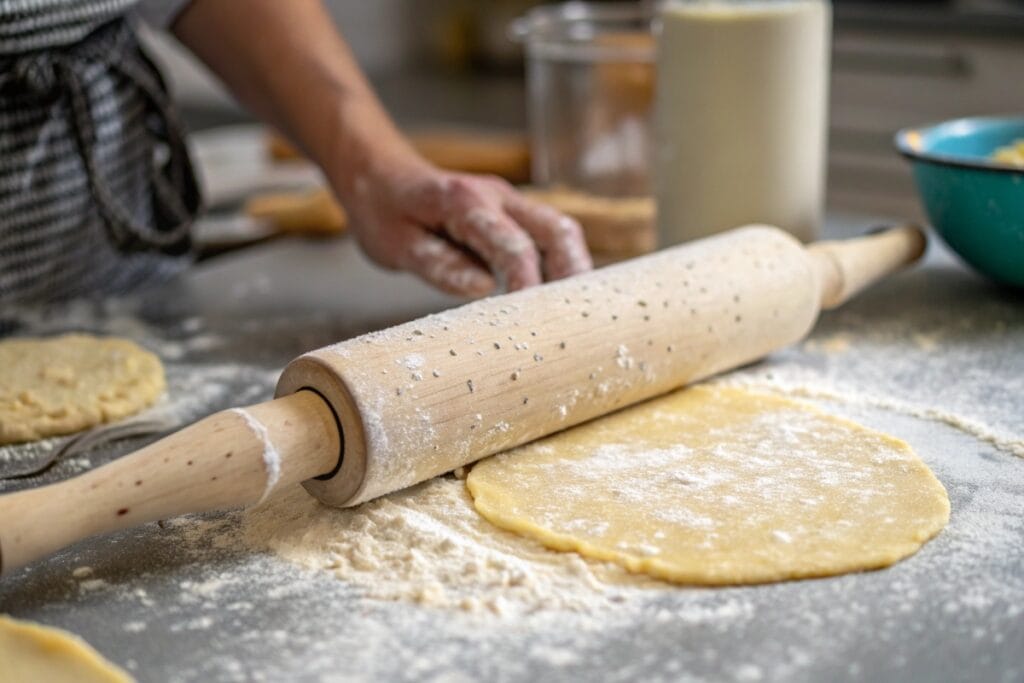
8. Roll the first portion between two sheets of parchment paper or on a lightly floured surface until approximately 1/16 inch thick.
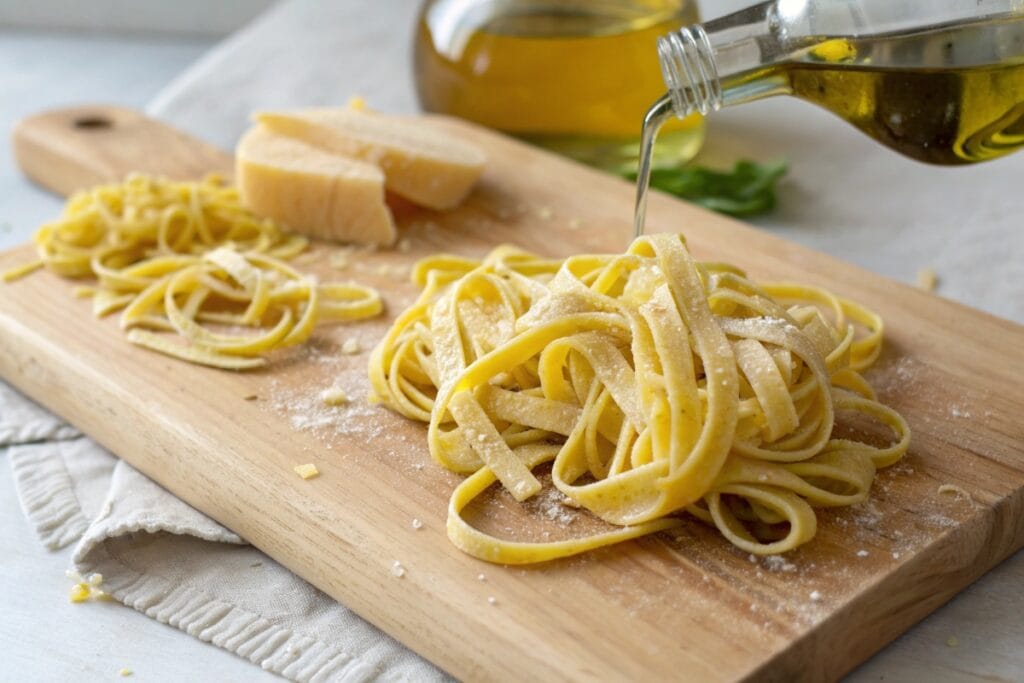
9. Cut the dough into narrow strips or wide noodle ribbons with a sharp knife, pizza cutter, or pasta wheel.
10. Transfer the noodles to a tray dusted lightly with gluten-free flour and let them rest for 10–15 minutes.
11. Repeat the rolling and cutting process with the remaining dough.
12. Bring a large pot of salted water to a gentle boil.
13. Add the noodles and stir carefully to prevent sticking.
14. Cook for 2–3 minutes, or until the noodles feel just tender.
15. Drain immediately and serve with your preferred sauce, soup, broth, or toppings.
Notes
Use a gluten-free flour blend that already contains xanthan gum. Do not add extra xanthan gum when the blend already includes it.
Different flour blends absorb liquid differently, so add water slowly and only when necessary.
Avoid substituting coconut flour or almond flour because they behave differently and require another recipe formula.
Roll the dough thinly because thick gluten-free noodles may remain heavy or doughy in the center.
Keep the cooking water at a gentle boil to protect the delicate noodles.
Begin checking the noodles after 2 minutes because fresh gluten-free pasta can overcook quickly.
For clearer chicken noodle soup, cook the noodles separately and add them to each bowl before serving.
Store uncooked noodles in an airtight container in the refrigerator for up to 1 day.
Freeze uncooked noodles in a single layer, then transfer them to a freezer-safe container for up to 1 month.
Cook frozen noodles directly from the freezer without thawing.
Store cooked noodles in the refrigerator for up to 3 days.
Author:Adam Moretti
Prep Time:30 minutes
Resting Time:15 minutes
Cook Time:3 minutes
Category:Main Dish
Method:Stovetop
Cuisine:American
Diet:Gluten Free
How to Make Gluten Free Egg Noodles
1. Bring the Dough Together
Combine the gluten-free flour blend and salt in a mixing bowl. Make a well in the center, then add the eggs and olive oil.
Use a fork to gradually pull flour from the sides into the wet ingredients. Once the mixture becomes too thick for the fork, bring it together gently with your hands.
2. Adjust the Texture
The finished dough should feel soft and workable without sticking heavily to your fingers.
If it remains dry and breaks apart when pressed, add water one teaspoon at a time. Avoid pouring in too much water at once. Gluten-free flour can move quickly from dry to sticky.
If the dough becomes sticky, dust it with a small amount of additional gluten-free flour.
3. Let the Dough Rest
Cover the dough and let it rest for about 15 minutes. This gives the flour time to absorb the moisture from the eggs and water.
Resting is especially useful in gluten-free recipes because it reduces crumbling and makes the dough easier to roll. Do not leave the uncovered dough on the counter, as the surface can dry out.
4. Roll It Thinly
Divide the dough into two portions so it is easier to handle. Keep one portion covered while you work with the other.
Place the dough between two sheets of parchment paper or roll it on a lightly floured surface. Aim for approximately 1/16 inch thick. The noodles will become slightly thicker as they cook.
If the edges crack, press them back together and continue rolling. Small cracks around the edges are normal with gluten-free dough.
5. Cut the Noodles
Remove the top sheet of parchment and cut the dough into noodles using a sharp knife, pizza cutter, or pasta wheel.
Cut thin strips for soup or wider ribbons for creamy sauces and stroganoff-style dishes. Try to keep the strips similar in width so they finish cooking at the same time.
Separate the noodles gently and transfer them to a tray dusted with gluten-free flour.
6. Cook Until Just Tender
Bring a large pot of salted water to a gentle boil. Add the noodles and stir carefully to keep them from sticking together.
Fresh gluten-free egg noodles cook quickly, usually in about two to three minutes depending on their thickness. Begin checking them early and remove them as soon as they are tender.
Drain the noodles gently and serve them immediately with your preferred sauce, broth, or toppings.
How to Keep the Noodles From Falling Apart
Gluten-free noodle dough is more delicate than traditional wheat dough, but a few simple techniques make a significant difference.
Use a Blend With a Binder
Xanthan gum helps replace some of the binding function normally provided by gluten. A flour blend without an appropriate binder may produce noodles that crack during rolling or fall apart in the pot.
Add Water Slowly
A dry dough crumbles, while an overly wet dough becomes difficult to cut. Add water only when needed and only one teaspoon at a time.
Do Not Skip the Rest
The resting period hydrates the flour and improves the dough’s flexibility. Rolling it immediately after mixing can make it harder to handle.
Roll the Dough Thinly
Thick gluten-free noodles can feel heavy or doughy in the center. Rolling the dough to approximately 1/16 inch helps it cook quickly and evenly.
Use a Gentle Boil
A very aggressive boil can damage delicate fresh noodles. Keep the water bubbling steadily without allowing it to toss the noodles around too forcefully.
Avoid Overcooking
Fresh gluten-free noodles can change from tender to overly soft quickly. Test one noodle after approximately two minutes rather than relying only on a timer.
Troubleshooting the Dough
The Dough Is Crumbly
Press a small amount between your fingers. If it does not hold together, work in one teaspoon of water and test it again. Repeat only if necessary.
The Dough Is Too Sticky
Dust the dough, rolling surface, and rolling pin lightly with gluten-free flour. Use only enough to make the dough manageable; too much additional flour can dry it out.
The Noodles Break While Cutting
The dough may be too dry or rolled too thinly. Press it back together, add a few drops of water if necessary, and roll it again.
The Cooked Noodles Are Gummy
They may have been overcooked, or the flour blend may contain more binder than the recipe needs. Use a blend that contains xanthan gum without adding extra, and begin testing the noodles early.
The Noodles Stick Together
Dust the cut noodles lightly with gluten-free flour and keep the strands separated on the tray. Stir them gently shortly after adding them to the cooking water.
Ways to Serve Gluten Free Egg Noodles
These noodles have a mild flavor, making them useful in both simple meals and richer comfort-food recipes.
Chicken Noodle Soup
Cook the noodles separately and add them to each bowl before serving. This keeps the broth clearer and makes it easier to control the texture of the noodles.
Butter and Herbs
Toss the cooked noodles with butter or olive oil, chopped parsley, black pepper, and a small amount of grated Parmesan if desired.
Beef and Mushroom Sauce
Wide noodles work well with a creamy mushroom sauce or a stroganoff-style beef sauce. Confirm that the broth, seasoning, and sauce ingredients are also labeled gluten free.
Casseroles
Cook the noodles just until slightly firm before adding them to a casserole. They will continue cooking in the oven, so fully cooking them first may make them too soft.
Tomato or Cream Sauce
Serve the noodles with marinara, pesto, or a simple cream sauce. For another homemade option, see our gluten free pasta recipe.
You can also use a packaged gluten-free pasta to make this high protein pasta salad when you need a cold meal rather than fresh egg noodles.
Gluten-Free Safety and Cross-Contact
If you are preparing this recipe for someone with celiac disease, every ingredient must be verified—not only the flour.
In the United States, food carrying a “gluten-free” claim must meet the FDA definition, including having less than 20 parts per million of unavoidable gluten. You can read the full explanation in the FDA’s gluten and food labeling guidance.
Use a clean preparation area and clean utensils, bowls, rolling pins, cutting boards, and cooking pots. Flour dust, crumbs, shared pasta water, colanders, sauces, broth, and seasonings can all introduce gluten into an otherwise gluten-free recipe.
If your kitchen regularly handles wheat flour, take extra care to clean the work area before beginning. When serving the noodles with a sauce or soup, confirm that every packaged ingredient is also labeled gluten free.
How to Store Homemade Egg Noodles
Refrigerating Uncooked Noodles
Place the freshly cut noodles in an airtight container with parchment paper between the layers. Refrigerate them and use them within one day.
Freezing Uncooked Noodles
Arrange the cut noodles in a single layer on a parchment-lined tray and freeze until firm. Transfer them to a freezer-safe container or bag and keep them frozen for up to one month.
Cook frozen noodles directly from the freezer. Do not thaw them first, as thawing can make the strands stick together.
Storing Cooked Noodles
Let cooked noodles cool, then place them in an airtight container and refrigerate for up to three days. A light coating of olive oil can help prevent sticking.
Reheat them gently in a sauce, broth, or skillet. Avoid boiling them again for an extended period.
Frequently Asked Questions
What is a good gluten-free substitute for egg noodles?
Rice noodles, corn-and-rice pasta, lentil pasta, chickpea pasta, and certified gluten-free noodles can all replace traditional egg noodles. The best choice depends on the sauce or dish you are preparing.
Can people with celiac disease eat egg noodles?
They can eat egg noodles only when the noodles are made with gluten-free ingredients and cross-contact has been prevented. Traditional wheat-based egg noodles are not suitable for a gluten-free diet.
Can I make these noodles without xanthan gum?
This specific recipe works best with a flour blend that contains xanthan gum or a similar binder. Leaving it out may cause the dough to crumble. A binder-free version would require a separately tested flour and liquid ratio.
Can I make this recipe without eggs?
Not with a direct one-for-one substitution. Eggs provide both moisture and structure in this dough. An egg-free noodle recipe requires a different formula and binder.
Do gluten free egg noodles taste different?
They have a mild flavor similar to fresh pasta, although the exact taste depends on the flour blend. Their texture is usually more tender and less elastic than wheat-based egg noodles.
Do stores sell gluten free egg noodles?
Some grocery stores and online retailers carry gluten-free noodle products, but availability changes by location. Read the current package carefully because regular egg noodles—and many products displayed near gluten-free pasta—may still contain wheat.
Can I cook the noodles directly in soup?
Yes, but they can release starch and make the broth cloudy. For a clearer soup and more reliable texture, cook them separately and add them to the bowl just before serving.
Final Tips for Better Gluten Free Egg Noodles
Homemade gluten free egg noodles become easier once you recognize the correct dough texture. Start with a gluten-free blend containing xanthan gum, add water gradually, allow the dough to rest, and roll it thinner than you think it needs to be.
Keep the cooking time short and test the noodles early. Once you master the basic method, you can cut the dough into thin soup noodles, broad ribbons, or shorter pieces for casseroles.
The result is a versatile homemade noodle that brings soups, sauces, and comforting family meals back to the table—without relying on wheat flour.
Reviewed recipe options
Make this recipe fit me
Choose one of seven popular diet options. NutriMatch will confirm whether the recipe already fits, show a reviewed adaptation when available, or recommend recipes that match your choice.
Please choose a diet first.
Already a reviewed match
This recipe already fits Dairy-Free.
No changes are needed based on its reviewed NutriMatch classification. Check the complete ingredients, product labels, and serving details for your own needs.
Recipe details, product formulas, and cross-contact information can change. Confirm current labels and use professional guidance when medically necessary.
Already a reviewed match
This recipe already fits Gluten-Free.
No changes are needed based on its reviewed NutriMatch classification. Check the complete ingredients, product labels, and serving details for your own needs.
Recipe details, product formulas, and cross-contact information can change. Confirm current labels and use professional guidance when medically necessary.
Not available for this recipe
This recipe cannot currently be made High Protein with a reviewed adaptation.
NutriMatch will not guess at substitutions. Try one of these recipes that is already reviewed for your choice.
Recipe details, product formulas, and cross-contact information can change. Confirm current labels and use professional guidance when medically necessary.
Not available for this recipe
This recipe cannot currently be made Keto with a reviewed adaptation.
NutriMatch will not guess at substitutions. Try one of these recipes that is already reviewed for your choice.
Recipe details, product formulas, and cross-contact information can change. Confirm current labels and use professional guidance when medically necessary.
Not available for this recipe
This recipe cannot currently be made Low Carb with a reviewed adaptation.
NutriMatch will not guess at substitutions. Try one of these recipes that is already reviewed for your choice.
Recipe details, product formulas, and cross-contact information can change. Confirm current labels and use professional guidance when medically necessary.
Reviewed Vegan adaptation
Vegan Homemade Gluten Free Egg Noodles That Stay Tender
Use the reviewed substitutions below to prepare a Vegan version while keeping the original recipe's basic method.
Ingredient swaps
2 large eggsUse 6 tablespoons aquafaba, plus 1 tablespoon ground flaxseed
Instruction changes
Whisk the aquafaba and flaxseed, rest for 10 minutes, then add water only as needed to form a firm rollable dough.
Check: Confirm every packaged substitute, sauce, seasoning, and topping is vegan; product formulas and processing aids can vary.
Use these reviewed changes with the original ingredient quantities and instructions above. The original recipe card stays unchanged.
Recipe details, product formulas, and cross-contact information can change. Confirm current labels and use professional guidance when medically necessary.
Already a reviewed match
This recipe already fits Vegetarian.
No changes are needed based on its reviewed NutriMatch classification. Check the complete ingredients, product labels, and serving details for your own needs.
Recipe details, product formulas, and cross-contact information can change. Confirm current labels and use professional guidance when medically necessary.