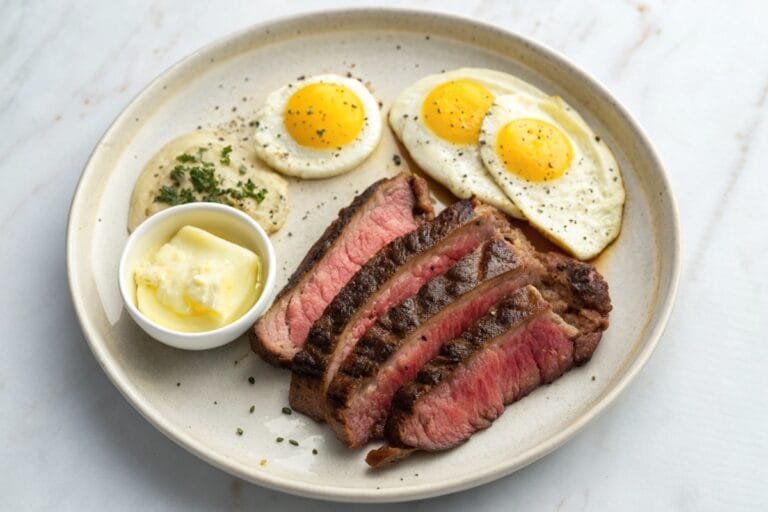
If you are curious about the carnivore diet but feel overwhelmed by what to cook, this easy one-day lineup of carnivore diet recipes keeps things simple. The classic approach to this way of eating focuses on animal foods only: meat, poultry, fish, eggs, and sometimes a few dairy products.:contentReference[oaicite:0]{index=0} These recipes build a basic high-protein, high-fat day of eating with minimal prep and very few ingredients. They work well for people who want a more structured starting point while they experiment. However, because the carnivore diet is extremely restrictive and may carry health risks for some people, it is important to talk with your healthcare provider before you commit to it long term.:contentReference[oaicite:1]{index=1}
Quick Recipe Snapshot
Prep time: 20 minutes
Cook time: 35–40 minutes total (across meals)
Total time: About 1 hour (mostly hands-off once you learn the flow)
Servings: 2 people for one full day of meals (or 1 person for two days)
Difficulty: Easy
Diet type: Carnivore, Very Low Carb, Gluten-Free
You’ll find a printable recipe card with exact measurements and nutrition details at the end of this post.
Table of Contents
Ingredients for Carnivore Diet Recipes (One-Day Plan)
Breakfast: Ribeye & Eggs
1 lb (16 oz / 450 g) ribeye steak, about 1-inch thick
4 large eggs
1 tablespoon butter, tallow, or ghee
1 teaspoon fine salt (or to taste)
1/2 teaspoon black pepper (optional, some strict versions avoid pepper)
1/2 teaspoon garlic powder (optional, omit for strict carnivore)
Dinner: Buttered Burger Patties with Egg Yolks
1 lb (450 g) ground beef, 80/20 fat-to-protein if possible
2 large egg yolks (or whole eggs if you prefer)
1–2 tablespoons butter or tallow
1 teaspoon salt
Optional Snacks & Extras
4–6 hard-boiled eggs
4–6 ounces pork rinds or high-quality pork cracklings
1–2 cups salted bone broth (homemade or store-bought with no added sugar)
Carnivore Diet Recipes
Step-by-Step Instructions
Prep your ingredients. Pat the ribeye steak and chicken thighs dry with paper towels. Season both sides of the steak and chicken with salt. Add pepper or garlic powder if you include those in your personal version of carnivore.
Start the chicken thighs for lunch. Preheat the oven to 400°F (200°C). Place the chicken thighs skin-side up on a rimmed baking sheet or in a cast-iron skillet. Roast for 30–35 minutes, until the internal temperature reaches 165°F (74°C) and the skin is crispy. Let them rest while you make breakfast.
Cook the ribeye for breakfast. Heat a heavy skillet (cast iron works best) over medium-high heat. Add 1/2 tablespoon of the butter or tallow. When hot and shimmering, sear the ribeye for about 3–4 minutes per side for medium-rare, or to your preferred doneness. Baste with the fat in the pan as it cooks.
Rest and slice the steak. Transfer the ribeye to a cutting board and let it rest for 5–10 minutes so the juices redistribute. Slice it against the grain into thick strips. Divide into two portions if you are feeding two people or planning for leftovers.
Cook the breakfast eggs. In the same pan, add the remaining 1/2 tablespoon butter if needed. Crack in four eggs and cook them sunny-side up, over-easy, or scrambled, depending on your preference. Season lightly with salt.
Plate breakfast. Serve the steak slices with two eggs on each plate. Spoon any pan juices over the top. This is your high-protein, high-fat breakfast that fits typical carnivore diet recipes.
Finish the chicken thighs. Check the chicken thighs in the oven. When they are done, remove the tray and let them rest for at least 10 minutes. You can eat them hot for lunch or store them in the fridge for later.
Shape and season burger patties. For dinner, divide the ground beef into 4 equal portions and shape into thick patties, slightly wider than your palm. Press a shallow indentation in the center of each patty so they cook evenly. Season both sides with salt.
Cook the burgers. Heat a skillet over medium-high heat and add 1–2 tablespoons butter or tallow. Sear the patties for about 3–4 minutes per side, or until they reach your preferred doneness (many carnivore followers like burgers slightly pink in the center, but always cook to a safe temperature you feel comfortable with).
Finish with egg yolks. If you love rich flavor, separate 2 eggs and keep the yolks whole. Place cooked patties on plates and gently nestle an egg yolk on top of each patty, spooning a bit of hot fat over the yolks to very lightly thicken them. You can fry or scramble whole eggs instead if you prefer.
Plan snacks strategically. While meats cook or cool, boil your eggs for snacks and warm bone broth. Having these options ready helps you avoid grabbing non-carnivore foods if hunger hits between meals.
Adjust portions to appetite. The carnivore diet often encourages eating until comfortably full rather than counting calories.:contentReference[oaicite:2]{index=2} If you find you feel overly stuffed, reduce pork rinds or egg snacks; if you feel low on energy or hungry, increase the fattier cuts or an extra egg or two at meals.
Tips & Variations
Play with the 80/20 fat-to-protein ratio. Many high-fat carnivore diet versions aim for roughly 80% of calories from fat and 20% from protein.:contentReference[oaicite:3]{index=3} To move in that direction, choose fattier beef (like 80/20 ground beef), keep the chicken skin on, and be generous with butter or tallow. To lean things out slightly, use leaner cuts and trim visible fat.
Include organ meats if you tolerate them. Swapping one of the dinners for pan-seared liver or adding a small portion of liver to the ground beef can increase certain micronutrients like vitamin A and iron, which can be harder to balance on a strict meat-only plan.:contentReference[oaicite:4]{index=4}
Use the grill, oven, or air fryer. You can grill the ribeye, bake the burger patties, or crisp chicken thighs in an air fryer instead of the oven. Rotate methods to keep the texture and flavor interesting without changing ingredient lists.
Watch your lab work and symptoms. Because the carnivore diet can be very high in saturated fat and low in fiber and certain vitamins, experts warn about potential increases in LDL (“bad”) cholesterol and nutrient deficiencies.:contentReference[oaicite:5]{index=5} Regular blood work and medical supervision matter if you follow this pattern for more than a short experiment.
Consider transition days. If you currently eat a mixed diet, some people feel better easing toward carnivore with a very low-carb or keto-style pattern first rather than switching overnight.
Carnivore Diet Recipes
Serving Suggestions
Strict carnivore diet recipes keep sides as simple as the main dish, but you still have room to tailor the day to your schedule.
Busy weekdays: Eat the ribeye and eggs as a late breakfast or early brunch, two chicken thighs for lunch, then a burger patty or two for dinner. Save any extra for the next day.
Meal prep option: Double the quantities of chicken thighs and burger patties on a weekend, then portion into containers so you only have to reheat at mealtime.
Hydration and electrolytes: Plain water, sparkling water, and salted bone broth can help you stay hydrated and maintain electrolytes, especially if you are also cutting carbs drastically and may lose more water early on.:contentReference[oaicite:6]{index=6}
For a less strict approach: Some people experiment with a “animal-focused” plate by adding a small amount of low-carb vegetables to the side while keeping the protein high. If you move in that direction, you are no longer doing a strict carnivore diet, but it may be more balanced and sustainable.
Storage & Reheating
Refrigerator: Store cooked steak, chicken, and burger patties in separate airtight containers in the fridge for up to 3–4 days.
Freezer: For longer storage, freeze cooked meats in freezer bags or containers for up to 2–3 months. Label with dates so you remember what to use first.
Reheating steak and burgers: Reheat gently in a skillet over low heat with a bit of fat, or in a 300°F (150°C) oven for 8–10 minutes, just until warmed through. Avoid very high heat so they do not dry out.
Reheating chicken thighs: Reheat at 350°F (175°C) in the oven or air fryer for 8–12 minutes, until hot and the skin re-crisps.
Hard-boiled eggs and bone broth: Keep boiled eggs in the fridge up to one week. Reheat bone broth on the stovetop or in the microwave until steaming.
Nutrition Highlights
Approximate per serving (one meal of steak and eggs or burger and eggs, not counting snacks):
Calories: ~650–700
Protein: ~55–60 g
Fat: ~50–55 g
Carbohydrates: 0–2 g (from trace amounts in eggs and any seasonings)
Fiber: 0 g
This style of carnivore diet recipes often lands very high in protein and saturated fat while eliminating all fiber and most sources of vitamins C, K, certain B vitamins, and minerals like magnesium and potassium.:contentReference[oaicite:7]{index=7} Some people do report short-term weight loss or changes in digestion on meat-only diets, but major health organizations and hospitals note concerns about cholesterol, heart health, kidney strain, and long-term nutrient gaps.:contentReference[oaicite:8]{index=8}
When I first started exploring higher-protein eating, I went down every rabbit hole, including the carnivore diet. I loved the simplicity of throwing a steak in a pan, cracking a few eggs, and calling it a meal. It felt grounding and oddly freeing not to overthink sauces and side dishes. Over time, though, I realized my body felt better with a bit more variety, including some fiber and color on the plate.
These simple carnivore diet recipes come from that experimental season: they are straightforward, high-protein, and very filling. I still use versions of them when I want an easy meat-focused day, but now I also feel comfortable reminding readers to check in with their doctors and their own long-term health goals.
FAQ About Carnivore Diet Recipes
What is the 80 20 rule for carnivore diet?
In carnivore diet circles, the “80/20 rule” usually means one of two things. Some people use it to describe an 80% fat, 20% protein calorie split, which pushes the diet into a very high-fat, ketogenic range.:contentReference[oaicite:9]{index=9} Others use 80/20 to mean they eat strictly carnivore 80% of the time and allow a little flexibility—like coffee, spices, or occasional non-carnivore foods—the other 20%. Different coaches and communities lean toward one definition or the other. The key is understanding which version you are following and how it affects your food choices and lab work over time. Bottom line: 80/20 on carnivore usually refers either to an 80% fat macro target or to being strict most of the time with small built-in exceptions.
What can be eaten on a carnivore diet?
A classic carnivore diet keeps things very simple: meat, poultry, fish, eggs, and some dairy products like hard cheese, butter, and heavy cream if tolerated.:contentReference[oaicite:10]{index=10} It excludes all fruits, vegetables, grains, legumes, nuts, seeds, and added sugars. Many people also avoid processed meats that contain fillers or sugar. Water (still or sparkling) is the main drink, with some followers including black coffee or plain tea while others skip them. Bottom line: On a strict carnivore diet, you eat only animal-sourced foods and drink mostly water, cutting out all plant-based foods.
Do and don’ts of carnivore diet?
Do focus on simple, minimally processed animal foods you digest well, such as beef, lamb, eggs, and fish. Drink plenty of water, salt your food to taste, and monitor how you feel, especially in the first weeks.:contentReference[oaicite:11]{index=11} Don’t ignore potential warning signs like extreme fatigue, digestive problems, or abnormal lab work; long-term meat-only diets may increase LDL cholesterol, strain the kidneys, and create vitamin and mineral deficiencies in some people.:contentReference[oaicite:12]{index=12} It is especially important not to use a strict carnivore diet without medical supervision if you are pregnant, have kidney disease, heart disease, or a history of eating disorders. Bottom line: Do keep the food list simple and watch your health markers; don’t treat carnivore as harmless for everyone or ignore professional medical advice.
How long will it take to lose 20 pounds on carnivore?
There is no single timeline, even on a restrictive plan like carnivore. Weight loss depends on your starting weight, activity level, calorie intake, metabolism, medications, and overall health. Health organizations generally consider 1–2 pounds per week a safe, sustainable loss rate, which would make 20 pounds more like a 2–5 month project, not a quick fix.:contentReference[oaicite:13]{index=13} Rapid drops on the scale during the first week of an extreme low-carb or carnivore diet often come from water and glycogen loss, not pure body fat.:contentReference[oaicite:14]{index=14} Bottom line: Some people may lose weight on carnivore, but a realistic, healthy pace for 20 pounds is measured in months, and you should work with a healthcare professional if weight loss is a goal.
Is the carnivore diet safe long-term?
Research on long-term, strict carnivore diets is still limited, and several heart and nutrition organizations raise concerns about very high saturated fat intake, zero fiber, and missing vitamins and minerals.:contentReference[oaicite:15]{index=15} For some people with specific medical conditions, a short-term therapeutic trial under medical care may make sense. For many others, a more balanced low-carb or high-protein pattern that still includes some plant foods may support health with fewer risks. Bottom line: We do not yet have strong evidence that strict carnivore is safe for most people over many years, so it is wise to involve your healthcare team and consider more balanced options.
More Recipes You’ll Love
If you like experimenting with carnivore diet recipes but also want other high-protein or lower-carb ideas, you might enjoy these options on HealthyAmericanBites.com:
To understand how different proteins fit into your day, the high-protein foods guide breaks down practical sources and serving sizes.
If you want a more flexible, balanced way to eat for weight loss, the low-calorie high-protein meals collection offers filling ideas that still leave room for vegetables.
For an approach that sits between standard eating and full carnivore, the keto diet for beginners and keto dinner ideas posts give you carb-conscious recipes with more variety.
And if you like easy, protein-forward breakfasts, the high-protein egg bites meal prep recipe helps you stock your fridge with grab-and-go options that can complement or replace a meat-only morning.
Final Thoughts’ Carnivore Diet Recipes ‘
Carnivore diet recipes do not have to be complicated—simple cuts of meat, eggs, and a hot pan can take you a long way. At the same time, it is important to remember that “simple” and “healthy long-term” are not always the same thing. If you decide to try a meat-only day or short experiment, use these recipes as a framework, listen carefully to your body, and stay in conversation with your healthcare provider. You can always shift toward a more balanced high-protein pattern if that ends up feeling better for your energy, digestion, and long-term health.
This simple carnivore diet recipe focuses on a classic steak-and-eggs plate you can repeat on busy days or build into a one-day carnivore meal plan. A well-seared ribeye steak, cooked in butter or tallow, pairs with fried eggs for a high-protein, high-fat, very low-carb meal. You only need a few ingredients, and you can adjust doneness and portion sizes to match your appetite. It is a practical starting point if you are experimenting with carnivore-style eating and want something filling without much prep.
Total Time:25 minutes
Yield:2 servings
Ingredients
Scale
1 lb (16 oz) ribeye steak, about 1-inch thick
4 large eggs
1 tablespoon butter, tallow, or ghee
1 teaspoon fine salt, divided
1/2 teaspoon black pepper (optional)
Instructions
1. Pat the ribeye steak dry with paper towels and season both sides with about 1/2 teaspoon salt and black pepper if using.
2. Heat a heavy skillet over medium-high heat and add about half of the butter, tallow, or ghee.
3. When the fat is hot and shimmering, place the steak in the skillet and sear for about 3–4 minutes per side, or until it reaches your preferred doneness.
4. Reduce the heat slightly and spoon some of the hot fat over the steak as it cooks to keep the surface moist and flavorful.
5. Transfer the cooked steak to a cutting board and let it rest for 5–10 minutes so the juices redistribute.
6. While the steak rests, crack four eggs into the same skillet, adding the remaining fat if needed, and cook them sunny-side up, over-easy, or scrambled.
7. Sprinkle the eggs with the remaining 1/2 teaspoon salt while they cook.
8. Slice the rested steak against the grain into thick strips and divide between two plates.
9. Add two eggs to each plate, spooning any remaining pan juices over the meat and eggs for extra flavor.
10. Serve hot as a carnivore-style steak and eggs meal, and adjust portions or add more eggs if you need a larger serving.
Notes
This steak and eggs plate fits strict carnivore diet guidelines when you use only animal fats and keep seasonings simple.
For a higher fat ratio, choose a fattier ribeye and add an extra tablespoon of butter or tallow over the steak at the table.
If you prefer, you can grill the steak instead of pan-searing it, then cook the eggs in a small skillet on the side.
Store leftover steak and eggs in an airtight container in the refrigerator for up to 3 days and reheat gently in a skillet over low heat.
Because the carnivore diet is very restrictive, talk with your healthcare provider before following it long term, especially if you have heart, kidney, or metabolic conditions.