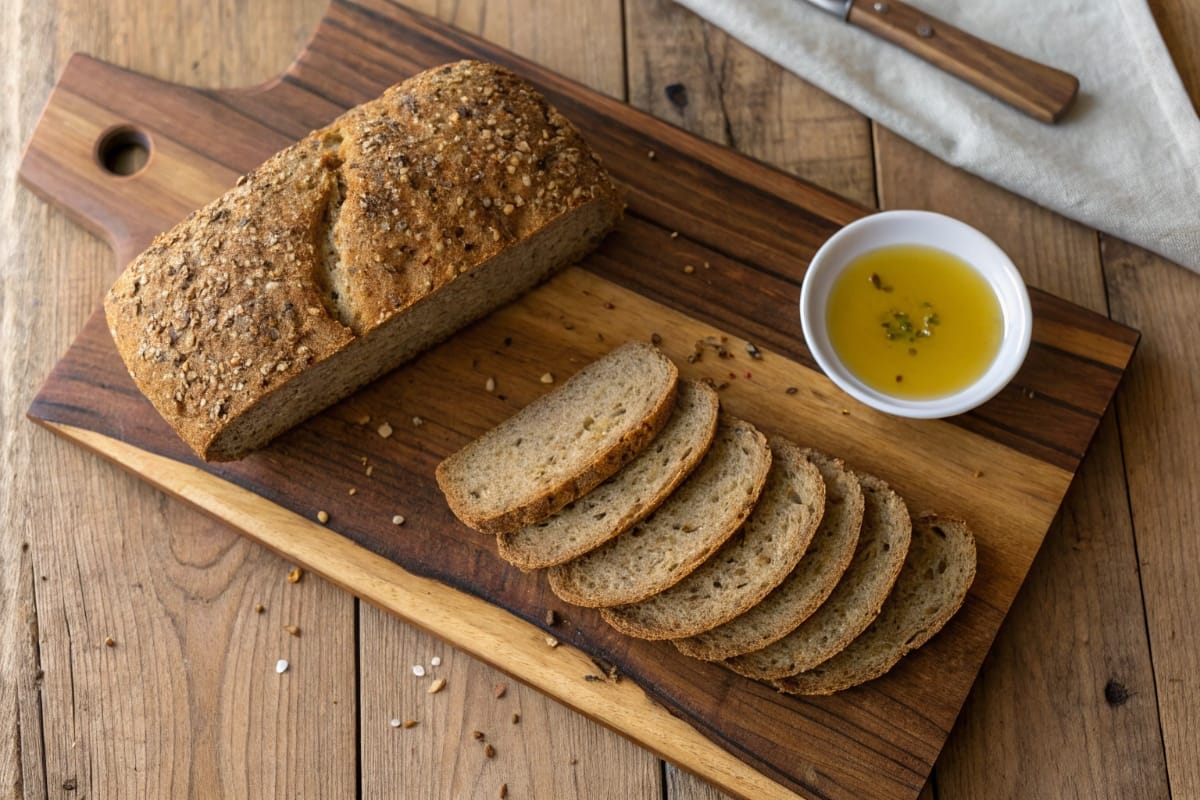
This easy Ezekiel bread recipe shows you how to bake a dense, nutty sprouted-style loaf at home using a mix of whole grains and legumes. Inspired by the biblical list in Ezekiel 4:9—wheat, barley, beans, lentils, millet, and spelt—modern Ezekiel bread uses those grains and pulses in more practical ratios so you can slice and toast it like everyday bread.:contentReference[oaicite:0]{index=0} If you want a hearty bread with more protein and fiber than standard white or wheat bread, this Ezekiel bread recipe gives you a good starting point without needing special equipment beyond a loaf pan and a little patience.
Quick Recipe Snapshot
Prep time: 25 minutes (plus 60–75 minutes rising)
Cook time: 35–40 minutes
Total time: About 2 hours 15 minutes
Servings: 1 loaf (about 12–14 slices)
Difficulty: Medium (similar to regular yeast bread)
You’ll find a printable recipe card with exact measurements and nutrition details at the end of this post.
Table of Contents
Ingredients for This Ezekiel Bread Recipe
This Ezekiel bread recipe uses a blend of flours that echo the grains and beans mentioned in Ezekiel 4:9 while keeping the dough manageable for home bakers.:contentReference[oaicite:1]{index=1}
Grain and Legume Flour Blend
2 cups whole wheat flour
1 cup spelt flour
1/2 cup barley flour
1/4 cup millet flour
1/4 cup lentil flour (or very finely ground dry green or brown lentils)
1/4 cup white bean flour (or very finely ground cooked, well-drained white beans)
2 tablespoons vital wheat gluten (optional, for better rise and chew)
1 1/2 teaspoons fine sea salt
Yeast and Liquid
2 1/4 teaspoons active dry yeast (1 standard packet)
2 cups warm water (about 105–110°F / 40–43°C)
3 tablespoons honey or maple syrup
2 tablespoons olive oil (plus a bit more for greasing)
Equipment
Large mixing bowl
Wooden spoon or dough whisk
9 x 5-inch (23 x 13 cm) loaf pan
Kitchen towel or plastic wrap
Cooling rack
Step-by-Step Instructions
Bloom the yeast. In a large bowl, stir together the warm water and honey or maple syrup. Sprinkle the yeast over the top and let it sit for 5–10 minutes, until the mixture looks foamy. If it does not foam, your yeast may be inactive and you should start this Ezekiel bread recipe again with fresh yeast.
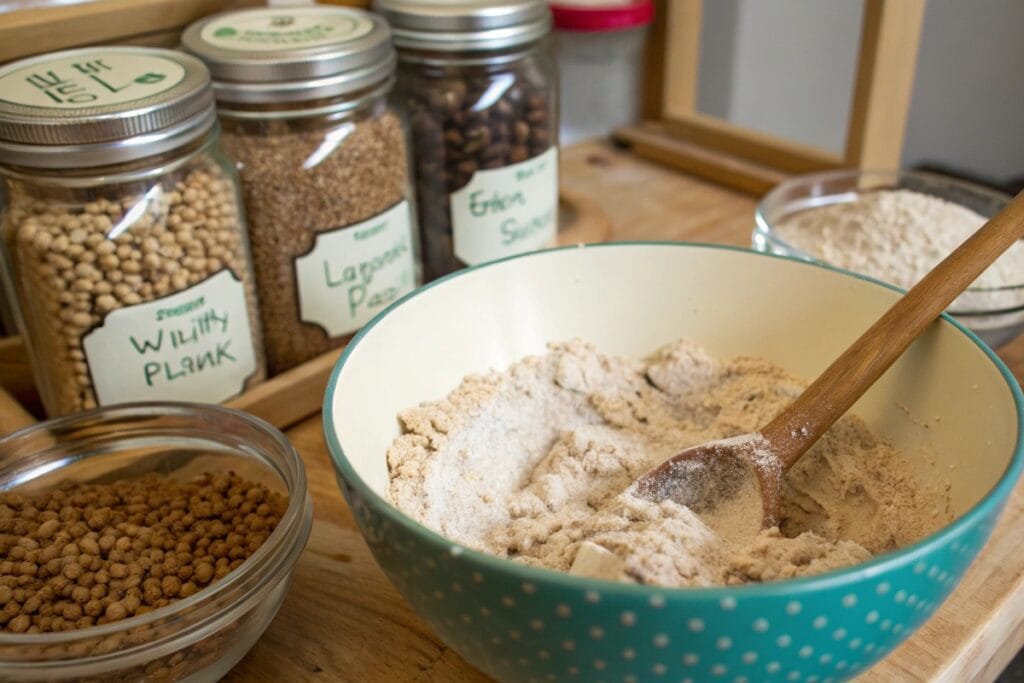
Mix the dry ingredients. In a separate bowl, whisk together the whole wheat flour, spelt flour, barley flour, millet flour, lentil flour, bean flour, vital wheat gluten (if using), and salt. This blend brings in wheat, barley, beans, lentils, and millet like the original inspiration for Ezekiel bread.:contentReference[oaicite:2]{index=2}
Combine wet and dry. Pour the olive oil into the yeast mixture. Add the flour mixture 1 cup at a time, stirring with a wooden spoon or dough whisk after each addition. When the dough becomes too thick to stir, switch to using your hands.
Knead the dough. Turn the dough onto a lightly floured surface. Knead for about 8–10 minutes, adding a small amount of flour if the dough feels very sticky. Aim for a dough that feels slightly tacky but smooth and elastic. Because this Ezekiel bread recipe uses several low-gluten flours, it will feel denser than typical white bread dough.
First rise. Lightly oil a clean bowl. Place the dough inside, turning it once to coat the surface with a thin layer of oil. Cover with a kitchen towel or plastic wrap and let it rise in a warm, draft-free spot for 60–75 minutes, or until the dough has roughly doubled in size.
Shape the loaf. Gently punch down the dough to release excess gas. Turn it out onto a lightly floured surface and press it into a rectangle roughly the length of your loaf pan. Roll the rectangle up tightly into a log, pinching the seam closed, and tuck the ends under. Place the shaped loaf seam-side down in a greased 9 x 5-inch pan.
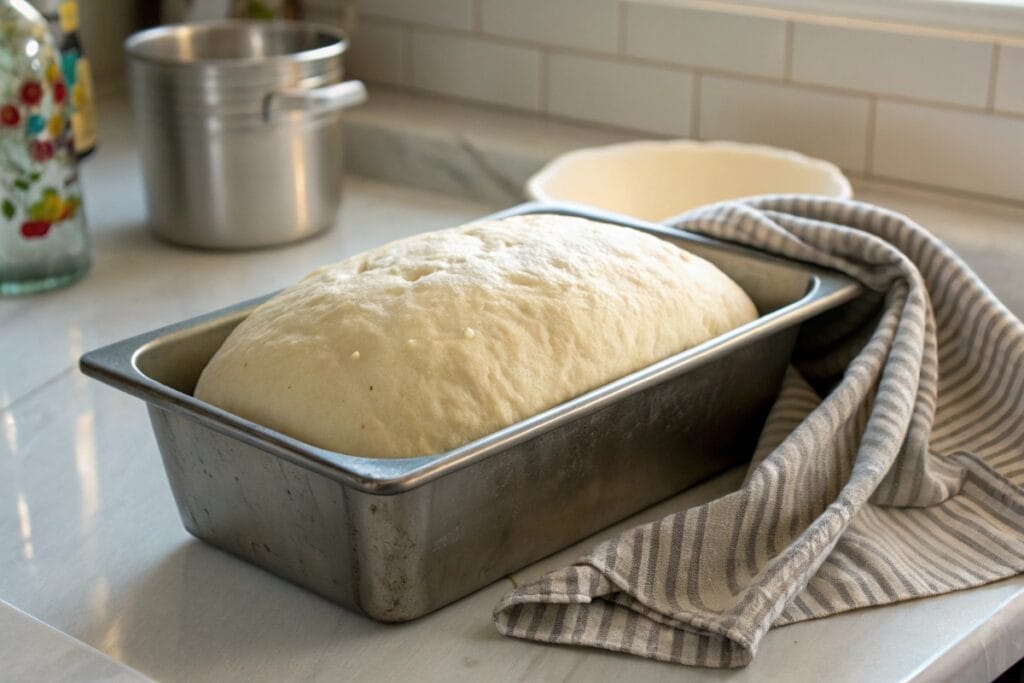
Second rise. Cover the pan loosely with a towel or plastic wrap and let the dough rise again for 30–40 minutes, until it has puffed and domes slightly over the top of the pan. Near the end of this proof, preheat your oven to 375°F (190°C).
Bake the Ezekiel bread. Bake for 35–40 minutes, until the top is deep golden brown and the loaf sounds hollow when you tap it. An instant-read thermometer inserted in the center should read about 200–205°F (93–96°C).
Cool completely. Remove the pan from the oven and let the loaf cool in the pan for 5–10 minutes. Carefully turn it out onto a cooling rack and let it cool completely before slicing. This helps the Ezekiel bread recipe hold together and prevents gummy slices.
Slice and serve. Once cool, slice the bread with a sharp serrated knife. Enjoy it plain, toasted, or topped with your favorite spreads. This loaf works well for hearty toast, open-faced sandwiches, or alongside soups and salads.
Tips & Variations
Use sprouted flours if you have them. To move this Ezekiel bread recipe closer to the popular store-bought version, use sprouted whole wheat, sprouted spelt, or other sprouted grain flours where you can. Sprouting can increase some vitamins and lower the glycemic impact compared with unsprouted flours.
Make it fully vegan. Ezekiel bread itself is usually vegan, but some recipes use honey. If you want a fully plant-based Ezekiel bread recipe, swap the honey for maple syrup or date syrup and brush the loaf with olive oil instead of butter after baking.
Boost the protein and crunch. Fold 2–3 tablespoons of hemp seeds, sunflower seeds, or pumpkin seeds into the dough at the end of kneading for a little extra protein and texture. Just avoid adding too many mix-ins or the loaf may not rise as well.
Try mini loaves or rolls. Divide the dough into smaller loaf pans or shape into rolls if you want built-in portion control. Reduce the bake time and watch closely; smaller shapes cook faster than a full-size Ezekiel bread recipe.
Play with flavor. Add a teaspoon of cinnamon and a tablespoon of molasses for a darker, breakfast-style loaf, or keep it plain and savory for sandwiches and toast with eggs.
Serving Suggestions
Once you have a fresh Ezekiel bread recipe on your counter, it becomes a flexible base for meals and snacks.
High-fiber breakfast toast: Toast a slice and top it with nut butter and sliced banana for a filling breakfast that balances carbs with protein and healthy fat. For more ideas, you can pair it with a batch of high-protein banana muffins to stock your breakfast lineup.
Soup and salad nights: Serve warm slices with a big bowl from your favorite vegan soup recipes collection or a colorful salad. The hearty texture of this Ezekiel bread recipe stands up well to dipping.
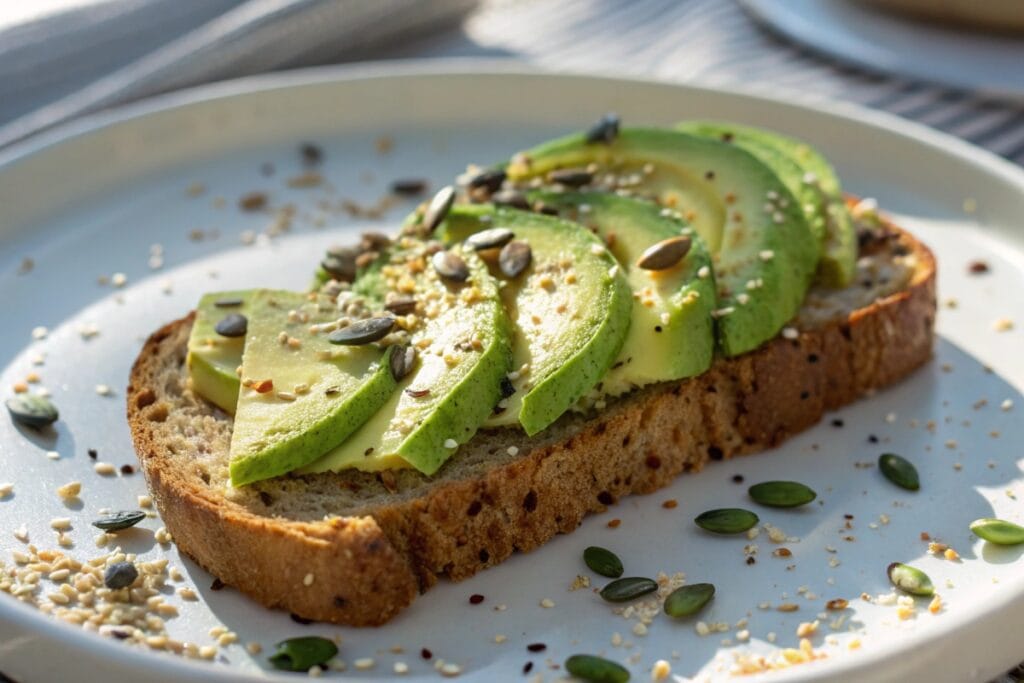
Snack plates and mini sandwiches: Cut thin slices, toast them well, and top with hummus, avocado, or cottage cheese for easy snack plates.
Weekend brunch: Use slightly thicker slices for avocado toast or eggs-on-toast, alongside a fresh drink pulled from the site’s juicing recipes.
Balanced dessert plate: Offer small toasted pieces with fruit and a square of dark chocolate, or enjoy a slice next to a sweet bake like the vegan banana bread recipe when you want a mix of wholesome and cozy.
Storage & Reheating
Room temperature: Store your Ezekiel bread recipe loaf, once fully cooled, in an airtight container or bread box at room temperature for 2–3 days. Because it contains no preservatives, it will not last as long as many store-bought loaves.
Refrigerator: If your kitchen runs warm or you want to stretch freshness, refrigerate sliced bread in a sealed bag for up to 5–6 days. Toast slices straight from the fridge to bring back softness and flavor.
Freezer: For longer storage, slice the loaf, place parchment between slices, and freeze in a freezer bag for up to 2–3 months. Pull out individual slices as needed.
Reheating and toasting: Toast thawed or frozen slices in a toaster or toaster oven until warm and crisp. You can also brush slices lightly with oil and toast them in a skillet over medium heat.
Nutrition Highlights
Exact nutrition will vary based on your specific grain and legume flours, but homemade Ezekiel-style bread typically lands in a similar range to the well-known store-bought Ezekiel 4:9 bread. One slice (about 34 g) of that bread provides around 80 calories, 4 g protein, 15 g carbs, 3 g fiber, and less than 1 g fat.
Approximate per slice of this loaf (1/14 of the recipe):
Calories: ~95–110
Protein: ~4–5 g
Carbohydrates: ~20–22 g
Fiber: ~3–4 g
Fat: ~1.5–2 g
Because this Ezekiel bread recipe uses whole grains and legumes, it tends to offer more protein, fiber, and certain vitamins and minerals than white bread made from refined flour. Sprouting (if you use sprouted flours) may also reduce antinutrients and lower the glycemic index, which can help some people with blood sugar control, though it is still a carbohydrate-rich food. Remember that Ezekiel bread still contains gluten and is not safe for people with celiac disease or a diagnosed wheat allergy.
If you want to read a thorough overview from a registered dietitian, this Healthline article on Ezekiel bread explains how sprouted bread compares nutritionally with standard options.
Why This Recipe Matters to Me
When I first learned about Ezekiel bread, it was sitting in the freezer section with a hefty price tag. I loved the idea of a bread built from whole grains and legumes, but I wanted to understand how it worked and whether I could make something similar at home. Creating this Ezekiel bread recipe became a way to blend that curiosity with a practical, everyday loaf.
I appreciate that it feels substantial and nourishing without a long ingredient list. It is not a magic health food, but it offers more texture, flavor, and staying power than many standard sandwich breads. Sharing a homemade version means you can control the ingredients, adjust the flavor, and enjoy a slice warm from your own oven.
FAQ About Ezekiel Bread Recipe
What are the ingredients to Ezekiel bread?
The idea behind Ezekiel bread comes from Ezekiel 4:9, which lists wheat, barley, beans, lentils, millet, and spelt mixed together to make bread. Modern Ezekiel bread brands and homemade recipes follow that pattern by combining sprouted grains (like wheat, barley, spelt, and sometimes millet) with sprouted lentils and beans. Many versions also add water, salt, and yeast, and sometimes a small amount of sweetener or oil to help the dough rise and stay moist. Bottom line: An Ezekiel bread recipe usually uses a blend of whole grains and legumes—often sprouted—plus water, yeast, and salt.
Is Ezekiel bread actually healthy?
Compared with white bread made from refined flour, sprouted grain breads like Ezekiel bread often provide more protein, fiber, and certain vitamins and minerals. Sprouting can reduce some antinutrients and may lower the glycemic index, so blood sugar rises more slowly. However, Ezekiel bread still contains carbohydrates and gluten, so it is not low-carb and it is not safe for people with celiac disease or a wheat allergy. Bottom line: Ezekiel bread can be a nutrient-dense choice for many people, but it is still bread and not a cure-all, and it does not work for gluten-free diets.
What is the Ezekiel bread in the Bible?
In the Bible, Ezekiel 4:9 describes God instructing the prophet Ezekiel to take wheat, barley, beans, lentils, millet, and spelt, put them in one vessel, and make bread from them. That bread was part of a symbolic act tied to a difficult prophetic message, not a modern wellness product. Today’s Ezekiel bread recipes take inspiration from that grain and legume combination but change the ratios, fermentation, and baking methods to create a practical loaf for everyday eating. Bottom line: Biblical Ezekiel bread refers to a multi-grain, multi-legume bread from Ezekiel 4:9, which modern Ezekiel bread recipes adapt for regular baking.
What is better for you, sourdough bread or Ezekiel bread?
Both sourdough and Ezekiel-style sprouted bread can be solid choices compared with refined white bread. Sourdough’s fermentation can improve digestibility, lower the glycemic index, and reduce some antinutrients, especially when you make it with whole grains. Ezekiel bread, made from sprouted grains and legumes, tends to be higher in fiber and protein with a dense texture and may also have a lower glycemic impact for some people. Bottom line: Sourdough and Ezekiel bread each have strengths; the “better” option depends on your digestion, blood sugar goals, and taste preferences.
Is Ezekiel bread gluten-free?
No, traditional Ezekiel bread is not gluten-free. It contains wheat, barley, and spelt, all of which are gluten-containing grains. Even though sprouting can change the way grains behave in your body, it does not remove enough gluten to make this bread safe for people with celiac disease or a medically diagnosed gluten sensitivity. If you need to avoid gluten, you are better off choosing breads specifically made with gluten-free grains and labeled gluten-free. Bottom line: Classic Ezekiel bread recipes are not gluten-free, so anyone with celiac disease or a wheat allergy should choose a different bread.
More Recipes You’ll Love
If you enjoy baking this Ezekiel bread recipe and want more ideas for high-fiber or high-protein meals and snacks, you might like these recipes on HealthyAmericanBites.com:
For more ways to use whole grains, the high-protein banana muffins offer a satisfying, portable breakfast that pairs well with a slice of toast.
If you are looking for plant-based mains that still feel cozy, browse the site’s vegan casserole recipes and serve them with thick slices of Ezekiel-style bread.
To round out a nourishing meal with something sweet, the vegan dessert recipes collection includes options that complement this hearty loaf without going overboard.
And if you want to learn more about protein-rich foods beyond grains and legumes, the high-protein foods guide breaks down practical options you can add alongside your homemade bread.
Final Thoughts
Baking your own Ezekiel bread recipe at home turns a freezer-aisle staple into something familiar and manageable. You get a dense, flavorful loaf built from whole grains and legumes that fits into many balanced eating patterns. It is not perfect for every situation—especially if you need to avoid gluten—but it can be a satisfying alternative to softer, more processed breads. Try the recipe once as written, then adjust the grains, sweetness, and shape until it fits the way you like to eat and the meals you already love to make.
This Ezekiel bread recipe is a hearty, homemade loaf inspired by the grain and legume blend in Ezekiel 4:9. Whole wheat, spelt, barley, millet, lentils, and beans come together to create a dense, nutty bread with more texture than standard sandwich loaves. The dough uses yeast and a simple rise-and-bake method, so you do not need a sourdough starter or special equipment. Slice it for toast, serve it with soups and salads, or freeze extra slices for quick high-fiber breakfasts.
Total Time:2 hours 15 minutes
Yield:1 loaf (12–14 slices)
Ingredients
Scale
2 cups whole wheat flour
1 cup spelt flour
1/2 cup barley flour
1/4 cup millet flour
1/4 cup lentil flour (or finely ground dry lentils)
1/4 cup white bean flour (or finely ground cooked white beans)
2 tablespoons vital wheat gluten (optional)
1 1/2 teaspoons fine sea salt
2 1/4 teaspoons active dry yeast (1 packet)
2 cups warm water (about 105–110°F)
3 tablespoons honey or maple syrup
2 tablespoons olive oil (plus extra for greasing)
Instructions
1. In a large bowl, stir together the warm water and honey or maple syrup, then sprinkle the yeast over the top and let it sit for 5–10 minutes until foamy.
2. In a separate bowl, whisk together the whole wheat flour, spelt flour, barley flour, millet flour, lentil flour, bean flour, vital wheat gluten if using, and salt.
3. Pour the olive oil into the yeast mixture, then add the flour mixture 1 cup at a time, stirring after each addition until a shaggy dough forms.
4. Turn the dough onto a lightly floured surface and knead for 8–10 minutes, adding just enough extra flour to keep it from sticking, until the dough feels smooth and slightly tacky.
5. Lightly oil a clean bowl, place the dough inside, turn it to coat, and cover with a towel or plastic wrap; let it rise in a warm place for 60–75 minutes, or until roughly doubled in size.
6. Punch down the dough gently, then turn it out onto a floured surface and press it into a rectangle about the length of your loaf pan.
7. Roll the dough up tightly into a log, pinch the seam closed, tuck the ends under, and place it seam-side down in a greased 9 x 5-inch loaf pan.
8. Cover the pan and let the dough rise again for 30–40 minutes, until it domes slightly above the rim of the pan; meanwhile, preheat the oven to 375°F (190°C).
9. Bake the loaf for 35–40 minutes, until the top is deep golden and the bread sounds hollow when tapped or registers about 200–205°F in the center.
10. Cool the bread in the pan for 5–10 minutes, then transfer to a cooling rack and let it cool completely before slicing.
Notes
Because this bread uses several low-gluten flours, it will feel denser than typical white bread; using vital wheat gluten helps it rise better.
If you prefer a fully vegan Ezekiel bread, use maple syrup instead of honey and brush the crust with olive oil rather than butter.
For extra texture and protein, fold a few tablespoons of seeds such as sunflower or pumpkin into the dough near the end of kneading.
Store the cooled loaf at room temperature for 2–3 days, refrigerate slices up to 5–6 days, or freeze sliced bread for up to 2–3 months.
Toast slices before serving to bring out the flavor and improve the texture, especially if the bread has been refrigerated or frozen.
Author:Adam Moretti
Prep Time:25 minutes
Cook Time:40 minutes
Category:Bread
Method:Baked, Yeast Bread
Cuisine:American, Inspired by Biblical
Reviewed recipe options
Make this recipe fit me
Choose one of seven popular diet options. NutriMatch will confirm whether the recipe already fits, show a reviewed adaptation when available, or recommend recipes that match your choice.
Please choose a diet first.
Already a reviewed match
This recipe already fits Dairy-Free.
No changes are needed based on its reviewed NutriMatch classification. Check the complete ingredients, product labels, and serving details for your own needs.
Recipe details, product formulas, and cross-contact information can change. Confirm current labels and use professional guidance when medically necessary.
Not available for this recipe
This recipe cannot currently be made Gluten-Free with a reviewed adaptation.
NutriMatch will not guess at substitutions. Try one of these recipes that is already reviewed for your choice.
Recipe details, product formulas, and cross-contact information can change. Confirm current labels and use professional guidance when medically necessary.
Not available for this recipe
This recipe cannot currently be made High Protein with a reviewed adaptation.
NutriMatch will not guess at substitutions. Try one of these recipes that is already reviewed for your choice.
Recipe details, product formulas, and cross-contact information can change. Confirm current labels and use professional guidance when medically necessary.
Not available for this recipe
This recipe cannot currently be made Keto with a reviewed adaptation.
NutriMatch will not guess at substitutions. Try one of these recipes that is already reviewed for your choice.
Recipe details, product formulas, and cross-contact information can change. Confirm current labels and use professional guidance when medically necessary.
Not available for this recipe
This recipe cannot currently be made Low Carb with a reviewed adaptation.
NutriMatch will not guess at substitutions. Try one of these recipes that is already reviewed for your choice.
Recipe details, product formulas, and cross-contact information can change. Confirm current labels and use professional guidance when medically necessary.
Use the reviewed substitutions below to prepare a Vegan version while keeping the original recipe's basic method.
Ingredient swaps
3 tablespoons honey or maple syrupUse 3 tablespoons maple syrup
Instruction changes
Use maple syrup to activate the yeast mixture and continue with the original rise and bake method.
Check: Confirm every packaged substitute, sauce, seasoning, and topping is vegan; product formulas and processing aids can vary.
Use these reviewed changes with the original ingredient quantities and instructions above. The original recipe card stays unchanged.
Recipe details, product formulas, and cross-contact information can change. Confirm current labels and use professional guidance when medically necessary.
Already a reviewed match
This recipe already fits Vegetarian.
No changes are needed based on its reviewed NutriMatch classification. Check the complete ingredients, product labels, and serving details for your own needs.
Recipe details, product formulas, and cross-contact information can change. Confirm current labels and use professional guidance when medically necessary.