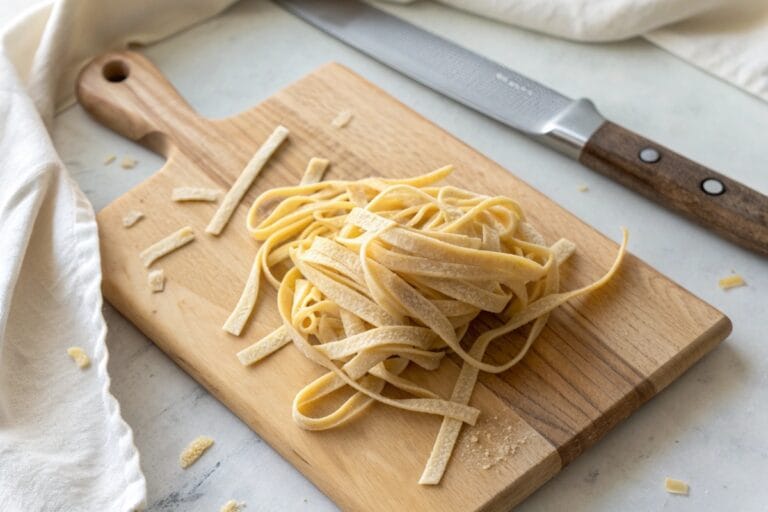
If you miss real pasta nights because of gluten, this gluten free pasta recipe brings them back in a big way. You only need a good gluten-free flour blend, eggs, and a little binder to get silky, tender noodles you can roll by hand or run through a pasta machine. The dough comes together quickly and cooks in just a few minutes, so it works even on a weeknight. This recipe includes tricks to avoid mushy noodles, plus tips for getting that satisfying al dente bite that gluten-free pasta often lacks.
Quick Recipe Snapshot
Prep time: 25 minutes (including resting and rolling)
Cook time: 3–4 minutes per batch
Total time: 40–45 minutes
Servings: 4 (about 4 moderate pasta portions)
Difficulty: Medium
Diet type: Gluten-Free
You’ll find a printable recipe card with exact measurements and nutrition details at the end of this post.
1 1/2 teaspoons xanthan gum (reduce or omit if your blend already contains it)
3 large eggs, at room temperature
1 tablespoon extra-virgin olive oil
1/2 teaspoon fine sea salt
1–3 tablespoons warm water, as needed
Extra gluten-free flour, for dusting the counter and dough
For cooking the pasta
4–5 quarts water
1 1/2–2 tablespoons salt (the water should taste like the sea)
Gluten Free Pasta Recipe
Step-by-Step Instructions
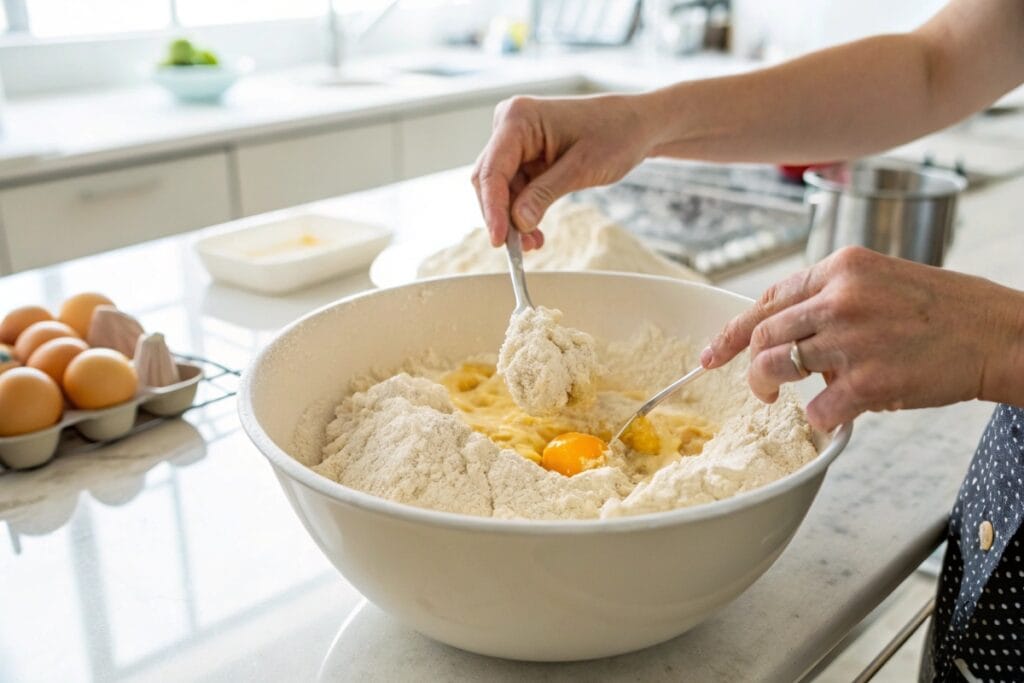
Mix the dry ingredients. In a large bowl, whisk together the gluten-free flour blend, xanthan gum (if using), and salt until evenly combined.
Make a well and add eggs. Use your hand or a spoon to make a well in the center. Crack in the eggs and add the olive oil.
Bring the dough together. Use a fork to gently beat the eggs and oil, gradually pulling flour from the sides into the center until a shaggy dough forms.
Adjust the moisture. Switch to your hands and gently press the dough together. If it feels dry or crumbly, add 1 tablespoon of warm water at a time, kneading gently until it just comes together in a smooth ball. Gluten-free flours keep absorbing liquid, so stop while it still feels slightly soft.
Rest briefly (but not too long). Wrap the dough ball in plastic wrap or cover it with an upside-down bowl and let it sit for about 5–10 minutes. This short rest helps the flour hydrate; longer rests can make some gluten-free doughs stiff and harder to roll.
Divide the dough. Unwrap and cut the dough into 4 equal pieces. Keep the pieces you’re not working with covered so they don’t dry out.
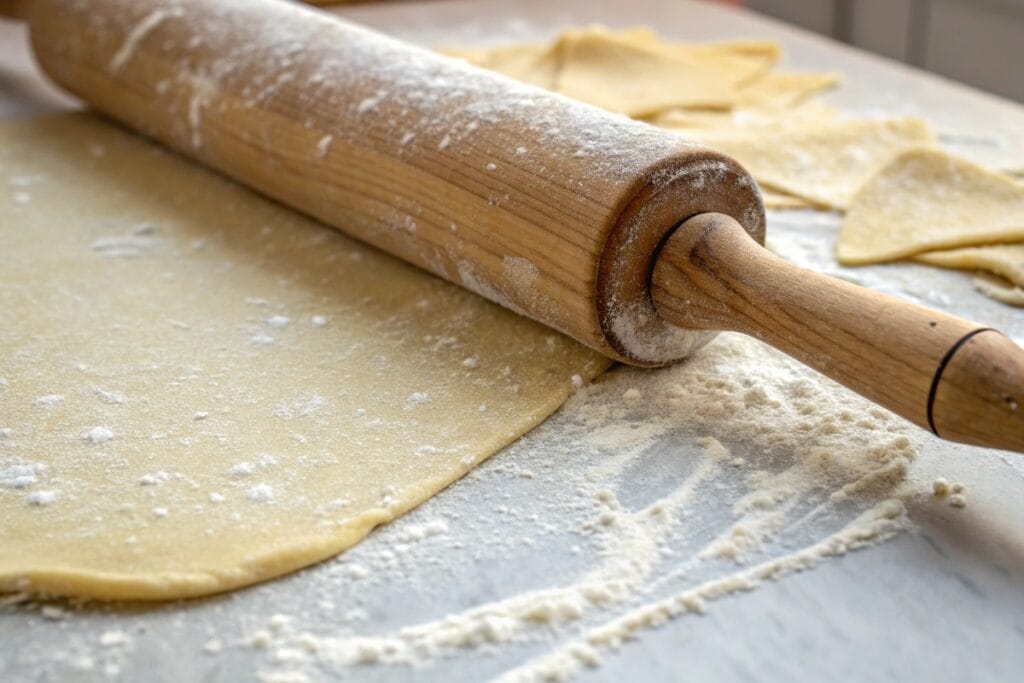
Roll the dough. Lightly dust your counter and rolling pin (or pasta machine) with gluten-free flour. Flatten one piece into a rectangle and roll from the center outward, adding only tiny pinches of flour as needed to prevent sticking. Aim for about 1/16 inch thickness for fettuccine-style noodles.
Cut into noodles. For hand-cut pasta, lightly dust the sheet with flour, roll it into a loose log, and slice into strips (fettuccine or pappardelle width). Gently unfurl the strands and toss them with a little flour so they don’t stick.
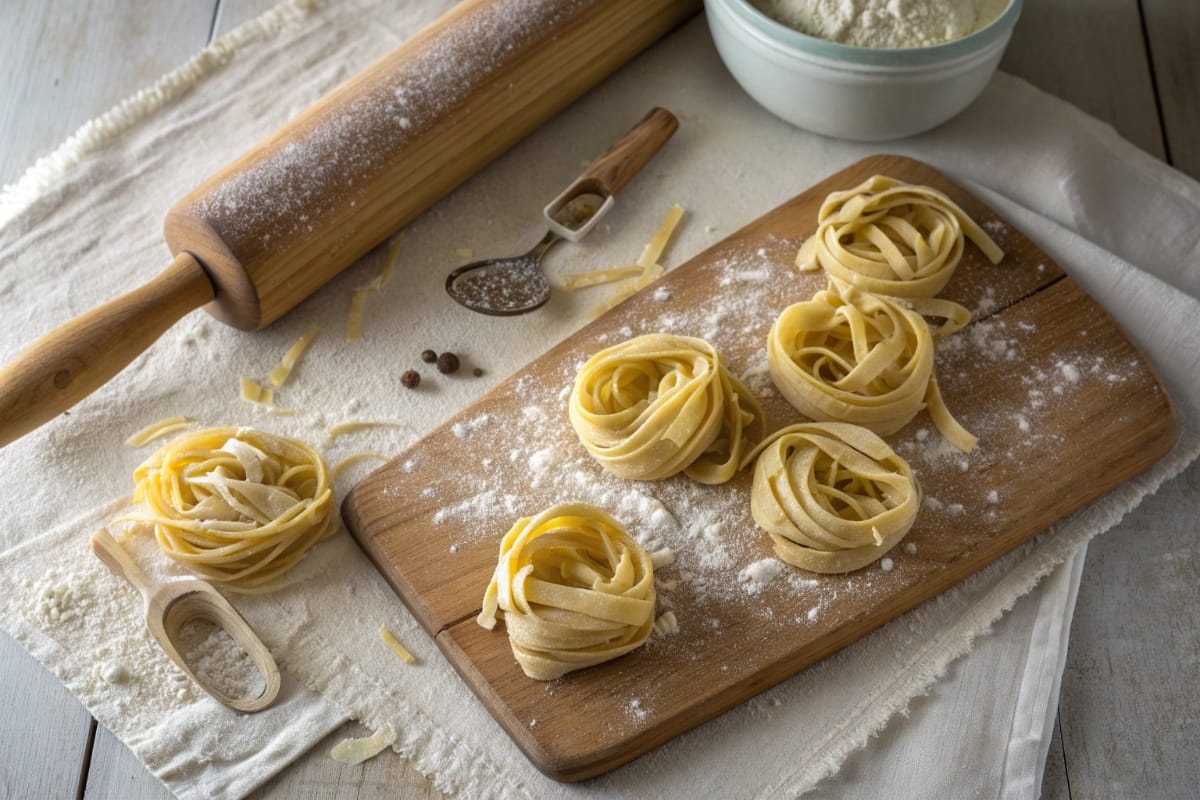
Repeat with the remaining dough. Lay the cut noodles in loose nests on a floured tray while you finish the rest of the dough.
Boil the water. Bring a large pot of well-salted water to a rolling boil. Gluten-free pasta needs plenty of water and salt for the best flavor and texture.
Cook the pasta. Add the noodles, gently stirring for the first 30–60 seconds to prevent clumping. Fresh gluten-free pasta cooks fast—usually 3–4 minutes. Start tasting at the 3-minute mark and stop when the pasta is al dente, with a slight bite in the center.
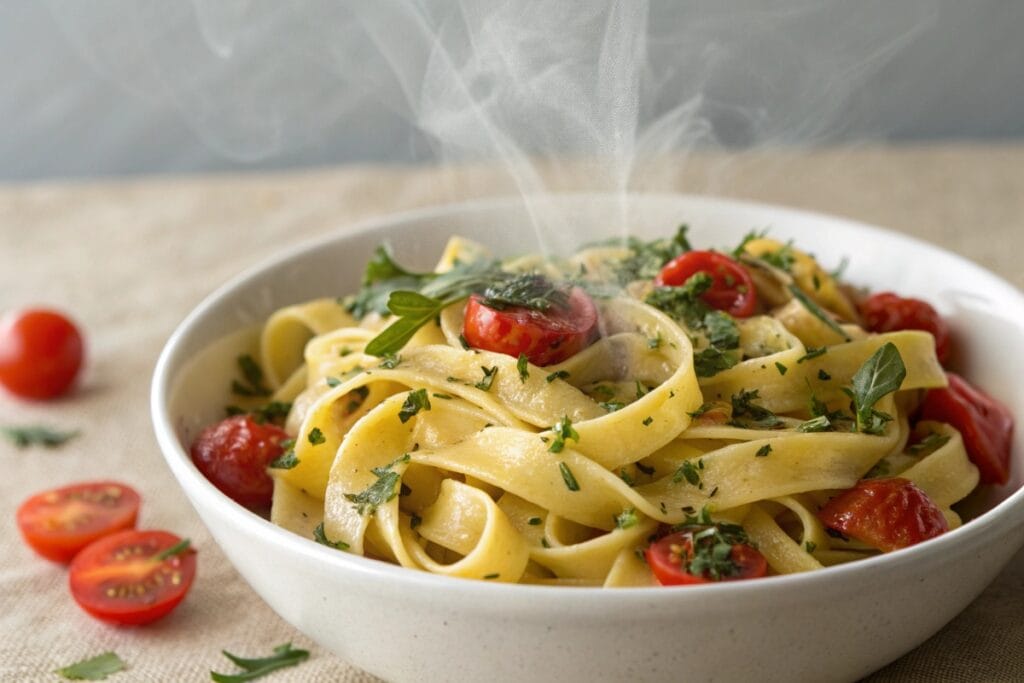
Drain and serve. Reserve a cup of starchy pasta water, then drain the noodles. Toss immediately with warm sauce, adding a splash of pasta water if needed to help the sauce cling.
Gluten Free Pasta Recipe
Tips & Variations
Choose the right flour blend. A good all-purpose gluten-free flour blend made from rice flour, corn flour, and starches (and sometimes sorghum or buckwheat) gives the most reliable texture. Many bakers like 1:1 blends (such as those from King Arthur or Bob’s) because they’re balanced for structure and tenderness.
Don’t overwork the dough. Traditional pasta needs vigorous kneading to build gluten; gluten-free dough does not. Mix only until the dough is smooth and cohesive. Too much kneading can make it tough instead of tender.
Control stickiness with flour and water. If the dough sticks badly to your hands or counter, dust very lightly with more flour. If it cracks or breaks, it likely needs a few drops more water. Gluten-free flours soak up liquid over time, so make small adjustments and re-check.
Add flavor to the dough. Mix 1–2 teaspoons of dried Italian herbs, garlic powder, or lemon zest into the dry ingredients for extra flavor. This works especially well if you plan to keep the sauce simple, like olive oil and herbs.
Make it dairy-free. This recipe is naturally dairy-free as long as your flour blend does not contain milk powder. Serve the noodles with dairy-free sauces like a vegan Alfredo or olive oil-based mushroom sauce.
Prep ahead. You can refrigerate cut, uncooked noodles on a floured tray covered loosely with plastic for up to 24 hours, or freeze them in nests. Cook from chilled or frozen, adding 1–2 extra minutes and testing often.
Serving Suggestions
Classic Italian-style dinner Toss your gluten-free pasta with a simple tomato sauce, sautéed garlic and olive oil, or a creamy dairy-free sauce like your own vegan Alfredo sauce recipe for a cozy pasta night.
Protein-packed meal Add grilled chicken, shrimp, or white beans plus a big handful of spinach or kale. A high-protein topping with extra veggies helps balance the carbs in the pasta and keeps the meal satisfying.
Comfort food casseroles Turn cooked gluten-free noodles into baked dishes inspired by your favorite vegan casserole recipes or gluten-free pasta bakes. Just undercook the pasta slightly so it finishes in the oven.
Light but filling lunch Cool the noodles slightly and toss with olive oil, lemon, chopped herbs, and leftover roasted vegetables. For a heartier twist, add chickpeas or grilled tofu.
Pasta and dessert night Finish your meal with something sweet from your gluten-free desserts collection for a fully gluten-free Italian-style dinner at home.
Storage & Reheating
Storing fresh dough Wrap the dough tightly in plastic and refrigerate for up to 24 hours. It may firm up slightly; if it feels stiff when you take it out, knead in a teaspoon or two of warm water to soften before rolling.
Storing cut, uncooked noodles Arrange noodles in loose nests on a floured baking sheet. Cover lightly and refrigerate up to 24 hours. For longer storage, freeze until solid, then transfer to a freezer bag. Use within 1–2 months.
Storing cooked pasta Toss hot, drained noodles with a little olive oil to prevent sticking. Cool completely, then store in an airtight container in the fridge for up to 3 days.
Reheating For best texture, reheat cooked gluten-free pasta by dropping it into simmering water for 30–60 seconds, then adding it directly to warm sauce. Or warm gently in a skillet with sauce and a splash of water, stirring just until heated through.
Nutrition Highlights (per serving, without sauce)
Approximate values for 1 of 4 servings:
Calories: ~270
Protein: ~9 g
Carbohydrates: ~40 g
Fat: ~7 g
Fiber: ~2 g
Sugar: ~1 g
Gluten free pasta is still a higher-carb food, but making it from scratch lets you choose more nutrient-dense flour blends with brown rice, sorghum, or quinoa instead of only refined starches. Some gluten-free flour blends incorporate whole grains or legumes, which can offer more fiber and micronutrients than refined wheat flour. The Loopy Whisk
If you want to dive deeper into the science of gluten-free pasta dough and how xanthan gum and eggs replace gluten’s structure, the team at King Arthur Baking shares helpful testing notes and flour recommendations.
Gluten Free Pasta Recipe
Why This Recipe Matters to Me
When someone in my family first had to cut out gluten, pasta nights were the hardest thing to replace. We tried every boxed gluten-free pasta out there—some were decent, but many turned mushy or broke apart. I grew up on big bowls of pasta as comfort food, so losing that felt like losing a tradition. Learning to make a reliable gluten free pasta recipe at home changed everything. We could sit around the table again with the same dish in everyone’s bowl, not a “special” plate off to the side. This dough is my way of keeping that shared comfort while still taking care of our health needs.
FAQ About Gluten Free Pasta Recipe
What is the best flour for gluten-free pasta?
The best flour for gluten-free pasta is usually a high-quality all-purpose gluten-free blend rather than a single flour. Blends that combine rice flour, corn or corn flour, and starches like tapioca or potato create a balance of tenderness and structure. Some bakers suggest a 50/50 blend of rice flour and corn flour for a great base, while others prefer commercial 1:1 blends from brands like King Arthur or Bob’s. Whatever you choose, make sure it’s designed for baking and pair it with xanthan gum if the blend doesn’t already include it. Bottom line: use a balanced gluten-free flour blend plus a binder, not a single starch.
Is there a trick to cooking gluten-free pasta?
Yes—technique matters more than with regular pasta. Use a large pot with plenty of water and salt it generously so the water tastes like the sea. Add the pasta only after the water reaches a full boil, and stir often in the first couple of minutes to prevent sticking. Most gluten-free pasta cooks faster than wheat-based versions, so ignore the box time and start tasting early to keep it al dente instead of mushy. You don’t need to soak the pasta first; direct boiling works best. Bottom line: lots of water, lots of salt, frequent stirring, and careful timing are the secrets.
What are the three ingredients in gluten-free pasta recipe?
Most simple gluten-free pasta recipes rely on three core ingredients: a gluten-free flour blend, eggs, and a binder like xanthan gum. The flour provides bulk and starch, the eggs add protein and richness, and xanthan gum mimics gluten’s elasticity so the dough doesn’t crumble. Some recipes fold salt and olive oil into the dough as flavor and texture boosters, but the flour–egg–xanthan combo forms the base you’ll see in many 3-ingredient style recipes. Bottom line: think flour blend + eggs + xanthan gum as your three-ingredient foundation.
What are the common mistakes when making gluten-free pasta?
Common mistakes include using the wrong flour (like only starch or only brown rice), adding too little liquid so the dough cracks, or overcompensating and making it sticky and hard to roll. Many people also knead the dough as aggressively as wheat dough, which can make gluten-free dough tough instead of elastic. Letting the dough rest too long can cause it to stiffen, and over-flouring the surface while rolling can dry it out. On the cooking side, under-salting the water, not stirring enough at the beginning, and overcooking the noodles all lead to disappointing texture. Bottom line: choose the right blend, hydrate enough, handle gently, and don’t overcook.
Can I make this gluten-free pasta recipe without eggs?
You can make egg-free gluten-free pasta, but it needs a slightly different formula. Many vegan versions rely on a stronger binder such as psyllium husk or xanthan gum plus extra water or plant milk for moisture. The dough tends to be more delicate, so rolling it slightly thicker and cooking it just until tender helps it hold together. If you’re fully plant-based, pair egg-free pasta with rich sauces like a vegan Alfredo or mushroom ragù to make the meal satisfying. Bottom line: yes, but expect a more fragile dough and follow egg-free pasta formulas closely.
More Recipes You’ll Love
Once you master this gluten free pasta recipe, you may want more ideas for meals that fit your dietary needs, starting with your collection of gluten-free recipes for easy main dishes and sides.
On nights when you want a classic Italian vibe without the dairy, toss your noodles with creamy sauce inspirations from your vegan Italian recipes and this silky vegan Alfredo sauce recipe.
If you love the texture of homemade noodles, try another style by exploring your gluten-free egg noodles recipe for soups and casseroles.
For something sweet after pasta night, finish with a treat from your gluten-free desserts collection so the whole meal stays gluten-free from start to finish.
Final Thoughts ‘Gluten Free Pasta Recipe’
Homemade gluten free pasta feels like a project, but once you make it a couple of times, it becomes a comforting ritual that’s easier than you expect. Start with this basic dough, learn how it should feel in your hands, and then play with different flour blends, shapes, and sauces. Keep exploring the gluten-free and Italian-inspired recipes on HealthyAmericanBites.com to build a set of reliable, feel-good meals you can turn to any night of the week.
This gluten free pasta recipe uses a simple homemade dough so you can roll and cut fresh noodles in your own kitchen. A good gluten-free flour blend, eggs, and xanthan gum create tender pasta that holds together in boiling water. You’ll get tips for adjusting the dough texture, rolling it thin, and cooking it al dente without turning it mushy. Use these noodles with any of your favorite sauces for an easy, cozy pasta night.
1 1/2 teaspoons xanthan gum (reduce or omit if your blend already contains it)
3 large eggs, at room temperature
1 tablespoon extra-virgin olive oil
1/2 teaspoon fine sea salt
1–3 tablespoons warm water, as needed
Extra gluten-free flour, for dusting
4–5 quarts water, for boiling
1 1/2–2 tablespoons salt, for the cooking water
Instructions
1. In a large bowl, whisk together the gluten-free flour blend, xanthan gum (if using), and fine sea salt.
2. Make a well in the center and add the eggs and olive oil, then use a fork to gradually pull flour into the wet ingredients until a shaggy dough forms.
3. Switch to your hands and gently press the dough together, adding 1 tablespoon of warm water at a time if it feels dry or crumbly, until it forms a smooth, soft ball.
4. Wrap the dough in plastic wrap or cover the bowl and let it rest for 5–10 minutes to finish hydrating.
5. Unwrap the dough and cut it into 4 equal pieces, keeping the pieces you are not working with covered so they do not dry out.
6. Lightly flour your work surface and rolling pin with gluten-free flour, then roll one piece of dough into a thin sheet about 1/16 inch thick.
7. Dust the sheet lightly with flour, roll it into a loose log, and slice into strips for fettuccine or your desired width, then unfurl and toss lightly with flour.
8. Repeat the rolling and cutting process with the remaining pieces of dough, arranging the noodles in loose nests on a floured tray.
9. Bring 4–5 quarts of water and 1 1/2–2 tablespoons salt to a rolling boil in a large pot.
10. Add the gluten-free pasta, gently stirring for the first 30–60 seconds to prevent sticking, and cook for 3–4 minutes or until al dente.
11. Reserve a cup of starchy pasta water, then drain the noodles and toss immediately with your favorite sauce, adding a splash of pasta water if needed to loosen the sauce.
12. Serve right away while hot, and enjoy your homemade gluten-free pasta with desired toppings.
Notes
Use a high-quality all-purpose gluten-free flour blend for the best texture; add xanthan gum only if your blend does not already include it.
Gluten-free dough does not need heavy kneading; mix just until smooth to avoid a tough texture.
If the dough cracks or feels dry while rolling, mist or brush lightly with water and let it sit for a minute before rolling again.
Fresh gluten-free pasta cooks quickly, so start tasting at the 3-minute mark and stop as soon as the noodles are al dente.
You can refrigerate cut, uncooked noodles for up to 24 hours or freeze them in floured nests and cook from frozen with 1–2 extra minutes of boiling time.
Author:Adam Moretti
Prep Time:25 minutes
Cook Time:15 minutes
Category:Main Dish
Method:Stovetop
Cuisine:Italian
Gluten Free Pasta Recipe
Reviewed recipe options
Make this recipe fit me
Choose one of seven popular diet options. NutriMatch will confirm whether the recipe already fits, show a reviewed adaptation when available, or recommend recipes that match your choice.
Please choose a diet first.
Already a reviewed match
This recipe already fits Dairy-Free.
No changes are needed based on its reviewed NutriMatch classification. Check the complete ingredients, product labels, and serving details for your own needs.
Recipe details, product formulas, and cross-contact information can change. Confirm current labels and use professional guidance when medically necessary.
Already a reviewed match
This recipe already fits Gluten-Free.
No changes are needed based on its reviewed NutriMatch classification. Check the complete ingredients, product labels, and serving details for your own needs.
Recipe details, product formulas, and cross-contact information can change. Confirm current labels and use professional guidance when medically necessary.
Not available for this recipe
This recipe cannot currently be made High Protein with a reviewed adaptation.
NutriMatch will not guess at substitutions. Try one of these recipes that is already reviewed for your choice.
Recipe details, product formulas, and cross-contact information can change. Confirm current labels and use professional guidance when medically necessary.
Not available for this recipe
This recipe cannot currently be made Keto with a reviewed adaptation.
NutriMatch will not guess at substitutions. Try one of these recipes that is already reviewed for your choice.
Recipe details, product formulas, and cross-contact information can change. Confirm current labels and use professional guidance when medically necessary.
Not available for this recipe
This recipe cannot currently be made Low Carb with a reviewed adaptation.
NutriMatch will not guess at substitutions. Try one of these recipes that is already reviewed for your choice.
Recipe details, product formulas, and cross-contact information can change. Confirm current labels and use professional guidance when medically necessary.
Reviewed Vegan adaptation
Vegan Gluten Free Pasta Recipe (Easy 3-Ingredient Style Dough)
Use the reviewed substitutions below to prepare a Vegan version while keeping the original recipe's basic method.
Ingredient swaps
3 large eggs, at room temperatureUse 9 tablespoons aquafaba, at room temperature
Instruction changes
Mix in the aquafaba gradually and use only enough warm water to form a firm dough; chill for 20 minutes before rolling.
Check: Confirm every packaged substitute, sauce, seasoning, and topping is vegan; product formulas and processing aids can vary.
Use these reviewed changes with the original ingredient quantities and instructions above. The original recipe card stays unchanged.
Recipe details, product formulas, and cross-contact information can change. Confirm current labels and use professional guidance when medically necessary.
Already a reviewed match
This recipe already fits Vegetarian.
No changes are needed based on its reviewed NutriMatch classification. Check the complete ingredients, product labels, and serving details for your own needs.
Recipe details, product formulas, and cross-contact information can change. Confirm current labels and use professional guidance when medically necessary.