
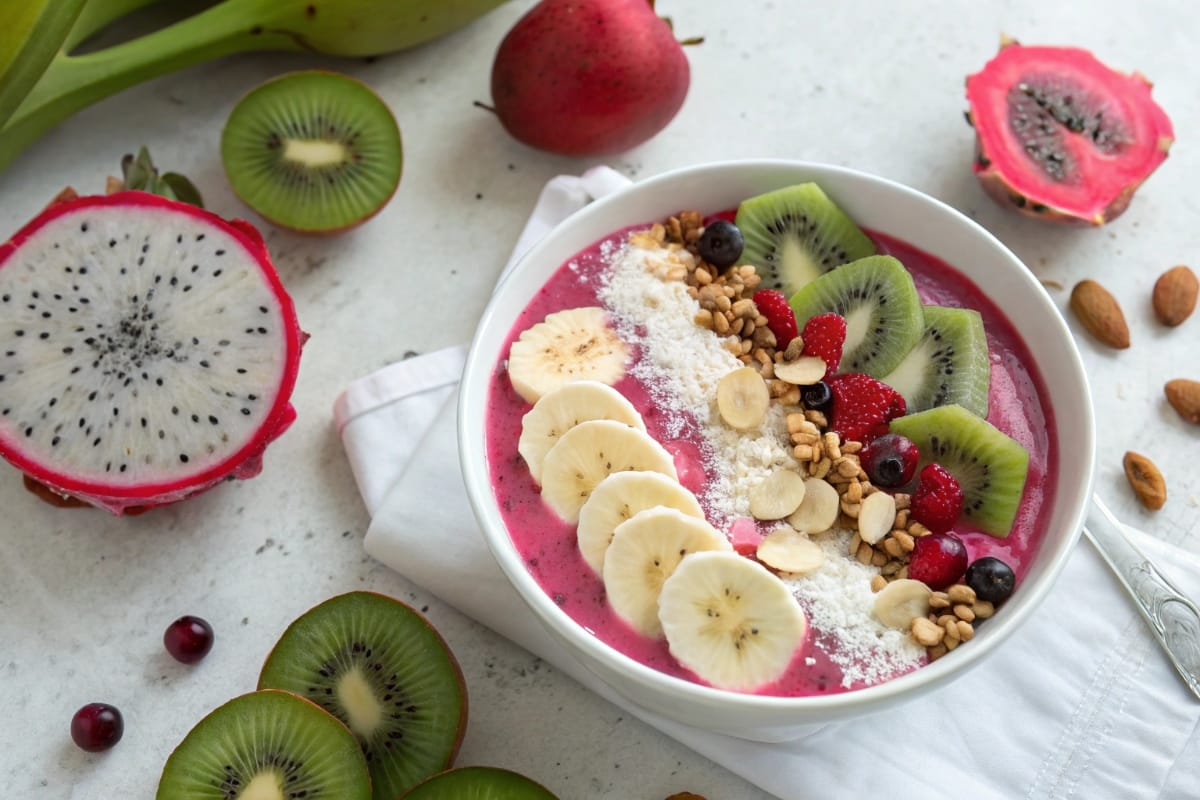
When you think about dragon fruit recipes, bright smoothie bowls are probably the first thing that comes to mind—and for good reason. This tropical dragon fruit smoothie bowl turns the vivid pink fruit into a thick, spoonable base that you can load with fresh fruit, crunchy toppings, and plant-based protein. Dragon fruit is naturally low in calories, rich in fiber, and full of antioxidants, which makes it a fun way to sneak more nutrition into breakfast or snacks. This recipe comes together in just a few minutes in the blender, so it’s perfect if you want simple dragon fruit recipes that still look impressive.
Quick Recipe Snapshot
- Recipe: Tropical Dragon Fruit Smoothie Bowl
- Prep time: 10 minutes
- Cook time: 0 minutes
- Total time: 10 minutes
- Servings: 2 smoothie bowls
- Difficulty: Easy
- Diet type: Vegan, Dairy-Free, Gluten-Free (if toppings are gluten-free)
You’ll find a printable recipe card with exact measurements and nutrition details at the end of this post.
Table of Contents
Ingredients for This Tropical Dragon Fruit Smoothie Bowl
For the Smoothie Base
- 2 cups frozen dragon fruit (pitaya) cubes or 2 frozen pitaya smoothie packs
- 1 medium ripe banana, sliced and frozen
- 1/2 cup frozen mango chunks
- 1/2 cup frozen pineapple chunks
- 1/2–3/4 cup unsweetened coconut milk or other plant-based milk
- 1–2 teaspoons lime juice, to taste
- 1–2 teaspoons maple syrup or honey (optional, for extra sweetness)
- Pinch of fine sea salt, to enhance flavor (optional)
For the Toppings (Mix and Match)
- Fresh dragon fruit cubes
- Sliced banana, kiwi, or strawberries
- 2–4 tablespoons gluten-free granola
- 1–2 tablespoons unsweetened shredded coconut
- 1 tablespoon chia seeds or hemp hearts
- Pomegranate arils or blueberries for color
- Drizzle of nut butter (optional, for extra richness and protein)
Dragon Fruit Recipes
Step-by-Step Instructions
- Prep your ingredients. Slice and freeze the banana ahead of time if you can. Measure out the frozen dragon fruit, mango, and pineapple so everything is ready for the blender.
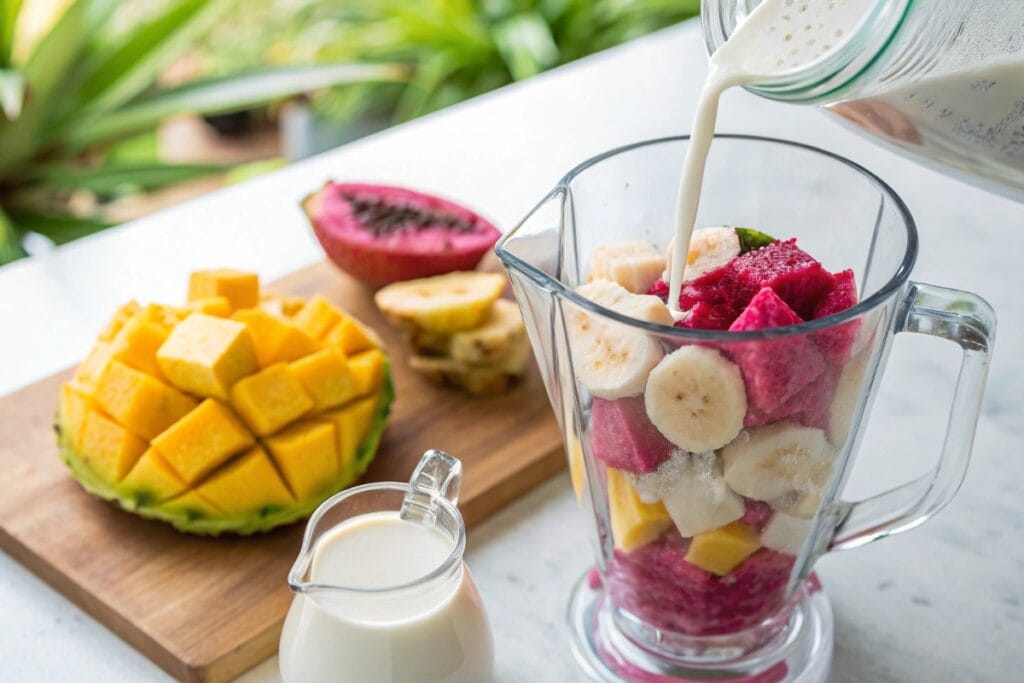
- Add fruit to the blender. Place the frozen dragon fruit, frozen banana slices, frozen mango, and frozen pineapple into a high-speed blender.
- Pour in the liquid. Add 1/2 cup of coconut milk, the lime juice, and the optional pinch of salt. If you prefer a sweeter bowl, add the maple syrup or honey now.
- Blend slowly at first. Start blending on low speed, using a tamper if your blender has one, to push the frozen fruit down toward the blades. Blend until the mixture begins to break down.
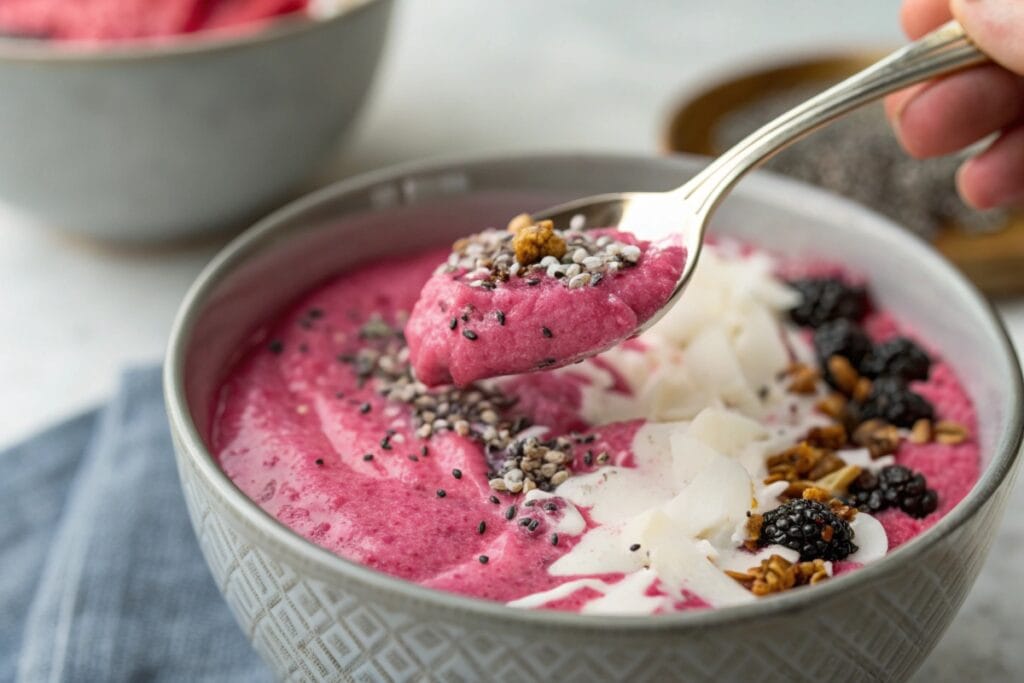
- Adjust thickness. Gradually increase speed and, if needed, add more coconut milk 1 tablespoon at a time. You want a thick, soft-serve texture that holds its shape in a bowl, not a thin drinkable smoothie.
- Taste and tweak. Stop the blender and taste the base. Add a little more lime juice for brightness or a bit more sweetener if you like, then blend again briefly.
- Assemble the bowls. Divide the dragon fruit mixture between two bowls. Smooth the tops with the back of a spoon to create a flat surface for your toppings.
- Add toppings and serve. Arrange fresh fruit, granola, shredded coconut, chia seeds, and any other toppings over each bowl. Serve your smoothie bowls immediately while they are thick and icy.
Tips & Variations
- Use fresh dragon fruit. If you only have fresh dragon fruit, cube it and freeze it on a parchment-lined tray before making this recipe. Dragon fruit recipes work best with frozen fruit when you want that creamy, scoopable texture.
- Make it higher protein. Blend in a scoop of vanilla plant-based protein powder, 1/2 cup of Greek yogurt (if you eat dairy), or 2 tablespoons of hemp hearts for more protein. Add a little extra coconut milk if the mixture becomes too thick.
- Turn it into a drinkable smoothie. If you prefer a regular smoothie instead of a bowl, simply add more liquid until it reaches sipping consistency, then pour into a glass.
- Adjust sweetness naturally. Dragon fruit has a mild, slightly sweet flavor similar to a cross between kiwi and pearTaste your fruit first and only add sweetener if you truly need it.
- Try different fruits. Dragon fruit pairs especially well with pineapple, mango, citrus, kiwi, and berries, thanks to its neutral base and bright color. Swap in what you have on hand while keeping roughly the same total amount of fruit.
- Make popsicles. Pour the blended mixture into popsicle molds, add a few small fruit pieces, and freeze for at least 4 hours for a fun dragon fruit pop.
Dragon Fruit Recipes
Serving Suggestions
Serve these smoothie bowls immediately after blending so they stay thick and cold. They work well as a light breakfast, post-workout snack, or refreshing afternoon treat. For more staying power, add a spoonful of nut butter on top or serve with a small side of scrambled eggs or tofu for additional protein.
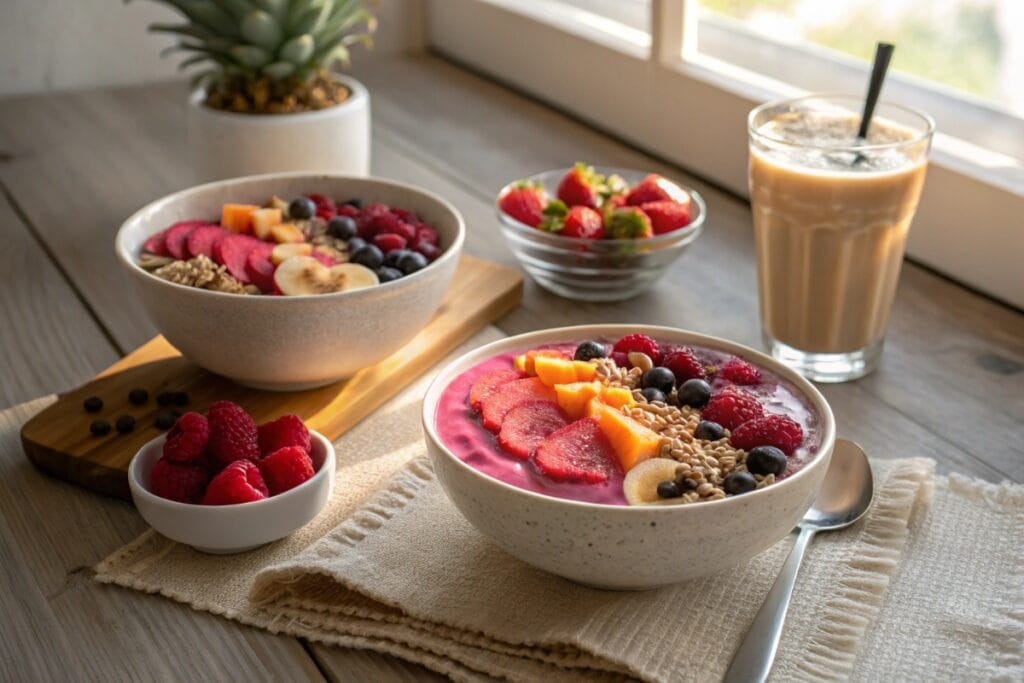
If you enjoy building whole menus around colorful fruit, pair your bowl with a chilled drink like the vegan iced coffee recipe for a café-style brunch at home. You can also follow it with a small baked treat from the site’s vegan cookie recipes collection when you want a dessert-like finish.
Storage & Make-Ahead
- Make-ahead prep: Portion the frozen dragon fruit, banana, mango, and pineapple into individual freezer bags or containers. In the morning, dump one portion into the blender, add liquid, and blend.
- Short-term storage: Once blended, the smoothie base tastes best right away. If you need to hold it briefly, refrigerate for up to 1–2 hours and stir well before serving. The texture will soften but still taste good.
- Freezing: You can freeze leftover blended smoothie in popsicle molds or small containers and enjoy it later like a sorbet. Let it sit at room temperature for 5–10 minutes before scooping.
- Topping storage: Keep granola and coconut in airtight containers at room temperature. Store fresh fruit toppings in the refrigerator and cut them just before serving so they stay juicy.
Nutrition Highlights
Exact nutrition will vary with your toppings, but for one of two smoothie bowls (base only, without toppings), an approximate estimate is:
- Calories: ~260
- Protein: ~4 g
- Carbohydrates: ~55 g
- Fiber: ~7 g
- Total Fat: ~4 g
- Saturated Fat: ~3 g
- Sugars: ~36 g (naturally occurring from fruit)
Dragon fruit itself is naturally low in calories, virtually fat-free, and offers about 5–6 grams of fiber per cup, plus vitamin C and antioxidant pigments. The seeds contain small amounts of beneficial fats, and the prebiotic fiber can help support a healthy gut microbiome when you enjoy it as part of a balanced diet
If you want more details on the health benefits of dragon fruit, including fiber content, gut health, and antioxidant support, check out this Cleveland Clinic resource on dragon fruit, which breaks down the nutrition in a simple, science-backed way.
Dragon Fruit Recipes
Why This Recipe Matters to Me
When I first started paying more attention to what I ate, I wanted recipes that felt playful and colorful, not strict or limiting. Dragon fruit recipes became a small way to make healthier choices feel exciting. A bright pink smoothie bowl looks like a treat, but it quietly adds fiber, hydration, and fruit to the day. It is also one of those recipes that kids love to help decorate with toppings, which turns breakfast into a quick family activity instead of a rushed chore. On HealthyAmericanBites.com, I try to lean into that balance—food that supports better habits but still feels joyful, approachable, and fun to share.
FAQ About Dragon Fruit Recipes
What is the best way to eat dragon fruit?
The best way to eat dragon fruit depends on what you like, but most people enjoy it fresh and chilled. Cut the fruit in half, scoop out the flesh with a spoon, and eat it directly or cube it for fruit salads and smoothie bowls. Dragon fruit recipes like this smoothie bowl, simple fruit salad, or a quick salsa with lime and cilantro show off its color and mild sweetness. You can also blend it into drinks, freeze it into popsicles, or add it as a topping for yogurt or oatmeal.
Bottom line: Slice, scoop, and enjoy dragon fruit fresh—or blend it into smoothies, bowls, and salads for extra color and fiber.
Why does my stomach hurt after eating dragon fruit?
Most people tolerate dragon fruit well, but a few things can cause stomach discomfort. Dragon fruit is relatively high in fiber, so eating a lot at once—especially if you are not used to that much fiber—can lead to bloating, gas, or stomach cramps. In rare cases, some people may have an allergy to dragon fruit, which can cause abdominal pain, nausea, or other symptoms. If your stomach pain is severe, includes symptoms like hives or trouble breathing, or keeps coming back, stop eating the fruit and talk with a healthcare professional for personal guidance.
Bottom line: Overdoing dragon fruit or having an allergy can cause stomach upset, so enjoy modest portions and seek medical advice if symptoms persist.
What can I do with fresh dragon fruit?
Fresh dragon fruit works in many simple recipes. You can add cubes to fruit salad, layer them into parfaits, or use them in tropical salsas with pineapple, lime, and cilantro. Dragon fruit recipes like smoothie bowls, blended drinks, and homemade popsicles are great ways to use fruit that is fully ripe. You can also freeze cubes of dragon fruit on a sheet pan and store them in bags so you always have some ready for smoothies. If you like savory dishes, try a small handful of dragon fruit cubes over leafy green salads for color and subtle sweetness.
Bottom line: Turn fresh dragon fruit into salads, smoothie bowls, salsas, popsicles, or just enjoy it chilled by the spoonful.
What does dragon fruit pair well with?
Because dragon fruit has a mild, lightly sweet taste, it pairs best with stronger, bright flavors. It goes particularly well with pineapple, mango, citrus (like lime and orange), berries, kiwi, and banana. For texture and flavor contrast, combine dragon fruit with creamy yogurt or coconut milk and crunchy toppings such as granola, nuts, and seeds. It also works nicely with herbs like mint or basil and can show up in drinks, smoothie bowls, fruit salads, and even light desserts.
Bottom line: Pair dragon fruit with bold fruits, creamy bases, and crunchy toppings to highlight its color and gentle sweetness.
Are dragon fruit recipes good for digestion?
Many dragon fruit recipes support digestion because they keep the fruit’s natural fiber intact. Dragon fruit contains prebiotic fiber that helps feed beneficial gut bacteria, which can support regular bowel movements and overall gut health when you eat it regularly as part of a balanced diet. However, suddenly eating very large amounts of fiber if your usual diet is low in fiber can cause temporary bloating or loose stools, so it helps to increase portions gradually and drink enough water throughout the day.
Bottom line: Dragon fruit recipes can be gentle and helpful for digestion when you build them into your routine gradually and stay hydrated.
More Recipes You’ll Love
If you enjoy this smoothie bowl and want more dragon fruit recipes–adjacent inspiration, you’ll find plenty of ideas on HealthyAmericanBites.com.
For more plant-forward treats and snacks, explore the raw vegan recipes and raw vegan recipes 2 collections, which offer fruit-forward dishes and no-bake desserts that pair well with tropical flavors.
When you want something sweet to serve after a fruit-heavy breakfast, browse the vegan dessert recipes and classic vegan banana bread recipe for more plant-based baking projects.
And if you are planning a full brunch spread, combine your dragon fruit bowls with chilled drinks like the vegan iced coffee recipe or a fruity dessert from the gluten-free desserts section for guests who avoid gluten.
Final Thoughts
Dragon fruit recipes do not have to be complicated to feel special. This tropical smoothie bowl shows how a few basic ingredients can turn into a vibrant, nourishing breakfast or snack in just minutes. Once you try the base, you can mix and match fruits, toppings, and add-ins to keep things interesting all week long. Keep a bag of frozen dragon fruit in your freezer, and you will always have a simple, colorful recipe ready whenever you crave something refreshing.
Print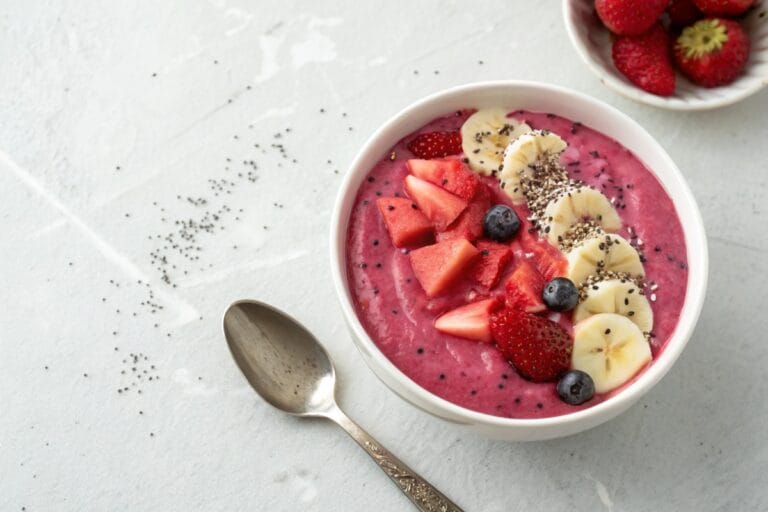
Tropical Dragon Fruit Smoothie Bowl
This tropical dragon fruit smoothie bowl blends frozen dragon fruit, banana, mango, and pineapple with creamy coconut milk for a thick, spoonable base. It comes together in about 10 minutes and makes a bright, fiber-rich breakfast or snack. Customize each bowl with your favorite fruit, granola, and seeds to add crunch and extra nutrition. It is naturally vegan, dairy-free, and gluten-free when you choose appropriate toppings, and it is a fun, colorful way to enjoy more fruit.
- Total Time: 10 minutes
- Yield: 2 smoothie bowls
Ingredients
2 cups frozen dragon fruit (pitaya) cubes or 2 frozen pitaya packs
1 medium ripe banana, sliced and frozen
1/2 cup frozen mango chunks
1/2 cup frozen pineapple chunks
1/2–3/4 cup unsweetened coconut milk or other plant-based milk
1–2 teaspoons lime juice, to taste
1–2 teaspoons maple syrup or honey (optional)
Pinch of fine sea salt (optional)
Fresh dragon fruit cubes, for topping
Sliced banana, kiwi, or strawberries, for topping
2–4 tablespoons gluten-free granola
1–2 tablespoons unsweetened shredded coconut
1 tablespoon chia seeds or hemp hearts
Pomegranate arils or blueberries, for topping
Drizzle of nut butter (optional)
Instructions
1. Prepare the fruit by slicing and freezing the banana if needed and measuring out the frozen dragon fruit, mango, and pineapple.
2. Add the frozen dragon fruit, frozen banana slices, frozen mango, and frozen pineapple to a high-speed blender.
3. Pour in 1/2 cup of coconut milk, the lime juice, and the optional pinch of salt, plus maple syrup or honey if using.
4. Begin blending on low speed, using a tamper if you have one to press the fruit down toward the blades.
5. Increase the speed gradually and, if needed, add more coconut milk a tablespoon at a time until the mixture is thick and smooth.
6. Stop the blender and taste the base; adjust sweetness or lime juice, then blend briefly again to combine.
7. Divide the thick dragon fruit smoothie evenly between two bowls and smooth the tops with the back of a spoon.
8. Top each bowl with fresh dragon fruit cubes, sliced fruit, granola, shredded coconut, chia seeds or hemp hearts, and any other desired toppings.
9. Serve the smoothie bowls immediately while they are cold and thick for the best texture.
Notes
For an extra protein boost, blend in a scoop of plant-based protein powder or add hemp hearts, Greek yogurt (if you use dairy), or a drizzle of nut butter on top.
If you prefer a drinkable smoothie instead of a bowl, add more coconut milk until it reaches your desired sipping consistency.
You can portion the frozen fruit into freezer bags ahead of time so the recipe comes together even faster on busy mornings.
Leftover smoothie base does not hold its texture well in the fridge, but you can freeze it in popsicle molds or small containers and enjoy it as a sorbet-style treat.
Keep granola and coconut stored separately and add toppings just before serving so they stay crisp.
- Prep Time: 10 minutes
- Cook Time: 0 minutes
- Category: Breakfast
- Method: No Cook
- Cuisine: American