
Table of Contents
New to gluten-free? Start with our main guide before you dive into this recipe:
Gluten Free Recipes: Simple American Meals, Snacks, and Desserts
The Real Meaning of Gluten Free Candy
Candy, Gluten, and Everyday Life
When people hear “gluten free candy,” they often picture a tiny list of boring options. In reality, gluten free candy simply means candy that avoids gluten ingredients like wheat, barley, rye, and malt, and that manufacturers produce in a way that avoids cross-contact with gluten.
Because many hard candies and chocolate bars never used flour in the first place, plenty of sweets already count as gluten free candy by ingredients, even before you check for official gluten free claims. However, some candies still use wheat flour, barley malt, or cookie pieces, and some use shared lines that raise cross-contact risks.
For families like mine, that nuance matters. My mom needs gluten free candy to protect her gut. My dad needs portion control and smart choices for his blood sugar. I focus on candy that keeps gluten out and still offers real satisfaction so people stop feeling like second-class guests at every holiday dessert table.
Also, I always treat gluten free candy as one slice of a bigger dessert strategy. When you want full dessert spreads that include cakes and crisps, you can browse my long-form guide to gluten free desserts and my focused collection of gluten and dairy free desserts for guests with multiple restrictions.
Label Reading, Certifications, and Why They Matter
Most celiac organizations stress one core habit: always read labels. Celiac Disease Foundation and Beyond Celiac both remind shoppers that some candies contain gluten, some carry “may contain wheat” or “made on shared equipment” notes, and some change formulas over time.Beyond Celiac+2Celiac Disease Foundation+2
Because of that, I think about gluten free candy in three layers:
| Category | What It Means | Examples (Always Check Current Labels) |
|---|---|---|
| Certified or labeled gluten free | Product carries a gluten free certification mark or clear GF claim. | Certain Hershey’s Kisses flavors, some specialty brands, labeled gummies. |
| No gluten ingredients | Label shows no wheat, barley, rye, or malt, but no GF claim. | Many plain chocolate bars, fruit chews, and some M&M’s varieties. |
| Not safe for gluten free diets | Label lists gluten ingredients or strong cross-contact risk. | Candies with cookie bits, malt, wafers, or pretzels. |
Additionally, organizations such as Celiac Canada and Celiac Disease Foundation publish updated candy lists every year for holidays like Halloween and Easter. You can always bookmark a trusted guide such as for quick reference.
Meanwhile, when you want to build entire snack boards with gluten free candy and chips, my roundup of gluten free dairy free snacks helps you layer sweets and salty bites without hidden gluten.
What Popular Candy Is Gluten Free?
Everyday Gluten Free Candy Examples
Many readers ask, “What popular candy is gluten-free?” They want to know whether trick-or-treat buckets, party bowls, and office candy jars still feel safe. Lists from Beyond Celiac, Celiac Canada, and other gluten free resources show that quite a few classic candies can work for gluten free diets when labels back that up.
Depending on brand and region, you often see candies like these on gluten free lists:
- Andes Mints
- Dots
- Dum Dums
- Smarties (U.S. brand)
- Junior Mints
- Hot Tamales
- Mike and Ike
- Peeps
- Sugar Babies and Sugar Daddy
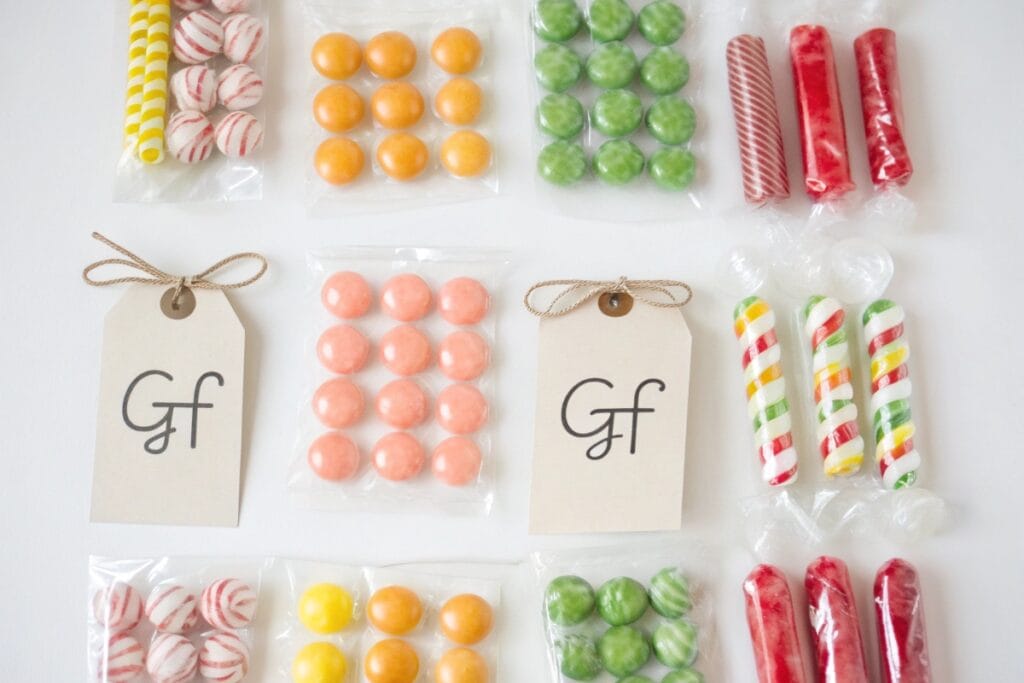
Beyond Celiac’s Halloween guide highlights options like Andes, Blow Pops, Dots, Dubble Bubble, Dum Dums, Hot Tamales, Junior Mints, Mike and Ike, Peeps, Smarties, and Salted Nut Rolls as examples of candy that companies report as gluten free or label as such.Meanwhile, Celiac Disease Foundation’s candy list groups brands such as Hershey, Ferrara, and Mars products and explains how to interpret their packaging.
However, ingredients and manufacturing processes change. Because of that, I always encourage two checks for gluten free candy: read today’s label and scan the brand’s official website for dietary needs pages. Hershey’s, for example, maintains a dedicated gluten free page that lets you sort products and see which ones currently meet their gluten free criteria.
Also, when sweet cravings move past candy into baked treats, you can jump into my vegan dessert recipes and vegan cookie recipes sections, where many recipes stay gluten free or offer gluten free options without losing that candy-bar flavor.
Seasonal Candy, Minis, and Fun-Size Complications
Holiday versions of candy often look identical to the originals, yet they sometimes carry different ingredients. Beyond Celiac warns that fun-size and seasonal shapes can contain ingredients that regular bars do not, or they can come from facilities that handle more gluten.
For example:
- Seasonal peanut butter shapes from some brands contain gluten even when classic cups stay gluten free by ingredients.
- Some “crispy” or “pretzel” flavors add wheat-based crunch.
- Mini versions sometimes use different production lines with higher cross-contact risk.
Because kids sort Halloween buckets as soon as they get home, I like to print a simple “yes / no / maybe” cheat sheet. I base that sheet on current lists from groups like Celiac Canada and Celiac Disease Foundation, plus the manufacturer pages. We then build a swap box full of safe gluten free candy that kids can trade for questionable items.
When hot weather hits and candy feels too heavy, I like to move toward cold treats that taste like candy but avoid gluten. My recipes for gluten free ice cream sandwiches and my playful keto mango ice cream show how to spin that candy craving into frosty desserts that still respect celiac needs.
M&M’s, Hershey’s Kisses, and Other Big Questions
Are M&M’s OK for Celiacs?
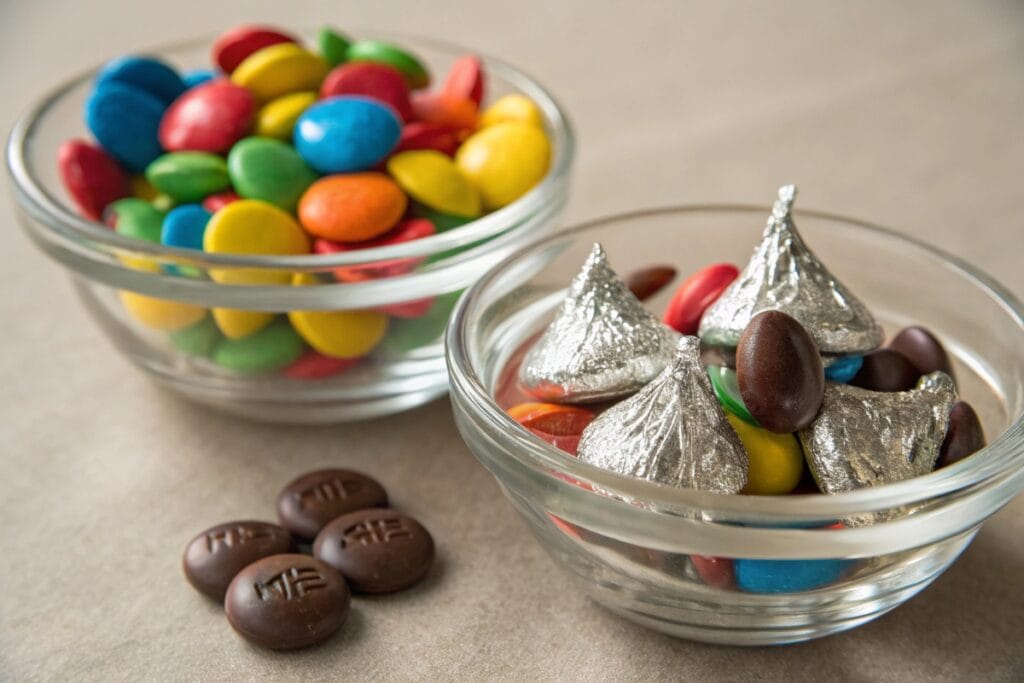
This question comes up constantly. People love M&M’s, and they want clear rules. Articles from gluten free bloggers and celiac resources explain that most U.S. M&M’s flavors do not contain gluten ingredients, but Mars does not label them gluten free or claim dedicated gluten free lines.
Gluten Free Palate notes that most M&M’s varieties use similar base ingredients like sugar, chocolate, milk, and soy, and that many flavors test free of gluten with sensors. However, the brand does not guarantee that lines stay separate from gluten, so cross-contact can still happen Celiac.com also reports that most U.S. M&M’s flavors count as gluten free by ingredients, with a few exceptions such as pretzel or crispy versions that clearly include wheat.
Because of that, my answer for celiacs stays careful:
- Plain, peanut, and some other flavors often work for people who tolerate “no gluten ingredients” products.
- However, celiacs who need stricter control or who react strongly to trace gluten may choose candy that carries a gluten free label or certification instead.
- Additionally, formulas differ by country, so people outside the U.S. must check their local labels.
So, are M&M’s ok for celiacs? Many celiacs eat certain flavors without issues, but strict medical guidance still favors candy that has gluten free certification or clear gluten free labeling.
Can Celiacs Have Hershey’s Kisses?
Hershey’s Kisses create another big question. Hershey’s maintains a gluten free page and notes that the best way to know whether any product counts as gluten free is to read the package label, which lists ingredients and any gluten declaration. Third-party gluten free guides explain that many classic Hershey’s Kisses flavors do stay gluten free, while a few flavors that contain cookie pieces or other gluten ingredients do not.
For example, the Gluten Free Bar’s list of Hershey’s Kisses notes flavors like Milk Chocolate, Milk Chocolate with Almonds, Special Dark Mildly Sweet Chocolate, Hugs, and some filled varieties as gluten free by ingredients.The GFB+1 Many seasonal options, such as Candy Cane Kisses with peppermint bits, also carry gluten free labeling directly from Hershey’s.
Because Hershey’s updates formulas and seasonal products often, I recommend this simple approach for celiacs who want gluten free candy from Hershey’s:
- Read the front and back of the package for a gluten free callout.
- Scan the ingredient list for wheat, barley, rye, and malt.
- Check Hershey’s gluten free page for confirmation when you feel unsure.
Also, if you want treats that give the same chocolate hit but with more nutrition, you can pivot to homemade cookies that still support gluten free living, such as my vegan chocolate chip cookie recipe and the bigger library of vegan cookie recipes that often adapt easily to gluten free flours.
What Popular Treats Count as Gluten Free Candy and Beyond?
Beyond Candy: Gluten Free Treats That Still Feel Fun
When readers ask, “What popular treats are gluten-free?” they usually mean more than candy. They imagine brownies, cookies, snack bars, and frozen goodies that feel just as fun as their old favorites. Snack guides and product roundups show a rapidly growing market of gluten free cookies, brownies, cupcakes, granola clusters, and soft-baked bars.
Some popular treat categories that often include gluten free options:
- Brownies and blondies from dedicated gluten free brands
- Granola clusters and snack mixes labeled gluten free
- Soft-baked cookies and bars made in gluten free facilities
- Frozen treats such as bars and sandwiches that use gluten free cookies or wafers
Recent news even highlights gluten free granola inspired by Girl Scout cookies and new gluten free brownie mixes from mainstream brands such as Ghirardelli.These shifts show how “gluten free treat” now reaches far beyond plain hard candy.
However, just like with gluten free candy, you still read labels and look for gluten free certifications when possible, especially if you live with celiac disease rather than a non-celiac sensitivity.
When you want to build an entire dessert night around gluten free candy, cookies, and ice cream, I like to pair store-bought treats with homemade options from my gluten free dairy free snacks guide and frozen desserts like gluten free ice cream sandwiches. That mix keeps stress low and fun high.
Homemade Gluten Free Candy: Dark Chocolate Almond Clusters
Store-bought gluten free candy helps a ton, but homemade candy gives you control over every ingredient. These dark chocolate almond clusters come together quickly and use ingredients that usually stay safely gluten free when you buy trusted brands.
Personal Story Behind This Candy
When my mom first went gluten free, our family candy bowl looked empty. I stood in my Santa Barbara kitchen, thinking about childhood Halloweens when I grabbed handfuls of chocolate from orange plastic pumpkins. I wanted that same feeling for my mom, minus the gluten and mystery ingredients that upset her. One Saturday, I melted dark chocolate, stirred in roasted almonds, and added a pinch of sea salt. The clusters chilled on parchment while we cooked dinner. After we ate, I set a small bowl of those shiny mounds on the table. My mom smiled, grabbed one, and said, “Now this feels normal again.”
No-Bake Dark Chocolate Almond Clusters (Gluten Free Candy)
Ingredients (Makes about 18 small clusters)
- 12 ounces dark chocolate chips or chopped bars labeled gluten free (60–70% cocoa)
- 1½ cups roasted almonds (whole or roughly chopped)
- 1 teaspoon coconut oil (optional, for extra shine)
- ½ teaspoon vanilla extract
- ¼ teaspoon fine sea salt, plus extra flakes for topping
Instructions
- Line a baking sheet with parchment paper.
- Place chocolate and coconut oil in a heat-safe bowl. Set the bowl over a small pot of barely simmering water and stir until the chocolate melts and looks smooth.
- Remove the bowl from heat. Stir in vanilla and sea salt.
- Fold in almonds until each nut looks coated with chocolate.
- Drop heaping tablespoons of the mixture onto the parchment, leaving a little space between each cluster.
- Sprinkle a tiny pinch of flaky sea salt over the top of each cluster if you like a salty finish.
- Chill the tray in the fridge for 20–30 minutes until the clusters firm up.
- Store the gluten free candy in an airtight container in the fridge for up to two weeks.
Notes
You can swap half the almonds for roasted peanuts, cashews, or pumpkin seeds as long as you confirm that each ingredient stays gluten free. You can also stir in unsweetened coconut flakes for extra texture.
FAQ About Gluten Free Candy
What popular candy gluten-free?
Many popular candies count as gluten free by ingredients or carry gluten free labels. Lists from celiac organizations often include brands such as Andes Mints, Dots, Dum Dums, Smarties (U.S.), Junior Mints, Hot Tamales, Mike and Ike, Peeps, Sugar Babies, and more. You still read labels every time, because companies sometimes change formulas or production lines.
Are M&M’s ok for celiacs?
Most U.S. M&M’s flavors do not include gluten ingredients, and gluten free bloggers and celiac resources describe them as “technically gluten free” by ingredients, with clear exceptions like pretzel or crispy versions that contain wheat. However, Mars does not label M&M’s gluten free or promise dedicated gluten free lines, so cross-contact can still matter. Some celiacs tolerate selected M&M’s flavors, while others choose only candy with gluten free certification or labeling. Everyone should read the current label and consider their personal medical guidance.
Can celiacs have Hershey Kisses?
Many Hershey’s Kisses flavors stay gluten free by ingredients, and some carry gluten free labeling. Classic Milk Chocolate, Milk Chocolate with Almonds, some Special Dark, and seasonal flavors like Candy Cane Kisses often appear on gluten free lists. However, certain Kisses that include cookie pieces or other gluten ingredients do not fit gluten free diets. Celiacs should check each package for gluten free claims, read the ingredients, and use Hershey’s online gluten free product tool for confirmation.
What popular treats are gluten-free?
Popular gluten free treats range from candy to baked goods. Gluten free snack guides list cookies, brownies, cupcakes, granola clusters, soft-baked bars, and more that carry gluten free certifications or clear labels. Many brands now produce brownies, blondies, and cookies in gluten free facilities, and some companies even sell gluten free versions of classic cookie flavors. People still need to read labels and favor products that show gluten free certifications, especially if they live with celiac disease.
Conclusion: Building a Candy Bowl That Truly Includes Everyone
Gluten free candy might look like a small detail, yet it carries real emotional weight. When someone lives with celiac disease or gluten intolerance, a safe candy bowl tells them, “You belong here.” With careful label reading, trusted lists from organizations such as Beyond Celiac, Celiac Disease Foundation, and Celiac Canada, and a few simple homemade recipes, you can keep gluten out without pushing joy out of the room.
If you want more support, you can explore my broader guides to gluten free desserts and gluten free dairy free snacks, then sign up for the HealthyAmericanBites.com email list. I send printable cheat sheets and small PDFs that help you stock your pantry, plan parties, and keep your candy bowl ready for every gluten free guest who walks through your door.
Print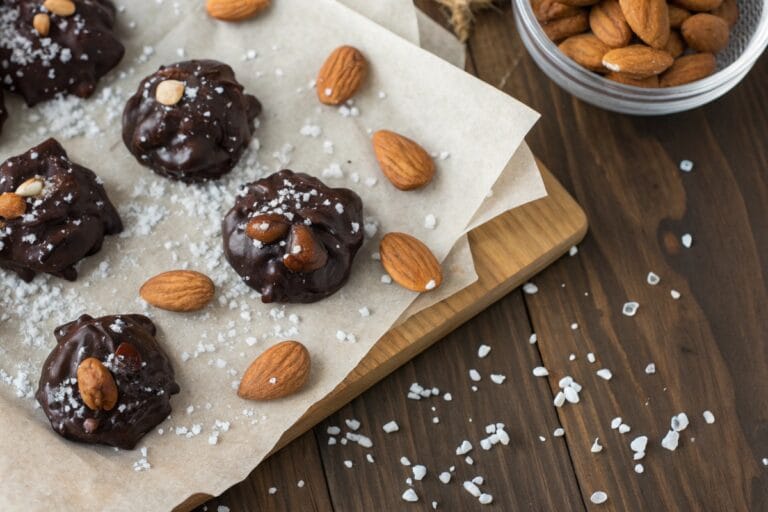
Gluten Free Candy Guide: Safe Sweets for Celiacs and Gluten-Sensitive Snackers
Quick no-bake dark chocolate almond clusters that satisfy candy cravings while staying safely gluten free with simple pantry ingredients.
- Total Time: 35 minutes
- Yield: 18 clusters
Ingredients
12 ounces dark chocolate chips or chopped bars labeled gluten free (60–70% cocoa)
1½ cups roasted almonds (whole or roughly chopped)
1 teaspoon coconut oil (optional, for extra shine)
½ teaspoon vanilla extract
¼ teaspoon fine sea salt, plus extra flaky sea salt for topping
Instructions
1. Line a baking sheet with parchment paper.
2. Place chocolate and coconut oil in a heat-safe bowl set over a small pot of barely simmering water.
3. Stir until the chocolate melts and looks smooth, then remove the bowl from heat.
4. Stir in vanilla and fine sea salt.
5. Fold in the roasted almonds until each nut looks coated with chocolate.
6. Drop heaping tablespoons of the mixture onto the parchment-lined baking sheet, leaving space between clusters.
7. Sprinkle a tiny pinch of flaky sea salt over each cluster if desired.
8. Chill the tray in the refrigerator for 20–30 minutes, until the clusters feel firm.
9. Transfer the gluten free candy clusters to an airtight container and store them in the refrigerator.
Notes
Swap in roasted peanuts, cashews, or pumpkin seeds for part of the almonds if all ingredients stay gluten free.
Stir in unsweetened coconut flakes for extra texture and flavor.
Keep clusters chilled for best crunch and to protect the chocolate from warm kitchen temperatures.
- Prep Time: 15 minutes
- Cook Time: 5 minutes
- Category: Dessert
- Method: No-Bake
- Cuisine: American
- Diet: Gluten Free
visit our facebook page