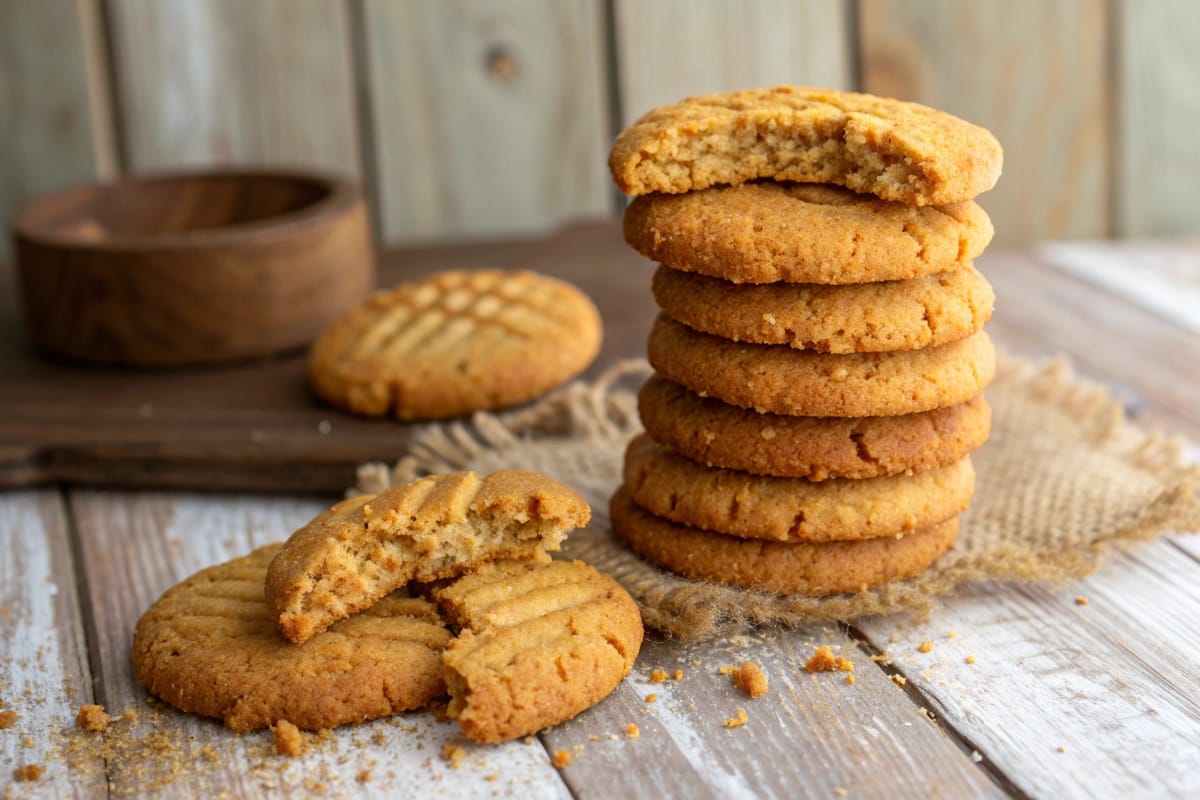
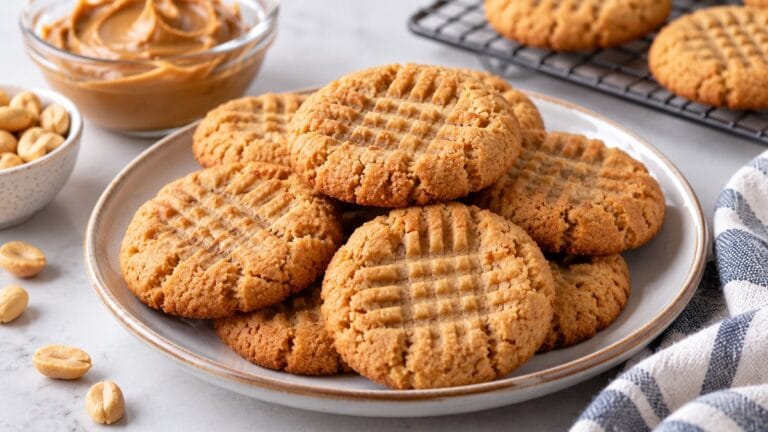
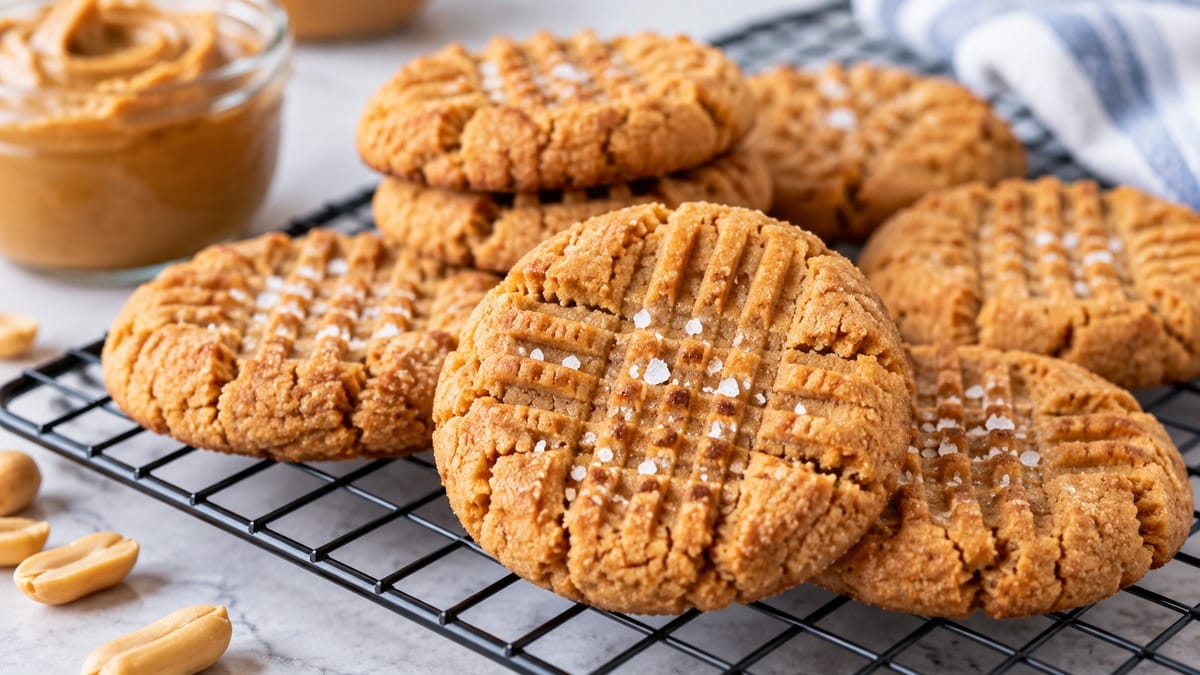
These peanut butter keto cookies are thick, soft in the center, lightly crisp at the edges, and made with everyday low-carb baking ingredients. Natural peanut butter supplies most of the flavor and structure, while a small amount of almond flour keeps the dough easy to shape and helps the cookies hold together after baking.
This version uses a granulated monk-fruit/erythritol sweetener that measures like sugar, one egg, vanilla, baking soda, and salt. There is no wheat flour or added sugar in the base recipe. Because sweetener and peanut-butter brands vary, the nutrition numbers below are estimates rather than a promise about how any particular product will affect blood glucose, ketosis, or weight.
If you are new to low-carb cooking, the broader keto diet for beginners guide explains common ingredients and terminology. For this recipe, though, the goal is simple: make a dependable peanut butter cookie with a short ingredient list and clear visual cues.
Table of Contents
Why These Peanut Butter Keto Cookies Work
Natural creamy peanut butter provides fat, protein, flavor, and enough body to form a cookie dough without wheat flour.
A small amount of fine almond flour absorbs excess oil from the peanut butter and makes the baked cookies less fragile.
A 1:1 granulated monk-fruit/erythritol blend sweetens the dough without adding table sugar; powdered or very fine crystals give the smoothest texture.
One egg binds the dough and helps the cookies set as they cool.
Baking soda gives a little lift so the centers stay tender instead of becoming dense peanut-butter disks.
The classic fork crosshatch flattens the dough to an even thickness, helping the centers and edges finish at roughly the same time.
Cooling on the baking sheet is part of the recipe, not an optional step: these cookies are delicate when hot and firm as they cool.
Ingredients You’ll Need
Natural creamy peanut butter
Use a smooth peanut butter with peanuts and salt as the main ingredients, and stir it thoroughly before measuring. Natural peanut butter can separate in the jar; if you scoop from an oily top or a dry bottom, the dough can be inconsistent. A no-stir peanut butter can also work, but it may make the cookies slightly sweeter or firmer depending on the added oil and sweetener.
Granulated keto sweetener
Choose a monk-fruit/erythritol blend labeled to measure 1:1 like sugar. Brands differ in sweetness and crystal size, so check the package. If the crystals are very coarse, pulse the sweetener briefly in a clean spice grinder or blender before measuring. Very coarse erythritol can leave a gritty texture after the cookies cool.
Fine almond flour
Use finely ground blanched almond flour, not coarse almond meal. The small amount in this recipe improves structure without making the cookies taste like almond cookies. If you need to avoid almonds, see the substitution section rather than replacing it blindly with coconut flour, which absorbs much more liquid.
Egg, vanilla, baking soda, and salt
The egg is the binder. Vanilla rounds out the peanut flavor, baking soda loosens the texture slightly, and a small amount of salt makes the peanut flavor more distinct. If your peanut butter is heavily salted, reduce the added salt to a pinch.
Peanut Butter Keto Cookies: Quick Recipe Snapshot
Prep: 10 minutes
Bake: 9 to 11 minutes
Cooling: at least 15 minutes before moving the cookies
Yield: 12 cookies
Oven: 350°F (175°C)
Texture: soft center, lightly crisp edge, tender crumb
Estimated net carbs: about 3 g per cookie based on the ingredient estimates used for this package; check your own product labels for a more precise number
Soft-centered peanut butter cookies made with natural peanut butter, almond flour, egg, vanilla, and a granulated monk-fruit/erythritol baking blend.
Total Time:35 minutes
Yield:12 cookies
Ingredients
Scale
1 cup (256 g) natural creamy peanut butter, unsweetened and stirred well
1/2 cup granulated monk-fruit/erythritol sweetener that measures 1:1 like sugar
1 large egg
1/4 cup (28 g) fine blanched almond flour
1 teaspoon vanilla extract
1/2 teaspoon baking soda
1/4 teaspoon fine salt, or a pinch if the peanut butter is very salty
Instructions
Heat the oven to 350°F (175°C). Line a light-colored baking sheet with parchment paper.
In a medium bowl, stir the peanut butter, granulated sweetener, egg, and vanilla until smooth and uniform.
Add the almond flour, baking soda, and salt. Stir just until no dry pockets remain. If the dough is very glossy or too soft to scoop, chill it for 10 to 15 minutes.
Divide the dough into 12 equal portions and roll gently into balls. Space them about 2 inches apart on the prepared baking sheet.
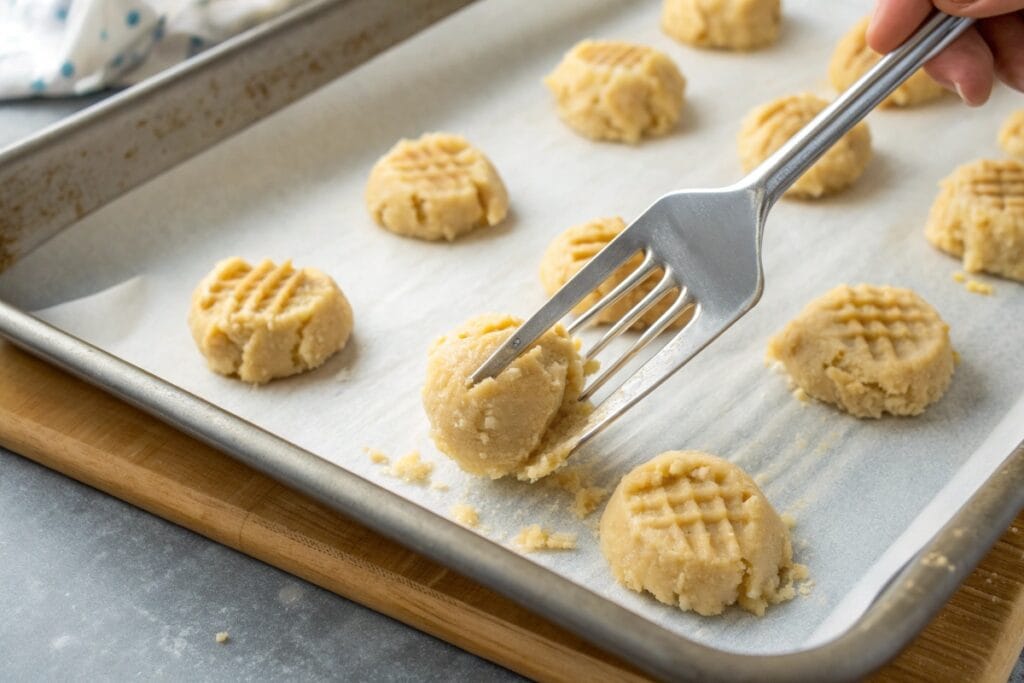
Press each dough ball with a fork, rotate the fork 90 degrees, and press again to make a crisscross pattern. Aim for cookies about 1/2 inch thick.
Bake for 9 to 11 minutes, until the edges look set and lightly golden while the centers are still a little soft.
Leave the cookies on the baking sheet for at least 15 minutes so they can firm as they cool.
Transfer the cooled cookies to a wire rack. Serve once fully cooled or store in an airtight container.
Notes
Stir natural peanut butter thoroughly before measuring so the oil and solids are evenly combined.
Sweetener brands behave differently. The recipe is written for a granulated monk-fruit/erythritol blend that measures 1:1 like sugar.
Do not taste the raw dough because it contains raw egg.
If the dough spreads before baking, chill it for 10 to 20 minutes.
Nutrition values are estimates based on 12 equal cookies. Product labels, especially for peanut butter and keto sweetener, can change the totals.
Author:Adam Moretti
Prep Time:10 minutes
Cook Time:10 minutes
Category:Dessert
Method:Baking
Cuisine:American
Diet:Keto
How to Make Peanut Butter Keto Cookies
1. Heat the oven and prepare the pan
Heat the oven to 350°F (175°C). Line a light-colored baking sheet with parchment paper. Dark pans can brown the bottoms faster, so begin checking a minute early if that is what you have. Position a rack near the center of the oven for even heat.
2. Mix the wet ingredients first
In a medium bowl, stir the well-mixed peanut butter, granulated sweetener, egg, and vanilla until the mixture looks uniform and glossy. Scrape the sides and bottom of the bowl so no streaks of egg remain. At this stage the mixture can look slightly loose; the almond flour will tighten it.
3. Add the dry ingredients
Stir in the almond flour, baking soda, and salt. Mix just until no dry pockets remain. The dough for peanut butter keto cookies should be soft but scoopable. If it looks shiny and spreads immediately when placed on the parchment, chill the bowl for 10 to 15 minutes before portioning.
4. Portion the dough evenly
Divide the dough into 12 portions, about 1 generous tablespoon each. Roll gently into balls and space them about 2 inches apart. Matching the portion size matters because smaller cookies can dry out before the larger cookies are set.
5. Make the fork crosshatch
Press each ball once with the tines of a fork, then rotate the fork 90 degrees and press again. Aim for cookies about 1/2 inch thick. If the fork sticks, lightly dampen the tines or wipe them between cookies. Do not flatten the dough paper-thin; a little height is what keeps the center tender.
6. Bake until the edges look set
Bake for 9 to 11 minutes. The edges should look dry and lightly golden, while the centers may still look a little soft. Do not wait for the entire cookie to look crisp in the oven. Carryover heat continues setting the center on the hot pan.
7. Cool before moving
Leave the cookies on the baking sheet for at least 15 minutes. Fresh-from-the-oven peanut butter keto cookies can break if lifted too soon. Once they feel firm enough to slide a thin spatula underneath, move them to a wire rack and let them cool completely.
How to Tell When the Cookies Are Done
The outer 1/4 inch looks dry rather than glossy.
The bottom edge has a light golden color but is not dark brown.
The center still gives slightly if you nudge the pan, but it no longer looks wet.
The fork marks remain visible instead of melting into a flat puddle.
After 15 minutes of cooling, the cookie can be lifted in one piece without folding or crumbling apart.
Because low-carb sweeteners do not brown exactly like sucrose, color alone is not a perfect doneness test. Use the edge texture and cooling behavior as the main cues. If your first batch is too dry, shorten the next bake by one minute. If it stays very soft after cooling, add a minute on the next tray.
Troubleshooting
Why are my peanut butter keto cookies crumbly?
The most common causes are moving them while hot, using very dry peanut butter, or adding too much almond flour. Let the cookies cool on the sheet first. Stir natural peanut butter completely before measuring, and spoon the almond flour into the measuring cup rather than compacting it. If your peanut butter is unusually stiff, the dough may need only 2 to 3 tablespoons of almond flour instead of the full 1/4 cup.
Why did the cookies spread too much?
Very runny natural peanut butter, a warm kitchen, or a sweetener blend containing allulose can increase spread. Chill the dough for 10 to 20 minutes, then flatten it gently with the fork. If you switch sweetener brands, treat the first tray as a test batch because allulose, erythritol, and blended products bake differently.
Why do they taste gritty or “cool” after baking?
That cooling sensation is common with erythritol, especially when the crystals are coarse. Using a finely ground or powdered version can reduce the effect. You can also choose a baking blend that combines erythritol with monk fruit so less bulk sweetener is needed, but follow the brand’s sugar-equivalent directions.
Why are the bottoms too dark?
A dark baking sheet, a low oven rack, or an oven that runs hot can brown the bottoms before the centers set. Use parchment, move the rack to the middle, and consider checking your oven with an inexpensive oven thermometer. A light-colored aluminum pan is especially useful for pale cookie doughs like this one.
Sweetener Choices and What They Change
The recipe is written for a granulated monk-fruit/erythritol blend that measures 1:1 like sugar. Using straight erythritol usually gives a crisper, slightly drier cookie. Allulose tends to brown faster and can make a softer, more spread-out cookie. Liquid stevia or concentrated monk fruit cannot replace the full 1/2 cup directly because the missing bulk changes the dough.
For the most predictable peanut butter keto cookies, choose one baking blend and keep it consistent between batches. If you experiment, make six cookies first and hold half the dough in the refrigerator. You can then adjust the second half with a little almond flour or a shorter bake instead of committing the entire batch.
Peanut Butter Choices
Natural peanut butter
This is the preferred option for the recipe because the ingredient list is easy to read and the peanut flavor is direct. Stir it until the oil is completely reincorporated. If the jar has been refrigerated, let it soften enough to stir before measuring.
No-stir peanut butter
No-stir peanut butter usually contains added stabilizing oil and may contain added sugar. It can still make a good cookie, but check the label if carbohydrate content matters to your recipe planning. The dough may also be slightly firmer than with natural peanut butter.
Crunchy peanut butter
Crunchy peanut butter works. Expect rougher edges and a more fragile crumb because peanut pieces interrupt the dough structure. Press the fork marks gently so the cookies do not split before baking.
Variations and Substitutions
Chocolate chip version
Fold 1/4 cup sugar-free chocolate chips into the finished dough. Check the product label because sweeteners and total carbohydrates vary widely between brands. The chips add bulk, so press the cookies slightly more firmly before baking.
Cinnamon peanut butter cookies
Add 1/2 teaspoon ground cinnamon with the almond flour. Cinnamon changes the aroma more than the sweetness, making the cookies taste warmer without altering the basic dough structure.
Almond butter
Smooth almond butter can replace peanut butter by volume, but the dough is often softer. Chill before scooping and be prepared to add 1 extra tablespoon of almond flour. The flavor will be milder and the cookies may spread a little more.
Sunflower seed butter
Sunflower seed butter is useful when peanuts and tree nuts are not appropriate, but this specific recipe also contains almond flour, so a true nut-free version requires replacing both ingredients. Sunflower seed butter can also react with baking soda and occasionally give baked goods a harmless green tint. Because coconut flour behaves very differently from almond flour, use a tested nut-free formula rather than swapping it 1:1.
Gluten-Free Notes
The base ingredients do not contain wheat flour, but “gluten-free” labeling still matters when gluten must be strictly avoided. Check the peanut butter, sweetener, almond flour, vanilla, baking soda, and any optional chocolate chips for the labeling and cross-contact information appropriate to your needs. Keep the baking sheet, cooling rack, utensils, and storage container free from crumbs from wheat-based baking if cross-contact is a concern.
This dough contains a raw egg, so do not taste it before baking. The U.S. Food and Drug Administration advises avoiding raw cookie dough or batter made with raw eggs because raw eggs can carry harmful bacteria. Wash the bowl, fork, scoop, and hands after they contact raw dough. FDA egg-safety guidance.
Storage and Freezing
Room temperature
Cool the cookies completely, then store them in an airtight container for about 4 days for best texture. Separate layers with parchment if they are very soft. A loosely packed container keeps the fork marks from rubbing against each other.
Refrigerator
Refrigeration is not necessary for a short storage period, but it can extend texture quality for several more days. Cold peanut butter keto cookies become firmer; let them sit at room temperature for 10 to 15 minutes before serving if you prefer a softer center.
Freezer
Freeze completely cooled cookies in a single layer until firm, then transfer them to a freezer bag or airtight container for up to 2 months for best quality. Thaw at room temperature. You can also freeze portioned dough balls, but flatten them before freezing so they can go directly onto the baking sheet; add roughly 1 to 2 minutes to the bake time and judge doneness by the edges.
Nutrition and Net-Carb Context
Using the ingredient assumptions in this package, one of 12 cookies is estimated at about 145 calories, 12 g fat, 6 g protein, 5 g total carbohydrate, and 2 g fiber. That works out to roughly 3 g carbohydrate after subtracting fiber, before accounting for any sugar alcohol reported by your sweetener brand. The exact label will change with the peanut butter, almond flour, and sweetener you buy.
Treat those numbers as a planning estimate, not a medical target. If you track carbohydrates for a medical reason, use the labels from your actual ingredients and follow the plan given by your clinician or dietitian rather than relying on a generic recipe estimate.
Serving Ideas
Serve the cookies on their own, with unsweetened coffee or tea, or alongside a small portion of berries. For another frozen low-carb dessert, the keto mango ice cream gives you a completely different texture. If you prefer a chocolate-coated frozen treat, see the updated keto ice cream bars.
Because these cookies are rich and peanut-forward, they also pair well with a simple iced coffee. The cloud coffee recipe is a useful option when you want a café-style drink without adding another baked dessert.
FAQs about Peanut Butter Keto Cookies
Are peanut butter keto cookies flourless?
Some are. This version uses 1/4 cup almond flour rather than wheat flour because the small amount improves structure and makes the cookies easier to handle. If you want a completely flourless recipe, the ratios need to change; simply omitting the almond flour makes this dough softer and more fragile.
Can I make them with only three ingredients?
A basic peanut-butter, sweetener, and egg cookie is possible, but it behaves differently. The added almond flour, vanilla, baking soda, and salt in this recipe improve texture and flavor. For a dependable batch, use the full ingredient list the first time before experimenting with a stripped-down version.
Do I need to chill the dough?
Usually no. Chill only if the dough is very glossy, sticky, or spreading before baking. Natural peanut butter varies a lot between brands and even between the top and bottom of the same jar, so a short chill is a practical correction rather than a mandatory step.
Can I use powdered sweetener?
Yes. Powdered monk-fruit/erythritol often gives a smoother cookie because the crystals dissolve more easily. Measure according to the package’s sugar-equivalent directions rather than assuming every powdered product has the same sweetness as the granulated blend in the recipe.
Why do the cookies need to cool on the pan?
The egg and nut-based structure continues setting as the cookies cool. Moving them while they are hot is the most common reason a good-looking batch breaks. Fifteen minutes on the pan is usually enough for the bottoms and centers to firm.
Can I double the recipe?
Yes. Double every ingredient and mix in a large bowl. Bake on two pans in separate batches for the most predictable result. If you bake two pans at once, rotate them between racks halfway through because home ovens often have hotter zones.
Final Tips for the Best Batch
Stir natural peanut butter until the jar is completely uniform before measuring.
Use a 1:1 granulated keto sweetener and check the brand’s directions before substituting another product.
Keep the dough portions similar in size so the cookies finish together.
Do not overflatten the fork marks; about 1/2 inch thick is a good target.
Take the cookies out when the edges are set, not when the centers look completely dry.
Leave them on the pan for at least 15 minutes before transferring.
Record the peanut-butter and sweetener brands that work for you, because those two ingredients create most of the variation between batches.
Once the ingredient consistency and cooling step are under control, these peanut butter keto cookies are straightforward to repeat. The recipe is short enough for a weeknight bake, but the troubleshooting notes give you clear adjustments if your peanut butter or sweetener behaves differently from the brands used for the estimate.
Reviewed recipe options
Make this recipe fit me
Choose one of seven popular diet options. NutriMatch will confirm whether the recipe already fits, show a reviewed adaptation when available, or recommend recipes that match your choice.
Please choose a diet first.
Not available for this recipe
This recipe cannot currently be made Dairy-Free with a reviewed adaptation.
NutriMatch will not guess at substitutions. Try one of these recipes that is already reviewed for your choice.
Recipe details, product formulas, and cross-contact information can change. Confirm current labels and use professional guidance when medically necessary.
Already a reviewed match
This recipe already fits Gluten-Free.
No changes are needed based on its reviewed NutriMatch classification. Check the complete ingredients, product labels, and serving details for your own needs.
Recipe details, product formulas, and cross-contact information can change. Confirm current labels and use professional guidance when medically necessary.
Not available for this recipe
This recipe cannot currently be made High Protein with a reviewed adaptation.
NutriMatch will not guess at substitutions. Try one of these recipes that is already reviewed for your choice.
Recipe details, product formulas, and cross-contact information can change. Confirm current labels and use professional guidance when medically necessary.
Already a reviewed match
This recipe already fits Keto.
No changes are needed based on its reviewed NutriMatch classification. Check the complete ingredients, product labels, and serving details for your own needs.
Recipe details, product formulas, and cross-contact information can change. Confirm current labels and use professional guidance when medically necessary.
Already a reviewed match
This recipe already fits Low Carb.
No changes are needed based on its reviewed NutriMatch classification. Check the complete ingredients, product labels, and serving details for your own needs.
Recipe details, product formulas, and cross-contact information can change. Confirm current labels and use professional guidance when medically necessary.
Reviewed Vegan adaptation
Vegan Peanut Butter Keto Cookies
Use the reviewed substitutions below to prepare a Vegan version while keeping the original recipe's basic method.
Ingredient swaps
1 large eggUse 1 flax egg made with 1 tablespoon ground flaxseed and 2 1/2 tablespoons water
Instruction changes
Rest the flax egg for 10 minutes, mix the dough, and let the baked cookies cool fully before moving them.
Check: Confirm every packaged substitute, sauce, seasoning, and topping is vegan; product formulas and processing aids can vary.
Use these reviewed changes with the original ingredient quantities and instructions above. The original recipe card stays unchanged.
Recipe details, product formulas, and cross-contact information can change. Confirm current labels and use professional guidance when medically necessary.
Not available for this recipe
This recipe cannot currently be made Vegetarian with a reviewed adaptation.
NutriMatch will not guess at substitutions. Try one of these recipes that is already reviewed for your choice.
Recipe details, product formulas, and cross-contact information can change. Confirm current labels and use professional guidance when medically necessary.