
Blog
US Dietary Guidelines 2020 vs 2025: What Changed?
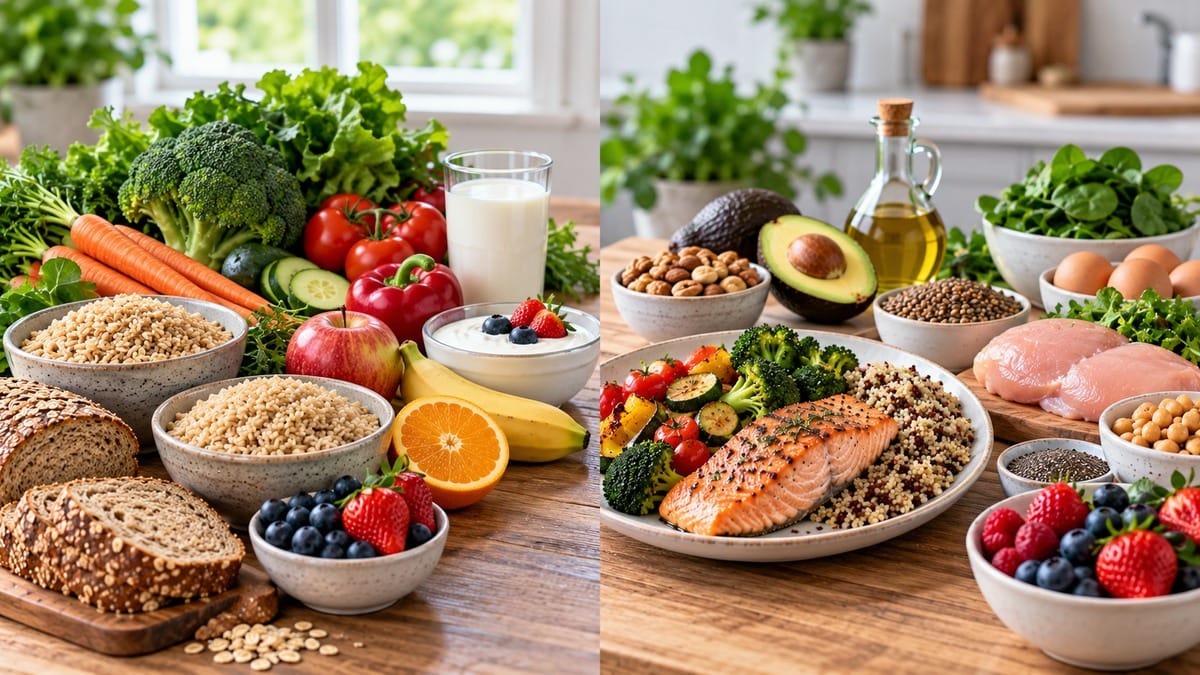
The US Dietary Guidelines 2020 vs 2025 comparison is more than a routine five-year update. The 2020–2025 edition and the final Dietary Guidelines for Americans, 2025–2030 share the same broad goal—help Americans meet nutrient needs and reduce diet-related disease—but the newer edition changes several headline recommendations and the way the guidance is presented.
The final 2025–2030 guidelines are the 10th edition and are dated January 2026. Their official name still uses the 2025–2030 cycle. This article compares the final federal documents, not the earlier advisory committee report or pre-release news coverage.
The biggest changes include a specific protein target of 1.2–1.6 grams per kilogram of body weight per day, a stronger public message to reduce highly processed foods, new language on added sugars, a new food-pyramid and serving framework, and a different approach to alcohol guidance. At the same time, familiar limits for saturated fat and sodium remain.
Table of Contents
US Dietary Guidelines 2020 vs 2025: Quick Comparison
- Protein: 2020–2025 emphasized nutrient-dense protein foods within healthy patterns; 2025–2030 adds a prominent 1.2–1.6 g/kg/day target, adjusted for individual calorie needs.
- Added sugar: 2020–2025 used less than 10% of daily calories starting at age 2; 2025–2030 says no amount of added sugars or non-nutritive sweeteners is recommended as part of a healthy diet and gives a meal-level ceiling of no more than 10 g added sugar.
- Highly processed foods: 2025–2030 addresses them directly and urges Americans to reduce or avoid salty or sweet highly processed packaged, prepared, and ready-to-eat foods.
- Food visual: the new edition is rolled out with a new food pyramid and daily serving guide rather than simply continuing the older public-facing framework.
- Alcohol: 2020–2025 gave numerical daily limits for adults who chose to drink; 2025–2030 instead says to consume less alcohol for better overall health and identifies groups who should avoid it completely.
- Saturated fat and sodium: the familiar general limits remain in the new edition.
1. Protein Is Much More Explicit in 2025–2030
The 2020–2025 guidelines included protein foods as a core food group and encouraged nutrient-dense choices such as seafood, lean meats and poultry, eggs, beans, peas, lentils, nuts, seeds, and soy products. What they did not do in the executive summary was make a body-weight-based protein target the headline.
The 2025–2030 edition does. It lists a target of 1.2–1.6 g of protein per kilogram of body weight per day, while saying the amount should be adjusted as needed for individual calorie requirements. It also encourages prioritizing nutrient-dense protein foods at meals.
That is a real shift in emphasis, but it should not be read as “protein replaces vegetables, fruit, or whole grains.” The newer guidelines still include all of those food groups. Protein simply receives more visible placement in the framework.
2. Added Sugar Guidance Changed Substantially
The 2020–2025 edition gave a simple numerical rule: keep added sugars to less than 10% of calories per day starting at age 2, and avoid added sugars for children younger than 2.
The 2025–2030 edition uses different language. It says that no amount of added sugars or non-nutritive sweeteners is recommended or considered part of a healthy or nutritious diet. It also states that one meal should contain no more than 10 grams of added sugars.
The distinction between added and naturally occurring sugars still matters. Whole fruit and plain dairy contain naturally occurring sugars and are not treated the same way as soda, candy, sweetened drinks, or heavily sweetened packaged foods. For a deeper look, see our guide to added sugar in the US nutrition guidelines.
3. Highly Processed Foods Move Into the Center of the Conversation
The older edition focused strongly on limiting foods and beverages high in added sugars, saturated fat, and sodium. The 2025–2030 edition keeps those concerns but adds much more direct language about highly processed foods.
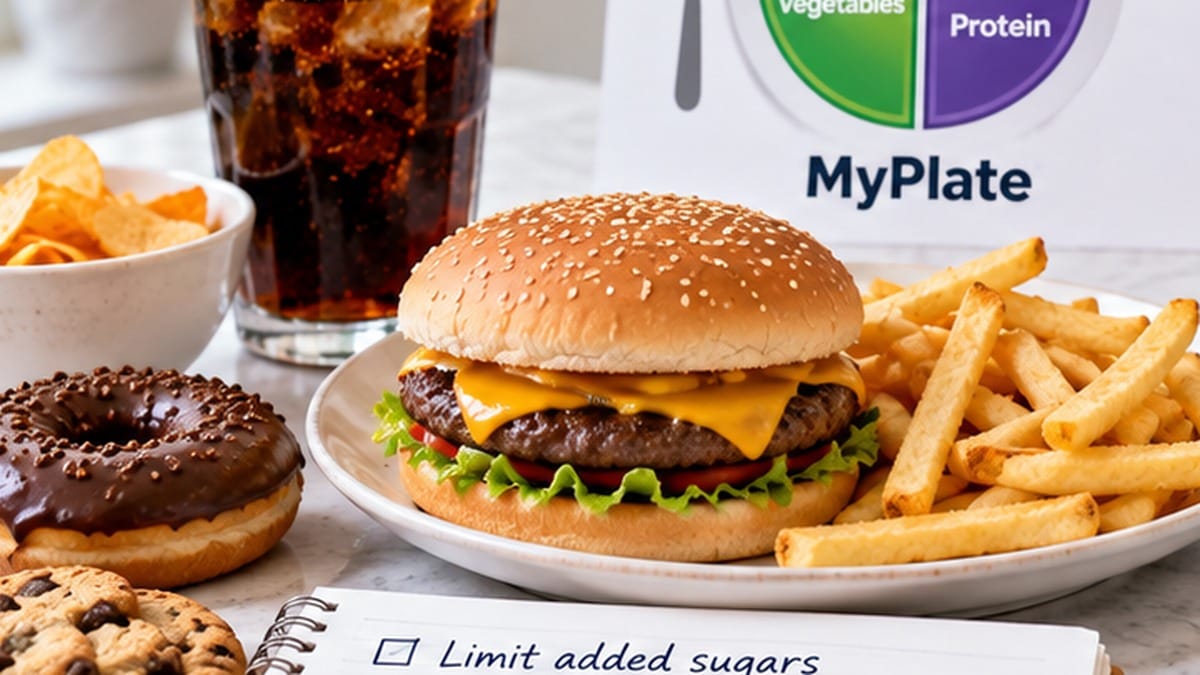
The final guidance tells Americans to reduce or avoid highly processed packaged, prepared, and ready-to-eat foods that are salty or sweet and to choose whole, nutrient-dense foods more often. Its public-facing resources use the phrase “Eat Real Food” as the central message.
That does not mean every food that comes in a package is nutritionally equivalent. Frozen vegetables, canned beans, plain yogurt, oats, and many other packaged staples can still support a nutrient-dense eating pattern. Our separate guide to processed foods and the US Dietary Guidelines looks at that distinction more closely.
4. The 2025–2030 Rollout Uses a New Food Pyramid
One claim that appeared in early discussion of the new guidelines was that federal nutrition advice might move away from food diagrams. The final release did the opposite: its public rollout prominently uses a new food pyramid plus a daily serving guide.
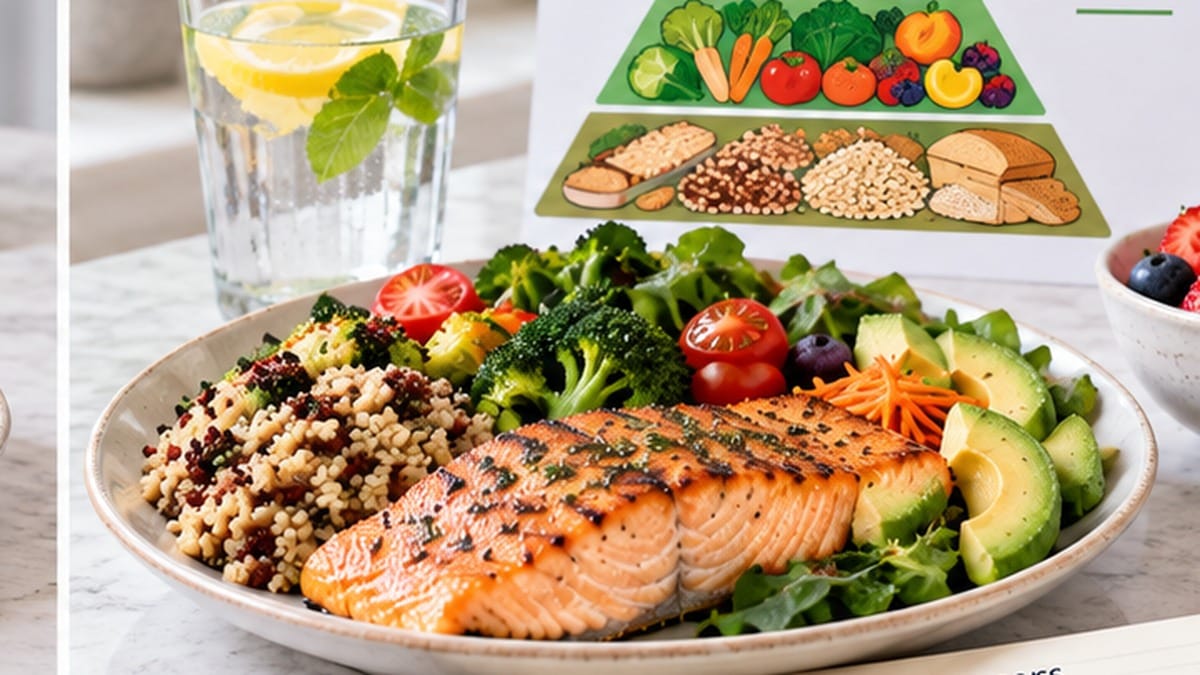
The new serving guide gives reference targets that vary by calorie level. For a 2,000-calorie pattern, the public materials list about 3–4 servings of protein foods, 3 servings of dairy, 3 servings of vegetables, 2 servings of fruit, and 2–4 servings of whole grains per day, along with healthy fats.
Those numbers are not universal prescriptions. The official framework changes serving goals according to calorie needs, and individual needs differ with age, sex, body size, activity, pregnancy, lactation, and health status.
5. Whole Grains Stay In, but Refined Carbohydrates Get Stronger Pushback
The 2020–2025 guidelines already encouraged whole grains and nutrient-dense carbohydrate foods. The 2025–2030 edition keeps whole grains in the eating pattern and gives a general target of 2–4 servings per day in the 2,000-calorie example.
What changes is the stronger language around highly processed and refined carbohydrate foods. The newer edition encourages fiber-rich whole grains while telling Americans to significantly reduce highly processed, refined carbohydrates that displace more nutrient-dense foods.
So the accurate comparison is not “2020 allowed carbs, 2025 removed them.” Both editions include carbohydrate-rich foods. The new edition places more emphasis on the form and degree of processing.
6. Saturated Fat and Sodium Are More Similar Than Different
Not every headline changed. The 2020–2025 edition limited saturated fat to less than 10% of calories per day starting at age 2 and sodium to less than 2,300 mg per day for adults, with lower limits for younger children.
The 2025–2030 edition still generally keeps saturated fat at 10% or less of daily calories and sodium at less than 2,300 mg per day for the general population age 14 and older. It also gives age-specific lower sodium limits for younger children.
This continuity is useful because it shows that the new edition did not abandon nutrient limits. It combines a stronger whole-food message with several familiar quantitative guardrails.
7. Alcohol Guidance Changed in Format
The 2020–2025 guidelines said that adults of legal drinking age could choose not to drink or, if they drank, could limit intake to two drinks or less in a day for men and one drink or less in a day for women.
The 2025–2030 edition does not repeat those sex-specific numerical daily limits. Instead, it says to consume less alcohol for better overall health and lists groups who should avoid alcohol completely, including pregnant women and people with certain medications, medical conditions, or alcohol-use concerns.
That is a change in how the federal advice is framed, not the disappearance of alcohol guidance.
8. Life-Stage Guidance Remains, but Some Priorities Are More Specific
Both editions organize recommendations across life stages, including infancy, childhood, adolescence, adulthood, pregnancy, lactation, and older adulthood. The newer edition gives a more streamlined public framework while still calling out age- and stage-specific priorities.
For example, the 2025–2030 guidance highlights calcium and vitamin D during adolescence, iron for menstruating girls, iron and folate during pregnancy, and protein, vitamin B12, vitamin D, and calcium in older adulthood.
For more detail, see our updated pages on the US Dietary Guidelines for children and the practical application of the guidelines for women over 40.
What Stayed the Same Across Both Editions?
The differences are important, but the two editions still share a recognizable foundation. Both encourage Americans to eat a variety of nutrient-dense foods, include vegetables and fruits, choose whole grains, use a variety of protein foods, and pay attention to saturated fat, sodium, and added sugar.
Both also treat healthy eating as a pattern rather than a single meal. Cultural traditions, budget, availability, preferences, and life stage can shape how that pattern looks. The 2025–2030 edition changes the emphasis and several targets, but it does not erase every principle from the previous cycle.
FAQs about Compare the US Dietary Guidelines 2020 vs 2025
Are the 2025 Dietary Guidelines actually called 2025–2030?
Yes. The official title is Dietary Guidelines for Americans, 2025–2030. The final 10th edition is dated January 2026, but the five-year cycle remains 2025–2030.
Did the protein recommendation really change?
The newer edition gives protein much more explicit emphasis and lists a target of 1.2–1.6 g/kg/day, adjusted for individual calorie requirements. The 2020–2025 edition emphasized nutrient-dense protein foods without using that target as the main public headline.
Did the added sugar limit stay at 10% of calories?
No. The 2020–2025 edition used the less-than-10%-of-calories rule. The 2025–2030 edition instead says no amount of added sugars or non-nutritive sweeteners is recommended as part of a healthy diet and sets a maximum of 10 g of added sugars in one meal.
Did sodium and saturated fat limits disappear?
No. The newer edition still includes numerical limits for sodium and saturated fat, so the shift toward whole foods does not replace all nutrient-based targets.
Does the new pyramid mean MyPlate is suddenly invalid?
The final 2025–2030 rollout clearly uses a new pyramid and serving framework. Other federal education materials and programs may not all update at the same moment, so implementation should be checked program by program rather than assumed to change instantly.
Final Takeaway
The clearest way to summarize US Dietary Guidelines 2020 vs 2025 is this: the newer edition keeps many familiar nutrition guardrails but makes protein, whole foods, highly processed foods, added sugar, and a new serving framework much more prominent.
The 2020–2025 edition remains useful historical context, especially for understanding the previous limits on added sugar and alcohol. For current federal guidance, however, the 2025–2030 edition is the source of truth.
For the complete current overview, read our updated pillar guide to the US Dietary Guidelines 2025–2030. The official current edition is maintained by USDA and HHS through ODPHP and RealFood.gov.

Trending recipe
Sheet Pan Harvest Chicken with Pan-Juice Toast
Sheet pan harvest chicken roasts crisp-skinned thighs with sweet potatoes, Brussels sprouts, apples, and sourdough pan-juice toast for a cozy…
View recipe →
Trending recipe
Banana Bread Banana Pudding
Banana bread banana pudding layers soft banana bread cubes, homemade vanilla pudding, fresh bananas, and whipped cream into an easy…
View recipe →
Trending recipe
Caramel Apple Bark
Caramel apple bark layers semisweet chocolate, salty pretzels, crisp Granny Smith apple, and chewy caramel into an easy no-bake fall…
View recipe →