
Blog
US Dietary Guidelines 2025–2030: What Changed & Why It Matters
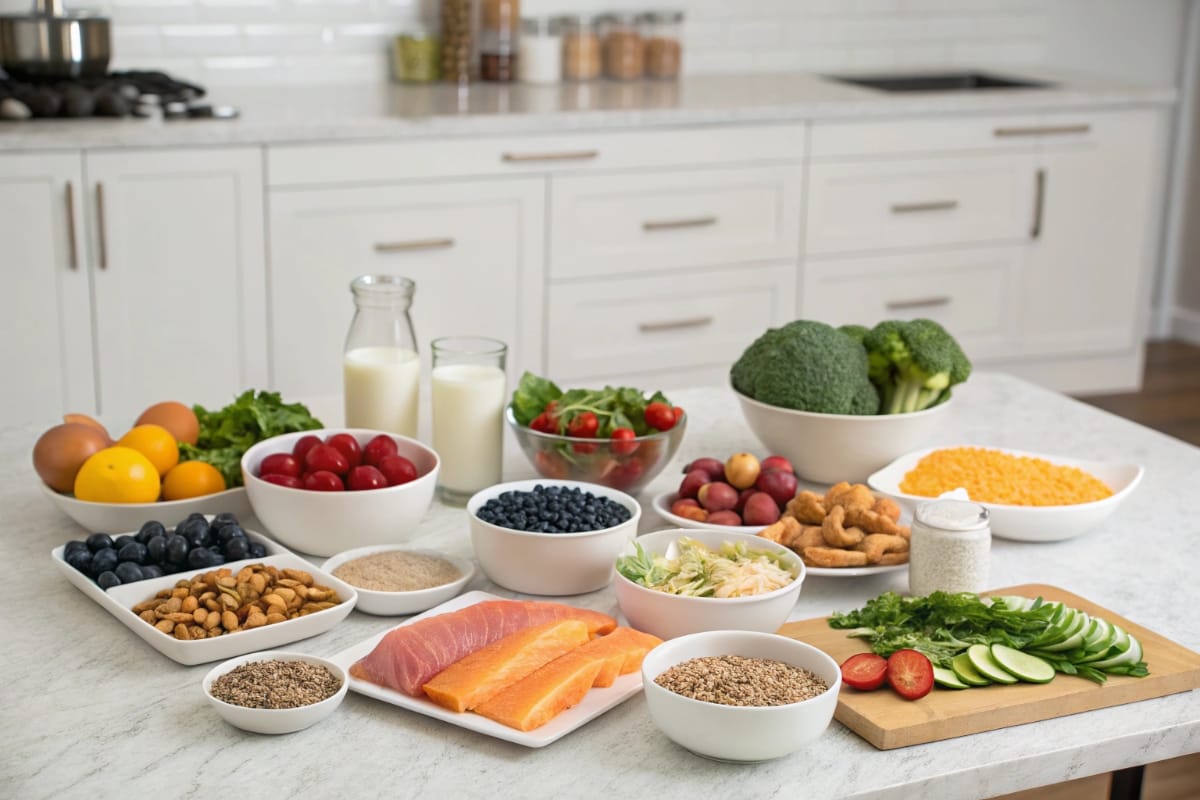
The US Dietary Guidelines 2025–2030 are the current federal nutrition recommendations issued jointly by the U.S. Department of Agriculture (USDA) and the U.S. Department of Health and Human Services (HHS). The final 10th edition is dated January 2026, but its official name remains Dietary Guidelines for Americans, 2025–2030.
This guide has been updated against the final federal guidelines, not the earlier 2025 Dietary Guidelines Advisory Committee report. That distinction matters because several details in the final publication differ from the proposals and news coverage that appeared before release.
The biggest changes are more specific than simply “eat more whole foods.” The final guidelines set a protein target of 1.2–1.6 grams per kilogram of body weight per day, introduce a new food-pyramid presentation and daily serving framework, change the approach to added sugar, emphasize limiting highly processed foods, retain the general saturated-fat and sodium limits, and replace the previous numerical alcohol limits with a shorter “consume less” message.
Table of Contents
US Dietary Guidelines 2025–2030: Quick Summary of What Changed
- Overall message: Prioritize whole, nutrient-dense foods and reduce highly processed foods. What changed: The final edition uses “Eat Real Food” as its central public-facing message.
- Protein: 1.2–1.6 g/kg/day, adjusted for individual calorie needs. What changed: A specific body-weight-based protein target is now prominent.
- Added sugar: No amount is recommended as part of a healthy diet; no more than 10 g of added sugar in one meal. What changed: This replaces the older headline limit of less than 10% of daily calories.
- Highly processed foods: Reduce or avoid salty or sweet highly processed packaged, prepared, and ready-to-eat foods. What changed: Processing level is addressed much more directly.
- Food visual: A food-pyramid presentation plus daily serving goals. What changed: It is not accurate to describe the final edition as moving away from visual food models.
- Saturated fat: Generally no more than 10% of daily calories. What changed: The familiar 10% ceiling remains.
- Sodium: Less than 2,300 mg/day for the general population age 14 and older, with age-specific limits for younger children. What changed: The adult benchmark remains familiar, with explicit child targets listed.
- Alcohol: “Consume less alcohol for better overall health,” with specific groups advised to avoid alcohol completely. What changed: The prior edition’s numerical daily limits are not repeated in the final 2025–2030 guideline.
For the official document and serving tables, see the 2025–2030 Dietary Guidelines resources on RealFood.gov.
1. Whole, Nutrient-Dense Foods Move to the Center
The final guidelines tell Americans to build eating patterns around nutrient-dense foods including protein foods, dairy, vegetables, fruits, healthy fats, and whole grains. They also explicitly call for a substantial reduction in highly processed foods that are high in refined carbohydrates, added sugars, excess sodium, unhealthy fats, or certain additives.
The wording matters. “Processed” is a very broad term: frozen vegetables, canned beans, plain yogurt, and roasted nuts are processed in some way. The federal document specifically uses the term highly processed foods when describing foods to reduce or avoid. That is more precise than treating every packaged food as nutritionally equivalent.
The guidelines give examples such as chips, cookies, and candy with added sugars and sodium, and they encourage home-prepared, nutrient-dense meals when practical. For a closer look at this section, see our guide to processed foods in the US Dietary Guidelines.
2. Protein Gets a Specific Daily Target
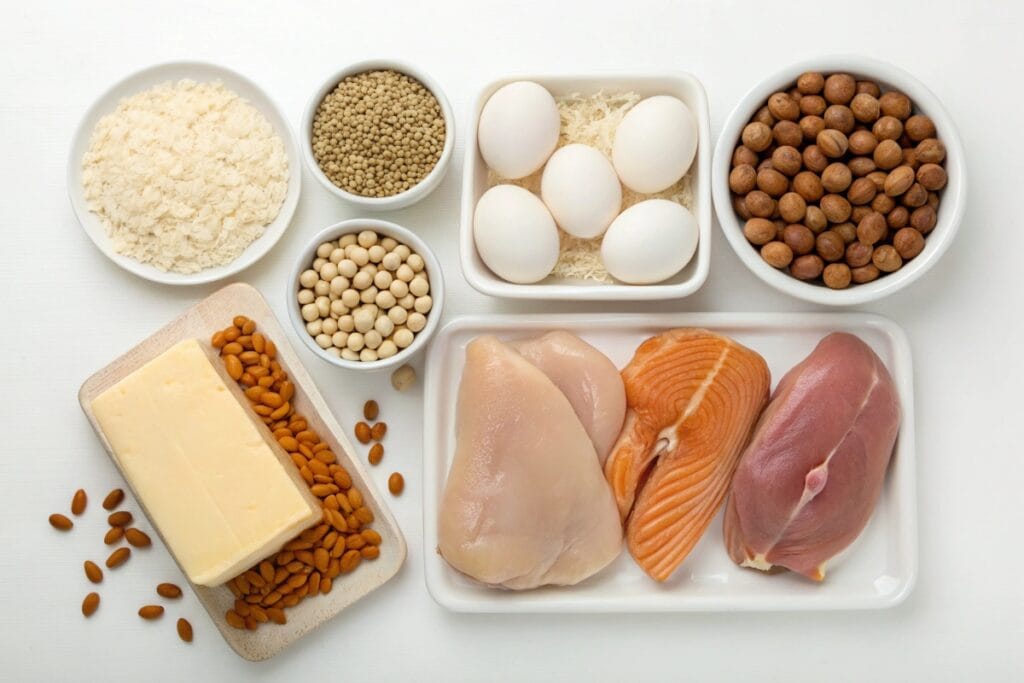
One of the clearest changes in the US Dietary Guidelines 2025–2030 is the new protein target: 1.2–1.6 grams of protein per kilogram of body weight per day, with adjustment based on individual calorie requirements. The guidance also says to prioritize protein foods at every meal.
The recommended sources include both animal and plant foods: eggs, poultry, seafood, red meat, beans, peas, lentils, legumes, nuts, seeds, and soy. The document also recommends choosing cooking methods such as baking, broiling, roasting, stir-frying, or grilling instead of deep frying.
This does not mean every person should automatically aim for the top of the range. Body size, calorie needs, activity, age, medical conditions, and overall dietary pattern can change an appropriate intake. The federal wording itself says the target should be adjusted as needed.
Our separate article on high-protein eating and the US Dietary Guidelines looks more closely at what this range means in everyday food choices.
3. The Final Guidelines Use a Food Pyramid and Daily Serving Goals
An important correction to early coverage is that the final guidelines did not move away from food visuals. The 2025–2030 rollout explicitly returns to a food-pyramid presentation and pairs it with a daily servings guide.
For a 2,000-calorie dietary pattern, the official daily serving guide lists approximately:
- Protein foods: 3–4 servings per day
- Dairy: 3 servings per day
- Vegetables: 3 servings per day
- Fruits: 2 servings per day
- Whole grains: 2–4 servings per day
- Healthy fats: about 4½ teaspoon-size servings in the official 2,000-calorie table
Those numbers are reference targets, not universal prescriptions. The same federal serving chart changes by calorie level, and the guidelines state that calorie needs depend on age, sex, height, weight, and physical activity. Smaller or larger portions may be appropriate depending on individual needs.
4. Added Sugar Guidance Changed Substantially
The 2020–2025 edition used a familiar limit of less than 10% of daily calories from added sugars. The final 2025–2030 edition uses different language. It says that no amount of added sugars or non-nutritive sweeteners is recommended or considered part of a healthy or nutritious diet, while also stating that one meal should contain no more than 10 grams of added sugars.
The document also recommends avoiding sugar-sweetened beverages such as sodas, fruit drinks, and energy drinks. For snack foods, it points readers to FDA “Healthy” claim limits and gives examples of lower added-sugar thresholds for grain and dairy snacks.
This guidance concerns added sugars, not naturally occurring sugars in whole fruit or plain milk. The guidelines explicitly distinguish naturally occurring sugars from sugars added during manufacturing or preparation.
Our detailed guide to added sugar in the new US nutrition guidelines explains the label-reading implications in more detail.
5. Whole Grains Stay In; Refined Carbohydrates Are Reduced
The final guidelines encourage fiber-rich whole grains while recommending a significant reduction in highly processed refined carbohydrates. The official target is generally 2–4 servings of whole grains per day in a 2,000-calorie pattern, with adjustments for individual calorie needs.
This is an important distinction because the new guidance is not a blanket recommendation to avoid carbohydrates. Whole grains remain part of the federal eating pattern; the stronger warning is directed at refined and highly processed carbohydrate foods that displace more nutrient-dense choices.
6. Saturated Fat and Sodium Still Have Numerical Limits
Despite the stronger emphasis on food quality, the final edition still includes quantitative nutrient limits. Saturated fat should generally remain at 10% or less of total daily calories. For sodium, the general population age 14 and older should consume less than 2,300 mg per day.
The sodium limits for younger children are lower: less than 1,200 mg per day for ages 1–3, less than 1,500 mg for ages 4–8, and less than 1,800 mg for ages 9–13. The guidelines also note that highly active people may need more sodium to replace sweat losses.
In other words, the 2025–2030 edition does not abandon nutrient targets. It combines food-based guidance with specific limits where the federal document still uses them.
7. Alcohol Guidance Is Shorter and Different
The previous edition gave numerical daily limits for adults who chose to drink. The final 2025–2030 guidelines do not repeat those sex-specific daily numbers. Instead, the alcohol section says: consume less alcohol for better overall health.
It also identifies groups who should avoid alcohol completely, including pregnant women, people recovering from alcohol use disorder or unable to control their drinking, and people taking medications or living with medical conditions that can interact with alcohol. The document also advises people with a family history of alcoholism to be mindful of alcohol use and related addictive behaviors.
So the accurate summary is not simply that alcohol was “removed.” Alcohol is still addressed, but the style of guidance changed from explicit daily numerical limits to a shorter risk-reduction message.
8. Special Guidance Covers Different Life Stages
The final guidelines include sections for infancy and early childhood, children and adolescents, pregnant women, lactating women, young adulthood, older adulthood, and people with chronic disease. That makes it important not to turn broad federal guidance into a one-size-fits-all rule for every age group.
For example, children have age-specific sodium recommendations, and the infant section includes guidance on breastfeeding or infant formula, vitamin D, iron, solid-food introduction, and early peanut introduction for some infants at higher allergy risk under professional guidance.
For age-specific context, see our guides to the US Dietary Guidelines for children and the practical application of the guidelines for women over 40. These pages apply the federal framework to specific groups; they should not be read as separate federal guideline categories unless the official document actually uses that category.
What Changed From the 2020–2025 Guidelines?
The best way to understand the new edition is to separate what genuinely changed from what remained familiar. The 2020–2025 guidelines already encouraged nutrient-dense foods, fruits, vegetables, whole grains, and limits on added sugar, saturated fat, and sodium. The 2025–2030 edition changes the emphasis and several headline targets.
- Protein: a prominent 1.2–1.6 g/kg/day target now appears.
- Added sugar: the headline shifts from less than 10% of daily calories to no amount being recommended as part of a healthy diet, with a maximum of 10 g in one meal.
- Highly processed foods: the language becomes much more direct.
- Food visual: the new rollout uses a food pyramid and serving framework rather than moving away from food diagrams.
- Alcohol: the previous numerical daily limits are replaced by “consume less alcohol for better overall health.”
- Saturated fat and sodium: familiar numerical limits remain.
For a side-by-side breakdown, read what changed compared with the 2020 Dietary Guidelines.
What the Guidelines Mean for Everyday Meals
The federal document is broad, but its practical direction can be translated into ordinary meals without turning every plate into a nutrition calculation. A meal can start with a nutrient-dense protein food, include vegetables or fruit, add a whole-grain food when it fits, and use a modest amount of a preferred cooking fat. Water and unsweetened drinks are the default hydration choices.
For packaged foods, the new guidance makes label reading more useful. Compare added sugar, sodium, saturated fat, and ingredient lists across products that serve the same purpose. A packaged food is not automatically incompatible with the guidelines; the larger question is whether it helps build a nutrient-dense eating pattern or mainly adds refined starch, added sugar, excess sodium, and little nutritional value.
That is also why the guidelines should not be reduced to a single diet trend. They include animal and plant protein sources, vegetables, fruits, dairy or suitable alternatives, healthy fats, and whole grains. Individuals may arrange those foods differently according to culture, preference, budget, allergies, medical needs, and calorie requirements.
FAQs abot US Dietary Guidelines 2025–2030
Were the Dietary Guidelines for Americans 2025–2030 published in 2025 or 2026?
The official edition is called Dietary Guidelines for Americans, 2025–2030, but the final 10th edition is dated January 2026. The name refers to the guideline cycle, not simply the calendar date on which the final document appeared.
Do the new guidelines recommend 1.2–1.6 grams of protein per kilogram?
Yes. The final federal document lists a protein serving goal of 1.2–1.6 g/kg/day and says to adjust it as needed for individual calorie requirements.
Did the added sugar limit stay at 10% of calories?
No. The 2020–2025 edition used the less-than-10%-of-calories benchmark. The 2025–2030 edition instead states that no amount of added sugars or non-nutritive sweeteners is recommended as part of a healthy diet and that one meal should contain no more than 10 grams of added sugars.
Did the new guidelines get rid of MyPlate and food diagrams?
It is not accurate to describe the final release as moving away from food visuals. The 2025–2030 rollout uses a new food-pyramid presentation and an official daily servings guide. MyPlate may still appear in other federal resources or programs during implementation, but the final DGA rollout itself clearly includes a pyramid framework.
Do the guidelines ban processed foods?
No. The document specifically calls for reducing or avoiding highly processed foods that are salty or sweet and prioritizing nutrient-dense foods. Processing alone does not make every frozen, canned, or packaged food nutritionally equivalent.
Did the guidelines remove alcohol advice?
No. Alcohol still has its own section. The new edition says to consume less alcohol for better overall health and identifies groups who should avoid it completely, but it does not repeat the previous edition’s numerical daily limits.
Official Sources and Final Takeaway
The most important update to this article is methodological: the source of truth is now the final 2025–2030 federal guideline, not forecasts, news reports, or the earlier advisory committee report. The official edition is maintained by HHS and USDA through the Office of Disease Prevention and Health Promotion, with the guideline, scientific foundation, and serving guides available at RealFood.gov.
In practical terms, the US Dietary Guidelines 2025–2030 put more explicit attention on protein, whole and nutrient-dense foods, highly processed foods, added sugar, and a new serving framework. At the same time, several familiar guardrails remain, including limits for saturated fat and sodium. Because federal implementation can differ by program and population, individual program rules—such as school meal standards—should always be checked separately rather than assumed to change immediately when a new DGA edition is published.

Trending recipe
Sheet Pan Harvest Chicken with Pan-Juice Toast
Sheet pan harvest chicken roasts crisp-skinned thighs with sweet potatoes, Brussels sprouts, apples, and sourdough pan-juice toast for a cozy…
View recipe →
Trending recipe
Banana Bread Banana Pudding
Banana bread banana pudding layers soft banana bread cubes, homemade vanilla pudding, fresh bananas, and whipped cream into an easy…
View recipe →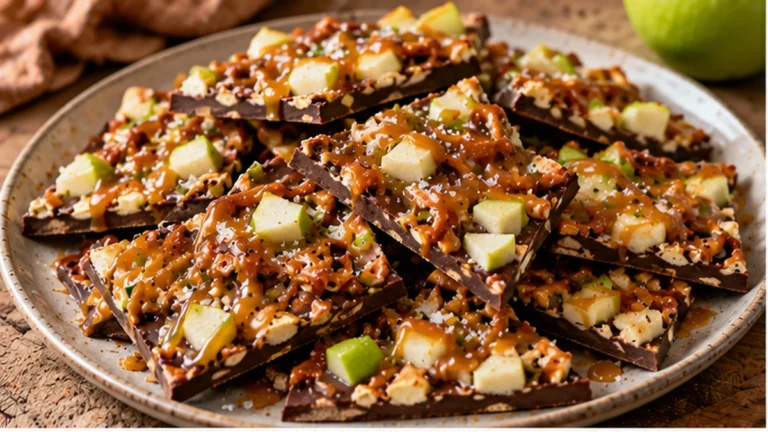
Trending recipe
Caramel Apple Bark
Caramel apple bark layers semisweet chocolate, salty pretzels, crisp Granny Smith apple, and chewy caramel into an easy no-bake fall…
View recipe →