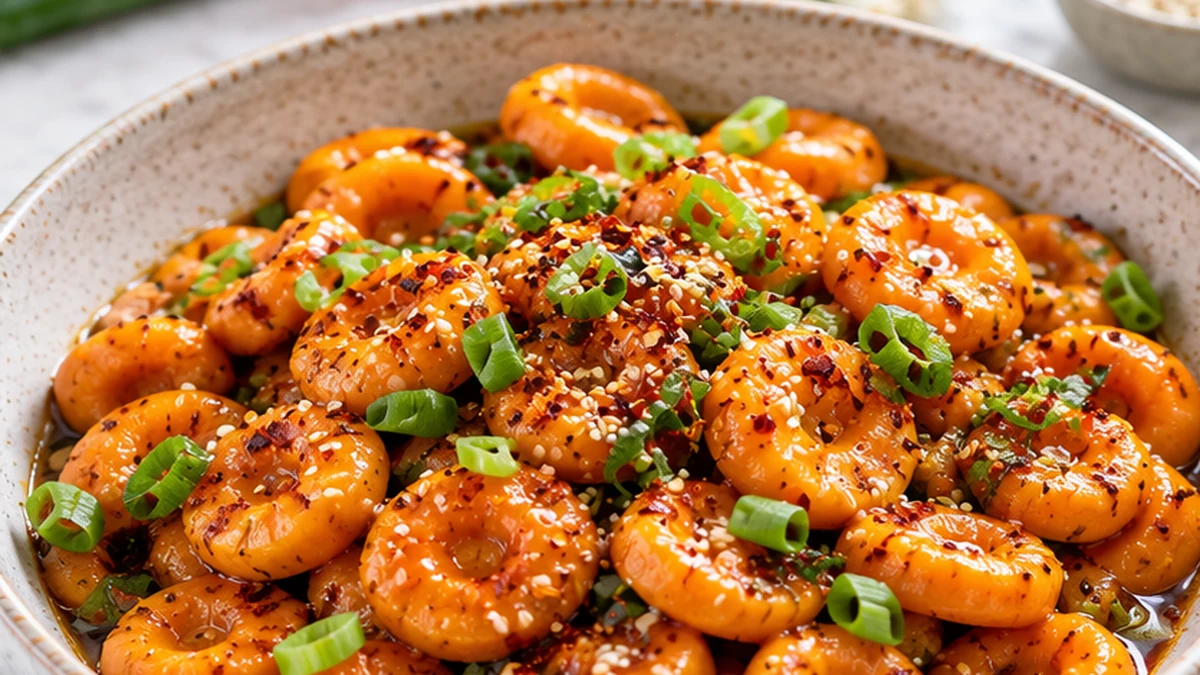
Carrot button noodles are one of those recipes that look AI-generated until you watch the dough come together. The noodle base uses only cooked carrots and glutinous rice flour. The warm carrot puree hydrates the flour, then the dough is rolled into little balls, pressed with a fingertip, boiled, and tossed in a garlic-chili sauce.
The recipe has circulated online before, but it jumped back into the viral-recipe conversation this week after a major creator tested a batch of “two-ingredient recipes that shouldn’t be possible.” That makes carrot button noodles unusually useful for a trend article: the idea is strange enough to earn curiosity clicks, yet the finished food is a real chewy noodle rather than a stunt.
The version below keeps the noodle dough faithful to the two-ingredient idea, then uses tamari, rice vinegar, garlic, scallions, chile, sesame, and hot oil for the sauce. If you like unusual vegetable preparations, our ribbon carrot salad is another carrot recipe built around texture rather than complicated ingredients.
Table of Contents
Why Carrot Button Noodles Work
Warm mashed carrots provide both moisture and flavor for the dough.
Glutinous rice flour creates the chewy, stretchy texture that makes the buttons feel closer to rice cakes or gnocchi than wheat pasta.
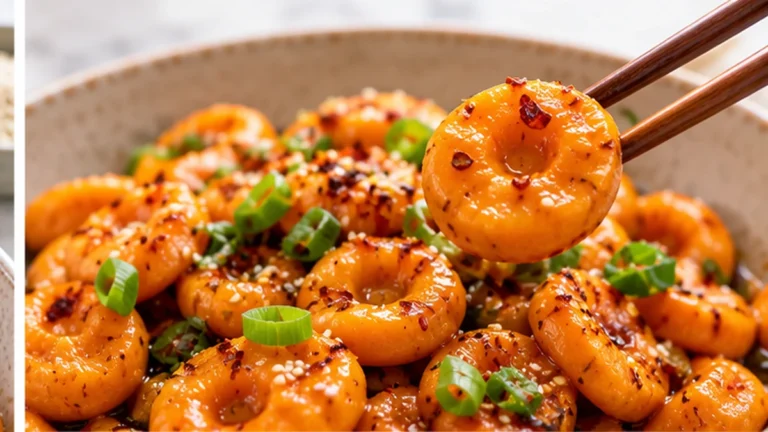
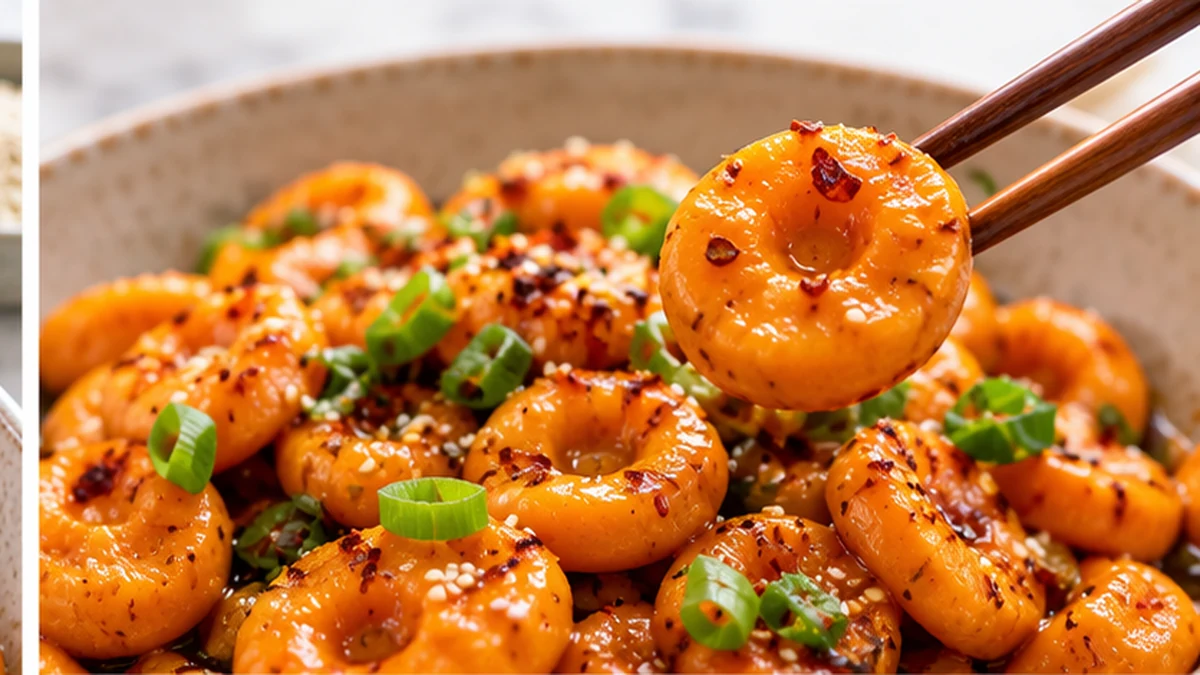
The fingertip indentation helps the sauce collect on each piece.
Boiling only until the buttons float keeps them chewy instead of waterlogged.
A sharp garlic-chili sauce balances the mild sweetness of the carrots.
The recipe is naturally vegan when the sauce ingredients are vegan.
Why This Weird Recipe Is Trending Again
On November 2, 2026, a new viral-recipe roundup from LifeByMikeG put carrot noodles back in front of a huge audience while testing recipes built around only two ingredients. The current version traces back to creators such as Dan Dumbrell, whose carrot-and-glutinous-rice-flour method has circulated through social media and recipe sites.
One useful reference is Harris Farm Markets’ carrot button noodle recipe, which uses 400 grams of carrots and 200 to 250 grams of glutinous rice flour, then finishes the buttons with garlic, scallions, chile, soy sauce, vinegar, and hot oil. The proportions below stay close to that successful structure while using tamari so the sauce can fit a gluten-free version when the labels are appropriate.
Ingredients You’ll Need
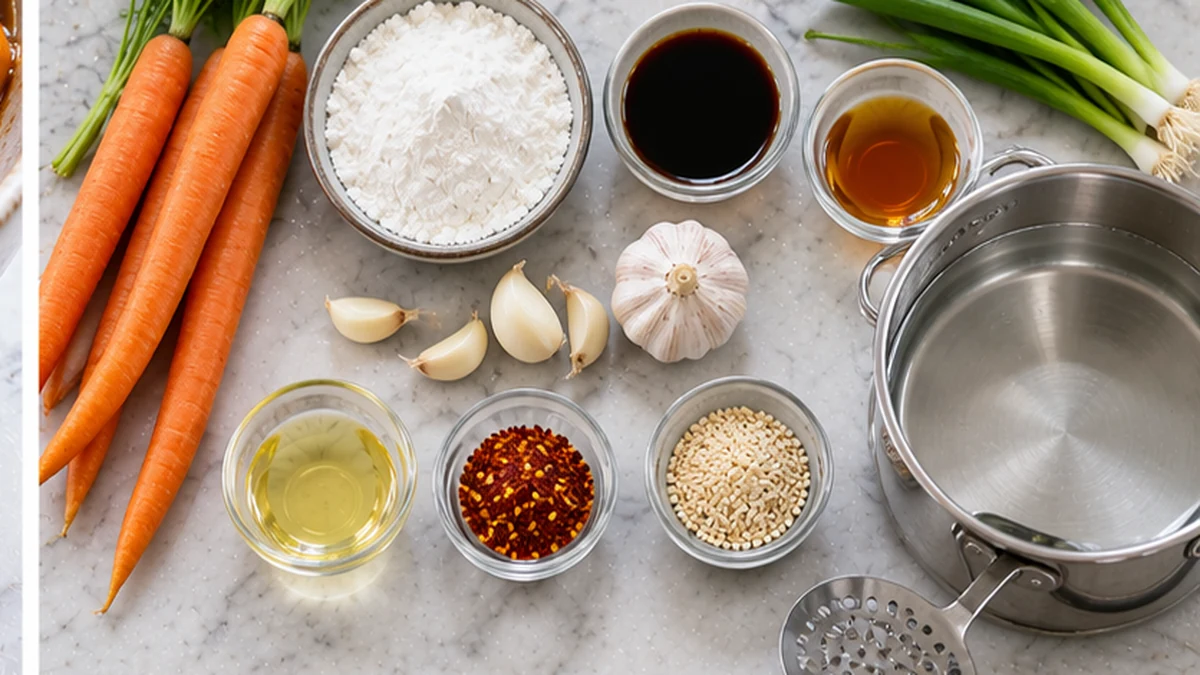
For the 2-Ingredient Noodle Dough
400 grams carrots, peeled and sliced into rounds
220 grams glutinous rice flour, plus up to 30 grams more if needed
For the Garlic-Chili Sauce
2 garlic cloves, finely minced
2 scallions, thinly sliced
1 teaspoon crushed red pepper flakes
1 tablespoon neutral oil
1 tablespoon gluten-free tamari
1 tablespoon rice vinegar or Chinese black vinegar
1 teaspoon toasted sesame seeds
1/2 teaspoon toasted sesame oil, optional
What Does “Glutinous” Rice Flour Mean?
Despite the name, glutinous rice does not contain the gluten protein found in wheat, barley, and rye. “Glutinous” refers to the sticky texture of the cooked rice. Beyond Celiac specifically notes that glutinous rice is gluten-free.
Cross-contact still matters for packaged ingredients. The FDA gluten-free labeling guidance explains that foods using a gluten-free claim must meet the federal standard of less than 20 ppm gluten. If you are cooking for someone with celiac disease, use glutinous rice flour and tamari labeled gluten-free and keep utensils and cooking surfaces free from wheat contamination.
Chewy two-ingredient carrot and glutinous-rice-flour buttons tossed in a hot garlic, scallion, chile, tamari, vinegar, and sesame sauce.
Total Time:40 minutes
Yield:2 servings
Ingredients
Scale
400 grams carrots, peeled and sliced into rounds
220 grams glutinous rice flour, plus up to 30 grams more if needed
2 garlic cloves, finely minced
2 scallions, thinly sliced
1 teaspoon crushed red pepper flakes
1 tablespoon neutral oil
1 tablespoon gluten-free tamari
1 tablespoon rice vinegar or Chinese black vinegar
1 teaspoon toasted sesame seeds
1/2 teaspoon toasted sesame oil, optional
Instructions
Place the sliced carrots in a medium saucepan and cover with water. Bring to a boil and cook for 10 to 12 minutes, until completely fork-tender. Drain very well.
Blend or mash the carrots while still hot. Transfer to a bowl and stir in 220 grams glutinous rice flour. When cool enough to handle, knead briefly until a soft, smooth dough forms. Add more flour one tablespoon at a time only if the dough is very sticky.
Pinch off roughly 2-teaspoon pieces and roll into balls. Press a fingertip deeply into the center of each ball without pushing through.
Bring a fresh pot of water to a rolling boil. Cook the buttons in batches. When they float, continue cooking for about 30 seconds, then remove with a slotted spoon.
Place the garlic, scallions, red pepper flakes, sesame seeds, and optional sesame oil in a heatproof bowl. Heat the neutral oil until shimmering and carefully pour it over the aromatics.
Stir in the tamari and vinegar. Add the hot carrot button noodles and toss until evenly coated. Serve immediately.
Notes
Mix the flour into the carrot puree while the carrots are still warm for the smoothest dough.
If the dough is crumbly, add hot water 1 teaspoon at a time. If sticky, add glutinous rice flour 1 tablespoon at a time.
Use glutinous rice flour and tamari labeled gluten-free when gluten cross-contact matters.
Nutrition is estimated for two servings using 220 grams glutinous rice flour and 1 tablespoon neutral oil.
Author:Adam Moretti
Prep Time:20 minutes
Cook Time:20 minutes
Category:Dinner
Method:Boil and Stovetop
Cuisine:Asian-Inspired
Diet:Vegan
How to Make Carrot Button Noodles
Place the sliced carrots in a medium saucepan and cover them with water. Bring to a boil and cook until the thickest pieces are completely fork-tender, about 10 to 12 minutes. Drain very well, then blend or mash the carrots while they are still hot.
Transfer the hot carrot puree to a mixing bowl. Add 220 grams of glutinous rice flour and stir with a sturdy spoon until a rough dough forms. When it is cool enough to handle, knead briefly. The dough should feel soft and pliable but should not stick heavily to your fingers. Add more flour one tablespoon at a time only if needed.
Pinch off small pieces, roughly 2 teaspoons each, and roll them into balls. Press your fingertip into the center of each ball to create a deep dimple without pushing all the way through. Keep the buttons similar in size so they cook at the same rate.
Bring a fresh pot of water to a rolling boil. Add the carrot button noodles in batches so the pot does not become crowded. Once they float to the surface, cook for about 30 seconds more, then lift them out with a slotted spoon.
Place the garlic, scallions, red pepper flakes, sesame seeds, and optional sesame oil in a heatproof bowl. Heat the neutral oil until shimmering, then carefully pour it over the aromatics. Stir in the tamari and vinegar. Add the hot noodles and toss until every button is glossy and coated.
The Most Important Step: Mix the Dough While the Carrots Are Warm
Warm carrot puree hydrates glutinous rice flour much more effectively than cold puree. If you let the carrots cool completely, the flour can stay powdery and the dough may crack when you shape it.
If the dough looks dry, add one teaspoon of hot water at a time rather than dumping in more liquid. If it is sticky, dust in a little more glutinous rice flour. The goal is a smooth dough that feels similar to soft modeling clay.
How to Tell When the Noodles Are Cooked
Raw buttons sink when they first enter the boiling water.
As they cook, they rise to the surface.
Give them about 30 seconds after floating so the center finishes cooking.
The outside should look glossy, not chalky.
A cooked button should be chewy and flexible without a dry flour center.
Troubleshooting
Why is my dough crumbling?
The carrot puree may have cooled too much or been unusually dry. Add one teaspoon of hot water, knead, and reassess before adding more. Too much water at once can turn the dough sticky.
Why is my dough sticky?
Carrots vary in water content. Add glutinous rice flour one tablespoon at a time until the dough stops clinging heavily to your hands. Do not add large amounts at once or the cooked noodles can become dense.
Why did the buttons fall apart in the pot?
The dough was probably too wet, the water was not fully boiling, or the pieces were too large. A firm rolling boil sets the surface quickly. Make one test noodle first before cooking the entire batch.
Why are the noodles too tough?
Too much flour is the usual cause. Stop adding flour as soon as the dough becomes workable. The recipe should feel chewy, but not rubbery.
Flavor Variations
For a milder sauce, skip the chile flakes and use garlic, scallions, tamari, vinegar, and sesame. For a brighter version, add lime juice after tossing. For more heat, add chile crisp instead of the hot-oil mixture, but remember that the sodium and calories will change. If you want another simple plant-based bowl for colder days, our vegan soup recipes collection is a better fit than forcing these noodles into a soup.
You can also serve the buttons in a light broth with bok choy or spinach. If you want a complete plant-based meal rather than a snack-sized noodle bowl, pair them with tofu, edamame, or beans. Our vegan dinner recipes guide has more ideas for building a fuller meal.
Can You Make Them With Potato Starch Instead?
Yes, but the texture changes. Some older carrot noodle recipes use potato starch rather than glutinous rice flour. Potato starch produces a translucent, springy bite, while glutinous rice flour tends to be softer and more rice-cake-like. Do not substitute cup-for-cup without testing because the absorption differs.
Nutrition Notes
The biggest calorie source is the glutinous rice flour, not the carrots. Using 400 grams of carrots, about 220 grams of flour, one tablespoon of oil, and the sauce ingredients, two generous servings come to roughly 555 calories each with about 10 grams of protein.
USDA FoodData Central lists raw mature carrots as a standard vegetable reference food. The recipe is best understood as a starch-based noodle dish that happens to use a substantial amount of carrot, not as a low-calorie vegetable side.
Make-Ahead and Storage
The uncooked dough is easiest to shape while still warm, so I would not mix it far in advance. You can peel and slice the carrots earlier in the day, then cook and mash them when you are ready to make the noodles.
Cooked carrot button noodles can be refrigerated in a covered container for up to about two days for best texture. Reheat them in a skillet with a splash of water or briefly in the microwave. They become firmer as they chill, so a little moisture helps restore the chewy texture.
Carrot Button Noodles FAQs
Are carrot button noodles actually noodles?
They are not wheat noodles in the traditional sense. They are small boiled pieces of carrot-and-rice-flour dough, closer in method to dumplings, gnocchi, or rice cakes. The “noodle” name comes from how they are served and eaten.
Do they taste strongly like carrots?
They have mild carrot sweetness, but the garlic, tamari, vinegar, chile, and sesame dominate the final flavor. The carrot is more noticeable in the color and slight sweetness than in the sauce-forward taste.
Can I use regular rice flour?
Not as a direct substitute. Regular rice flour does not have the same sticky texture as glutinous rice flour, so the dough can crack or produce a much less chewy noodle.
Can I freeze the noodles?
You can experiment with freezing shaped uncooked buttons, but the dough texture may change as moisture moves during freezing and thawing. For a first batch, refrigerating cooked leftovers is more predictable.
Are carrot button noodles gluten-free?
The core ingredients are rice and carrots, but packaged flour, tamari, vinegar, and seasonings still need label checking. Use products that meet your gluten-free requirements, especially when celiac disease is a concern.
Final Tips
The recipe succeeds or fails on dough texture. Keep the carrots hot, add the flour gradually, shape one test button, and boil it before committing the whole batch. That test tells you immediately whether the dough needs more flour or a touch of hot water.
Carrot button noodles are weird enough to look like a social-media trick, but the finished bowl has a legitimate chewy texture and a sauce-friendly shape. That makes this one of the rare viral two-ingredient ideas that can survive after the trend itself fades.
Reviewed recipe options
Make this recipe fit me
Choose one of seven popular diet options. NutriMatch will confirm whether the recipe already fits, show a reviewed adaptation when available, or recommend recipes that match your choice.
Please choose a diet first.
Already a reviewed match
This recipe already fits Dairy-Free.
No changes are needed based on its reviewed NutriMatch classification. Check the complete ingredients, product labels, and serving details for your own needs.
Recipe details, product formulas, and cross-contact information can change. Confirm current labels and use professional guidance when medically necessary.
Already a reviewed match
This recipe already fits Gluten-Free.
No changes are needed based on its reviewed NutriMatch classification. Check the complete ingredients, product labels, and serving details for your own needs.
Recipe details, product formulas, and cross-contact information can change. Confirm current labels and use professional guidance when medically necessary.
Not available for this recipe
This recipe cannot currently be made High Protein with a reviewed adaptation.
NutriMatch will not guess at substitutions. Try one of these recipes that is already reviewed for your choice.
Recipe details, product formulas, and cross-contact information can change. Confirm current labels and use professional guidance when medically necessary.
Not available for this recipe
This recipe cannot currently be made Keto with a reviewed adaptation.
NutriMatch will not guess at substitutions. Try one of these recipes that is already reviewed for your choice.
Recipe details, product formulas, and cross-contact information can change. Confirm current labels and use professional guidance when medically necessary.
Not available for this recipe
This recipe cannot currently be made Low Carb with a reviewed adaptation.
NutriMatch will not guess at substitutions. Try one of these recipes that is already reviewed for your choice.
Recipe details, product formulas, and cross-contact information can change. Confirm current labels and use professional guidance when medically necessary.
Already a reviewed match
This recipe already fits Vegan.
No changes are needed based on its reviewed NutriMatch classification. Check the complete ingredients, product labels, and serving details for your own needs.
Recipe details, product formulas, and cross-contact information can change. Confirm current labels and use professional guidance when medically necessary.
Already a reviewed match
This recipe already fits Vegetarian.
No changes are needed based on its reviewed NutriMatch classification. Check the complete ingredients, product labels, and serving details for your own needs.
Recipe details, product formulas, and cross-contact information can change. Confirm current labels and use professional guidance when medically necessary.