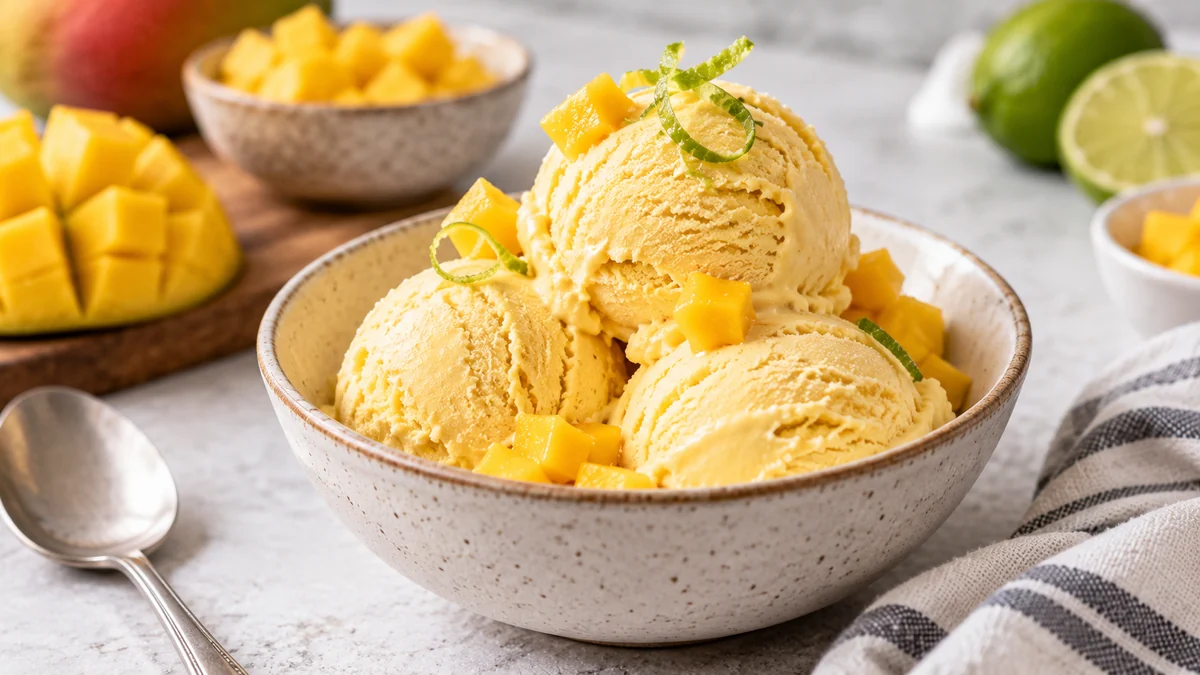
Keto mango ice cream is a portion-controlled way to keep real mango flavor in a low-carb frozen dessert. This version uses one measured cup of mango for the entire batch, then stretches that fruit across eight servings with heavy cream, unsweetened almond milk, and allulose. The result is creamy, bright, and noticeably mango-forward without relying on a large amount of fruit.
Mango is naturally higher in carbohydrate than berries, so the recipe is not built around the idea that mango itself is a low-carb fruit. Instead, the amount is controlled and the rest of the base is kept low in digestible carbohydrate. That makes serving size important, especially if you track net carbs closely.
Table of Contents
Why This Keto Mango Ice Cream Works
Real mango, measured carefully: one cup flavors the full batch rather than each serving.
Heavy cream for body: the fat gives the frozen base a creamy texture instead of an icy one.
Unsweetened almond milk lightens the base: it adds fluid without the carbohydrate load of sweetened milk.
Allulose improves scoopability: it sweetens while also helping the frozen mixture stay softer than a batch made with only a high-intensity sweetener.
Lime, vanilla, and salt sharpen the mango flavor: small amounts keep the dessert from tasting flat.
The recipe is churned: incorporating air as it freezes gives a smoother, more traditional ice-cream texture.
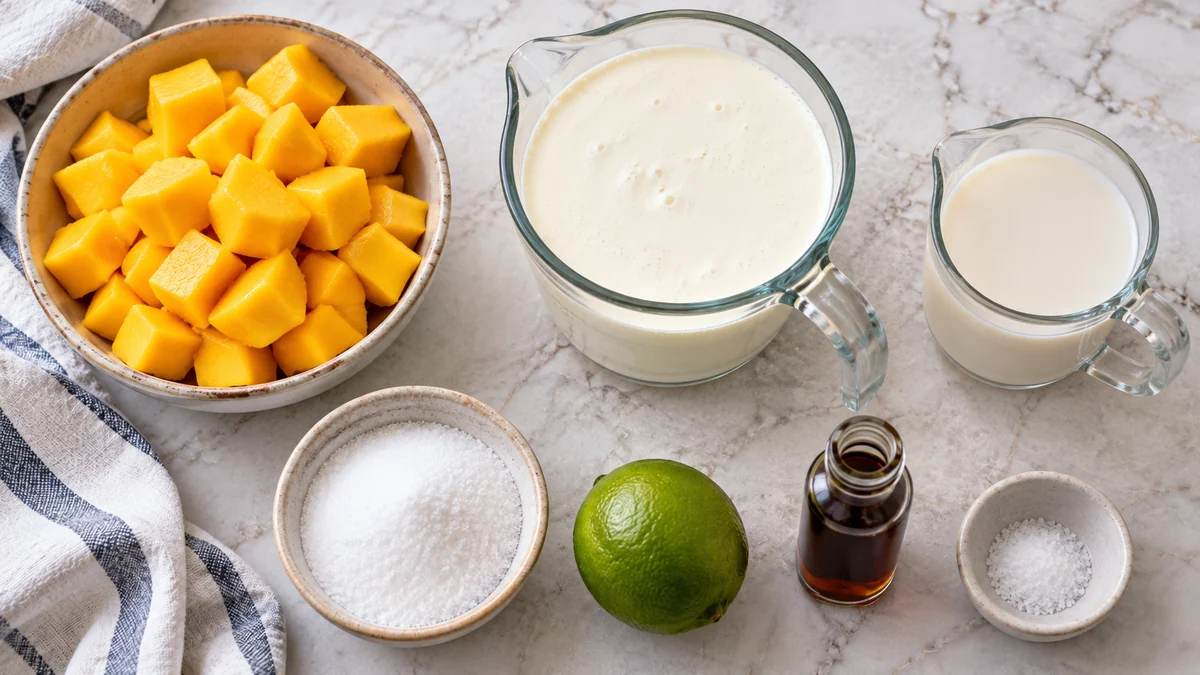
Mango: use 1 cup (165 g) fresh or frozen mango. If using frozen fruit, let it soften for several minutes so it blends smoothly. USDA FoodData Central lists one cup of raw mango at about 24.7 grams of carbohydrate, which is why this recipe spreads that cup across eight servings rather than using several cups in one batch.
Heavy whipping cream: provides most of the fat and body. Keep it cold until mixing. Unsweetened almond milk: thins the mango puree just enough for smooth blending without adding much sugar.
Allulose: is the primary sweetener. FDA guidance allows allulose to be excluded from Total Sugars and Added Sugars on Nutrition Facts labels, while it still remains part of Total Carbohydrate. That distinction matters when you compare total carbs with a net-carb estimate.
Lime juice, vanilla, and salt: round out the flavor. Lime makes the fruit taste brighter, vanilla softens the dairy notes, and a small amount of salt balances sweetness.
Creamy keto mango ice cream made with a measured amount of real mango, heavy cream, unsweetened almond milk, allulose, lime, and vanilla.
Total Time:5 hours 40 minutes
Yield:8 servings
Ingredients
Scale
1 cup (165 g) fresh or frozen mango chunks
2 cups (476 g) cold heavy whipping cream
1 cup (240 ml) unsweetened almond milk
1/2 cup (95 g) granulated allulose
1 tablespoon fresh lime juice
1 teaspoon vanilla extract
1/4 teaspoon fine sea salt
Finely grated lime zest for serving, optional
Instructions
Add the mango, almond milk, allulose, lime juice, vanilla, and salt to a blender. Blend until completely smooth.
Pour in the cold heavy cream and blend on low only until combined, about 10 to 15 seconds. Do not overblend.
Transfer the mixture to a covered container and refrigerate for at least 2 hours, until thoroughly chilled.
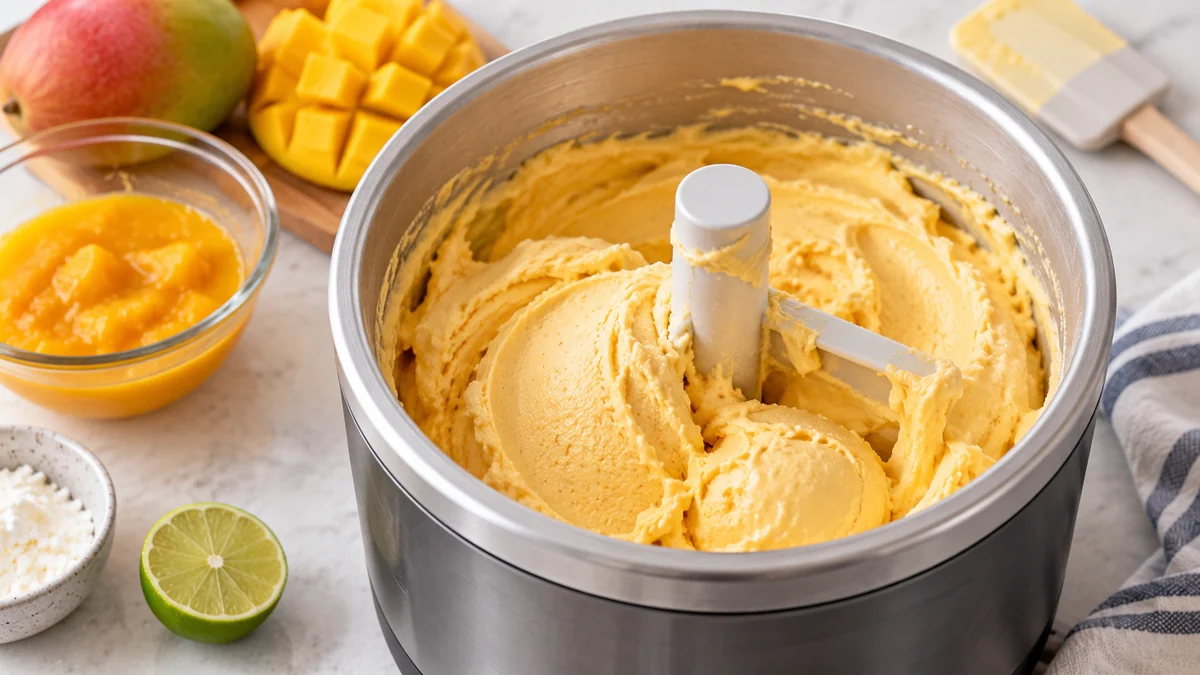
Pour the cold mixture into an ice cream maker and churn according to the manufacturer’s directions, usually 20 to 25 minutes, until thick and soft-serve-like.
Transfer the churned ice cream to a shallow freezer-safe container. Press parchment directly onto the surface, cover, and freeze for 3 to 4 hours, until firm enough to scoop.
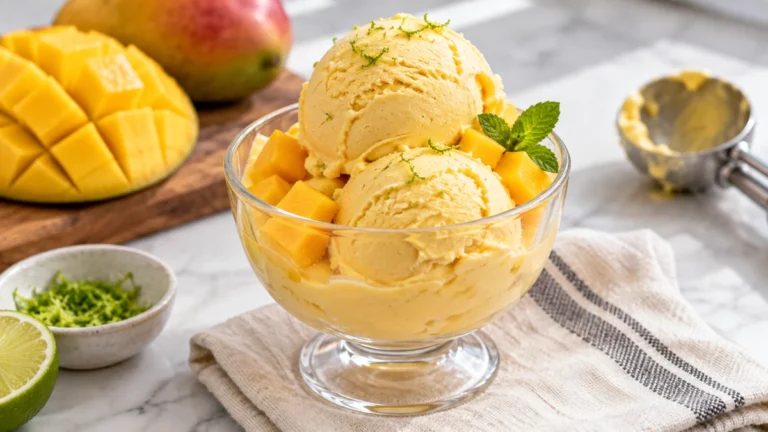
If the ice cream has frozen overnight, let it stand at room temperature for 8 to 12 minutes before scooping. Garnish with lime zest if desired.
Notes
Nutrition is calculated for 8 equal servings and excludes optional garnish.
The listed total carbohydrate includes allulose. Estimated net carbohydrate after subtracting allulose and fiber is about 4.5 to 5 g per serving.
FDA guidance allows allulose to be excluded from Total Sugars and Added Sugars but not from Total Carbohydrate.
Different cream and almond milk brands can change the final nutrition values.
For a no-churn version, freeze in a shallow pan and stir vigorously every 30 minutes for the first 2 to 3 hours.
Author:Adam Moretti
Prep Time:15 minutes
Cook Time:0 minutes
Category:Dessert
Method:No Cook
Cuisine:American
Diet:Keto
How to Make Keto Mango Ice Cream
The best texture comes from chilling the base before churning. A cold mixture freezes faster in the machine, which helps create smaller ice crystals.
Blend the fruit base. Add the mango, almond milk, allulose, lime juice, vanilla, and salt to a blender. Blend until completely smooth.
Add the cream. Pour in the cold heavy cream and blend on low just until combined. Do not keep running the blender once the mixture is uniform.
Chill the mixture. Transfer to a covered container and refrigerate for at least 2 hours.
Churn. Pour the cold base into an ice cream maker and churn according to the machine directions, usually 20 to 25 minutes, until thick like soft serve.
Firm the ice cream. Transfer to a shallow freezer-safe container, press parchment directly against the surface, cover, and freeze for 3 to 4 hours.
Soften before scooping. If frozen overnight, let the container stand at room temperature for about 8 to 12 minutes before serving.
How Many Carbs Are in This Recipe?
The nutrition card lists about 17 grams of total carbohydrate per serving because allulose is still counted inside Total Carbohydrate for labeling purposes. When you subtract the estimated allulose and fiber, the recipe works out to roughly 4.5 to 5 grams of net carbohydrate per serving. That number is an estimate, and different almond milk or cream brands can shift it.
The FDA explains that allulose may be excluded from Total Sugars and Added Sugars but not from Total Carbohydrate in its allulose labeling guidance. This is why a low-net-carb dessert can still show a higher total-carbohydrate number on a recipe card.
Can Mango Fit a Keto-Style Dessert?
Mango is not a low-carb fruit in the same way berries are. One cup supplies roughly 24.7 grams of total carbohydrate, so using several cups would push the recipe much higher. Here, the fruit is treated as a concentrated flavor ingredient and divided across eight portions.
Whether a serving fits your own carbohydrate target depends on the rest of your day and the way you personally define a ketogenic diet. The useful point is the measured serving, not a blanket claim that mango itself is automatically keto-friendly.
Allulose vs. Monk Fruit or Erythritol
Allulose is used here because it does more than provide sweetness. In frozen desserts it also helps lower the freezing point, which makes the finished ice cream easier to scoop. Pure monk fruit extract can sweeten the mixture, but it does not provide the same bulk or freezing behavior.
An erythritol-based blend can work, but the finished texture may freeze firmer and some people notice a cooling sensation. If you substitute a different sweetener, follow that product’s conversion instructions and expect the texture to change.
No Ice Cream Maker?
You can freeze the blended base in a shallow metal pan and whisk or stir it aggressively every 30 minutes for the first 2 to 3 hours. This breaks up some of the ice crystals, but it will not be quite as smooth as a churned batch.
For the no-machine method, keep the pan shallow so the mixture freezes evenly and scrape the firm edges back into the softer center each time you stir.
Storage and Serving
Freeze airtight: use a shallow container with a tight lid and press parchment against the surface to limit ice crystals.
Best texture: eat within about 1 to 2 weeks for the creamiest homemade texture.
Let it soften: homemade low-sugar ice cream can freeze harder than commercial ice cream, so allow 8 to 12 minutes at room temperature before scooping.
Use a warm scoop: briefly dip the scoop in warm water, dry it, and portion immediately.
Keep portions measured: the nutrition estimate assumes eight equal servings.
Flavor Variations
Mango-lime: add extra finely grated lime zest after churning. Mango-coconut: replace the almond milk with unsweetened coconut milk from a carton; recheck the nutrition label because brands vary. Spiced mango: add a very small pinch of cardamom or ginger.
If you want a stronger mango aroma without adding more fruit, use a food-grade mango extract according to the manufacturer’s directions rather than increasing the puree. That keeps the carbohydrate contribution closer to the base recipe.
How to Choose Mango for the Best Flavor
Use ripe mango that smells fragrant near the stem and gives slightly when pressed. The fruit should taste sweet and aromatic before it goes into the blender because freezing mutes sweetness and aroma. If fresh mango is bland, the finished ice cream will be bland too.
Frozen mango works well and is often more consistent outside peak season. Choose plain frozen mango with no added sugar or syrup. Let the pieces soften for about 5 minutes before blending so the mixture turns smooth without forcing the blender to run for too long.
Texture Troubleshooting
Why is my ice cream too hard?
Homemade low-sugar ice cream naturally freezes firmer than many commercial products because it contains fewer dissolved sugars and stabilizers. Let the container soften for several minutes before scooping. If you reduced the allulose, expect an even firmer texture.
Why is it icy?
The base may not have been cold enough before churning, or the mixture may have frozen too slowly. Chill the base thoroughly, make sure the machine bowl is prepared exactly as the manufacturer requires, and transfer the churned ice cream to the freezer promptly.
Why does it taste more like cream than mango?
The most common cause is under-ripe or weak-flavored mango. Use fruit that already tastes strongly of mango before blending. A little extra lime zest can make the fruit seem brighter without adding meaningful carbohydrate, while adding more mango would change the nutrition.
Serving Ideas
Keep toppings simple so the carb count stays close to the recipe estimate. Lime zest, a few crushed unsweetened coconut chips, or a teaspoon of chopped macadamias add texture without turning the serving into a second dessert. If you add fresh mango cubes, count them separately because the nutrition card covers only the base recipe.
FAQs about Keto Mango Ice Cream
Is mango keto friendly?
Mango is relatively high in carbohydrate compared with common keto fruits, so portion size matters. This recipe uses one cup for eight servings rather than treating mango as a free food.
Why does the recipe card show 17 grams of total carbs?
Most of that difference comes from allulose. FDA guidance says allulose still belongs in Total Carbohydrate even though it may be excluded from Total Sugars and Added Sugars. The estimated net carbohydrate after subtracting fiber and allulose is about 4.5 to 5 grams per serving.
Can I use coconut cream instead of heavy cream?
Yes, but it will change both flavor and nutrition. Use full-fat canned coconut cream, not a thin coconut beverage, and expect a more noticeable coconut taste.
Can I reduce the sweetener?
You can, but the ice cream may freeze harder because allulose contributes to scoopability as well as sweetness. If you reduce it, expect to let the container soften longer before serving.
Can I make this dairy free?
Use full-fat coconut cream in place of the heavy cream and unsweetened coconut milk in place of the almond milk. The result will taste more strongly of coconut and the nutrition values will be different.
Final Tips
Measure the mango rather than filling the blender by eye, chill the base thoroughly, and give the churned ice cream several hours to firm before judging the texture. Those three steps matter more than adding extra thickeners.
Choose one of seven popular diet options. NutriMatch will confirm whether the recipe already fits, show a reviewed adaptation when available, or recommend recipes that match your choice.
Please choose a diet first.
Reviewed Dairy-Free adaptation
Dairy-Free Keto Mango Ice Cream
Use the reviewed substitutions below to prepare a Dairy-Free version while keeping the original recipe's basic method.
Ingredient swaps
2 cups (476 g) cold heavy whipping creamUse 2 cups (476 g) cold dairy-free whipping cream suitable for desserts
Instruction changes
Whip and freeze as directed, checking the plant-based cream early because brands vary in how quickly they thicken.
Check: Check every packaged substitute, sauce, seasoning, and topping for milk ingredients and the cross-contact information you need. The adapted nutrition differs from the published recipe; recalculate it before relying on the original high-protein, keto, or low-carb claim.
Use these reviewed changes with the original ingredient quantities and instructions above. The original recipe card stays unchanged.
Recipe details, product formulas, and cross-contact information can change. Confirm current labels and use professional guidance when medically necessary.
Already a reviewed match
This recipe already fits Gluten-Free.
No changes are needed based on its reviewed NutriMatch classification. Check the complete ingredients, product labels, and serving details for your own needs.
Recipe details, product formulas, and cross-contact information can change. Confirm current labels and use professional guidance when medically necessary.
Not available for this recipe
This recipe cannot currently be made High Protein with a reviewed adaptation.
NutriMatch will not guess at substitutions. Try one of these recipes that is already reviewed for your choice.
Recipe details, product formulas, and cross-contact information can change. Confirm current labels and use professional guidance when medically necessary.
Already a reviewed match
This recipe already fits Keto.
No changes are needed based on its reviewed NutriMatch classification. Check the complete ingredients, product labels, and serving details for your own needs.
Recipe details, product formulas, and cross-contact information can change. Confirm current labels and use professional guidance when medically necessary.
Already a reviewed match
This recipe already fits Low Carb.
No changes are needed based on its reviewed NutriMatch classification. Check the complete ingredients, product labels, and serving details for your own needs.
Recipe details, product formulas, and cross-contact information can change. Confirm current labels and use professional guidance when medically necessary.
Reviewed Vegan adaptation
Vegan Keto Mango Ice Cream
Use the reviewed substitutions below to prepare a Vegan version while keeping the original recipe's basic method.
Ingredient swaps
2 cups (476 g) cold heavy whipping creamUse 2 cups (476 g) cold vegan whipping cream suitable for desserts
Instruction changes
Whip and freeze as directed, checking the vegan cream early because brands vary in how quickly they thicken.
Check: Confirm every packaged substitute, sauce, seasoning, and topping is vegan; product formulas and processing aids can vary. The adapted nutrition differs from the published recipe; recalculate it before relying on the original high-protein, keto, or low-carb claim.
Use these reviewed changes with the original ingredient quantities and instructions above. The original recipe card stays unchanged.
Recipe details, product formulas, and cross-contact information can change. Confirm current labels and use professional guidance when medically necessary.
Already a reviewed match
This recipe already fits Vegetarian.
No changes are needed based on its reviewed NutriMatch classification. Check the complete ingredients, product labels, and serving details for your own needs.
Recipe details, product formulas, and cross-contact information can change. Confirm current labels and use professional guidance when medically necessary.