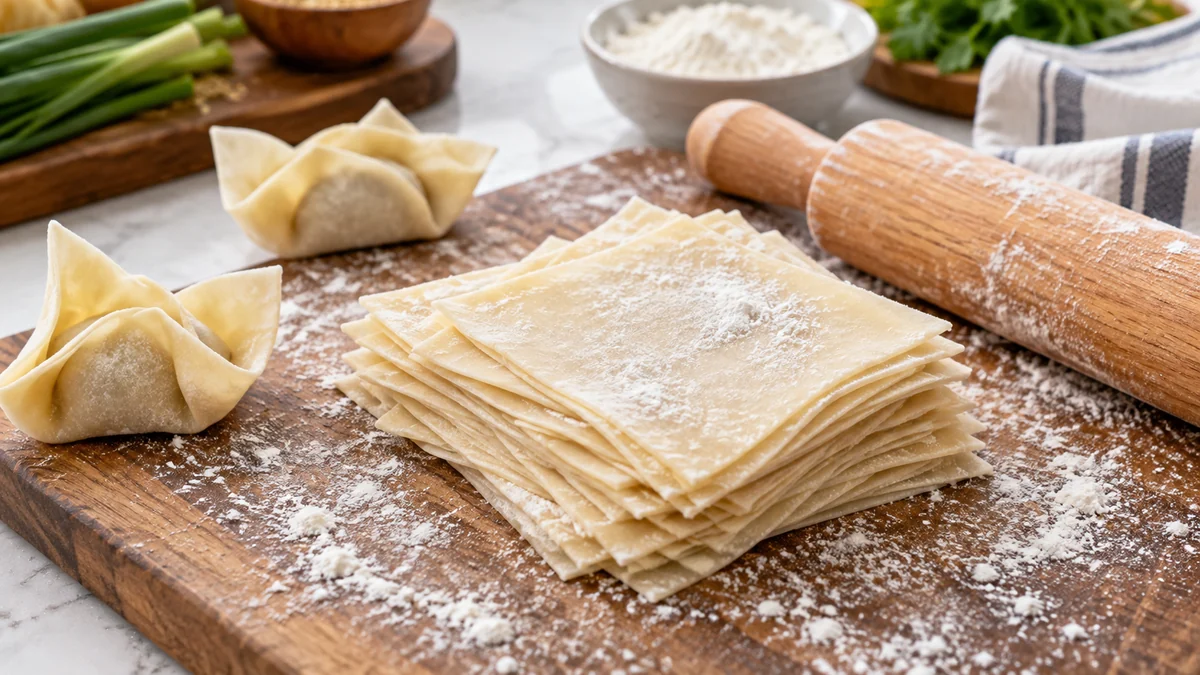
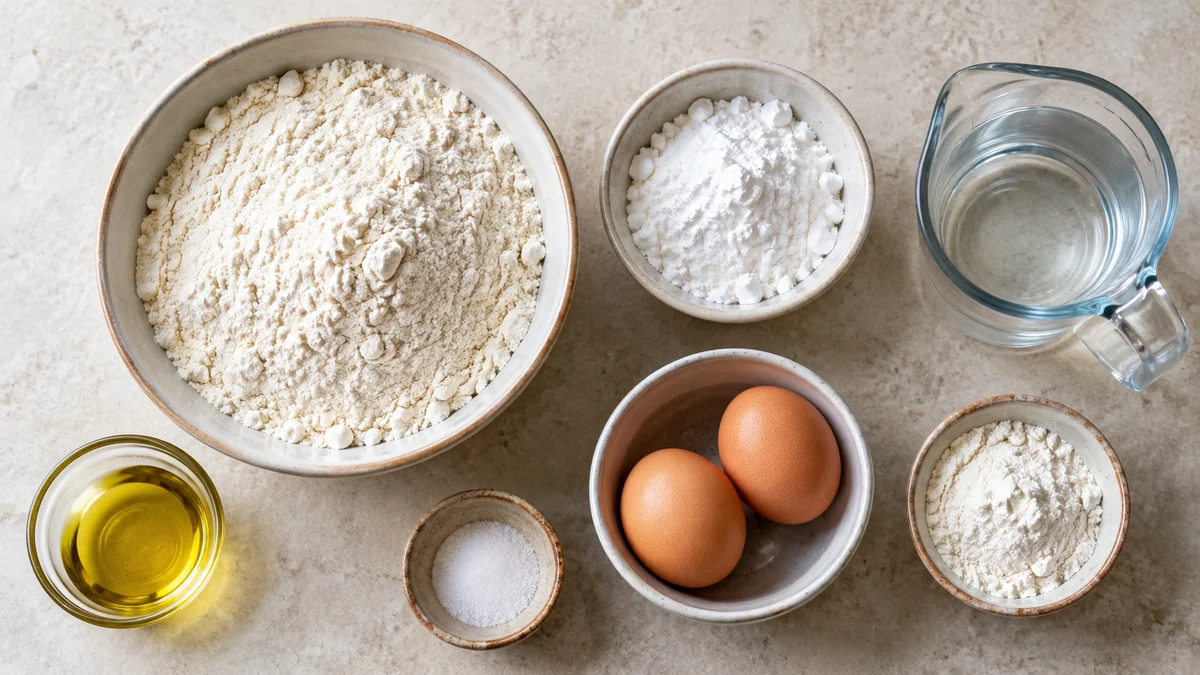
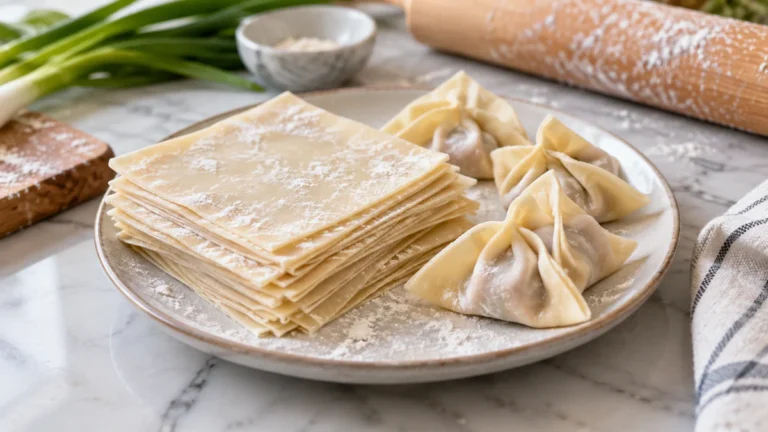
Gluten free wonton wrappers are thin homemade dough squares made without wheat, designed for wontons, dumplings, potstickers, and crispy appetizer cups. This version uses a gluten-free flour blend with xanthan gum, a small amount of tapioca starch, eggs, oil, and warm water so the dough rolls thin without becoming as fragile as a flour-and-water dough.
The key is not adding a long list of specialty ingredients. The dough needs enough moisture to stay flexible, a short rest so the flour can hydrate, and careful rolling so each wrapper is thin but still strong enough to seal around a filling. The finished wrappers are best used fresh, but they can also be stacked with parchment and chilled briefly before filling.
Table of Contents
Gluten Free Wonton Wrappers: Why This Recipe Works
A measured flour-to-liquid ratio: the dough starts firm, then receives extra water only as needed.
Tapioca for flexibility: a small amount improves stretch without turning the wrappers gummy.
Eggs for strength: they help the thin dough hold together during rolling and folding.
A 20-minute rest: this gives the gluten-free flour time to absorb moisture before the dough is rolled.
Small-batch rolling: dividing the dough keeps unused portions covered so they do not dry out.
No unverified brand claims: packaged wrappers and flour blends can change, so label checking matters more than a static shopping list.
If you are building a broader gluten-free pantry, the same label-checking approach applies to our gluten free taco seasoning and other packaged ingredients. For a second homemade dough project, see the gluten free egg noodles.
Ingredients for Homemade Gluten Free Wonton Wrappers
Gluten-free measure-for-measure flour with xanthan gum forms the base. A blend that already contains xanthan gum is important here because the binder helps replace some of the structure normally supplied by wheat gluten. Different blends absorb water differently, which is why the recipe gives a small range for the final amount of water.
Tapioca starch adds flexibility and a little chew. It is used as a supporting starch rather than the main flour so the wrappers stay workable instead of becoming overly elastic or sticky.
Eggs, oil, warm water, and salt complete the dough. Eggs provide structure, oil makes the dough easier to roll, and warm water lets you fine-tune the texture. The dough should feel smooth and pliable, not wet or tacky.
Gluten-free flour or tapioca starch for very light dusting
Instructions
Whisk the gluten-free flour, tapioca starch, and salt in a medium mixing bowl until evenly combined.
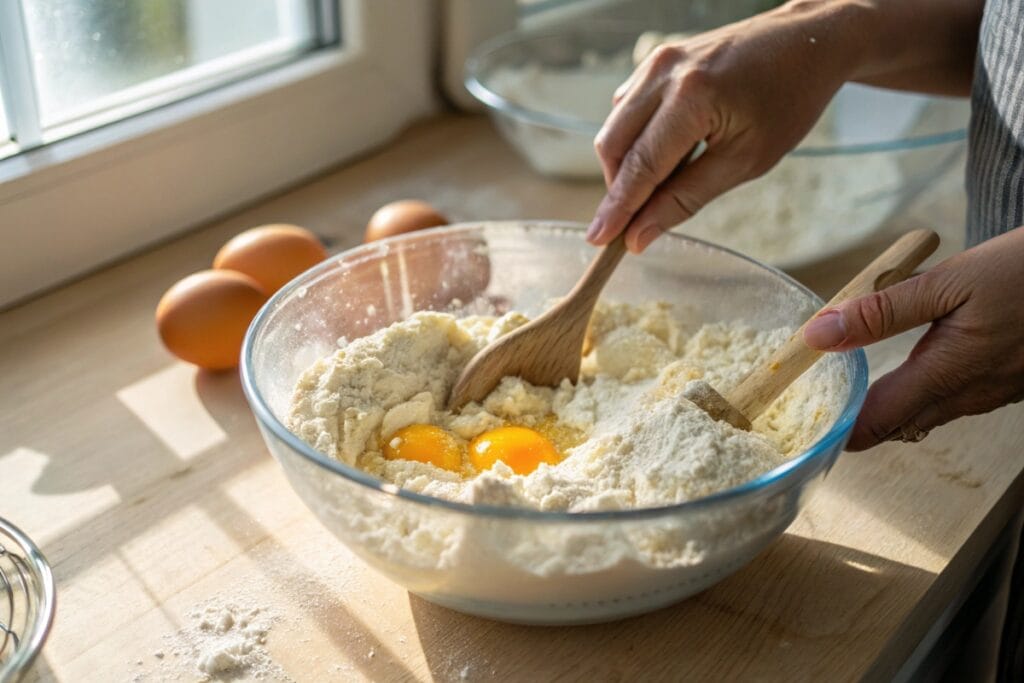
In a small bowl, whisk the eggs, oil, and 3 tablespoons of warm water. Pour the wet mixture into the flour mixture and stir until a shaggy dough forms.
Press the dough together with your hands. If dry flour remains, add additional warm water 1 teaspoon at a time until the dough holds together without becoming sticky.
Knead the dough for 2 to 3 minutes, until it looks smoother and feels firm but flexible. Cover tightly and let it rest for 20 minutes.
Divide the dough into 4 equal pieces. Keep 3 pieces covered while you roll the first one.
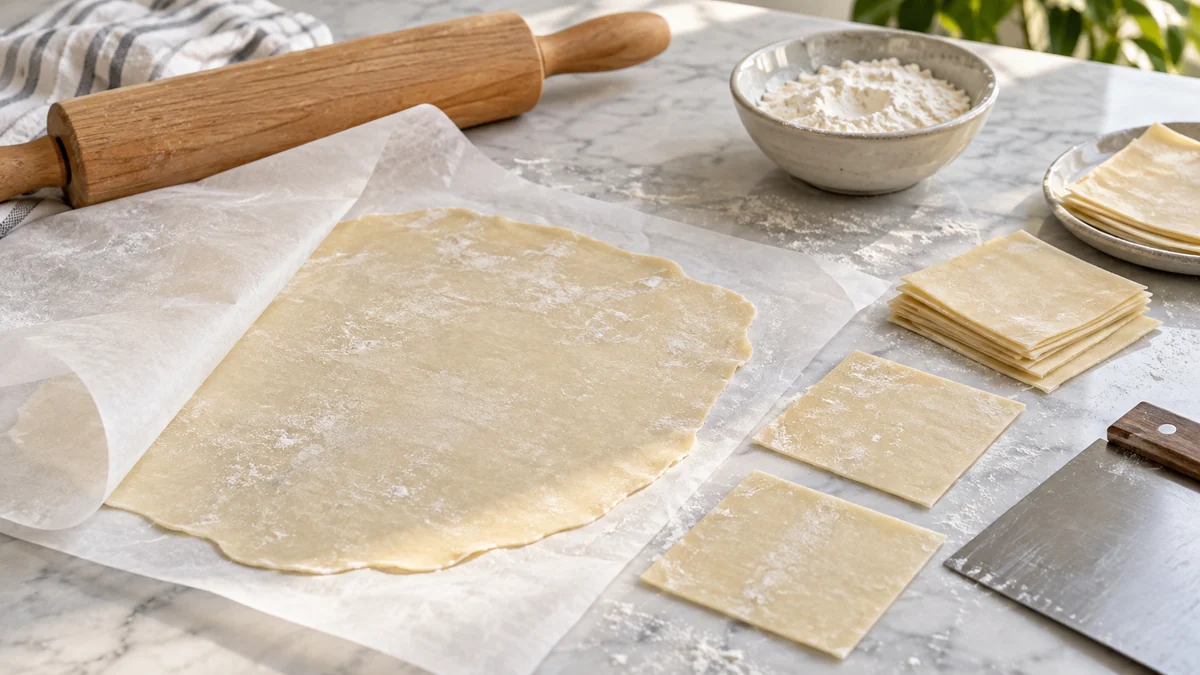
Place one piece between lightly floured sheets of parchment and roll it to about 1/16 inch thick, or as thin as possible without tearing.
Trim the edges and cut the dough into 3 1/2- to 4-inch squares. Dust very lightly and stack with parchment between larger groups of wrappers.
Repeat with the remaining dough, keeping finished wrappers covered so the edges do not dry out.
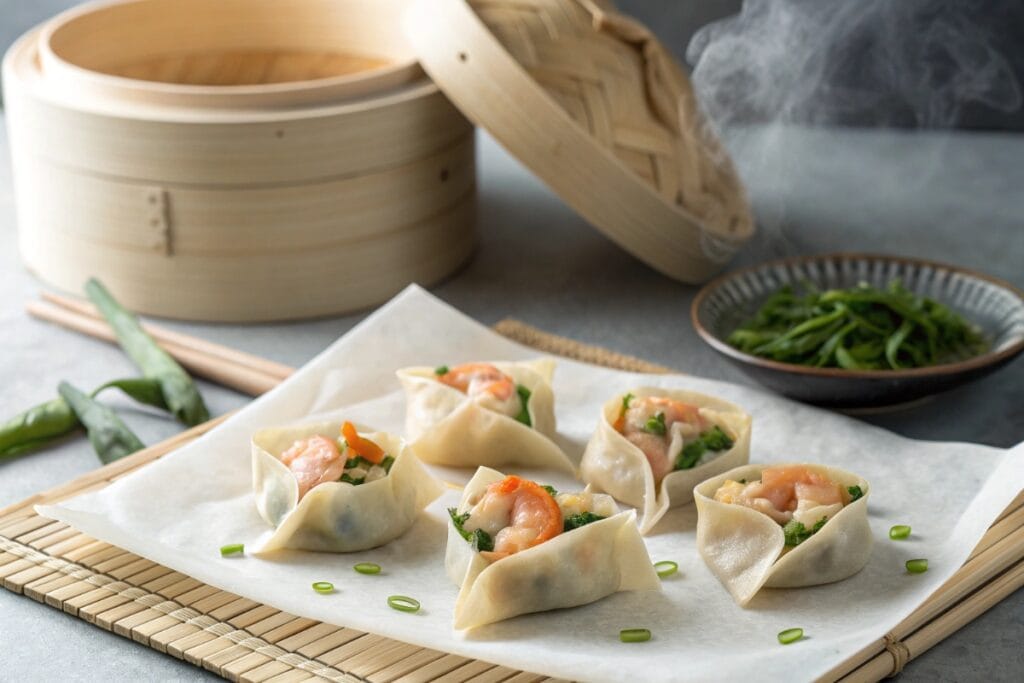
Fill each wrapper with about 1 to 2 teaspoons of filling, moisten the border with water, press out trapped air, and seal. Cook the assembled wontons according to the filling and cooking method you are using.
Notes
Use a gluten-free flour blend that already contains xanthan gum; blends without a binder may require a different formula.
Water absorption varies by flour blend. Add extra water slowly, 1 teaspoon at a time.
Do not overfill the wrappers. Simple folds are more reliable than elaborate pleats with gluten-free dough.
For celiac disease or strict gluten avoidance, check every packaged ingredient and prevent cross-contact from shared tools, surfaces, flour bins, and condiments.
If using raw meat or poultry fillings, cook to the safe internal temperature for that filling; USDA recommends 165°F for poultry and 160°F for ground beef, pork, lamb, and veal.
Nutrition is estimated per 2 wrappers and excludes dusting flour and any filling.
Author:Adam Moretti
Prep Time:35 minutes
Cook Time:0 minutes
Category:Basics
Method:Rolling
Cuisine:Asian-Inspired
Diet:Gluten Free
How to Make Gluten Free Wonton Wrappers
Gluten-free wrapper dough is easier to manage when you make small adjustments instead of adding a large amount of water at once. The exact amount can change with the flour blend, room humidity, and egg size.
Combine the dry ingredients. Whisk the gluten-free flour, tapioca starch, and salt until evenly blended.
Add the wet ingredients. Whisk the eggs, oil, and 3 tablespoons of warm water, then stir them into the flour mixture.
Adjust the dough slowly. If dry flour remains, add more warm water 1 teaspoon at a time until the dough holds together when pressed.
Knead briefly. Knead for 2 to 3 minutes until the surface becomes smoother. The dough should be firm and flexible, not sticky.
Rest for 20 minutes. Cover the dough tightly so the surface cannot dry out. This rest makes rolling easier.
Divide into four pieces. Work with one piece at a time and keep the others covered.
Roll very thin. Roll between lightly floured parchment sheets to roughly 1/16 inch, or as thin as you can go without creating holes.
Cut into squares. Trim the edges and cut 3 1/2- to 4-inch squares with a sharp knife or bench scraper.
Keep the wrappers covered. Dust very lightly, separate stacks with parchment, and cover while you finish the remaining dough.
How Thin Should Wonton Wrappers Be?
A homemade gluten-free wrapper should be thin enough that the filling remains the focus, but not so thin that the dough becomes translucent and tears before cooking. About 1/16 inch is a useful target. If your first piece cracks at the edges, knead in a few drops of water and let that portion rest for another 5 minutes before rolling again.
Do not pile on extra flour during rolling. Excess dusting flour can make the edges harder to seal. Use only enough to prevent sticking, and brush away visible flour before wetting the edges.
Filling and Sealing the Wrappers
Place a small amount of filling in the center, leaving a clean border around the edge. For a 3 1/2- to 4-inch wrapper, start with about 1 to 2 teaspoons of filling. Overfilling stretches the dough and makes leaks much more likely.
Lightly brush the edge with water, fold the wrapper over the filling, and press out trapped air before sealing. Simple triangle or purse shapes are easier on gluten-free dough than complicated folds. Keep the finished wontons covered while you work so exposed edges do not dry out.
These wrappers also work as the gluten-free variation in our high protein dumpling lasagna. For that casserole, the wrappers are layered rather than folded, so small cosmetic cracks are much less important.
Cooking Filled Wontons Safely
The wrapper recipe itself has no cook time because the dough is prepared raw and then cooked with whatever filling you choose. Follow the cooking method for the filling rather than relying only on a clock or the color of the wrapper.
If you use raw ground poultry, the USDA recommends cooking it to 165°F. Raw ground beef, pork, lamb, and veal should reach 160°F. Use a food thermometer when a raw meat filling is involved. See the USDA safe-temperature guidance for the current recommendations.
Gluten-Free Label Checking and Cross-Contact
When celiac disease or strict gluten avoidance matters, the flour blend, tapioca starch, sauces, broth, and fillings all need the same level of attention. In the United States, the FDA requires foods that carry a voluntary “gluten-free” claim to meet its definition, including less than 20 parts per million of unavoidable gluten. The rule does not mean every naturally gluten-free ingredient must display a gluten-free claim.
The FDA explains the labeling standard in its gluten-free labeling Q&A. The Celiac Disease Foundation also notes that cross-contact can happen through shared utensils, cutting boards, storage containers, and other kitchen surfaces. Clean tools and work surfaces before rolling the dough if gluten is handled in the same kitchen.
Can You Buy Gluten Free Wonton Wrappers?
Availability changes by region and by retailer, so this page no longer relies on a fixed list of brands. Standard wonton wrappers are commonly wheat-based, while specialty gluten-free options may appear in freezer cases, natural-food stores, Asian markets, or online. Read the current package rather than assuming a product is gluten free because an older article or store listing says it is.
If a packaged product carries a gluten-free claim, confirm that the exact package you are buying still has that claim and review the ingredient and allergen statements. If you cannot verify a product and strict gluten avoidance is required, the homemade recipe gives you more control over the flour and work surface.
Storage and Make-Ahead Tips
Best texture: use the wrappers the day they are made.
Short refrigeration: stack with parchment, seal tightly, and refrigerate for up to 2 days. Let them sit at room temperature briefly if they feel stiff.
Prevent drying: keep both the dough and cut wrappers covered whenever they are not being rolled or filled.
Freezing: for the most reliable results, freeze assembled uncooked wontons rather than a loose stack of bare wrappers. The filled shape protects the thin dough from repeated handling.
Dust lightly: too much flour between wrappers dries the surface and makes sealing more difficult.
Troubleshooting Gluten Free Wonton Dough
Why is my dough cracking?
The dough is usually too dry or has been left uncovered. Knead in water a few drops at a time, cover it, and rest it for 5 to 10 minutes before rolling again. Large additions of water can turn the dough sticky very quickly.
Why are the wrappers sticking together?
They may be too wet or stacked without enough separation. Dust very lightly with gluten-free flour or tapioca starch and place small pieces of parchment between larger stacks. Do not leave the wrappers sitting uncovered while you prepare a filling.
Why do the edges open during cooking?
Visible flour, trapped air, too much filling, or dry edges can all weaken the seal. Brush away loose flour, use less filling, dampen the entire border, and press firmly from the filling outward to remove air pockets.
FAQs about Gluten Free Wonton Wrappers
Are regular wonton wrappers gluten free?
Usually not. Standard wonton skins are typically made with wheat flour, so they are not appropriate for a gluten-free diet unless the specific package is clearly formulated and labeled to meet gluten-free requirements.
What is the best gluten free substitute for wonton wrappers?
For recipes that need the shape and folding behavior of a wonton skin, a dedicated homemade gluten-free wrapper is the closest substitute. Rice paper can work for some dumpling-style recipes, but it hydrates and cooks differently, so it is not a one-for-one replacement in every method.
Can I make these without eggs?
This version was formulated around eggs, which contribute structure and flexibility. An egg-free wrapper needs a different hydration and binder system, so replacing the eggs with flax or another substitute is not recommended as a direct swap in this recipe.
Can I use any gluten-free flour blend?
Use a measure-for-measure blend that contains xanthan gum. Blends without a binder can behave very differently and may need additional xanthan gum or a different amount of water. Check the ingredient list before mixing the dough.
Do I cook the wrappers before filling them?
No. Roll, cut, fill, and seal them while raw, then cook the assembled wontons using a method appropriate for the filling. For casserole-style recipes, use the raw wrappers directly in the dish when the recipe is designed for that method.
Final Tips
For the easiest batch, weigh the flour, keep the dough covered, and resist adding extra dusting flour unless the surface actually sticks. Gluten-free wrapper dough will never feel exactly like wheat dough, but it can still roll thin, seal cleanly, and hold a filling when the hydration is right.
Use these wrappers for homemade wontons, dumplings, appetizer cups, or the gluten-free variation of a layered dumpling casserole. For more ideas built around careful gluten-free ingredient choices, browse the gluten free recipes collection.