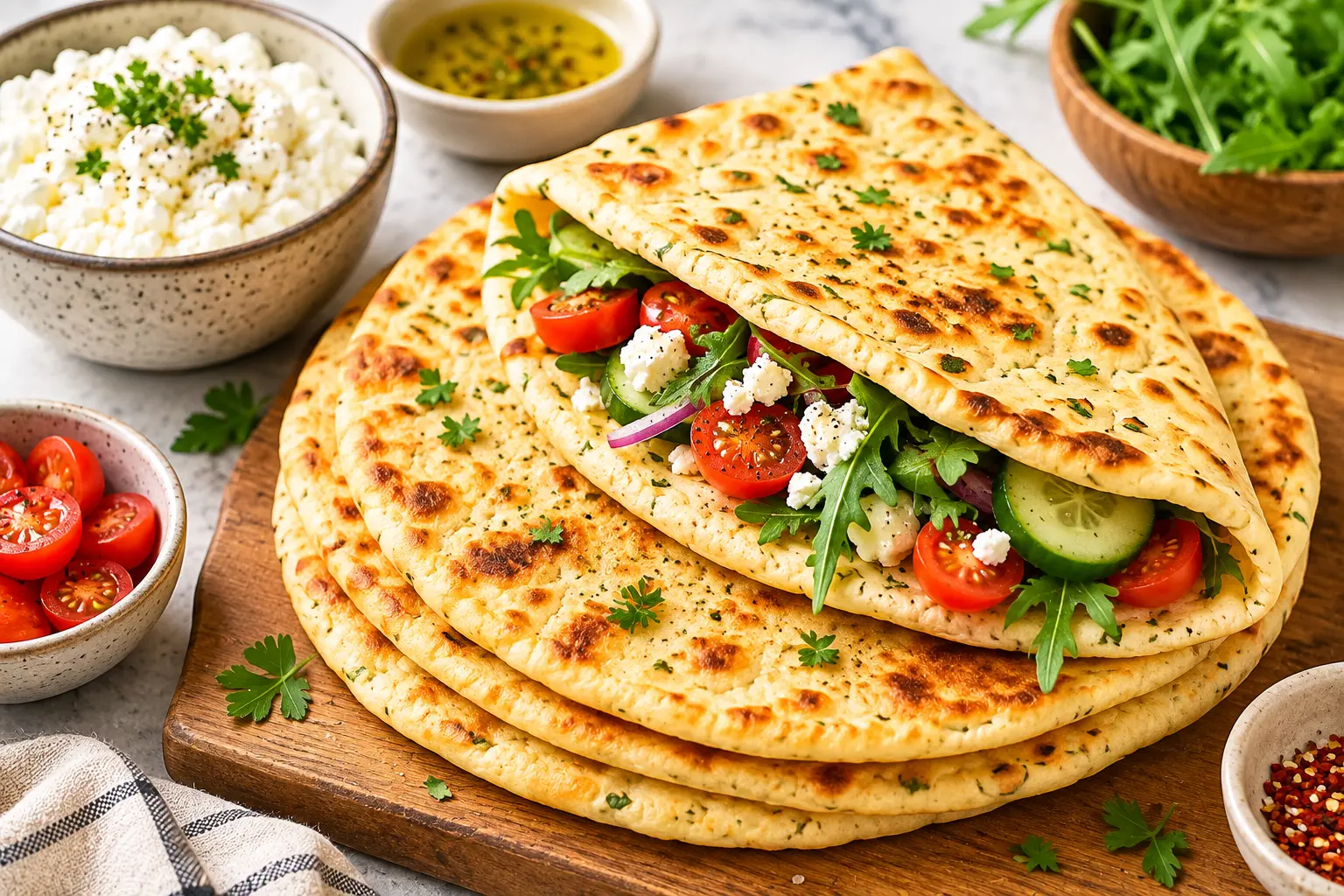
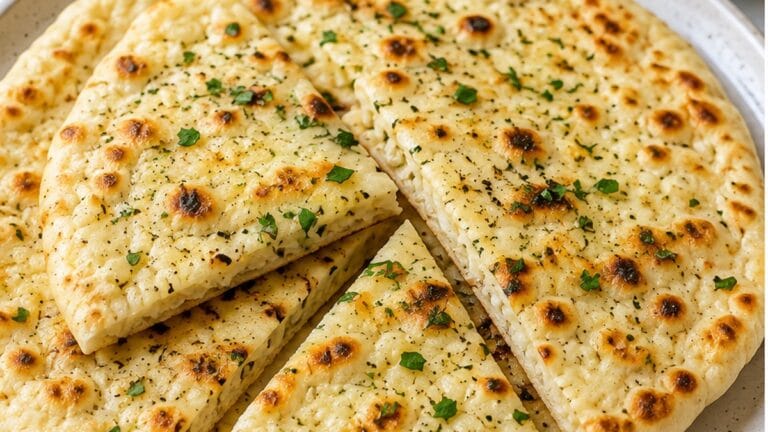
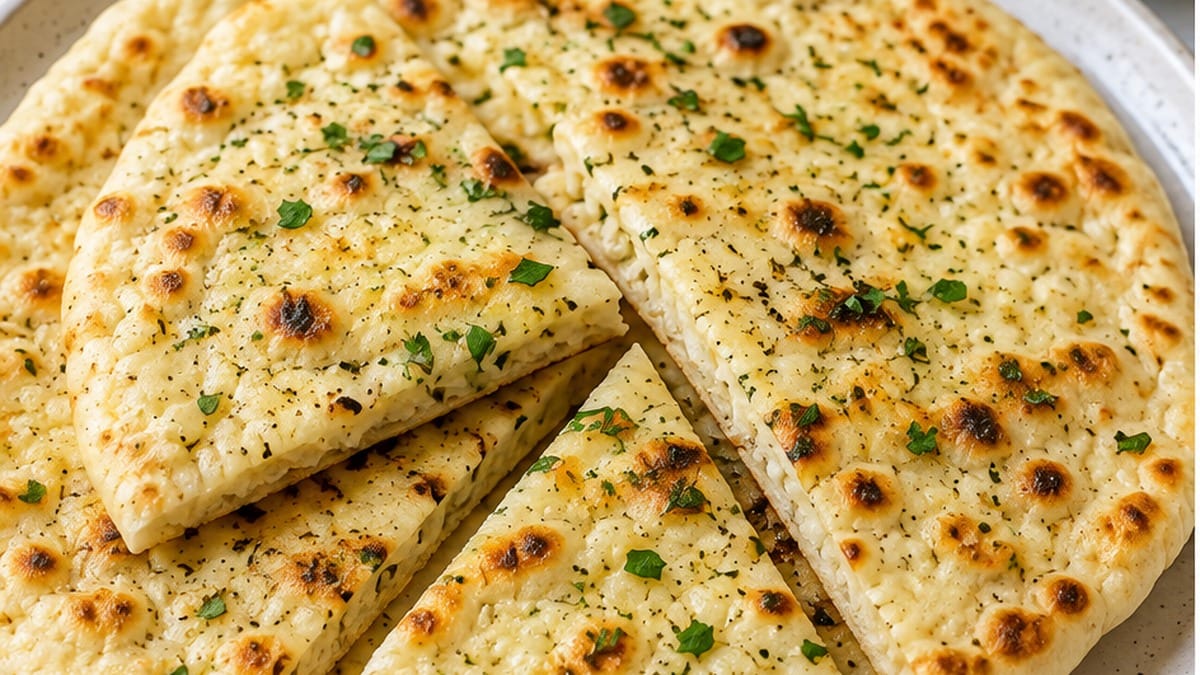
Gluten free cottage cheese flatbread can be soft enough to fold around a filling without turning into an omelet. This version blends low-fat cottage cheese and eggs until completely smooth, then adds a small amount of certified gluten-free oat flour for structure. The oat flour makes the baked sheet easier to peel from parchment, cut cleanly, and use as a wrap.
The ingredient list stays short, but the details matter: spread the batter to an even thickness, bake until the surface is dry and the edges are lightly golden, and let the flatbread cool for a few minutes before peeling it away from the paper. Those steps are what separate a flexible flatbread from a wet center or a fragile sheet.
Why This Gluten Free Cottage Cheese Flatbread Works
Blending removes the curds. A smooth batter bakes more evenly and gives the finished flatbread a consistent surface.
Oat flour adds just enough structure. Cottage cheese and eggs alone can bake into a tender sheet, but a quarter cup of oat flour makes this version easier to lift and fold.
The thickness is controlled. Spreading the batter into roughly a 10-by-7-inch rectangle keeps the center from staying wet while the edges overcook.
It is gluten free as written. Use oat flour that is labeled gluten free and verify packaged seasonings when gluten cross-contact matters.
It works for meal prep. The flatbread can be refrigerated, reheated gently, and used later as a wrap or savory side.
Ingredients You’ll Need
You only need a handful of ingredients, but cottage cheese moisture and flour choice can change the final texture. The amounts below are designed for one large sheet that makes two servings.
Low-Fat Cottage Cheese
Use 1 cup (about 226 g) 1% low-fat cottage cheese. One-percent cottage cheese gives the batter plenty of protein without adding much extra fat. Brands vary in moisture, so if yours has a visible pool of liquid on top, stir it well first. You do not need to strain ordinary cottage cheese for this recipe.
If you prefer a richer loaf-style cottage cheese recipe, our avocado cottage cheese bread uses a different flour system and is meant to be sliced and toasted rather than folded.
Eggs
Two large eggs bind the cottage cheese and provide most of the structure as the flatbread bakes. Blend them with the cottage cheese until the mixture looks creamy and no white curds remain. Because the recipe contains eggs, the center should be fully cooked rather than merely browned at the edges.
Certified Gluten-Free Oat Flour
A quarter cup of oat flour is enough to make the sheet sturdier without turning it into a conventional bread dough. When gluten avoidance is important, choose oat flour specifically labeled gluten free. You can also grind labeled gluten-free rolled oats into a very fine flour and then measure 30 grams.
Garlic and Italian Seasoning
Garlic powder and Italian seasoning keep the base savory without adding moisture. The finished flavor stays mild enough for turkey, vegetables, eggs, or pizza-style toppings. If you want a neutral flatbread, omit both seasonings rather than replacing them with a wet sauce in the batter.
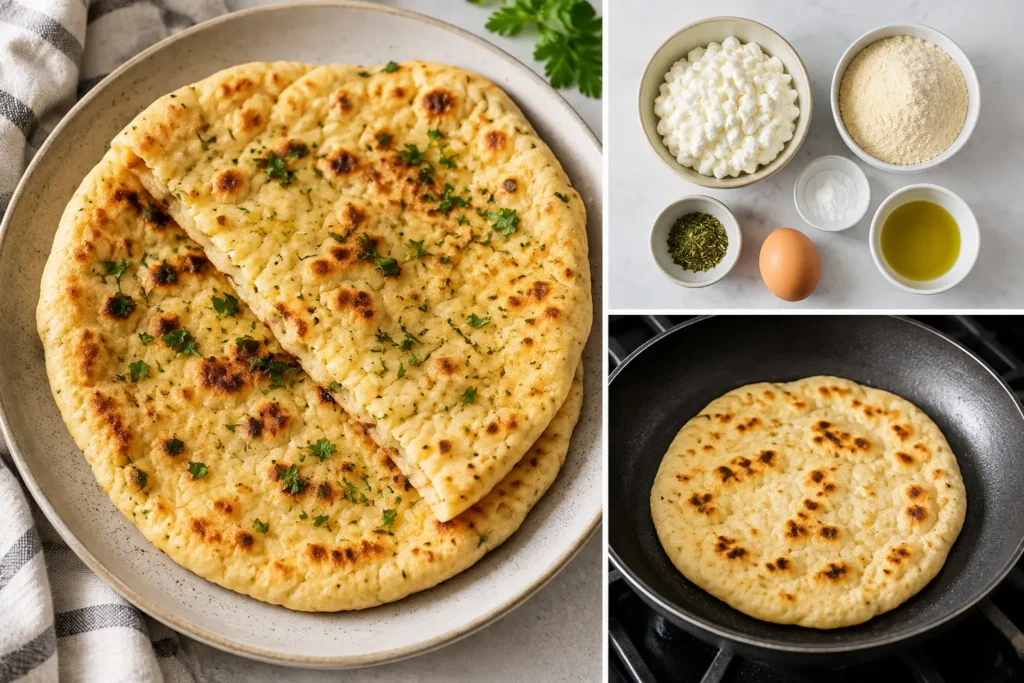
A soft, flexible gluten-free cottage cheese flatbread made with low-fat cottage cheese, eggs, certified gluten-free oat flour, garlic, and Italian seasoning.
Total Time:35 minutes
Yield:2 servings
Ingredients
Scale
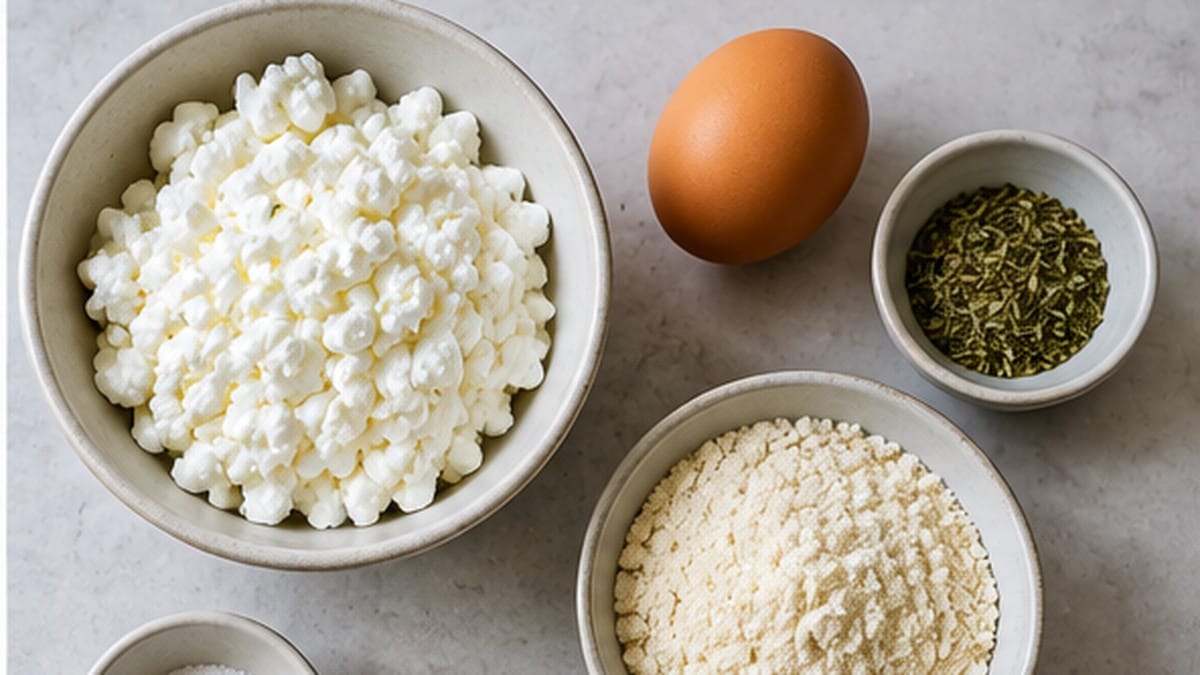
1 cup (about 226 g) 1% low-fat cottage cheese
2 large eggs
1/4 cup (30 g) certified gluten-free oat flour
1/2 teaspoon garlic powder
1/2 teaspoon dried Italian seasoning
Instructions
Preheat the oven to 375°F (190°C). Line a rimmed sheet pan with parchment paper.
Add the cottage cheese and eggs to a blender or food processor. Blend for 20 to 30 seconds, until completely smooth and no cottage cheese curds remain.
Add the certified gluten-free oat flour, garlic powder, and Italian seasoning. Blend just until combined.
Pour the batter onto the parchment and spread it into an even rectangle about 10 by 7 inches and roughly 1/4 inch thick.
Bake for about 30 minutes, until the surface looks dry, the edges are lightly golden, and the center is fully set. For a safety check, an egg-based dish should reach 160°F (71°C) in the center.
Cool on the pan for 5 minutes, then gently peel the parchment away. Cut into two portions and serve warm or cool completely for storage.
Notes
Cottage cheese brands vary in moisture. If the blended batter looks unusually thin, add 1 tablespoon additional oat flour and blend briefly.
Use oat flour labeled gluten free when gluten cross-contact matters, and verify packaged seasonings and cottage cheese for your needs.
Do not replace oat flour one-for-one with coconut flour or almond flour; their absorption and fat content are different.
Refrigerate cooked flatbread in an airtight container for 3 to 4 days. Freeze flat portions with parchment between them for up to 2 months for best texture.
Nutrition is an estimate based on 1% low-fat cottage cheese, two large eggs, 30 g oat flour, and a two-serving yield; brands can change the final values.
Author:Adam Moretti
Prep Time:5 minutes
Cook Time:30 minutes
Category:Bread
Method:Oven
Cuisine:American
Diet:Gluten Free, Vegetarian
How to Make Gluten Free Cottage Cheese Flatbread
Heat the oven. Preheat the oven to 375°F (190°C). Line a rimmed sheet pan with a flat piece of parchment paper.
Blend the cottage cheese and eggs. Add the cottage cheese and eggs to a blender or food processor. Blend for 20 to 30 seconds, or until completely smooth.
Add the dry ingredients. Add the certified gluten-free oat flour, garlic powder, and Italian seasoning. Blend just until the flour disappears into the batter.
Spread to the right thickness. Pour the batter onto the parchment and spread it into an even rectangle about 10 by 7 inches. Aim for roughly 1/4 inch thickness throughout; thin corners cook faster than the center.
Bake until set. Bake for about 30 minutes, rotating the pan once if your oven browns unevenly. The top should look dry, the edges should be lightly golden, and the center should feel set rather than wet.
Cool before peeling. Let the flatbread stand on the pan for 5 minutes. Lift it with the parchment, then gently peel the paper away. Cut into two portions or use the sheet whole for a larger wrap.
How to Know When It Is Done
Color alone is not the best doneness test. The center should no longer look glossy or fluid, and pressing it lightly should leave the surface resilient rather than wet. If your oven runs cool or the batter was spread thicker than 1/4 inch, it may need a few extra minutes.
For an objective safety check, FoodSafety.gov lists 160°F (71°C) as the safe minimum internal temperature for egg dishes. A thin instant-read thermometer inserted into the thickest area can confirm the center is cooked. This is especially useful the first time you make the recipe in a particular pan or oven.
Troubleshooting
The Center Is Wet or Gummy
First check thickness. A smaller rectangle leaves more batter stacked in the middle, so the edges can brown before the center sets. Spread the next batch closer to 10 by 7 inches. If the shape is correct, bake the current batch a few minutes longer and confirm the center reaches the safe temperature for an egg dish.
The Flatbread Sticks to the Parchment
A flatbread that is still steaming heavily is more likely to cling. Let it rest for five minutes, then peel the parchment away from the flatbread rather than pulling the flatbread straight upward. Very low-quality parchment can also release less cleanly than a standard nonstick baking parchment.
The Edges Crack When I Fold It
Overbaking is the usual cause. Pull the sheet when the center is set and the edges are only lightly golden. Folding it while slightly warm also helps. If you plan to use the flatbread as a wrap later, reheat it briefly before folding instead of trying to bend it while refrigerator-cold.
It Tastes Too Eggy
Blend until the cottage cheese is completely smooth and keep the oat flour at the full quarter cup. The flour and seasonings soften the egg-forward texture. Baking long enough for the center to set also produces a more bread-like result than an underdone sheet.
Ways to Serve It
Use each half as a soft wrap for sliced turkey, grilled vegetables, scrambled eggs, or a simple salad filling. You can also cut the flatbread into strips and serve it beside soup or a bean skillet.
For a gluten-free dinner that already has tomato, basil, and melted cheese, pair a plain piece with our gluten free pizza beans. If you would rather make a different homemade gluten-free starch, the gluten free egg noodles use a dough-based technique instead of a blended batter.
The flatbread can also act as a quick pizza-style base. Bake it fully first, add only a thin layer of sauce and toppings, then return it to the oven just long enough to heat the toppings. Heavy or watery toppings can soften the center, so keep the layer light.
Variations and Substitutions
Use 2% cottage cheese: it works, but the nutrition changes slightly and some brands are wetter. If the batter looks unusually thin after blending, add one additional tablespoon of oat flour rather than adding a large amount at once.
Use a gluten-free 1-to-1 flour blend: a measured 30 grams can replace the oat flour when the blend is intended for baking. The texture may be slightly firmer because rice- and starch-based blends absorb differently. Do not assume coconut flour or almond flour can replace oat flour one-for-one; they behave very differently.
Change the seasoning: dried chives, onion powder, smoked paprika, or a small pinch of red pepper can replace the Italian seasoning. Keep wet ingredients out of the batter unless you are prepared to adjust the flour and bake time.
Make it plain: omit the garlic powder and Italian seasoning. The cottage cheese already contributes salt, so taste the finished flatbread before adding extra salt.
Make-Ahead, Storage, and Reheating
Cool the flatbread completely before storing it so steam does not collect inside the container. Refrigerate the two portions in an airtight container for up to 3 to 4 days. The U.S. FDA advises using refrigerated cooked egg dishes within 3 to 4 days and keeping the refrigerator at 40°F (4°C) or below.
To reheat, warm the flatbread for a few minutes in a 325°F oven or briefly in a dry skillet over medium-low heat. Reheating just until flexible is better than cooking it a second time until crisp.
For freezing, place parchment between portions and freeze them flat in a freezer-safe container for up to 2 months for best texture. Thaw overnight in the refrigerator, then warm before folding. Freezing can make the surface a little drier, so this method works best when the flatbread will be used with a moist filling.
Gluten-Free Label Checking and Cross-Contact
Cottage cheese, eggs, and plain seasonings do not require wheat as ingredients, but packaged products can vary. The most important item in this recipe is the oat flour. The FDA gluten-free labeling rule requires foods carrying a gluten-free claim to meet the federal definition, including less than 20 parts per million of unavoidable gluten.
If gluten avoidance is medically necessary, use oat flour labeled gluten free and check the cottage cheese and seasonings you buy. Start with clean bowls, a clean blender, clean parchment, and a work surface free of regular flour crumbs. A gluten-free ingredient list does not by itself prevent cross-contact in a shared kitchen.
FAQ about Gluten Free Cottage Cheese Flatbread
Is Cottage Cheese Flatbread Gluten Free?
This version is gluten free when the oat flour and packaged seasonings are appropriate for your gluten-free needs. Cottage cheese and eggs are naturally made without wheat, but labels and manufacturing practices can vary, so verify packaged ingredients when cross-contact matters.
Can I Make Cottage Cheese Flatbread Without Flour?
Yes, cottage cheese and egg flatbreads exist without flour, but they are usually more egg-forward and delicate. This recipe intentionally uses a small amount of oat flour because the goal is a sturdier, more flexible sheet that can hold a filling.
Can I Use Almond Flour Instead of Oat Flour?
Not as a direct one-for-one swap. Almond flour contains more fat and absorbs liquid differently, so the same volume can leave the center softer. Use a recipe developed around almond flour rather than treating it as an exact substitute.
Why Did My Flatbread Puff in the Oven?
Small bubbles are normal because the eggs expand as they heat. If one area forms a large dome, it usually settles as the flatbread cools. Spreading the batter evenly helps reduce exaggerated thick spots.
Can I Use This as a Pizza Crust?
Yes, after it has baked completely. Add a light layer of sauce and toppings, then return it to the oven briefly. It is a soft flatbread base rather than a crisp pizzeria crust, so use modest toppings to preserve the structure.
How Much Protein Is in One Serving?
Using 1% low-fat cottage cheese, two large eggs, and 30 grams of oat flour, one half of the flatbread is estimated to provide about 22 grams of protein. Brand labels vary, especially for cottage cheese, so the final number can shift slightly.
Final Tips
For reliable gluten free cottage cheese flatbread, blend the dairy and eggs until no curds remain, weigh the oat flour when possible, and spread the batter to an even 1/4-inch thickness. Bake until the center is fully set, then give the sheet five minutes to cool before you peel away the parchment.
That short rest is worth it: the flatbread becomes easier to handle as steam escapes and the structure firms. Once you know the correct thickness in your pan, the recipe becomes a simple gluten-free base for wraps, savory snacks, and quick lunches.
Reviewed recipe options
Make this recipe fit me
Choose one of seven popular diet options. NutriMatch will confirm whether the recipe already fits, show a reviewed adaptation when available, or recommend recipes that match your choice.
Please choose a diet first.
Reviewed Dairy-Free adaptation
Dairy-Free Gluten-Free Cottage-Style Flatbread
Use the reviewed substitutions below to prepare a Dairy-Free version while keeping the original recipe's basic method.
Ingredient swaps
1 cup (about 226 g) 1% low-fat cottage cheeseUse 1 cup (about 226 g) thick dairy-free cottage-cheese alternative
Instruction changes
Blend until completely smooth and extend baking only if the center remains visibly wet.
Check: Check every packaged substitute, sauce, seasoning, and topping for milk ingredients and the cross-contact information you need. The adapted nutrition differs from the published recipe; recalculate it before relying on the original high-protein, keto, or low-carb claim.
Use these reviewed changes with the original ingredient quantities and instructions above. The original recipe card stays unchanged.
Recipe details, product formulas, and cross-contact information can change. Confirm current labels and use professional guidance when medically necessary.
Already a reviewed match
This recipe already fits Gluten-Free.
No changes are needed based on its reviewed NutriMatch classification. Check the complete ingredients, product labels, and serving details for your own needs.
Recipe details, product formulas, and cross-contact information can change. Confirm current labels and use professional guidance when medically necessary.
Already a reviewed match
This recipe already fits High Protein.
No changes are needed based on its reviewed NutriMatch classification. Check the complete ingredients, product labels, and serving details for your own needs.
Recipe details, product formulas, and cross-contact information can change. Confirm current labels and use professional guidance when medically necessary.
Not available for this recipe
This recipe cannot currently be made Keto with a reviewed adaptation.
NutriMatch will not guess at substitutions. Try one of these recipes that is already reviewed for your choice.
Recipe details, product formulas, and cross-contact information can change. Confirm current labels and use professional guidance when medically necessary.
Not available for this recipe
This recipe cannot currently be made Low Carb with a reviewed adaptation.
NutriMatch will not guess at substitutions. Try one of these recipes that is already reviewed for your choice.
Recipe details, product formulas, and cross-contact information can change. Confirm current labels and use professional guidance when medically necessary.
Not available for this recipe
This recipe cannot currently be made Vegan with a reviewed adaptation.
NutriMatch will not guess at substitutions. Try one of these recipes that is already reviewed for your choice.
Recipe details, product formulas, and cross-contact information can change. Confirm current labels and use professional guidance when medically necessary.
Already a reviewed match
This recipe already fits Vegetarian.
No changes are needed based on its reviewed NutriMatch classification. Check the complete ingredients, product labels, and serving details for your own needs.
Recipe details, product formulas, and cross-contact information can change. Confirm current labels and use professional guidance when medically necessary.