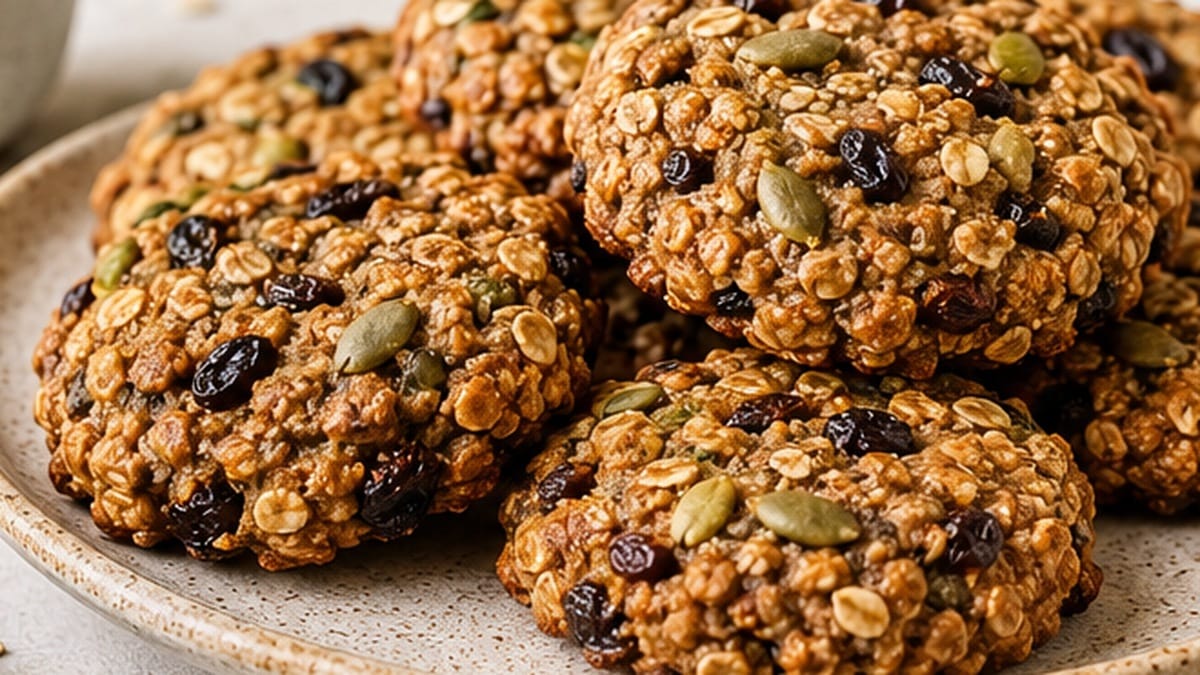
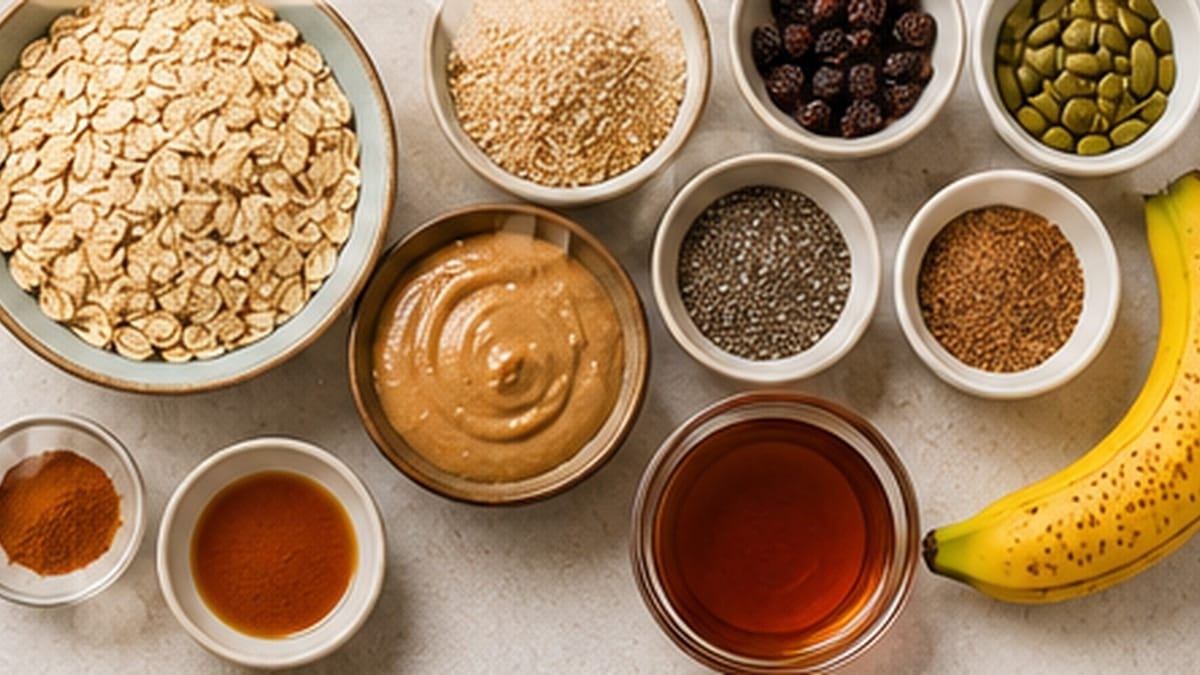
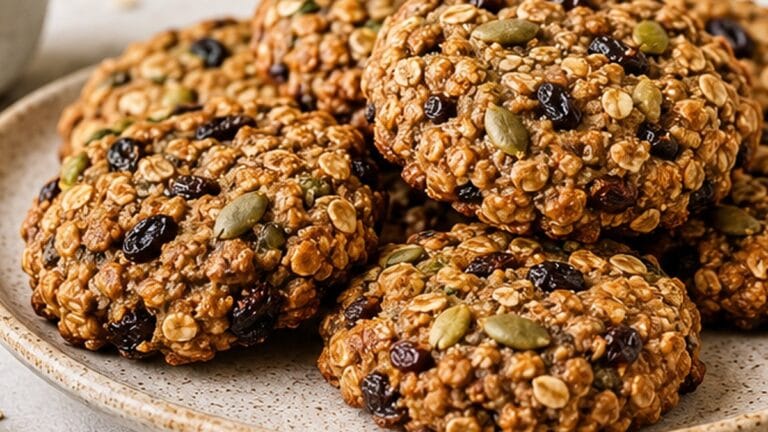
High fiber gluten free breakfast cookies turn the best parts of a bowl of oatmeal into a grab-and-go breakfast you can make once and eat all week. These thick, chewy cookies are packed with certified gluten-free oats, oat bran, chia seeds, ground flaxseed, almond butter, banana, raisins, and pumpkin seeds. One large cookie provides an estimated 7.8 grams of fiber and just over 10 grams of plant protein.
They are naturally sweetened with ripe banana, raisins, and a modest amount of maple syrup, so they taste like breakfast rather than dessert. The center stays soft, the edges turn lightly golden, and the seeds give each cookie enough texture to keep every bite interesting.
If you already like meal-prep breakfasts, save our high protein overnight oats for another busy morning. For a classic weekend option, our gluten free waffles are crisp outside and fluffy in the center.
Table of Contents
Why These High Fiber Gluten Free Breakfast Cookies Work
Breakfast cookies can go wrong in two opposite directions. Some are basically oatmeal pressed into a circle and crumble as soon as you pick them up. Others use enough nut butter and sweetener to behave like a dessert cookie, which makes them heavy and overly sweet for breakfast.
This recipe lands between those extremes. Mashed banana and almond butter provide moisture and binding. Chia seeds and ground flaxseed absorb some of that moisture as the dough rests, while oat bran fills the gaps between the rolled oats. The result is a cookie that holds together without eggs or a gluten-free flour blend.
The cookies also do not depend on chocolate chips for flavor. Cinnamon, vanilla, raisins, pumpkin seeds, and toasted oats give them enough sweetness and texture on their own. That keeps the recipe focused on breakfast while still making it something you will actually look forward to eating.
Quick Recipe Snapshot
Prep time: 12 minutes
Rest time: 10 minutes
Bake time: 15 to 18 minutes
Total time: about 40 minutes
Yield: 10 large breakfast cookies
Serving size: 1 large cookie
Texture: soft, chewy, and hearty
Diet: gluten free and vegan as written
Ingredients You’ll Need
Certified Gluten-Free Rolled Oats
Old-fashioned rolled oats give the cookies their recognizable oatmeal texture. Do not use steel-cut oats here because they stay too firm, and avoid instant oatmeal packets because the added sugar, flavoring, and very fine oat pieces change the dough.
For a gluten-free recipe, use oats that are specifically labeled gluten free. The FDA explains that oats can carry a gluten-free label when the finished food meets the federal gluten-free standard, including the limit of less than 20 parts per million of gluten. You can read the FDA gluten-free labeling Q&A for the details.
Oat Bran
Oat bran is the finely textured outer layer of the oat grain. In this dough it does two jobs: it boosts fiber and helps absorb moisture so the cookies stay thick instead of spreading into flat, sticky rounds. If you skip it, the dough will need extra oats and the texture will be more coarse.
Chia Seeds and Ground Flaxseed
Chia and flax are important to the structure, not just the nutrition. Once mixed with the banana and almond butter, they begin absorbing liquid and thickening the dough. Ground flax works better than whole flaxseed because it distributes evenly and does not leave hard seeds in the center.
Almond Butter
Use smooth, well-stirred almond butter. Very dry almond butter can make the dough crumbly, while an unusually runny jar can make it soft. If the dough seems dry after resting, a tablespoon or two of unsweetened plant milk brings it back to the right consistency.
Ripe Banana
Two very ripe bananas add moisture, sweetness, and binding. Bananas with plenty of brown spots work best. Mash them until mostly smooth so there are no large pieces that create wet pockets inside the cookies.
Raisins and Pumpkin Seeds
Raisins add concentrated sweetness and chew without turning the cookies into dessert. Pumpkin seeds add crunch and extra protein. If your raisins are very dry, cover them with hot water for five minutes, drain well, and pat dry before mixing them into the dough.
Why They Qualify as High Fiber
The estimated fiber in one cookie is about 7.8 grams. The FDA lists the Daily Value for dietary fiber as 28 grams and considers 20% Daily Value or more per serving to be high. That puts one cookie at roughly 28% of the Daily Value, based on the ingredient amounts used here. You can see the current reference values in the FDA Daily Value guide.
The estimate comes mainly from rolled oats, oat bran, chia, flaxseed, almond butter, banana, raisins, and pumpkin seeds. Exact numbers change with brands and portion size, so treat the nutrition panel as a practical estimate rather than a laboratory measurement.
Soft, chewy breakfast cookies made with certified gluten-free oats, oat bran, chia, flaxseed, almond butter, banana, raisins, and pumpkin seeds. Vegan, freezer-friendly, and naturally high in fiber.
2 medium very ripe bananas (about 230 g peeled), mashed
1/2 cup (128 g) smooth almond butter, well stirred
1/4 cup (60 g) pure maple syrup
1 teaspoon vanilla extract
1 to 2 tablespoons unsweetened plant milk, as needed
1/2 cup (60 g) raisins
1/3 cup (50 g) raw or roasted unsalted pumpkin seeds
Instructions
Preheat the oven to 350°F (175°C) and line a large baking sheet with parchment paper.
Mash the bananas in a large bowl until mostly smooth. Whisk in the almond butter, maple syrup, vanilla, and 1 tablespoon of plant milk until creamy.
Add the rolled oats, oat bran, chia seeds, ground flaxseed, cinnamon, baking powder, and salt. Fold until no dry pockets remain.
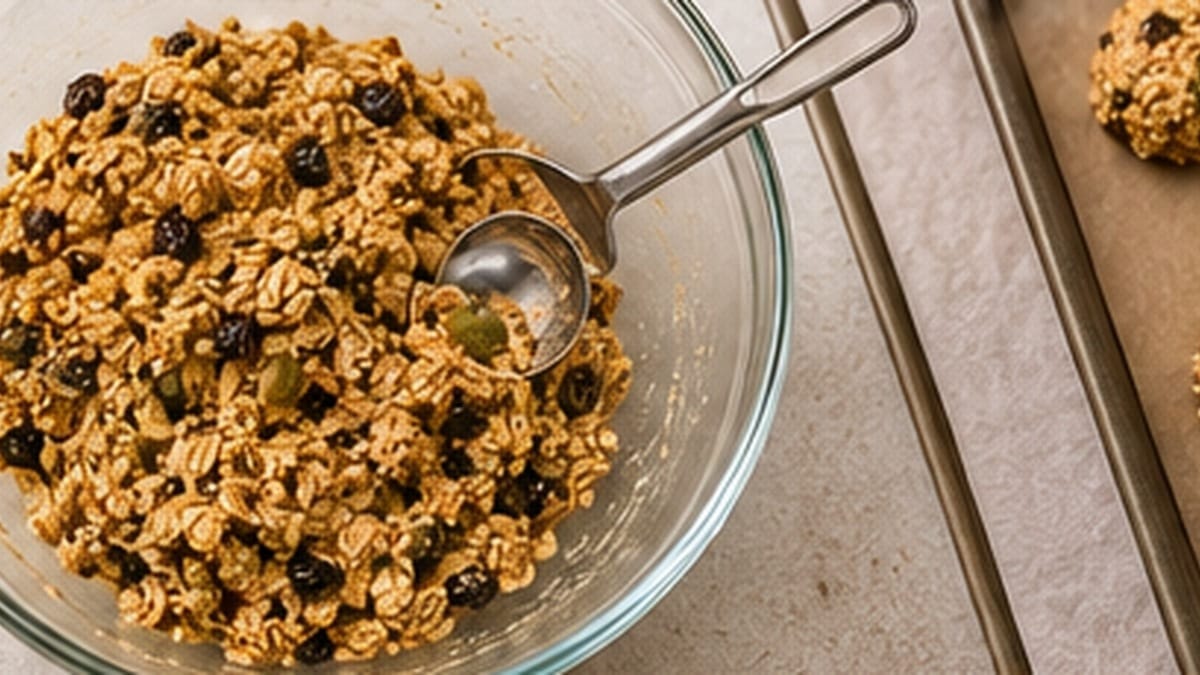
Fold in the raisins and pumpkin seeds. Let the dough rest for 10 minutes so the oats, chia, flax, and oat bran can absorb moisture.
After resting, the dough should hold together when pressed. If it is very loose, add 2 tablespoons rolled oats. If it is dry and crumbly, add the remaining tablespoon of plant milk.
Divide into 10 equal portions, about a generous 1/3 cup each. Place on the prepared baking sheet and press into rounds about 3/4 inch thick.
Bake for 15 to 18 minutes, until the edges are lightly golden and the centers feel set.
Cool on the baking sheet for at least 10 minutes before moving the cookies to a rack. Cool completely before storing.
Notes
Use oats specifically labeled gluten free when gluten avoidance is important.
The 10-minute rest is essential for the chia, flax, oat bran, and oats to absorb moisture.
These cookies spread very little, so shape them before baking.
For a nut-free variation, sunflower seed butter can replace almond butter. Nutrition will change.
Store at room temperature for up to 2 days or refrigerate for up to 5 days.
Freeze cooled cookies for up to 2 months for best quality.
Nutrition is an estimate based on 10 equal cookies and will vary by ingredient brand.
Author:Adam Moretti
Prep Time:12 minutes
Cook Time:15-18 minutes
Category:Breakfast
Method:Baking
Cuisine:American
Diet:Gluten Free, Vegan
How to Make High Fiber Gluten Free Breakfast Cookies
1. Mash the Banana
Heat the oven to 350°F and line a large baking sheet with parchment paper. Mash the bananas in a large mixing bowl until they look almost like thick applesauce. A few tiny pieces are fine, but large chunks can make individual cookies bake unevenly.
2. Add the Wet Ingredients
Whisk in the almond butter, maple syrup, vanilla, and one tablespoon of plant milk. Keep mixing until the almond butter is fully incorporated and the mixture looks creamy rather than streaky.
3. Add the Fiber-Rich Dry Ingredients
Add the rolled oats, oat bran, chia seeds, ground flaxseed, cinnamon, baking powder, and salt. Fold until no dry pockets remain. The mixture will look softer than traditional cookie dough at first; that is expected.
4. Fold in Raisins and Pumpkin Seeds
Add the raisins and pumpkin seeds and fold again until they are evenly distributed. Try not to overwork the mixture. You want the oats to stay visible so the finished cookies keep a chunky breakfast-cookie texture.
5. Rest the Dough for 10 Minutes
This short rest is one of the most important steps. Chia, flax, oat bran, and rolled oats need a few minutes to absorb moisture. After 10 minutes the dough should be thick enough to scoop and shape with your hands.
If the dough still looks very loose, stir in 2 tablespoons of rolled oats and wait another three minutes. If it looks dry and breaks apart when pressed, mix in the remaining tablespoon of plant milk.
6. Shape 10 Large Cookies
Divide the mixture into 10 equal portions, about a generous 1/3 cup each. Place them on the prepared baking sheet and press each portion into a round about 3/4 inch thick. These cookies spread very little, so shape them before they go into the oven.
7. Bake Until the Edges Are Golden
Bake for 15 to 18 minutes, rotating the pan once if your oven browns unevenly. The cookies are ready when the edges look lightly golden and the centers feel set when touched gently.
8. Cool Before Moving
Let the cookies cool on the baking sheet for at least 10 minutes. They are fragile straight from the oven but firm up as the oats, chia, and flax cool. Moving them too early is the most common reason breakfast cookies break.
How to Keep Breakfast Cookies From Falling Apart
Because these cookies do not use eggs or wheat flour, their structure comes from moisture balance. The banana and almond butter hold the mixture together, while the chia, flax, oat bran, and oats absorb that moisture. If the ratio shifts too far in either direction, the cookies can crumble or stay gummy.
Measure the banana. Two medium peeled bananas should give you about 1 cup or 230 grams mashed.
Use ground flaxseed. Whole flax seeds do not bind the dough as effectively.
Do not skip the 10-minute rest. The dough thickens noticeably while it sits.
Shape before baking. These cookies barely spread on their own.
Cool on the pan. They become much stronger after 10 minutes.
Adjust only after resting. Add extra oats or plant milk only after the chia and flax have had time to hydrate.
Rolled Oats vs. Quick Oats
Rolled oats create the best chewy texture because the individual flakes remain visible after baking. Quick oats absorb liquid faster and make a softer, more uniform cookie. They can work in a pinch, but start checking the dough after five minutes of resting because it will thicken sooner.
If you use quick oats, do not add extra oat bran unless the dough is truly loose. Using quick oats and the full amount of oat bran can make the cookies dense and dry.
Can I Make Them Without Oat Bran?
Yes, but the fiber and texture will change. Replace the 3/4 cup oat bran with 3/4 cup additional certified gluten-free rolled oats, then pulse about half of those replacement oats briefly in a blender or food processor. The finer pieces help mimic some of the moisture absorption you would normally get from oat bran.
The finished cookies will be slightly more rustic and the estimated fiber per cookie will be lower, so do not use the same nutrition numbers for that variation.
Easy Variations
Apple Cinnamon Breakfast Cookies
Replace half the raisins with 1/2 cup finely diced dried apple and increase the cinnamon to 1 1/2 teaspoons. Avoid fresh chopped apple unless you reduce the banana slightly because fresh fruit adds extra water.
Cranberry Pumpkin Seed
Swap the raisins for dried cranberries. Choose a product that fits your preferences for added sugar and verify the package is suitable for your gluten-free needs.
Sunflower Seed Butter Version
Use sunflower seed butter in place of almond butter for a nut-free variation. The cookies may turn slightly green after baking because sunflower seeds can react with baking powder; the color change is harmless but surprising if you are not expecting it.
Chocolate Chip Option
For a sweeter version, replace half the raisins with 1/3 cup gluten-free vegan chocolate chips. That changes the sugar, calories, and overall breakfast profile, so treat it as an occasional variation rather than the base nutrition estimate.
What to Serve With Breakfast Cookies
One cookie is substantial, but breakfast feels more complete when you pair it with something fresh or creamy. Try a piece of fruit, unsweetened soy yogurt, or a glass of fortified plant milk. If you want a more traditional hot breakfast on another day, browse our main gluten free recipes guide for more ideas.
For a bigger morning meal, a cookie also works well beside a small serving of overnight oats. The textures are different enough that it does not feel like you are eating two versions of the same breakfast.
Meal Prep and Storage
These cookies are designed for make-ahead breakfasts. Once completely cool, store them in an airtight container at room temperature for up to 2 days or refrigerate for up to 5 days. Place parchment between layers if your kitchen is warm and the cookies feel soft.
For the best texture, take a refrigerated cookie out 10 to 15 minutes before eating, or warm it in the microwave for about 10 seconds. The almond butter softens slightly and the oats become pleasantly chewy again.
How to Freeze Breakfast Cookies
Freeze the fully cooled cookies in a single layer until firm, then transfer them to a freezer-safe container or bag. That first freeze keeps them from sticking together. For best quality, use them within about 2 months.
Thaw overnight in the refrigerator or leave one wrapped cookie at room temperature for 30 to 60 minutes. You can also microwave a frozen cookie in short 10-second intervals until just soft.
Troubleshooting High Fiber Gluten Free Breakfast Cookies
The Dough Is Too Wet
Wait the full 10 minutes first. If the dough still will not hold a mound, add 2 tablespoons of rolled oats, mix, and wait another three minutes. Avoid adding large amounts at once because the cookies can become dry after baking.
The Dough Is Too Dry
This usually happens when the banana is small or the almond butter is unusually thick. Mix in 1 tablespoon of unsweetened plant milk. Add a second tablespoon only if the dough still cracks apart when pressed.
The Cookies Are Gummy
Gummy centers usually mean the cookies are too thick, the bananas were extra large, or the baking time was too short. Press the next batch to about 3/4 inch thick and bake until the center feels set instead of wet.
The Cookies Crumble
Let them cool longer before moving them. If they still crumble once completely cool, the dough was probably too dry. Add 1 to 2 tablespoons of plant milk to the next batch and make sure the flaxseed is ground.
Frequently Asked Questions
Are breakfast cookies actually breakfast?
They can be. This recipe uses the same kinds of ingredients you might put into oatmeal—oats, banana, seeds, nut butter, and dried fruit—but bakes them into a portable shape. It is intentionally less sweet than a traditional dessert cookie.
Do oats contain gluten?
Oats are not wheat, barley, or rye, but cross-contact can happen during growing, processing, and packaging. For this recipe, choose oats specifically labeled gluten free when gluten avoidance is important.
Can I use peanut butter instead of almond butter?
Yes. Use smooth peanut butter in the same amount. The peanut flavor will be more noticeable, and the nutrition estimate will change slightly.
Can I leave out the raisins?
Yes. Replace them with chopped dried dates, dried cranberries, or another dried fruit. If you leave dried fruit out completely, the cookies will taste much less sweet and the nutrition will change.
Can kids eat these breakfast cookies?
They are made with common breakfast ingredients, but portions and choking risks depend on age and the individual child. For younger children, pumpkin seeds and dried fruit may need to be chopped more finely, and any nut or seed allergies need to be considered.
Can I make smaller cookies?
Yes. Make 15 smaller cookies instead of 10 and start checking them around 11 to 12 minutes. The nutrition per cookie will be lower because the serving size has changed.
Final Tips
The most important part of this recipe is the 10-minute rest. That is when the chia, flax, oats, and oat bran absorb moisture and turn a soft mixture into scoopable cookie dough. Shape the cookies before baking, give them enough time to cool, and you will get a chewy breakfast cookie that holds together without eggs or a gluten-free flour blend.
Keep the first batch exactly as written so you can see the intended texture. After that, swap the dried fruit, seeds, or nut butter while keeping the basic wet-to-dry ratio the same. That makes these high fiber gluten free breakfast cookies easy to adapt without losing the texture that makes them work.
Reviewed recipe options
Make this recipe fit me
Choose one of seven popular diet options. NutriMatch will confirm whether the recipe already fits, show a reviewed adaptation when available, or recommend recipes that match your choice.
Please choose a diet first.
Already a reviewed match
This recipe already fits Dairy-Free.
No changes are needed based on its reviewed NutriMatch classification. Check the complete ingredients, product labels, and serving details for your own needs.
Recipe details, product formulas, and cross-contact information can change. Confirm current labels and use professional guidance when medically necessary.
Already a reviewed match
This recipe already fits Gluten-Free.
No changes are needed based on its reviewed NutriMatch classification. Check the complete ingredients, product labels, and serving details for your own needs.
Recipe details, product formulas, and cross-contact information can change. Confirm current labels and use professional guidance when medically necessary.
Not available for this recipe
This recipe cannot currently be made High Protein with a reviewed adaptation.
NutriMatch will not guess at substitutions. Try one of these recipes that is already reviewed for your choice.
Recipe details, product formulas, and cross-contact information can change. Confirm current labels and use professional guidance when medically necessary.
Not available for this recipe
This recipe cannot currently be made Keto with a reviewed adaptation.
NutriMatch will not guess at substitutions. Try one of these recipes that is already reviewed for your choice.
Recipe details, product formulas, and cross-contact information can change. Confirm current labels and use professional guidance when medically necessary.
Not available for this recipe
This recipe cannot currently be made Low Carb with a reviewed adaptation.
NutriMatch will not guess at substitutions. Try one of these recipes that is already reviewed for your choice.
Recipe details, product formulas, and cross-contact information can change. Confirm current labels and use professional guidance when medically necessary.
Already a reviewed match
This recipe already fits Vegan.
No changes are needed based on its reviewed NutriMatch classification. Check the complete ingredients, product labels, and serving details for your own needs.
Recipe details, product formulas, and cross-contact information can change. Confirm current labels and use professional guidance when medically necessary.
Already a reviewed match
This recipe already fits Vegetarian.
No changes are needed based on its reviewed NutriMatch classification. Check the complete ingredients, product labels, and serving details for your own needs.
Recipe details, product formulas, and cross-contact information can change. Confirm current labels and use professional guidance when medically necessary.