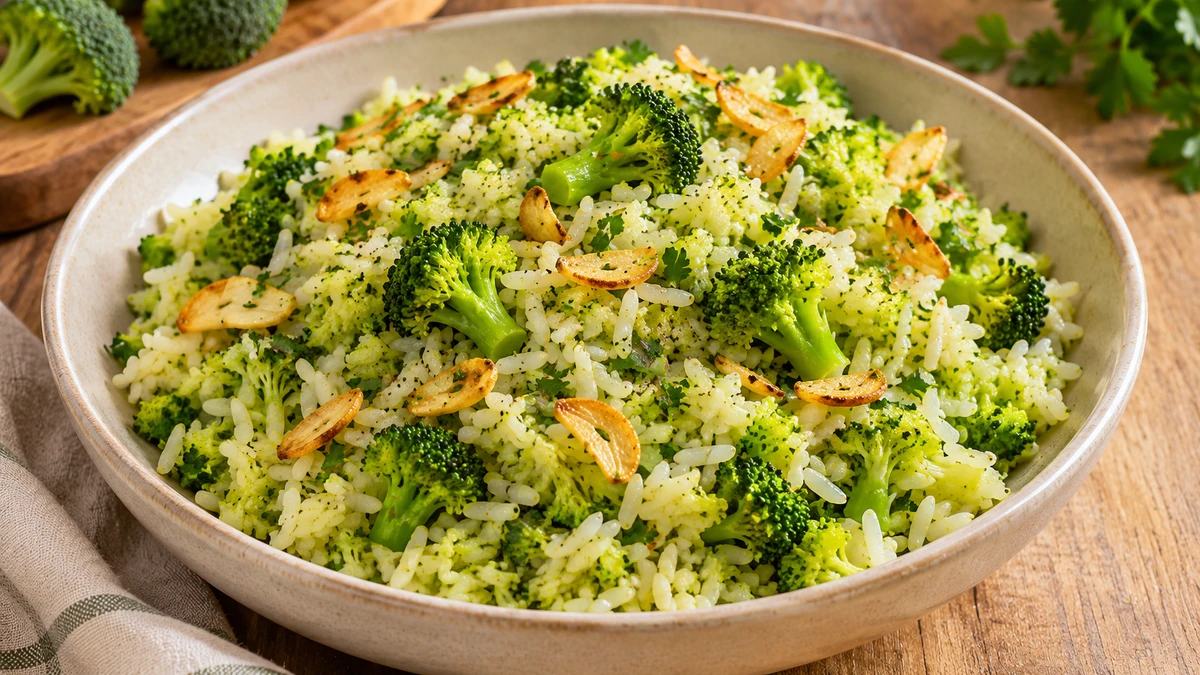
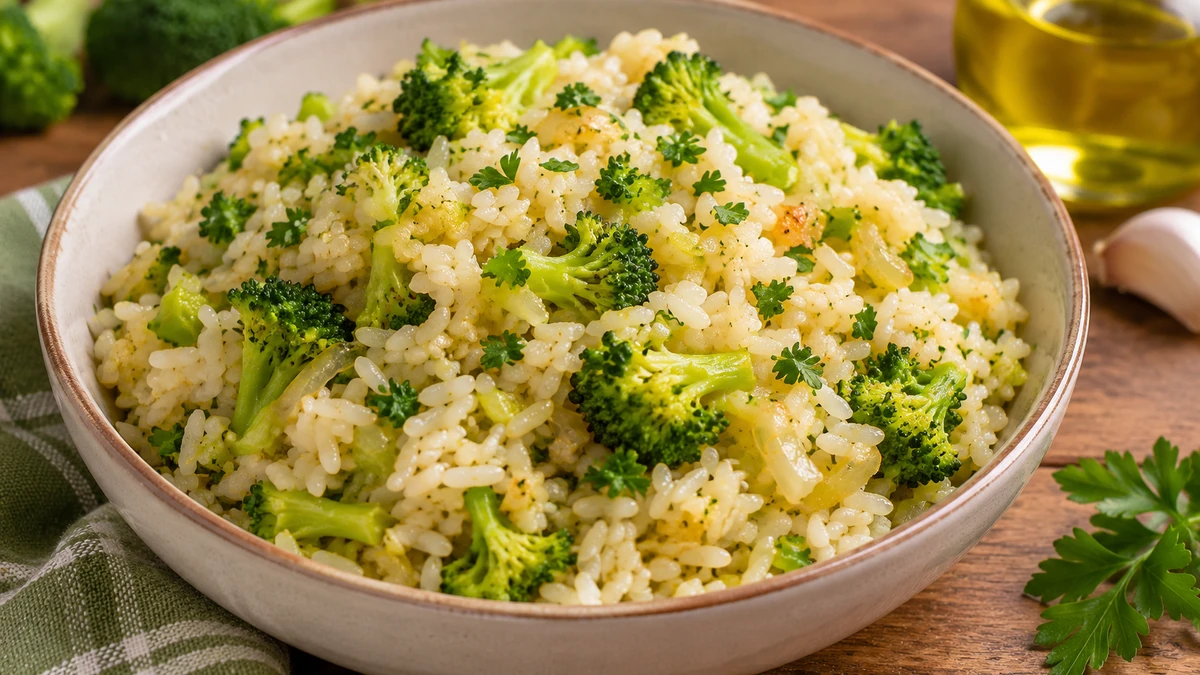
Brazilian broccoli rice, or arroz de brócolis, is fluffy white rice cooked with finely chopped broccoli stems, tender florets, onion, and garlic. The stems tint the cooking liquid green, while the florets give every spoonful a little bite. Thin slices of garlic, toasted until golden, finish the dish without cheese, butter, or broth.
This version uses ordinary U.S. supermarket ingredients and one saucepan for the rice, plus a small skillet if you want the crispy garlic topping. The key is to measure the water before blending it with the stems and to add the florets partway through cooking. That keeps the rice separate and the broccoli green rather than mushy.
Table of Contents
What Is Brazilian Broccoli Rice?
In Brazil, arroz de brócolis is a familiar vegetable-and-rice side, particularly associated with everyday lunch plates and some Rio de Janeiro kitchens. It is not simply cauliflower-style “broccoli rice,” where broccoli replaces the grain. The rice here is real long-grain white rice, and the broccoli is worked into its cooking liquid and folded among the grains.
There are several legitimate ways to prepare the dish. The Brazilian cooking site Panelinha documents a version that blends broccoli greens with water and finishes with golden garlic. Brazilian Kitchen Abroad also describes using broccoli stems for the green liquid and cooking florets with rice. Our measured, U.S.-kitchen adaptation keeps the idea but uses its own proportions and timing.
Why This Rice Stays Fluffy and Flavorful
Long-grain white rice cooks into distinct grains when the liquid is measured and the pot is kept at a gentle simmer.
Peeled broccoli stems, pulsed with the measured water, add flavor and a soft green tint instead of being discarded.
Small florets go on top after the rice has started absorbing liquid, so they steam without breaking apart.
Onion and minced garlic season the base; a little sliced garlic is cooked separately for a golden, crunchy finish.
A five-minute covered rest lets the last steam settle before you fluff the rice with a fork.
The result should be savory and garlicky, with rice grains that hold their shape and broccoli pieces you can still identify. It is a side dish, not a high-protein meal on its own. For a complete plant-based dinner, serve it with beans, baked tofu, or another substantial main from our vegan dinner recipes guide.
Ingredients for Brazilian Broccoli Rice
You need 1 cup (185 g) dry long-grain white rice and 12 ounces (340 g) trimmed, edible broccoli florets and tender stems. Set aside the little florets and chop the stems so they fit in a blender. Peel the fibrous outside of any thick stem first. The broccoli amount is weighed after trimming away the tough base, not as the weight of an entire untrimmed grocery-store head.
For seasoning, use half a medium yellow onion (about 80 g), four garlic cloves (about 12 g), 1½ tablespoons olive oil divided between the saucepan and garlic topping, ½ teaspoon fine salt, ¼ teaspoon black pepper, and optional chopped parsley. Measure 1¾ cups (415 mL) water in total for the rice. All ingredients in the main recipe are plant-based; there is no chicken broth or cheese.
The best rice to use
Choose regular white long-grain rice rather than instant rice or pre-cooked microwave packets. Basmati may work but cooks a little differently and has a different fragrance. Brown rice needs substantially more cooking time and often a different amount of water, so it should not be substituted using the times below. Keep the basic rice-and-water measurements consistent the first time you make this.
Which part of the broccoli goes into the blender?
Use the peeled, tender stems—not the tough, woody bottom. Aim for roughly 1 cup chopped stem pieces and keep the remaining broccoli in small florets. If a head has very little stem, pulse a handful of chopped florets with the water instead. Avoid blending the entire broccoli head into a thick paste; leaving recognizable florets in the finished rice gives the dish its characteristic texture.
How to Make Brazilian Broccoli Rice
Step 1: Prepare the broccoli and rinse the rice
Cut the florets into bite-size pieces, about ½ to ¾ inch across, so they steam evenly. Peel and chop the tender stem interior. Place the rice in a fine-mesh strainer, rinse briefly under cool water until the runoff is less cloudy, and drain thoroughly. Rinsing removes loose surface starch, but letting the rice drain is just as important so extra unmeasured water does not go into the pot.
Step 2: Make the green cooking liquid
Pour exactly 1¾ cups water into a blender with the chopped stems. Pulse until the stems are very finely minced and the water looks green and speckled; it does not need to be perfectly smooth. Do not add more water to help the blender run unless you subtract that amount from the measured 1¾ cups. Set the mixture beside the stove.
Step 3: Sauté the onion, garlic, and rice
Heat 1 tablespoon olive oil in a medium saucepan with a fitted lid over medium heat. Add the diced onion and cook for about 3 minutes, until it looks translucent. Stir in two finely minced garlic cloves for 30 seconds, then add the drained rice. Stir for 1 minute so the grains are lightly coated with the aromatic oil; avoid letting the garlic turn dark brown.
Step 4: Simmer, then add the florets
Pour in all of the broccoli-stem water, add the salt and pepper, and bring the pot to a gentle boil. Stir once to distribute the stems. Lower the heat, cover, and simmer for 10 minutes without stirring. Open the lid briefly, spread the little florets across the top, and cover again. Cook another 7 to 9 minutes, until the water is absorbed and the rice is tender. If a grain is still hard and the pot looks dry, add 1 or 2 tablespoons hot water, cover, and cook a little longer.
Step 5: Rest, make the golden garlic, and serve
Turn off the heat and leave the saucepan covered for 5 minutes. Meanwhile, warm the remaining ½ tablespoon oil in a small skillet over medium-low heat. Add the two thinly sliced garlic cloves and stir for 1 to 2 minutes, removing them as soon as they turn pale gold; they darken after leaving the oil. Fluff the rice gently with a fork, spoon it into a serving bowl, and scatter the garlic and optional parsley on top. Serve warm.
Fluffy Brazilian broccoli rice cooked with green broccoli-stem water, small florets, onion, and garlic, finished with golden garlic chips. Vegan side dish.
Total Time:40 minutes
Yield:4 servings
Ingredients
Scale
1 cup (185 g) uncooked regular long-grain white rice, rinsed and well drained
1 1/2 tablespoons olive oil, divided (1 tablespoon for rice, 1/2 tablespoon for garlic topping)
1 3/4 cups (415 mL) water, measured before blending with the stems
1/2 teaspoon fine salt
1/4 teaspoon ground black pepper
1 tablespoon chopped fresh parsley, optional, for serving
Instructions
Cut broccoli into small florets (about 1/2 to 3/4 inch across). Peel thick stems to remove the tough exterior; chop the tender cores. Rinse the rice briefly in a fine-mesh strainer and drain it thoroughly.
Blend or pulse the chopped stems with exactly 1 3/4 cups measured water until the stems are very finely minced and the liquid is green and speckled. Set aside. Do not add extra water.
Heat 1 tablespoon olive oil in a medium lidded saucepan over medium heat. Cook the onion for about 3 minutes until translucent. Add 2 minced garlic cloves and cook 30 seconds. Stir in the drained rice and toast 1 minute.
Add the full broccoli-stem water mixture, salt, and pepper. Stir once and bring to a gentle boil. Reduce to low, cover, and simmer for 10 minutes without stirring.
Quickly spread the small broccoli florets over the rice. Cover again and cook for 7 to 9 minutes more, or until the rice is tender and water is absorbed. If rice is still firm and the pot is dry, add 1 to 2 tablespoons hot water and cook a few minutes longer.
Turn off the heat and let the rice stand covered for 5 minutes. Meanwhile, warm the remaining 1/2 tablespoon oil in a small skillet over medium-low heat; cook the 2 thinly sliced garlic cloves for 1 to 2 minutes until pale gold, then immediately remove from the hot oil.
Fluff the rice gently with a fork, transfer to a serving bowl, and top with the golden garlic and optional chopped parsley. Serve warm.
Notes
Yield: 4 generous side-dish servings. The water amount is the TOTAL water used, including the liquid blended with broccoli stems.
Use regular raw long-grain white rice, not instant or brown rice; those varieties need different timings and liquid.
Add florets after the first 10 minutes so they steam without becoming mushy. Remove the thin garlic chips at pale gold because they continue browning in residual heat.
Refrigerate promptly in shallow containers within 2 hours (within 1 hour above 90°F); use within 3 to 4 days and reheat to 165°F.
Nutrition is an ingredient-based estimate for the stated recipe only; toppings and substitutions change it.
Author:Adam Moretti
Prep Time:15 minutes
Cook Time:25 minutes
Category:Side Dish
Method:Stovetop
Cuisine:Brazilian
Diet:Vegan
What the Finished Rice Should Look Like
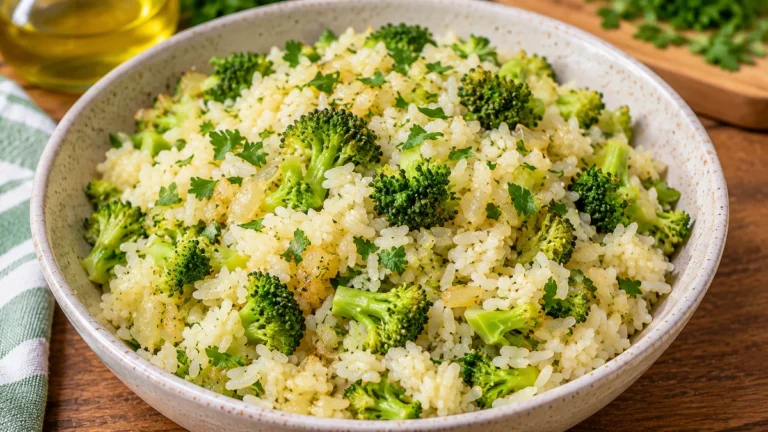
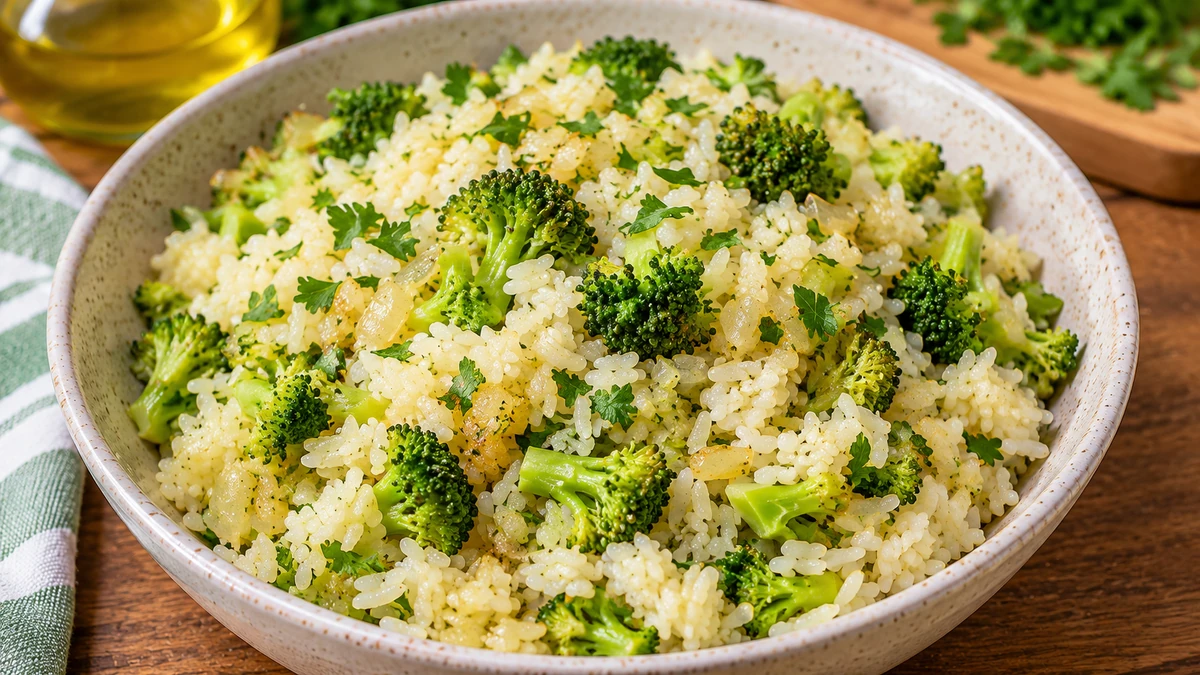
Each grain should be tender but distinct, not suspended in a creamy sauce. Expect a light green tint rather than a uniformly dark puree: the stem mixture colors the rice while the little florets remain bright. The onion should disappear into the grains; the thin garlic chips should be golden, not dark brown or bitter.
Troubleshooting: Avoid Mushy Rice and Dull Broccoli
Why did the rice turn sticky or wet?
The usual causes are extra water, insufficient draining after rinsing, or stirring during the simmer. Measure the water first, including every tablespoon that goes into the blender. Keep the lid in place for the first 10 minutes, and do not stir after the simmer starts. If the rice is cooked but a little wet, uncover it briefly over low heat and then let it rest off the heat before fluffing.
What if the rice is crunchy but the water is gone?
Heat levels and saucepan widths vary. Add 1 to 2 tablespoons hot water around the edge of the pot, cover, and cook on the lowest heat for another 3 to 5 minutes. Check a grain, not only the look of the surface. Do not dump in another full cup: too much added liquid can turn the bottom of the rice pasty.
Why did the broccoli lose its bright color?
Broccoli darkens when cooked too long. Cut the florets small and add them after the rice has simmered for 10 minutes rather than at the beginning. Keep the later simmer gentle, then serve soon after the covered rest. Color also varies with broccoli freshness; a slightly muted green does not automatically mean the dish failed.
How do I stop the garlic from burning?
Use medium-low heat for the sliced topping and remove the garlic from the oil when it is pale gold, not deep brown. Thin slices brown quickly, and hot oil continues cooking them after you turn off the stove. If they burn, start the topping again rather than sprinkling bitter chips over the finished rice. You can also skip the crispy garnish without changing how the rice itself cooks.
Easy Variations and Substitutions
No blender: finely grate or mince the peeled broccoli stems and add them with the water. The rice will show more green flecks and a less even tint, but the basic method is the same.
Frozen broccoli: use thawed, well-drained chopped broccoli; reserve some for the late steaming step. Frozen florets may be softer and need less time than fresh.
Extra garlic: add one extra clove to the cooked topping rather than the simmering rice if you want a more pronounced toasted garlic flavor.
Spicy version: finish with a pinch of red pepper flakes. Add them at the table so diners can adjust their own heat.
With beans: serve alongside warmed black beans or chickpeas to make the plate more substantial; the recipe-card nutrition covers the rice side only.
With lemon: add a small squeeze immediately before eating for a brighter finish. This is optional and not required by the base recipe.
What to Serve with Arroz de Brócolis
Brazilian broccoli rice works well alongside black beans, sautéed mushrooms, grilled vegetables, or tofu with a simple lemon dressing. As a side, it can also sit next to a brothy stew or a baked protein. For more plant-based main dishes, browse our vegan slow cooker recipes; the rice is particularly useful for soaking up the sauce from a lentil or bean stew.
If you are building a vegetable-heavy dinner, combine the rice with the ideas in our vegan cabbage recipes. Or serve a smaller scoop alongside one of our vegan soup recipes for a simple lunch. Those are serving ideas, not additions to the nutrition estimate printed in this recipe card.
Make-Ahead, Refrigeration, and Freezing
Cooked rice needs prompt cooling. Transfer leftovers into shallow containers and refrigerate within 2 hours of cooking, or within 1 hour if the surrounding temperature is above 90°F. The FoodSafety.gov leftover guidance advises using properly refrigerated leftovers within 4 days and reheating to 165°F. Do not leave a deep, warm pot of rice on the stove overnight to cool slowly.
For make-ahead lunches, divide the finished rice into portions as soon as you are done serving and refrigerate promptly at 40°F or below. Reheat only the portion you need in a covered microwave-safe dish with a small splash of water, stirring halfway so no cold spots remain. Heat thoroughly to 165°F. Freshly toasted garlic is best added after reheating because stored chips soften.
You can freeze cooled portions in airtight containers for approximately 1 to 2 months for best texture. Let them thaw in the refrigerator or reheat directly from frozen using a method that heats the center completely. Broccoli may soften after thawing; the flavor generally holds up better than the floret texture. Do not use smell or appearance alone to decide whether forgotten rice is safe.
Nutrition and Dietary Notes
The recipe makes four generous side-dish portions. Based on 185 g uncooked white rice, 340 g raw broccoli, 80 g onion, 12 g garlic, approximately 20 g olive oil, and ½ teaspoon fine salt, the estimate is about 255 calories, 46 g carbohydrate, 6 g protein, 6 g fat, and 3 g fiber per serving. We calculated the batch from ingredient-level figures referenced to USDA FoodData Central and divided by four; it is not a laboratory analysis.
This is naturally prepared without meat, dairy, wheat ingredients, or animal broth. However, check individual packaging and kitchen cross-contact if you need a strictly gluten-free meal. Brand-specific rice weight, oil absorbed by the garlic, trimming losses, and salt measurement can change the numbers. Adding beans, tofu, cheese, or other toppings changes the nutrition and is not included in the recipe-card estimate.
FAQs about Brazilian Broccoli Rice
Is Brazilian broccoli rice the same as broccoli rice made without grain?
No. Brazilian arroz de brócolis uses actual rice cooked with broccoli. “Broccoli rice” in low-carb recipes can mean broccoli pulsed into tiny grain-shaped pieces with no rice at all. This recipe uses a full cup of dry white rice, so it is not a low-carb substitute.
Can I make Brazilian broccoli rice without a blender?
Yes. Chop or grate the peeled broccoli stems extremely finely and cook them with the measured rice water. You may see more green pieces and less uniform coloring, but there is no need to buy a blender just for this dish. Do not add extra water to compensate.
Should I cook broccoli before adding it to the rice?
No precooking is required for the small fresh florets in this method. They go on top of the simmering rice after 10 minutes and steam for about 7 to 9 more minutes. If you use already cooked broccoli, fold it in only after the rice is finished to prevent it from falling apart.
Final Tips for Fluffy Brazilian Broccoli Rice
For the best result, start with regular long-grain white rice, use the full 12 ounces of trimmed broccoli, and keep the blended stem water within the measured 1¾ cups. Add the small florets after the first 10 minutes rather than cooking them from the start, then let the pot rest before you fluff the grains. Save the sliced golden garlic until serving so it stays crisp.
Reviewed recipe options
Make this recipe fit me
Choose one of seven popular diet options. NutriMatch will confirm whether the recipe already fits, show a reviewed adaptation when available, or recommend recipes that match your choice.
Please choose a diet first.
Already a reviewed match
This recipe already fits Dairy-Free.
No changes are needed based on its reviewed NutriMatch classification. Check the complete ingredients, product labels, and serving details for your own needs.
Recipe details, product formulas, and cross-contact information can change. Confirm current labels and use professional guidance when medically necessary.
Already a reviewed match
This recipe already fits Gluten-Free.
No changes are needed based on its reviewed NutriMatch classification. Check the complete ingredients, product labels, and serving details for your own needs.
Recipe details, product formulas, and cross-contact information can change. Confirm current labels and use professional guidance when medically necessary.
Not available for this recipe
This recipe cannot currently be made High Protein with a reviewed adaptation.
NutriMatch will not guess at substitutions. Try one of these recipes that is already reviewed for your choice.
Recipe details, product formulas, and cross-contact information can change. Confirm current labels and use professional guidance when medically necessary.
Not available for this recipe
This recipe cannot currently be made Keto with a reviewed adaptation.
NutriMatch will not guess at substitutions. Try one of these recipes that is already reviewed for your choice.
Recipe details, product formulas, and cross-contact information can change. Confirm current labels and use professional guidance when medically necessary.
Not available for this recipe
This recipe cannot currently be made Low Carb with a reviewed adaptation.
NutriMatch will not guess at substitutions. Try one of these recipes that is already reviewed for your choice.
Recipe details, product formulas, and cross-contact information can change. Confirm current labels and use professional guidance when medically necessary.
Already a reviewed match
This recipe already fits Vegan.
No changes are needed based on its reviewed NutriMatch classification. Check the complete ingredients, product labels, and serving details for your own needs.
Recipe details, product formulas, and cross-contact information can change. Confirm current labels and use professional guidance when medically necessary.
Already a reviewed match
This recipe already fits Vegetarian.
No changes are needed based on its reviewed NutriMatch classification. Check the complete ingredients, product labels, and serving details for your own needs.
Recipe details, product formulas, and cross-contact information can change. Confirm current labels and use professional guidance when medically necessary.
Freeze and pan-sear konnyaku for a chewy vegan Japanese-inspired appetizer with bright scallion-sesame sauce. Includes prep, troubleshooting, and nutrition.