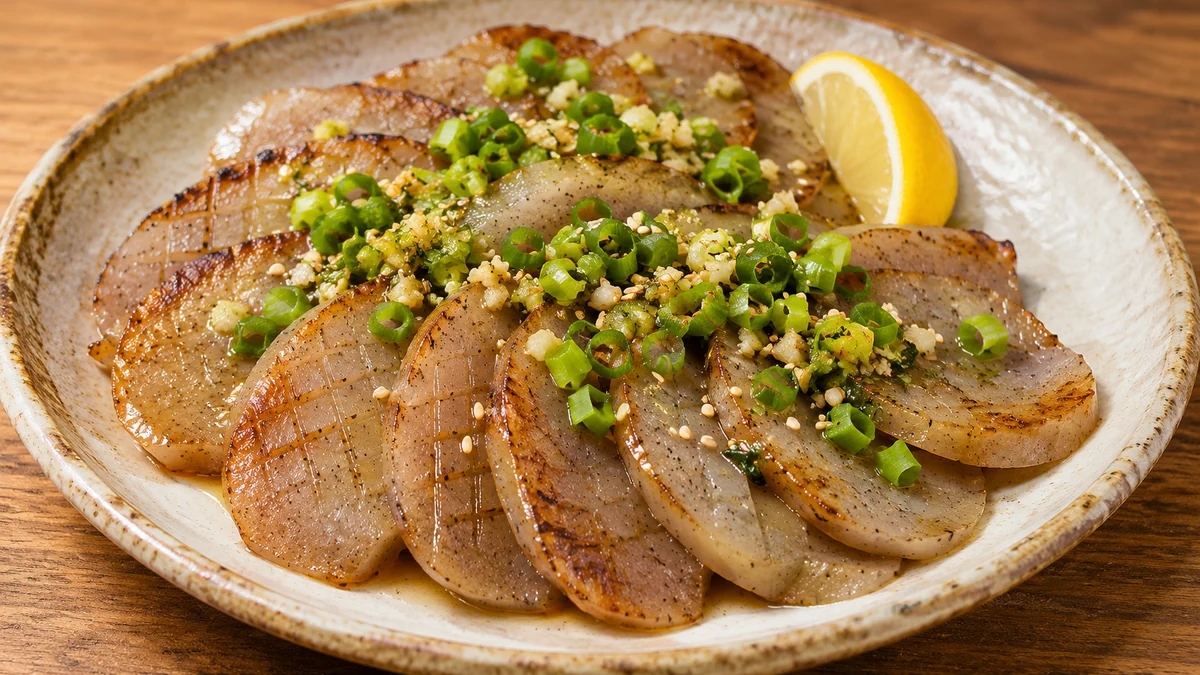
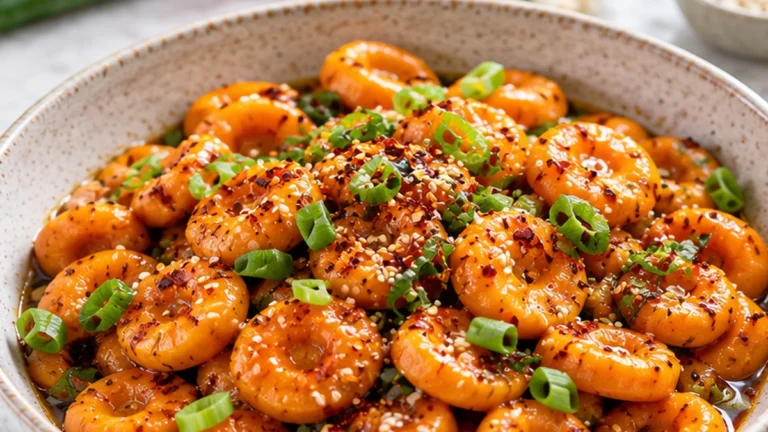
Frozen konnyaku beef tongue style is a plant-based Japanese-inspired appetizer made by freezing a konnyaku block, partially thawing it, cutting it into thin slices, and pan-searing the slices until their edges brown. A lemony scallion-sesame topping gives the chewy pieces a savory finish. There is no beef, meat stock, or meat flavoring in this version.
The surprising part is the texture, not a secret ingredient. Konnyaku normally feels springy and slippery; once frozen and thawed, it becomes more porous and firm. If you are curious about the viral technique, this recipe explains exactly what to buy in a U.S. grocery store, what the finished slices should feel like, and how to avoid soggy or rubbery results. Plan for overnight freezing even though the final skillet work is brief.
Table of Contents
What Is Frozen Konnyaku Beef Tongue Style?
Konnyaku, also spelled konjac or konnyaku yam cake, is a firm Japanese food made from processed konjac. It is sold as a pale white or speckled gray block, usually sitting in liquid. Unlike beef tongue, it supplies very little protein; the comparison describes its appearance, chew, and savory scallion topping rather than its nutrition. For ingredient background, the Kikkoman konnyaku glossary explains its traditional forms and cooking uses.
The recent social-video wave highlighted the beef tongue-style presentation, but freezing konnyaku is an established technique. The Japanese DELISH KITCHEN beef tongue-style recipe uses a chicken-based seasoning powder. This Healthy American Bites version is a separate vegan adaptation with tamari, citrus, garlic, and sesame instead. It is not a claim to reproduce the original seasoning exactly.
Why Freeze Konnyaku Before Cooking?
Freezing changes the water-rich gel structure. Ice formation leaves small spaces after thawing, so the block loses the original bouncy bite and absorbs seasoning differently. The Japanese konnyaku producer Kan-etsu describes the freeze-thaw method and recommends removing moisture thoroughly after thawing. That last step is crucial: wet pieces steam instead of searing.
The texture becomes chewy, porous, and slightly spongy rather than identical to meat.
Thin 1/4-inch (about 5-mm) slices are easier to brown and serve than thick slabs.
A few shallow crosshatch cuts hold the topping; cuts must not go all the way through.
A dry skillet surface and moderate heat produce a better crust than turning the pieces constantly.
Lemon and scallions balance the richness of sesame oil without adding animal ingredients.
Ingredients for Frozen Konnyaku Beef Tongue Style
Use one 8-ounce (225-g) block of plain konnyaku sold as yam cake, not dried konjac flour or shirataki noodles. Look for a firm rectangular block in the refrigerated tofu section or the shelf-stable Japanese-food aisle. The label may say “ita konnyaku,” “konnyaku,” or “konjac yam cake.” Follow any package directions about boiling or rinsing before you freeze it.
The complete quantities are in the recipe card. Beyond the konnyaku, you need two scallions, a small garlic clove, grated ginger, lemon juice, rice vinegar, 2 teaspoons of labeled gluten-free reduced-sodium tamari, a little fine salt, black pepper, 1 tablespoon neutral oil for browning, 1 teaspoon toasted sesame oil for the topping, and 1 teaspoon sesame seeds. These ingredients create a salty, sharp finish without the chicken bouillon used in some versions.
If you cannot find konnyaku, do not substitute shirataki noodles and expect the same result: their thread-like shape cannot be scored and seared as slices. Extra-firm tofu can make another good vegan appetizer, but it will be a different recipe. For more tofu-based meal inspiration, see the ginger-garlic cabbage and tofu ideas on Healthy American Bites.
How to Make Frozen Konnyaku Beef Tongue Style
1. Drain and freeze the block
Drain the packing liquid and rinse the konnyaku under cool water. If its package requires a brief boil, do that first and cool it completely. Pat the block dry, seal it inside a freezer-safe bag, and freeze it until solid, at least 8 hours or overnight. Freezing an entire block makes the half-thawed cutting step possible; freezing ready-cut slices is another useful method, but the look will differ.
2. Partially thaw until it can be sliced
Keep the sealed bag in a bowl of cold water, changing the water as needed, until a sharp knife can cut through the block without force. Expect roughly 30 to 45 minutes, though a thick block can take longer. Do not force a knife through a rock-hard center. Work on a stable cutting board and use careful, controlled strokes. If the block turns fully soft before you slice it, the recipe still works—just handle the sponge-like slices gently.
3. Cut thin and squeeze out the water
Slice diagonally about 1/4 inch (5 mm) thick. Make shallow crosshatch marks on one side without cutting through; you want the appearance of scored pieces, not a pile of cubes. Once flexible, press each slice between clean kitchen towels or paper towels to remove as much water as possible. This is the biggest practical difference between a savory sear and a watery pan.
4. Mix the scallion-lemon topping
Stir the finely chopped scallions, garlic, ginger, lemon juice, rice vinegar, tamari, salt, black pepper, and toasted sesame oil together in a small bowl. Let the mixture stand about 5 minutes so the scallions soften slightly. Taste the sauce before adding more salt; different tamari brands contribute different amounts. Keep the sesame seeds for the final garnish.
5. Sear in batches and dress at the table
Heat the neutral oil in a wide nonstick or well-seasoned skillet over medium-high heat. Lay the dried konnyaku pieces down in one layer with space between them. Cook about 3 to 4 minutes on the first side, then 3 to 4 minutes on the second, until both sides show golden spots and the edges look firmer. Transfer to a warm plate, spoon the scallion mixture over the top, and scatter on sesame seeds. Serve immediately with lemon wedges if you have extra lemon.
Thin slices of frozen-and-thawed konnyaku are pan-seared and finished with a vegan lemon-scallion-sesame sauce. A chewy Japanese-inspired appetizer with no beef or animal stock.
1 tablespoon fresh lemon juice, plus extra wedges to serve if desired
1 teaspoon unseasoned rice vinegar
2 teaspoons reduced-sodium tamari, labeled gluten-free if required
1/8 teaspoon fine salt, plus more only if needed
1/4 teaspoon freshly ground black pepper
1 tablespoon neutral cooking oil, such as canola oil, for searing
1 teaspoon toasted sesame oil, for the topping
1 teaspoon sesame seeds, for garnish
Instructions
Drain and rinse the konnyaku. If the package directs you to boil it first, follow those directions, then cool completely. Pat dry and seal the whole block in a freezer-safe bag. Freeze solid for at least 8 hours or overnight.
Place the sealed bag in a bowl of cold water for about 30 to 45 minutes, changing the water as needed, until the block is just soft enough to slice safely. Do not force a knife through a hard frozen center.
Cut diagonally into roughly 1/4-inch (5-mm) slices. Score one side lightly in a crosshatch pattern without cutting through. Allow any still-firm pieces to finish thawing, then press each slice firmly between paper towels until very dry.
In a small bowl, stir together the scallions, garlic, ginger, lemon juice, rice vinegar, tamari, fine salt, black pepper, and toasted sesame oil. Leave for 5 minutes to soften the scallions.
Heat the neutral oil in a broad skillet over medium-high heat. Arrange konnyaku slices in a single layer; work in batches if needed. Sear about 3 to 4 minutes per side until lightly golden and firmer at the edges.
Transfer to a serving plate. Spoon the scallion-sesame sauce over the hot slices and sprinkle with sesame seeds. Serve immediately, with extra lemon wedges if desired.
Notes
This is a vegan adaptation of a Japanese viral presentation, not the original chicken-stock-seasoned version.
Use a solid block of konnyaku; shirataki noodles cannot be sliced this way.
Do not skip squeezing out water before the pan; excess moisture prevents browning.
Ingredient labels vary. Check tamari for gluten-free status and all sauces for animal-derived ingredients when needed.
Time includes at least 8 hours freezing and approximately 30 to 45 minutes partial thawing; thawing can vary.
Nutrition is an estimate for one of two appetizer servings, calculated from representative konnyaku and ingredient values. It assumes all cooking oil remains in the dish and will change by brand or substitutions.
Refrigerate leftovers promptly, use within 3 to 4 days, and reheat thoroughly to 165°F before serving with fresh topping.
Author:Adam Moretti
Prep Time:20 minutes
Freezing and partial thawing:8 hours 45 minutes
Cook Time:8 minutes
Category:Appetizer
Method:Stovetop
Cuisine:Japanese-inspired
Diet:Vegan
How to Tell When the Texture Is Right
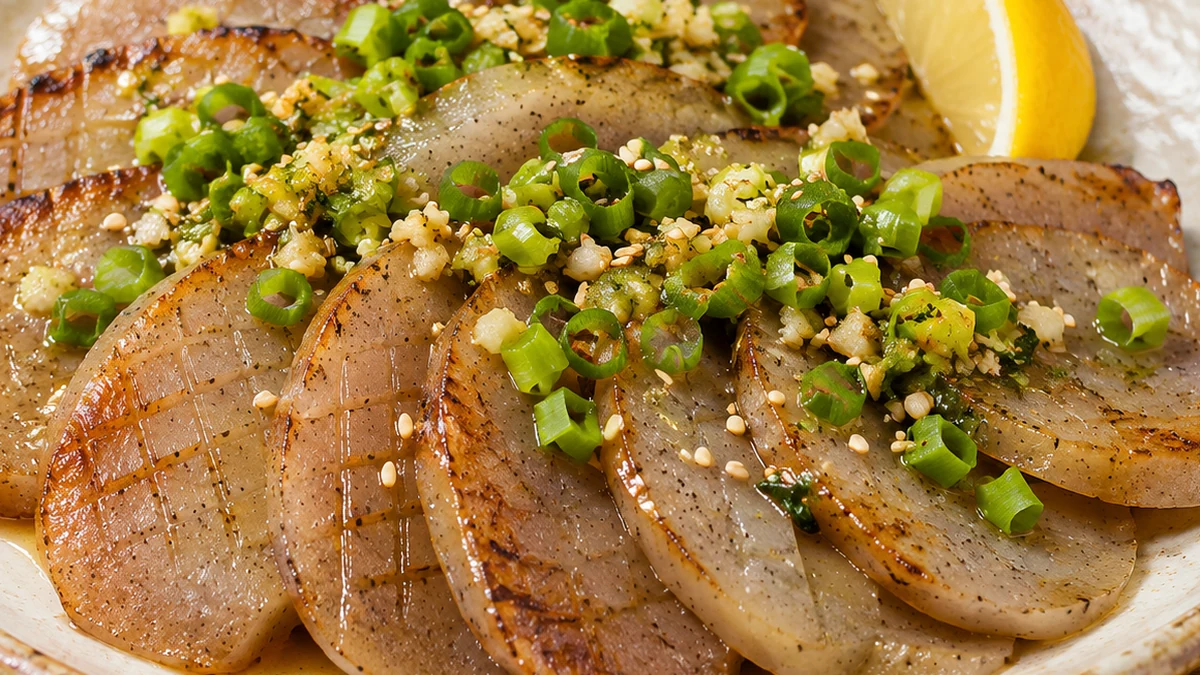
The slices should bend slightly instead of snapping, show pores on the cut surfaces, and have a lightly browned exterior. Expect a noticeably firmer chew than regular konnyaku, not a tender steak texture. A few darker caramelized spots are welcome; scorching the garlic or drowning the plate in oil is not. Slice thickness and how thoroughly you squeezed out water matter much more than browning to a particular color.
If the aroma of the packing liquid remains strong, follow the product label for any preliminary boiling step before freezing. Some plain konnyaku needs only rinsing, while other products recommend blanching. Do not assume all brands are sold in the same ready-to-use state.
Troubleshooting the Most Common Problems
My konnyaku is still rubbery
It may not have frozen all the way through, or the pieces may be too thick. Freeze the block until solid, then aim for slices near 1/4 inch. The result will always have some chew, so the goal is pleasant resistance rather than softness. If you prefer an especially tender bite, this technique may not be the right way to serve konnyaku.
The skillet fills with water
Press the thawed slices more firmly with towels, use a sufficiently wide pan, and cook in two batches if necessary. Wet konnyaku will first release steam, preventing contact browning. Let excess moisture evaporate before adding more oil or topping. Do not pour the scallion sauce into the skillet early; it is meant to stay fresh and bright.
The pieces taste bland or too salty
Konnyaku itself has a mild flavor. Make sure each bite receives some scallion topping, and finish with fresh lemon if the plate seems flat. If it is too salty, dilute the sauce with another teaspoon of lemon juice and a tablespoon of chopped scallions rather than adding sugar. The recipe calls for reduced-sodium tamari, but its sodium still varies by brand.
The crosshatch cuts tear the slices
Cut shallower and use a knife with a sharp, smooth edge. Very thin pieces can split after freezing; they are still edible and can be seared as irregular pieces. For a beginner-friendly plate, skip the scoring altogether. Pressing out the water and browning the surfaces are more important than decorative cuts.
Variations That Keep the Main Recipe Vegan
Garlic-chili: add 1/4 teaspoon red pepper flakes to the scallion topping. This adds heat without changing the cooking method.
Extra citrus: replace half the lemon juice with lime juice for a sharper finish. Add the juice just before serving.
Ginger-forward: double the ginger and reduce the garlic by half; taste before adding more salt.
Sesame-free: replace the toasted sesame oil with a mild olive oil and omit sesame seeds; the flavor will be different, and nutrition changes.
Soy-free: replace tamari with a suitable plant-based, soy-free savory seasoning or an extra pinch of salt; check the full product label and adjust sodium.
Lightly sweet: add 1/2 teaspoon maple syrup to the topping if you enjoy a sweet-salty contrast. This will change the nutrition estimate.
These are optional adjustments, not hidden additions to the nutrition estimate below. If you need strictly gluten-free ingredients, check the konnyaku packaging, tamari label, and any replacement seasoning; products and shared manufacturing lines differ. Sesame and soy also matter for food allergies even though the main dish contains no meat or dairy.
What to Serve with Frozen Konnyaku Beef Tongue Style
Treat the dish as a savory appetizer or vegetable-style side, not a protein entrée. A small plate of warm rice, steamed bok choy, or a cucumber salad rounds out the Japanese-inspired flavors. For a larger plant-based meal with meaningful protein, pair it with the high-protein vegan dense bean salad or add tofu and edamame to a separate bowl. The konnyaku will contribute mostly texture while the beans or tofu supply the meal’s protein.
The scallion-sesame flavor also pairs with a quick cabbage skillet. If you want a contrasting comfort-food meal instead, try a small bowl from our vegan slow cooker recipes collection. Browse the Vegan recipes category for more ideas that use familiar pantry staples.
Nutrition: What This Dish Does and Does Not Provide
Konnyaku is mostly water and has minimal protein. The University of Hawaiʻi Nutrition Center lists a representative 200-g portion of konjac at about 20 calories, 4 g of carbohydrate, 4 g of fiber, and essentially no protein. Brand labels differ, so this recipe uses that approximate block-food profile plus ingredient-based estimates for the oils, scallions, sesame seeds, tamari, garlic, and lemon. Most of the calories come from cooking and finishing oils.
For two appetizer servings, estimate about 110 calories, 1 g protein, 5 g carbohydrate, 3 g fiber, and 10 g fat per serving. The separate recipe card includes the complete estimated nutrient panel. Values assume the full tablespoon of pan oil is retained in the served food; a little remaining in the skillet would make the actual total lower. Sodium depends heavily on the label for your reduced-sodium tamari. These numbers do not apply if you add rice, tofu, maple syrup, or different oils.
Make-Ahead, Storage, and Reheating
For frozen konnyaku beef tongue style, you can freeze the drained, plain block ahead of time, making the overnight step easier to plan. When you are ready to cook, partially thaw, slice, squeeze, and sear. For the freshest contrast, chop the scallions and combine the sauce shortly before serving. The finished dish tastes best right away because moisture moves back into the browned slices as they sit under the topping.
If you have leftovers, cool promptly, refrigerate in a shallow covered container at 40°F or colder, and use within 3 to 4 days. Keep the scallion topping separate when practical. FoodSafety.gov advises refrigerating perishable leftovers within 2 hours, using cooked leftovers within 4 days, and reheating leftovers to 165°F. Reheat konnyaku in a skillet until thoroughly hot, then add fresh topping. Re-freezing a finished, sauced dish is not recommended for texture.
FAQs about Frozen Konnyaku Beef Tongue
Does frozen konnyaku actually taste like beef tongue?
Not exactly. The seared slices can resemble the appearance and chew of the Japanese-style dish, especially with a salty scallion topping, but konnyaku has very little flavor and none of beef tongue’s protein or fat. Think of it as a playful, plant-based texture experiment, not an indistinguishable meat substitute.
Can I freeze the konnyaku as individual slices?
Yes. Freezing slices in a single layer can shorten thawing time and may help portion control. The whole-block method in this recipe makes diagonal slicing and scoring while partly frozen easier to demonstrate, but either approach can produce a porous texture once the pieces thaw and are pressed dry.
Is frozen konnyaku beef tongue style vegan?
This version is vegan because the topping uses tamari, citrus, aromatics, and plant oils. Other recipes may use chicken bouillon or animal-based stock powder, so do not assume every viral version is vegan. Check labels for prepared sauces and seasonings.
Is konnyaku a good source of protein?
No. Despite the meat-style appearance, konnyaku is not a meaningful protein source. Add beans, tofu, edamame, or another protein-rich food if you want the plate to become a balanced main meal.
Can I use shirataki noodles instead of a konnyaku block?
Not for this sliced presentation. Shirataki noodles are made with konjac but cannot be cut into scored, seared oval pieces. They work better rinsed, dried, and tossed with sauce as a separate noodle dish.
How long does it take to make?
Allow at least 8 hours for freezing, roughly 30 to 45 minutes for partial thawing, about 15 to 20 minutes of active preparation, and 8 minutes at the stove. Exact thawing time varies with the block thickness and temperature. This is a make-ahead appetizer, not a 15-minute recipe from start to finish.
Final Tips
For frozen konnyaku beef tongue style, choose a plain block, follow its package preparation guidance, freeze it solid, slice it thin, and press it dry. Keep the scallion sauce fresh, resist crowding the pan, and serve the slices before they soften. The method is unusual but practical once you understand the freeze-thaw texture change. Most importantly, enjoy it as a flavorful vegan appetizer and be realistic about what it can—and cannot—replace nutritionally.
Reviewed recipe options
Make this recipe fit me
Choose one of seven popular diet options. NutriMatch will confirm whether the recipe already fits, show a reviewed adaptation when available, or recommend recipes that match your choice.
Please choose a diet first.
Already a reviewed match
This recipe already fits Dairy-Free.
No changes are needed based on its reviewed NutriMatch classification. Check the complete ingredients, product labels, and serving details for your own needs.
Recipe details, product formulas, and cross-contact information can change. Confirm current labels and use professional guidance when medically necessary.
Already a reviewed match
This recipe already fits Gluten-Free.
No changes are needed based on its reviewed NutriMatch classification. Check the complete ingredients, product labels, and serving details for your own needs.
Recipe details, product formulas, and cross-contact information can change. Confirm current labels and use professional guidance when medically necessary.
Not available for this recipe
This recipe cannot currently be made High Protein with a reviewed adaptation.
NutriMatch will not guess at substitutions. Try one of these recipes that is already reviewed for your choice.
Recipe details, product formulas, and cross-contact information can change. Confirm current labels and use professional guidance when medically necessary.
Not available for this recipe
This recipe cannot currently be made Keto with a reviewed adaptation.
NutriMatch will not guess at substitutions. Try one of these recipes that is already reviewed for your choice.
Recipe details, product formulas, and cross-contact information can change. Confirm current labels and use professional guidance when medically necessary.
Already a reviewed match
This recipe already fits Low Carb.
No changes are needed based on its reviewed NutriMatch classification. Check the complete ingredients, product labels, and serving details for your own needs.
Recipe details, product formulas, and cross-contact information can change. Confirm current labels and use professional guidance when medically necessary.
Already a reviewed match
This recipe already fits Vegan.
No changes are needed based on its reviewed NutriMatch classification. Check the complete ingredients, product labels, and serving details for your own needs.
Recipe details, product formulas, and cross-contact information can change. Confirm current labels and use professional guidance when medically necessary.
Already a reviewed match
This recipe already fits Vegetarian.
No changes are needed based on its reviewed NutriMatch classification. Check the complete ingredients, product labels, and serving details for your own needs.
Recipe details, product formulas, and cross-contact information can change. Confirm current labels and use professional guidance when medically necessary.