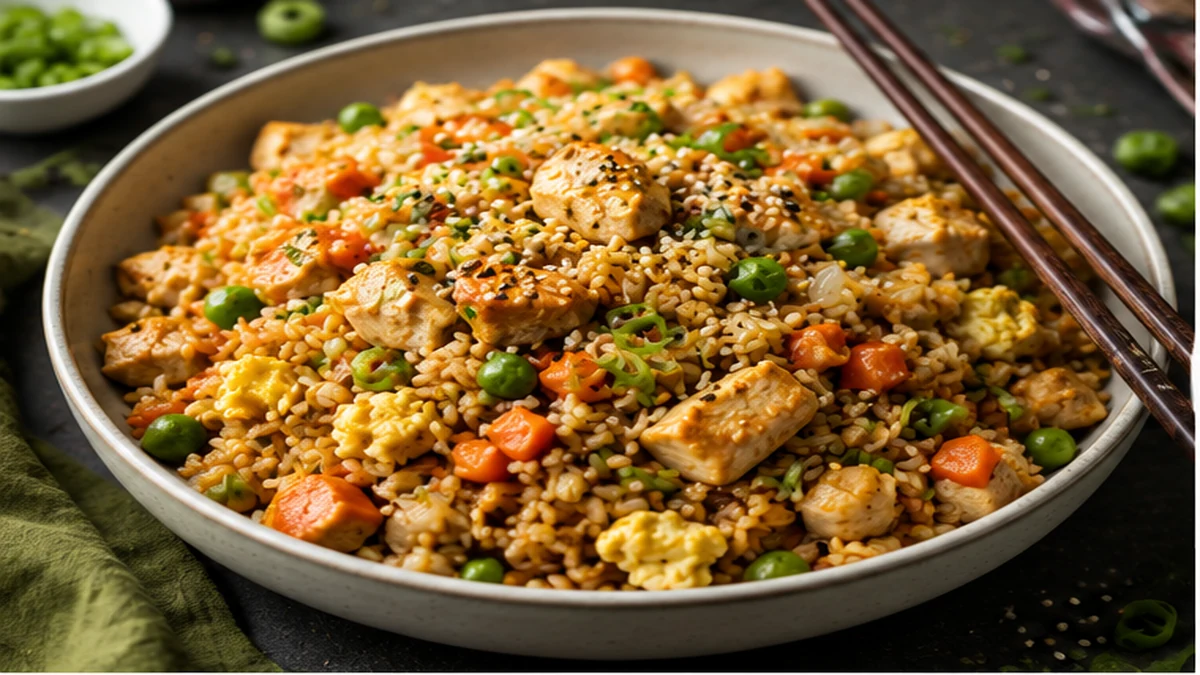
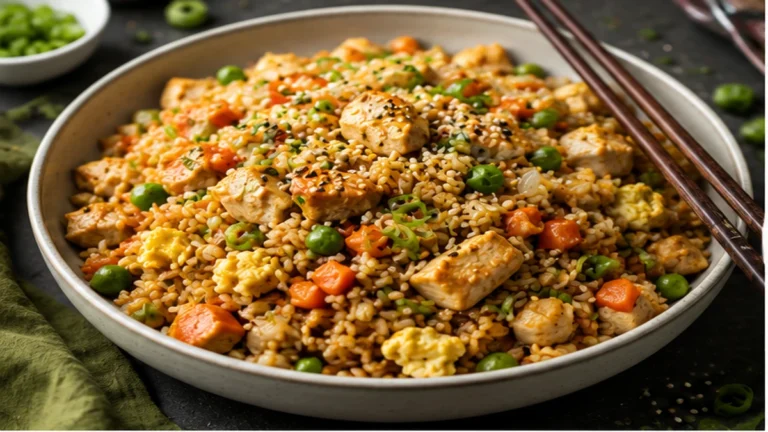
High protein chicken fried rice meal prep turns cold cooked rice, lean chicken breast, eggs, egg whites, and frozen vegetables into four filling lunches in about 30 minutes. The order matters: brown the chicken first, cook the eggs separately, fry the cold rice over high heat, then bring everything together with a light soy-ginger sauce.
The recipe is built specifically for meal prep rather than just dinner leftovers. Each portion has an estimated about 48 grams of protein, the rice stays firmer because it starts cold, and the vegetables and eggs are added in a way that keeps the texture from becoming wet or mushy after reheating.
For more make-ahead protein ideas, our high protein pasta salad with chicken is another practical lunch option. You can also browse the high protein foods guide when you want more ideas for building meals around chicken, eggs, dairy, beans, and other protein sources.
Table of Contents
Why This Chicken Fried Rice Works for Meal Prep
Cold rice fries instead of steaming. Chilled cooked rice is drier and easier to separate in a hot pan, which gives the finished meal a better texture after refrigeration.
Chicken breast carries most of the protein. One and a quarter pounds of chicken keeps the recipe protein-forward without requiring protein powder or specialty ingredients.
Egg whites raise protein without making the rice greasy. Two whole eggs add classic fried-rice flavor while liquid egg whites add extra protein and soft curds.
Frozen vegetables keep prep fast. Peas and carrots go straight from the freezer to the skillet, so there is very little chopping.
The sauce is light enough for storage. Reduced-sodium soy sauce, rice vinegar, ginger, and a teaspoon of sesame oil season the rice without soaking it.
Four portions fit the safe leftover window. The recipe is designed for four meals because USDA guidance recommends using most cooked leftovers within 3 to 4 days.
Ingredients You’ll Need
Chicken Breast
Use 1 1/4 pounds (567 g) boneless, skinless chicken breast cut into small 1/2-inch pieces. Small pieces cook quickly and distribute evenly through all four meal-prep portions. Pat the chicken dry before seasoning so it browns instead of releasing a large amount of liquid.
Cold Cooked Rice
Use 3 cups (about 600 g) cooked long-grain white rice that has been chilled. Rice cooked earlier in the day or the day before works well, provided it was cooled and refrigerated promptly. Break up large clumps with clean fingers before the pan gets hot.
Brown rice can replace white rice, but the texture is chewier and the nutrition changes. If you are intentionally preparing rice ahead, portion it into shallow containers and refrigerate promptly rather than leaving a large pot at room temperature.
Whole Eggs and Egg Whites
Two large eggs give the fried rice familiar egg flavor and color. One cup of liquid egg whites adds roughly another 25 grams of protein to the full recipe without adding much fat. Cook the egg mixture first and remove it from the skillet so the curds stay tender while the rice fries.
Frozen Peas and Carrots
Two cups of frozen peas and carrots provide color, sweetness, and enough vegetables to make each container feel like a complete lunch. You do not need to thaw them first. Add them to the hot pan and cook until the extra surface moisture has evaporated.
Soy-Ginger Sauce
The sauce is intentionally simple: reduced-sodium soy sauce, rice vinegar, toasted sesame oil, fresh ginger, garlic, and green onions. Reduced-sodium soy sauce still contributes substantial sodium, so the chicken only gets a small amount of added salt.
A high-protein chicken fried rice made with lean chicken breast, cold cooked rice, eggs, egg whites, peas and carrots, garlic, ginger, and a light soy-sesame sauce.
4 green onions, thinly sliced, white and green parts separated
3 cups (about 600 g) cold cooked long-grain white rice
3 tablespoons reduced-sodium soy sauce
2 teaspoons rice vinegar
1 teaspoon toasted sesame oil
Instructions
Stir the soy sauce, rice vinegar, sesame oil, and 1/4 teaspoon white pepper together in a small bowl. Set aside.
Pat the chicken dry and season with the salt and remaining 1/4 teaspoon white pepper.
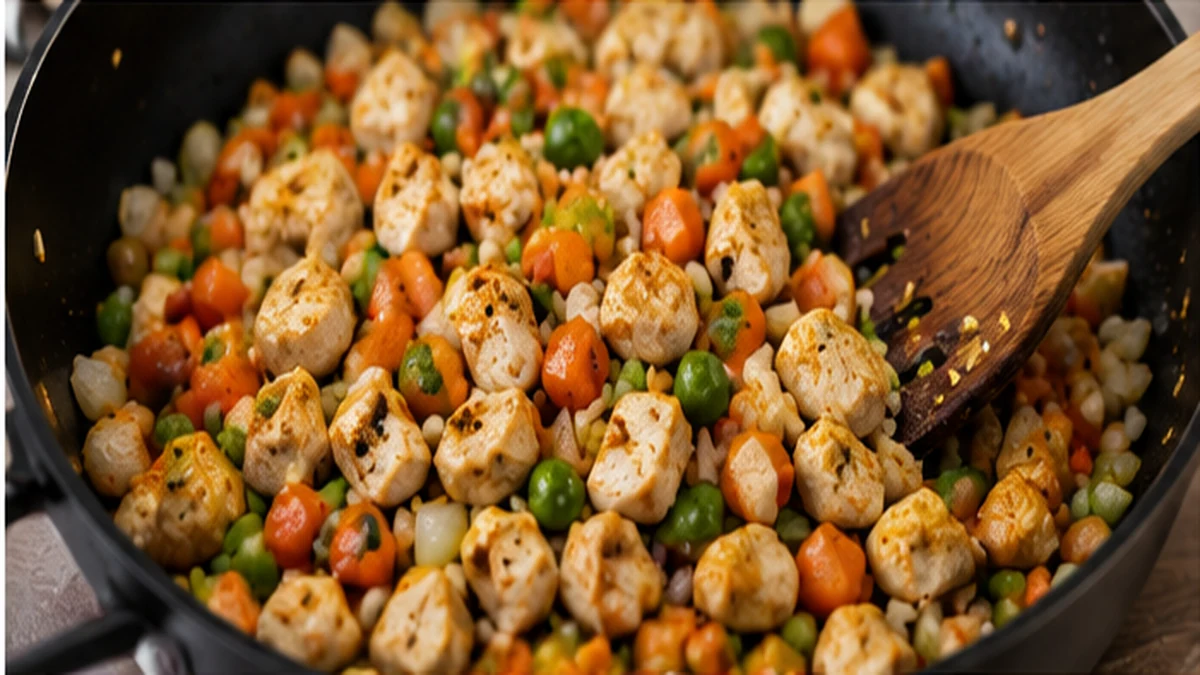
Heat a large nonstick skillet or wok over medium-high to high heat. Add 1 teaspoon avocado oil and half the chicken in one layer. Cook until browned and the thickest pieces reach 165°F (74°C), then transfer to a clean plate. Repeat with the remaining chicken and the second teaspoon of oil.
Reduce the heat slightly. Add the beaten eggs and egg whites. Let them set for a few seconds, then gently push into large soft curds. Transfer the eggs to the plate with the chicken.
Add the frozen peas and carrots to the skillet and cook until hot and most visible moisture has evaporated. Add the garlic, ginger, and white parts of the green onions and cook for 30 to 60 seconds.
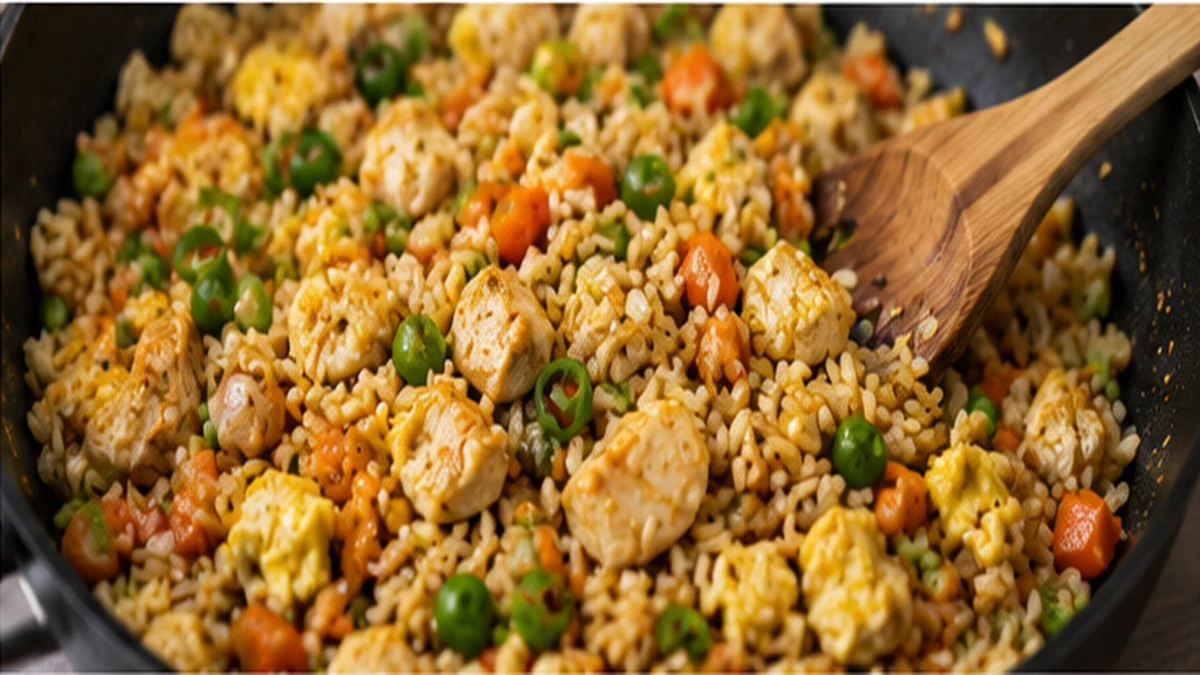
Increase the heat and add the cold rice. Break up clumps and stir-fry for 2 to 3 minutes, letting portions of rice sit against the hot pan briefly so a few grains toast.
Return the chicken to the skillet. Pour in the sauce and toss until the rice is evenly seasoned and hot. Fold the cooked eggs back in and cook just until heated through.
Remove from the heat and stir in the green parts of the onions. Divide into 4 shallow meal-prep containers and refrigerate promptly.
Notes
Use rice that was cooled and refrigerated promptly. Cold rice fries more cleanly than warm freshly cooked rice.
Cook chicken breast to 165°F (74°C) measured in the thickest pieces.
Refrigerate cooked portions within 2 hours and use within 3 to 4 days. Reheat leftovers to 165°F.
To make a gluten-free variation, use tamari labeled gluten free instead of conventional soy sauce and verify packaged ingredients.
Nutrition is an estimate for one-fourth of the recipe based on generic USDA-style values and a representative reduced-sodium soy sauce. Brands and cooked-rice weight can change the final values.
Author:Adam Moretti
Prep Time:10 minutes
Cook Time:20 minutes
Category:Lunch
Method:Stovetop
Cuisine:Chinese-American
Diet:High Protein, Dairy Free
How to Make High Protein Chicken Fried Rice Meal Prep
1. Mix the Sauce Before the Pan Gets Hot
Stir together the reduced-sodium soy sauce, rice vinegar, toasted sesame oil, and white pepper in a small bowl. Keep the garlic, ginger, and sliced green onions separate because they cook directly in the skillet and build more aroma that way.
2. Brown the Chicken in Batches
Heat a large nonstick skillet or wok over medium-high to high heat. Add 1 teaspoon avocado oil and half the chicken. Spread the pieces into one layer and leave them alone long enough to brown before stirring. Cook until the chicken reaches 165°F (74°C) in the thickest pieces, then transfer it to a clean plate. Repeat with the remaining chicken and the second teaspoon of oil.
Lower the heat slightly. Pour the beaten eggs and egg whites into the skillet and let them sit for a few seconds before gently pushing them into large soft curds. Remove the eggs while they still look tender; they will heat again when you fold them into the rice.
4. Cook the Vegetables and Aromatics
Add the frozen peas and carrots to the skillet and cook until hot and most of the visible moisture has evaporated. Add the garlic, ginger, and the white parts of the green onions for the final 30 to 60 seconds. This keeps the garlic from burning while still giving the rice a strong aromatic base.
5. Fry the Cold Rice
Increase the heat and add the cold rice. Break apart any remaining clumps with a spatula, then spread the rice across the hot surface. Let parts of it sit against the pan for 20 to 30 seconds at a time before tossing. You are looking for separated grains and a few lightly toasted spots, not dark or crunchy rice.
6. Add the Sauce, Chicken, and Eggs
Return the cooked chicken to the pan and pour the sauce around the outside edge so it hits the hot surface before coating the rice. Toss well, then fold the eggs back in. Cook only until everything is evenly hot. Finish with the green tops of the sliced onions.
How to Keep Fried Rice from Getting Mushy
The biggest texture problems happen before the soy sauce reaches the pan. Freshly cooked rice contains more surface moisture and steam, so it tends to clump and soften when stir-fried. Cold rice is firmer and easier to separate.
Start with chilled rice. Cook it ahead, cool it safely, and refrigerate until cold.
Use a wide, hot pan. A crowded skillet traps steam around the chicken, vegetables, and rice.
Cook the chicken separately. Browning in two batches keeps excess chicken juices from soaking the rice.
Drive moisture off the vegetables. Frozen vegetables release water, so give that moisture time to evaporate before the rice goes in.
Add sauce at the end. Toss just long enough for even seasoning instead of simmering the rice in soy sauce.
Meal Prep Portioning and Cooling
Divide the fried rice into four shallow meal-prep containers rather than leaving the whole batch in one deep container. USDA advises rapid cooling and recommends refrigerating perishable leftovers within two hours of cooking. Shallow containers help the food cool more quickly.
You do not need to wait for the fried rice to sit on the counter until it is completely cold. USDA guidance allows hot food to go into the refrigerator; the important point is getting leftovers chilled promptly instead of leaving cooked rice and chicken in the temperature danger zone.
Storage and Reheating
Refrigerate the four portions at 40°F (4°C) or below and use them within 3 to 4 days. USDA specifically lists cooked rice for 3 to 4 days in the refrigerator and recommends the same general window for cooked leftovers.
For the microwave, sprinkle about a teaspoon of water over a portion, cover loosely, and heat until the food reaches 165°F, stirring once midway so the center heats evenly. In a skillet, add a small splash of water and reheat over medium-high heat, tossing until the entire portion is steaming hot and reaches 165°F.
Freeze portions you will not eat within the refrigerated window. Cool them promptly, seal them in freezer-safe containers, and freeze. Thaw overnight in the refrigerator before reheating for the best rice texture.
Troubleshooting
The Rice Is Clumpy
Separate cold rice before it goes into the skillet. If a few clumps remain, press them gently with the flat side of a spatula. Avoid pouring sauce onto a large clump because the outside absorbs seasoning while the center stays plain.
The Chicken Is Dry
Small chicken pieces cook very quickly. Remove each batch as soon as the thickest pieces reach 165°F. The chicken goes back into the pan at the end, so cooking it far beyond that point during the first step only makes reheated portions drier.
The Fried Rice Tastes Watery
Frozen vegetables probably released moisture that did not have time to evaporate, or the pan was too crowded. Cook the vegetables until the skillet looks dry before adding rice. If your pan is small, cook the vegetable mixture in two stages or use the widest skillet you own.
The Meal Prep Portion Dries Out in the Microwave
A teaspoon or two of water helps create a small amount of steam during reheating. Cover loosely and stir halfway through. Sesame oil is used for flavor in the original recipe; adding extra oil after storage is not necessary to restore moisture.
Variations and Substitutions
Use Chicken Thighs
Boneless skinless chicken thighs make a richer fried rice and stay especially tender after reheating. They also contain more fat and calories than the chicken breast used for the nutrition estimate, so the listed values will not apply exactly.
Use Brown Rice
Cold cooked brown rice works with the same technique. Its firmer bran layer gives the fried rice more chew and it generally brings a little more fiber. Measure the same three cups of cooked rice, but expect nutrition to differ.
Make It Gluten Free
Replace the soy sauce with a tamari product labeled gluten free and verify every packaged sauce or seasoning used. The primary recipe uses conventional soy sauce, so it should not be labeled gluten free as written.
Add More Vegetables
Frozen corn, shelled edamame, diced bell pepper, broccoli, or mushrooms can work, but avoid overfilling the pan. Cook high-moisture vegetables separately if necessary so they brown rather than steam the rice.
FAQ about High Protein Chicken Fried Rice Meal Prep
How Much Protein Is in One Serving?
With 1 1/4 pounds of chicken breast, two eggs, one cup of egg whites, and four portions, one serving is estimated to provide about 48 grams of protein. The exact value changes with the chicken, egg-white brand, rice, and soy sauce you use.
Can I Use Freshly Cooked Rice?
Yes, but the texture is less reliable. Spread fresh cooked rice onto a shallow tray so steam can escape, then refrigerate it promptly until cold before frying. Do not leave cooked rice sitting at room temperature for hours just to dry it out.
Can Chicken Fried Rice Be Meal Prepped for Five Days?
For home food safety, the more conservative plan is four portions for the next 3 to 4 days. USDA recommends using most cooked leftovers within 3 to 4 days. Freeze any extra portion rather than planning to keep cooked chicken and rice refrigerated for a full five-day workweek.
Do I Need a Wok?
No. A wide nonstick or well-seasoned skillet works well. The important features are enough surface area, enough heat, and cooking the chicken in batches so the pan does not fill with liquid.
Can I Skip the Egg Whites?
Yes. Use two additional whole eggs if you prefer, or simply leave the egg whites out. Either change lowers or changes the protein, calories, fat, and cholesterol compared with the primary nutrition estimate.
Can I Freeze Chicken Fried Rice?
Yes. Portion the finished rice, cool it promptly, and freeze in airtight freezer-safe containers. Thaw overnight in the refrigerator for the most even reheating, then heat the portion to 165°F before eating.
Final Tips
For high protein chicken fried rice meal prep that still tastes good on day three, focus on texture before seasoning: use cold rice, brown the chicken in batches, let moisture evaporate from the vegetables, and keep the sauce concentrated rather than watery.
Then treat the meal-prep step as part of the recipe. Divide the fried rice into shallow containers, refrigerate promptly, use refrigerated portions within 3 to 4 days, and reheat each serving to 165°F. That gives you four practical lunches without sacrificing the fried-rice texture you worked to build.
Reviewed recipe options
Make this recipe fit me
Choose one of seven popular diet options. NutriMatch will confirm whether the recipe already fits, show a reviewed adaptation when available, or recommend recipes that match your choice.
Please choose a diet first.
Already a reviewed match
This recipe already fits Dairy-Free.
No changes are needed based on its reviewed NutriMatch classification. Check the complete ingredients, product labels, and serving details for your own needs.
Recipe details, product formulas, and cross-contact information can change. Confirm current labels and use professional guidance when medically necessary.
Reviewed Gluten-Free adaptation
Gluten-Free High-Protein Chicken Fried Rice
Use the reviewed substitutions below to prepare a Gluten-Free version while keeping the original recipe's basic method.
Check: Use products labeled gluten-free when needed and check sauces, seasonings, baking ingredients, and shared equipment for cross-contact.
Use these reviewed changes with the original ingredient quantities and instructions above. The original recipe card stays unchanged.
Recipe details, product formulas, and cross-contact information can change. Confirm current labels and use professional guidance when medically necessary.
Already a reviewed match
This recipe already fits High Protein.
No changes are needed based on its reviewed NutriMatch classification. Check the complete ingredients, product labels, and serving details for your own needs.
Recipe details, product formulas, and cross-contact information can change. Confirm current labels and use professional guidance when medically necessary.
Not available for this recipe
This recipe cannot currently be made Keto with a reviewed adaptation.
NutriMatch will not guess at substitutions. Try one of these recipes that is already reviewed for your choice.
Recipe details, product formulas, and cross-contact information can change. Confirm current labels and use professional guidance when medically necessary.
Not available for this recipe
This recipe cannot currently be made Low Carb with a reviewed adaptation.
NutriMatch will not guess at substitutions. Try one of these recipes that is already reviewed for your choice.
Recipe details, product formulas, and cross-contact information can change. Confirm current labels and use professional guidance when medically necessary.
Reviewed Vegan adaptation
Vegan Tofu Fried Rice Meal Prep
Use the reviewed substitutions below to prepare a Vegan version while keeping the original recipe's basic method.
Ingredient swaps
1 1/4 pounds (567 g) boneless, skinless chicken breast, cut into 1/2-inch piecesUse 20 ounces (567 g) extra-firm tofu, pressed and cut into 1/2-inch cubes
2 large eggs, beatenUse 1 cup crumbled extra-firm tofu seasoned with a pinch of turmeric
1 cup (243 g) liquid egg whitesUse 1 cup (240 g) liquid vegan egg substitute
Instruction changes
Cook the tofu cubes first, scramble the vegan egg substitute separately, then combine everything with the rice as directed.
Check: Confirm every packaged substitute, sauce, seasoning, and topping is vegan; product formulas and processing aids can vary. The adapted nutrition differs from the published recipe; recalculate it before relying on the original high-protein, keto, or low-carb claim.
Use these reviewed changes with the original ingredient quantities and instructions above. The original recipe card stays unchanged.
Recipe details, product formulas, and cross-contact information can change. Confirm current labels and use professional guidance when medically necessary.
Reviewed Vegetarian adaptation
Vegetarian High-Protein Tofu Fried Rice
Use the reviewed substitutions below to prepare a Vegetarian version while keeping the original recipe's basic method.
Ingredient swaps
1 1/4 pounds (567 g) boneless, skinless chicken breast, cut into 1/2-inch piecesUse 20 ounces (567 g) extra-firm tofu, pressed and cut into 1/2-inch cubes
Instruction changes
Sear the tofu until golden on several sides, transfer it to a plate, and return it with the rice at the end.
Check: Check broths, sauces, seasonings, cheeses, and meat substitutes for animal-derived ingredients that matter to you. The adapted nutrition differs from the published recipe; recalculate it before relying on the original high-protein, keto, or low-carb claim.
Use these reviewed changes with the original ingredient quantities and instructions above. The original recipe card stays unchanged.
Recipe details, product formulas, and cross-contact information can change. Confirm current labels and use professional guidance when medically necessary.