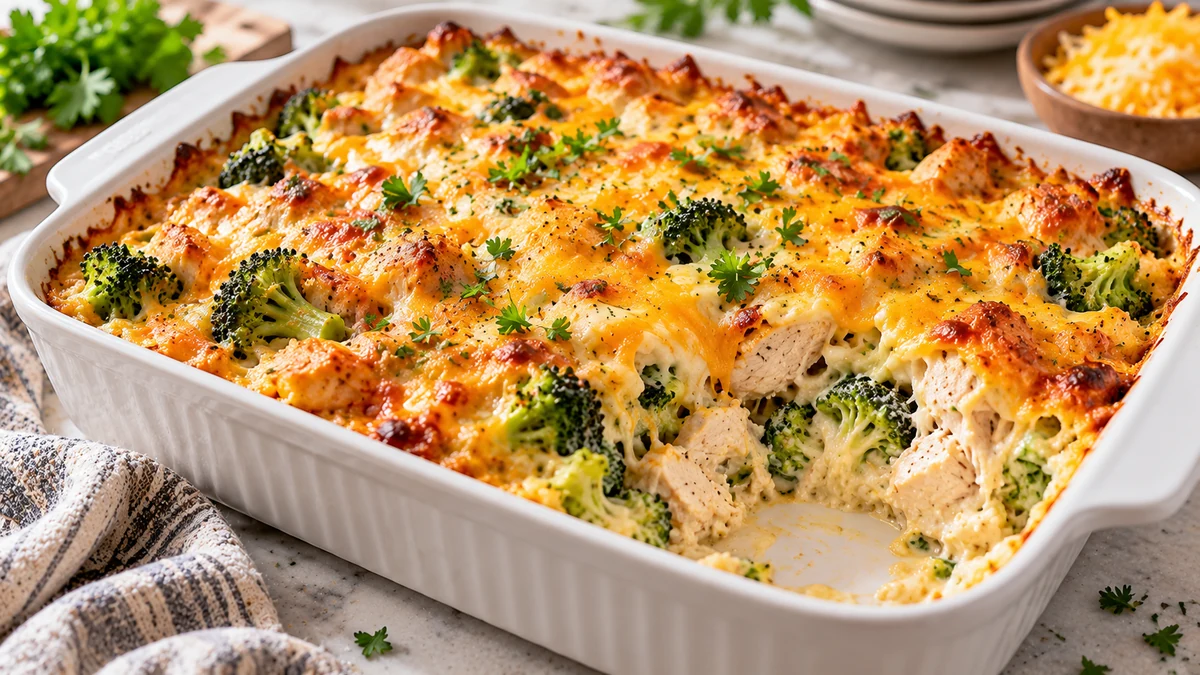
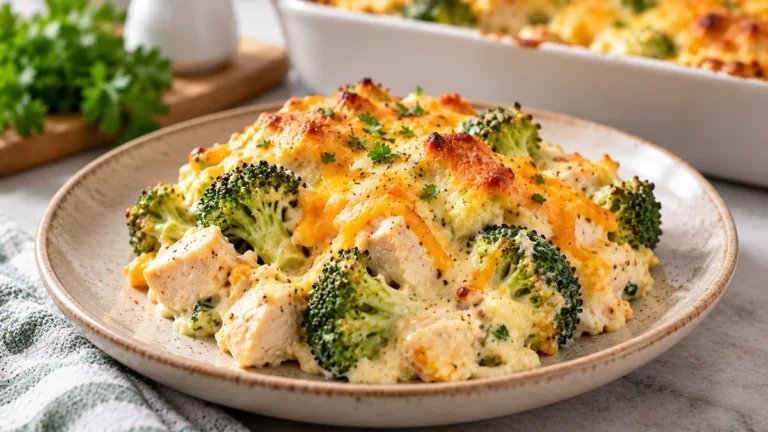
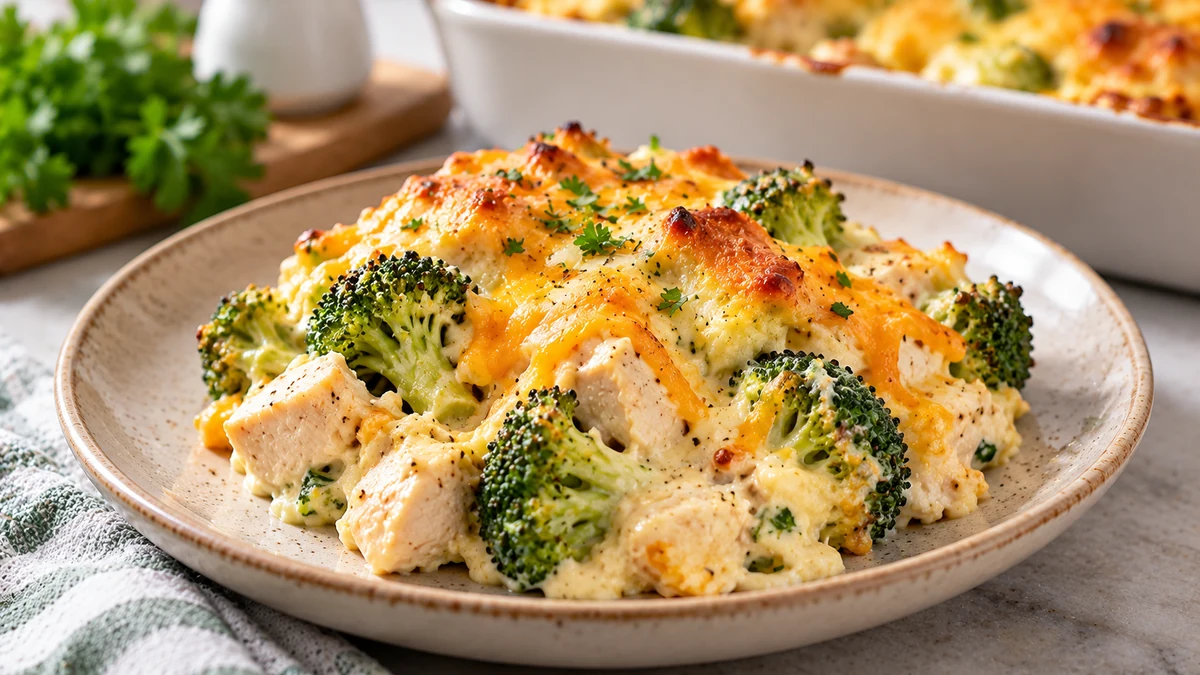
This high protein chicken broccoli casserole combines tender chicken breast, broccoli, cottage cheese, Greek yogurt, sharp cheddar, and Parmesan in a creamy baked dinner with an estimated 47 grams of protein per serving. It is rich enough to feel like classic comfort food, but the sauce is built around high-protein dairy instead of canned cream soup.
The recipe is intentionally different from a rice casserole or tater-tot bake: there is no rice, pasta, or potato layer. That keeps the focus on chicken, broccoli, and a thick cheese sauce while making the casserole easy to pair with whatever side fits your meal. For more protein-forward dinner ideas, browse our high protein foods guide.
Table of Contents
Why You’ll Love This High Protein Chicken Broccoli Casserole
About 47 grams of protein per serving from chicken breast, cottage cheese, Greek yogurt, cheddar, and Parmesan.
No canned cream soup; the creamy base is made from blended cottage cheese, Greek yogurt, broth, and seasonings.
Fresh or frozen broccoli both work when excess moisture is cooked off first.
The chicken is cooked before assembly, so the final bake is mainly for heating the casserole through and browning the cheese.
A 9-by-13-inch pan divides cleanly into eight meal-prep portions.
The casserole reheats well and can be frozen in individual portions.
The base recipe is gluten-free when broth, mustard, and packaged seasonings are labeled gluten-free.
It works as a complete dinner or can be paired with rice, potatoes, quinoa, or a simple salad.
What Makes This Casserole High in Protein?
The protein in this high protein chicken broccoli casserole comes from several ingredients rather than one oversized chicken portion. Two pounds of boneless skinless chicken breast provide the main source, while cottage cheese and Greek yogurt turn the sauce into a second meaningful source of protein. Cheddar and Parmesan add flavor plus additional protein.
Using several protein sources also helps the texture. Cottage cheese blends into a thick, creamy base, Greek yogurt adds tang and body, and the shredded cheeses melt into the casserole instead of leaving the chicken sitting in a thin broth. If you want another creamy chicken dinner with a different format, try our high protein white chicken chili.
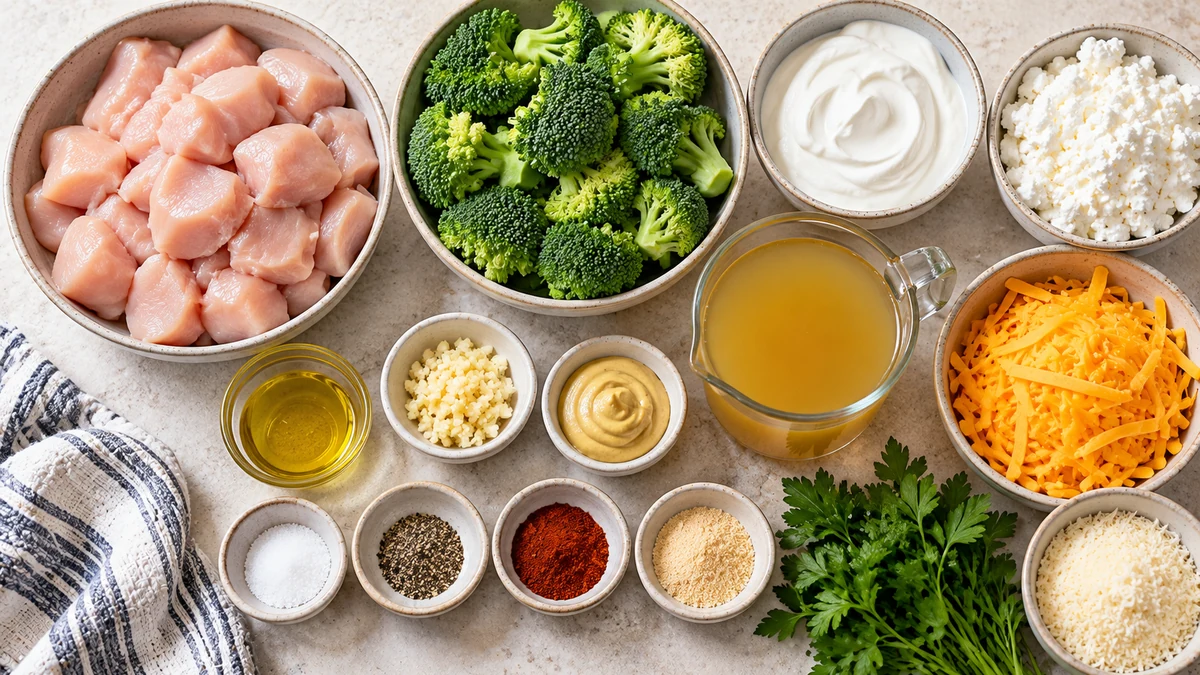
Ingredients You’ll Need
Chicken Breast
Use 2 pounds of boneless, skinless chicken breast cut into roughly 1-inch pieces. Keeping the pieces similar in size helps them cook evenly. Chicken thighs can work, but they add more fat and change the nutrition. For the published estimate, the recipe is calculated with chicken breast.
Broccoli
Use about 6 cups of small broccoli florets. Fresh broccoli can be steamed or microwaved until crisp-tender. Frozen broccoli is convenient, but thaw it and squeeze or cook off as much water as possible before it goes into the casserole. Excess moisture is the most common reason a broccoli casserole turns watery.
Cottage Cheese and Greek Yogurt
Low-fat cottage cheese gives the sauce body and protein. Blending it smooth removes the curds, so the finished casserole tastes creamy rather than like baked cottage cheese. Plain nonfat or 2% Greek yogurt adds tang and helps the sauce stay thick without requiring a roux.
Cheddar and Parmesan
Sharp cheddar gives the most noticeable cheese flavor without needing an extremely heavy layer. Parmesan brings a salty, savory finish. Reserve some cheddar for the top so the casserole gets a browned, bubbly surface in the oven.
Broth, Dijon, Garlic, and Seasonings
A small amount of reduced-sodium chicken broth loosens the blended sauce enough to coat the chicken and broccoli. Dijon mustard, garlic, onion powder, smoked paprika, black pepper, and parsley keep the sauce savory without needing a packaged casserole mix. Use gluten-free-labeled broth and mustard if that classification matters to you.
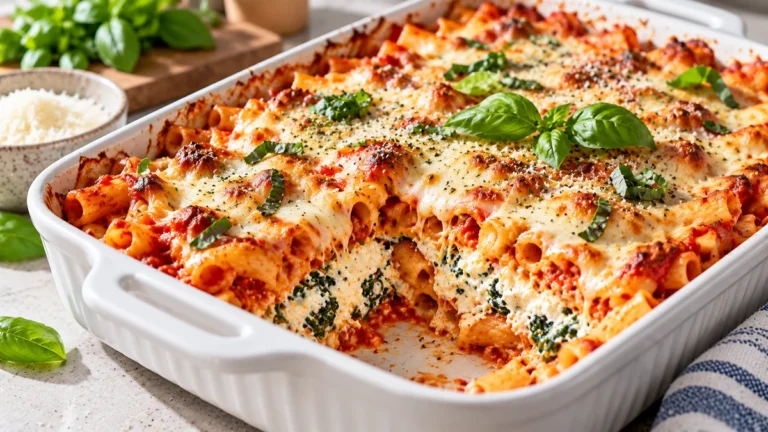
A creamy baked chicken and broccoli casserole with blended cottage cheese, Greek yogurt, sharp cheddar, Parmesan, garlic, and Dijon. One of eight servings provides an estimated 47 grams of protein.
1/2 cup reduced-sodium chicken broth labeled gluten-free
1 tablespoon Dijon mustard labeled gluten-free
2 garlic cloves, minced
1 teaspoon garlic powder
1/2 teaspoon onion powder
1/2 teaspoon smoked paprika
1 1/2 cups shredded sharp cheddar cheese, divided
1/2 cup finely grated Parmesan cheese
2 tablespoons chopped fresh parsley, plus more for serving
Instructions
Preheat the oven to 375°F (190°C) and lightly grease a 9-by-13-inch baking dish.
Steam or microwave the broccoli for 3 to 4 minutes, until bright green and just crisp-tender. Drain very well and set aside.
Heat the olive oil in a large skillet over medium-high heat. Add the chicken and season with 1/2 teaspoon salt and 1/4 teaspoon black pepper. Cook for 6 to 8 minutes, stirring occasionally, until cooked through. Work in batches if needed to avoid crowding.
Add the cottage cheese, Greek yogurt, chicken broth, Dijon mustard, garlic, garlic powder, onion powder, smoked paprika, remaining 1/2 teaspoon salt, and remaining 1/4 teaspoon black pepper to a blender or food processor. Blend until mostly smooth.
Transfer the cooked chicken and drained broccoli to the prepared baking dish. Pour the blended sauce over the top, then add 1 cup cheddar, the Parmesan, and the parsley. Fold gently until evenly coated.
Spread the mixture into an even layer and sprinkle the remaining 1/2 cup cheddar over the top.
Bake uncovered for 20 to 25 minutes, until the edges are bubbling, the cheese is melted, and the center reaches 165°F. Broil for 1 to 2 minutes at the end if you want more browning.
Let the casserole rest for 8 to 10 minutes before dividing into 8 servings. Garnish with extra parsley if desired.
Notes
For frozen broccoli, thaw completely and squeeze out excess moisture before cooking.
Do not overcook the chicken in the skillet; the oven step is mainly for heating the assembled casserole and browning the cheese.
Use gluten-free-labeled broth, Dijon mustard, and seasonings if you need the finished recipe to remain gluten-free.
Refrigerate cooked portions within 2 hours and use within 3 to 4 days. Reheat leftovers to 165°F.
Nutrition values are estimates and will vary by brand and portion size.
Author:Adam Moretti
Prep Time:20 minutes
Cook Time:30 minutes
Category:Dinner
Method:Baking
Cuisine:American
Diet:Gluten Free
How to Make High Protein Chicken Broccoli Casserole
1. Prep the Broccoli
Heat the oven to 375°F and lightly grease a 9-by-13-inch baking dish. Steam or microwave the broccoli until it is bright green and just crisp-tender, about 3 to 4 minutes. Drain it very well. If you use frozen broccoli, thaw it first and press out excess water with clean towels before cooking.
2. Cook the Chicken
Heat the olive oil in a large skillet over medium-high heat. Add the chicken in a single layer, season with half of the salt and pepper, and cook for 6 to 8 minutes, stirring occasionally, until the pieces are cooked through. Work in two batches if the skillet is crowded; crowding traps steam and makes the chicken release more water.
3. Blend the Creamy Sauce
Add the cottage cheese, Greek yogurt, chicken broth, Dijon mustard, garlic, garlic powder, onion powder, smoked paprika, remaining salt, and remaining pepper to a blender or food processor. Blend until the mixture is mostly smooth. A few tiny cottage-cheese flecks are fine, but the sauce should pour easily and look creamy.
4. Combine the Filling
Add the cooked chicken and drained broccoli to the prepared baking dish. Pour the blended sauce over the top, then add 1 cup of shredded cheddar and the Parmesan. Fold gently until the chicken and broccoli are evenly coated. Spread the high protein chicken broccoli casserole into an even layer so the center heats at the same rate as the edges.
5. Add the Cheese Topping
Sprinkle the remaining 1/2 cup cheddar evenly over the casserole. Do not pack the cheese down. A loose layer melts and browns more evenly, while a thick compressed layer can trap steam underneath and soften the surface.
6. Bake Until Hot and Bubbly
Bake uncovered for 20 to 25 minutes, until the sauce is bubbling around the edges and the center is hot. If you want more browning, switch the oven to broil for 1 to 2 minutes at the end while watching closely. Let the casserole stand for 8 to 10 minutes before serving so the sauce thickens slightly.
How to Keep Chicken Broccoli Casserole from Getting Watery
Moisture control matters more than any other step. Broccoli naturally holds water, and chicken can release liquid if it is crowded or under-browned. Cook the broccoli only until crisp-tender, drain it thoroughly, and cook the chicken in a hot skillet instead of adding raw chicken directly to the casserole.
The sauce should also be thick before baking. Do not add extra broth unless your cottage cheese is unusually dry. After baking, let the dish rest for at least 8 minutes. The sauce will look looser when it is bubbling hot and will tighten as the casserole sits.
How to Tell When the Casserole Is Done
The edges should bubble steadily, the top cheese should be fully melted, and the center should be steaming hot. Because this recipe uses poultry, check the center with a food thermometer rather than relying only on browning. USDA food-safety guidance lists 165°F as the safe minimum internal temperature for poultry and casseroles. The same guidance recommends reheating leftovers to 165°F and using most refrigerated cooked leftovers within 3 to 4 days. See the USDA food safety basics.
Troubleshooting
The Casserole Is Watery
The most likely cause is excess broccoli moisture or liquid released from crowded chicken. Spoon off any obvious liquid before baking if needed, and let the casserole rest after it comes out of the oven. For the next batch, dry the broccoli more thoroughly and brown the chicken in two batches.
The Sauce Looks Grainy
Overheating Greek yogurt can sometimes make dairy sauces look slightly grainy, especially if the oven is very hot or the casserole bakes too long. Use 375°F, bake only until the center is hot, and avoid a long uncovered bake after the sauce is already bubbling. Blending the cottage cheese completely also helps create a smoother base.
The Chicken Is Dry
Chicken breast dries out when it is cooked hard in the skillet and then baked for too long. Cook the pieces only until done, then use the oven to heat and brown the assembled casserole rather than to continue cooking the chicken for another long period. Chicken thighs are more forgiving if you prefer a richer variation.
The Top Is Not Browning
Move the pan to the upper third of the oven for the final few minutes or broil for 1 to 2 minutes. Keep the dish uncovered and watch continuously under the broiler because shredded cheese can go from golden to scorched quickly.
Variations and Substitutions
Add Rice
For a chicken broccoli rice casserole, fold in 3 cups of cooked rice before baking. Add 1/4 to 1/2 cup extra broth if the mixture looks too thick because rice absorbs sauce. This changes the serving size, calories, carbohydrates, and protein per serving, so the published nutrition estimate no longer applies.
Use Chicken Thighs
Boneless skinless chicken thighs can replace chicken breast in the same weight. Dice and cook them completely before assembly. The casserole will taste richer and usually stay more tender after reheating, but calories and fat will increase.
Use Frozen Broccoli
Frozen broccoli works well when convenience matters. Thaw it fully, drain it, and squeeze out excess water before assembly. Large frozen florets can be cut into smaller pieces so every serving gets both chicken and broccoli.
Make It Spicier
Add 1/4 teaspoon crushed red pepper flakes to the sauce or stir in a finely diced jalapeño. Hot sauce can also be served at the table. Adding spice at serving time is the easiest way to keep the base casserole family-friendly.
Add a Crunchy Topping
For extra texture, combine 1/2 cup panko with 1 tablespoon melted butter and sprinkle it over the cheese before baking. Standard panko contains wheat, so this variation is not gluten-free unless you use a gluten-free breadcrumb product.
What to Serve with Chicken Broccoli Casserole
Because the base casserole does not include rice, pasta, or potatoes, you can choose the side based on how substantial you want the meal to be. Brown rice, quinoa, roasted potatoes, or a slice of crusty bread make the meal more carbohydrate-rich. A green salad, roasted cauliflower, or sliced tomatoes keep the plate lighter.
This high protein chicken broccoli casserole is useful for meal prep because the sauce protects the chicken from drying during reheating. Divide the cooled casserole into individual containers after it has rested. Keeping portions shallow helps them chill faster and makes reheating more even.
Refrigerator: Store covered portions for 3 to 4 days.
Freezer: Freeze individual portions for up to 2 to 3 months for best quality. The dairy sauce can become slightly less smooth after freezing, but the flavor remains good.
Thawing: Thaw overnight in the refrigerator when possible.
Reheating: Cover loosely and microwave until the center reaches 165°F, or reheat in a 325°F oven until hot throughout.
If you prefer meal-prep recipes that stay separate rather than baked together, our high protein chicken fried rice meal prep is portioned specifically for grab-and-go lunches.
Nutrition Notes
One-eighth of the base high protein chicken broccoli casserole is estimated at about 390 calories and 47 grams of protein. The estimate assumes boneless skinless chicken breast, low-fat cottage cheese, nonfat Greek yogurt, reduced-sodium broth, sharp cheddar, Parmesan, broccoli, and eight equal servings.
Exact nutrition will vary by brand, especially for cottage cheese, yogurt, cheddar, broth, and Parmesan. Sodium can change significantly between brands, so use the package labels if you are tracking it closely. Rice, breadcrumb toppings, extra cheese, or side dishes are not included in the estimate.
FAQs about High Protein Chicken Broccoli Casserole
How do you add protein to chicken broccoli casserole?
Start with enough chicken per serving, then use high-protein dairy in the sauce instead of relying only on cream or condensed soup. Cottage cheese and Greek yogurt work especially well because they add protein and body. Cheese contributes additional protein but also adds saturated fat and sodium, so it does not need to be the only strategy.
Can I use rotisserie chicken?
Yes. Use about 6 cups of chopped or shredded cooked chicken and skip the skillet-cooking step. Rotisserie chicken is usually saltier than plain chicken breast, so reduce the added salt and taste the sauce before assembly. Reheat the finished casserole to 165°F.
Can I prepare this casserole the night before?
Yes. Cook the chicken and broccoli, mix the casserole, cover it, and refrigerate it overnight. Add the final cheddar before baking. Because the pan starts cold, expect the baking time to increase by about 5 to 10 minutes. Check the center temperature rather than relying only on time.
Can I make chicken broccoli casserole without cottage cheese?
You can replace the cottage cheese with more Greek yogurt plus a small amount of cream cheese, but the sauce will be tangier and the nutrition will change. Another option is a traditional milk-based cheese sauce thickened with flour, but that version will not be gluten-free unless you use a suitable alternative thickener.
Does this casserole need rice?
No. This recipe is designed as a chicken-and-broccoli casserole without rice. The sauce is thick enough to coat the meat and vegetables on its own. Add cooked rice only if you specifically want a starchier one-dish meal.
Can I freeze chicken broccoli casserole?
Yes. Cool it completely, divide it into covered freezer-safe containers, and freeze. Dairy sauces can separate slightly after freezing, so stir the reheated portion if needed. For best texture, thaw overnight in the refrigerator before reheating.
Final Tips
For the best high protein chicken broccoli casserole, control moisture from the start: drain the broccoli thoroughly, brown the chicken in a hot skillet, blend the cottage-cheese sauce smooth, and bake only until the center is hot and the cheese is bubbling. Let the finished casserole rest before portioning so the sauce has time to settle.
The result is a creamy, cheesy dinner with a clear chicken-and-broccoli focus, enough protein to stand on its own, and a flexible base that works for meal prep or family dinner. Serve it as written or add rice, potatoes, or salad depending on the meal you want.
Reviewed recipe options
Make this recipe fit me
Choose one of seven popular diet options. NutriMatch will confirm whether the recipe already fits, show a reviewed adaptation when available, or recommend recipes that match your choice.
Please choose a diet first.
Not available for this recipe
This recipe cannot currently be made Dairy-Free with a reviewed adaptation.
NutriMatch will not guess at substitutions. Try one of these recipes that is already reviewed for your choice.
Recipe details, product formulas, and cross-contact information can change. Confirm current labels and use professional guidance when medically necessary.
Already a reviewed match
This recipe already fits Gluten-Free.
No changes are needed based on its reviewed NutriMatch classification. Check the complete ingredients, product labels, and serving details for your own needs.
Recipe details, product formulas, and cross-contact information can change. Confirm current labels and use professional guidance when medically necessary.
Already a reviewed match
This recipe already fits High Protein.
No changes are needed based on its reviewed NutriMatch classification. Check the complete ingredients, product labels, and serving details for your own needs.
Recipe details, product formulas, and cross-contact information can change. Confirm current labels and use professional guidance when medically necessary.
Not available for this recipe
This recipe cannot currently be made Keto with a reviewed adaptation.
NutriMatch will not guess at substitutions. Try one of these recipes that is already reviewed for your choice.
Recipe details, product formulas, and cross-contact information can change. Confirm current labels and use professional guidance when medically necessary.
Not available for this recipe
This recipe cannot currently be made Low Carb with a reviewed adaptation.
NutriMatch will not guess at substitutions. Try one of these recipes that is already reviewed for your choice.
Recipe details, product formulas, and cross-contact information can change. Confirm current labels and use professional guidance when medically necessary.
Not available for this recipe
This recipe cannot currently be made Vegan with a reviewed adaptation.
NutriMatch will not guess at substitutions. Try one of these recipes that is already reviewed for your choice.
Recipe details, product formulas, and cross-contact information can change. Confirm current labels and use professional guidance when medically necessary.
Not available for this recipe
This recipe cannot currently be made Vegetarian with a reviewed adaptation.
NutriMatch will not guess at substitutions. Try one of these recipes that is already reviewed for your choice.
Recipe details, product formulas, and cross-contact information can change. Confirm current labels and use professional guidance when medically necessary.