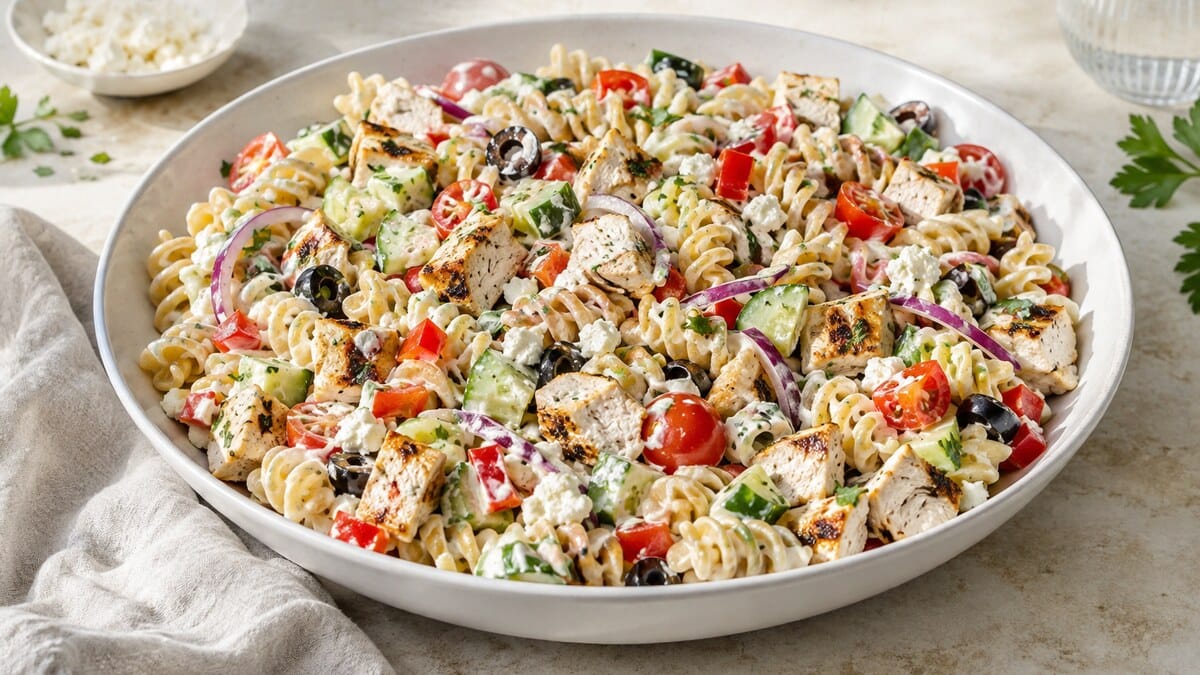
This high protein pasta salad combines chickpea rotini, cooked chicken breast, crisp vegetables, feta, and a creamy lemon Greek yogurt dressing. The complete recipe makes six generous servings and provides approximately 27 grams of protein per serving when prepared with the ingredients listed below.
It is practical for lunch, a light dinner, or meal prep because the pasta cooks quickly and the remaining ingredients only need chopping and mixing. The dressing is creamy without mayonnaise, while lemon, red wine vinegar, Dijon, garlic, and oregano keep the flavor bright.
For more ways to use chicken, yogurt, eggs, beans, and other protein-rich ingredients in everyday meals, visit our high protein foods guide.
Table of Contents
Why You’ll Love This High Protein Pasta Salad
Each serving provides approximately 27 grams of protein when the recipe is divided into six equal portions.
Chickpea pasta and chicken provide most of the protein, while Greek yogurt and feta add a smaller amount.
The recipe is ready in about 30 minutes.
The Greek yogurt dressing is creamy, tangy, and made without mayonnaise.
Cucumber, tomatoes, bell pepper, red onion, parsley, and olives add color and texture.
The salad can be prepared ahead for lunches or an easy cold dinner.
Ingredient variations are clearly separated so the nutrition estimate is not confused with a different version.
What Makes This Pasta Salad High in Protein?
The protein comes mainly from three ingredients: chickpea pasta, cooked chicken breast, and plain Greek yogurt. For the estimate in this recipe, the chickpea pasta provides 14 grams of protein per 2-ounce dry serving, the salad includes 2 cups of cooked chicken breast, and the dressing uses 3/4 cup of plain nonfat Greek yogurt.
Dividing the finished salad into six equal portions gives approximately 27 grams of protein per serving. Pasta and yogurt brands vary, so check the package labels if a precise figure matters. Using regular wheat pasta, a lower-protein yogurt, less chicken, or a plant-based substitution will change the result.
Ingredients You’ll Need
Chickpea Rotini
Use 8 ounces of dry chickpea rotini. A short spiral shape holds the creamy dressing and mixes easily with the diced vegetables. The protein estimate is based on pasta that lists 14 grams of protein per 2-ounce dry serving. Lentil or another high-protein pasta can work, but its cooking time, texture, and nutrition will differ.
Cooked Chicken Breast
Use 2 cups of diced cooked chicken breast. Keep the pieces close to bite size so they distribute evenly through the salad. Plain baked, poached, grilled, or rotisserie chicken can work, but heavily seasoned chicken may compete with the lemon-herb dressing.
Greek Yogurt Dressing
Plain nonfat Greek yogurt gives the dressing body and contributes additional protein. Olive oil smooths the texture, while lemon juice, red wine vinegar, Dijon mustard, garlic, oregano, salt, and black pepper provide acidity and seasoning. Use thick Greek yogurt rather than regular yogurt so the dressing does not become watery.
Vegetables, Feta, and Herbs
Cherry tomatoes, cucumber, red bell pepper, red onion, parsley, olives, and feta create a fresh Mediterranean-style combination. Cut the vegetables into small, even pieces so each serving gets a balanced mix. The olives are optional, but the feta is included in the protein estimate.
A fresh high protein pasta salad made with chickpea rotini, cooked chicken breast, crisp vegetables, feta, and a creamy lemon Greek yogurt dressing. One of six servings provides approximately 27 grams of protein when prepared as written.
Total Time:30 minutes
Yield:6 servings
Ingredients
Scale
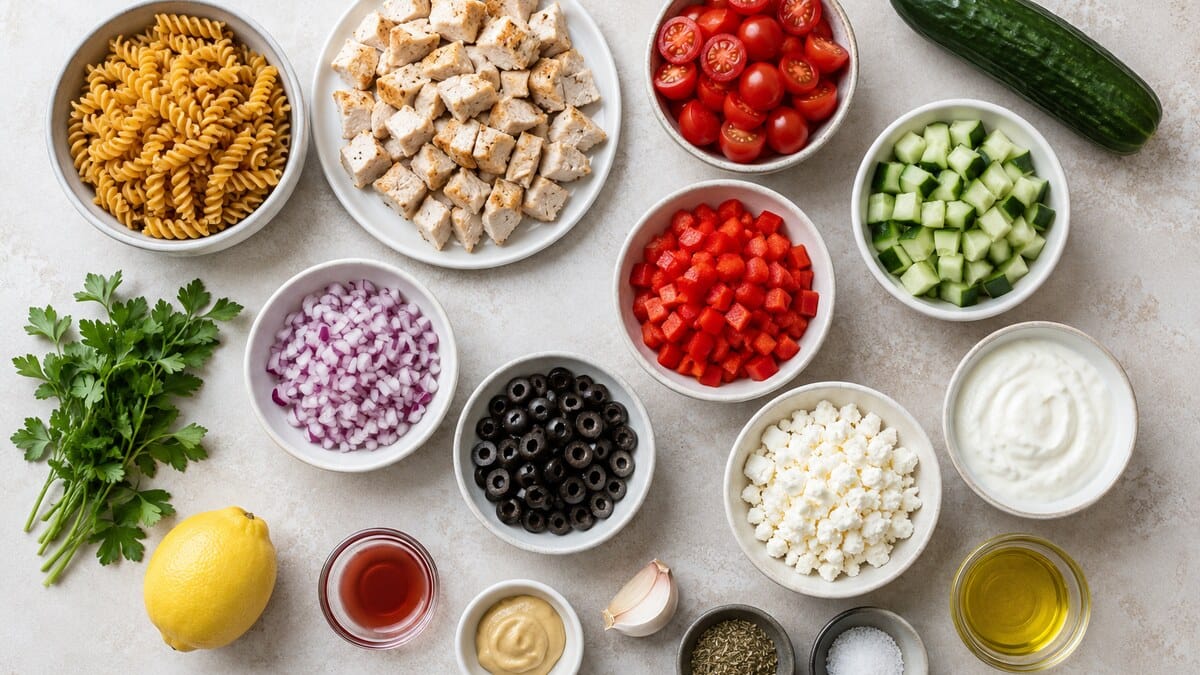
8 ounces dry chickpea rotini, providing 14 g protein per 2-ounce serving
2 cups diced cooked chicken breast
1 cup cherry tomatoes, halved
1 cup cucumber, diced
1/2 cup red bell pepper, diced
1/4 cup red onion, finely diced
1/4 cup sliced black olives, optional
1/4 cup crumbled feta cheese
2 tablespoons chopped fresh parsley or basil
3/4 cup plain nonfat Greek yogurt
2 tablespoons extra-virgin olive oil
2 tablespoons fresh lemon juice
1 tablespoon red wine vinegar
1 tablespoon Dijon mustard
1 small garlic clove, finely grated or minced
1 teaspoon dried oregano
1/2 teaspoon fine salt, plus more to taste
1/4 teaspoon black pepper
1 to 2 tablespoons cold water, only as needed to thin the dressing
Instructions
Bring a large pot of salted water to a boil. Cook the chickpea rotini according to the package directions, beginning to check at the earliest suggested time. Stop when it is tender but still holds its shape.
Drain the pasta and rinse it briefly under cold water to stop the cooking. Shake away excess water and let the pasta drain thoroughly while you prepare the remaining ingredients.
In a medium bowl, whisk the Greek yogurt, olive oil, lemon juice, red wine vinegar, Dijon mustard, garlic, oregano, salt, and black pepper until smooth. Whisk in cold water 1 teaspoon at a time only if the dressing is too thick to toss.
Add the cooled pasta, chicken, tomatoes, cucumber, bell pepper, red onion, olives, feta, and parsley to a large mixing bowl.
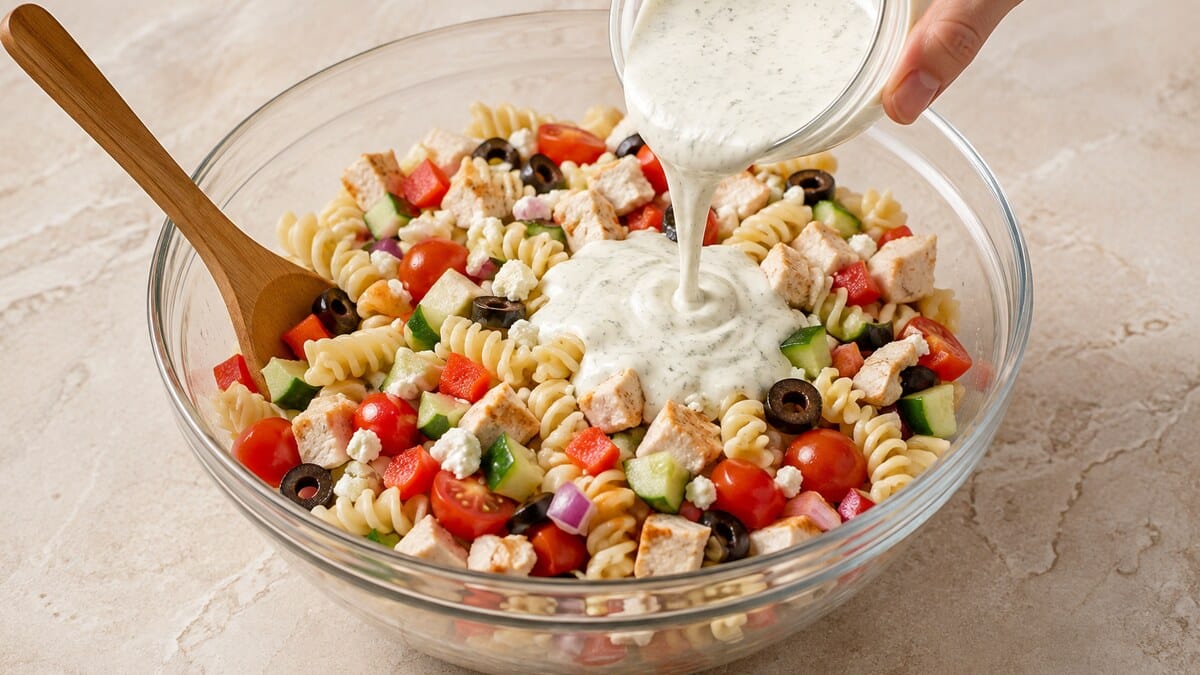
Pour the dressing over the salad. Fold gently with a large spoon or flexible spatula until the pasta, chicken, and vegetables are evenly coated.
Taste and adjust the salt, pepper, or lemon juice. Serve immediately or cover and refrigerate until cold. Stir gently before serving.
Notes
The protein estimate is based on chickpea pasta providing 14 g protein per 2-ounce dry serving, 2 cups cooked chicken breast, plain nonfat Greek yogurt, feta, and six equal portions. Brands and substitutions change the result.
For a vegetarian variation, replace the chicken with 2 cups drained and rinsed chickpeas. The original protein estimate does not apply.
For a dairy-free variation, use thick plain unsweetened dairy-free yogurt and omit the feta. The original protein estimate does not apply.
For a gluten-free salad, use chickpea pasta and all packaged ingredients that are clearly labeled gluten free when cross-contact matters.
Store covered in the refrigerator at 40°F or below for 3 to 4 days. Freezing is not recommended because the vegetables soften and the yogurt dressing may separate.
Author:Adam Moretti
Prep Time:20 minutes
Cook Time:10 minutes
Category:Main Dish
Method:Stovetop
Cuisine:American
Diet:High Protein
How to Make High Protein Pasta Salad
1. Cook the Pasta Carefully
Bring a large pot of salted water to a boil and cook the chickpea rotini according to the package directions. Begin checking at the earliest suggested time. The pasta should be tender but still hold its shape because it will soften slightly as it rests in the dressing.
2. Cool and Drain Thoroughly
Drain the pasta in a colander and rinse it briefly under cold water to stop the cooking. Shake away as much water as possible, then let it drain while you prepare the dressing. Excess water can dilute the yogurt dressing and collect at the bottom of the bowl.
3. Whisk the Dressing
Whisk the Greek yogurt, olive oil, lemon juice, red wine vinegar, Dijon mustard, garlic, oregano, salt, and black pepper until smooth. If the dressing is too thick to toss easily, whisk in cold water one teaspoon at a time.
4. Combine the Salad
Place the cooled pasta, diced chicken, tomatoes, cucumber, bell pepper, red onion, olives, feta, and parsley in a large mixing bowl. Pour the dressing over the top and fold gently until every ingredient is evenly coated.
5. Taste and Serve
Taste the salad and adjust the salt, pepper, or lemon only after everything is mixed. Serve it immediately or cover and refrigerate it until cold. If the dressing thickens during storage, fold in a teaspoon of lemon juice or water before serving.
Tips for the Best Texture
Do not overcook chickpea pasta. It can become soft and break apart faster than traditional pasta.
Rinse the cooked pasta briefly, but drain it thoroughly before adding the dressing.
Use thick Greek yogurt rather than regular yogurt.
Dice the chicken and vegetables into similar bite-size pieces.
Fold the salad with a large spoon or flexible spatula instead of stirring aggressively.
Taste before adding extra salt because feta, olives, Dijon, and cooked chicken may already be seasoned.
Refresh refrigerated salad with a small amount of lemon juice or water instead of adding a second full batch of dressing.
Variations and Substitutions
Vegetarian Pasta Salad
For a vegetarian version, replace the chicken with 2 cups of drained and rinsed chickpeas. Keep the feta and Greek yogurt if dairy is suitable. This substitution changes the protein content and the nutrition estimate from the original recipe does not apply.
Gluten-Free Pasta Salad
Chickpea pasta is often made without wheat, but the ingredient list alone is not enough when gluten cross-contact matters. Choose a pasta clearly labeled gluten free and check the Dijon mustard, vinegar, cooked chicken, feta, olives, and seasonings as well. Use clean cookware, utensils, and work surfaces.
Dairy-Free Pasta Salad
Use a thick, plain, unsweetened dairy-free yogurt and omit the feta. Choose a yogurt that works in savory dressings rather than a sweetened product. Dairy-free yogurt brands vary widely in texture and protein, so the 27-gram estimate does not apply to this variation.
Use a Different Vegetable Mix
Chopped baby spinach, grated carrot, steamed broccoli florets, or sliced scallions can replace part of the vegetable mixture. Keep the total amount of vegetables close to the original so the dressing remains sufficient. Watery vegetables should be patted dry before mixing.
Make-Ahead and Storage
For the best texture, cook and cool the pasta, prepare the dressing, and chop the vegetables up to one day ahead. Store the components in separate covered containers, then combine them when you are ready to serve. This prevents the pasta from absorbing too much dressing overnight.
Store assembled pasta salad in a covered container in a refrigerator at 40°F or below and use it within 3 to 4 days. This timing follows the FoodSafety.gov cold food storage guidance for chicken and macaroni-style salads. Return the salad to the refrigerator promptly after serving.
Freezing is not recommended. The fresh vegetables lose their crisp texture, and the yogurt dressing can separate after thawing.
Frequently Asked Questions
How much protein is in high protein pasta salad?
One of six equal servings contains approximately 27 grams of protein when the salad is made with chickpea pasta that provides 14 grams per 2-ounce dry serving, 2 cups of cooked chicken breast, 3/4 cup of plain nonfat Greek yogurt, and 1/4 cup of feta. Different brands and substitutions change the result.
Can I use regular pasta?
Yes, but regular pasta usually provides less protein than chickpea pasta. The cooking time, texture, and protein estimate will change, so follow the package directions and do not use the 27-gram figure for that version.
Why is my chickpea pasta falling apart?
It was probably cooked too long or stirred too firmly after draining. Begin checking the pasta at the earliest package time, rinse it briefly to stop the cooking, drain it well, and fold the salad gently.
Can I make the dressing without Greek yogurt?
You can use another thick plain yogurt, but regular yogurt may produce a thinner dressing. Plant-based yogurt also works as a variation when it is unsweetened and suitable for savory food. Changing the yogurt changes the protein estimate.
Can I make this pasta salad the night before?
Yes. For the freshest texture, refrigerate the cooked pasta, dressing, and chopped vegetables separately, then combine them before serving. If you assemble the entire salad in advance, stir it gently and add a small splash of lemon juice or water if the dressing has thickened.
How long does high protein pasta salad last?
Keep the salad covered and refrigerated at 40°F or below, and use it within 3 to 4 days. Discard it if it has been left unrefrigerated for an unsafe length of time or shows signs of spoilage.
The best high protein pasta salad starts with pasta that is cooked only until tender, cooled quickly, and drained thoroughly. Use bite-size pieces of chicken and vegetables, whisk the dressing until smooth, and fold everything together gently.
Keep the primary recipe unchanged when you rely on the stated protein estimate. Chickpea pasta, chicken breast, Greek yogurt, and feta are the ingredients used for that calculation; vegetarian, dairy-free, and regular-pasta variations produce different results.
Reviewed recipe options
Make this recipe fit me
Choose one of seven popular diet options. NutriMatch will confirm whether the recipe already fits, show a reviewed adaptation when available, or recommend recipes that match your choice.
Please choose a diet first.
Reviewed Dairy-Free adaptation
Dairy-Free High Protein Pasta Salad with Chicken and Greek Yogurt Dressing
Use the substitutions below to prepare a Dairy-Free version while keeping the rest of the recipe as close as possible to the original.
Ingredient swaps
1/4 cup crumbled feta cheeseUse 1/4 cup crumbled dairy-free feta-style crumbles
3/4 cup plain nonfat Greek yogurtUse 3/4 cup unsweetened dairy-free Greek-style yogurt
Instruction changes
Use dairy-free feta-style crumbles in the same measured amount and adjust salt only after tasting.
Use an unsweetened dairy-free Greek-style yogurt in the same measured amount; choose a thick product for dips and batters.
Check: Check packaged substitutes for milk ingredients and the cross-contact information you need.
Use these reviewed changes with the original ingredient quantities and instructions above. The original recipe card stays unchanged.
Recipe details, product formulas, and cross-contact information can change. Confirm current labels and use professional guidance when medically necessary.
Reviewed Gluten-Free adaptation
Gluten-Free High Protein Pasta Salad (Fresh, Filling, and Make-Ahead)
Use the reviewed substitutions below to prepare a Gluten-Free version while keeping the original recipe's basic method.
Ingredient swaps
8 ounces dry chickpea rotini, providing 14 g protein per 2-ounce servingUse 8 ounces dry chickpea rotini labeled gluten-free, providing about 14 g protein per 2-ounce serving
Rinse the cooked gluten-free pasta briefly, cool it completely, and then add the dressing.
Check: Use products labeled gluten-free when needed and check sauces, seasonings, baking ingredients, and shared equipment for cross-contact. The original Recipe Card nutrition does not reflect these substitutions. Recalculate the adapted serving from the exact product labels before relying on its protein, carbohydrate, calorie, or other nutrition values.
Use these reviewed changes with the original ingredient quantities and instructions above. The original recipe card stays unchanged.
Recipe details, product formulas, and cross-contact information can change. Confirm current labels and use professional guidance when medically necessary.
Already a reviewed match
This recipe already fits High Protein.
No changes are needed based on its reviewed NutriMatch classification. Check the complete ingredients, product labels, and serving details for your own needs.
Recipe details, product formulas, and cross-contact information can change. Confirm current labels and use professional guidance when medically necessary.
Not available for this recipe
This recipe cannot currently be made Keto with a reviewed adaptation.
NutriMatch will not guess at substitutions. Try one of these recipes that is already reviewed for your choice.
Recipe details, product formulas, and cross-contact information can change. Confirm current labels and use professional guidance when medically necessary.
Not available for this recipe
This recipe cannot currently be made Low Carb with a reviewed adaptation.
NutriMatch will not guess at substitutions. Try one of these recipes that is already reviewed for your choice.
Recipe details, product formulas, and cross-contact information can change. Confirm current labels and use professional guidance when medically necessary.
Reviewed Vegan adaptation
Vegan High Protein Pasta Salad (Fresh, Filling, and Make-Ahead)
Use the reviewed substitutions below to prepare a Vegan version while keeping the original recipe's basic method.
1/4 cup crumbled feta cheeseUse 1/4 cup vegan feta-style crumbles or omit
3/4 cup plain nonfat Greek yogurtUse 3/4 cup unsweetened vegan Greek-style yogurt
Instruction changes
Use chickpeas, vegan yogurt, and vegan feta or omit the feta; then chill as directed.
Check: Confirm every packaged substitute, sauce, seasoning, and topping is vegan; product formulas and processing aids can vary. The original Recipe Card nutrition does not reflect these substitutions. Recalculate the adapted serving from the exact product labels before relying on its protein, carbohydrate, calorie, or other nutrition values.
Use these reviewed changes with the original ingredient quantities and instructions above. The original recipe card stays unchanged.
Recipe details, product formulas, and cross-contact information can change. Confirm current labels and use professional guidance when medically necessary.
Reviewed Vegetarian adaptation
Vegetarian High Protein Pasta Salad (Fresh, Filling, and Make-Ahead)
Use the reviewed substitutions below to prepare a Vegetarian version while keeping the original recipe's basic method.
Use the chickpea option and assemble the salad after the pasta has cooled.
Check: Check broths, sauces, seasonings, cheeses, and meat substitutes for animal-derived ingredients that matter to you. The original Recipe Card nutrition does not reflect these substitutions. Recalculate the adapted serving from the exact product labels before relying on its protein, carbohydrate, calorie, or other nutrition values.
Use these reviewed changes with the original ingredient quantities and instructions above. The original recipe card stays unchanged.
Recipe details, product formulas, and cross-contact information can change. Confirm current labels and use professional guidance when medically necessary.