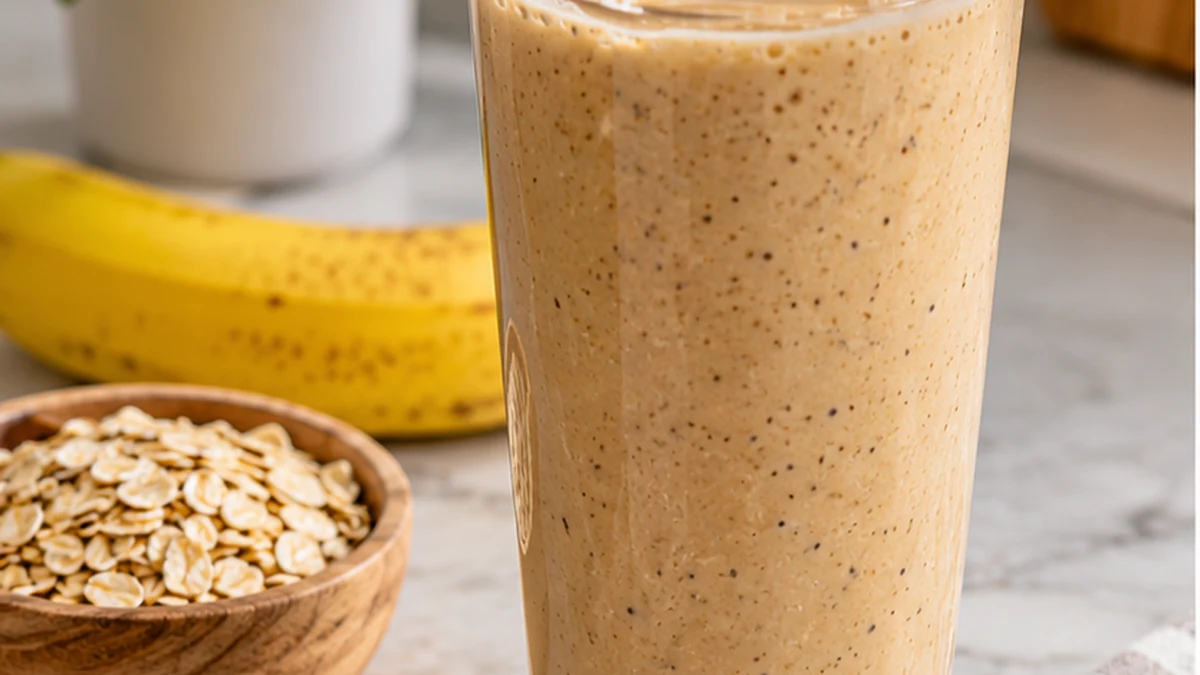
This high calorie high protein smoothie for weight gain is a thick banana, peanut butter, oat, Greek yogurt, and chia smoothie designed for people who need an easy way to add substantial calories and protein to the day. The full recipe is estimated at about 886 calories and 46 grams of protein without using protein powder.
The smoothie is calorie-dense on purpose. Whole milk, Greek yogurt, peanut butter, oats, banana, honey, and chia all contribute energy, while the dairy, peanut butter, oats, and chia spread the protein across familiar foods. If one full smoothie is more than you need at once, divide it into two smaller servings and refrigerate the second portion.
A drink like this can make it easier to raise calorie intake, but it does not guarantee weight gain. Body weight changes depend on total intake, activity, metabolism, health, medicines, and other factors. The NIDDK explains that consistently taking in more calories than you use can lead to weight gain over time. If weight loss has been sudden or unexplained, talk with a health professional rather than relying only on calorie-dense recipes.
Table of Contents
Why This Smoothie Works for a Higher-Calorie Day
About 886 calories: the ingredients are energy-dense enough to meaningfully increase daily intake without requiring a large solid meal.
About 46 grams of protein: whole milk, Greek yogurt, peanut butter, oats, and chia all contribute.
No protein powder required: the recipe gets its protein from ordinary foods, so there is no whey or plant-protein flavor to balance.
Carbohydrates plus fat: banana, oats, honey, dairy, peanut butter, and chia create a mixed macro profile rather than a protein-only shake.
Fast preparation: everything goes into one blender and is ready in about five minutes.
Easy to scale: you can reduce or increase oats, nut butter, milk, or honey depending on the calorie level that fits your needs.
A high calorie high protein smoothie for weight gain works best when the calorie-dense ingredients are measured rather than added by eye. That makes it easier to repeat the same serving, compare brands, and adjust only one variable when you want a smaller or larger drink.
Use 1 cup of whole milk for the base. It adds liquid, protein, carbohydrate, and fat at the same time, which makes it more useful here than water or a very low-calorie milk. If you substitute a different milk, the calories and protein can change substantially, so the recipe-card nutrition will no longer be exact.
Plain 2% Greek Yogurt
One cup of thick Greek yogurt makes the smoothie creamy and pushes the protein up without requiring powder. Plain yogurt keeps the sweetness under your control. A thinner regular yogurt can work, but the smoothie will be looser and generally lower in protein per cup.
Peanut Butter and Rolled Oats
Two tablespoons of peanut butter bring richness and concentrated calories, while one-half cup of rolled oats adds carbohydrate, fiber, and more body. Blend long enough to fully break down the oats. If your blender is less powerful, soak the oats in the milk for 10 minutes before blending.
Banana, Honey, and Chia Seeds
A ripe banana gives the smoothie most of its fruit flavor and helps thicken it. One tablespoon of honey adds extra carbohydrate and sweetness, while chia seeds add fat, fiber, and a little protein. Chia continues thickening the drink as it sits, so the texture will be noticeably thicker after 10 to 15 minutes.
High Calorie High Protein Smoothie for Weight Gain
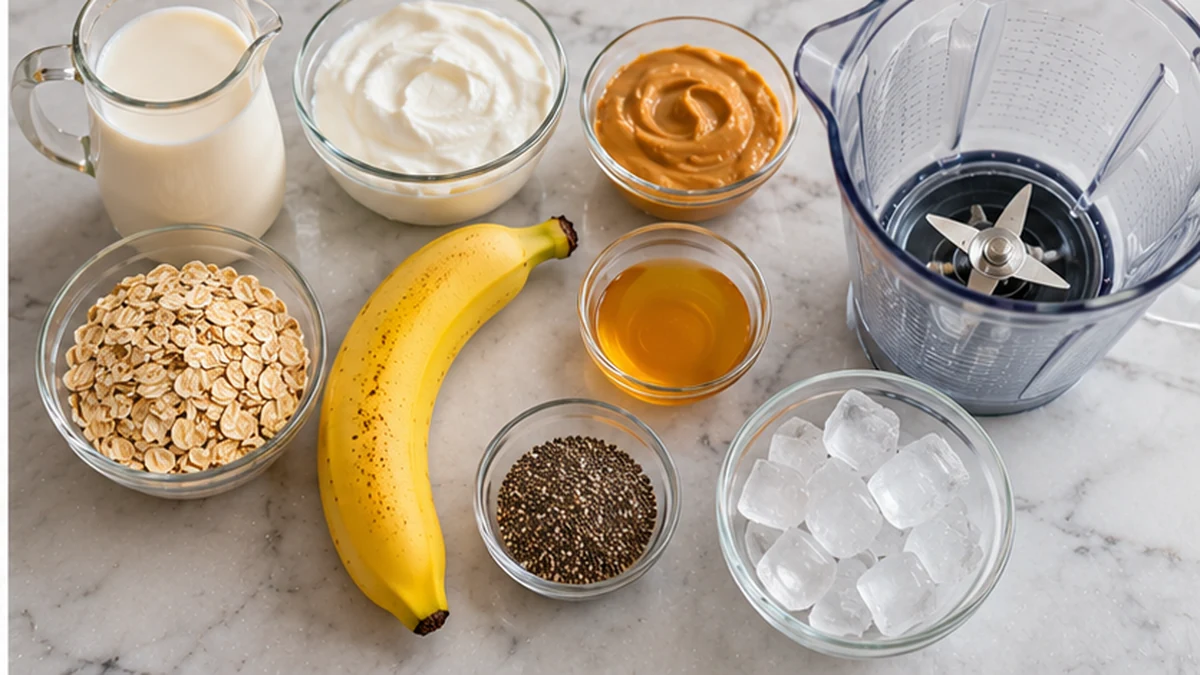
The base high calorie high protein smoothie for weight gain uses measured portions so you know roughly what you are adding to the day. Blend the milk and yogurt first, then add the oats, peanut butter, banana, honey, chia, and ice. Starting with liquid near the blades helps the thicker ingredients move instead of sticking under the lid.
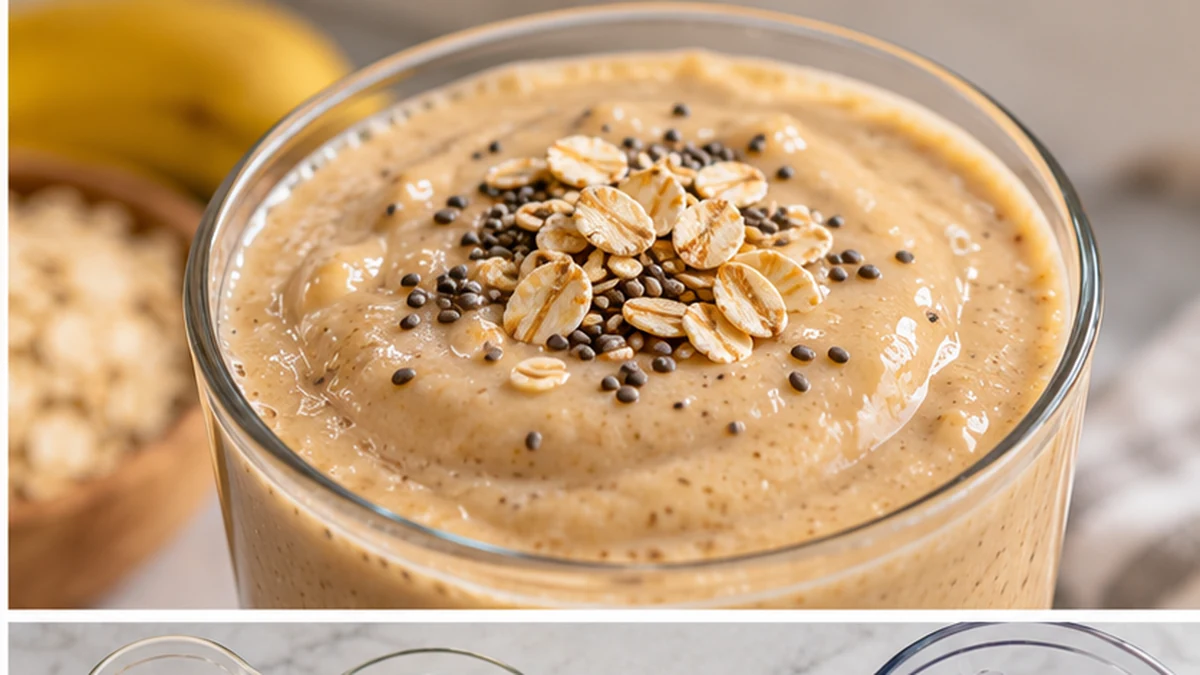
A thick banana peanut butter smoothie with whole milk, Greek yogurt, oats, honey, and chia for about 886 calories and 46 grams of protein without protein powder.
Total Time:5 minutes
Yield:1 large smoothie or 2 smaller servings
Ingredients
Scale
1 cup (240 ml) whole milk
1 cup (about 225 g) plain 2% Greek yogurt
1/2 cup (40 g) old-fashioned rolled oats
2 tablespoons (32 g) natural peanut butter
1 medium ripe banana, peeled (about 118 g)
1 tablespoon (21 g) honey
1 tablespoon (12 g) chia seeds
1/4 to 1/2 cup ice, optional
Instructions
Pour the whole milk into a high-speed blender, then add the Greek yogurt.
Add the rolled oats, peanut butter, banana, honey, chia seeds, and optional ice.
Blend on high for 45 to 60 seconds, until the oats are fully broken down and the smoothie is thick and uniform. Stop and scrape the sides if needed.
If the smoothie is too thick to move, add whole milk 1 tablespoon at a time and blend again. Measure any extra milk if you are tracking calories closely.
Pour into a large glass and serve immediately. For two smaller portions, divide evenly between two containers and refrigerate the second portion promptly.
Notes
Nutrition is estimated for the full recipe using representative USDA-style values for whole milk, plain 2% Greek yogurt, rolled oats, peanut butter, banana, honey, and chia. Brands vary.
The full smoothie is intentionally calorie-dense. Divide it into two equal servings if a roughly 886-calorie drink is more than you need at once.
This recipe does not guarantee weight gain. Body-weight change depends on total energy intake and individual factors.
For gluten-free preparation, use oats specifically labeled gluten free and verify all packaged ingredients for your needs.
If weight loss is sudden, unexplained, or related to illness, seek individualized medical or dietetic guidance rather than relying only on calorie-dense recipes.
Author:Adam Moretti
Prep Time:5 minutes
Cook Time:0 minutes
Category:Smoothie
Method:No-Cook
Cuisine:American
Diet:Vegetarian
How to Make the Smoothie
1. Add the liquid ingredients first
Pour the whole milk into the blender, then add the Greek yogurt. Putting the liquid near the blades creates movement before the oats and peanut butter start thickening the mixture. This is especially helpful with compact personal blenders.
2. Add the calorie-dense ingredients
Add the rolled oats, peanut butter, banana, honey, and chia seeds. Break the banana into two or three pieces so it drops closer to the blades. If the peanut butter is very stiff from refrigeration, let it soften for a few minutes so it blends more evenly.
3. Blend until completely smooth
Blend on high for 45 to 60 seconds. Stop and scrape the sides if you see peanut butter or dry oats above the liquid line. Blend again until there are no obvious oat flakes and the smoothie pours in one thick ribbon.
4. Adjust the texture, not the nutrition blindly
Add 1/4 to 1/2 cup ice for a colder, thicker drink. If it is too thick, add milk 1 tablespoon at a time. Remember that extra milk changes the calorie and protein total, so measure it if you are tracking intake closely.
How to Adjust a High Calorie High Protein Smoothie for Weight Gain
The full high calorie high protein smoothie for weight gain is intentionally large. You do not have to use the same calorie level every day. The simplest approach is to change one ingredient at a time so you can predict how the texture and nutrition will shift.
Lower the calories: omit the honey, reduce peanut butter to 1 tablespoon, or use 1/4 cup oats instead of 1/2 cup.
Raise the calories: add another tablespoon of peanut butter, use an extra 1/4 cup oats, or add more whole milk.
Raise protein with food: add more Greek yogurt or use ultra-filtered dairy milk. Recalculate the nutrition for the specific products you use.
Make it less sweet: skip the honey and rely on a very ripe banana.
Make it thinner: increase milk gradually rather than adding water if your goal is to keep the drink calorie-dense.
For another high-protein breakfast with a more savory profile, the high protein cottage cheese egg bake provides a make-ahead option that can be portioned over several days.
What “For Weight Gain” Means Here
Calling this a high calorie high protein smoothie for weight gain describes the recipe’s calorie density and intended use, not a guaranteed body-weight result. A single smoothie can add a large amount of energy, but the effect on body weight depends on the rest of your food and beverage intake and on your energy needs.
For some people, a large drink is easier than adding another full plate of food. For others, 886 calories at once may be uncomfortable or unnecessary. Splitting the recipe into two smaller servings is a practical option, especially if you are new to deliberately increasing calorie intake. The same full recipe still contains the same total calories; you are simply spreading them across the day.
Stop the blender and add 2 tablespoons of milk. Blend again before adding more. Oats, chia, peanut butter, and Greek yogurt all thicken the drink, and chia becomes more absorbent as it sits. Do not keep running an overheated blender against a mixture that is not moving.
It tastes too strongly of peanut butter
Reduce peanut butter to 1 tablespoon and add another few tablespoons of Greek yogurt. The smoothie will be lower in calories and fat, but the banana and yogurt flavors will be more noticeable. Cinnamon or vanilla can also shift the flavor without adding much volume.
The oats feel gritty
Blend longer, use quick oats, or soak rolled oats in the milk for 10 minutes before blending. The smoothie should not have dry flakes after a full minute in a reasonably powerful blender. Chilling the finished drink also softens any remaining oat texture.
It is too sweet
Leave out the honey. A very ripe banana plus dairy already gives the drink noticeable sweetness. If you are using sweetened yogurt or flavored milk, omit the honey automatically and recalculate the nutrition because packaged sweeteners can add a meaningful amount of sugar.
Variations and Substitutions
Chocolate version: add 1 tablespoon unsweetened cocoa powder. This adds a little bitterness and only a small calorie change.
Berry version: add 1/2 cup frozen berries and enough extra milk to keep the blender moving. The drink will be more tart and slightly higher in carbohydrate and fiber.
Cinnamon banana: add 1/2 teaspoon cinnamon and 1/2 teaspoon vanilla extract for a warmer breakfast flavor.
Almond butter: use the same volume instead of peanut butter. Calories and protein vary by brand, so check the label if you track closely.
Gluten-free preparation: use oats specifically labeled gluten free and verify the labels on all packaged ingredients when cross-contact matters.
Two smaller servings: divide the finished smoothie evenly. Each half is roughly 443 calories and 23 grams of protein based on the same estimate.
Make-Ahead and Storage
Because a high calorie high protein smoothie for weight gain contains oats, chia, dairy, and nut butter, its texture changes faster than a thin fruit smoothie. Refrigeration keeps it safe and cold, but it will thicken as the oats and chia absorb liquid.
This smoothie is best immediately after blending because oats and chia continue absorbing liquid. If you need to prepare it ahead, refrigerate it in a tightly covered container for up to 24 hours, then stir or shake well before drinking. Add a small measured splash of milk if it has become too thick.
For a faster morning setup, portion the dry oats and chia together the night before and keep the remaining ingredients ready in the refrigerator. You can also freeze peeled banana pieces. Do not freeze the fully blended smoothie in a completely full glass jar because liquids expand; use a freezer-safe container with headspace instead.
FAQs about High Calorie High Protein Smoothie for Weight Gain
How many calories are in this smoothie?
The full recipe is estimated at about 886 calories. The exact number depends on the brands and fat percentages of the milk, Greek yogurt, peanut butter, oats, and other ingredients. If you divide the recipe into two equal servings, each half is roughly 443 calories.
How much protein does it have?
The full recipe is estimated at about 46 grams of protein. Greek yogurt supplies the largest share, with additional protein from milk, peanut butter, oats, and chia seeds. Switching to lower-protein plant milks or different yogurt can reduce that number.
Can I make this high calorie high protein smoothie for weight gain without honey?
Yes. Leave out the honey and use a very ripe banana for sweetness. The smoothie will still be calorie-dense and high in protein, but the total calories and carbohydrate will be lower than the recipe-card estimate.
Do I need protein powder?
No. This high calorie high protein smoothie for weight gain reaches its protein estimate from ordinary foods. Protein powder can be convenient, but it is not required for this recipe and adding it would change the nutrition and thickness.
Can I drink it every day?
That depends on your overall diet and personal calorie needs. The smoothie is very energy-dense, so it may be useful for some people and excessive for others. Variety still matters; rotate breakfasts and snacks so your diet is not dependent on one recipe.
Is this a meal replacement?
It can be substantial enough to function as a meal for some adults, but “meal replacement” is not a medical designation here. Whether it is appropriate depends on your needs, appetite, schedule, and the rest of your food intake.
Can I use it for muscle gain?
The smoothie provides both protein and calories, which are commonly tracked in strength-training diets. Muscle gain still depends on training, total diet, recovery, genetics, and time. The recipe itself does not guarantee a change in muscle mass.
Final Tips
For the best high calorie high protein smoothie for weight gain, use a ripe banana, thick plain Greek yogurt, measured peanut butter, and rolled oats that are blended completely smooth. Add liquid first, keep the honey optional if the banana is already sweet, and adjust the milk in small measured amounts so the nutrition stays predictable.
The finished smoothie is intentionally calorie-dense at about 886 calories with an estimated 46 grams of protein. Use the full serving when that amount fits your plan, or divide it into two smaller drinks. The useful part is not a promise of weight gain; it is having a fast, repeatable recipe with a known ingredient list and a clear approximate nutrition profile.
Reviewed recipe options
Make this recipe fit me
Choose one of seven popular diet options. NutriMatch will confirm whether the recipe already fits, show a reviewed adaptation when available, or recommend recipes that match your choice.
Please choose a diet first.
Not available for this recipe
This recipe cannot currently be made Dairy-Free with a reviewed adaptation.
NutriMatch will not guess at substitutions. Try one of these recipes that is already reviewed for your choice.
Recipe details, product formulas, and cross-contact information can change. Confirm current labels and use professional guidance when medically necessary.
Not available for this recipe
This recipe cannot currently be made Gluten-Free with a reviewed adaptation.
NutriMatch will not guess at substitutions. Try one of these recipes that is already reviewed for your choice.
Recipe details, product formulas, and cross-contact information can change. Confirm current labels and use professional guidance when medically necessary.
Already a reviewed match
This recipe already fits High Protein.
No changes are needed based on its reviewed NutriMatch classification. Check the complete ingredients, product labels, and serving details for your own needs.
Recipe details, product formulas, and cross-contact information can change. Confirm current labels and use professional guidance when medically necessary.
Not available for this recipe
This recipe cannot currently be made Keto with a reviewed adaptation.
NutriMatch will not guess at substitutions. Try one of these recipes that is already reviewed for your choice.
Recipe details, product formulas, and cross-contact information can change. Confirm current labels and use professional guidance when medically necessary.
Not available for this recipe
This recipe cannot currently be made Low Carb with a reviewed adaptation.
NutriMatch will not guess at substitutions. Try one of these recipes that is already reviewed for your choice.
Recipe details, product formulas, and cross-contact information can change. Confirm current labels and use professional guidance when medically necessary.
Not available for this recipe
This recipe cannot currently be made Vegan with a reviewed adaptation.
NutriMatch will not guess at substitutions. Try one of these recipes that is already reviewed for your choice.
Recipe details, product formulas, and cross-contact information can change. Confirm current labels and use professional guidance when medically necessary.
Already a reviewed match
This recipe already fits Vegetarian.
No changes are needed based on its reviewed NutriMatch classification. Check the complete ingredients, product labels, and serving details for your own needs.
Recipe details, product formulas, and cross-contact information can change. Confirm current labels and use professional guidance when medically necessary.