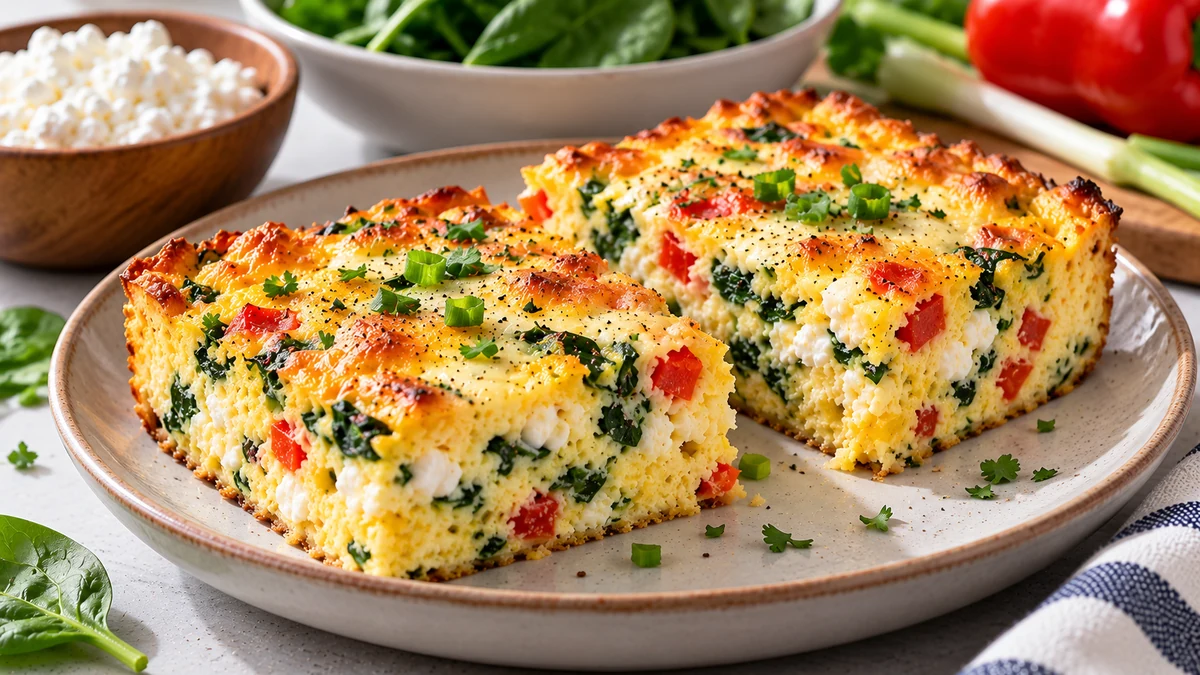
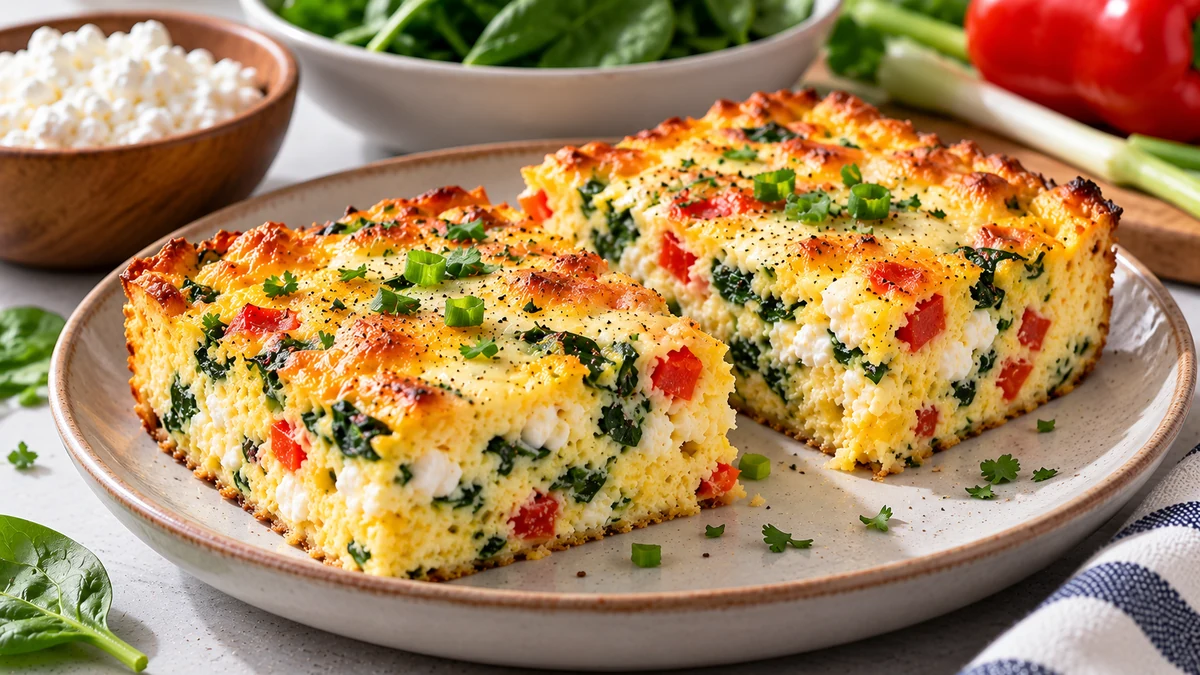
This high protein cottage cheese egg bake is a make-ahead breakfast casserole built around eggs, egg whites, cottage cheese, spinach, red bell pepper, and mozzarella. It bakes in one 9×13-inch dish, slices cleanly once set, and provides about 24 grams of protein per serving without protein powder or meat.
The texture is closer to a fluffy frittata than a dense casserole. Blending the cottage cheese into the egg base smooths out the curds, while briefly cooking the vegetables before they go into the pan keeps excess moisture from collecting around the edges. If you like meal-prep breakfasts, our high protein egg bites meal prep uses the same practical egg-and-cottage-cheese idea in smaller portions.
Table of Contents
Why You’ll Love This High Protein Cottage Cheese Egg Bake
One serving has about 24 grams of protein from whole eggs, egg whites, cottage cheese, and mozzarella.
It is vegetarian and does not rely on protein powder, meat, or specialty ingredients.
A 9×13-inch pan makes eight substantial servings for meal prep or brunch.
The vegetables are cooked briefly first, which helps prevent a watery egg bake.
The recipe reheats well, so breakfast can be ready in minutes on busy mornings.
You can change the vegetables or cheese while keeping the same basic method.
The finished casserole is naturally flourless; use verified gluten-free packaged ingredients if gluten is a concern.
What Makes This Egg Bake High in Protein?
A standard egg casserole can be high in protein, but this version deliberately stacks several protein-rich ingredients. Twelve large eggs provide the structure and richness. One cup of liquid egg whites adds extra protein with very little fat, and two cups of low-fat cottage cheese make the egg mixture creamy while contributing substantially to the protein total.
Part-skim mozzarella adds more protein and gives the top a browned, savory finish. Divided into eight equal pieces, the full recipe comes to approximately 24 grams of protein per serving based on the ingredient assumptions in the recipe card. Brand labels vary, especially for cottage cheese, liquid egg whites, and shredded cheese, so use the nutrition estimate as a practical guide rather than an exact laboratory value. For a broader list of everyday protein options, see our high protein foods guide.
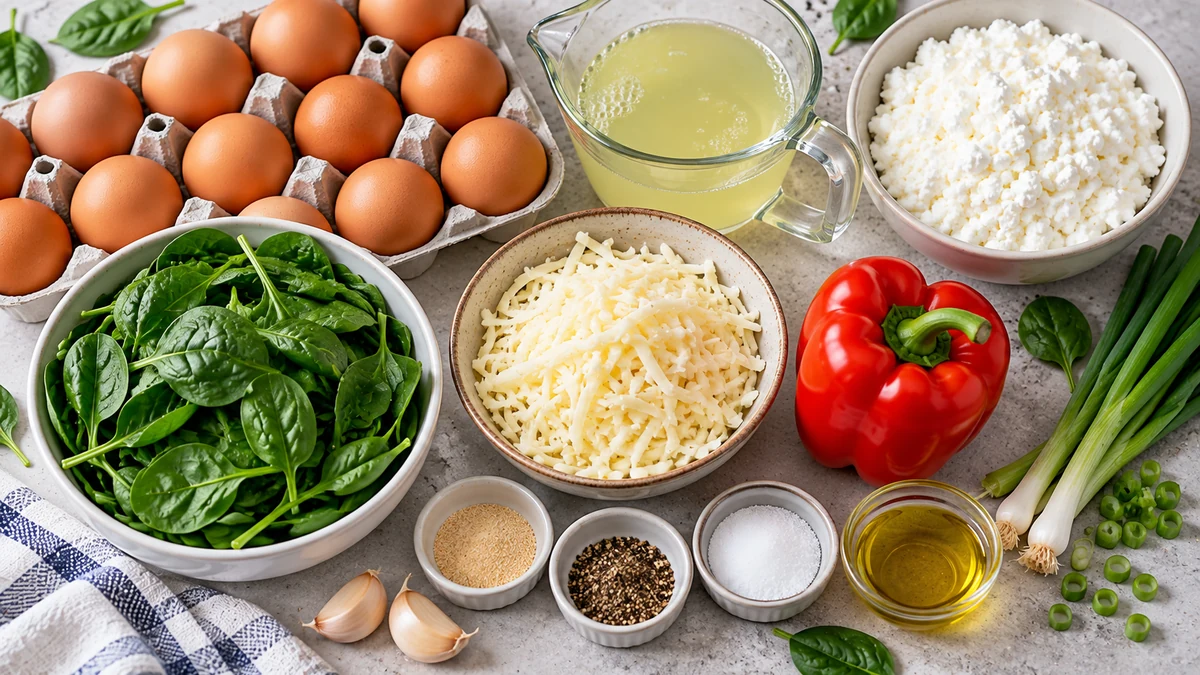
Ingredients You’ll Need
Eggs and Liquid Egg Whites
Use 12 large eggs plus 1 cup of liquid egg whites. Whole eggs give the bake flavor, color, and a tender custard-like texture, while the egg whites raise the protein without making the finished casserole excessively rich. Whisk or blend them thoroughly with the cottage cheese so the base is evenly combined before the vegetables are added.
Low-Fat Cottage Cheese
Two cups of low-fat cottage cheese are the key to the creamy interior. Blending the cottage cheese with the eggs breaks down most of the curds and distributes the dairy throughout the casserole. A 2% cottage cheese works especially well because it has enough fat for a soft texture without making the pan greasy. Small-curd or large-curd both work once blended.
Mozzarella
Part-skim shredded mozzarella melts evenly and has a mild flavor that does not overpower the eggs or vegetables. Mix most of it into the egg base and reserve a small handful for the top. If you prefer sharper flavor, you can replace part of the mozzarella with cheddar, but that substitution will change the nutrition estimate.
Spinach, Red Bell Pepper, and Scallions
Spinach adds color and cooks down quickly. Red bell pepper gives the bake a slightly sweet bite and helps each square look more substantial. Scallions add a mild onion flavor without making the casserole heavy. The vegetables are briefly sautéed before baking so they release some of their water in the skillet instead of inside the egg mixture.
Seasonings
Garlic powder, onion powder, black pepper, and a modest amount of salt keep the flavor simple. Cottage cheese and mozzarella already contain sodium, so it is better to season conservatively before baking and add more at the table if needed. A pinch of red pepper flakes is optional if you want mild heat.
A fluffy vegetarian breakfast casserole made with eggs, egg whites, low-fat cottage cheese, spinach, red bell pepper, scallions, and mozzarella. One of eight servings provides approximately 24 grams of protein.
Total Time:55 minutes
Yield:8 servings
Ingredients
Scale
Nonstick cooking spray
1 large red bell pepper, diced
2 cups fresh baby spinach, roughly chopped
1/2 cup sliced scallions
12 large eggs
1 cup liquid egg whites
2 cups low-fat cottage cheese (2%)
1 teaspoon garlic powder
1/2 teaspoon onion powder
1/2 teaspoon fine salt
1/2 teaspoon black pepper
1 1/2 cups shredded part-skim mozzarella, divided
Optional: pinch of red pepper flakes or hot sauce for serving
Instructions
Preheat the oven to 375°F. Lightly coat a 9×13-inch baking dish with nonstick cooking spray.
Heat a large nonstick skillet over medium heat and lightly coat with cooking spray. Add the red bell pepper and cook for 3 minutes. Add the spinach and scallions and cook for 1 to 2 minutes, until the spinach is wilted and excess moisture has evaporated. Remove from the heat and cool for a few minutes.
Add the eggs, liquid egg whites, cottage cheese, garlic powder, onion powder, salt, and black pepper to a blender. Blend for 20 to 30 seconds, just until smooth and evenly combined.
Pour the egg mixture into a large bowl. Stir in the cooked vegetables and 1 cup of the mozzarella. Pour into the prepared baking dish and spread the vegetables evenly. Sprinkle the remaining 1/2 cup mozzarella over the top.
Bake for 32 to 38 minutes, until the edges are lightly golden, the center no longer looks wet, and the egg mixture reaches 160°F in the center.
Let the egg bake stand for about 10 minutes before slicing. Cut into 8 equal servings and serve warm.
Notes
The nutrition estimate is based on 12 large eggs, 1 cup liquid egg whites, 2 cups 2% cottage cheese, 1 1/2 cups part-skim mozzarella, the listed vegetables, and eight equal servings.
Cook moist vegetables before adding them to the egg base so the casserole does not become watery.
USDA guidance says casseroles and other dishes containing eggs should reach 160°F in the center.
Refrigerate cooked egg dishes promptly and use within 3 to 4 days. Reheat leftovers to 165°F.
Optional toppings and substitutions are not included in the nutrition estimate.
If gluten matters, choose packaged cottage cheese, liquid egg whites, shredded cheese, seasonings, and cooking spray that are labeled gluten free when appropriate and avoid cross-contact.
Author:Adam Moretti
Prep Time:15 minutes
Cook Time:40 minutes
Category:Breakfast
Method:Baked
Cuisine:American
Diet:Gluten Free
How to Make High Protein Cottage Cheese Egg Bake
1. Prepare the Pan and Oven
Heat the oven to 375°F. Lightly coat a 9×13-inch baking dish with nonstick cooking spray. A ceramic, glass, or metal pan can work, but baking time may vary slightly. Set the prepared dish aside while you cook the vegetables and blend the egg base.
2. Cook the Vegetables First
Place a large nonstick skillet over medium heat and lightly coat it with cooking spray. Add the diced red bell pepper and cook for about 3 minutes. Add the chopped spinach and scallions and cook for another 1 to 2 minutes, just until the spinach wilts and any obvious moisture has evaporated. Remove the skillet from the heat and let the vegetables cool for a few minutes.
3. Blend the Egg and Cottage Cheese Base
Add the eggs, liquid egg whites, cottage cheese, garlic powder, onion powder, salt, and black pepper to a blender. Blend for 20 to 30 seconds, just until the mixture looks smooth and evenly pale yellow. Avoid blending for several minutes; you only need to break up the cottage cheese and combine the ingredients.
4. Combine and Fill the Baking Dish
Pour the blended egg mixture into a large bowl. Stir in the cooked vegetables and 1 cup of the shredded mozzarella. Pour everything into the prepared baking dish and spread the vegetables evenly with a spoon so one side of the casserole does not end up heavier than the other. Sprinkle the remaining 1/2 cup mozzarella over the top.
5. Bake Until the Center Is Set
Bake for 32 to 38 minutes, or until the edges are lightly golden, the center no longer looks wet, and the egg mixture reaches 160°F in the center. If the top is browning faster than the middle is setting, loosely cover the pan with foil for the final few minutes. Let the egg bake stand for about 10 minutes before slicing so the structure can settle.
How to Know When the Egg Bake Is Done
Visual cues help, but they should not be the only test. The edges should look set and slightly puffed, the center should no longer ripple like liquid when the pan is gently moved, and a thin knife inserted near the middle should come out without raw egg mixture. The most reliable check is temperature: USDA guidance says casseroles and other dishes containing eggs should reach 160°F in the center.
Do not intentionally overbake the casserole just to make the surface very brown. Eggs continue to firm as the pan rests, and too much oven time can turn the edges rubbery while the center loses its creamy texture.
How to Prevent a Watery Cottage Cheese Egg Bake
Cook Moist Vegetables Before Baking
Spinach, mushrooms, zucchini, and peppers all contain water. Raw vegetables can release that moisture while the eggs are setting, leaving a puddle at the bottom or a soft layer around the vegetables. For this recipe, sauté the spinach and pepper until the spinach is wilted and the skillet looks mostly dry before they go into the egg mixture.
Use Cottage Cheese as Written
Low-fat cottage cheese gives the casserole a creamy texture without adding a large amount of free liquid. If your cottage cheese looks unusually watery in the container, stir it first and spoon it into the measuring cup rather than pouring in liquid from the bottom. Avoid replacing it with an equal volume of milk because that changes the egg-to-liquid ratio.
Rest Before Slicing
The egg bake is softer immediately after it comes from the oven. A short rest lets the steam settle and the proteins finish setting, which makes cleaner squares. Ten minutes is usually enough. If you are meal prepping, let the pan cool further before sealing individual portions so condensation does not collect inside the storage containers.
Variations and Substitutions
Broccoli Cheddar
Replace the spinach and red pepper with 2 cups of finely chopped broccoli that has been steamed or sautéed until just tender. Use cheddar in place of half or all of the mozzarella for a stronger flavor. Because cheddar and mozzarella have different nutrition profiles, the protein, fat, and sodium will change.
Mushroom and Spinach
Use 8 ounces of sliced mushrooms with the spinach. Cook the mushrooms until their released liquid has evaporated before combining them with the eggs. This variation stays vegetarian and has a deeper savory flavor, but it takes a few extra minutes on the stovetop.
Add More Heat
Stir in a diced jalapeño with the bell pepper or add a pinch of red pepper flakes to the blender. You can also serve salsa or hot sauce on the side. Keeping spicy toppings separate is useful when the same pan is serving people with different heat preferences.
Use a Different Cheese
Cheddar, Monterey Jack, pepper Jack, or a small amount of feta can replace part of the mozzarella. Stronger cheeses usually need less volume to make an impact. Keep the total cheese amount similar if you want the texture to remain close to the tested version.
Meal Prep, Storage, and Reheating
This high protein cottage cheese egg bake is especially useful for meal prep because it can be sliced into eight squares after cooling. Store the portions in airtight containers in the refrigerator. USDA guidance for cooked egg dishes is to refrigerate promptly and use them within 3 to 4 days. The same guidance recommends reheating leftovers to 165°F. You can review the details in the USDA shell egg safety guide.
For the microwave, place one square on a microwave-safe plate and heat in short intervals until hot throughout. For a firmer edge, use a toaster oven or conventional oven at a moderate temperature. If the portion looks dry, cover it loosely while reheating. The casserole can also be eaten at room temperature for a short period, but do not leave cooked egg dishes unrefrigerated for extended periods.
Can You Freeze Cottage Cheese Egg Bake?
Yes. Once the casserole is fully baked and cooled, cut it into individual squares and wrap or containerize them well before freezing. The texture may become slightly softer after thawing because eggs and vegetables release a little moisture, but the portions still reheat well for meal prep. For best quality, thaw overnight in the refrigerator and then reheat until hot throughout.
If you know you plan to freeze the batch, cook the vegetables until the skillet is fairly dry and avoid adding extra high-moisture ingredients. Tomatoes, zucchini, and frozen spinach can all contribute more water unless they are drained or cooked first.
What to Serve With It
A square of this egg bake can be a complete breakfast on its own, but it also works with fresh fruit, roasted potatoes, whole-grain toast, avocado, or a simple side salad. If you prefer smaller portions for grab-and-go mornings, compare this casserole with our air fryer egg bites. For a larger brunch-style egg dish, our high protein quiche uses a similar cottage-cheese base in a different format.
FAQs about High Protein Cottage Cheese Egg Bake
Do you have to blend cottage cheese for an egg bake?
No, but blending gives the casserole a smoother and more uniform texture. If you stir cottage cheese in by hand, small curds will remain visible in the finished bake. That is not a problem if you like the texture, but the blended version feels more like a classic egg casserole.
Can I use only whole eggs and skip the egg whites?
Yes. Replace the cup of liquid egg whites with additional whole eggs, but the result will be richer and the nutrition estimate will change. The combination of whole eggs and egg whites is used here to raise the protein while keeping the texture light.
Can I use frozen spinach?
Yes, but thaw it completely and squeeze out as much water as possible before adding it. Frozen spinach holds much more water than fresh spinach. If it goes into the casserole wet, the egg bake can become watery around the spinach pockets.
Why did my egg bake puff up and then sink?
That is normal. Air and steam expand while the eggs bake, so the casserole can rise above the edge line in the oven. As it cools, the steam escapes and the egg proteins settle, causing the center to come down slightly. A modest amount of sinking does not mean the recipe failed.
Can I assemble it the night before?
You can cook the vegetables ahead and refrigerate them separately, then blend and assemble the casserole in the morning. For food safety, USDA advises cooking dishes containing raw eggs immediately or refrigerating and cooking within 24 hours. If assembling ahead, keep the mixture covered and cold until it goes into the oven.
Is this cottage cheese egg bake gluten free?
The core ingredients are naturally free of wheat flour, but packaged cottage cheese, shredded cheese, liquid egg whites, seasonings, and cooking spray can vary by brand. If gluten is medically important, use products labeled gluten free when appropriate and avoid cross-contact with shared utensils or surfaces.
Final Tips
For the best high protein cottage cheese egg bake, cook the vegetables before they meet the eggs, blend the cottage cheese into the base, and stop baking when the center is set rather than waiting for a deeply browned top. Those three details keep the casserole fluffy instead of watery or rubbery.
Keep the ingredient amounts and eight-serving yield unchanged if you rely on the nutrition estimate below. If you switch cheeses, add meat, or increase the serving size, recalculate the nutrition for the version you actually prepare.
Reviewed recipe options
Make this recipe fit me
Choose one of seven popular diet options. NutriMatch will confirm whether the recipe already fits, show a reviewed adaptation when available, or recommend recipes that match your choice.
Please choose a diet first.
Reviewed Dairy-Free adaptation
Dairy-Free High Protein Cottage Cheese Egg Bake (24g Protein)
Use the substitutions below to prepare a Dairy-Free version while keeping the rest of the recipe as close as possible to the original.
Use a thick dairy-free cottage-cheese alternative in the same measured amount; drain excess liquid if the product is looser than dairy cottage cheese.
Use meltable dairy-free mozzarella-style shreds in the same measured amount; melting behavior can vary by brand.
Check: Check packaged substitutes for milk ingredients and the cross-contact information you need.
Use these reviewed changes with the original ingredient quantities and instructions above. The original recipe card stays unchanged.
Recipe details, product formulas, and cross-contact information can change. Confirm current labels and use professional guidance when medically necessary.
Already a reviewed match
This recipe already fits Gluten-Free.
No changes are needed based on its reviewed NutriMatch classification. Check the complete ingredients, product labels, and serving details for your own needs.
Recipe details, product formulas, and cross-contact information can change. Confirm current labels and use professional guidance when medically necessary.
Already a reviewed match
This recipe already fits High Protein.
No changes are needed based on its reviewed NutriMatch classification. Check the complete ingredients, product labels, and serving details for your own needs.
Recipe details, product formulas, and cross-contact information can change. Confirm current labels and use professional guidance when medically necessary.
Not available for this recipe
This recipe cannot currently be made Keto with a reviewed adaptation.
NutriMatch will not guess at substitutions. Try one of these recipes that is already reviewed for your choice.
Recipe details, product formulas, and cross-contact information can change. Confirm current labels and use professional guidance when medically necessary.
Not available for this recipe
This recipe cannot currently be made Low Carb with a reviewed adaptation.
NutriMatch will not guess at substitutions. Try one of these recipes that is already reviewed for your choice.
Recipe details, product formulas, and cross-contact information can change. Confirm current labels and use professional guidance when medically necessary.
Not available for this recipe
This recipe cannot currently be made Vegan with a reviewed adaptation.
NutriMatch will not guess at substitutions. Try one of these recipes that is already reviewed for your choice.
Recipe details, product formulas, and cross-contact information can change. Confirm current labels and use professional guidance when medically necessary.
Already a reviewed match
This recipe already fits Vegetarian.
No changes are needed based on its reviewed NutriMatch classification. Check the complete ingredients, product labels, and serving details for your own needs.
Recipe details, product formulas, and cross-contact information can change. Confirm current labels and use professional guidance when medically necessary.