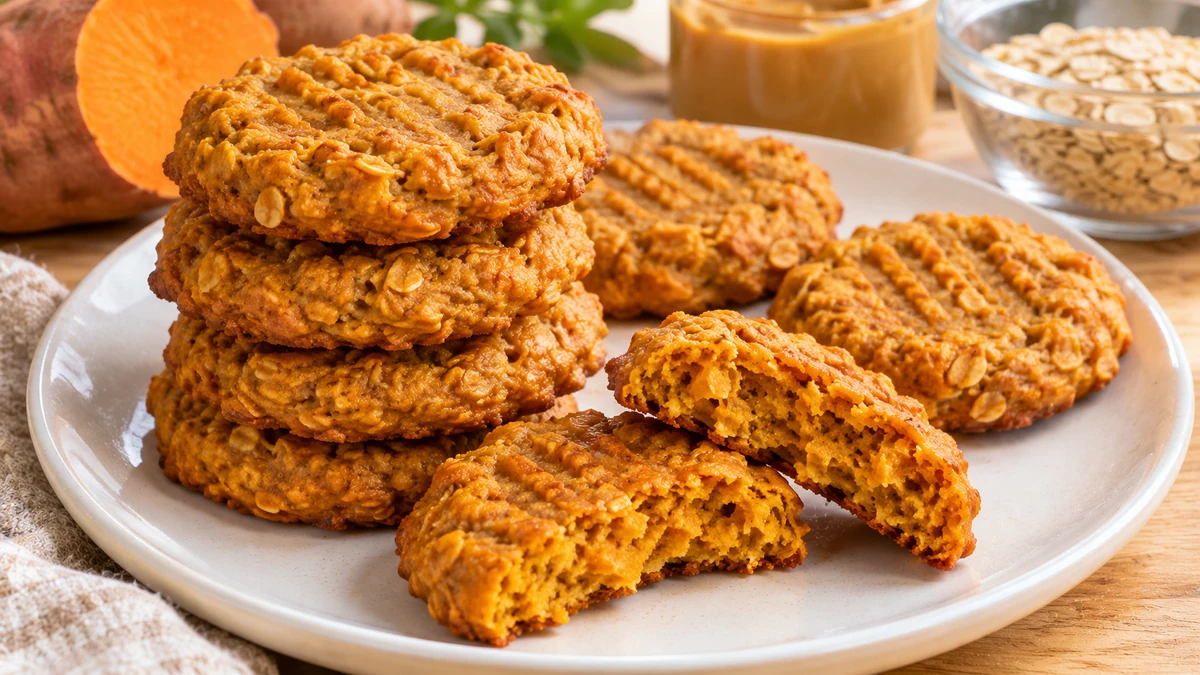
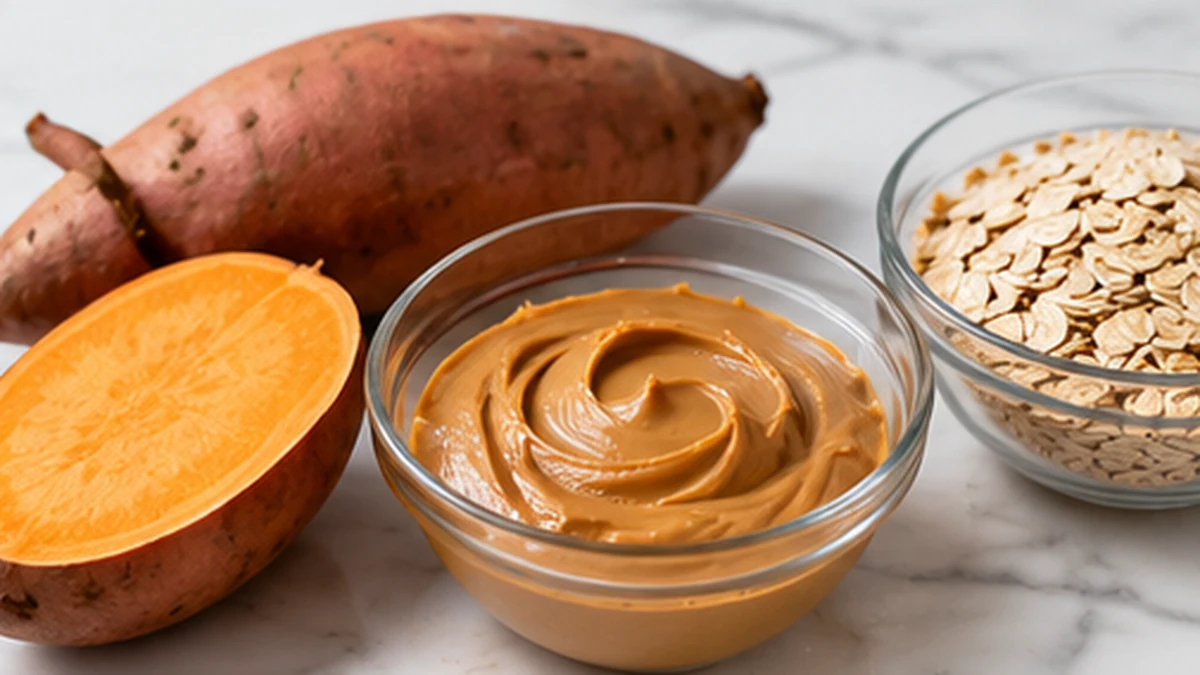
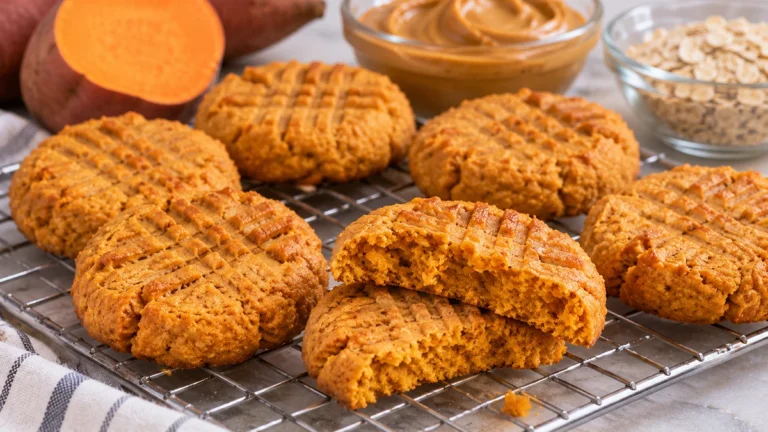
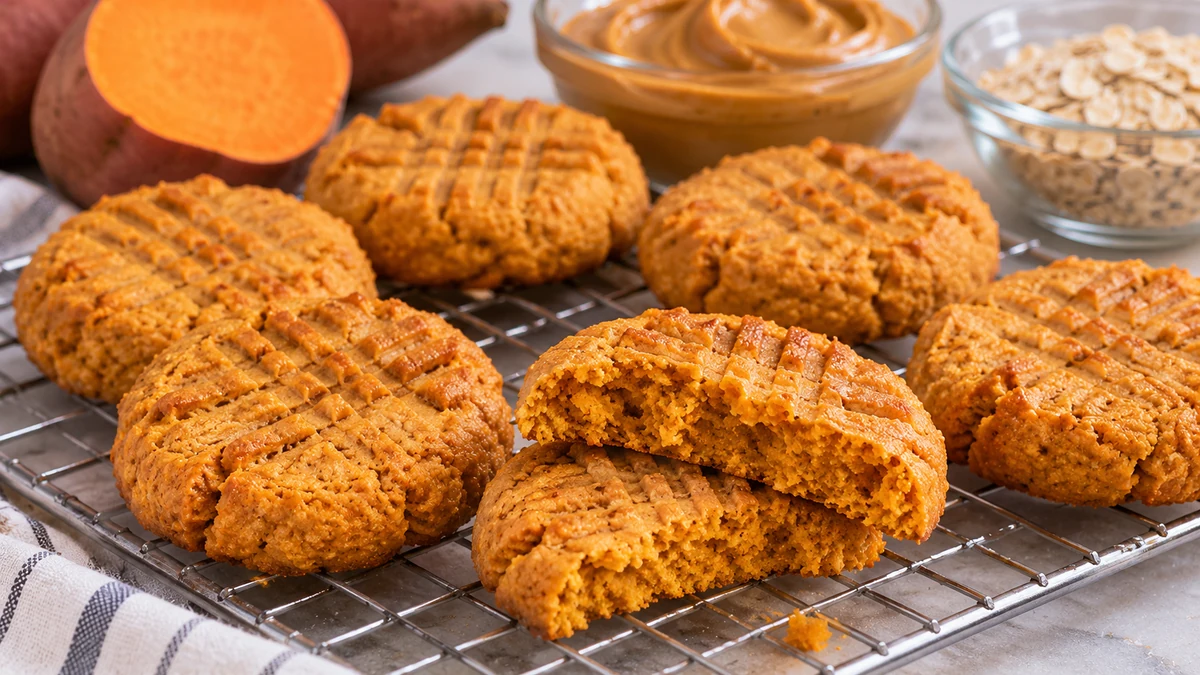
Sweet potato peanut butter cookies need only three ingredients: mashed cooked sweet potato, creamy peanut butter, and quick oats. These soft, lightly sweet cookies come together in one bowl, need no eggs or wheat flour, and hold their shape without baking powder. Expect a tender, chewy oat cookie rather than the crisp snap of a traditional butter cookie.
The proportions matter. Using 1 cup (240 g) mashed sweet potato, 1/2 cup (128 g) peanut butter, and 1 1/4 cups (112 g) quick oats makes enough dough for 14 small cookies. Press the portions into discs before baking, because this dough does not spread much. The result is best for a mellow snack or a lightly sweet dessert, not a substitute for a frosted bakery cookie.
Table of Contents
Why These Sweet Potato Peanut Butter Cookies Work
Cooked sweet potato provides moisture and helps the dough bind without eggs.
Peanut butter contributes rich flavor and fat, which softens the dense oat mixture.
Quick oats absorb excess moisture and give the cookies a recognizable chewy texture.
A short rest makes scooping easier and reduces the chance of a wet center.
Shaping before baking gives consistent thickness because the dough barely spreads.
There are exactly three ingredients in the base recipe—no hidden salt, sweetener, or baking powder.
Because sweet potato peanut butter cookies contain no granulated sugar, its edges brown less dramatically than a conventional cookie. The center will stay somewhat soft even when properly baked. That is the expected texture. For a richer, sweeter treat that uses different ingredients, our vegan cookie recipes guide has other ways to build egg-free cookies.
Sweet Potato Peanut Butter Cookies Ingredients
1. Mashed Cooked Sweet Potato
Measure 1 cup (240 g) of smooth orange-fleshed sweet potato after cooking and removing the skin. Roast or microwave the potato until very tender, then mash it thoroughly and let it cool. Roasting produces a relatively concentrated mash. If you boil the potato, drain it well and let steam escape before measuring, since extra water can make this dough sticky and soft.
2. Creamy Peanut Butter
Use 1/2 cup (128 g) of well-stirred creamy peanut butter. The nutrition estimate assumes a natural, unsalted product with no added sugar. A shelf-stable creamy variety will also make cookies, but added sugar and salt change the flavor and nutrition. If you choose natural peanut butter, stir the settled oil fully into the solids before measuring; otherwise the dough may turn oily or dry from one batch to another.
3. Gluten-Free Quick Oats
Measure 1 1/4 cups (112 g) of quick-cooking oats. Their smaller flakes hydrate faster than thick old-fashioned oats, giving the cookie a less crumbly bite. Choose a product specifically labeled gluten free when making the recipe for someone who must avoid gluten; oats can encounter wheat, barley, or rye during growing or processing. See the FDA guidance on gluten-free labeling for the labeling standard.
What Do These Cookies Taste Like?
Sweet potato peanut butter cookies taste like mild roasted sweet potato with a noticeable peanut butter finish and an oat-forward chew. They are subtly sweet from the sweet potato rather than dessert-shop sweet. The outside becomes a little firmer than the center after cooling, but it will not turn crisp like a classic fork-mark peanut butter cookie. If you are serving guests who expect a sugary cookie, describe them as soft breakfast-style cookies or oat snack bites.
Soft, lightly sweet gluten-free sweet potato peanut butter oatmeal cookies made with three ingredients. The dough is egg-free, dairy-free and needs only one bowl.
Total Time:42 minutes
Yield:14 cookies (14 servings)
Ingredients
Scale
1 cup (240 g) cooked mashed orange sweet potato, cooled (plain, without added sugar)
1/2 cup (128 g) creamy natural peanut butter, well stirred (unsweetened and unsalted for the nutrition estimate)
Have 1 cup (240 g) of cooked, cooled, smooth sweet potato mash ready. If starting with a raw sweet potato, roast at 400°F until fully tender, then cool, peel and mash before beginning the timed recipe.
Preheat the oven to 350°F (175°C). Line a large baking sheet with parchment paper.
In a mixing bowl, stir the sweet potato mash and peanut butter until smooth and evenly combined.
Fold in the quick oats until the mixture is uniform, then let the dough stand for 5 minutes so the oats can absorb moisture.
Divide the dough into 14 portions (roughly 34 g each). Place on the baking sheet and press each into a disc about 1/2 inch thick. Add a shallow fork crosshatch if desired.
Bake for 13 to 17 minutes, approximately 15 minutes, until the tops look matte and the edges are set. The centers will still be soft.
Cool on the baking sheet for 10 minutes before carefully transferring with a spatula. Serve once cool enough to hold together.
Notes
The 42-minute total assumes cooked sweet potato mash is ready. Roasting a raw whole sweet potato beforehand may add 45 to 60 minutes or more.
No added sugar is in the base ingredients. These cookies taste lightly sweet and have a tender, chewy texture—not a crisp, sugary-cookie texture.
Use gluten-free-labeled oats when gluten cross-contact matters. The recipe contains peanuts and is not peanut-free.
If the dough remains wet after resting, add quick oats one tablespoon at a time; if crumbly, add a tablespoon of cooked mash. Additional ingredients change per-cookie nutrition slightly.
Refrigerate cooled cookies in a covered container for 3 to 4 days or freeze for best quality up to 2 months.
Nutrition is estimated for 14 equal cookies from 240 g cooked sweet potato, 128 g unsweetened unsalted peanut butter, and 112 g quick oats. Labels and brands vary. Optional add-ins are excluded.
Author:Adam Moretti
Prep Time:12 minutes
Rest and cool:15 minutes
Cook Time:15 minutes
Category:Cookie
Method:Baking
Cuisine:American
Diet:Gluten-Free, Vegan
How to Make Sweet Potato Peanut Butter Cookies
Step 1: Prepare the Sweet Potato
If the sweet potato is not already cooked, pierce a medium-large orange sweet potato with a fork and bake at 400°F until a knife slides into the thickest part easily, often 45 to 60 minutes depending on size. Alternatively, microwave according to your appliance instructions until fully tender. Let it cool enough to handle, remove the skin, mash until smooth, then weigh or measure 1 cup. The 42-minute recipe time begins once this mash is ready.
Step 2: Preheat and Line the Pan
Heat the oven to 350°F (175°C). Line a large baking sheet with parchment paper. The parchment helps lift the soft cookies without tearing the bottoms, and a light-colored sheet reduces the chance that their edges overbrown before the centers set. Arrange an oven rack in the center so the heat is reasonably even.
Step 3: Mix the Sweet Potato and Peanut Butter
Place the cooled mash in a large mixing bowl and stir in the measured peanut butter until the mixture looks smooth and evenly colored. Scrape the sides and bottom so no pockets of straight peanut butter remain. Mixing these two ingredients first spreads the fat through the mash and makes the oats easier to distribute evenly.
Step 4: Add the Oats and Rest
Fold in all the quick oats until every flake is moistened. The dough should look thick, soft, and slightly tacky, not runny. Leave it for 5 minutes so the oats absorb some moisture. This pause is especially important if your sweet potato was microwaved or boiled rather than roasted. The dough should hold a mound when scooped.
Step 5: Portion and Flatten
Divide the mixture into 14 portions, roughly 34 g or about 2 packed tablespoons each. Place them on the sheet about 1 inch apart. Flatten each mound to a disc about 1/2 inch thick using the bottom of a measuring cup or lightly damp fingers. Add a shallow crisscross with a fork if you like; these marks are decorative, not essential to baking.
Step 6: Bake and Cool
Bake for 13 to 17 minutes, aiming for about 15 minutes in most ovens, until the surfaces look matte and the edges feel set when touched lightly. The middle should still be tender, not wet and shiny. Let the cookies rest on the pan for 10 minutes before moving them to a rack. They firm up as they cool, so lifting them too soon can make them break.
How to Tell When Sweet Potato Peanut Butter Cookies Are Done
Look for a dry-looking top, a bottom that can lift away from the parchment without smearing, and edges that hold together. Because sweet potato adds orange color before baking, color alone is not a reliable doneness cue. A warm center will feel softer than a wheat-flour cookie and that is normal. If a cookie leaves obviously wet mash on a knife after cooling for a minute, bake the remainder for another 2 minutes and reassess.
Troubleshooting Sweet Potato Peanut Butter Cookies
The Dough Is Too Wet to Scoop
Sweet potato peanut butter cookies can be too wet when the mash contains more water than expected, particularly after boiling or when using a loose canned puree. Wait the full five-minute rest before making changes. If it still spreads on the spoon, add 1 tablespoon quick oats at a time and allow a minute for each addition to hydrate. The added oats remain one of the same three ingredients, but will slightly change the yield and nutrition.
The Dough Crumbles When Flattened
The mash may be too dry or the oats may be too coarse. Let the mixture stand for another five minutes and press a small amount together between your fingers. If it will not bind, stir in 1 tablespoon of extra sweet potato mash; if necessary, repeat once. Avoid pouring in water, because it makes this delicate style of cookie more gummy and less flavorful.
The Cookies Are Gummy in the Middle
Gummy sweet potato peanut butter cookies can result from thick portions, very wet mash, or removing the pan early. Shape discs no thicker than half an inch, and let the tops become matte before removing them from the oven. A longer bake can help, but it cannot fully correct a batter made with an excessively watery puree. If the batch stays soft, chill it after cooling and serve it as a tender oat bite rather than calling it crisp.
The Cookies Fall Apart When Lifted
Do not move them immediately from the oven. Ten minutes on the hot baking sheet allows the oat-and-peanut mixture to settle. Use a thin spatula, sliding it completely under each cookie, and finish cooling on a rack. If they still break after cooling, review the amount of oats and whether the peanut butter was evenly mixed. Oversized cookies are also harder to move intact.
Variations and Smart Substitutions
Chocolate Chip Sweet Potato Cookies
Fold in 1/4 cup mini chocolate chips after mixing the three core ingredients. Choose chips that match your dairy-free requirements and check labels when gluten matters. This version has four ingredients and more sugar and calories than the base. Press the dough just as thinly and watch for the same matte tops and set edges.
Cinnamon and Vanilla
For a dessert-like aroma, add 1/2 teaspoon cinnamon and 1/2 teaspoon vanilla extract. These are optional additions, not part of the three-ingredient recipe. Cinnamon can make the sweet potato taste sweeter without actually adding much sugar, but the cookie remains lightly sweet unless a sweetener is added.
Using Almond or Sunflower Seed Butter
You can try well-stirred almond butter or sunflower seed butter in the same measured amount. However, each product has a different fat and moisture balance, so treat this as a variation and check consistency after the five-minute rest. An almond version contains tree nuts; a sunflower version still requires allergen-label checks. Recalculate nutrition for whichever product you use.
Gluten-Free, Vegan, and Peanut Allergy Notes
Sweet potato peanut butter cookies can be vegan, dairy-free, and gluten free, but the labels and kitchen environment matter. The peanut butter should contain no honey or dairy additions if vegan is important. For gluten-free cooking, use oats labeled gluten free and check the peanut butter label; also clean the bowl, utensils, baking sheet, and cooling rack to limit cross-contact. The NIDDK guidance on celiac disease and oats explains why gluten-free oats still need careful consideration. For more everyday meal ideas and label-reading advice, see our gluten-free recipes guide.
This recipe contains peanuts. It is not suitable for someone with a peanut allergy, and a different butter should not be presented as automatically allergy-safe without reviewing manufacturing and cross-contact information. For additional desserts built with gluten and dairy restrictions in mind, browse our gluten and dairy free desserts collection.
How to Store Sweet Potato Peanut Butter Cookies
Refrigerate the Cookies
Because sweet potato peanut butter cookies contain a substantial amount of moist cooked sweet potato, cool them promptly and store them in a covered container in the refrigerator. Use within 3 to 4 days for a conservative leftovers window. Put parchment between layers if they stick. The USDA leftovers guidance recommends prompt refrigeration at 40°F or below and avoiding long periods at room temperature.
Freeze Individual Portions
To freeze sweet potato peanut butter cookies, arrange completely cooled cookies on a lined tray until firm, then transfer them to a freezer bag or container. For best texture, use within roughly 2 months. Thaw in the refrigerator or briefly warm an individual cookie. They may feel softer after thawing because the sweet potato holds moisture, but that is a texture change, not a reason to bake them until hard.
Sweet Potato Peanut Butter Cookies FAQs
Can I use canned sweet potato puree?
Yes, if it is plain, unsweetened puree with a thick consistency. Do not use sweet potato pie filling, which can contain sugar, spices, or other ingredients. Weigh 240 g if possible, let watery puree drain briefly, and allow the dough to rest before adding any extra oats. The goal is a scoopable mixture, not a pourable batter.
Can I replace the peanut butter with powdered peanut butter?
Not as a direct one-for-one swap. Powdered peanut butter has much less fat and is usually reconstituted with liquid, so the cookie will be drier and may crumble. If you need to avoid regular peanut butter, use a separate recipe designed for powdered peanut butter rather than assuming it behaves like the creamy spread.
Can I make these cookies without oats?
Not reliably using the same measurements. Oats absorb moisture and create most of the structure. Almond flour, coconut flour, and regular all-purpose flour differ in absorption and baking behavior. Replacing them changes the cookie substantially and would require a new ratio; it would also affect whether the cookie is gluten free.
Why did my cookies not spread?
They are not supposed to spread much. There is no creamed butter-and-sugar mixture or baking powder to expand the dough. Flatten each scoop to about half an inch before baking. Sweet potato peanut butter cookies should look nearly the same size and shape when they come out of the oven as when they went in.
Are these a high-protein cookie?
Sweet potato peanut butter cookies provide an estimated 4 g protein per small cookie, mostly from peanut butter and oats. That can be useful as part of a snack, but it is not comparable to a formulated high-protein cookie. Serving two cookies doubles the estimated portion to around 8 g protein and 200 calories. Actual values vary by peanut butter brand and cookie size. For a different formula that targets more protein, visit our vegan protein cookies without protein powder.
Final Tips for Reliable Results
For the best sweet potato peanut butter cookies, measure the cooked mash rather than a raw potato, stir the peanut butter well, use quick oats, and allow the dough to rest before shaping. Keep the cookies small and flat so the centers finish baking, then give them the full cooling period before lifting. That combination is more important than trying to force extra browning in the oven.
Sweet potato peanut butter cookies are most useful when you want a soft, lightly sweet oat snack from ingredients you may already have. Treat chocolate, cinnamon, and extra syrup as clearly labeled variations, and remember that any substitutions change the nutrition. The base recipe below is calculated for fourteen cookies, one cookie per serving.
Reviewed recipe options
Make this recipe fit me
Choose one of seven popular diet options. NutriMatch will confirm whether the recipe already fits, show a reviewed adaptation when available, or recommend recipes that match your choice.
Please choose a diet first.
Already a reviewed match
This recipe already fits Dairy-Free.
No changes are needed based on its reviewed NutriMatch classification. Check the complete ingredients, product labels, and serving details for your own needs.
Recipe details, product formulas, and cross-contact information can change. Confirm current labels and use professional guidance when medically necessary.
Already a reviewed match
This recipe already fits Gluten-Free.
No changes are needed based on its reviewed NutriMatch classification. Check the complete ingredients, product labels, and serving details for your own needs.
Recipe details, product formulas, and cross-contact information can change. Confirm current labels and use professional guidance when medically necessary.
Not available for this recipe
This recipe cannot currently be made High Protein with a reviewed adaptation.
NutriMatch will not guess at substitutions. Try one of these recipes that is already reviewed for your choice.
Recipe details, product formulas, and cross-contact information can change. Confirm current labels and use professional guidance when medically necessary.
Not available for this recipe
This recipe cannot currently be made Keto with a reviewed adaptation.
NutriMatch will not guess at substitutions. Try one of these recipes that is already reviewed for your choice.
Recipe details, product formulas, and cross-contact information can change. Confirm current labels and use professional guidance when medically necessary.
Not available for this recipe
This recipe cannot currently be made Low Carb with a reviewed adaptation.
NutriMatch will not guess at substitutions. Try one of these recipes that is already reviewed for your choice.
Recipe details, product formulas, and cross-contact information can change. Confirm current labels and use professional guidance when medically necessary.
Already a reviewed match
This recipe already fits Vegan.
No changes are needed based on its reviewed NutriMatch classification. Check the complete ingredients, product labels, and serving details for your own needs.
Recipe details, product formulas, and cross-contact information can change. Confirm current labels and use professional guidance when medically necessary.
Already a reviewed match
This recipe already fits Vegetarian.
No changes are needed based on its reviewed NutriMatch classification. Check the complete ingredients, product labels, and serving details for your own needs.
Recipe details, product formulas, and cross-contact information can change. Confirm current labels and use professional guidance when medically necessary.