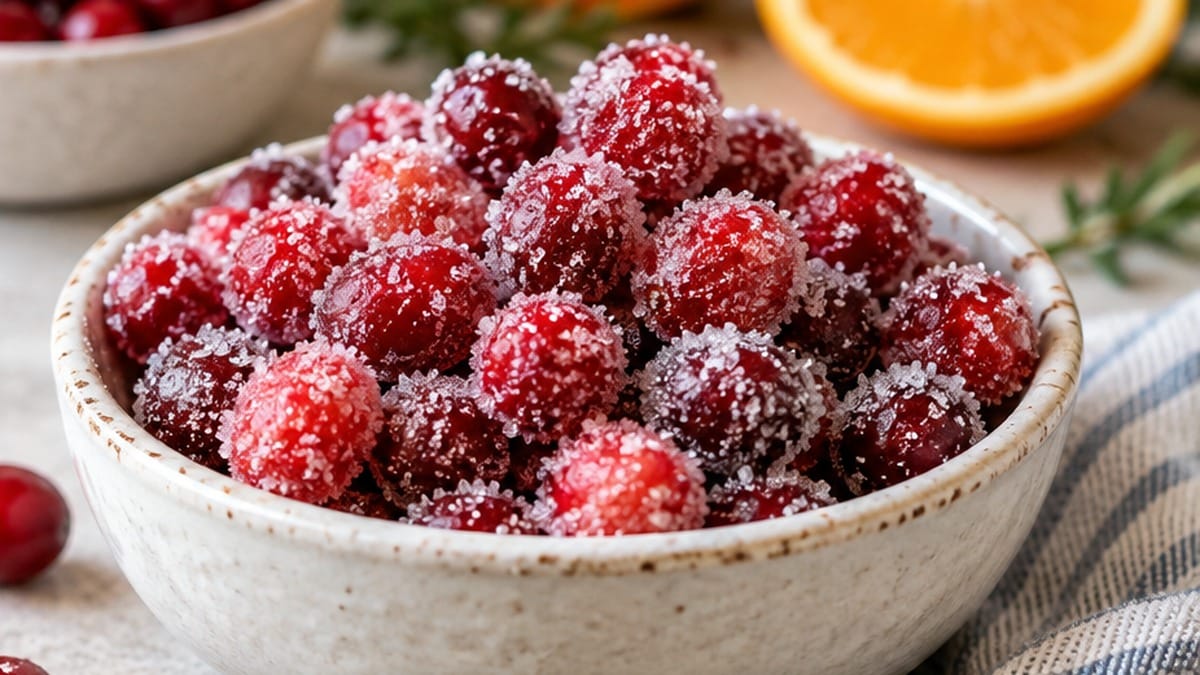
This popping cranberries recipe turns fresh cranberries into sparkling, sweet-tart bites with a crisp sugar shell. The berries soak in a lightly flavored simple syrup, dry until tacky, then get rolled in fine sugar so the coating clings instead of melting into a sticky glaze.
The method is simple, but timing matters. The syrup should be warm rather than boiling when the cranberries go in, the berries need time to drain before coating, and the sugared cranberries need a final drying period before serving. Those three steps are what give you intact berries with a bright ruby center and a frosty finish.
Table of Contents
Why This Popping Cranberries Recipe Works
The cranberries are soaked instead of boiled, which helps them stay whole rather than turning into cranberry sauce.
A warm simple syrup softens the sharp tartness without cooking the berries into a jammy texture.
Letting the soaked cranberries become tacky gives the coating sugar something to grip.
Superfine sugar creates a more even, delicate crust than very coarse crystals.
The recipe can be made ahead for holiday desserts, snack boards, or drink garnishes.
The base recipe uses ordinary pantry ingredients and does not depend on soda, artificial color, or specialty candy equipment.
What Do Popping Cranberries Taste Like?
Popping cranberries are still distinctly cranberry: tart, juicy, and slightly tannic. The sugar shell softens that tartness and adds a crisp first bite. Orange zest and vanilla round out the flavor without making the berries taste like candy syrup.
They are different from dried cranberries, cranberry sauce, or hard candied fruit. The center stays fresh and juicy, while the outside dries into a thin sugar crust. That contrast is the reason these work so well as a small holiday snack or garnish.
Ingredients for This Popping Cranberries Recipe
Fresh cranberries: Choose firm, glossy berries and discard any that are soft, wrinkled, split, or discolored. A standard 12-ounce bag gives about 3 cups.
Organic cane sugar: The recipe uses sugar twice: once for the soaking syrup and again for the outside coating. Using organic cane sugar also keeps the ingredient choice straightforward for a vegan recipe.
Water: Equal parts water and sugar make a simple syrup that is concentrated enough to sweeten the cranberries but still easy to drain away.
Vanilla and orange zest: Both are optional flavor builders. Vanilla softens the sharp edge of the fruit, while a little orange zest adds a fresh citrus note.
For the coating, superfine sugar works especially well. If you only have regular granulated sugar, pulse it briefly in a clean blender or food processor to make the crystals smaller without turning them into powdered sugar.
Equipment That Makes the Recipe Easier
You do not need candy-making equipment for this recipe. A medium saucepan, slotted spoon, wire rack, rimmed baking sheet, parchment paper, shallow bowl, and dry storage container are enough. The wire rack is helpful because it lets syrup drip away from all sides of the cranberries instead of pooling underneath them.
If you do not have a wire rack, line a tray with parchment and move the cranberries to a fresh dry section once the first puddles of syrup have drained. The goal is the same: remove enough surface moisture that the berry feels sticky rather than wet before it touches the coating sugar.
Why Fresh Cranberries Work Best
Fresh cranberries have firm skins and a springy interior, which helps them survive the soak without collapsing. Frozen cranberries can be used for sauces and baking, but thawed berries release much more juice. That extra moisture makes a dry sugar crust difficult to maintain, so this popping cranberries recipe is designed around fresh fruit.
Before you begin, sort through the bag. Remove berries that are mushy, badly split, or shriveled. Rinse the good berries under cool water, drain them well, and blot off obvious surface water. Starting with firm, dry fruit gives you a cleaner syrup and a more consistent coating.
How to Make This Popping Cranberries Recipe
1. Make the simple syrup
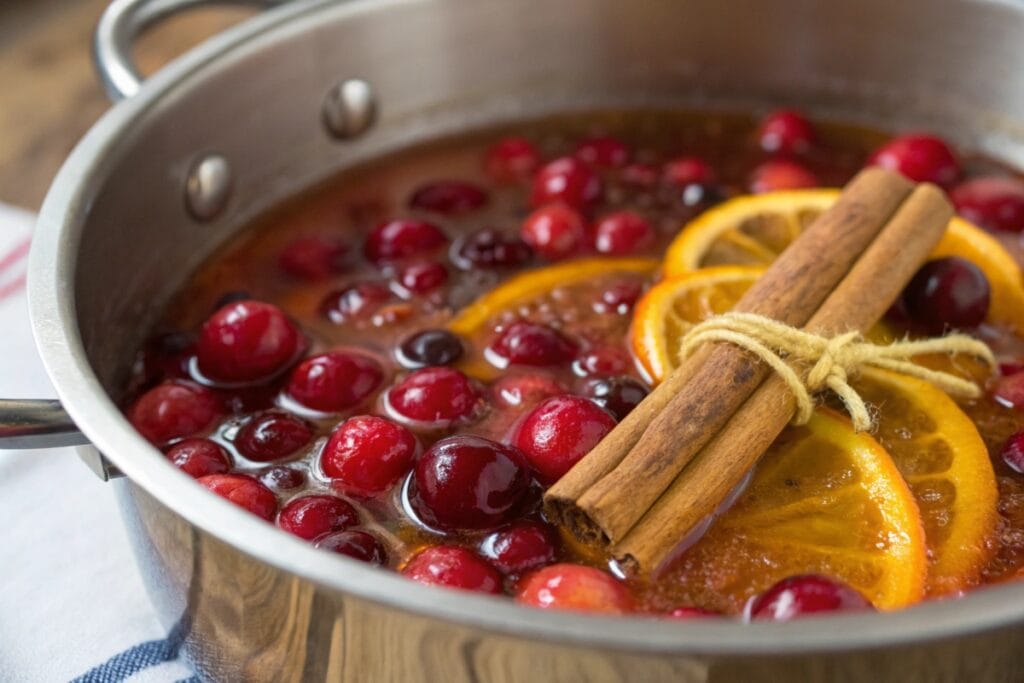
Combine 1 cup organic cane sugar and 1 cup water in a medium saucepan. Warm over medium heat, stirring, until the sugar dissolves and the syrup looks clear. You only need to dissolve the sugar; do not keep boiling the mixture.
2. Flavor and cool the syrup
Remove the pan from the heat. Stir in the vanilla and orange zest if using, then let the syrup cool for 5 to 10 minutes. It should feel warm, not aggressively hot.
3. Soak the cranberries
Add the cranberries to the warm syrup and gently stir so they are coated. Let them soak for about 45 to 60 minutes. A small piece of parchment laid over the top can help keep floating berries in contact with the syrup.
4. Drain until tacky
Use a slotted spoon to move the berries to a wire rack set over a baking sheet or to a parchment-lined tray. Spread them in one layer and let them stand for about 30 minutes. The surface should look shiny and feel tacky, but the berries should not be dripping.
5. Roll in superfine sugar
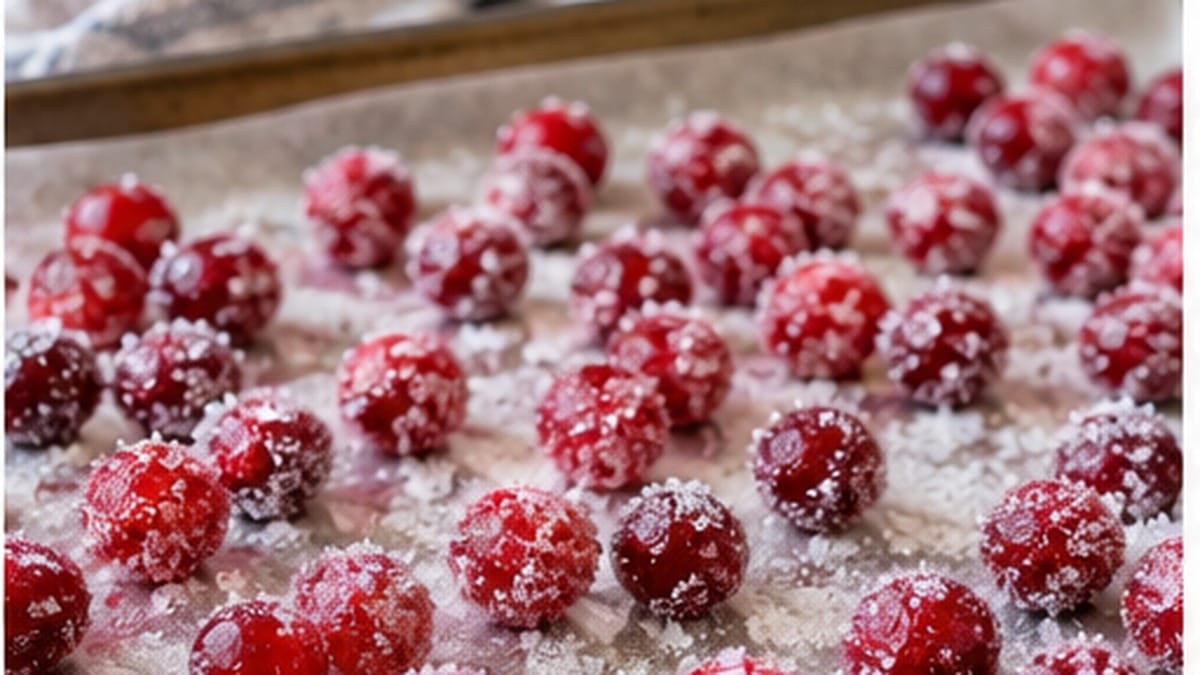
Pour 1 cup superfine organic cane sugar into a shallow bowl. Work in small batches and roll the tacky cranberries until every side is coated. Transfer them to a clean sheet of parchment as you go.
6. Let the coating set
Leave the coated cranberries uncovered for 45 to 60 minutes, or until the sugar feels dry instead of damp. This final rest keeps the coating from immediately dissolving when the berries are piled into a bowl.
Fresh cranberries soaked in orange-vanilla simple syrup, rolled in superfine sugar, and dried into sparkling sweet-tart bites with juicy centers.
Total Time:1 hour 50 minutes
Yield:10 servings
Ingredients
Scale
12 oz (about 3 cups) fresh cranberries, rinsed and picked over
1 cup organic cane sugar
1 cup water
1 teaspoon vanilla extract
Zest of 1/2 orange, optional
1 cup superfine organic cane sugar, for coating
2 tablespoons coarse decorating sugar, optional, for extra sparkle
Instructions
Combine 1 cup organic cane sugar and 1 cup water in a medium saucepan. Warm over medium heat, stirring, until the sugar fully dissolves and the syrup looks clear. Remove from the heat.
Stir in the vanilla extract and orange zest, if using. Let the syrup cool for 5 to 10 minutes so it is warm rather than hot.
Add the cranberries to the warm syrup and stir gently. Let them soak for 45 to 60 minutes.
Set a wire rack over a rimmed baking sheet or line a clean tray with parchment. Use a slotted spoon to transfer the cranberries from the syrup to the rack in one layer.
Let the cranberries drain for about 30 minutes, until the surface is tacky but no longer dripping.
Pour the superfine sugar into a shallow bowl and mix in the optional coarse decorating sugar. Roll the cranberries in small batches until evenly coated.
Transfer the coated cranberries to clean parchment in one layer. Let them dry uncovered for 45 to 60 minutes, until the sugar coating feels dry.
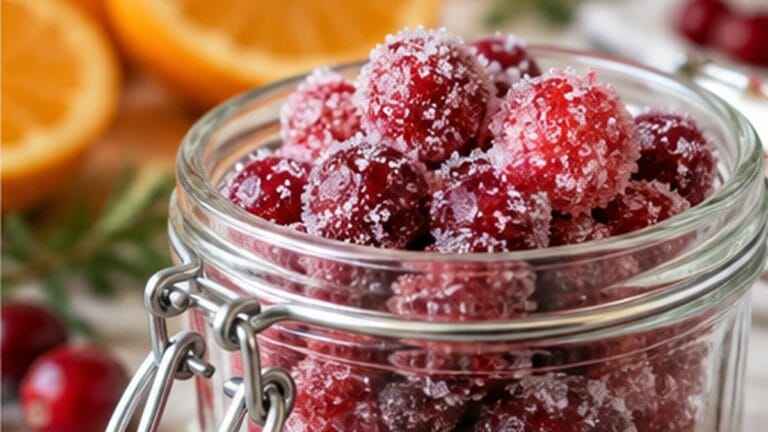
Serve immediately or refrigerate in a shallow airtight container after the coating is completely dry.
Notes
Prep time includes the soaking, draining, and final drying periods.
Do not add the cranberries to boiling syrup; warm syrup helps the berries stay intact.
If the coating sugar becomes wet or clumpy, replace it with fresh dry sugar.
Fresh cranberries work better than frozen for a crisp exterior.
Nutrition is an estimate because some syrup and coating sugar remain unused after draining and rolling.
Author:Adam Moretti
Prep Time:1 hour 45 minutes
Cook Time:5 minutes
Category:Snack
Method:Stovetop
Cuisine:American
Diet:Vegan
How to Get the Best Sugar Crust
The biggest mistake in a popping cranberries recipe is coating berries that are still too wet. If syrup is visibly pooling around them, the coating sugar will dissolve and turn patchy. Give the berries more draining time until the surface is sticky rather than wet.
The second key is crystal size. Superfine sugar gives you more points of contact with the tacky cranberry skin, so it tends to coat more evenly. Regular granulated sugar still works, but the shell will look coarser and may shed more easily.
Finally, do not crowd the freshly coated cranberries. A single layer gives the sugar a chance to dry all the way around each berry. Once the coating feels dry, you can transfer them to a serving bowl or container.
How to Tell When the Cranberries Are Ready to Coat
Use touch rather than the clock alone. After draining, a cranberry should feel slightly sticky when you pick it up, but your fingers should not come away wet. If the surface is slick with syrup, wait longer. If the berry has dried completely and no longer feels tacky, lightly brush it with a tiny amount of reserved syrup before rolling it in sugar.
Humidity changes the timing. In a dry kitchen the berries may be ready in 20 to 30 minutes; in a humid kitchen they can need longer. Treat the listed times as a guide and let the surface texture decide when to move to the next step.
Popping Cranberries Recipe Troubleshooting
The sugar keeps melting off
The berries were probably too wet when they went into the coating. Move them back to a rack or clean parchment and let them air-dry until tacky. Then roll them in fresh sugar.
The cranberries split open
The syrup may have been too hot. Dissolve the sugar first, remove the pan from the heat, and let the syrup cool briefly before adding the fresh cranberries. A few split berries are harmless for the recipe, but too many will make the coating sticky.
The coating is patchy
Use a shallow bowl with enough sugar to surround the berries, coat only a small handful at a time, and replace the sugar if it becomes damp and clumpy.
The cranberries are still very tart
Fresh cranberries are naturally sharp. For a sweeter result, use the full 60-minute soak and keep the finished coating generous. For a more tart result, shorten the soak slightly or use a thinner layer of sugar.
Flavor Variations
Orange-vanilla: Use the base recipe with vanilla and the zest of half an orange.
Ginger-orange: Add 3 or 4 thin slices of fresh ginger to the warm syrup, then remove them before coating the berries.
Warm spice: Steep one cinnamon stick in the syrup while it cools, then remove it before adding the cranberries.
Lemon: Swap orange zest for finely grated lemon zest for a sharper citrus note.
Extra sparkle: Mix a small spoonful of coarse decorating sugar into the superfine coating sugar for more visible crystals.
What to Do With the Leftover Cranberry Syrup
You will have syrup left after the cranberries are removed. Strain it if small bits of zest or fruit are floating in it, then refrigerate it in a clean covered jar. A spoonful can sweeten sparkling water, lemonade, iced tea, oatmeal, yogurt, or pancake batter.
The syrup is sweeter than the finished berries, so start with a small amount and taste before adding more. For a simple drink, combine a tablespoon of the cranberry-orange syrup with cold sparkling water and plenty of ice. If you want more fruit-based beverage ideas, browse our juicing recipes.
Serving Ideas
A bowl of sugared cranberries is an easy holiday snack on its own, but the bright color and frosty surface also make them useful as a garnish. Add a few to cakes, cheesecakes, cupcakes, or cookies just before serving so the coating stays dry.
They also look good on a snack board beside fruit, nuts, chocolate, and crackers. If you want another colorful side for a holiday spread, pair them with our ribbon carrot salad.
For drinks, use two or three berries as a garnish in sparkling water or a fruit-forward mocktail. You can also use a small amount of leftover cranberry syrup in sparkling water; for more produce-based drink ideas, see our juicing recipes collection.
If you are building a plant-based dessert table, these cranberries fit naturally next to recipes from our vegan dessert recipes collection.
Can You Double the Recipe?
Yes, but use a wider bowl or two trays for draining and drying. The syrup can handle a larger batch as long as the berries can stay mostly submerged, but the coating step works best in small batches. Crowding two bags of cranberries onto one tray traps moisture and makes the sugar shell less even.
When doubling, keep extra dry superfine sugar nearby rather than dumping all of it into the coating bowl at once. As soon as the sugar becomes damp and clumpy, replace it. Fresh, dry crystals make the second half of the batch look as good as the first.
Make-Ahead and Storage
For the best texture, make the cranberries the same day you plan to serve them or the day before. Once the coating is completely dry, transfer the berries to a shallow airtight container and refrigerate. Layering parchment between batches helps reduce sticking.
Cold storage can soften the sugar shell slightly because moisture collects on the surface. Before serving, spread the cranberries on parchment for 10 to 15 minutes. If the coating has become noticeably patchy, roll the berries lightly in a little fresh superfine sugar.
Freezing is not a good fit for this recipe because thawing creates condensation that dissolves the dry sugar coating. The berries are at their best while the centers are fresh and the exterior is still crisp.
Nutrition Notes
The nutrition estimate in the recipe card is approximate because not every gram of soaking syrup or coating sugar ends up on the finished cranberries. A drained batch will always leave some syrup and sugar behind. The estimate therefore works best as a practical serving guide rather than a laboratory measurement.
This is a sweet snack or garnish built from fresh fruit and added sugar. It is not positioned as a low-sugar or weight-loss recipe. If you want a smaller portion, use a few berries as a garnish rather than a full snack serving.
FAQs about Popping Cranberries Recipe
What are popping cranberries?
Popping cranberries are fresh cranberries that are soaked in syrup, drained until tacky, coated in sugar, and dried until the outside forms a crisp, sparkling shell. The center stays juicy and tart.
Do I need Sprite or 7-Up?
No. This popping cranberries recipe uses a basic sugar-and-water syrup, so you can control the sweetness and flavor without relying on soda.
Why does the syrup need to cool before I add the berries?
Very hot syrup can soften or split fresh cranberries. Letting the syrup cool briefly keeps the soak gentle and helps the berries stay intact.
Can I use frozen cranberries?
Fresh cranberries are the better choice. Frozen berries soften as they thaw and release more liquid, which makes it harder to create a dry, even sugar shell.
Can I make popping cranberries ahead?
Yes. Make them up to one day ahead for the best texture, refrigerate after the coating is fully dry, and let them sit briefly at room temperature before serving.
Are popping cranberries gluten free and dairy free?
The base ingredients contain no wheat or dairy. If you need strict gluten-free handling, check the labels on vanilla, decorating sugar, and any other packaged additions and prevent cross-contact in your kitchen.
Can I use regular sugar instead of superfine sugar?
Yes. Regular granulated sugar works, but the coating will look a little coarser. For a finer finish, pulse regular sugar briefly in a blender or food processor, stopping before it becomes powdered sugar.
Why are they called popping cranberries?
The name describes the contrast between the crisp sugar shell and the juicy cranberry center. They do not literally pop during cooking; the berries stay mostly whole and give a small burst of tart juice when you bite them.
Final Tips
For a reliable popping cranberries recipe, keep the process simple: dissolve the sugar, cool the syrup, soak the berries, drain until tacky, coat in superfine sugar, and give the finished cranberries enough time to dry. Most texture problems come from rushing one of those resting stages.
The finished berries should look frosty, feel dry on the outside, and stay juicy in the center. Serve them in a small bowl, use them as a dessert or drink garnish, or add them to a holiday snack board while the sugar shell is at its crispest.
Reviewed recipe options
Make this recipe fit me
Choose one of seven popular diet options. NutriMatch will confirm whether the recipe already fits, show a reviewed adaptation when available, or recommend recipes that match your choice.
Please choose a diet first.
Already a reviewed match
This recipe already fits Dairy-Free.
No changes are needed based on its reviewed NutriMatch classification. Check the complete ingredients, product labels, and serving details for your own needs.
Recipe details, product formulas, and cross-contact information can change. Confirm current labels and use professional guidance when medically necessary.
Already a reviewed match
This recipe already fits Gluten-Free.
No changes are needed based on its reviewed NutriMatch classification. Check the complete ingredients, product labels, and serving details for your own needs.
Recipe details, product formulas, and cross-contact information can change. Confirm current labels and use professional guidance when medically necessary.
Not available for this recipe
This recipe cannot currently be made High Protein with a reviewed adaptation.
NutriMatch will not guess at substitutions. Try one of these recipes that is already reviewed for your choice.
Recipe details, product formulas, and cross-contact information can change. Confirm current labels and use professional guidance when medically necessary.
Not available for this recipe
This recipe cannot currently be made Keto with a reviewed adaptation.
NutriMatch will not guess at substitutions. Try one of these recipes that is already reviewed for your choice.
Recipe details, product formulas, and cross-contact information can change. Confirm current labels and use professional guidance when medically necessary.
Not available for this recipe
This recipe cannot currently be made Low Carb with a reviewed adaptation.
NutriMatch will not guess at substitutions. Try one of these recipes that is already reviewed for your choice.
Recipe details, product formulas, and cross-contact information can change. Confirm current labels and use professional guidance when medically necessary.
Already a reviewed match
This recipe already fits Vegan.
No changes are needed based on its reviewed NutriMatch classification. Check the complete ingredients, product labels, and serving details for your own needs.
Recipe details, product formulas, and cross-contact information can change. Confirm current labels and use professional guidance when medically necessary.
Already a reviewed match
This recipe already fits Vegetarian.
No changes are needed based on its reviewed NutriMatch classification. Check the complete ingredients, product labels, and serving details for your own needs.
Recipe details, product formulas, and cross-contact information can change. Confirm current labels and use professional guidance when medically necessary.