
Blog
US Dietary Guidelines for Children (2025–2030)

The US Dietary Guidelines for Children changed meaningfully with the final Dietary Guidelines for Americans, 2025–2030. The federal guidance now separates early childhood, middle childhood ages 5–10, and adolescence ages 11–18, with specific priorities for growth, brain development, bone health, iron, calcium, added sugar, caffeine, and highly processed foods.
The final 10th edition is dated January 2026, but its official name remains Dietary Guidelines for Americans, 2025–2030. This article uses that final federal document rather than the earlier 2025 advisory report or pre-release news coverage.
One important distinction: the Dietary Guidelines influence federal nutrition policy, but school meal rules do not automatically change the day a new edition is released. As of 2026, USDA’s current school nutrition standards still come from the 2024 final rule titled Child Nutrition Programs: Meal Patterns Consistent With the 2020–2025 Dietary Guidelines for Americans. The 2025–2030 guidelines are the current national nutrition guidance, while school program regulations follow their own rulemaking and implementation schedule.
Table of Contents
The 2025–2030 Child Nutrition Framework at a Glance
The federal guidelines organize childhood into different developmental stages because nutrition needs change quickly from infancy through adolescence. The practical themes are consistent: offer nutrient-dense foods, limit highly processed foods, keep added sugar low, use water as the default beverage, and match portions and food textures to the child’s age and development.
- Infancy and early childhood: focus on developmental readiness, nutrient-dense complementary foods, repeated exposure to new foods, and avoiding added sugars.
- Middle childhood, ages 5–10: emphasize protein foods, dairy, vegetables, fruits, healthy fats, and whole grains; avoid caffeinated beverages; no amount of added sugar is recommended.
- Adolescence, ages 11–18: energy, protein, calcium, and iron needs rise during rapid growth, with particular attention to iron for menstruating girls and calcium plus vitamin D for peak bone mass.
Infants and Toddlers: Readiness Comes Before the Calendar
The final guidelines say that every child develops differently, so readiness for solid food should be judged by developmental signs rather than age alone. Examples include being able to sit with support, control the head and neck, grasp objects, bring them to the mouth, open the mouth when food is offered, move food backward with the tongue, and swallow rather than push food back out.
Parents and caregivers are also encouraged to offer new foods repeatedly. The federal document notes that it may take 8 to 10 exposures before a young child accepts a new food. That makes repeated, low-pressure exposure more useful than expecting a child to like a food on the first try.
For this stage, the guidance emphasizes nutrient-dense foods in safe, age-appropriate forms. It also says to avoid added sugars during infancy and early childhood. Food texture, choking risk, allergy guidance, and individual developmental readiness are all reasons infant feeding advice should be age-specific rather than treated like a smaller version of an adult diet.
Middle Childhood Ages 5–10: Whole Foods, Water, and Regular Meals
For ages 5–10, the final US Dietary Guidelines for Children recommend focusing on whole, nutrient-dense foods such as protein foods, dairy, vegetables, fruits, healthy fats, and whole grains. The federal document also specifically says that full-fat dairy products are important for children in this age group to help meet energy needs and support brain development.
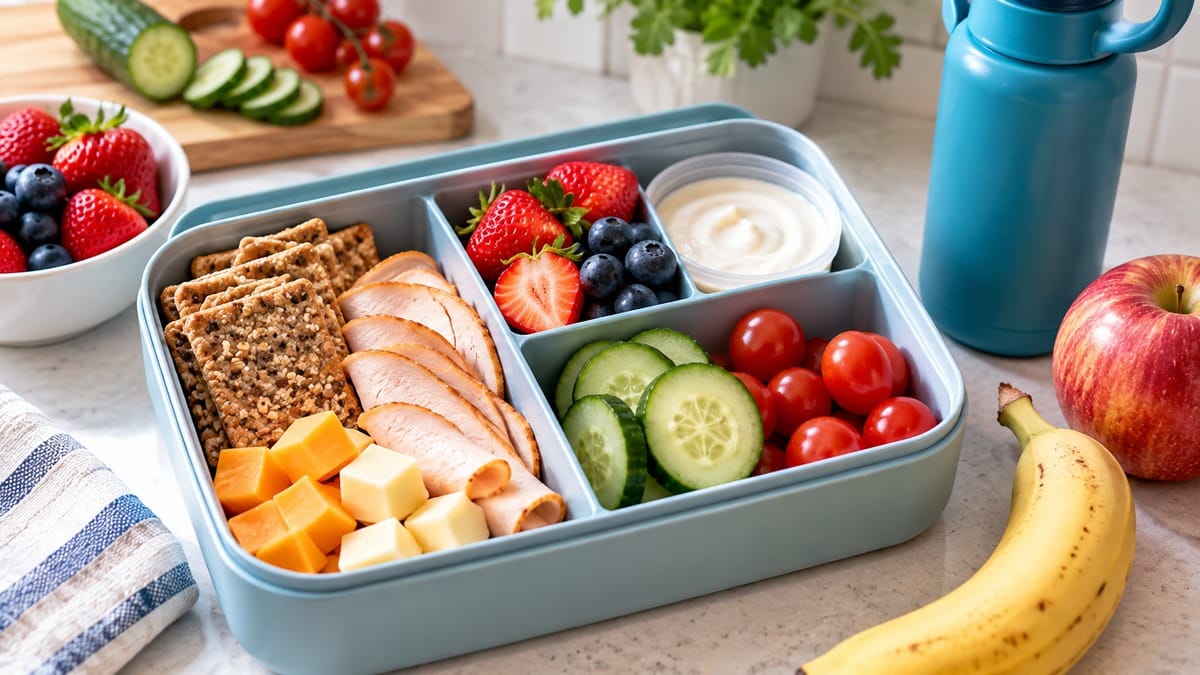
Water is the preferred everyday beverage. The guidance says to avoid caffeinated beverages in middle childhood and states that no amount of added sugars is recommended. That is stronger language than the older 2020–2025 headline limit of less than 10% of calories from added sugar starting at age 2.
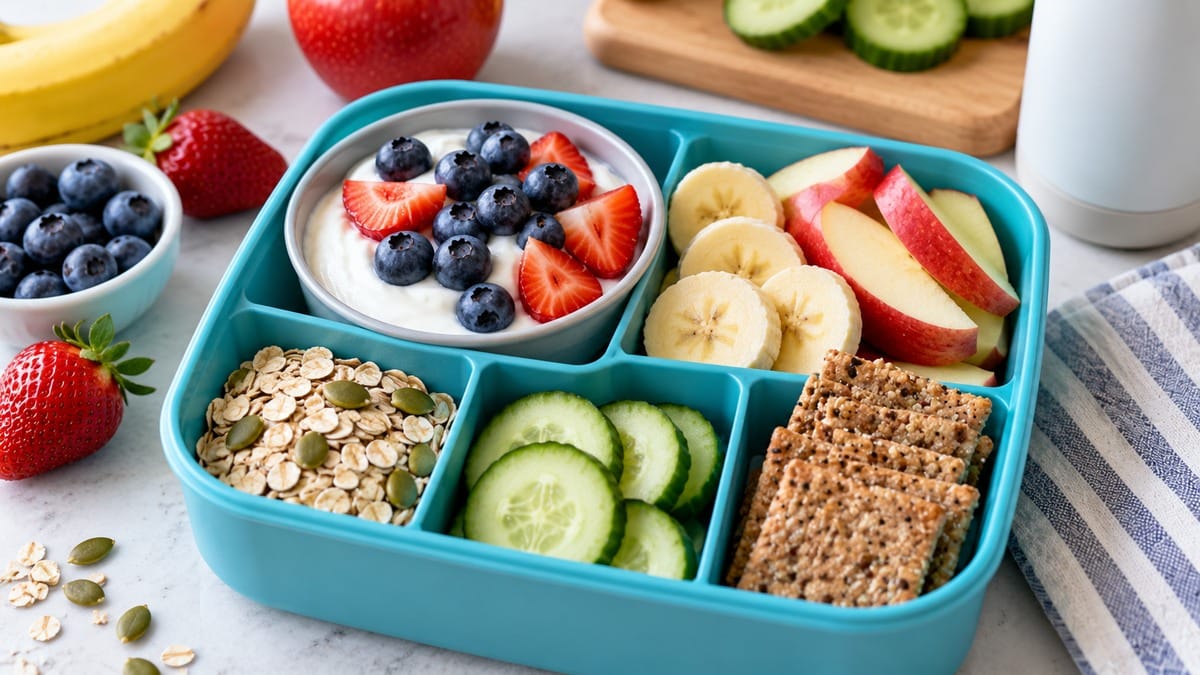
A practical lunch does not need to look perfect or include every food group every time. A protein food, fruit or vegetable, a grain or starchy food, and a dairy food or appropriate alternative can form a simple starting pattern. Repeating familiar foods is fine; variety can build gradually across the week rather than being forced into a single lunchbox.
The federal guidance also encourages making cooking a regular part of family life. For school-age children, that can be as simple as choosing fruit, washing produce, stirring yogurt, measuring oats, or helping assemble a lunchbox.
Adolescence Ages 11–18: More Energy, Protein, Calcium, and Iron
Adolescence is a period of rapid growth and continued brain development. The final guidelines highlight increased needs for energy, protein, calcium, and iron. For girls who menstruate, iron deserves particular attention because menstrual blood loss increases iron requirements.
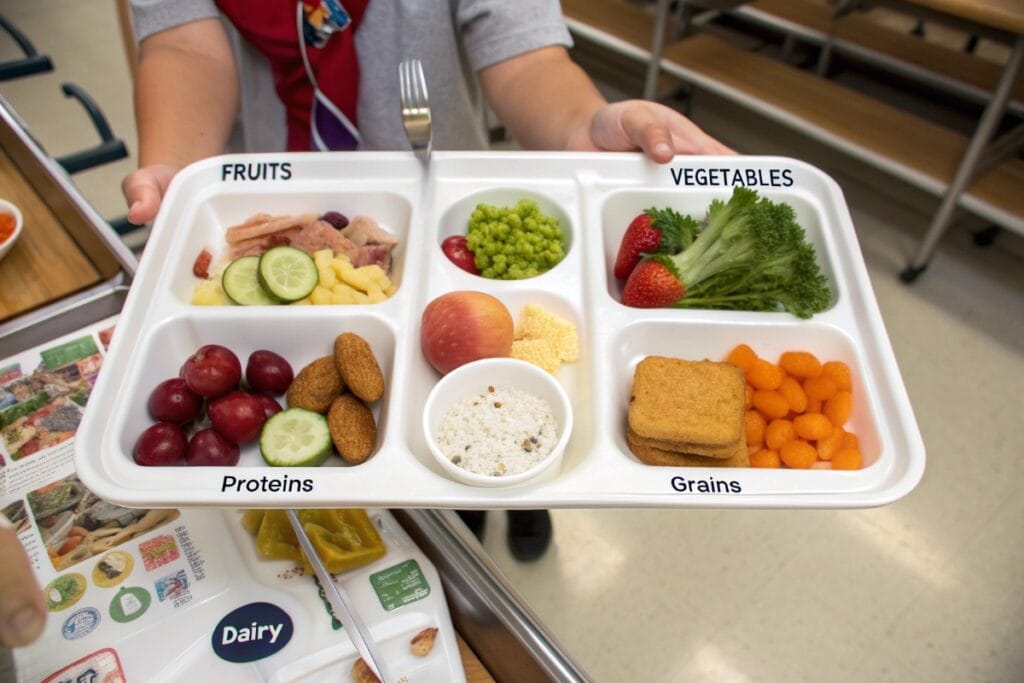
Calcium and vitamin D are also emphasized because adolescence is an important period for building peak bone mass. Dairy foods, fortified alternatives, leafy greens, and other calcium-rich foods can contribute, while vitamin D may come from fortified foods and selected foods such as fatty fish.
The guidelines encourage adolescents to eat nutrient-dense foods while significantly limiting sugary drinks and energy drinks and avoiding highly processed snacks. When access to nutrient-rich foods is limited, the document notes that fortified foods or supplements may sometimes be needed under medical guidance.
Adolescents are also encouraged to participate in shopping and cooking. The goal is not only the nutrient content of today’s meal but the development of skills that support food choices later in life.
Added Sugar: The New Guidance Is Stricter
The 2025–2030 guidelines changed the way added sugar is presented. Instead of using the previous headline rule of keeping added sugars below 10% of daily calories, the new edition says that no amount of added sugars or non-nutritive sweeteners is recommended as part of a healthy diet. It also sets a general meal-level ceiling of no more than 10 grams of added sugars in one meal.
For children ages 5–10, the age-specific section goes even more directly to the point: no amount of added sugars is recommended. This does not mean whole fruit, plain milk, or unsweetened yogurt need to be treated as “sugar foods.” The guidance distinguishes naturally occurring sugars from sugars added during manufacturing or preparation.
The easiest practical place to reduce added sugar is usually beverages and sweet snacks. Water can replace soda, fruit drinks, or energy drinks, while plain yogurt with fruit can replace heavily sweetened yogurt or dessert-style dairy products.
Sodium Limits Change With Age
The final guidelines give age-specific sodium limits rather than using the adult 2,300 mg target for every child. The federal recommendations are:
- Ages 1–3: less than 1,200 mg sodium per day.
- Ages 4–8: less than 1,500 mg per day.
- Ages 9–13: less than 1,800 mg per day.
- Ages 14 and older: less than 2,300 mg per day for the general population.
Highly processed foods can be a major source of sodium, so the guidelines recommend reducing or avoiding highly processed foods that are high in sodium. Comparing labels on breads, crackers, soups, sauces, deli meats, frozen meals, and snack foods can make a bigger difference than focusing only on the salt shaker.
Protein: Important, but Children Do Not Need a “High-Protein Diet”
The 2025–2030 guidelines place more emphasis on protein overall, but that should not be interpreted as a reason to put children on a restrictive high-protein diet. Children and adolescents need enough total energy, carbohydrate, fat, vitamins, minerals, and fiber to support growth alongside protein.
Useful protein foods include eggs, dairy, seafood, poultry, meat, beans, peas, lentils, soy foods, nuts, and seeds when they are safe for the child’s age and chewing ability. Variety matters because different protein foods contribute different nutrients.
For adolescents, the federal document specifically notes that protein needs rise during rapid growth. For younger children, the more practical message is to include a protein food regularly without letting protein products crowd out fruits, vegetables, grains, and other foods needed for a varied diet.
School Meals in 2026: Do Not Confuse Guidelines With Regulations
This is the point most likely to be misunderstood. The Dietary Guidelines for Americans, 2025–2030 are now the current national nutrition guidance, but the current USDA school meal standards were finalized in April 2024 under a rule explicitly designed to align school meals with the 2020–2025 Dietary Guidelines.
That 2024 school nutrition rule includes phased implementation requirements for school breakfast and lunch. Those regulatory standards remain the rules schools must follow until USDA changes them through the appropriate process. So it would be inaccurate to say that every school menu in 2026 is already operating directly under the new 2025–2030 Dietary Guidelines.
Families can still use the new 2025–2030 guidance at home while recognizing that federal school meal programs have their own legal standards, timelines, procurement constraints, and implementation rules.
Packing a Safe Lunch From Home
Nutrition and food safety belong together. USDA food-safety guidance says that perishable lunch foods such as yogurt, cheese, eggs, poultry, or deli meat should be packed in an insulated lunch bag with at least two cold sources, such as two frozen gel packs or a frozen gel pack plus a frozen water bottle.
If a refrigerator is available at school, perishable foods can be stored there on arrival. Foods that do not require refrigeration, such as whole fruits, some whole vegetables, breads, crackers, and certain shelf-stable foods, can simplify lunch packing when reliable cold storage is not available.
FAQs about US Dietary Guidelines for Children
What are the main US dietary guidelines for children ages 5–10?
The final 2025–2030 guidelines emphasize whole, nutrient-dense protein foods, dairy, vegetables, fruits, healthy fats, and whole grains; recommend avoiding caffeinated beverages; state that no amount of added sugar is recommended; and encourage making cooking a regular family activity.
What changes for teenagers?
During ages 11–18, energy, protein, calcium, and iron needs rise with growth. The guidelines especially highlight iron for girls who menstruate and calcium plus vitamin D for bone development, while limiting sugary drinks, energy drinks, and highly processed snacks.
How much sodium should children have?
The final federal limits are less than 1,200 mg per day for ages 1–3, less than 1,500 mg for ages 4–8, less than 1,800 mg for ages 9–13, and less than 2,300 mg for the general population age 14 and older.
Are school meals already based on the 2025–2030 guidelines?
Not directly. USDA’s current school meal standards come from the 2024 final rule titled Child Nutrition Programs: Meal Patterns Consistent With the 2020–2025 Dietary Guidelines for Americans. The new 2025–2030 Dietary Guidelines are current nutrition guidance, but school meal regulations change through a separate rulemaking process.
Should kids avoid all packaged foods?
No. The guidelines focus on reducing highly processed foods that add large amounts of refined carbohydrate, added sugar, sodium, or unhealthy fats. Plain yogurt, frozen vegetables, canned beans, whole-grain breads, and other packaged staples can still contribute to a nutrient-dense eating pattern.
Final Takeaway
The updated US Dietary Guidelines for Children are more age-specific than a simple “healthy plate” message. Middle childhood emphasizes whole nutrient-dense foods, water, no caffeine, and no recommended added sugar. Adolescence adds stronger attention to protein, calcium, vitamin D, and iron during rapid growth.
The most useful approach for families is not perfection or restriction. It is a repeatable pattern: offer nutrient-dense foods regularly, use water as the default drink, make highly processed foods less central, involve children in food preparation, and adjust food choices to age, development, appetite, and medical needs.
For the broader federal changes, see our updated guide to the US Dietary Guidelines 2025–2030. The final guideline itself is available through ODPHP and RealFood.gov.

Trending recipe
Sheet Pan Harvest Chicken with Pan-Juice Toast
Sheet pan harvest chicken roasts crisp-skinned thighs with sweet potatoes, Brussels sprouts, apples, and sourdough pan-juice toast for a cozy…
View recipe →
Trending recipe
Banana Bread Banana Pudding
Banana bread banana pudding layers soft banana bread cubes, homemade vanilla pudding, fresh bananas, and whipped cream into an easy…
View recipe →
Trending recipe
Caramel Apple Bark
Caramel apple bark layers semisweet chocolate, salty pretzels, crisp Granny Smith apple, and chewy caramel into an easy no-bake fall…
View recipe →