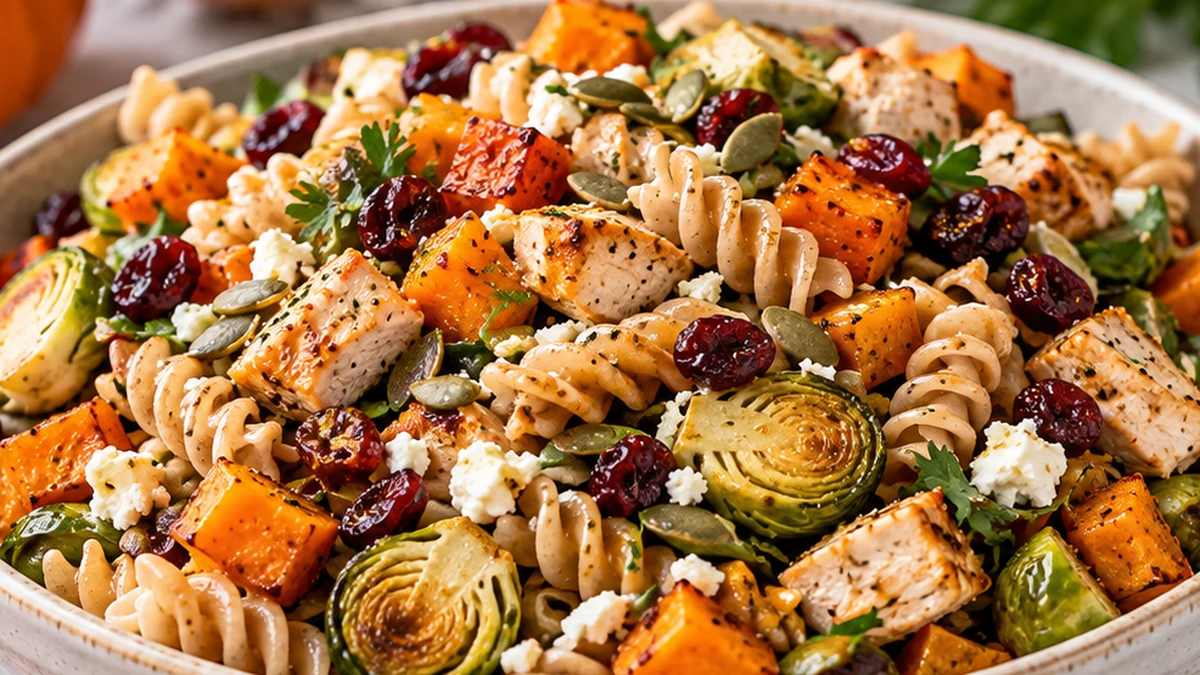
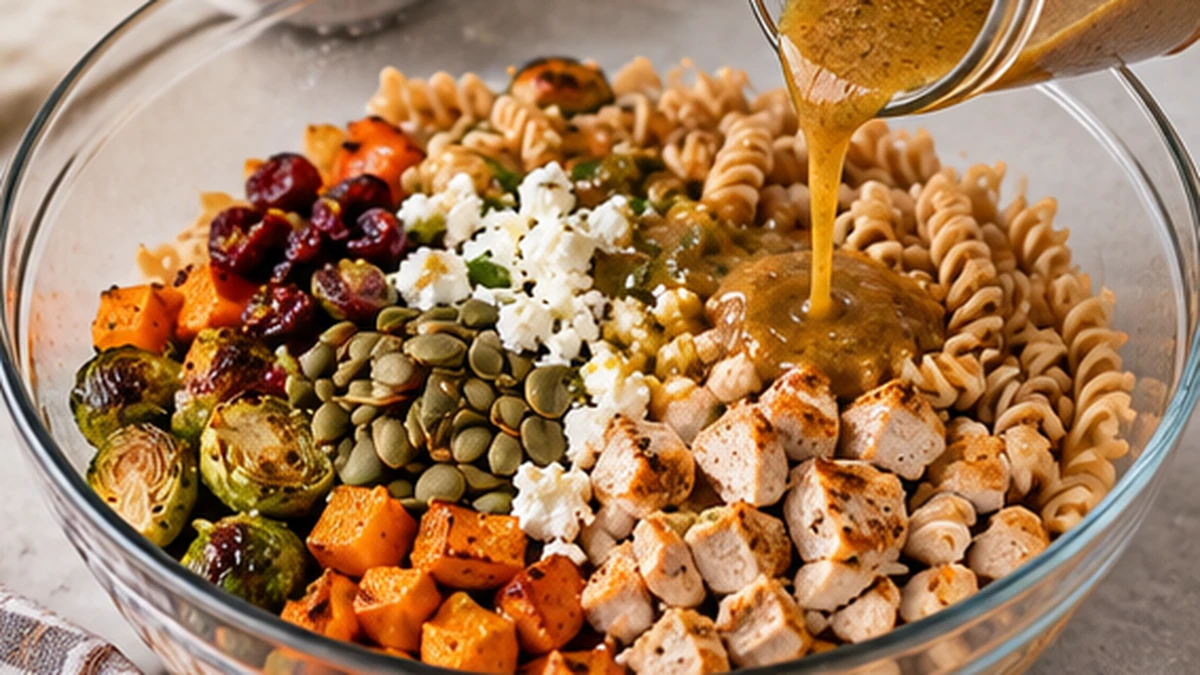
High protein fall harvest pasta salad is built for the part of September when you want autumn flavors but not a heavy casserole. High-protein rotini, roasted sweet potato, Brussels sprouts, chicken, crisp apple, dried cranberries, goat cheese, and pepitas are tossed with a maple-Dijon vinaigrette that tastes seasonal without becoming overly sweet.
This is intentionally different from our existing high protein pasta salad with chicken. That recipe is Mediterranean-style with tomatoes, cucumber, feta, and a Greek yogurt dressing. This one uses roasted fall vegetables, apple, cranberries, goat cheese, pepitas, and a vinaigrette, so the flavor, texture, and search intent are clearly different.
Each of six servings provides an estimated about 34 grams of protein. Most of that comes from chicken breast and high-protein pasta, with smaller amounts from goat cheese and pepitas. For more ways to build meals around protein-rich ingredients, use our high protein foods guide.
Table of Contents
Why This High Protein Fall Harvest Pasta Salad Works
It uses genuinely autumn ingredients. Sweet potato, Brussels sprouts, apple, cranberries, pepitas, thyme, and maple-Dijon dressing make the seasonal angle clear.
The protein comes from normal food. Chicken and high-protein rotini carry the recipe without protein powder or a heavy dairy dressing.
Roasting adds contrast. Warm caramelized vegetables taste very different from raw cucumber-and-tomato pasta salads.
The dressing stays light enough for meal prep. A maple-Dijon vinaigrette coats the pasta without becoming thick or chalky after refrigeration.
Apple and pepitas are added after cooling. That keeps the salad crisp instead of turning every ingredient soft.
Six portions fit a practical lunch plan. The salad can be divided into containers and refrigerated for the next few days.
Ingredients You’ll Need
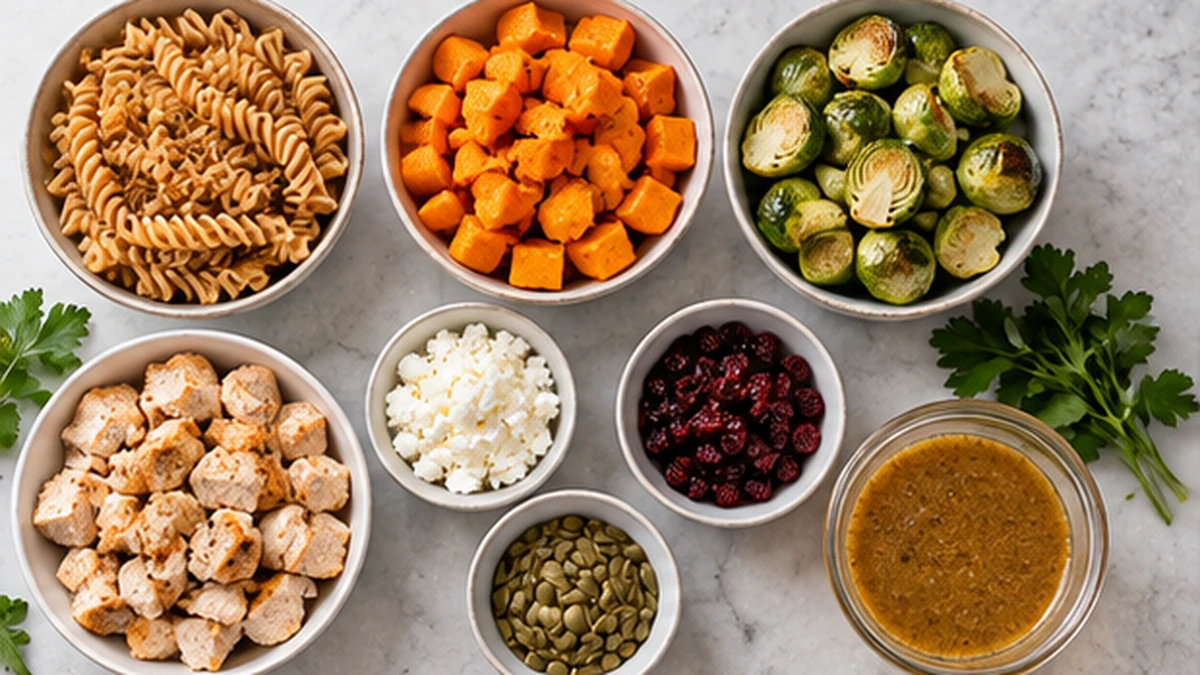
The ingredient list is longer than a basic pasta salad, but most of the work happens on one sheet pan while the pasta cooks. The balance matters: too much dried fruit or maple makes the dish sweet, while too much roasted vegetable makes it feel more like a grain bowl than pasta salad.
High-Protein Rotini
Use 10 ounces (283 g) dry high-protein rotini. The nutrition estimate uses a pasta that provides about 10 grams of protein per 2-ounce dry serving. Barilla currently lists Protein+ Rotini as a wheat-based pasta with protein from lentils, peas, and chickpeas; its current product information also describes 17 grams of protein per 3.5-ounce serving.
Choose a short shape that can hold the dressing and mix easily with the roasted vegetables. If you use regular pasta, the recipe still works, but the stated protein estimate does not apply.
Chicken Breast
Use 1 pound (454 g) boneless, skinless chicken breast cut into roughly 1-inch pieces. Keeping the pieces close to the same size helps them cook evenly on the sheet pan. Pat the chicken dry before seasoning so it roasts instead of releasing too much liquid.
Sweet Potato and Brussels Sprouts
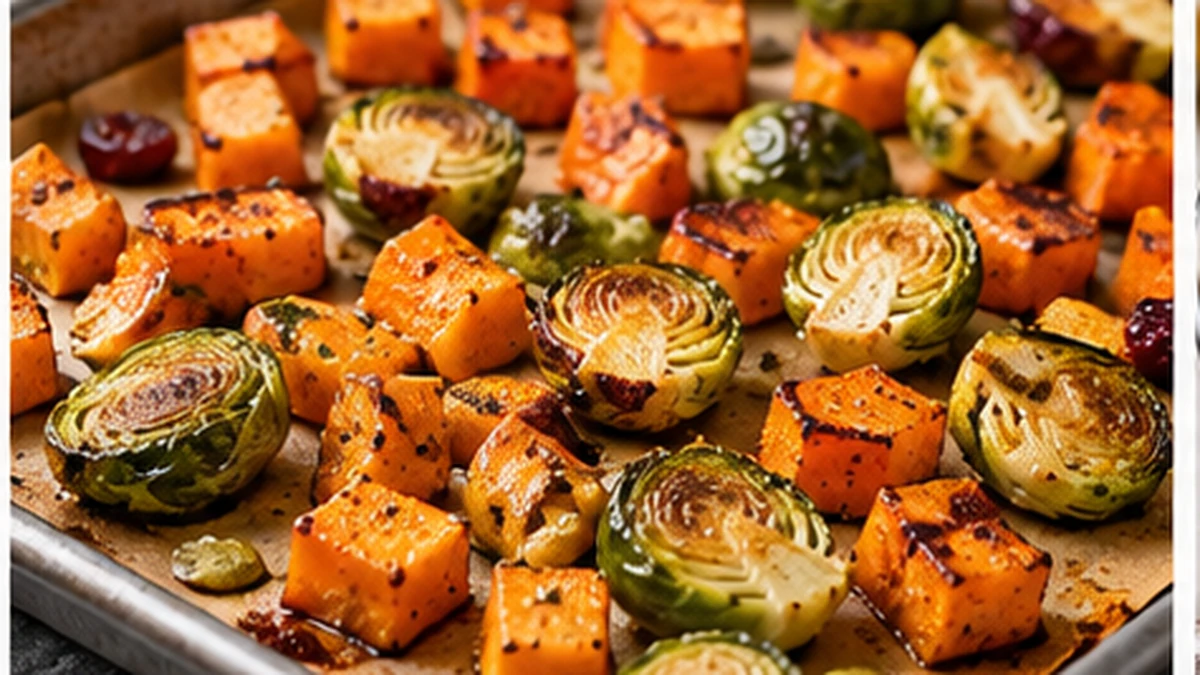
Use about 12 ounces of sweet potato cut into 1/2-inch cubes and 12 ounces of Brussels sprouts trimmed and halved. The sweet potato needs a short head start in the oven, then the Brussels sprouts and chicken join the pan.
The vegetables should be browned at the edges but still hold their shape. Over-roasted Brussels sprouts can become soft enough to break apart when the salad is tossed.
Apple, Cranberries, Goat Cheese, and Pepitas
A crisp apple adds fresh crunch after the roasted ingredients cool. Honeycrisp, Pink Lady, or another firm sweet-tart apple works well. Dried cranberries provide concentrated sweetness, goat cheese gives tang, and pepitas add crunch and a little extra protein.
Keep the cranberries to about one-third cup. More than that can shift the salad from savory-sweet to noticeably sugary.
Maple-Dijon Vinaigrette
The dressing combines olive oil, apple cider vinegar, Dijon mustard, maple syrup, thyme, salt, and black pepper. The maple is deliberately modest: it rounds out the vinegar and mustard rather than turning the dressing into a sweet glaze.
12 ounces (340 g) sweet potato, peeled and cut into 1/2-inch cubes
12 ounces (340 g) Brussels sprouts, trimmed and halved
1 large crisp apple (about 180 g), cored and diced
1/3 cup (50 g) dried cranberries
3 ounces (85 g) goat cheese, crumbled
1/3 cup (40 g) pepitas
3 tablespoons extra-virgin olive oil, divided
2 tablespoons apple cider vinegar
1 1/2 tablespoons Dijon mustard
1 tablespoon pure maple syrup
1 teaspoon dried thyme
1/2 teaspoon fine salt, divided, plus more to taste
1/2 teaspoon ground black pepper, divided
Instructions
Preheat the oven to 425°F (218°C). Line a large rimmed sheet pan with parchment paper.
Toss the sweet potato with 2 teaspoons olive oil, a pinch of the salt, and some black pepper. Spread in one layer and roast for 10 minutes.
Remove the pan carefully. Add the Brussels sprouts and chicken, keeping the chicken mostly grouped on one side. Add 1 teaspoon olive oil and season lightly with the remaining salt and pepper. Roast for 15 to 18 minutes, until the chicken reaches 165°F (74°C) in the thickest pieces and the vegetables are tender and browned at the edges.
While the sheet pan roasts, cook the high-protein rotini according to the package directions until tender but still firm enough for pasta salad. Drain thoroughly and spread in a wide bowl or on a tray to cool.
Whisk the remaining 2 tablespoons olive oil, apple cider vinegar, Dijon mustard, maple syrup, and thyme until emulsified. Taste and adjust salt or pepper only after accounting for the goat cheese.
Let the chicken and roasted vegetables cool for about 10 minutes.
Combine the pasta, chicken, sweet potato, Brussels sprouts, apple, cranberries, goat cheese, and pepitas in a large bowl. Add about three-quarters of the vinaigrette and fold gently. Add more dressing only if needed.
Serve at cool room temperature or refrigerate promptly for meal prep. Stir gently before serving and add a splash of reserved dressing if the pasta has absorbed too much.
Notes
The protein estimate uses a high-protein rotini providing about 10 g protein per 2-ounce dry serving, plus the chicken breast, goat cheese, and pepitas listed in the recipe.
Cook chicken to 165°F (74°C) measured in the thickest pieces.
Keep refrigerated at 40°F (4°C) or below and use within 3 to 4 days.
Freezing is not recommended because the apple, roasted vegetables, goat cheese, and pasta lose texture after thawing.
For a gluten-free variation, use a certified gluten-free chickpea or lentil pasta and verify packaged ingredients; the primary nutrition estimate will change.
Nutrition is an estimate for one-sixth of the recipe. Pasta brands, goat cheese, dried cranberries, and chicken products can change the final values.
Author:Adam Moretti
Prep Time:20 minutes
Cook Time:25 minutes
Category:Lunch
Method:Oven and Boiling
Cuisine:American
Diet:High Protein
How to Make High Protein Fall Harvest Pasta Salad
1. Give the Sweet Potato a Head Start
Heat the oven to 425°F (218°C). Line a large rimmed sheet pan with parchment. Toss the sweet potato with part of the olive oil, a pinch of the salt, and black pepper. Spread it in one layer and roast for 10 minutes.
2. Add the Brussels Sprouts and Chicken
Remove the pan carefully. Add the Brussels sprouts and chicken, keeping the chicken mostly grouped on one side so it is easy to temperature-check. Toss with the remaining roasting oil and season lightly. Return the pan to the oven for another 15 to 18 minutes.
The chicken is ready when the thickest pieces reach 165°F (74°C). USDA lists 165°F as the safe minimum internal temperature for all poultry. If the vegetables need another few minutes after the chicken is done, transfer the chicken to a clean plate and continue roasting the vegetables.
3. Cook the Pasta While the Sheet Pan Roasts
Bring a pot of water to a boil and cook the rotini according to the package directions. Stop when it is tender but still holds its shape. Drain thoroughly, then spread the pasta in a wide bowl or on a tray for a few minutes so steam can escape.
Do not overcook the pasta just because the salad will be served cold. Pasta continues softening slightly as it absorbs dressing during storage.
4. Whisk the Maple-Dijon Dressing
Whisk the olive oil, apple cider vinegar, Dijon mustard, maple syrup, dried thyme, salt, and black pepper until the dressing looks emulsified. Taste before adding extra maple. The finished vinaigrette should be tangy first, with a light maple finish.
5. Cool Before Adding the Crisp Ingredients
Let the roasted chicken and vegetables cool for about 10 minutes. The pasta can be slightly warm, but the ingredients should not be steaming when the apple, goat cheese, pepitas, and cranberries go in. Too much heat softens the apple and can melt the goat cheese into the dressing.
6. Assemble and Toss
Add the pasta, roasted sweet potato, Brussels sprouts, chicken, diced apple, cranberries, goat cheese, and pepitas to a large bowl. Pour over about three-quarters of the dressing and fold gently. Add more dressing only if the salad looks dry.
How This Fall Pasta Salad Stays Distinct from the Original
Healthy American Bites already has a general high-protein pasta salad built around chickpea pasta, chicken, fresh Mediterranean vegetables, feta, and Greek yogurt dressing. That page should remain the broad answer for readers searching for a classic cold pasta salad.
This high protein fall harvest pasta salad is narrower and seasonal. Roasted sweet potato and Brussels sprouts create a warmer flavor profile, while apple, cranberries, pepitas, goat cheese, and maple-Dijon dressing make the harvest angle specific enough to stand on its own.
If you prefer a creamy, lemony salad with cucumber and tomato, use the original high protein pasta salad. If you want roasted vegetables and fall flavors for September and October meal prep, use this version.
Texture Tips That Matter
Keep the sweet potato cubes small. Half-inch cubes cook through without turning the pasta salad into large chunks of soft potato.
Do not crowd the sheet pan. Crowding traps steam and leaves Brussels sprouts pale rather than browned.
Cool before adding apple. Warm ingredients soften the apple and make the salad feel less fresh after refrigeration.
Use part of the dressing first. Pasta absorbs dressing as it sits, so reserve a little for refreshing leftovers.
Add pepitas near the end. They stay crunchier when they are not sitting in vinaigrette for a long time before serving.
Meal Prep and Storage
For meal prep, divide the salad into six covered containers after everything has cooled. If you want the crispest texture on day three, keep the pepitas in a separate small container and add them just before eating.
Freezing is not recommended. The apple softens, the roasted vegetables lose structure, and goat cheese can become grainy after thawing. If you need a make-ahead high-protein lunch that freezes more predictably, our high protein chicken fried rice meal prep is a better candidate.
Variations and Substitutions
Use Butternut Squash
Butternut squash can replace the sweet potato in the same approximate weight. Cut it into small cubes and begin checking a few minutes earlier because some squash cooks faster than dense sweet potato.
Use Feta Instead of Goat Cheese
Feta gives a saltier, firmer bite. Use a similar amount, but taste the vinaigrette before adding the full salt quantity because feta can raise the sodium noticeably.
Use Turkey Instead of Chicken
Cooked turkey breast works well, especially after a holiday meal. If you use pre-cooked turkey, roast only the vegetables and fold the turkey into the pasta at the end. Nutrition will differ from the primary recipe.
Make It Vegetarian
Replace the chicken with two drained cans of chickpeas or white beans. The salad will still be substantial, but the original 34-gram protein estimate no longer applies.
Make It Gluten Free
The primary recipe uses wheat-based high-protein rotini. For a gluten-free variation, use a high-protein chickpea or lentil pasta that is clearly labeled gluten free and verify the Dijon mustard, dried cranberries, and other packaged ingredients. Pasta texture and nutrition will change.
FAQ about High Protein Fall Harvest Pasta Salad
How Much Protein Is in High Protein Fall Harvest Pasta Salad?
One of six servings is estimated to provide about 34 grams of protein when the salad is made with the high-protein rotini, one pound of chicken breast, goat cheese, and pepitas used in the primary recipe. Brand labels and substitutions change the final number.
Can I Make Fall Harvest Pasta Salad the Night Before?
Yes. Assemble it the night before, refrigerate it promptly, and reserve a small amount of vinaigrette plus the pepitas. Refresh the salad with the reserved dressing and add the pepitas just before serving.
Should Fall Pasta Salad Be Served Warm or Cold?
It works at cool room temperature or chilled. Letting the roasted ingredients cool before assembly gives the best apple and goat-cheese texture. If it has been refrigerated, let the container sit out only briefly before eating and return leftovers to the refrigerator promptly.
Can I Use Rotisserie Chicken?
Yes, but sodium and nutrition vary by brand and seasoning. Remove the skin, dice the meat, and use about 3 cups cooked chicken. The nutrition estimate in the recipe card is based on plain chicken breast cooked for this recipe.
What Apple Is Best for a Harvest Pasta Salad?
Choose a firm, crisp apple that stays crunchy after cutting. Honeycrisp, Pink Lady, Jazz, or Granny Smith all work. A very soft apple can become mealy after a day in vinaigrette.
Can I Freeze This Pasta Salad?
Freezing is not recommended because the apple, roasted vegetables, pasta, and goat cheese all lose texture after thawing. Refrigerated meal prep for 3 to 4 days is the better option.
Final Tips
For the best high protein fall harvest pasta salad, keep the seasonal ingredients balanced: roast the sweet potato and Brussels sprouts until browned, cool them before adding the apple and goat cheese, and use enough maple-Dijon dressing to coat rather than soak the pasta.
The result is a fall meal-prep salad that is clearly different from a summer Mediterranean pasta salad: roasted vegetables, crisp apple, cranberry sweetness, pepita crunch, tangy goat cheese, and about 34 grams of protein in each serving.
Reviewed recipe options
Make this recipe fit me
Choose one of seven popular diet options. NutriMatch will confirm whether the recipe already fits, show a reviewed adaptation when available, or recommend recipes that match your choice.
Please choose a diet first.
Reviewed Dairy-Free adaptation
Dairy-Free High-Protein Fall Harvest Pasta Salad
Use the reviewed substitutions below to prepare a Dairy-Free version while keeping the original recipe's basic method.
Check: Check every packaged substitute, sauce, seasoning, and topping for milk ingredients and the cross-contact information you need. The adapted nutrition differs from the published recipe; recalculate it before relying on the original high-protein, keto, or low-carb claim.
Use these reviewed changes with the original ingredient quantities and instructions above. The original recipe card stays unchanged.
Recipe details, product formulas, and cross-contact information can change. Confirm current labels and use professional guidance when medically necessary.
Reviewed Gluten-Free adaptation
Gluten-Free High-Protein Fall Harvest Pasta Salad
Use the reviewed substitutions below to prepare a Gluten-Free version while keeping the original recipe's basic method.
Cook the gluten-free pasta to firm al dente and rinse briefly so it does not soften excessively in storage.
Check: Use products labeled gluten-free when needed and check sauces, seasonings, baking ingredients, and shared equipment for cross-contact. The adapted nutrition differs from the published recipe; recalculate it before relying on the original high-protein, keto, or low-carb claim.
Use these reviewed changes with the original ingredient quantities and instructions above. The original recipe card stays unchanged.
Recipe details, product formulas, and cross-contact information can change. Confirm current labels and use professional guidance when medically necessary.
Already a reviewed match
This recipe already fits High Protein.
No changes are needed based on its reviewed NutriMatch classification. Check the complete ingredients, product labels, and serving details for your own needs.
Recipe details, product formulas, and cross-contact information can change. Confirm current labels and use professional guidance when medically necessary.
Not available for this recipe
This recipe cannot currently be made Keto with a reviewed adaptation.
NutriMatch will not guess at substitutions. Try one of these recipes that is already reviewed for your choice.
Recipe details, product formulas, and cross-contact information can change. Confirm current labels and use professional guidance when medically necessary.
Not available for this recipe
This recipe cannot currently be made Low Carb with a reviewed adaptation.
NutriMatch will not guess at substitutions. Try one of these recipes that is already reviewed for your choice.
Recipe details, product formulas, and cross-contact information can change. Confirm current labels and use professional guidance when medically necessary.
Not available for this recipe
This recipe cannot currently be made Vegan with a reviewed adaptation.
NutriMatch will not guess at substitutions. Try one of these recipes that is already reviewed for your choice.
Recipe details, product formulas, and cross-contact information can change. Confirm current labels and use professional guidance when medically necessary.
Reviewed Vegetarian adaptation
Vegetarian Fall Harvest Protein Pasta Salad
Use the reviewed substitutions below to prepare a Vegetarian version while keeping the original recipe's basic method.
Add the beans after the roasted vegetables cool instead of roasting them with the chicken.
Check: Check broths, sauces, seasonings, cheeses, and meat substitutes for animal-derived ingredients that matter to you. The adapted nutrition differs from the published recipe; recalculate it before relying on the original high-protein, keto, or low-carb claim.
Use these reviewed changes with the original ingredient quantities and instructions above. The original recipe card stays unchanged.
Recipe details, product formulas, and cross-contact information can change. Confirm current labels and use professional guidance when medically necessary.