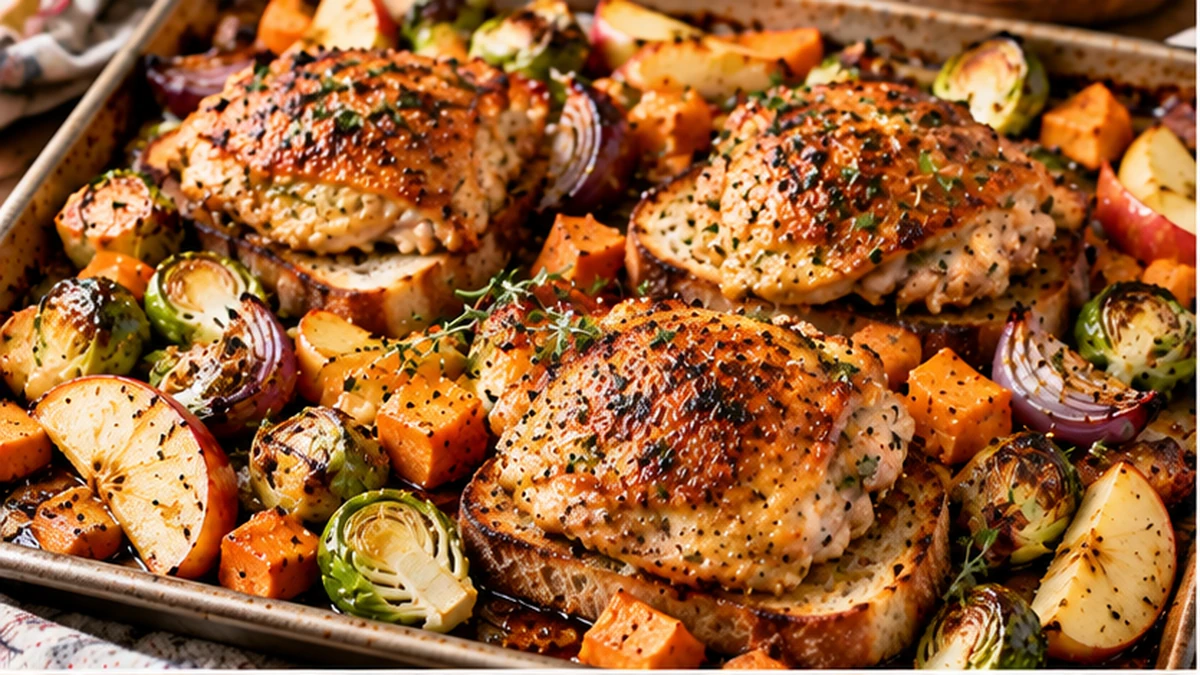
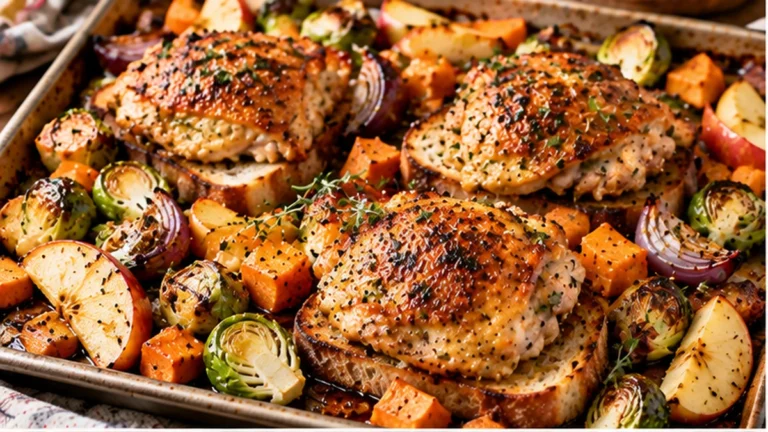
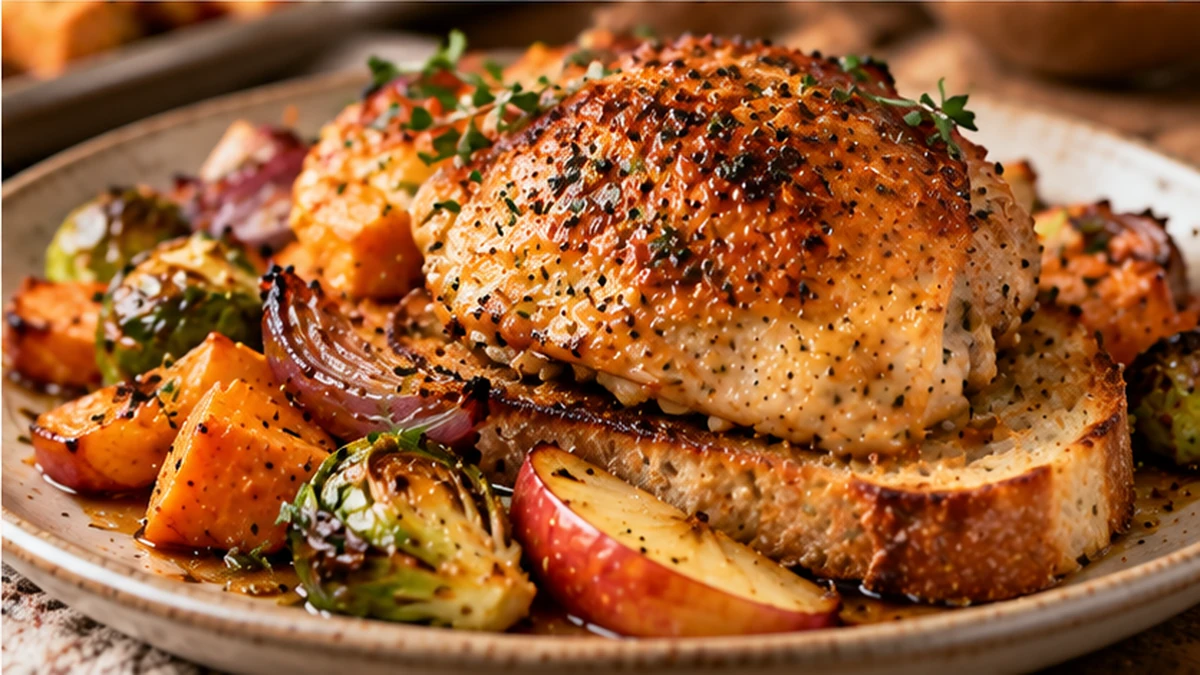
Sheet pan harvest chicken is a cozy fall dinner built around crisp-skinned chicken thighs, caramelized seasonal vegetables, and thick sourdough toast that catches the savory pan juices as everything roasts. Sweet potatoes, Brussels sprouts, red onion, and apple give the pan a mix of earthy, sweet, and tangy flavors, while a cider-Dijon glaze ties the whole dinner together.
The pan-juice toast is what makes this version different from a standard sheet-pan chicken dinner. Instead of serving bread on the side, each chicken thigh roasts over a thick slice of sourdough during the final stage of cooking. The bread toasts around the edges while the center absorbs seasoned chicken drippings and the cider-herb glaze, giving you a savory, almost stuffing-like base under every serving.
Table of Contents
Why You’ll Love This Sheet Pan Harvest Chicken
Chicken, vegetables, apples, and toast cook on one rimmed sheet pan.
The sourdough absorbs pan juices instead of letting all that flavor stay on the tray.
Sweet potato and Brussels sprouts make the dinner feel distinctly seasonal without using hard-to-find ingredients.
A maple-cider-Dijon glaze adds enough sweetness and acidity to balance the rich chicken thighs.
The recipe makes four complete servings with no separate starch required.
Ingredients You’ll Need
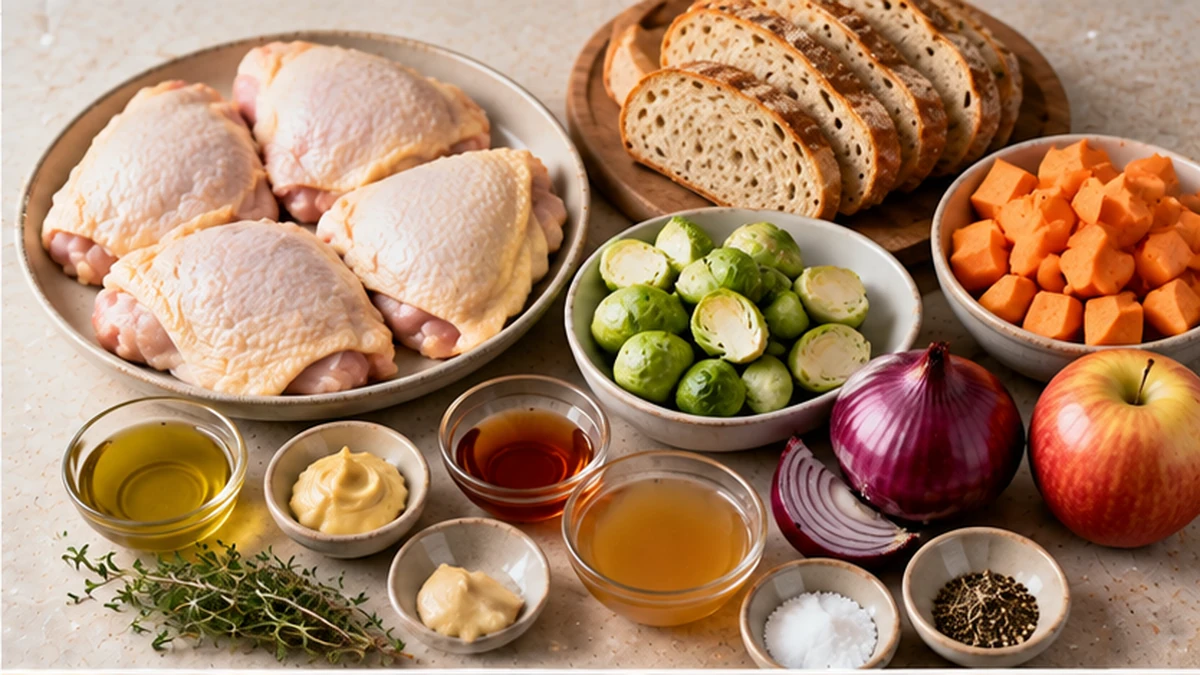
Use four bone-in, skin-on chicken thighs for the best combination of crisp skin and flavorful pan juices. Thick-cut sourdough is sturdy enough to sit under the chicken without disappearing into the drippings. Choose slices about 3/4 to 1 inch thick and roughly the size of each thigh.
The harvest vegetables are sweet potato, Brussels sprouts, and red onion. A crisp apple such as Honeycrisp, Pink Lady, or Braeburn goes onto the pan later so it roasts without turning into applesauce. The glaze uses Dijon mustard, apple cider vinegar, maple syrup, olive oil, garlic, thyme, rosemary, and smoked paprika.
Why the Vegetables Start Before the Chicken
Sweet potatoes and Brussels sprouts need a head start to become browned and tender. If every ingredient went onto the sheet pan at the same time, the chicken could reach its safe temperature before the sweet potatoes softened. Roasting the vegetables for 15 minutes first gives them time to caramelize and also heats the pan before the bread and chicken are added.
Cut the sweet potatoes into roughly 3/4-inch cubes and halve average-size Brussels sprouts. Keep the red onion in thick wedges. Similar-size pieces matter because small vegetables can burn while large chunks stay firm.
4 thick slices sourdough bread, about 3/4 to 1 inch thick
1 large crisp apple, cored and cut into 8 wedges
Instructions
Heat the oven to 425°F. Place the sweet potatoes, Brussels sprouts, and red onion on a large rimmed sheet pan. Toss with 1 tablespoon olive oil, 1/2 teaspoon salt, and 1/4 teaspoon black pepper. Spread in a single layer and roast for 15 minutes.
Meanwhile, whisk the remaining 1 tablespoon olive oil with the Dijon mustard, maple syrup, apple cider vinegar, garlic, thyme, rosemary, smoked paprika, remaining 1/4 teaspoon salt, and remaining 1/4 teaspoon black pepper.
Pat the chicken thighs dry with paper towels. Brush about half of the glaze over the chicken, including the skin.
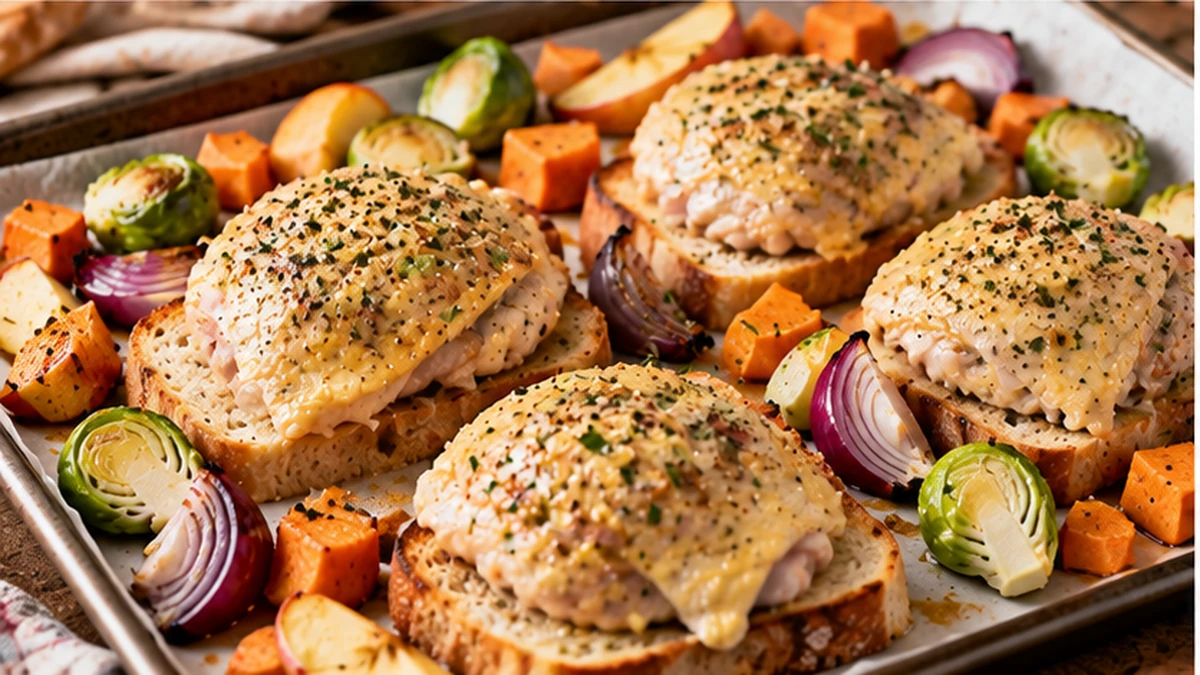
Remove the sheet pan from the oven and turn the vegetables. Move them aside to create four spaces. Place one sourdough slice in each space and set one chicken thigh skin-side up directly on each slice. Scatter the apple wedges around the vegetables.
Brush the chicken with the remaining glaze. Return the pan to the oven and roast for 25 to 30 minutes, or until the thickest part of each chicken thigh reaches 165°F on a food thermometer without touching the bone.
Let the chicken rest for 5 minutes. Check the sweet potatoes for tenderness; if needed, transfer the chicken and toast to plates and roast the vegetables for another 5 minutes.
Serve each chicken thigh on its pan-juice toast with roasted vegetables and apples. Spoon any pan juices over the toast and garnish with extra thyme if desired.
Notes
Use sturdy sourdough or country bread. Thin sandwich bread becomes too soft under the chicken.
Bone-in, skin-on thighs are important to the pan-juice method because they release flavorful drippings as they roast.
All poultry should reach 165°F in the thickest part as measured with a food thermometer.
Nutrition is an estimate and includes one chicken thigh, one slice of sourdough, one-quarter of the vegetables and apple, and one-quarter of the glaze.
Author:Adam Moretti
Prep Time:20 minutes
Cook Time:45 minutes
Category:Dinner
Method:Sheet Pan Baking
Cuisine:American
Diet:High Protein
How to Make Sheet Pan Harvest Chicken
Heat the oven to 425°F and use a large rimmed sheet pan. Toss the sweet potato, Brussels sprouts, and red onion with 1 tablespoon olive oil, 1/2 teaspoon salt, and part of the black pepper. Spread them in a single layer and roast for 15 minutes.
While the vegetables start cooking, stir together the remaining olive oil, Dijon mustard, maple syrup, apple cider vinegar, garlic, thyme, rosemary, smoked paprika, the remaining salt, and black pepper. Pat the chicken thighs dry so the skin browns more effectively, then brush the thighs with about half of the glaze.
Take the pan from the oven and turn the vegetables. Move them aside just enough to make four spaces, then place one sourdough slice in each space. Set a glazed chicken thigh directly on each slice. Add the apple wedges around the vegetables and brush the chicken with the remaining glaze.
Return the pan to the oven for about 25 to 30 minutes. The exact time depends on the size of the thighs. According to the USDA safe minimum internal temperature chart, all poultry should reach 165°F. Check the thickest part of each thigh with a food thermometer, avoiding the bone, before removing the chicken from the oven.
What Happens to the Pan-Juice Toast
The top surface of the bread sits under the chicken, so it absorbs seasoned drippings as the thigh roasts. The exposed edges become crisp and browned, while the center becomes soft and intensely savory. This is not meant to be dry breakfast-style toast; think of it more like a cross between roasted bread, stuffing, and the crisp-edged bread from the bottom of a roast.
For the best texture, use sturdy sourdough rather than thin sandwich bread. Very soft bread can become too wet, while slices that are excessively thick may remain dry underneath. If your loaf is especially fresh and soft, let the slices sit uncovered while you prep the vegetables.
How to Know the Chicken and Vegetables Are Done
The chicken skin should be browned, the sweet potatoes should be easily pierced with a fork, and the Brussels sprouts should have dark caramelized edges. The apples should be tender but still hold their wedge shape. Most importantly, rely on the thermometer rather than color alone for the chicken.
If the chicken reaches 165°F before the vegetables are as browned as you want, transfer the chicken and toast to plates and return the vegetables to the oven for another 5 minutes. If the vegetables finish first, move them toward the cooler edges of the pan while the chicken completes cooking.
Best Chicken Thighs for This Recipe
Bone-in, skin-on thighs are the best fit because they release enough flavorful drippings to season the toast and they tolerate high-heat roasting well. Boneless thighs cook faster and release less juice, so they are not a direct one-for-one substitute for this specific pan-juice method.
Butternut squash can replace the sweet potato if it is cut into similar-size cubes. Carrots or parsnips can replace part of the Brussels sprouts, although dense root vegetables should go onto the pan during the first roasting stage. Pear can replace the apple, but choose a firm variety so the slices do not collapse.
If sourdough is not available, use a sturdy country loaf or another crusty artisan bread. Avoid thin sandwich bread. Dijon gives the glaze its sharpness, but whole-grain mustard can work if you like a more textured coating. Honey can replace maple syrup in the same amount.
How to Serve It
Each serving already includes chicken, toast, vegetables, and fruit, so this sheet pan harvest chicken does not need much on the side. A simple green salad is enough if you want something fresh. Spoon any juices and caramelized bits left on the pan over the toast and vegetables before serving.
If you are planning several weeknight dinners at once, browse the Healthy American Bites recipe collection. For nights when you need something faster than this roast, the quick and easy recipes page collects reviewed recipes with shorter total times.
Make-Ahead and Meal Prep
You can cut the sweet potatoes, trim the Brussels sprouts, and mix the glaze earlier in the day. Store the vegetables and glaze separately in the refrigerator. Slice the bread when you are ready to cook so it does not dry out too much.
For meal prep, roast the complete recipe, then store chicken, vegetables, and toast in separate containers when possible. The toast softens in the refrigerator because it has absorbed chicken juices, so it is best reheated uncovered in the oven or toaster oven rather than in the microwave.
Storage and Reheating
Cool leftovers promptly and refrigerate them in covered containers. USDA food-safety guidance recommends refrigerating cooked leftovers within 2 hours and generally using refrigerated leftovers within 3 to 4 days. Reheat the chicken to 165°F before serving again.
To reheat, place the chicken, toast, and vegetables on a small sheet pan and warm them in a 350°F oven until hot. Cover the chicken loosely with foil if the skin is browning faster than the center is heating. The microwave is convenient, but it will make the toast much softer.
Sheet Pan Harvest Chicken FAQs
What is pan-juice toast?
Pan-juice toast is a thick slice of bread roasted directly under meat so it absorbs the seasoned juices released during cooking. In this recipe, each sourdough slice sits under one chicken thigh and becomes crisp around the edges and soft in the center.
Can I use chicken breasts?
Chicken breasts are not ideal for this exact method because they vary widely in thickness and usually release less fat than skin-on thighs. If you substitute them, cooking time and the amount of pan juice will change, so use a thermometer and do not rely on the thigh timing.
Can I make this without the bread?
Yes. Roast the chicken directly on the pan with the vegetables and apples. The dinner will still work, but you will lose the pan-juice toast element that makes this version distinctive.
Why did my toast get too soggy?
Thin or very soft bread absorbs liquid quickly and can collapse. Use a thick, sturdy slice of sourdough or country bread. The center is supposed to be juicy, but the crust and exposed edges should remain toasted.
Can I use two sheet pans?
You can, but the point of this recipe is to let the chicken, vegetables, and bread share flavors on one pan. If your sheet pan is too crowded, using two pans is better than piling ingredients on top of one another, because overcrowding causes vegetables to steam instead of brown.
Final Tips
For the best sheet pan harvest chicken, give the dense vegetables their 15-minute head start, use sturdy bread, pat the chicken dry, and check doneness with a thermometer. Add the apple only when the chicken and toast go onto the tray so the fruit stays intact. When everything is done, do not leave the savory drippings behind—spoon them over the toast and roasted vegetables before serving.
Reviewed recipe options
Make this recipe fit me
Choose one of seven popular diet options. NutriMatch will confirm whether the recipe already fits, show a reviewed adaptation when available, or recommend recipes that match your choice.
Please choose a diet first.
Not available for this recipe
This recipe cannot currently be made Dairy-Free with a reviewed adaptation.
NutriMatch will not guess at substitutions. Try one of these recipes that is already reviewed for your choice.
Recipe details, product formulas, and cross-contact information can change. Confirm current labels and use professional guidance when medically necessary.
Not available for this recipe
This recipe cannot currently be made Gluten-Free with a reviewed adaptation.
NutriMatch will not guess at substitutions. Try one of these recipes that is already reviewed for your choice.
Recipe details, product formulas, and cross-contact information can change. Confirm current labels and use professional guidance when medically necessary.
Already a reviewed match
This recipe already fits High Protein.
No changes are needed based on its reviewed NutriMatch classification. Check the complete ingredients, product labels, and serving details for your own needs.
Recipe details, product formulas, and cross-contact information can change. Confirm current labels and use professional guidance when medically necessary.
Not available for this recipe
This recipe cannot currently be made Keto with a reviewed adaptation.
NutriMatch will not guess at substitutions. Try one of these recipes that is already reviewed for your choice.
Recipe details, product formulas, and cross-contact information can change. Confirm current labels and use professional guidance when medically necessary.
Not available for this recipe
This recipe cannot currently be made Low Carb with a reviewed adaptation.
NutriMatch will not guess at substitutions. Try one of these recipes that is already reviewed for your choice.
Recipe details, product formulas, and cross-contact information can change. Confirm current labels and use professional guidance when medically necessary.
Not available for this recipe
This recipe cannot currently be made Vegan with a reviewed adaptation.
NutriMatch will not guess at substitutions. Try one of these recipes that is already reviewed for your choice.
Recipe details, product formulas, and cross-contact information can change. Confirm current labels and use professional guidance when medically necessary.
Not available for this recipe
This recipe cannot currently be made Vegetarian with a reviewed adaptation.
NutriMatch will not guess at substitutions. Try one of these recipes that is already reviewed for your choice.
Recipe details, product formulas, and cross-contact information can change. Confirm current labels and use professional guidance when medically necessary.