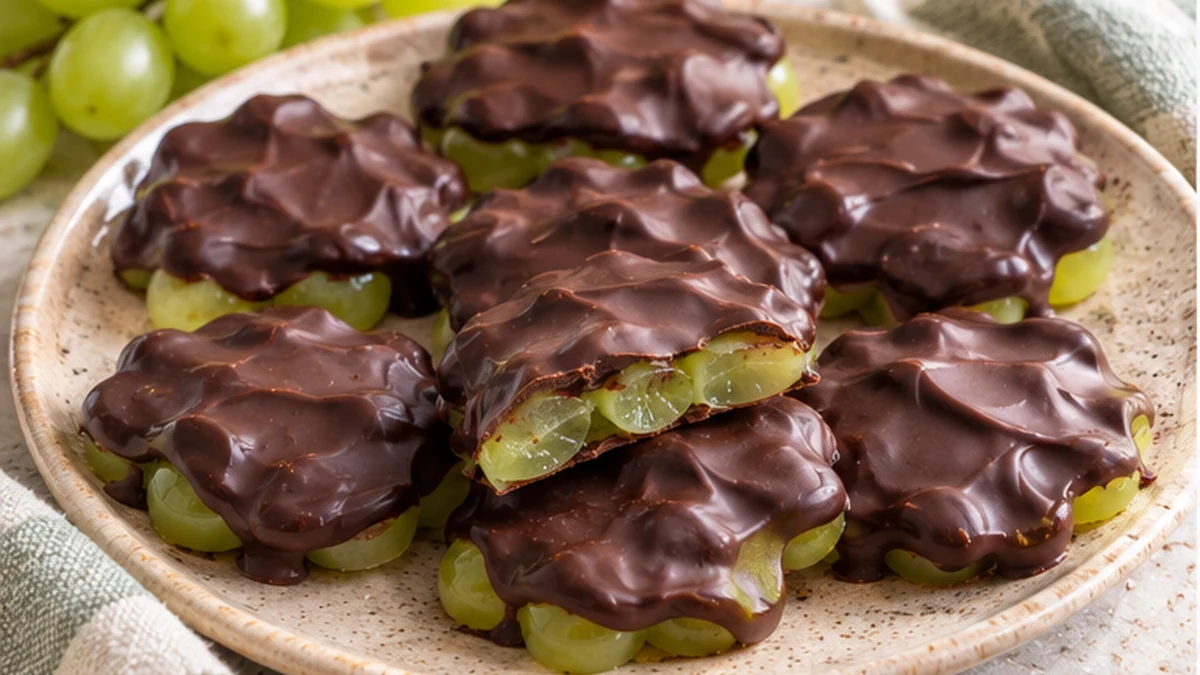
Glass pressed grape bark turns fresh seedless green grapes and melted dark chocolate into crisp-topped, juicy little clusters. Arrange the grapes in circles, gently flatten them with the base of a drinking glass, cover with chocolate, and chill until the coating firms. It is a quick, no-oven dessert. If you have made our caramel apple bark, you already know why drying fresh fruit before adding chocolate matters.
The idea became visible in a short-form video published in November 2026, but the goal here is a practical home-kitchen method—not a claim that a particular creator invented chocolate-covered grapes. You need about 15 minutes of hands-on prep and 25 minutes in the refrigerator. For other simple sweet snacks, see our healthy snack recipes; this is the fast chocolate-and-fruit option in that group.
Table of Contents
What Is Glass Pressed Grape Bark?
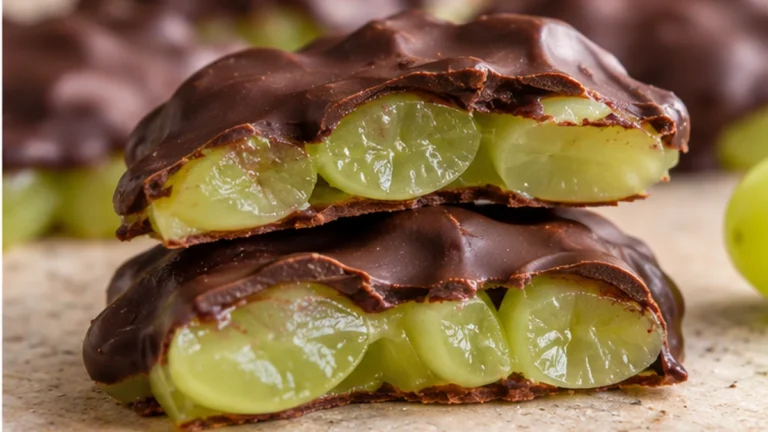
For glass pressed grape bark, the defining technique is the glass press. Instead of dipping individual grapes into chocolate, you group roughly seven to nine grapes into a compact round on parchment, then use the flat base of a clean glass to gently push them closer together and slightly flatten the tops. When you spoon melted chocolate over the fruit, it forms a connected cap that lifts off the parchment as one snack-sized cluster. The technique is simpler than assembling the layered sheet used for caramel apple bark and leaves the grapes easy to recognize.
Why This Version Works
A gentle press keeps the grapes grouped without turning them into juice.
Drying the grapes before pressing helps chocolate stick rather than slide.
Six ounces of dark chocolate gives eight modest clusters a thin but reliable coating.
One teaspoon of refined coconut oil makes the melted chocolate easier to spoon; it is optional.
The portions set in the refrigerator without heating an oven or making syrup.
The instructions include troubleshooting for splitting grapes, thick chocolate, and wet bark.
Ingredients You Need
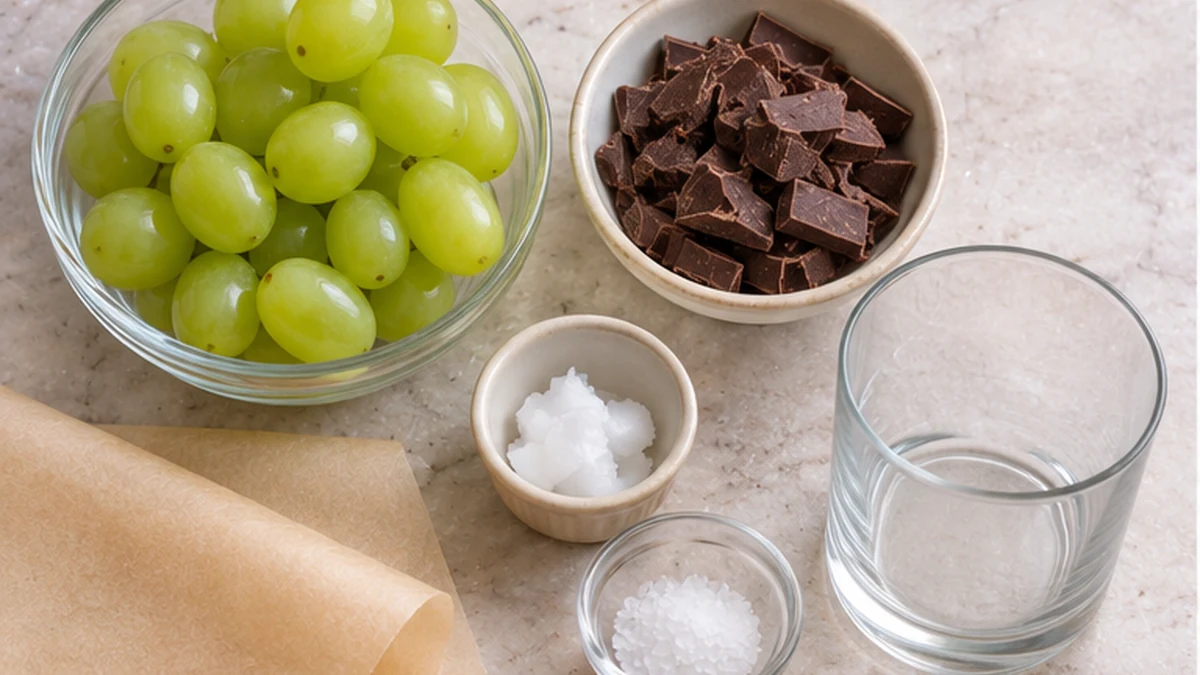
Seedless green grapes: Use 2 cups (about 300 grams) of fresh, firm grapes, preferably small to medium in size. Very large grapes make oversized clusters that are harder to press evenly. Choose berries without split skins or soft spots. This snack needs fresh grapes, not thawed frozen ones; for a frozen-fruit dessert with a different approach, visit our banana yogurt bark recipe.
Dark chocolate: Measure 6 ounces (170 grams) of chopped 65–70% dark chocolate or similarly formulated dark chocolate chips. The chocolate must melt smoothly and be appropriate for your dietary needs. If you are serving someone who avoids dairy, choose a product labeled dairy-free or vegan, not simply one that looks dark. For other chocolate serving ideas, our gluten-free candy guide explains why packaged-product labels matter.
Refined coconut oil and salt: One teaspoon of refined coconut oil is enough to loosen a thick melt without leaving the chocolate greasy; do not add water or milk. An optional pinch of flaky sea salt gives a sharper chocolate finish. If you prefer creamy chocolate desserts instead of a crisp coating, compare the ingredients with our high protein chocolate mousse, which uses a completely different yogurt-based texture.
Equipment and Setup
Line a small rimmed baking sheet or a flat freezer-safe tray with parchment paper. Set out one clean drinking glass with a flat, smooth base about 2½ to 3 inches wide; a straight-sided tumbler works particularly well. You also need a completely dry microwave-safe bowl, a spoon, paper towels, and refrigerator space for the tray to lie level. Our snack recipe collection has more small-portion ideas, but this one specifically requires the glass and flat tray to maintain the pressed shape.
Juicy seedless green grapes are gently shaped with a drinking glass, covered with melted dark chocolate, and chilled into eight crisp-topped no-bake clusters.
Total Time:40 minutes
Yield:8 clusters
Ingredients
Scale
2 cups (about 300 g) fresh seedless green grapes, washed, stemmed, and dried very thoroughly
6 ounces (170 g) chopped 65–70% dark chocolate labeled vegan, dairy-free, and gluten-free
1 teaspoon refined coconut oil, optional, to help the chocolate flow
1/8 teaspoon flaky sea salt, optional, for finishing (not included in the nutrition estimate)
Instructions
Line a flat baking sheet or cutting board with parchment paper. Make enough level space in the refrigerator for the tray.
Rinse the grapes under cool running water, remove all stems, discard damaged fruit, and dry the grapes completely with clean towels. Let air-dry briefly if needed.
Arrange the 2 cups of grapes into eight compact, single-layer circles of about 7–9 grapes each, keeping the grapes in each circle touching.
Use the flat bottom of a clean, dry drinking glass to gently press each grape circle for 1–2 seconds. Stop when the group is slightly flattened; do not crush until juice leaks. Replace split grapes and blot up any moisture.
Place the chopped chocolate and optional coconut oil in a dry microwave-safe bowl. Microwave for 20 seconds, stir, then heat in 10–15-second bursts, stirring between each, until almost melted. Stir until completely smooth.
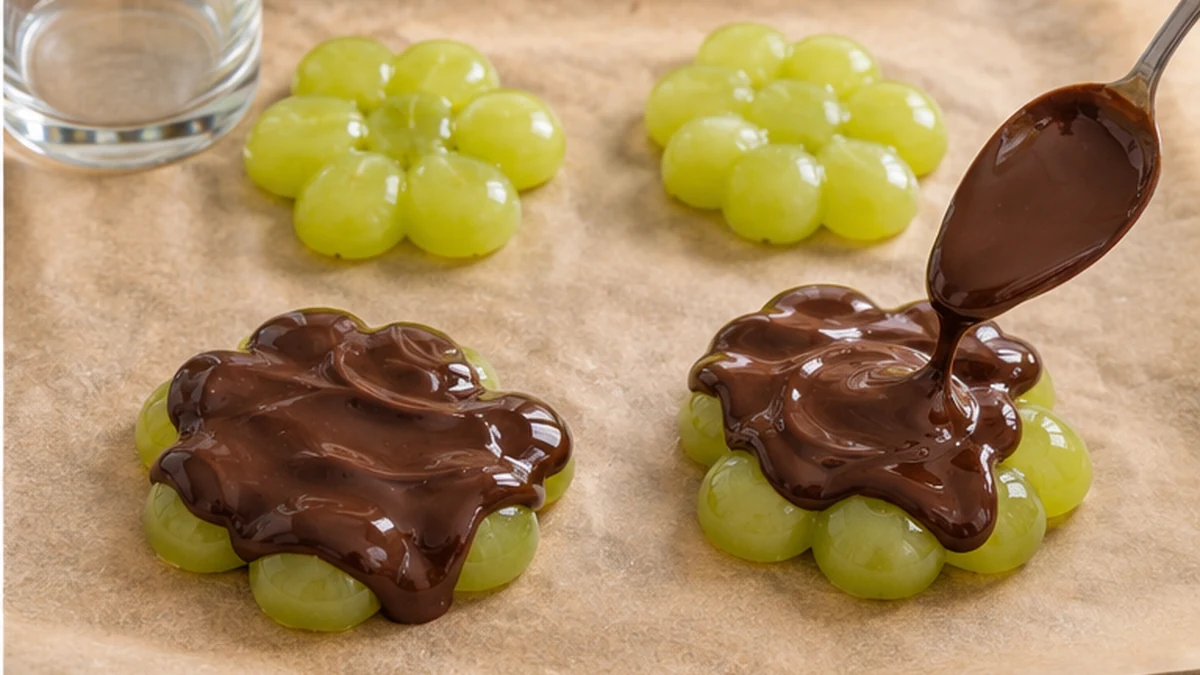
Spoon the melted chocolate over each cluster, spreading lightly so the chocolate connects the grapes into one disc-like piece. Leave some green grape edges visible. Sprinkle with optional flaky salt while the coating is soft.
Refrigerate the tray for about 25 minutes, until the chocolate is firm and releases cleanly from parchment. Lift each cluster with a thin spatula.
Serve cold. Cover and refrigerate leftovers promptly; for the best fruit texture, enjoy within about 24 hours.
Notes
The pressing step should group and slightly flatten grapes, not rupture them; replace any very leaky grapes.
Dry fruit and dry utensils are essential. Water can make melted chocolate seize or slide off the grapes.
For vegan, dairy-free, or gluten-free serving, check the actual chocolate product label and the kitchen for cross-contact.
Grapes remain recognizable whole pieces under the chocolate and can be a choking risk for young children; this recipe is not intended for toddlers.
The nutrition estimate assumes 300 g grapes, 170 g of 65–70% dairy-free dark chocolate, and 1 teaspoon coconut oil, divided into eight clusters. Optional flaky salt is excluded. Chocolate brands differ substantially.
Keep refrigerated at 40°F (4°C) or below. Best quality is the day made or within approximately 24 hours.
Author:Adam Moretti
Prep Time:15 minutes
Chill Time:25 minutes
Cook Time:0 minutes
Category:Dessert
Method:No-Cook
Cuisine:American
Diet:Vegan
How to Make Glass Pressed Grape Bark
1. Wash and thoroughly dry the grapes
Rinse the grapes under running water, discard any bruised or broken ones, remove the stems, and pat every grape dry with clean paper towels. Let them air-dry on another towel for a few minutes if they still look glossy with water. The FDA guidance on fresh produce recommends washing produce under running water and drying it with a clean towel; do not use soap or detergent. For another snack where water changes the finish, see our air fryer candied cranberries.
2. Form eight compact grape circles
To shape glass pressed grape bark, place seven to nine grapes close together in a roughly 2½-inch circle on the parchment, then repeat until you have eight clusters. Keep the grapes touching but not piled in multiple layers. A single layer makes the finished glass pressed grape bark sturdy enough to pick up without making the chocolate unusually thick. For a sheet-pan-style alternative with fresh fruit, use our caramel apple bark tutorial instead.
3. Press gently with a drinking glass
Lower the flat base of the clean glass over one group and apply light, even pressure for one to two seconds. You want to corral the grapes and just flatten their tops; do not grind or twist the glass. Lift straight up. Repeat with the other groups. If a grape splits, remove it and replace it with an intact one, then blot the parchment. A few slightly squashed grapes are expected; a puddle of juice is the warning sign to stop pressing.
4. Melt the chocolate slowly
Place the chopped dark chocolate and optional teaspoon of coconut oil in a dry microwave-safe bowl. Heat for 20 seconds, stir, and repeat in 10–15 second intervals until a few small pieces remain. Stir until residual heat melts the last pieces. The chocolate should fall from the spoon in a smooth ribbon, not stand up like frosting. This is the same gentle-melting principle used in our dark chocolate candy clusters; keeping water out is especially important here.
5. Spoon chocolate over each cluster
Spoon the melted chocolate over the center of each grape circle and nudge it toward the edges so neighboring grapes connect beneath one chocolate layer. You do not need to bury every grape; little green edges are part of the look. Aim for an even cap instead of a tall mound, and add the optional flaky salt while the chocolate is soft. If the coating is too thick, the finished snack will resemble a chunky bonbon rather than glass pressed grape bark. For a different sweet-and-salty finish, our hot honey popcorn takes the same contrast in a crunchy direction.
6. Chill and lift the finished clusters
Refrigerate the tray for about 25 minutes, or until the chocolate is firm when gently touched at the thickest point. Slide a thin spatula underneath one cluster and lift carefully. If the chocolate bends, return the tray to the fridge for five more minutes. Serve the glass pressed grape bark cold while the fruit is crisp and the topping is snappy. Another cold treat with a different texture is our banana and peanut butter yogurt bark.
How to Tell When It Is Ready
The top should look set rather than wet, and the chocolate should release from parchment without stretching. Lift one piece and look at the underside: a few visible green grapes are normal, but large wet patches mean the fruit was not dried enough. The clusters should feel cool and solid in your hand, with a little give from the grapes below. If you prefer an entirely creamy finish, our chocolate mousse recipe is a better match than leaving this bark out until it softens.
Troubleshooting the Most Common Problems
My grape clusters fell apart
Usually the grapes were too far apart or the chocolate did not bridge them. Next time, place them so they touch before pressing, and make sure a thin line of chocolate connects each fruit to its neighbors. If a chilled cluster cracks, serve the pieces as chocolate-covered grapes rather than trying to glue them together. Our no-bake caramel apple bark is also intentionally broken into irregular portions and may suit a less structured presentation.
The chocolate slid off or formed wet spots
In glass pressed grape bark, water is the usual cause: rinsing without drying, using thawed grapes, or bursting fruit with too much pressure. Pat dry before pressing, keep the glass base clean and dry, and blot any juice before spooning on chocolate. Never stir water into melted chocolate; it can seize. This moisture issue is similar to the coating problems covered in our sparkling cranberry snack, although that recipe uses sugar rather than chocolate.
The chocolate is thick, streaky, or grainy
Chocolate may overheat, or the bowl may have contained a drop of water. Use short microwave bursts and thorough stirring, and stop heating before everything is fully melted. Add only the measured coconut oil if the chocolate is thick. For a different approach that intentionally blends chocolate with other ingredients, see our protein chocolate mousse; do not adapt its liquid ratios to this bark.
Flavor Variations That Still Hold Together
Milk-chocolate-style version: use a dairy-containing milk chocolate if dairy-free or vegan status is not needed; the nutritional estimate changes.
Extra-dark version: choose 75% chocolate for a less sweet finish; you may need a touch more coconut oil for smooth spreading.
Crunchy finishing touch: add up to 1 tablespoon finely chopped roasted pistachios across the entire batch while chocolate is wet; this introduces a tree-nut allergen.
Citrus variation: sprinkle a little dry orange zest over the chocolate before chilling.
White-chocolate variation: possible, but much sweeter and often dairy-containing; use a product that melts smoothly.
Serving Ideas and Simple Pairings
One or two cold clusters make a simple after-dinner treat. Arrange on a chilled plate next to the red fruit in our air fryer candied cranberries for a colorful holiday dessert board, keeping the snacks separate until serving so the fresh fruit does not soften other crunchy bites.
Can You Make It Ahead or Freeze It?
Glass pressed grape bark is best made the same day. Prepare glass pressed grape bark up to 24 hours before serving, refrigerate the clusters in a single layer in a covered container, and add parchment between layers if you must stack them. Fresh grapes release water over time, so a longer hold can create condensation and soften the underside of the chocolate. This is a more perishable treat than most solid chocolate candies in our gluten-free candy collection.
Freezing is possible for a firmer, icier snack, but it changes the bite: grapes become very hard when fully frozen, and thawing can make the chocolate wet. If you choose to freeze, label the container, keep portions small, and eat the clusters straight from the freezer after a brief softening period rather than thawing them on the counter. For a recipe intended specifically as a frozen bark, the high-protein banana yogurt bark is a more predictable choice.
Food Safety, Allergens, and Storage
Wash fresh grapes under cool running water and dry them carefully before use; the FDA fresh-produce recommendations specifically advise against soap or produce detergents. Once the grapes have been pressed and covered, keep the finished clusters refrigerated at 40°F or below. The FDA storage guide advises prompt refrigeration and no more than two hours at room temperature for perishable food; shorten that to one hour above 90°F. For another refrigerated fresh-fruit dessert, compare storage advice in our caramel apple bark recipe.
Grapes can present a choking hazard for young children; pressing them lightly beneath chocolate does not make this recipe appropriate for toddlers. Serve only to people who can safely chew grape pieces, and supervise younger children with age-appropriate food preparation. Check the chocolate label for milk, soy, nuts, wheat, and shared-equipment statements as relevant. The FDA gluten-free labeling guidance explains what a U.S. gluten-free claim means. Our gluten-free desserts guide has broader ingredient-checking advice.
Nutrition: What the Estimate Includes
The recipe card provides an estimate per one of eight clusters, based on roughly 300 grams of raw grapes, 170 grams of 65–70% dark chocolate, and one teaspoon of coconut oil. The exact chocolate matters more than the grapes: brands differ widely in cocoa percentage, added sugar, and fat. Use the nutrition panel on your own package for a closer estimate, and check values against USDA FoodData Central when adjusting quantities. For a different protein-focused chocolate dessert, try our high protein chocolate mousse rather than treating these clusters as high-protein food.
Glass Pressed Grape Bark FAQs
How do you make glass pressed grape bark without a mold?
Arrange the clean, dry grapes in small circles on parchment and press gently with the flat base of a drinking glass. Cover each cluster with melted chocolate and refrigerate until set. You do not need a silicone mold, candy molds, or a special press. If you prefer a full flat sheet, our caramel apple bark is built with that format instead.
Should the grapes be frozen before adding chocolate?
No. Fresh, firm, thoroughly dried grapes are easier to group and press without excessive juice loss. Frozen grapes can collect condensation when they meet warm melted chocolate, and thawed grapes tend to be too soft. Refrigerate the finished clusters to set the topping, but start with fresh fruit.
Can I use chocolate chips instead of a chocolate bar?
Yes, if they melt smoothly. Some chips are formulated to retain their shape and may need slower warming and a little coconut oil to flow well. Read the label if you need dairy-free or gluten-free chocolate, especially when making sweets for people with allergies. Our gluten-free candy recipe guide discusses other chocolate-based snacks and ingredient labels.
Is glass pressed grape bark vegan or gluten free?
For glass pressed grape bark, the grapes are naturally plant-based and gluten-free, but chocolate products vary. With a dark chocolate specifically labeled vegan, dairy-free, and gluten-free, this version can fit those patterns. Avoid claiming that all dark chocolate has no milk or cross-contact risk. If strict avoidance is important, start with our gluten and dairy free dessert guide and verify the actual bar or chips.
Final Tips
For glass pressed grape bark, remember the three visual checks: dry grapes before pressing, a gentle press that leaves the fruit intact, and a continuous chocolate cap that holds each cluster together. Keep the recipe small the first time so you can learn how your chocolate flows and sets. The payoff is a fresh, juicy center under a firm chocolate layer, with far less work than traditional candy making. For another fruit-and-chocolate contrast, start with our caramel apple bark.
Reviewed recipe options
Make this recipe fit me
Choose one of seven popular diet options. NutriMatch will confirm whether the recipe already fits, show a reviewed adaptation when available, or recommend recipes that match your choice.
Please choose a diet first.
Already a reviewed match
This recipe already fits Dairy-Free.
No changes are needed based on its reviewed NutriMatch classification. Check the complete ingredients, product labels, and serving details for your own needs.
Recipe details, product formulas, and cross-contact information can change. Confirm current labels and use professional guidance when medically necessary.
Already a reviewed match
This recipe already fits Gluten-Free.
No changes are needed based on its reviewed NutriMatch classification. Check the complete ingredients, product labels, and serving details for your own needs.
Recipe details, product formulas, and cross-contact information can change. Confirm current labels and use professional guidance when medically necessary.
Not available for this recipe
This recipe cannot currently be made High Protein with a reviewed adaptation.
NutriMatch will not guess at substitutions. Try one of these recipes that is already reviewed for your choice.
Recipe details, product formulas, and cross-contact information can change. Confirm current labels and use professional guidance when medically necessary.
Not available for this recipe
This recipe cannot currently be made Keto with a reviewed adaptation.
NutriMatch will not guess at substitutions. Try one of these recipes that is already reviewed for your choice.
Recipe details, product formulas, and cross-contact information can change. Confirm current labels and use professional guidance when medically necessary.
Not available for this recipe
This recipe cannot currently be made Low Carb with a reviewed adaptation.
NutriMatch will not guess at substitutions. Try one of these recipes that is already reviewed for your choice.
Recipe details, product formulas, and cross-contact information can change. Confirm current labels and use professional guidance when medically necessary.
Already a reviewed match
This recipe already fits Vegan.
No changes are needed based on its reviewed NutriMatch classification. Check the complete ingredients, product labels, and serving details for your own needs.
Recipe details, product formulas, and cross-contact information can change. Confirm current labels and use professional guidance when medically necessary.
Already a reviewed match
This recipe already fits Vegetarian.
No changes are needed based on its reviewed NutriMatch classification. Check the complete ingredients, product labels, and serving details for your own needs.
Recipe details, product formulas, and cross-contact information can change. Confirm current labels and use professional guidance when medically necessary.