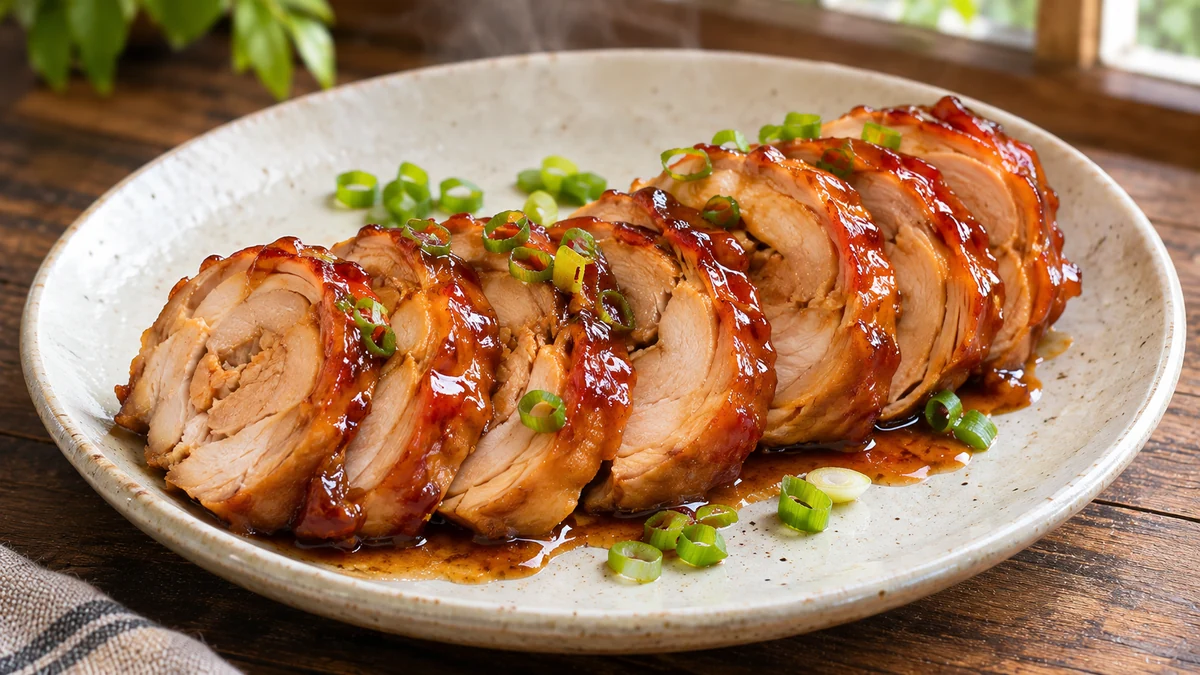
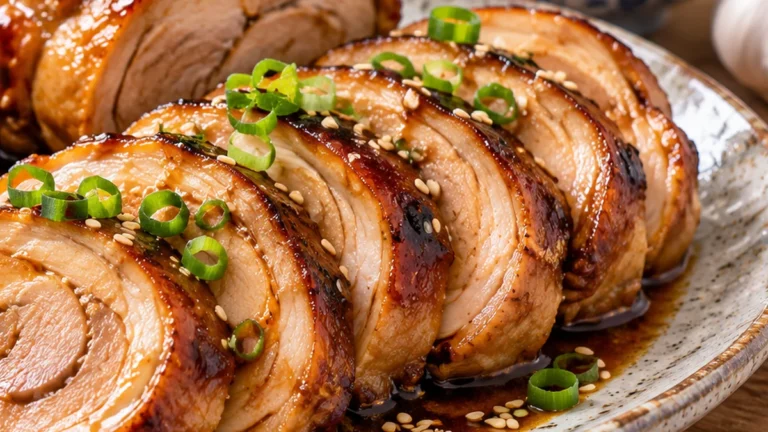
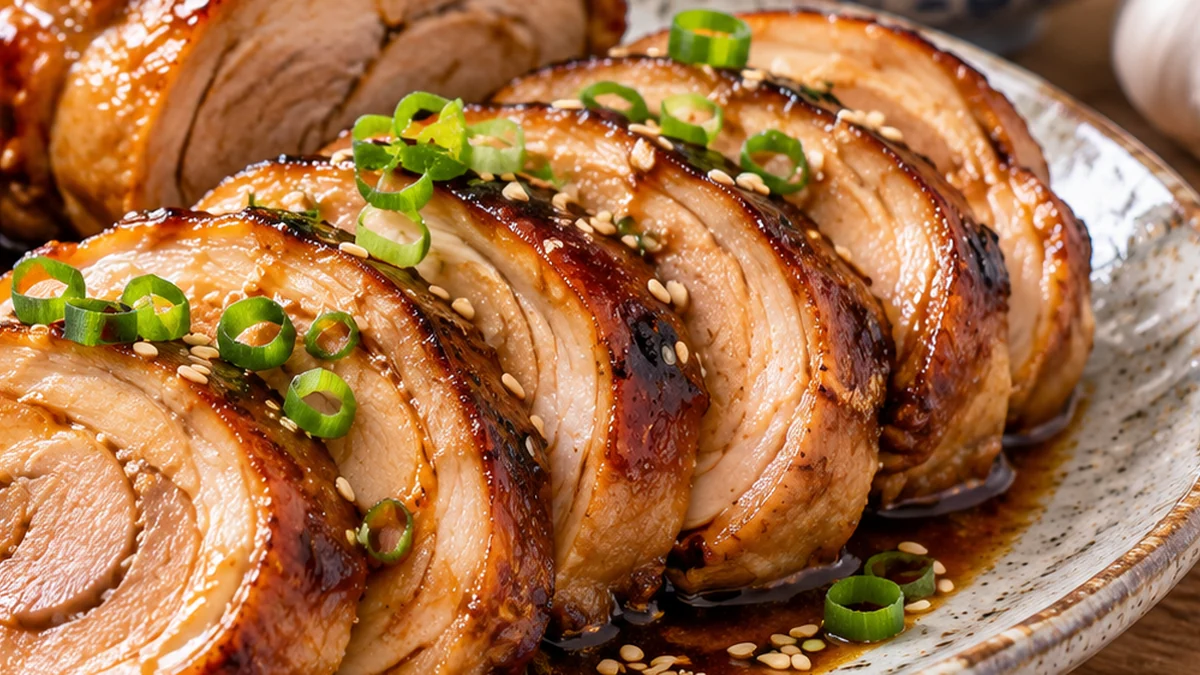
Yakiniku chicken chashu turns boneless chicken thighs, bottled Japanese-style barbecue sauce, and water into juicy, glossy slices with a savory-sweet finish. Instead of building a sauce from soy sauce, sugar, garlic, and ginger, you let one prepared condiment do most of the seasoning. The chicken is rolled, gently simmered in the sauce, and briefly glazed in the same skillet.
This three-item version makes four protein-rich servings in about 50 minutes. It is inspired by a Japanese chicken-chashu video that gained attention in November 2026, but it is an independent stovetop adaptation for American grocery stores. You do not need a pressure cooker, specialty oven, or a long marinade. You do need a thermometer to make sure the center of each roll reaches 165°F.
Why Yakiniku Chicken Chashu Is Trending
A short video from Japanese food publisher DELISH KITCHEN, tracked on November 5, 2026, highlighted how bottled yakiniku sauce can simplify chicken chashu. One tracked snapshot reported about 679,000 views and a sharp one-day increase. Those are social-video numbers, not U.S. search volumes, and a viral video does not make chicken chashu a newly invented dish.
Chashu generally refers to seasoned sliced meat, commonly pork in Japanese ramen shops. Chicken versions have existed for years. The specific appeal here is the shortcut: instead of measuring several seasonings and reducing an elaborate braising liquid, a prepared sauce provides sweetness, salt, aromatics, and color at once. This is why an approachable three-item recipe can be useful even after the trend fades.
Table of Contents
Why Yakiniku Chicken Chashu Works
Boneless thighs stay tender during a covered simmer and roll into compact portions.
Yakiniku sauce brings soy-based umami, sweetness, and aromatics without a long shopping list.
Measured water prevents the sugary sauce from burning while the center cooks through.
A short reduction turns the remaining liquid into a glaze that clings to the slices.
A thermometer takes the guesswork out of thicker rolled pieces.
No separate marinade is needed, so the recipe fits an ordinary weeknight.
The result is not identical to restaurant pork chashu or chicken cooked sous vide. It is a home-friendly, saucy chicken version intended for rice bowls, ramen, or a plate of vegetables. The chicken carries enough flavor to be served on its own, while its mild sweetness makes it easy to pair with steamed greens.
The 3 Ingredients You Need
1½ pounds (680 g) boneless, skinless chicken thighs: approximately four equal pieces, ideally 5 to 7 ounces each. Trim large loose flaps, but do not remove every small bit of fat.
⅓ cup (80 mL) bottled yakiniku sauce: choose a savory-sweet Japanese barbecue or yakiniku-style sauce that is intended for cooking. Flavor, sodium, and sugar vary widely by brand.
½ cup (120 mL) water: the third measured item. It thins the sauce so the meat can simmer before the liquid reduces.
Yes, water counts as one of the three listed ingredients here; in shopping-list terms, you only need to buy chicken and sauce. Kitchen twine or wooden toothpicks are equipment, not edible ingredients. Green onions, sesame seeds, rice, and eggs in serving suggestions are optional extras and are not included in the three-ingredient recipe or nutrition calculation.
What Sauce Should I Buy?
Look for a sauce labeled yakiniku sauce, yakiniku tare, or a Japanese-style barbecue sauce that already includes soy sauce, sweetener, and aromatics. Thin soy sauce alone is not a substitute: it tends to taste much saltier and lacks the body needed for a glossy finish. Thick American-style smoky BBQ sauce will produce a different flavor and can scorch faster. If your bottle is extremely thick, keep the skillet at a gentle simmer and add water by the tablespoon if needed.
For a U.S. comparison point, one retail Japanese barbecue sauce nutrition label lists 35 calories, 8 grams carbohydrate, and 520 milligrams sodium per tablespoon. Other yakiniku sauces can be different. The estimate below uses that label as a reference, not a claim that every sauce has identical nutrition. The example sauce contains wheat, soy, and sesame, so check the actual bottle if you have food allergies or need gluten-free food.
Can I Use Chicken Breast Instead?
You can, but it is not a straight one-for-one swap for this technique. Chicken breast is leaner and can become dry while the liquid reduces. If you choose breast, use pieces of similar thickness, check 165°F earlier, and remove the chicken as soon as it reaches the safe temperature. The listed nutrition estimate is for thighs, not breasts. For a more forgiving result, use thighs the first time.
⅓ cup (80 mL) bottled yakiniku sauce or Japanese-style barbecue sauce
½ cup (120 mL) water
Instructions
Pat the chicken thighs dry. Open each thigh flat and lightly butterfly any especially thick section. Fold loose edges in, roll tightly into a cylinder, and secure each roll with two toothpicks or food-safe kitchen twine.
Place the rolled thighs seam-side down in a wide nonstick skillet over medium heat. Brown for about 3 minutes, then turn and cook for another 3 to 4 minutes until a few lightly golden patches appear; do not add oil.
Reduce heat to medium-low. Pour in the water first, then the yakiniku sauce. Gently stir the liquid around the chicken. Bring to a low simmer, cover, and cook 12 to 18 minutes, turning the rolls halfway through.
Check the thickest center of each roll with an instant-read thermometer, avoiding twine or toothpicks. Remove each roll to a clean plate when it reaches 165°F (74°C). If a piece is not done, keep it in the covered skillet and check again.
Bring the remaining skillet liquid to a steady boil and reduce for 3 to 5 minutes, stirring often, until it lightly coats a spoon. Return the cooked chicken to the pan and turn briefly to glaze.
Transfer the chicken to a clean plate and rest 5 minutes. Carefully remove all toothpicks or twine, slice into ½-inch rounds, and spoon over the fully cooked sauce. Serve warm. Optional rice, eggs or garnishes are not part of the three ingredients or nutrition estimate.
Notes
Yield: four servings, each roughly one rolled thigh plus one-quarter of the cooked sauce. Rice, eggs, green onions, and sesame seeds shown as serving ideas are optional and not counted.
This version intentionally counts ½ cup water as the third ingredient; chicken and bottled sauce are the only purchased food items.
Use medium or medium-low heat. Many bottled sauces contain sugar, so do not allow the liquid to reduce to a sticky glaze before the chicken reaches 165°F.
All chicken must reach 165°F in the thickest center according to FoodSafety.gov; a thermometer is required. The sauce that contacts raw chicken must be boiled thoroughly before serving.
Nutrition is an ingredient-based estimate for 680 g raw boneless skinless thigh meat plus ⅓ cup sauce, modeled using an example U.S. Japanese barbecue sauce label (35 kcal, 8 g carbohydrate, 520 mg sodium per tablespoon). Brand labels and the amount of sauce ultimately eaten change the result.
Bottled yakiniku and Japanese barbecue sauces commonly contain wheat, soy, and/or sesame. Read actual product labels and check for relevant allergens.
Cool promptly and refrigerate at 40°F or below for up to 3 to 4 days; reheat leftovers thoroughly to 165°F.
Author:Adam Moretti
Prep Time:15 minutes
Resting:5 minutes
Cook Time:30 minutes
Category:Dinner
Method:Stovetop
Cuisine:Japanese-Inspired
Diet:High Protein
How to Make Yakiniku Chicken Chashu
1. Flatten and Roll the Thighs
Pat the thighs dry with paper towels. Open each one flat on a clean board, with the smooth side down. If one end is substantially thicker, make a shallow cut to even it out without cutting through. Fold any narrow ends inward, then roll each thigh tightly into a short cylinder. Secure with two toothpicks or food-safe kitchen twine. Try to make all four rolls similar in thickness so they cook at roughly the same rate.
A perfect spiral is not required. The goal is an even, compact piece that will slice neatly after resting. If the thighs are too small or irregular to roll, you can cook them flat; the sauce still works, but the result will look more like glazed chicken than classic sliced chashu.
2. Lightly Brown in a Nonstick Skillet
Place the rolls seam-side down in a wide nonstick skillet over medium heat. Do not add oil. The small amount of natural fat released from the thighs should help them release from a good nonstick surface. Cook for about 3 minutes, then turn carefully and cook for another 3 to 4 minutes, just until a few golden patches appear. Avoid using high heat: sugary sauce is coming next, and hard browning is not necessary for the finished dish.
3. Add Sauce and Water, Then Cover
Reduce the heat to medium-low. Pour in ½ cup water first, followed by ⅓ cup yakiniku sauce, and stir the liquid around the chicken. Bring it to a gentle simmer, cover, and cook for about 12 to 18 minutes, turning the rolls halfway through. The liquid should bubble slowly, not boil furiously. If your pan is wide and the sauce reduces too soon, add another tablespoon or two of water; that water is a cooking adjustment, not a new flavor ingredient.
4. Check the Temperature Before Glazing
Insert an instant-read thermometer sideways into the thickest center of each roll, avoiding any toothpick or string. Remove each roll once its center reaches 165°F (74°C). FoodSafety.gov specifies 165°F for chicken thighs and all other poultry. Brown edges or clear-looking juices do not prove the chicken is fully cooked. If one roll is behind, return just that piece to the covered pan and check again.
5. Reduce the Sauce and Rest
Transfer the cooked chicken to a clean plate. Bring the remaining pan liquid to a steady boil and reduce for roughly 3 to 5 minutes, stirring often, until it coats the back of a spoon. Because this sauce was in contact with raw chicken, do not use it as an uncooked dipping sauce. Add the cooked chicken back and turn briefly to glaze. Rest for about 5 minutes before removing twine or toothpicks, then slice across the rolls into ½-inch rounds.
The ideal finish is glossy, not sticky-hard: the glaze should leave a thin shiny layer without turning into candy. If it darkens too rapidly, move the pan off the heat and loosen it with a spoonful of water. If it is watery, remove the chicken and simmer the liquid a little longer.
How to Tell When It Is Done
Look for three separate signs. First, the thermometer reads at least 165°F in the thickest part. Second, the rolls hold together when the ties are removed after resting. Third, the sauce has reduced enough to cling to the outer surface. The slices should look moist inside, with a soft spiral rather than shredded strands. A very thick roll may take several additional minutes; temperature wins over the clock.
Yakiniku Chicken Chashu Troubleshooting
The Yakiniku Sauce Is Burning
Most bottled sauces contain some sugar. If the pan gets dry while the chicken is still below 165°F, the sugar can scorch before the middle is safe. Reduce the heat immediately, add 1 or 2 tablespoons water, and return to a gentle covered simmer. Begin reducing the sauce only after the chicken is cooked and removed. Avoid treating the sauce like a high-heat stir-fry glaze from the very beginning.
The Chicken Rolls Unwind
A loose roll, slippery fingers, or a single toothpick can cause the seam to open. Use two toothpicks crossing the seam or tie each piece in two places with kitchen twine. Keep the seam-side down during the first few minutes to help it set. If a roll opens during cooking, it is not ruined; cook the piece thoroughly, then slice it like regular glazed thigh instead of forcing it back into shape while hot.
The Chicken Is Dry or Unevenly Cooked
An over-tight roll and high heat can produce a dry outer layer around an underdone center. Keep the heat low enough to simmer gently and take the temperature of each roll separately. The most reliable strategy is to select thighs of similar weight, flatten their thick ends, and let them rest before slicing. A thinner thigh may reach 165°F sooner; remove it rather than waiting for the larger pieces to catch up.
The Glaze Is Too Salty
Reducing sauce concentrates salt as well as sugar. Taste a tiny amount only after the chicken and sauce have been fully cooked. If it tastes too strong, add warm water a teaspoon at a time and stop reducing. Next time, choose a lower-sodium sauce or start with less sauce. This is why sodium in the nutrition panel is an estimate rather than a universal value for every brand.
Serving Ideas for Yakiniku Chicken Chashu
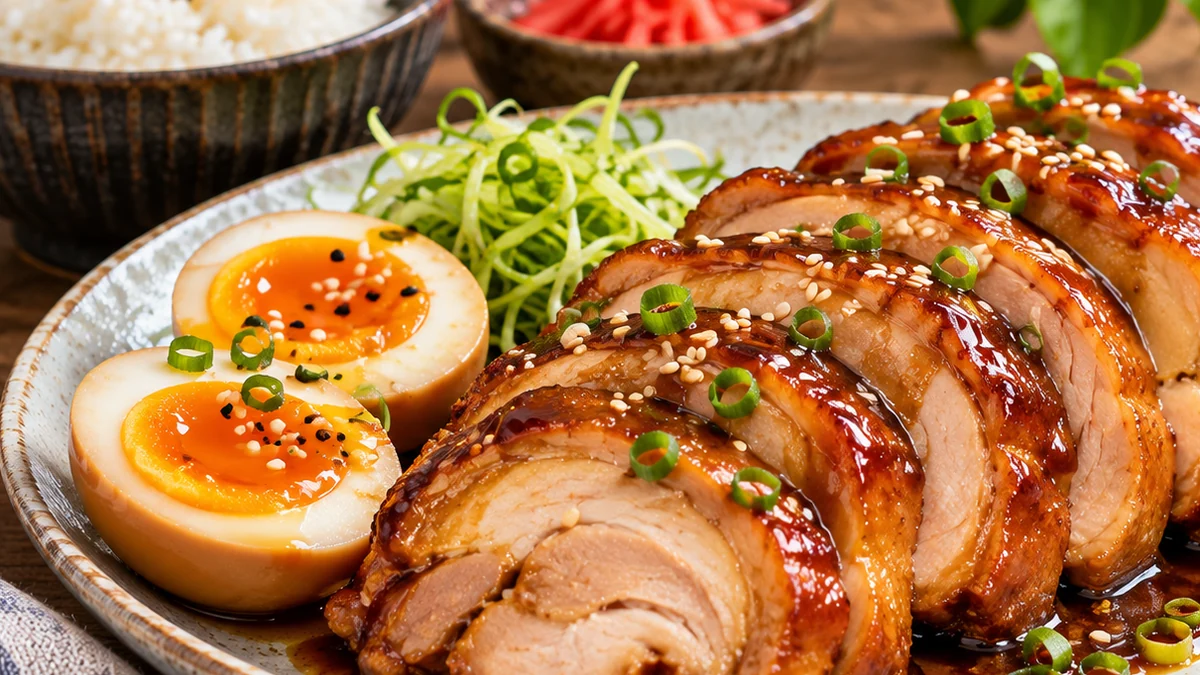
The rolled chicken itself is a compact protein component. For a full meal, serve a few slices over warm rice with steamed broccoli, sautéed cabbage, or cucumber salad. Rice and vegetables are serving suggestions and change the nutrition of the finished plate. If you want an all-in-one lunch with a different flavor profile, our high-protein chicken fried rice meal prep is built for refrigerated portions.
Another option is to place slices on noodles or ramen, then spoon on a little of the fully cooked glaze. The sweet-salty sauce goes well with a soft-boiled egg, sliced green onion, and sesame seeds if you already have them. Those toppings are optional, and they are not part of the three-ingredient recipe. For a richer, nontraditional noodle dinner, see our high-protein peanut butter ramen.
If you are counting protein, treat the nutrition estimate as one-quarter of the chicken and sauce only. Adding a cup of cooked rice, a ramen serving, an egg, or extra sauce can change calories and sodium substantially. To browse more balanced dishes with different protein sources, our high-protein foods guide is a broader starting point.
Yakiniku Chicken Chashu Storage and Reheating
This is a useful recipe to prepare ahead because you can keep the chicken whole and slice it just before serving. Let it cool briefly, then transfer to shallow covered containers and refrigerate promptly at 40°F or below. The USDA chicken storage guidance recommends using cooked chicken within 3 to 4 days. Freeze portions promptly if you need longer storage; the glaze may look a little less glossy after thawing.
Reheat chilled slices with a splash of water in a covered skillet over medium-low heat, turning once or twice. Check the middle of the reheated portion reaches 165°F. The FDA’s safe-handling advice also calls for refrigerating perishable foods within two hours, or within one hour when outdoor temperatures exceed 90°F. Never leave the finished chicken at room temperature for a long meal-prep session.
For office lunches, pack the chicken and rice in separate compartments if you want the chicken to retain its glaze. Add crisp vegetables after reheating rather than steaming them with the meat. Avoid carrying a lunch without cold packs when refrigeration is not available. The sauce already contains salt and sugar, so you generally will not need additional seasoning.
Yakiniku Chicken Chashu Variations
Spicier: choose a hot yakiniku sauce rather than adding a separate chili sauce. Less sweet: buy a lower-sugar bottled version, noting that a thinner sauce may take longer to glaze. Unrolled: lay thighs flat and simmer until 165°F for an easier, less photogenic weeknight version. Chicken breast: possible with closer temperature monitoring, but expect a leaner texture and different macros.
These alternatives preserve the basic technique, but they are not nutritionally identical to the featured recipe. If you have a medically necessary dietary restriction, verify the specific sauce’s ingredients and shared-facility information rather than assuming a Japanese-style sauce is free from wheat, soy, sesame, or dairy. The reviewed NutriMatch classification for this recipe does not mark it gluten-free, soy-free, or sesame-free.
Yakiniku Chicken Chashu FAQs
Is yakiniku chicken chashu authentic Japanese chashu?
It is a Japanese-inspired chicken variation using a common Japanese cooking shortcut. Traditional ramen-style chashu is frequently pork, and regional and home preparations vary. Here the familiar sliced-chashu presentation is combined with a ready-made yakiniku-style sauce, so it should not be described as a direct copy of a particular restaurant recipe.
Does the recipe really have only three ingredients?
Yes. The recipe card lists boneless chicken thighs, bottled yakiniku sauce, and measured water. Some cooks do not count water as an ingredient; in that case it is two purchased food items plus water. Twine or toothpicks are tools. Eggs, rice, scallions, and sesame seeds pictured as serving ideas are optional extras and are not included in the recipe’s yield or nutrition estimate.
Can I make it without rolling the chicken?
Yes. Flatten the thighs, lightly brown them, add the sauce and water, and simmer covered until the thickest portion measures 165°F. You will get glazed chicken thighs rather than round chashu slices. Flat pieces sometimes cook a little faster, so begin checking several minutes sooner.
Can I make this in the microwave or slow cooker?
Those are different methods and require separate tested timings. This version has been designed around a stovetop simmer and a final sauce reduction. Microwaves can heat rolled chicken unevenly, while a slow cooker will not create the same glossy reduced glaze without a separate finishing step. Use the skillet directions for the most predictable result.
Is yakiniku sauce gluten-free?
Not necessarily. Many bottled sauces contain soy sauce brewed with wheat, and some contain sesame or other allergens. Read the current label for your specific product and check any cross-contact information relevant to your needs. Do not infer that the meal is gluten-free just because it contains chicken and water.
Can I prepare it a day ahead for ramen?
Yes. Refrigerate the cooked rolls whole in a covered container with a little of the cooked sauce, then slice and reheat to 165°F the next day. Keep the rice or noodles separate until serving. The slices will be easier to cut cleanly once chilled, although reheating can soften the neat spiral.
Final Tips
The best yakiniku chicken chashu is about controlling heat, not adding more ingredients: make rolls of similar thickness, keep the sauce gently bubbling while the chicken cooks, measure 165°F, and reduce the liquid only after the chicken is safe. Those simple steps give you tender slices and an attractive glaze without needing a long ingredient list.
For a first batch, take note of how salty your chosen sauce tastes and how quickly it thickens. Brands vary more than this short recipe might suggest. Once you know how your bottle behaves in the skillet, it becomes a flexible shortcut for a savory-sweet weeknight chicken dinner.
Reviewed recipe options
Make this recipe fit me
Choose one of seven popular diet options. NutriMatch will confirm whether the recipe already fits, show a reviewed adaptation when available, or recommend recipes that match your choice.
Please choose a diet first.
Not available for this recipe
This recipe cannot currently be made Dairy-Free with a reviewed adaptation.
NutriMatch will not guess at substitutions. Try one of these recipes that is already reviewed for your choice.
Recipe details, product formulas, and cross-contact information can change. Confirm current labels and use professional guidance when medically necessary.
Not available for this recipe
This recipe cannot currently be made Gluten-Free with a reviewed adaptation.
NutriMatch will not guess at substitutions. Try one of these recipes that is already reviewed for your choice.
Recipe details, product formulas, and cross-contact information can change. Confirm current labels and use professional guidance when medically necessary.
Already a reviewed match
This recipe already fits High Protein.
No changes are needed based on its reviewed NutriMatch classification. Check the complete ingredients, product labels, and serving details for your own needs.
Recipe details, product formulas, and cross-contact information can change. Confirm current labels and use professional guidance when medically necessary.
Not available for this recipe
This recipe cannot currently be made Keto with a reviewed adaptation.
NutriMatch will not guess at substitutions. Try one of these recipes that is already reviewed for your choice.
Recipe details, product formulas, and cross-contact information can change. Confirm current labels and use professional guidance when medically necessary.
Not available for this recipe
This recipe cannot currently be made Low Carb with a reviewed adaptation.
NutriMatch will not guess at substitutions. Try one of these recipes that is already reviewed for your choice.
Recipe details, product formulas, and cross-contact information can change. Confirm current labels and use professional guidance when medically necessary.
Not available for this recipe
This recipe cannot currently be made Vegan with a reviewed adaptation.
NutriMatch will not guess at substitutions. Try one of these recipes that is already reviewed for your choice.
Recipe details, product formulas, and cross-contact information can change. Confirm current labels and use professional guidance when medically necessary.
Not available for this recipe
This recipe cannot currently be made Vegetarian with a reviewed adaptation.
NutriMatch will not guess at substitutions. Try one of these recipes that is already reviewed for your choice.
Recipe details, product formulas, and cross-contact information can change. Confirm current labels and use professional guidance when medically necessary.