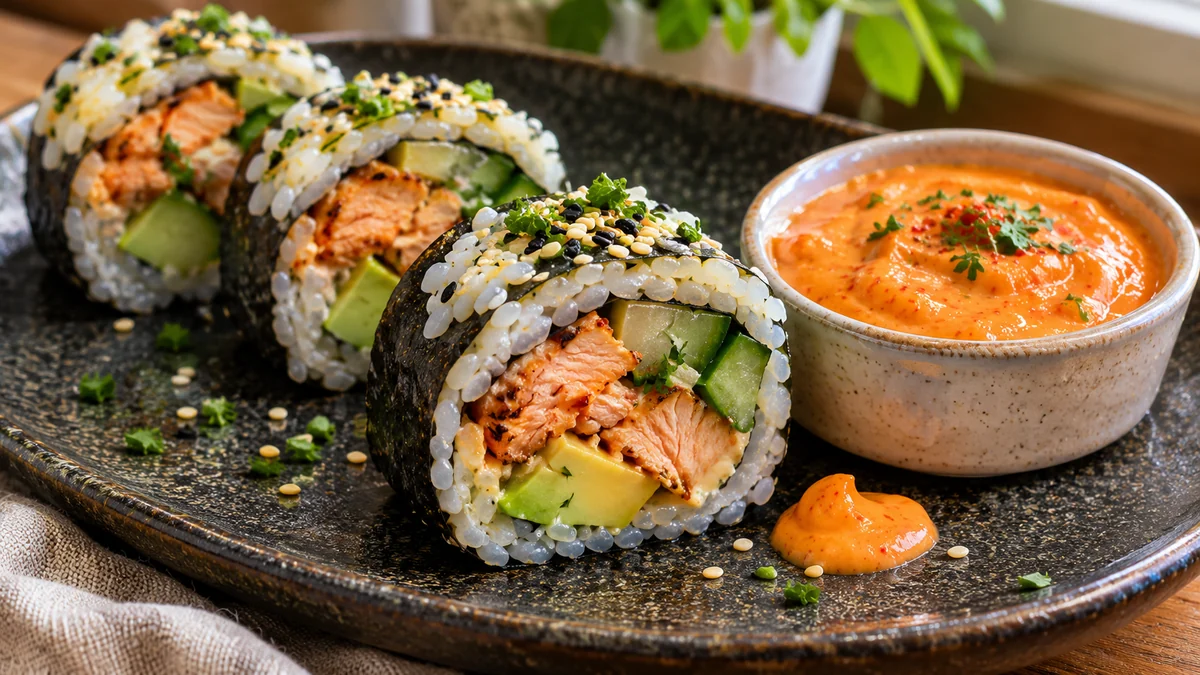
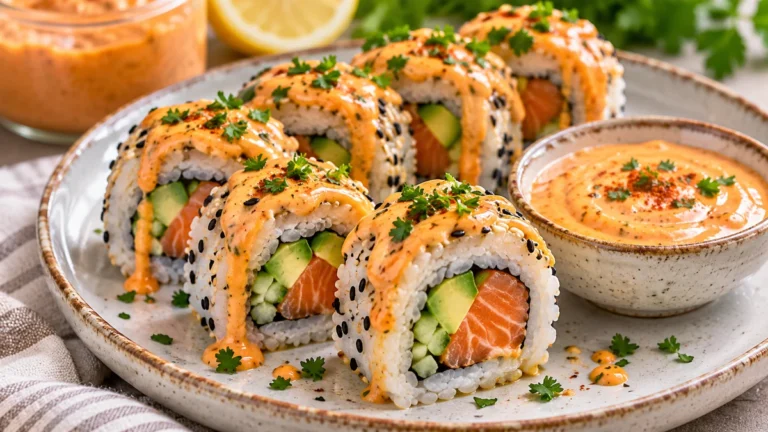
Sushi with Algerian sauce is the unexpected pairing of salmon sushi and a creamy, mildly sweet, chili-spiked onion sauce that caught attention in Japan in late October 2026. The idea is simple: dip a piece of sushi into sauce algérienne instead of relying only on soy sauce. This version pairs cooked salmon, cucumber, avocado, and sushi rice with a quick mayonnaise-tomato-harissa dip. It is a modern fusion recipe.
The complete recipe makes four rolls, about 28 pieces, with four meal-size servings. It uses ordinary U.S. grocery ingredients and avoids requiring raw fish or hard-to-find bottled Algerian sauce. Already have store-bought prepared sushi? Skip directly to the five-minute sauce and try one small dip first. Use enough sauce to complement the salmon without soaking the nori.
Table of Contents
Why Sushi with Algerian Sauce Went Viral
The combination began spreading after an October 24, 2026 post discussed by Le Parisien showed sushi alongside French-style sauce algérienne. Japanese cooks and social-media users tried it, with salmon emerging as a popular pairing. The viral part is the unexpected condiment combination; neither sushi nor the sauce was newly invented.
The early-November coverage in Elle à Table explains why people were curious about the sauce: it is creamy, savory, sweet, and spicy at once. The goal is a balanced, practical homemade dipping sauce.
What Is Algerian Sauce, Exactly?
Despite the name, sauce algérienne here refers to a familiar French/Belgian snack-shop condiment, often served with sandwiches, fries, or kebab-style foods. It is not a single standardized sauce from the traditional cuisines of Algeria. Brands vary, but the profile is generally creamy, slightly sweet, onion-forward, tomato-colored, and moderately to strongly spicy.
The manufacturer Nawhal’s describes its bottled version as spicy, lightly sweet, and dotted with finely chopped onion. For sushi with Algerian sauce, this home adaptation uses regular mayonnaise, ketchup, fresh onion, a little harissa, lemon, and warm spices. It is inspired by that flavor profile, not a copy of any manufacturer’s proprietary formula. Start with one teaspoon of harissa and adjust to taste.
Fully cooked salmon keeps the recipe accessible to cooks who do not want to handle raw fish.
Short-grain sushi rice sticks together enough to slice without becoming a dense paste.
Cucumber and avocado provide crunch and creaminess against the spicy-sweet dipping sauce.
The sauce is served on the side, so the seaweed stays firm until the moment you eat.
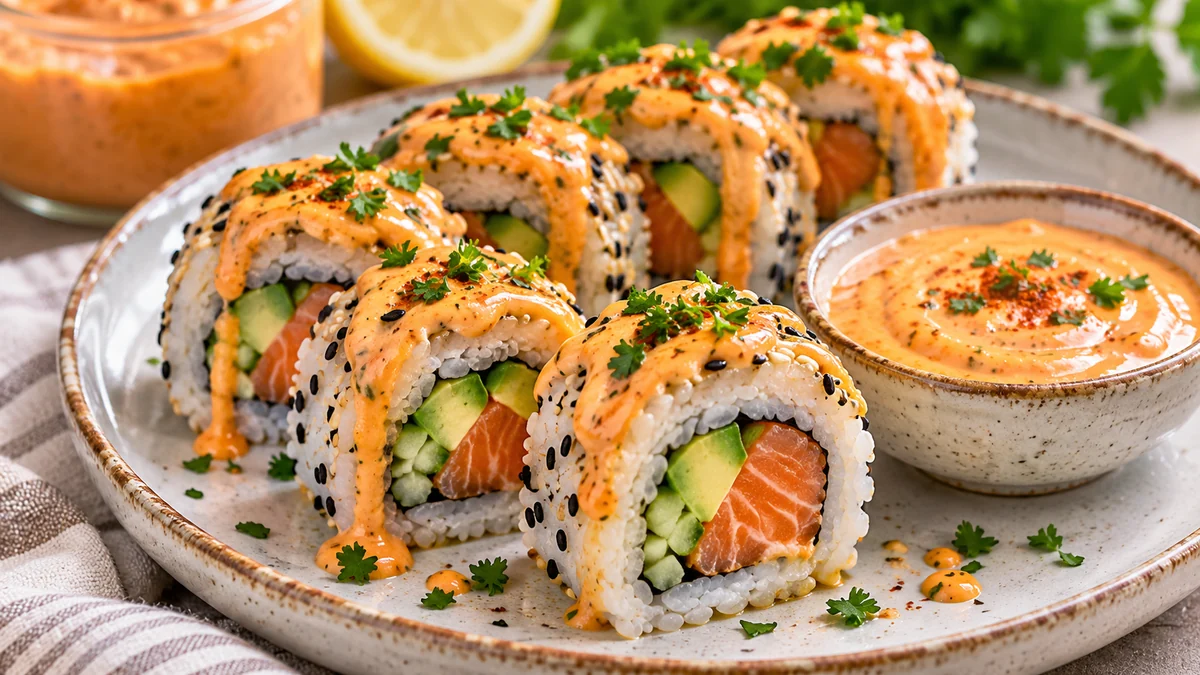
Nori-out rolling is easier for beginners; the inside-out presentation shown in some viral images is optional.
A clear 145°F fish temperature check removes guesswork from the salmon cooking step.
Ingredients You Need
For the sushi, you need 1 cup dry short-grain sushi rice, water, rice vinegar, sugar, fine salt, 12 ounces skinless salmon, a teaspoon of neutral oil, black pepper, four full-size nori sheets, half an English cucumber, and half an avocado. The exact quantities are in the recipe card. Using regular long-grain rice makes the rolls harder to hold together; sushi rice is worth buying for this particular dish.
For the quick homemade sauce algérienne, combine 3 tablespoons mayonnaise, 2 tablespoons ketchup, 1 tablespoon very finely minced onion, 1 teaspoon harissa paste, 1 teaspoon lemon juice, 1/4 teaspoon sweet paprika, and a pinch of cumin. These modest amounts make a dip rather than a heavy coating. Choose store-bought mayonnaise made with pasteurized egg, and read the labels on harissa and other prepared condiments if you have an allergy or need to avoid gluten.
Which Salmon Works Best?
For sushi with Algerian sauce, a 12-ounce boneless, skinless salmon fillet fills four modest rolls. Atlantic salmon is richer; leaner wild salmon will taste lighter and shift the nutrition estimate. Cook the fish to 145°F in the thickest portion, measured with a thermometer, following FoodSafety.gov’s safe-temperature chart. Avoid flaking hot fish directly onto rice; allow it to cool briefly so steam does not soften the nori.
Can I Use Bottled Sauce Algérienne?
Yes. If you find a bottle from a reputable seller, use about 1 to 2 tablespoons total for a tasting platter before deciding whether you want more. Commercial sauces can differ sharply in sweetness, heat, sodium, and allergens. The nutrition card here is calculated for the specified homemade sauce, not for a purchased brand. Bottled sauce also may contain egg, mustard, wheat-derived ingredients, or other allergens depending on its formulation.
Four salmon-cucumber-avocado sushi rolls with seasoned rice and a five-minute sweet-spicy onion mayo dip inspired by viral sauce algérienne.
Total Time:55 minutes
Yield:4 rolls (about 28 pieces; 4 servings)
Ingredients
Scale
1 cup (185 g) uncooked short-grain sushi rice, rinsed and drained
1 1/4 cups water, or amount specified on the sushi rice package
2 tablespoons unseasoned rice vinegar
2 teaspoons granulated sugar
1/2 teaspoon fine salt
12 ounces (340 g) boneless skinless salmon fillet
1 teaspoon neutral cooking oil
1/4 teaspoon freshly ground black pepper
4 full-size nori sheets
1/2 English cucumber (about 100 g), cut into thin long matchsticks
1/2 medium avocado (about 75 g flesh), cut into strips
3 tablespoons (45 g) regular mayonnaise, for the sauce
2 tablespoons (30 g) ketchup, for the sauce
1 tablespoon (15 g) finely minced yellow onion, for the sauce
1 teaspoon (5 g) harissa paste, for the sauce, more to taste
1 teaspoon fresh lemon juice, for the sauce
1/4 teaspoon sweet paprika, for the sauce
Small pinch ground cumin, for the sauce
1 teaspoon sesame seeds and chopped parsley for garnish, optional
Instructions
Rinse the sushi rice and combine with the measured water in a small saucepan. Cover, bring to a gentle simmer, and cook over low heat for about 15 minutes, following the package water ratio if different. Turn off the heat and rest covered for 10 minutes.
Mix rice vinegar, sugar, and salt in a small bowl. Fold gently into the hot rice, then spread rice in a shallow dish for about 5 to 10 minutes until it is warm but no longer steaming.
Meanwhile, heat the oven to 400°F. Pat the salmon dry, place on a lined baking sheet, rub with neutral oil and pepper, and roast for about 12 to 16 minutes until its thickest part reaches 145°F. Rest briefly, remove any pin bones, and break into thick flakes.
Whisk mayonnaise, ketchup, minced onion, harissa, lemon juice, paprika, and cumin in a small bowl. Let stand refrigerated for 5 minutes while preparing the fillings. Taste and adjust heat sparingly.
Place one nori sheet shiny-side down on a sushi mat. With damp fingers, spread about one-quarter of the rice over the lower two-thirds, leaving a one-inch clear strip at the top. Add one-quarter of the salmon, cucumber matchsticks, and avocado strips across the lower third.
Roll firmly using the mat, pressing just enough to make a tight cylinder. Lightly moisten the top nori strip to seal. Repeat with the remaining nori, rice, and fillings.
Rest rolls seam-side down for 1 minute. Slice each roll into roughly seven pieces with a sharp damp knife. Sprinkle on optional sesame seeds or parsley, and serve immediately with the orange Algerian-style sauce for dipping.
Notes
Yield: 4 full rolls, about 28 sushi pieces; 1 serving = 1 roll (about 7 pieces) plus one-quarter of the homemade sauce.
Active prep is approximately 20 minutes. Cooking takes about 20 minutes of active heat time; allow 15 minutes of resting/cooling as described, for about 55 minutes total.
Use a food thermometer; salmon must reach 145°F in its thickest part. This recipe intentionally uses cooked rather than raw fish.
The home sauce is inspired by French/Belgian-style sauce algérienne, not a verified copy of a commercial formula or a traditional Algerian regional sauce.
Use short-grain sushi rice. Let the rice and salmon stop steaming before rolling, and keep the sauce separate until serving.
Nutrition is an ingredient-based approximation assuming Atlantic salmon, dry sushi rice, regular mayonnaise, ketchup, avocado and optional 1 teaspoon sesame seeds across 4 servings. Brands, fillet type, sauce quantity and rice measurements change the results.
Fish and egg allergens are present. Check product labels for gluten, soy, milk, mustard, and other allergens according to your dietary needs.
Refrigerate perishable food promptly at 40°F or below and do not leave cooked rice or fish at room temperature for more than two hours (one hour above 90°F). Assembled sushi is best eaten the day it is made.
Author:Adam Moretti
Prep Time:20 minutes
Resting and cooling:15 minutes
Cook Time:20 minutes
Category:Dinner
Method:Stovetop and Oven
Cuisine:Japanese-Inspired Fusion
Diet:Dairy-Free
How to Make Sushi with Algerian Sauce
1. Cook and Season the Rice
Rinse the dry short-grain rice in several changes of cool water until the runoff looks less cloudy, then drain. Combine with 1 1/4 cups water in a small covered saucepan, bring to a gentle simmer, and cook on low for about 15 minutes. Turn off the heat and leave the lid on for another 10 minutes. Follow your rice package’s water ratio if it differs substantially. In a small bowl, stir rice vinegar, sugar, and salt until mostly dissolved, then fold gently into the cooked rice.
2. Bake the Salmon
While the rice cooks, heat the oven to 400°F. Place the salmon on a parchment-lined baking sheet, rub with 1 teaspoon neutral oil, and add black pepper. Roast for about 12 to 16 minutes depending on thickness, until a thermometer reads 145°F in the center. Let it rest for several minutes, then break it into long, thick flakes. Remove any remaining pin bones. Cool the fish enough that it will not steam inside the roll.
3. Mix the Orange Sauce
Whisk mayonnaise and ketchup until even in color. Stir in the minced onion, harissa, lemon juice, sweet paprika, and cumin. Give it five minutes for the onion to mellow, then taste with a clean spoon. For more brightness, add a few extra drops of lemon; for more heat, add harissa in very small increments. The sauce should be spoonable, not so runny that it floods the rice.
4. Fill and Roll the Nori
Set one sheet of nori shiny-side down on a bamboo sushi mat. With damp fingers, spread roughly one-quarter of the rice over the lower two-thirds, leaving about an inch bare at the top. Place one-quarter of the cooked salmon, a few cucumber matchsticks, and a few avocado strips in a line across the lower third. Keep the fillings below the level that would make the roll impossible to close.
Lift the front edge of the mat and curl the rice-covered nori over the filling, pressing gently but firmly to form a cylinder. Continue rolling until the exposed top edge seals; moisten that strip with a few drops of water if necessary. Repeat with the other three sheets. Rest each roll seam-side down for a minute before slicing.
5. Slice and Dip
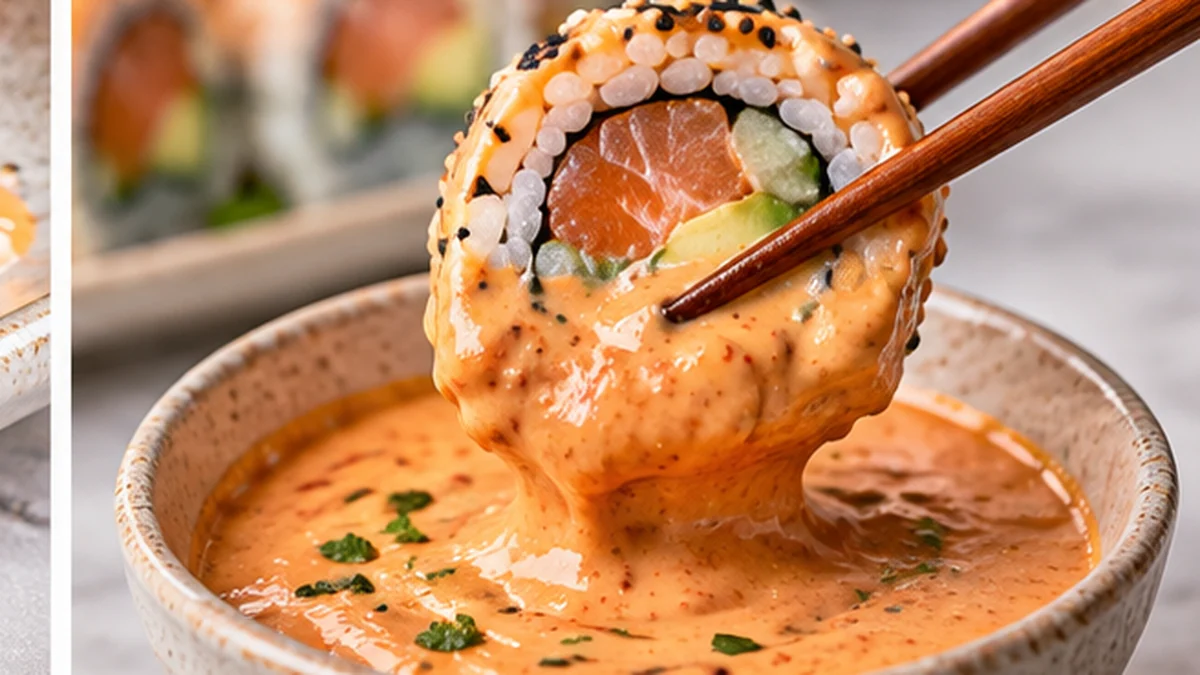
Use a sharp knife wiped with a damp cloth to cut each roll into roughly seven pieces. Start with the middle, halve each section, and make the remaining cuts so the pieces stay similar in width. Sprinkle on optional sesame seeds or parsley. Serve the orange sauce in a small bowl for dipping, with extra on the side only if wanted. A heavy sauce blanket looks dramatic online, but a light dip lets you taste the salmon and seasoned rice.
How to Get the Right Texture
Rice: cohesive and glossy, not dripping wet or mashed into paste.
Salmon: cooked to 145°F, easily flaked, but kept in pieces large enough for a neat filling.
Nori: dark and intact, with the seal on the bottom and no loose, dry edges.
Sauce: creamy orange with visible tiny onion bits and a gentle chile kick.
Finished roll: holds its round shape when lifted and has crisp cucumber in the center.
If you prefer the rice-on-the-outside appearance seen in some sushi photos, you can make an inside-out roll by covering a mat with plastic wrap, spreading rice on the nori, flipping the assembly, adding fillings against the nori, and rolling carefully. That technique is more delicate and is a variation, not required for this recipe’s success.
Troubleshooting Common Sushi Problems
The Rice Falls Apart When I Slice
When making sushi with Algerian sauce, the most common roll problems come from long-grain rice, too little moisture, or slicing before the roll is firm. Use short-grain sushi rice, measure water according to the package, and wet the knife lightly between cuts. Also avoid overstuffing: four full-size sheets should have enough space for the measured salmon and vegetables without forcing the seams open.
The Seaweed Turned Chewy or Soggy
The rice or salmon was probably too hot, or the sauce was added too early. Let the fillings cool, keep the sauce separate, and slice just before serving. Refrigerating fully assembled sushi for a long period also changes nori texture; make what you plan to eat soon rather than preparing a platter several days ahead.
The Sauce Is Too Sweet or Too Spicy
Sushi with Algerian sauce can taste quite different across ketchup and harissa brands. If the sauce tastes too sweet, add a little lemon juice and a tiny pinch of salt only after tasting. If it is too hot, mix in more mayonnaise rather than more sugar. If the sauce feels bland, a touch of chopped onion or harissa usually helps more than extra ketchup.
My Salmon Is Dry
Baking times change with fillet thickness. Start checking early and use a thermometer rather than adding extra minutes by habit. The cool cucumber and mayonnaise sauce can help balance a slightly firm fillet, but they cannot repair badly overcooked fish. If using canned salmon for a shortcut, drain it well and expect a looser filling and different nutrition.
Variations and Easy Substitutions
For the closest version to the viral tasting idea, buy professionally prepared salmon sushi from a reputable refrigerated counter and make only the sauce. Keep it chilled and follow the seller’s handling instructions, especially if the sushi contains raw fish. For a cooked shortcut, use fully cooked prepackaged salmon with short-grain rice and cucumber. Neither shortcut has the exact nutrition values shown in the recipe card.
For an easier assembly, form small cooked-salmon rice bowls or hand rolls and serve the sauce as a dip. A bowl is particularly useful if you do not own a bamboo mat. For a vegetarian variation, use fully cooked tofu strips or a cucumber-avocado roll and adjust the sauce if you need an egg-free mayonnaise. For another seafood-and-avocado lunch with less preparation, try our sardine avocado toast. For more dinner concepts, browse the HAB dinner recipes collection for meals that are less time-sensitive to assemble.
Allergens, Storage, and Food Safety
This dish contains fish and egg because of the salmon and regular mayonnaise. Nori, harissa, ketchup, and other prepared items can have different manufacturing or cross-contact warnings. The base ingredients do not deliberately add wheat, but do not label the complete meal gluten-free without checking every relevant package and your own preparation environment. Our gluten-free recipe guide discusses the importance of labels and shared equipment.
Serve sushi with Algerian sauce soon after assembly. Refrigerate perishable food promptly at 40°F or below, and do not let cooked rice, fish, or mayonnaise-based sauce sit at room temperature for longer than two hours, or one hour above 90°F. FoodSafety.gov’s four-step guidance explains this rule. If you prepare components ahead, chill the salmon, rice, and sauce quickly in separate shallow containers; assemble just before eating. For best rice and nori texture, plan to finish assembled rolls the same day.
Cooked rice deserves special care because some bacteria associated with rice can grow after cooking when it is not cooled promptly. FoodSafety.gov identifies rice as a potential source when foods sit too long at room temperature. This is also why the recipe does not recommend leaving seasoned sushi rice out for hours. Leftover cooked salmon and rice that have been promptly cooled can be refrigerated separately, but reheated leftovers are better used in a hot bowl rather than turned back into room-temperature sushi.
Sushi with Algerian Sauce Nutrition
Each serving is one of four rolls plus one-quarter of the homemade sauce, estimated at about 500 calories and 22 grams of protein. The estimates assume 1 cup (185 g) dry sushi rice, 12 ounces salmon, 3 tablespoons regular mayonnaise, 2 tablespoons ketchup, half an avocado, and the remaining measured ingredients. Regular mayonnaise and the type of salmon are the largest sources of calorie variation. A bottled sauce, raw-fish sushi, or leaner fish will change the numbers.
In sushi with Algerian sauce, salmon supplies most of the protein and rice provides most of the carbohydrates. The sauce uses relatively little mayonnaise compared with many spicy sushi-roll toppings. For a broader picture of protein portions and seafood, see our high protein foods guide. Treat the nutrition panel as a practical estimate, not an exact lab analysis or a value for every possible brand.
FAQs about Sushi with Algerian sauce
What does Algerian sauce taste like with salmon sushi?
Think of an onion-forward, mildly sweet, spicy mayonnaise dip with tomato and chile notes. With salmon, it brings richness and heat; cucumber and seasoned rice balance that intensity. Start with a small dab before dipping the whole piece. Bottled sauces can be hotter or sweeter than this homemade version.
Does the recipe require raw salmon?
No. This version uses salmon fully cooked to 145°F. If you choose to use raw-fish sushi bought elsewhere, follow the retailer’s refrigeration advice; the presence of mayonnaise sauce does not make raw fish safer or reduce foodborne illness risk.
Is sauce algérienne the same as sriracha mayo?
Not exactly. Both can be creamy and spicy, but sauce algérienne typically has noticeable tomato, onion, sweetness, and warm spice notes. Sriracha mayo often relies mainly on mayonnaise and sriracha. You can improvise a chile mayo, but it will not taste identical to the measured sauce here.
Final Tips
Sushi with Algerian sauce works best when you treat the sauce as an accent rather than a stunt. Use cooked salmon in substantial flakes, keep the cucumber crisp, roll while the rice is just warm, and serve a little orange sauce on the side. The unusual flavor pairing may be what brings you here, but reliable rice texture, safe fish handling, and balanced heat are what make it worth preparing.
Reviewed recipe options
Make this recipe fit me
Choose one of seven popular diet options. NutriMatch will confirm whether the recipe already fits, show a reviewed adaptation when available, or recommend recipes that match your choice.
Please choose a diet first.
Already a reviewed match
This recipe already fits Dairy-Free.
No changes are needed based on its reviewed NutriMatch classification. Check the complete ingredients, product labels, and serving details for your own needs.
Recipe details, product formulas, and cross-contact information can change. Confirm current labels and use professional guidance when medically necessary.
Not available for this recipe
This recipe cannot currently be made Gluten-Free with a reviewed adaptation.
NutriMatch will not guess at substitutions. Try one of these recipes that is already reviewed for your choice.
Recipe details, product formulas, and cross-contact information can change. Confirm current labels and use professional guidance when medically necessary.
Not available for this recipe
This recipe cannot currently be made High Protein with a reviewed adaptation.
NutriMatch will not guess at substitutions. Try one of these recipes that is already reviewed for your choice.
Recipe details, product formulas, and cross-contact information can change. Confirm current labels and use professional guidance when medically necessary.
Not available for this recipe
This recipe cannot currently be made Keto with a reviewed adaptation.
NutriMatch will not guess at substitutions. Try one of these recipes that is already reviewed for your choice.
Recipe details, product formulas, and cross-contact information can change. Confirm current labels and use professional guidance when medically necessary.
Not available for this recipe
This recipe cannot currently be made Low Carb with a reviewed adaptation.
NutriMatch will not guess at substitutions. Try one of these recipes that is already reviewed for your choice.
Recipe details, product formulas, and cross-contact information can change. Confirm current labels and use professional guidance when medically necessary.
Not available for this recipe
This recipe cannot currently be made Vegan with a reviewed adaptation.
NutriMatch will not guess at substitutions. Try one of these recipes that is already reviewed for your choice.
Recipe details, product formulas, and cross-contact information can change. Confirm current labels and use professional guidance when medically necessary.
Not available for this recipe
This recipe cannot currently be made Vegetarian with a reviewed adaptation.
NutriMatch will not guess at substitutions. Try one of these recipes that is already reviewed for your choice.
Recipe details, product formulas, and cross-contact information can change. Confirm current labels and use professional guidance when medically necessary.