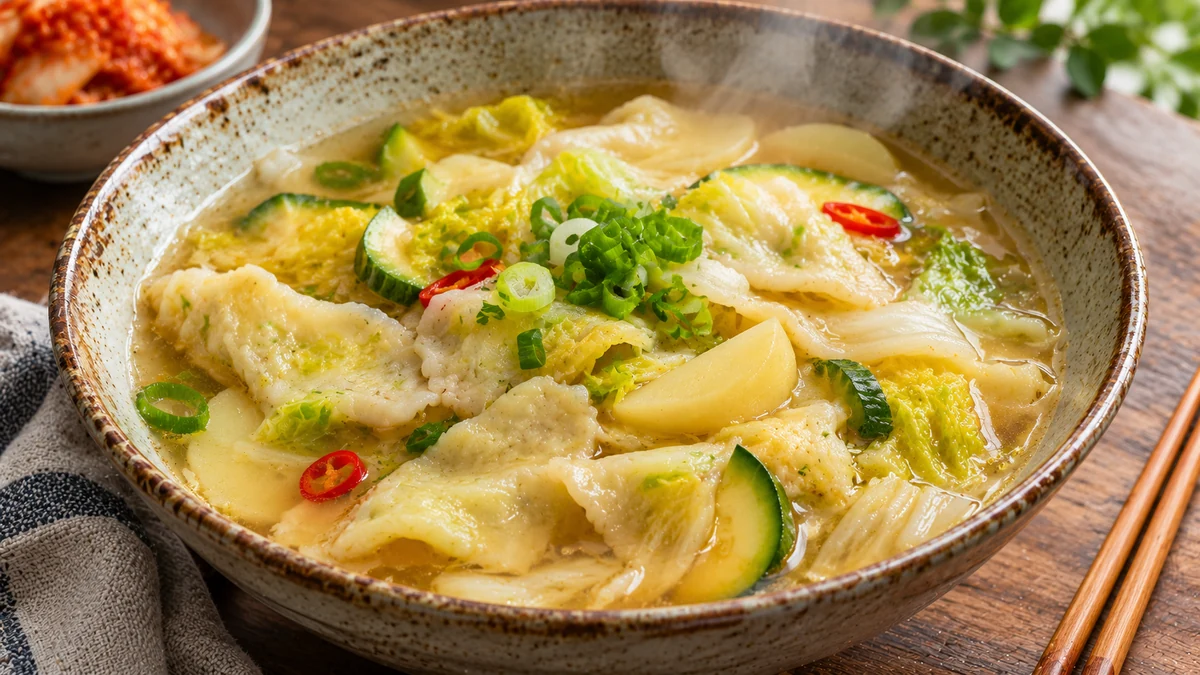
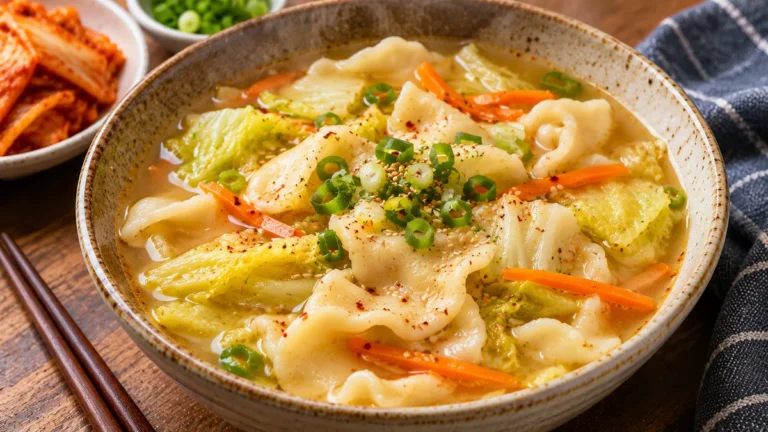
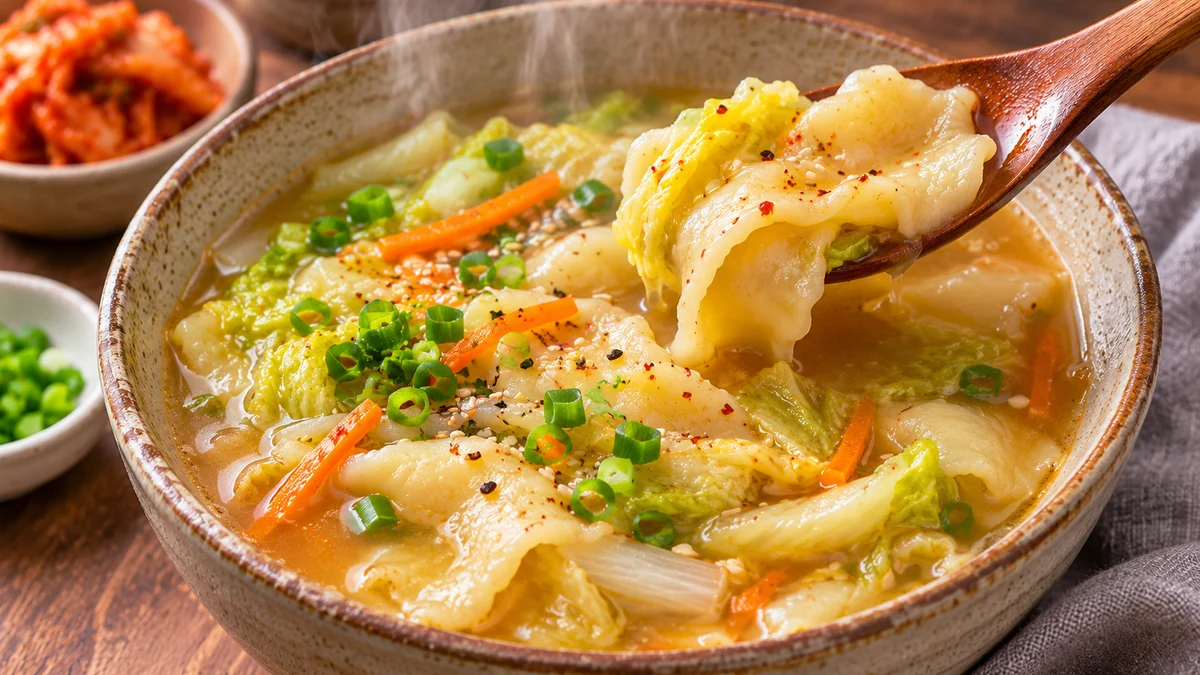
Cabbage sujebi is a Korean-style soup with chewy, hand-torn pieces of dough, finely chopped napa cabbage, potatoes, zucchini, and a light savory broth. This version folds cabbage directly into the dough instead of using it only as a vegetable in the pot, so each irregular noodle has a delicate cabbage bite. A small soy-chile dipping sauce is served on the side.
This recipe makes four light main-course bowls using 1 3/4 cups (210 g) all-purpose flour, 190 g napa cabbage divided between dough and broth, and a quick kombu-anchovy stock. The dough gets a short rest, then is stretched thin and torn directly into simmering soup. It is not flour-free or gluten-free; that distinction matters because online descriptions of the viral version conflict.
Table of Contents
What Is Cabbage Sujebi?
Sujebi (수제비) is Korean hand-torn noodle soup. Unlike long noodles that are rolled and cut into strands, sujebi starts as a pliable dough that you stretch and pull into flat, irregular pieces. They simmer directly in broth and develop a pleasantly chewy but tender bite. The Republic of Korea’s official culture site describes the classic dish as wheat dough with vegetables and an anchovy-based stock.
This cabbage sujebi is a home-cooking variation: the napa cabbage provides extra moisture and a gentle sweetness in the dough, while a little more cabbage goes into the soup. It does not turn the flour-based dumplings into vegetable-only noodles. If you want an entirely different texture made with glutinous rice flour, our carrot button noodles recipe uses a separate two-ingredient method.
Why the Viral Korean Cabbage Soup Needs a Clarification
A Korean short-form video posted on October 30, 2026 brought fresh attention to a cabbage-rich winter sujebi. The tracked video page describes the dough as flour-free in one section, yet also lists wheat flour among the extracted ingredients. Without a reliable full ingredient list, those statements cannot both be treated as established facts.
This article therefore offers a clearly specified wheat-flour adaptation, not a purported exact translation or reconstruction of the creator’s recipe. The technique is grounded in Korean sujebi practice, including the standard flour-and-water dough illustrated by Maangchi’s sujebi recipe. The cabbage addition is the distinct angle. Social views are a sign of interest, not a Google search-volume measurement.
Ingredients for Korean Cabbage Sujebi
All-purpose flour — 1 3/4 cups (210 g): use regular wheat flour for the dough; avoid cake flour, which makes it fragile.
Napa cabbage — 190 g total: finely chop 100 g for the dough and slice the other 90 g for the broth; drain and pat the first portion dry.
Water — 1/3 cup (80 ml) for the dough, plus up to 2 tablespoons (30 ml) more: add gradually because cabbage releases water.
Fine salt — 1/2 teaspoon (2 g), and neutral oil — 1 teaspoon: both go into the dough.
Broth — 5 cups water, a 3-inch square of dried kombu, and 8 to 10 dried anchovies (about 15 g): remove the solids after simmering.
Vegetables — 1 medium potato (150 g), 1/2 zucchini (100 g), 1 small carrot (60 g), 1/2 small onion (70 g), and 2 garlic cloves: cut small so they cook alongside the dough.
Reduced-sodium soy sauce — 1 tablespoon in the broth: start here and taste after the noodles cook.
Two scallions: thinly slice for the finish and the dipping sauce.
Kombu is thick dried kelp used to flavor stock; it is not the same as the thin roasted nori sheets used for sushi. Dried soup anchovies are a classic Korean stock ingredient. Simmer them gently, then remove them so the broth stays clean. If you cannot find them, a mild unsalted vegetable stock with a small piece of kombu is a workable vegetarian variation, but the flavor and nutrient estimate will change. Check packaged stock and soy sauce for allergens and sodium.
How to Make Cabbage Sujebi
For cabbage sujebi, the order matters: finish mixing and resting the dough before tearing it into the pot. You can prepare the stock while the dough rests. Keep a small dish of cool water nearby for your fingers, but do not wet the dough so heavily that it turns slippery or falls apart.
Hand-torn cabbage-flecked wheat dough cooked in light kombu-anchovy stock with potatoes, vegetables and optional spicy soy dipping sauce.
Total Time:80 minutes
Yield:4 light meal servings
Ingredients
Scale
1 3/4 cups (210 g) all-purpose wheat flour
1 cup (100 g) finely chopped napa cabbage, squeezed gently and patted dry, for the dough
1/3 cup (80 ml) water for the dough, plus up to 2 tablespoons (30 ml) more as needed
1/2 teaspoon (2 g) fine salt, for the dough
1 teaspoon neutral oil, for the dough
5 cups (1.2 L) water for the broth
1 square dried kombu, approximately 3 inches wide
8 to 10 dried soup anchovies (about 15 g), for broth, removed after simmering
1 medium potato (about 150 g), peeled and thinly sliced
1/2 small yellow onion (about 70 g), thinly sliced
1 small carrot (about 60 g), cut into thin matchsticks
1 cup (90 g) napa cabbage, sliced, for the broth
1/2 medium zucchini (about 100 g), sliced into thin half-moons
2 garlic cloves, minced
1 tablespoon reduced-sodium soy sauce, for the broth
2 scallions, sliced, divided between broth and dipping sauce
1 tablespoon reduced-sodium soy sauce, for the optional dipping sauce
2 teaspoons rice vinegar, for the optional dipping sauce
1 teaspoon gochugaru (Korean red pepper flakes), for the optional dipping sauce
1 teaspoon toasted sesame oil, for the optional dipping sauce
1 teaspoon toasted sesame seeds, for the optional dipping sauce
Instructions
Finely chop 100 g napa cabbage for the dough. Squeeze gently in a colander and pat dry. Slice the other 90 g separately for the broth.
Mix flour and salt in a bowl. Add the finely chopped cabbage, neutral oil, and 1/3 cup water. Knead 5 to 7 minutes, adding up to 2 tablespoons extra water by the teaspoon only if the dough is dry. It should be firm and slightly tacky, not wet.
Cover and rest the dough at room temperature for 20 minutes. While it rests, prepare the stock ingredients and vegetables.
Add 5 cups water, kombu, and dried anchovies to a medium-large pot. Heat gently. Remove kombu after about 8 minutes, before a hard boil, and remove anchovies after about 12 minutes total. Strain solids if necessary.
Bring the stock back to a gentle boil. Add potato, onion, and carrot. Cook 6 minutes, then add the sliced cabbage and zucchini for 2 minutes.
Pinch off a walnut-sized piece of rested dough. Stretch it to about 1/8 inch thick; tear into irregular 1- to 2-inch pieces directly into simmering broth. Repeat in small batches, stirring gently to prevent sticking.
Simmer 6 to 8 minutes after the final dough pieces enter the soup, until a thick piece has no raw, floury center. Add garlic and 1 tablespoon soy sauce for the final 2 minutes. Stir in most of the scallions and taste before adding any more salt.
For optional dipping sauce, combine remaining tablespoon soy sauce, rice vinegar, gochugaru, sesame oil, sesame seeds, and reserved scallions. Divide soup into four bowls, serving sauce on the side to add gradually.
Notes
Use a scale for the 210 g flour and 100 g minced cabbage; water absorption varies with flour and cabbage moisture.
The soup uses wheat flour and fish-based anchovy stock; soy and sesame are also present. It is not gluten-free or vegan.
To make a vegetarian variation, omit dried anchovies and use kombu with dried shiitake mushrooms and a mild vegetable broth; the flavor and nutrition values will differ.
The optional dipping sauce is included in the listed nutrition estimates for four servings; add it to taste.
Prep 25 minutes, cook about 35 minutes, rest the dough 20 minutes; total listed time is 80 minutes, though some steps can overlap.
Cool promptly, refrigerate at 40°F or below, and consume within 3 to 4 days for food safety; best noodle texture within 1 to 2 days.
Nutrition per serving is calculated from weighed flour, vegetables, oils, and a representative reduced-sodium soy sauce. Sodium varies by brand and broth extraction.
Author:Adam Moretti
Prep Time:25 minutes
Dough resting:20 minutes
Cook Time:35 minutes
Category:Soup
Method:Stovetop / Boil
Cuisine:Korean-inspired
Diet:Dairy-Free
Step 1: Chop and Dry the Cabbage for the Dough
Measure 100 g napa cabbage and mince it into very small pieces, especially the thick white ribs. Place it in a colander, squeeze gently, and pat with a clean towel. You do not need to wring it completely dry, but puddles of water will make the flour mixture unpredictable. Slice the remaining 90 g into bite-sized strips for the soup. Keep the two portions separate.
Step 2: Make a Flexible, Cabbage-Flecked Dough
Stir 210 g flour with 1/2 teaspoon salt. Add the minced cabbage, 1 teaspoon neutral oil, and 1/3 cup (80 ml) water. Mix until the flour begins forming clumps, then knead for 5 to 7 minutes. Add more water only 1 teaspoon at a time, stopping once the dough holds together. It should feel firm, smooth, and slightly tacky, not pourable. Cover and rest at room temperature for 20 minutes.
The rest is not a flavor step; it lets the flour hydrate and makes the dough easier to stretch thin. If it still tears immediately after resting, knead for another minute and rest 5 more. If it coats your hands like batter, dust in a teaspoon of flour and reassess. Cabbage naturally varies in moisture, so weigh it and use the texture cues rather than adding all the water automatically.
Step 3: Make a Clear, Savory Stock
Put 5 cups of water, one 3-inch kombu square, and 8 to 10 dried soup anchovies in a pot. Bring toward a gentle simmer over medium heat. Remove the kombu after about 8 minutes, before a hard boil, and remove the anchovies after about 12 minutes total. Strain if needed. Do not grind these stock solids into the broth; the stock is meant to be light enough that the chewy pieces remain the star.
Step 4: Cook the Vegetables
Bring the strained broth back to a gentle boil. Add thinly sliced potato, onion, and carrot; cook about 6 minutes, until the potato begins softening. Add the remaining sliced cabbage and the zucchini and cook 2 minutes more. The vegetables should be mostly tender before the torn dough goes in because the noodles themselves cook quickly.
Step 5: Tear Thin Pieces Directly Into the Soup
Pinch off a small walnut-sized piece of dough. Stretch it between your fingers until it is roughly 1/8 inch thick, then tear off uneven 1- to 2-inch pieces and drop them into gently bubbling broth. Continue in small batches so each piece has space to cook. Stir gently between handfuls to keep the pieces from sticking. Aim for thin, irregular patches rather than thick balls; thickness determines chewiness and cooking time.
Simmer 6 to 8 minutes after the last pieces go in, checking one of the thickest for an opaque, floury center. Add the minced garlic and 1 tablespoon reduced-sodium soy sauce during the last 2 minutes. Finish with sliced scallions. Taste the broth before adding extra salt because the anchovies, soy sauce, and optional dipping sauce already contribute sodium.
What the Dough and Noodles Should Look Like
Before resting: the dough is smooth enough to hold together, with tiny cabbage flecks and no pools of water.
When stretching: a small piece spreads thin without breaking into crumbs; a little resistance is normal.
In the pot: freshly dropped pieces look pale and matte, then turn glossy as they cook.
When done: the center is cooked through, chewy but not raw or gummy; a thick test piece should have no floury white streak.
In the bowl: broth is lightly cloudy from starch, not pasty or completely absorbed.
Troubleshooting Cabbage Sujebi
My Dough Is Too Sticky to Tear
The chopped cabbage likely carried extra water, or too much was added during mixing. Dust 1 tablespoon flour over the dough and knead briefly. Cover for another 5 minutes before deciding whether it needs more. Avoid adding several tablespoons at once: excess flour makes the finished pieces heavy and dulls the cabbage flavor. For the next batch, pat the cabbage drier and begin with the smaller water amount.
The Pieces Are Tough or Thick
Cabbage sujebi should have a definite bite, but it should not be dense in the middle. Pull smaller portions and stretch them thin before dropping them into the pot. If the dough springs back, leave it covered for 5 to 10 minutes and try again. Resist boiling at full force to compensate; high heat can break delicate vegetables before thick pieces finish cooking.
The Soup Became Thick and Gluey
In cabbage sujebi, the dough may have been heavily floured on the outside or the broth may have boiled down while you worked. Add 1/4 cup hot water or unsalted broth at a time, return to a light simmer, and taste the seasoning again. Do not pour in soy sauce immediately: reducing or diluting the liquid changes the salt balance quickly. If the noodles are already cooked, avoid prolonged simmering.
The Broth Tastes Too Fishy or Salty
Use small dried stock anchovies that are suitable for broth, do not boil them hard for a long time, and remove the solids after extracting their flavor. For an overly salty pot, dilute with unsalted water and add a few extra cabbage leaves rather than masking it with sugar. Always taste after adding soy sauce; reduced-sodium bottles still vary substantially by brand.
Variations and Ingredient Swaps
Vegetarian broth: omit the anchovies and simmer kombu with dried shiitake mushrooms, then use vegetable broth for depth. Check that the soy sauce and optional condiments meet your needs. This produces a different version, so the listed nutrition estimate does not automatically apply.
Extra vegetables: add a handful of sliced mushrooms or leafy greens in the last few minutes. Do not increase the chopped cabbage inside the dough dramatically without also adjusting flour; vegetables change hydration. Less spice: omit gochugaru from the sauce, or leave the sauce off altogether and finish with a squeeze of rice vinegar.
A richer bowl: add cooked shredded chicken, tofu, or an egg to the soup, but count these as variations, not ingredients in the base recipe. For a more protein-focused noodle bowl, compare our high-protein peanut butter ramen rather than assuming this cabbage sujebi is high in protein.
Is Cabbage Sujebi Gluten-Free, Vegan, or High-Protein?
This base recipe contains wheat from all-purpose flour, fish from the anchovy stock, soy from soy sauce, and sesame in the optional side sauce. It contains no milk or egg among the specified ingredients, but packaged products and preparation surfaces still matter. The FDA allergen guidance explains why wheat, fish, soy, and sesame are important ingredients to identify.
Because wheat dough defines the texture, a simple cup-for-cup gluten-free flour swap is not reliable. Because of the anchovies, the base is not vegetarian or vegan; the kombu-shiitake broth described above is an optional alternative. And because one serving has roughly 8 g of protein, this is better described as a modest-protein, carbohydrate-based soup, not a high-protein meal.
Nutrition and Serving Size
One serving is one-quarter of the pot plus one-quarter of the side sauce. The estimated per-serving nutrition is approximately 280 calories, 8 g protein, 54 g carbohydrate, 3.5 g fat, and 4 g fiber. The calculation starts from 210 g all-purpose flour, 190 g napa cabbage, 150 g potato, measured vegetables, 2 teaspoons total oil, soy sauce, and sesame. It uses standard ingredient values from USDA FoodData Central and a representative reduced-sodium soy sauce label.
The sodium estimate of approximately 500 mg per serving is especially sensitive to the soy-sauce brand, salt measurement, and how much seasoning the broth extracts from anchovies. Some anchovy flavor enters the broth even though the solids are removed; the estimate does not assume that the whole dried fish is eaten. As with any home recipe, these are calculated estimates, not lab-tested values.
Make-Ahead, Storage, and Reheating
You can chop vegetables and mix the cabbage dough earlier on the same day. Wrap the dough well and refrigerate it, then let it warm just enough to stretch before cooking. For best texture, cook the hand-torn pieces immediately before serving rather than leaving them in hot broth for hours. The pieces absorb liquid as they sit and can become swollen or soft.
Cool leftovers promptly in shallow containers and refrigerate at 40°F or below. FoodSafety.gov recommends 3–4 days for refrigerated soups and stews, but this flour-based soup tastes best within 1–2 days because the noodles continue soaking up stock. Reheat only the portion needed, add a splash of water, and bring it thoroughly hot. Freezing soup is possible for storage, but torn noodles often lose their springy texture after thawing.
For another cozy dumpling meal with a very different protein profile, our ginger-scallion chicken and dumplings uses chicken and soft drop dumplings instead of hand-torn cabbage dough.
FAQs about Cabbage Sujebi
What Does Sujebi Mean?
Sujebi is the Korean name for soup made with pieces of dough pulled or torn by hand. The pieces are irregular rather than cut into uniform noodle strips. The cooking method is part of the identity of the dish; it is not the same as boiling commercial noodles in broth.
Can I Make Cabbage Sujebi Without Flour?
Not with the measured wheat-dough recipe given here. Some social captions describe a flour-free cabbage version, but the associated ingredient extraction also mentions wheat flour and does not provide a consistent formula. A starch- or egg-based adaptation needs its own separately measured recipe, so this article does not claim that a flour-free substitution will behave the same.
Can I Use Cabbage Only in the Broth?
Yes. You can leave the 100 g of minced cabbage out of the dough and prepare an ordinary sujebi wrapper with flour, salt, oil, and approximately 95–115 ml water, adjusted by feel. Add the extra cabbage to the broth instead. It will taste pleasant, but it no longer has the cabbage-flecked dough that distinguishes this particular recipe.
Final Tips for a Better Bowl
This Korean cabbage sujebi is an approachable cold-weather variation with an unusual texture and a genuine cooking method behind the social-video curiosity. It is worth making for the chewy cabbage-flecked pieces and clear savory soup—not because a viral caption promises that ordinary flour somehow disappears.
Reviewed recipe options
Make this recipe fit me
Choose one of seven popular diet options. NutriMatch will confirm whether the recipe already fits, show a reviewed adaptation when available, or recommend recipes that match your choice.
Please choose a diet first.
Already a reviewed match
This recipe already fits Dairy-Free.
No changes are needed based on its reviewed NutriMatch classification. Check the complete ingredients, product labels, and serving details for your own needs.
Recipe details, product formulas, and cross-contact information can change. Confirm current labels and use professional guidance when medically necessary.
Not available for this recipe
This recipe cannot currently be made Gluten-Free with a reviewed adaptation.
NutriMatch will not guess at substitutions. Try one of these recipes that is already reviewed for your choice.
Recipe details, product formulas, and cross-contact information can change. Confirm current labels and use professional guidance when medically necessary.
Not available for this recipe
This recipe cannot currently be made High Protein with a reviewed adaptation.
NutriMatch will not guess at substitutions. Try one of these recipes that is already reviewed for your choice.
Recipe details, product formulas, and cross-contact information can change. Confirm current labels and use professional guidance when medically necessary.
Not available for this recipe
This recipe cannot currently be made Keto with a reviewed adaptation.
NutriMatch will not guess at substitutions. Try one of these recipes that is already reviewed for your choice.
Recipe details, product formulas, and cross-contact information can change. Confirm current labels and use professional guidance when medically necessary.
Not available for this recipe
This recipe cannot currently be made Low Carb with a reviewed adaptation.
NutriMatch will not guess at substitutions. Try one of these recipes that is already reviewed for your choice.
Recipe details, product formulas, and cross-contact information can change. Confirm current labels and use professional guidance when medically necessary.
Not available for this recipe
This recipe cannot currently be made Vegan with a reviewed adaptation.
NutriMatch will not guess at substitutions. Try one of these recipes that is already reviewed for your choice.
Recipe details, product formulas, and cross-contact information can change. Confirm current labels and use professional guidance when medically necessary.
Not available for this recipe
This recipe cannot currently be made Vegetarian with a reviewed adaptation.
NutriMatch will not guess at substitutions. Try one of these recipes that is already reviewed for your choice.
Recipe details, product formulas, and cross-contact information can change. Confirm current labels and use professional guidance when medically necessary.