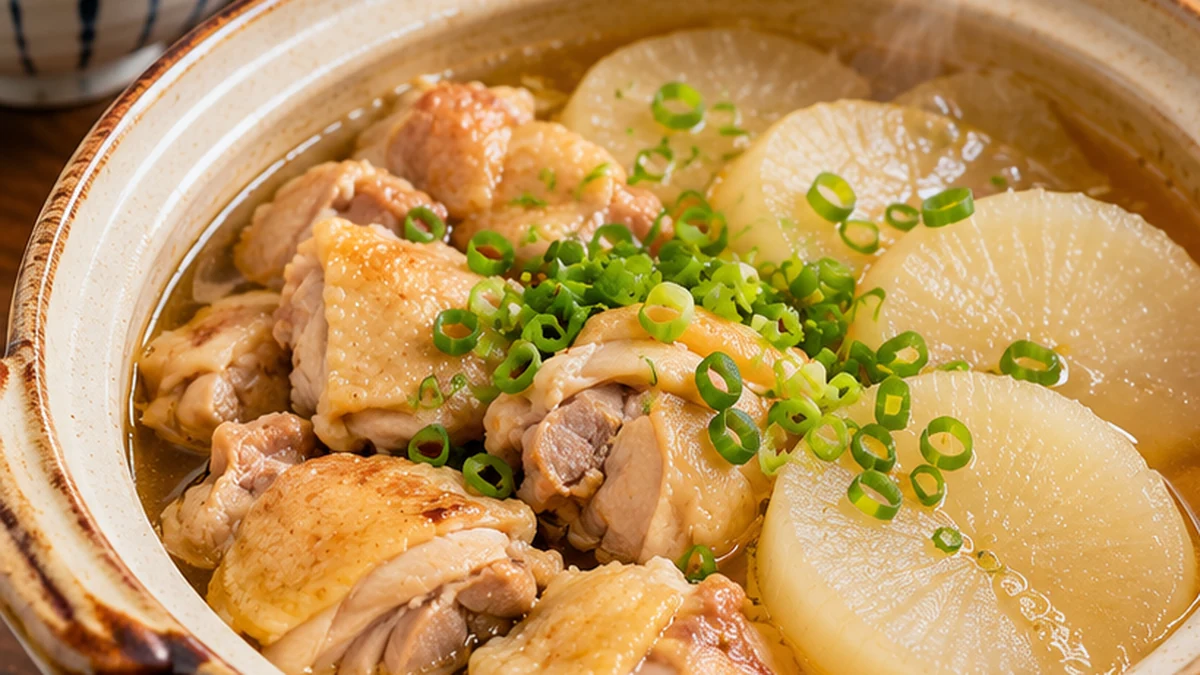
This daikon chicken hot pot is a light Japanese-inspired one-pot dinner made with tender chicken thighs, thin slices of white daikon radish, a kombu-infused broth, ginger, and scallions. You do not need a specialty hot-pot cooker: a covered Dutch oven or deep saucepan works well. In this daikon chicken hot pot, the radish turns slightly translucent as it cooks and gently sweetens the broth.
A recent wave of Japanese daikon hot-pot videos has drawn attention to the idea of cooking an impressive amount of radish in one pot. This measured chicken version is an accessible adaptation, not a claim to reproduce a particular viral video exactly. Below you will find the exact slice thickness, cooking order, thermometer check, and ingredient substitutions that make it practical in a US kitchen.
If you enjoy cozy chicken bowls with a different flavor profile, our high protein white chicken chili is a creamier, bean-based alternative. This hot pot stays clear, clean-tasting, and deliberately simple.
Table of Contents
Why This Daikon Chicken Hot Pot Works
Daikon takes center stage: two pounds go into one pot, rather than disappearing into the background as a few vegetable cubes.
Thin slices cook evenly: about 1/8 inch (3 mm) allows the radish to soften in the same short simmer that finishes the chicken.
Kombu adds savory depth: an easy cold-water steep creates a rounder broth without packaged bouillon or a long stock-making session.
Boneless chicken thighs stay tender: the gentle simmer is more forgiving than hard boiling, and a thermometer confirms when the meat is safe.
No unusual equipment: a large covered pot, sharp knife or mandoline, and food thermometer are enough.
Flexible serving: eat it as a light brothy dinner or serve with rice or noodles on the side; those extras are not included in the recipe nutrition.
What Is Daikon Hot Pot?
Daikon is a long, pale radish commonly used in Japanese cooking. Compared with many small red radishes sold in US grocery stores, it is milder and less peppery, especially when cooked. As thin daikon pieces simmer, they absorb flavor while keeping a soft, pleasant bite. You may also see it labeled Japanese radish, white radish, or mooli in different markets.
A Japanese nabe or hot pot is a broad style of simmered food rather than one fixed ingredient list. Chicken, daikon, and kombu are not a new invention. For example, Japanese recipes from Kewpie already pair chicken thighs and daikon in a kombu-based pot. The newer social-media hook is the attention paid to using a large quantity of daikon, not the creation of a previously unknown dish.
For a lighter daikon chicken hot pot, this version uses water and kombu instead of heavy seasonings. Ginger is an optional-flavor style choice included in the measured base recipe here, while scallions add a fresh finish. We avoid calling it a historically exact or restaurant-authentic preparation.
Ingredients You Need
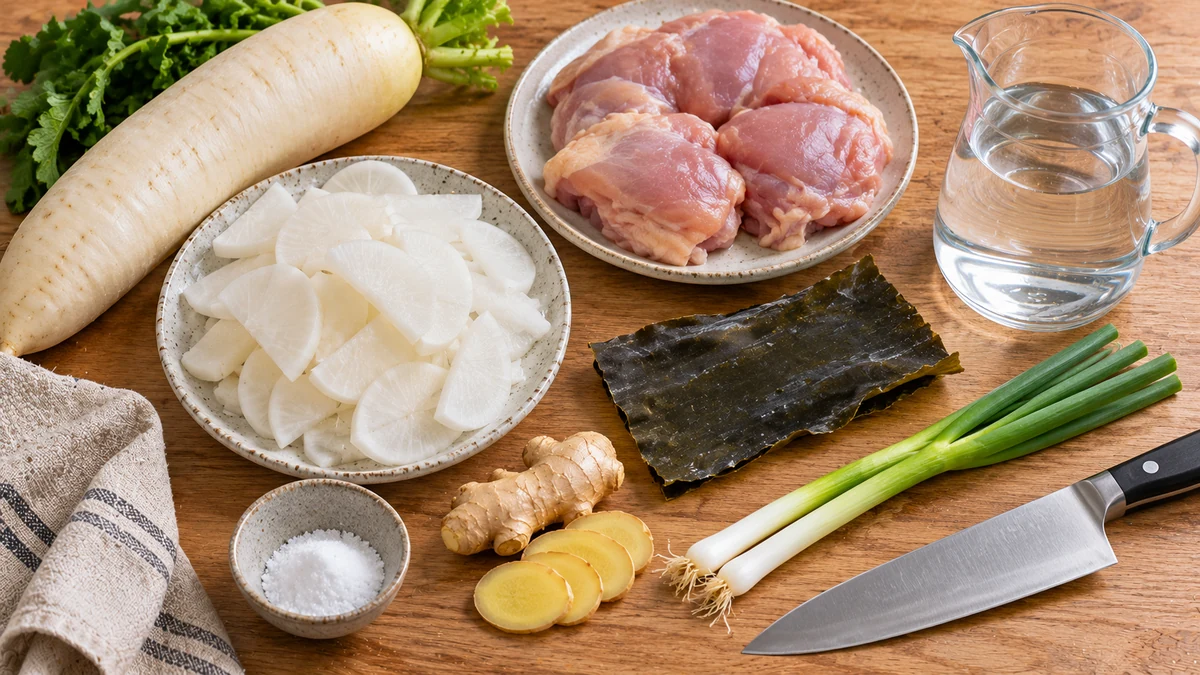
2 pounds (about 900 g) trimmed daikon: one large radish or two smaller ones. Look for firm, heavy roots without soft spots. A little skin discoloration is not a problem if the inside is sound.
1 1/2 pounds (680 g) boneless, skinless chicken thighs: cut into roughly 1 1/2-inch pieces so they cook steadily. Breast meat can be substituted with a shorter simmer.
5 cups (1.2 L) cold water: this becomes the broth, so the flavor stays delicate rather than concentrated.
1 dried kombu square, roughly 4 by 4 inches (about 5 g): check the package for plain dried kelp; it is not the same as roasted snack nori.
1 tablespoon (12 g) fresh ginger: peel and slice thinly. It perfumes the broth without overpowering the radish.
1/2 teaspoon fine sea salt: start with half and add the remainder to taste. Salt crystals and chicken brands can change sodium considerably.
2 scallions: thinly slice and scatter over each bowl at the end. These are part of the ingredient list, not an unexpected garnish.
How to Slice Daikon for Hot Pot
Peel away the firm outer skin, then slice the daikon into approximately 1/8-inch (3 mm) rounds. Halve very wide rounds if that helps them sit under the broth. The crucial detail is consistent thickness, not a decorative cutting pattern. A mandoline makes the job fast, but use its hand guard; a sharp knife also works well. Thick 1/2-inch coins take substantially longer and would change the stated cook time.
Can You Skip Kombu?
Yes, but the broth will be plainer. The closest low-effort substitute is unsalted or low-sodium chicken broth in place of some water; however, its sodium and calories will differ from the values below. Avoid replacing kombu with a large amount of soy sauce: that changes both the salt level and the clean flavor that makes daikon the focus. If you use bottled broth, taste before adding the listed salt.
Daikon Chicken Hot Pot Recipe
This recipe makes four modest main-dish portions. Gather and slice everything before heating the pot. The timing assumes thin radish slices and fully thawed boneless chicken thighs. Use the thermometer reading, not color alone, to confirm the chicken is done.
A light Japanese-inspired chicken and daikon hot pot with tender thigh pieces, thin radish slices, ginger, and kombu broth. Four modest servings in about 50 minutes.
Total Time:50 minutes
Yield:4 servings
Ingredients
Scale
2 pounds (about 900 g) trimmed daikon radish, peeled and sliced into 1/8-inch rounds (halve wide rounds)
1 1/2 pounds (680 g) boneless, skinless chicken thighs, trimmed and cut into 1 1/2-inch pieces
5 cups (1.2 L) cold water
1 (4-by-4-inch) square dried kombu (about 5 g)
1 tablespoon (12 g) fresh ginger, thinly sliced
1/2 teaspoon fine sea salt, divided, or to taste
2 scallions, thinly sliced for serving
Instructions
Place the kombu in 5 cups cold water in a large deep pot. Let stand for 10 minutes while you prepare the daikon, chicken, ginger, and scallions.
Peel the daikon and slice it into even 1/8-inch rounds. Halve very wide slices. Cut the thawed chicken thighs into about 1 1/2-inch pieces.
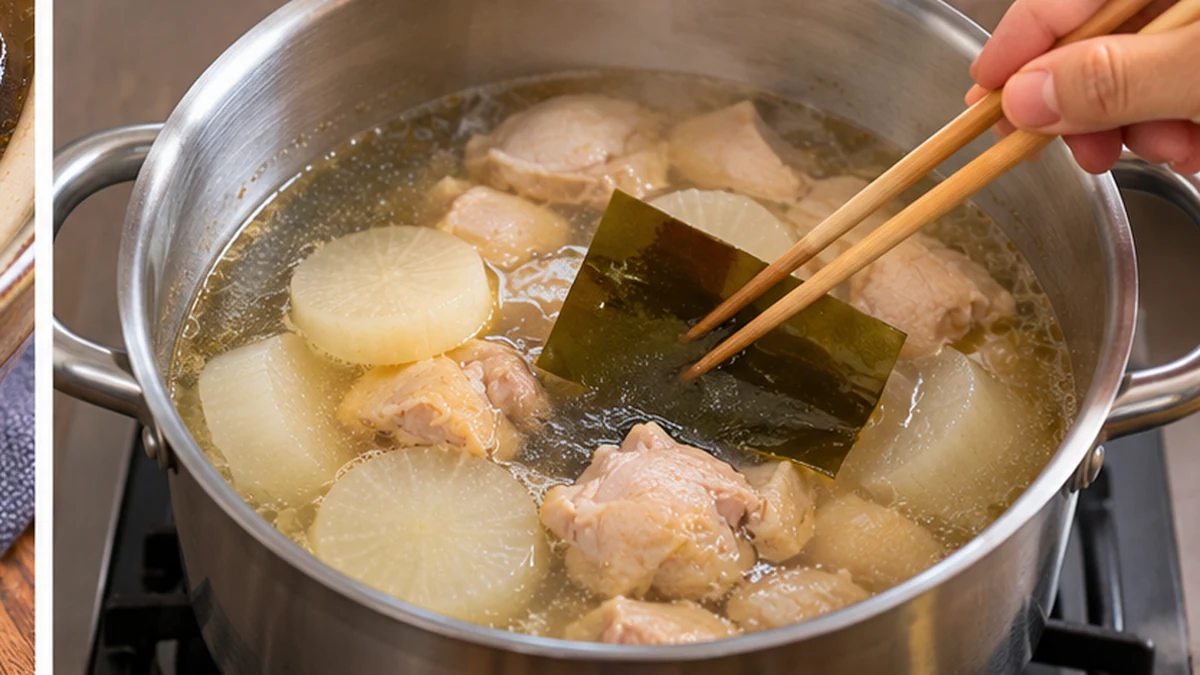
Warm the kombu water over medium heat until small bubbles appear at the edges, about 8 to 10 minutes. Remove the kombu before a vigorous boil.
Add the chicken, ginger, and 1/4 teaspoon fine sea salt. Bring to a gentle simmer and cook for 12 to 15 minutes, skimming foam from the top if necessary.
Slide the daikon into the pot in batches, pressing the slices beneath the broth. Partially cover and simmer 8 to 12 minutes longer, until the daikon is slightly translucent and fork-tender.
Check the thickest chicken piece with an instant-read thermometer; it must reach 165°F (74°C). Simmer longer if required. Taste the broth and add up to the remaining 1/4 teaspoon salt if needed.
Divide the chicken, daikon, and hot broth among 4 bowls. Top with scallions and serve immediately.
Notes
Total time assumes the 10-minute kombu steep overlaps the 15-minute prep; allow more time if slicing by hand or using thick daikon rounds.
Keep the pot at a gentle simmer; boiling hard can toughen the chicken and muddy the broth.
For food safety, chicken must reach 165°F (74°C) internally, measured with a thermometer.
Nutrition estimates assume 680 g raw boneless skinless chicken thighs, 900 g trimmed daikon, 5 g kombu, 12 g ginger, 2 scallions, 1/2 teaspoon fine sea salt, 5 cups water, and 4 equal servings. Sides, condiments and optional substitutions are not included.
Refrigerate leftovers promptly for up to 3 to 4 days, or freeze for best quality for about 2 to 3 months.
Step 1 — Infuse the water. Place the kombu in 5 cups cold water and let it stand 10 minutes while you slice the vegetables. Warm the pot gently until small bubbles form around its edges; lift out the kombu before a vigorous boil.
Step 2 — Prepare the chicken. Cut thawed chicken thighs into even pieces. Keep them on a separate board from the ready-to-eat scallions and wash surfaces afterward.
Step 3 — Start the broth. Add chicken, ginger, and half the salt to the kombu liquid. Bring to a gentle simmer, skim surface foam if needed, and cook around 12 to 15 minutes.
Step 4 — Add the daikon. Slide in the thin rounds in batches and press them under the liquid. Partially cover and simmer another 8 to 12 minutes, until the daikon is tender but not disintegrating.
Step 5 — Check for doneness. Insert an instant-read thermometer into the thickest chicken piece: it must reach 165°F (74°C). Extend cooking as needed; size and pot temperature change the time.
Step 6 — Finish and serve. Taste the broth, add the remaining measured salt only if needed, and ladle into four bowls. Sprinkle with sliced scallions and serve hot.
The process image shows the simmering stage, when pieces of daikon and chicken are visible in the pot and kombu is being lifted out. In practice, remove kombu before the broth reaches a strong boil. The finished hot pot should show pale, slightly translucent radish, fully cooked chicken, and clear broth, not a thick creamy sauce.
Doneness Cues That Actually Matter
In a daikon chicken hot pot, the radish should look more translucent than when raw, bend gently on a spoon, and yield to the tip of a fork with only slight resistance. It should not collapse into mush. Its outer edges may remain a little opaque if the slice is thicker than specified. Taste a slice before adding any extra cooking time.
Chicken is different: tenderness, color, and the clarity of juices are not enough to confirm safety. According to FoodSafety.gov, poultry must reach 165°F (74°C). Check the thickest piece with a food thermometer. If daikon is done first, lift it into serving bowls and simmer the chicken a little longer.
Troubleshooting
The broth tastes like plain water
Make sure the kombu had time to steep and that the chicken simmered gently rather than being added only at the very end. Season gradually after the ingredients are cooked. A tiny splash of ponzu at the table can brighten a portion, but packaged ponzu frequently contains soy and wheat, and it is not included in the recipe nutrition. A full cup of soy sauce or a salty bouillon cube would overwhelm this subtle pot.
My daikon is crunchy
Most often the slices are too thick or the pot has barely been simmering. Thin rounds should lose their raw snap after about 8 to 12 minutes in a covered pot. For larger slices, give them several extra minutes and check every few minutes. If the chicken has already reached 165°F, transfer it to a covered bowl while the radish finishes to prevent dry meat.
The chicken is dry or tough
A rolling boil tightens the texture of chicken thighs and can make even a flavorful broth feel harsh. Lower the heat until bubbles rise gently. Cut the pieces evenly and do not keep cooking them after they have reached a safe internal temperature. If you substitute breast meat, begin checking early because lean breast pieces can dry out faster.
The broth turned cloudy
A little cloudiness from chicken proteins is normal and harmless once cooked safely. For a clearer presentation, skim foam during the first few minutes and maintain a gentle simmer rather than a hard boil. Kombu can also make broth slick or cloudy if left boiling for a long time; taking it out early helps keep the taste clean.
Ingredient Swaps and Variations
Chicken breast: replace thighs by weight and check with a thermometer sooner; the finished nutrition will be lower in fat.
More vegetables: add a small amount of sliced mushrooms or bok choy near the end for a different meal, but the featured version intentionally lets daikon dominate.
Ginger-free: omit ginger for a simpler kombu-and-chicken broth, and add the scallions at serving.
Stronger dashi: use a known dashi stock instead of part of the water and adjust salt. Verify ingredient labels if gluten or fish allergens matter.
Rice or noodles: offer cooked rice or udon separately to make the meal more filling. These will increase calories and carbohydrates and should not be counted in the base nutrition.
Heat: add sliced chili to individual bowls so the entire batch stays mild. Chili oil adds fat and calories.
If you prefer a more heavily seasoned chicken soup with chili, beans, and toppings, our high protein chicken tortilla soup answers a different craving. For an everyday rice-and-broth meal, see the beef broth bowls with rice. Neither is a substitute for this daikon-forward Japanese method, so the recipe intents remain distinct.
Storage, Reheating, and Meal Prep
Divide the hot pot into shallow containers and refrigerate promptly at 40°F (4°C) or colder. FoodSafety.gov recommends 3 to 4 days for meat-containing soups and stews in the refrigerator and about 2 to 3 months in the freezer for best quality. Store broth, chicken, and daikon together; the radish will keep absorbing flavor and may soften more with time.
Reheat only the portion you need until it is thoroughly hot and reaches 165°F (74°C); for soup, bring the broth to a boil, then let it cool slightly before eating. Do not leave a pot sitting at room temperature for long periods while serving. If freezing, use a rigid freezer container with headspace. Daikon will be softer after thawing, so fresh is best when texture matters.
Daikon Chicken Hot Pot FAQs
Is daikon chicken hot pot spicy?
No. This mild base recipe has ginger but no chili. Add chili flakes or a small amount of chili oil to individual bowls if you want heat; they are optional and not included in the nutrition calculation.
Can I cook the daikon with its skin on?
The skin is edible, but large mature daikon roots may have a tough outer layer. Peeling gives the most consistent tender texture in a short-cooking hot pot. Scrub thoroughly if you choose not to peel, and expect a firmer bite.
What does kombu do in hot pot?
Kombu is dried kelp used to flavor broth. A short steep in water extracts savory compounds without needing long simmering. Remove it before the water boils vigorously, then season the completed broth to taste.
Can I make this in a slow cooker?
For daikon chicken hot pot, a slow cooker needs a different timing plan because raw chicken and thin daikon cook at different rates and the broth does not reach temperature as quickly as a stovetop pot. For this particular recipe, the stovetop method is the reliable option; do not simply copy the 35-minute cook time into a slow cooker.
Is this a high-protein meal?
With 1 1/2 pounds of boneless, skinless chicken thighs divided among four servings, the estimated protein is about 34 grams per bowl. Protein, calories, and sodium still vary with trimming, brands, portion size, and any sides you add. No medical or weight-loss benefit is implied by the name.
Can I make a vegetarian version?
Yes, but that would be a different recipe. Replace the chicken with tofu or mushrooms and keep kombu for the broth; simmer the daikon until tender and adjust seasoning. The nutrition, timing, and food-safety details for the chicken recipe would no longer apply.
Final Tips
The two variables that matter most are daikon thickness and heat level. Slice the radish evenly, maintain a quiet simmer, and taste the broth after the vegetables release their natural sweetness. Keep the broth simple enough that you can still taste daikon, and always use a thermometer to verify the chicken is safely cooked.
This daikon chicken hot pot turns a whole radish into a clear, comforting dinner without heavy sauces or a complicated ingredient list. Serve it as written first; once the basic timing works in your pot, it is easy to personalize each bowl with sides or seasonings.
Reviewed recipe options
Make this recipe fit me
Choose one of seven popular diet options. NutriMatch will confirm whether the recipe already fits, show a reviewed adaptation when available, or recommend recipes that match your choice.
Please choose a diet first.
Already a reviewed match
This recipe already fits Dairy-Free.
No changes are needed based on its reviewed NutriMatch classification. Check the complete ingredients, product labels, and serving details for your own needs.
Recipe details, product formulas, and cross-contact information can change. Confirm current labels and use professional guidance when medically necessary.
Already a reviewed match
This recipe already fits Gluten-Free.
No changes are needed based on its reviewed NutriMatch classification. Check the complete ingredients, product labels, and serving details for your own needs.
Recipe details, product formulas, and cross-contact information can change. Confirm current labels and use professional guidance when medically necessary.
Already a reviewed match
This recipe already fits High Protein.
No changes are needed based on its reviewed NutriMatch classification. Check the complete ingredients, product labels, and serving details for your own needs.
Recipe details, product formulas, and cross-contact information can change. Confirm current labels and use professional guidance when medically necessary.
Not available for this recipe
This recipe cannot currently be made Keto with a reviewed adaptation.
NutriMatch will not guess at substitutions. Try one of these recipes that is already reviewed for your choice.
Recipe details, product formulas, and cross-contact information can change. Confirm current labels and use professional guidance when medically necessary.
Not available for this recipe
This recipe cannot currently be made Low Carb with a reviewed adaptation.
NutriMatch will not guess at substitutions. Try one of these recipes that is already reviewed for your choice.
Recipe details, product formulas, and cross-contact information can change. Confirm current labels and use professional guidance when medically necessary.
Not available for this recipe
This recipe cannot currently be made Vegan with a reviewed adaptation.
NutriMatch will not guess at substitutions. Try one of these recipes that is already reviewed for your choice.
Recipe details, product formulas, and cross-contact information can change. Confirm current labels and use professional guidance when medically necessary.
Not available for this recipe
This recipe cannot currently be made Vegetarian with a reviewed adaptation.
NutriMatch will not guess at substitutions. Try one of these recipes that is already reviewed for your choice.
Recipe details, product formulas, and cross-contact information can change. Confirm current labels and use professional guidance when medically necessary.