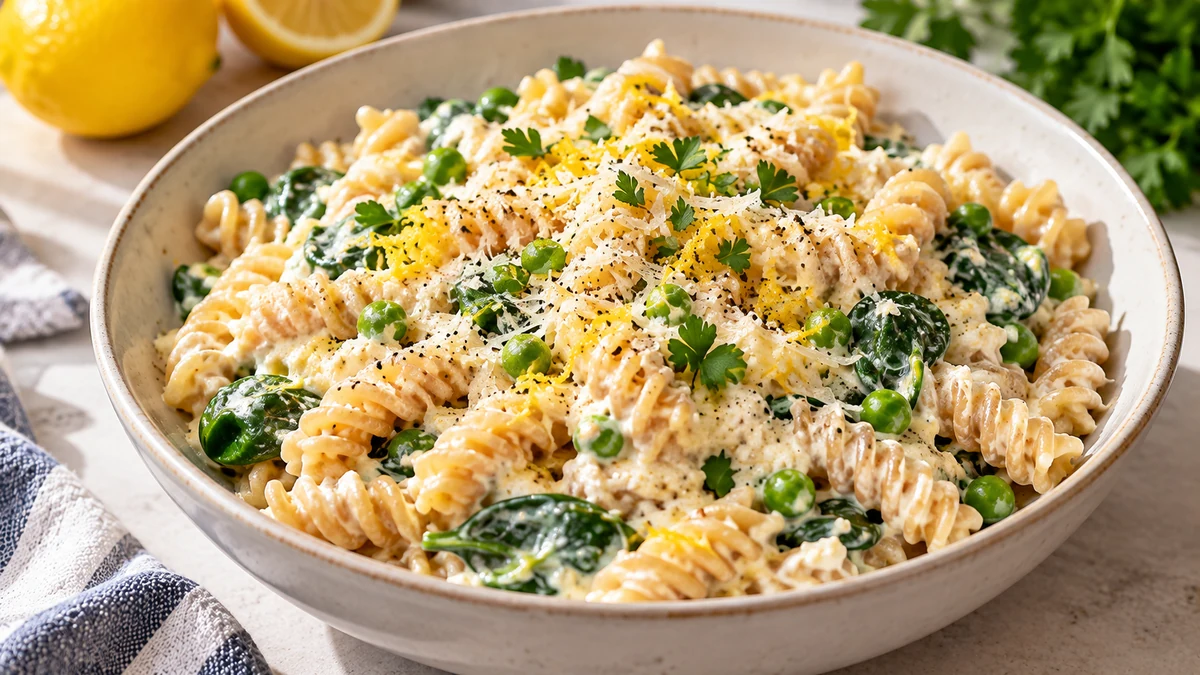
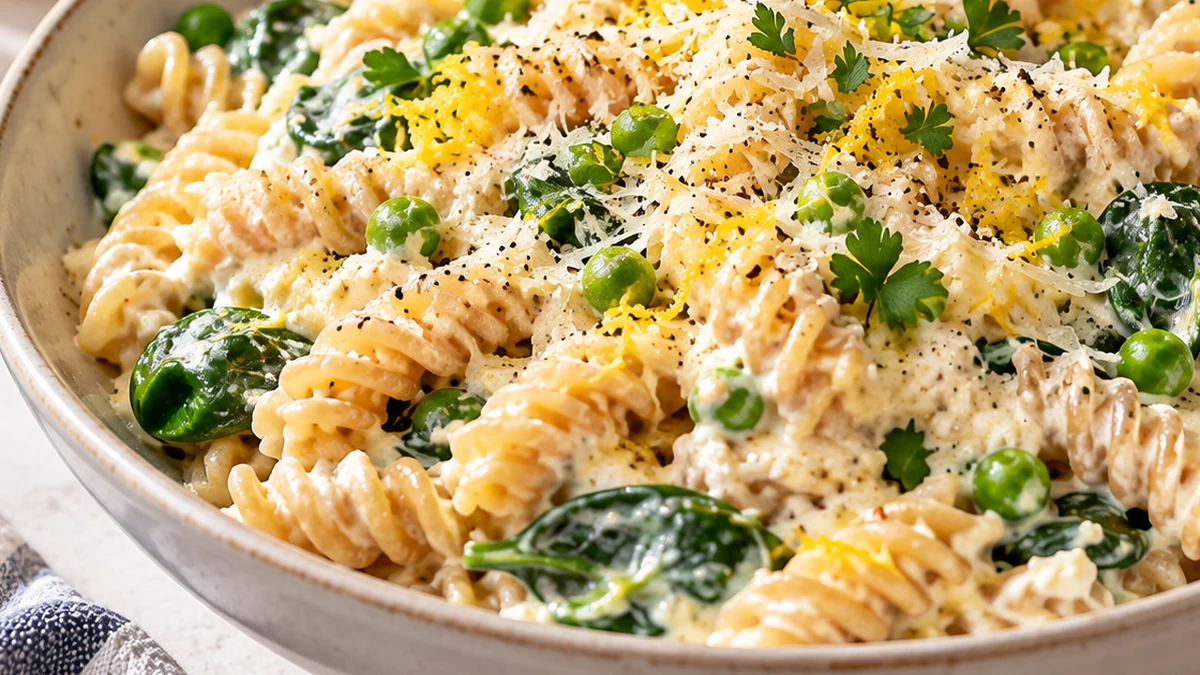
High protein cottage cheese lemon pasta turns a simple bowl of pasta into a creamy weeknight dinner with about 25 grams of protein per serving. The sauce is blended until completely smooth, then warmed gently with chickpea pasta, spinach, peas, Parmesan, lemon, and black pepper. There is no heavy cream and no protein powder in the sauce.
The most important technique is temperature control. Cottage cheese becomes silky after blending, but aggressive boiling can make the finished sauce look grainy. Toss the sauce with hot pasta off direct high heat, then loosen it gradually with reserved pasta water until it clings to every curve of the noodles.
Why You’ll Love This High Protein Cottage Cheese Lemon Pasta
It is ready in about 20 minutes, including the pasta cooking time.
Chickpea pasta, cottage cheese, Greek yogurt, and Parmesan build approximately 25 grams of protein per serving.
Blending the cottage cheese removes the curdy texture and creates a smooth sauce without heavy cream.
Lemon zest and fresh lemon juice keep the sauce bright instead of overly rich.
Spinach and peas cook in the same pot, so there is no separate vegetable pan to wash.
The recipe is vegetarian and can be gluten free when you use appropriately labeled chickpea pasta and packaged ingredients.
The sauce is mild enough for a weeknight family dinner, with red pepper flakes available for extra heat.
Ingredients You’ll Need
Chickpea Pasta
Use 12 ounces of chickpea rotini or penne. Chickpea pasta contributes more protein and fiber than standard white pasta and holds a thick cottage cheese sauce well. Cook it only until just tender; overcooked legume pasta can break when you toss it with the sauce. If gluten cross-contact matters, choose pasta specifically labeled gluten free and check the other packaged ingredients as well. Our gluten-free recipes guide has more label-checking reminders.
Cottage Cheese and Greek Yogurt
Two-percent cottage cheese is the main sauce base. It has enough body to blend creamy without making the sauce excessively heavy. A small amount of plain nonfat Greek yogurt adds tang and helps the sauce stay spoonable. Blend both until no visible curds remain before the sauce touches the pasta.
Parmesan, Lemon, and Garlic
Finely grated Parmesan supplies savory depth and helps the sauce cling to the noodles. Fresh lemon zest gives a strong citrus aroma without thinning the sauce, while lemon juice adds acidity. Raw garlic is blended directly into the sauce, so three small cloves are enough; larger cloves can overpower the lemon.
Spinach and Peas
Frozen peas add color, mild sweetness, and a little extra protein and fiber. Baby spinach wilts almost immediately in the warm pot. Both vegetables are added before the sauce so they can heat through without forcing the cottage cheese mixture to boil.
The Technique That Keeps Cottage Cheese Pasta Sauce Smooth
Cottage cheese contains milk proteins that can tighten when exposed to high heat for too long. The easiest way to keep the texture smooth is to blend the dairy mixture thoroughly, finish cooking the pasta and vegetables first, then lower the heat before adding the sauce. The residual heat from the pasta is usually enough to warm it.
Reserved pasta water matters because it contains starch from the noodles. Add it a few tablespoons at a time while tossing. The starch and water thin the blended cheese just enough to create a glossy coating. Adding a large amount all at once can turn the sauce soupy, so work gradually.
Creamy 20-minute lemon pasta made with chickpea pasta, blended cottage cheese, Greek yogurt, Parmesan, spinach, and peas.
Total Time:20 minutes
Yield:6 servings
Ingredients
Scale
12 ounces chickpea rotini or penne, gluten-free labeled if needed
2 cups 2% cottage cheese
1/2 cup plain nonfat Greek yogurt
1/2 cup finely grated Parmesan cheese, plus more for serving if desired
1 tablespoon olive oil
3 small garlic cloves
2 teaspoons finely grated lemon zest
3 tablespoons fresh lemon juice, divided
1/2 teaspoon freshly ground black pepper, plus more for serving
1/4 teaspoon fine salt, plus more to taste if needed
1 cup frozen green peas
5 ounces baby spinach
1/2 to 1 cup reserved pasta cooking water, as needed
1/4 teaspoon crushed red pepper flakes, optional
Instructions
Bring a large pot of water to a boil. Cook the chickpea pasta according to the package directions until just tender. Before draining, reserve at least 1 cup of the pasta cooking water, then drain the pasta without rinsing.
While the pasta cooks, add the cottage cheese, Greek yogurt, Parmesan, olive oil, garlic, lemon zest, 2 tablespoons lemon juice, black pepper, and salt to a blender or food processor. Blend for 45 to 60 seconds, scrape down the sides, then blend again until completely smooth.
Return the empty pasta pot to low heat. Add the frozen peas and 1/4 cup reserved pasta water and stir for about 1 minute. Add the spinach and toss just until it begins to wilt.
Return the drained pasta to the pot. Reduce the heat to its lowest setting or move the pot briefly off the burner. Pour in the blended cottage cheese sauce and toss continuously.
Add more reserved pasta water 2 tablespoons at a time until the sauce is glossy and evenly coats the pasta. Warm gently for about 1 minute if needed, but do not let the sauce boil.
Stir in the remaining 1 tablespoon lemon juice. Taste and adjust with black pepper or a small amount of salt. Serve warm with extra lemon zest, Parmesan, or optional red pepper flakes.
Notes
Do not boil the cottage cheese sauce after it is added to the pasta; gentle heat helps keep the texture smooth.
The nutrition estimate assumes chickpea pasta, 2% cottage cheese, nonfat Greek yogurt, and the listed Parmesan amount. Brand labels vary.
Regular wheat pasta can be substituted, but the protein and fiber per serving will be lower than the listed nutrition.
Use appropriately labeled chickpea pasta and packaged ingredients when gluten cross-contact matters.
Refrigerate leftovers promptly and use within 3 to 4 days. Reheat gently with a splash of water until the food reaches 165°F.
Freezing is not recommended for best texture because legume pasta can soften and the blended dairy sauce may become grainy after thawing.
Author:Adam Moretti
Prep Time:8 minutes
Cook Time:12 minutes
Category:Dinner
Method:Stovetop
Cuisine:American
Diet:Vegetarian
How to Make High Protein Cottage Cheese Lemon Pasta
1. Cook the Chickpea Pasta
Bring a large pot of water to a boil and cook the chickpea pasta according to the package directions until just tender. Before draining, scoop out at least 1 cup of the cooking water. Drain the pasta gently and do not rinse it; the surface starch helps the sauce adhere.
2. Blend the Cottage Cheese Sauce
While the pasta cooks, add cottage cheese, Greek yogurt, Parmesan, olive oil, garlic, lemon zest, 2 tablespoons lemon juice, black pepper, and salt to a blender or food processor. Blend for 45 to 60 seconds, scrape the sides, and blend again until the sauce looks completely smooth.
3. Warm the Peas and Spinach
Return the empty pasta pot to low heat. Add the frozen peas with 1/4 cup reserved pasta water and stir for about 1 minute. Add the baby spinach and toss just until it begins to wilt. You want the vegetables hot, but there is no need to brown them.
4. Toss Off High Heat
Return the drained pasta to the pot, then reduce the heat to its lowest setting or move the pot briefly off the burner. Pour in the blended cottage cheese sauce and toss continuously. Add more reserved pasta water, 2 tablespoons at a time, until the sauce coats the pasta instead of sitting in thick clumps.
5. Finish With Lemon
Stir in the remaining tablespoon of lemon juice after the sauce is warm. Taste before adding more salt because Parmesan and cottage cheese already contribute sodium. Finish with extra black pepper, lemon zest, or a pinch of red pepper flakes if you want more contrast.
How to Know the Pasta Is Right
The sauce should coat the pasta in a thin creamy layer rather than pooling heavily at the bottom of the bowl.
The pasta should hold its shape when tossed. If it begins breaking apart, it was cooked too long or stirred too aggressively.
The spinach should be wilted but still green, and the peas should be hot without becoming dull or mushy.
The lemon aroma should be noticeable before the first bite, while the flavor remains balanced by Parmesan and black pepper.
The finished sauce should look smooth. Small visible curds usually mean the cottage cheese was not blended long enough or the sauce was boiled.
Troubleshooting Cottage Cheese Pasta Sauce
The Sauce Looks Grainy
Graininess usually comes from insufficient blending or too much heat. Blend the sauce until completely smooth before adding it to the pasta, and do not let the finished sauce boil. If it looks slightly tight, remove the pot from the heat and toss in warm pasta water one tablespoon at a time.
The Sauce Is Too Thick
Chickpea pasta absorbs sauce quickly as it sits. Add reserved pasta water in small splashes until the coating loosens. Milk can work in a pinch, but pasta water is better because it thins the sauce without making it taste more milky.
The Sauce Is Too Thin
Let the pasta sit for 1 to 2 minutes before changing anything; chickpea pasta continues absorbing liquid. If the sauce is still loose, add a tablespoon or two of finely grated Parmesan and toss off heat. Avoid boiling the mixture to reduce it because high heat can hurt the texture.
The Lemon Flavor Is Harsh
Use zest for aroma and add the final lemon juice only after the sauce is warm. If the lemon tastes too sharp, stir in another spoonful of cottage cheese or a tablespoon of Parmesan rather than adding sugar. Different lemons vary in acidity, so tasting at the end is important.
Variations and Substitutions
Use Regular Pasta
Regular wheat rotini, penne, or spaghetti works with the same sauce, but the protein per serving will be lower than the nutrition estimate below because that estimate assumes chickpea pasta. Keep the sauce amount the same and reserve pasta water before draining.
Add More Vegetables
Sautéed zucchini, asparagus, mushrooms, or broccoli can replace some or all of the peas and spinach. Cook firmer vegetables before the pasta sauce is added so the dairy mixture is exposed to as little heat as possible.
Add Chicken
For an even higher-protein version, fold in 2 cups of cooked chopped chicken after the pasta is coated. Warm it gently with the finished dish. This changes the nutrition and removes the vegetarian classification, so do not use the base nutrition numbers for that variation.
Make It Spicier
Add 1/4 teaspoon crushed red pepper flakes to the blender or finish each bowl with chili flakes. A small amount works well with lemon and Parmesan without masking the mild cottage cheese sauce.
Serving Ideas
This pasta is substantial enough to serve as a main dish. A crisp green salad, roasted broccoli, or simple tomato-cucumber salad adds freshness without competing with the lemon sauce. If you are planning a protein-focused week, our low calorie high protein meals collection offers more dinner combinations.
For lunch meal prep, divide the pasta into individual containers while it is still slightly saucier than you want. The chickpea pasta will absorb more moisture in the refrigerator, so keeping a little extra reserved sauce or a splash of water for reheating improves the texture.
Make-Ahead, Storage, and Reheating
Cool leftovers promptly and refrigerate them in shallow airtight containers. USDA food-safety guidance recommends using most cooked leftovers within 3 to 4 days and reheating leftovers to 165°F. See the USDA leftovers guidance for the full recommendations.
Reheat a serving gently in the microwave or in a covered skillet over low heat. Add 1 to 2 tablespoons of water before reheating, then stir halfway through. The sauce may look thick straight from the refrigerator but loosens again as it warms. Freezing is not the best option for this recipe because both chickpea pasta and blended dairy can become softer or grainier after thawing.
FaQs about High Protein Cottage Cheese Lemon Pasta
Does cottage cheese melt into pasta sauce?
Cottage cheese does not melt exactly like mozzarella or cheddar, but blending turns the curds into a smooth creamy base. Gentle heat then warms the sauce and helps it coat the pasta. High heat is unnecessary and can make the texture less smooth.
Can I make cottage cheese pasta without a blender?
You can mash small-curd cottage cheese very thoroughly, but the sauce will not be as silky. An immersion blender, countertop blender, or food processor gives a more consistent result because it breaks down the curds completely before heating.
How much protein is in this cottage cheese pasta?
With 12 ounces of chickpea pasta and the dairy amounts listed, one-sixth of the recipe provides approximately 25 grams of protein. Brands vary, especially for chickpea pasta, cottage cheese, and Greek yogurt, so use the labels in your kitchen when you need a brand-specific number.
Can I use ricotta instead of cottage cheese?
Ricotta can make a creamy sauce, but it usually contains less protein per cup and has a different moisture level. It is not a direct nutrition-equivalent swap. If you use it, expect a richer, slightly thicker sauce and recalculate the nutrition if protein is important to your meal plan.
Is high protein cottage cheese lemon pasta gluten free?
The main recipe uses chickpea pasta and does not require wheat flour, but packaged ingredients can vary. Use pasta and other packaged products that are labeled appropriately for your needs and avoid cross-contact when gluten is a concern.
Final Tips
Blend the cottage cheese sauce longer than you think you need, reserve pasta water before draining, and lower the heat before the sauce goes into the pot. Those three details make the biggest difference between a smooth creamy coating and a grainy one.
Finish with lemon juice only after the sauce is warm, then adjust the consistency one splash of pasta water at a time. The result is a fast, bright, high protein cottage cheese lemon pasta that works for dinner, lunch prep, or any night when you want creamy pasta without a heavy cream sauce.
Reviewed recipe options
Make this recipe fit me
Choose one of seven popular diet options. NutriMatch will confirm whether the recipe already fits, show a reviewed adaptation when available, or recommend recipes that match your choice.
Please choose a diet first.
Not available for this recipe
This recipe cannot currently be made Dairy-Free with a reviewed adaptation.
NutriMatch will not guess at substitutions. Try one of these recipes that is already reviewed for your choice.
Recipe details, product formulas, and cross-contact information can change. Confirm current labels and use professional guidance when medically necessary.
Already a reviewed match
This recipe already fits Gluten-Free.
No changes are needed based on its reviewed NutriMatch classification. Check the complete ingredients, product labels, and serving details for your own needs.
Recipe details, product formulas, and cross-contact information can change. Confirm current labels and use professional guidance when medically necessary.
Already a reviewed match
This recipe already fits High Protein.
No changes are needed based on its reviewed NutriMatch classification. Check the complete ingredients, product labels, and serving details for your own needs.
Recipe details, product formulas, and cross-contact information can change. Confirm current labels and use professional guidance when medically necessary.
Not available for this recipe
This recipe cannot currently be made Keto with a reviewed adaptation.
NutriMatch will not guess at substitutions. Try one of these recipes that is already reviewed for your choice.
Recipe details, product formulas, and cross-contact information can change. Confirm current labels and use professional guidance when medically necessary.
Not available for this recipe
This recipe cannot currently be made Low Carb with a reviewed adaptation.
NutriMatch will not guess at substitutions. Try one of these recipes that is already reviewed for your choice.
Recipe details, product formulas, and cross-contact information can change. Confirm current labels and use professional guidance when medically necessary.
Not available for this recipe
This recipe cannot currently be made Vegan with a reviewed adaptation.
NutriMatch will not guess at substitutions. Try one of these recipes that is already reviewed for your choice.
Recipe details, product formulas, and cross-contact information can change. Confirm current labels and use professional guidance when medically necessary.
Already a reviewed match
This recipe already fits Vegetarian.
No changes are needed based on its reviewed NutriMatch classification. Check the complete ingredients, product labels, and serving details for your own needs.
Recipe details, product formulas, and cross-contact information can change. Confirm current labels and use professional guidance when medically necessary.