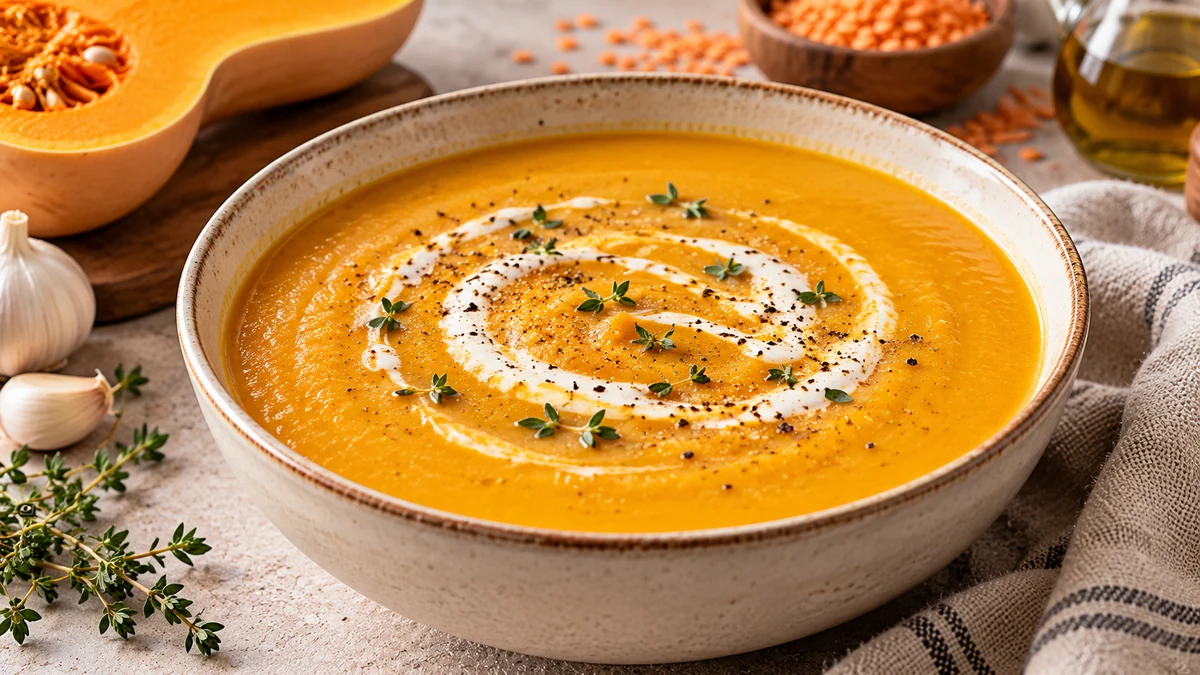
This high protein butternut squash soup turns naturally sweet squash, red lentils, and cottage cheese into a thick, creamy one-pot meal with about 23 grams of protein per serving. The lentils cook directly in the broth, so they soften enough to blend into the squash, while cottage cheese is added after cooking for extra protein and a smooth finish without heavy cream.
The recipe makes six generous bowls and works well for lunch, dinner, and meal prep. It is savory rather than dessert-like, with onion, garlic, thyme, cumin, black pepper, a small amount of nutmeg, and fresh lemon to balance the squash. For more ways to build meals around everyday protein sources, see our high protein foods guide.
Table of Contents
Why You’ll Love This High Protein Butternut Squash Soup
Each serving provides approximately 23 grams of protein when the pot is divided into six equal portions.
Red lentils thicken the soup naturally and blend smoothly with the squash.
Cottage cheese adds creaminess and protein without relying on heavy cream.
Everything cooks in one pot before blending, so cleanup stays simple.
The savory seasoning keeps the soup balanced instead of making it taste like sweet squash purée.
The finished soup reheats well and can be frozen in individual portions.
The ingredients are familiar and easy to find in a typical U.S. grocery store.
What Makes This Butternut Squash Soup High in Protein?
Two ingredients do most of the protein work: dry red lentils and low-fat cottage cheese. One and a half cups of dry red lentils simmer in the soup until completely tender, contributing both protein and body. Two cups of 2% cottage cheese are blended in after the pot comes off the heat, which raises the protein while keeping the texture creamy.
Butternut squash itself is not a high-protein food, so simply blending squash with broth would not create the same nutrition profile. This version uses the squash for flavor and texture, then builds the protein around it. The nutrition estimate below is based on the exact ingredient amounts in the recipe card and six equal servings. Brands of broth and cottage cheese can change the sodium and protein slightly.
Ingredients You’ll Need
Butternut Squash
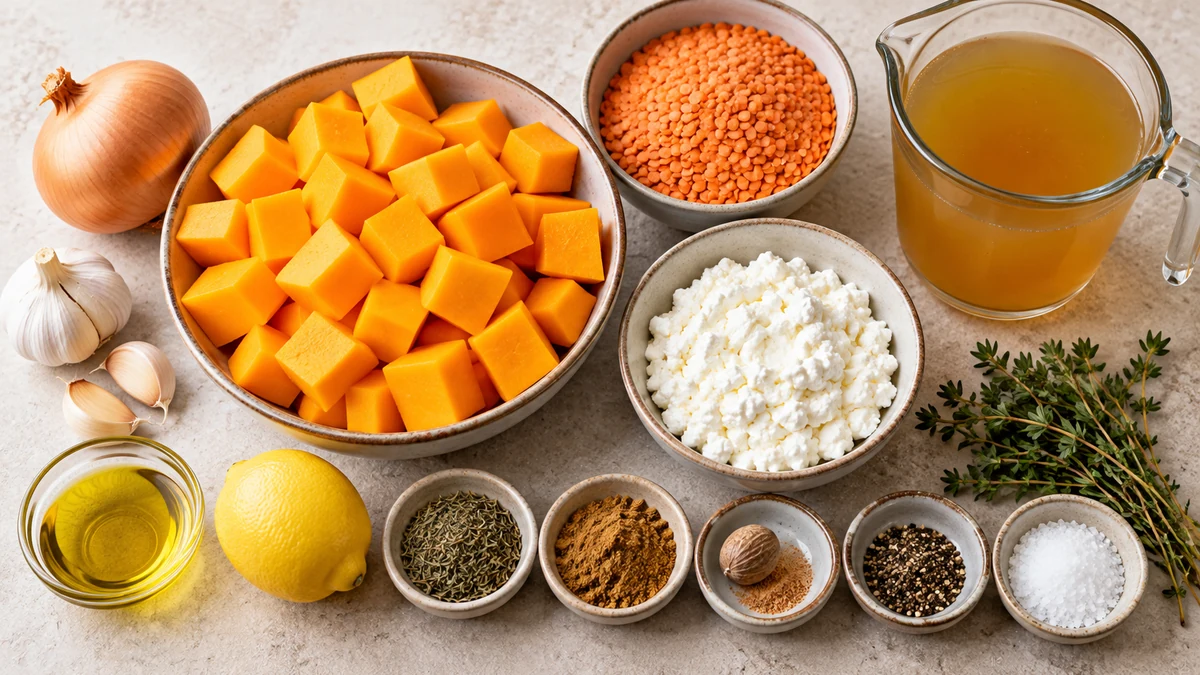
Use about 2 pounds of peeled, seeded butternut squash cut into 1-inch cubes. Pre-cut squash is convenient and works well as long as the cubes look firm and fresh. Smaller cubes cook faster and more evenly than large chunks, which matters because the lentils and squash should become tender at roughly the same time.
Red Lentils
Red lentils are ideal for this high protein butternut squash soup because they soften quickly and lose their shape during cooking. That is useful here: instead of trying to preserve individual lentils, you want them to disappear into the blended base. Rinse them under cool water until the runoff looks mostly clear, then drain before adding them to the pot.
Low-Fat Cottage Cheese
Use 2% cottage cheese for a balance of creaminess and protein. It blends completely smooth when the soup is hot and the blender has enough liquid to circulate. Full-fat cottage cheese also works, while fat-free cottage cheese can produce a slightly thinner, tangier result. The stated nutrition is based on 2% cottage cheese.
Vegetable Broth
Low-sodium vegetable broth gives you more control over seasoning because cottage cheese already contributes sodium. Start with 6 cups. After blending, add more broth or hot water only if you want a thinner soup. If gluten matters, check the broth label because packaged broths can vary by brand.
Onion, Garlic, Thyme, Cumin, and Nutmeg
Onion and garlic create the savory base. Dried thyme supports the squash without overpowering it, while cumin adds warmth and a little earthiness. Nutmeg is used sparingly—just enough to round out the squash flavor without making the soup taste like pie. Black pepper provides the final savory edge.
Lemon Juice
Fresh lemon juice goes in after blending. The acidity cuts through the natural sweetness of the squash and the dairy richness from the cottage cheese. Start with one tablespoon, taste, and add a little more only if the soup still tastes flat.
A creamy one-pot butternut squash soup with red lentils, cottage cheese, savory herbs, and approximately 23 grams of protein per serving.
Total Time:45 minutes
Yield:6 servings
Ingredients
Scale
2 tablespoons olive oil
1 large yellow onion, diced
4 garlic cloves, minced
2 pounds peeled butternut squash, cut into 1-inch cubes
1 1/2 cups dry red lentils, rinsed and drained
6 cups low-sodium vegetable broth, plus more as needed
1 teaspoon dried thyme
1 teaspoon ground cumin
1/4 teaspoon ground nutmeg
1/2 teaspoon black pepper
1/2 teaspoon fine salt, plus more to taste
2 cups low-fat 2% cottage cheese
1 tablespoon fresh lemon juice, plus more to taste
Fresh thyme or chopped parsley for serving, optional
Instructions
Heat the olive oil in a large Dutch oven or heavy soup pot over medium heat. Add the onion and cook for 5 to 6 minutes, stirring occasionally, until softened. Add the garlic, thyme, cumin, nutmeg, and black pepper and cook for 30 seconds, until fragrant.
Add the butternut squash, rinsed red lentils, vegetable broth, and salt. Stir well and bring the mixture to a gentle boil.
Reduce the heat to maintain a simmer. Partially cover the pot and cook for 22 to 28 minutes, stirring every few minutes, until the squash crushes easily with a spoon and the lentils are completely tender.
Remove the pot from the heat. Blend with an immersion blender until smooth, or carefully blend in batches in a countertop blender according to the manufacturer’s instructions for hot liquids.
Add the cottage cheese and blend again until no visible curds remain and the soup is glossy and uniform. If the soup is too thick, add warm broth or water 1/4 cup at a time until it reaches your preferred consistency.
Stir in the lemon juice. Taste and adjust salt, pepper, thyme, or lemon as needed. Divide into 6 servings and garnish with fresh thyme or parsley if desired.
Notes
The nutrition estimate is based on 2 pounds of butternut squash, 1 1/2 cups dry red lentils, 2 cups 2% cottage cheese, low-sodium vegetable broth, and six equal servings.
Use vegetable broth to keep the soup vegetarian. Check the broth label if gluten matters.
The soup thickens as it cools because red lentils continue absorbing liquid. Add broth or water during reheating as needed.
Cool leftovers promptly, refrigerate in shallow covered containers, and use most refrigerated leftovers within 3 to 4 days. Reheat leftovers to 165°F.
Optional toppings such as pumpkin seeds, bread, extra cottage cheese, or yogurt are not included in the nutrition estimate.
Author:Adam Moretti
Prep Time:15 minutes
Cook Time:30 minutes
Category:Soup
Method:Stovetop
Cuisine:American
Diet:Vegetarian
How to Make High Protein Butternut Squash Soup
1. Soften the Onion
Heat the olive oil in a large Dutch oven or heavy soup pot over medium heat. Add the diced onion and cook for 5 to 6 minutes, stirring occasionally, until the onion softens and the edges begin to turn translucent. Add the garlic, thyme, cumin, nutmeg, and black pepper and cook for about 30 seconds, just until fragrant.
2. Add Squash, Lentils, and Broth
Stir in the cubed butternut squash and rinsed red lentils, then pour in 6 cups of low-sodium vegetable broth. Add the salt and stir well so the lentils are distributed through the liquid instead of sitting in a dense layer on the bottom of the pot.
3. Simmer Until Completely Tender
Bring the pot to a gentle boil, then reduce the heat and simmer partially covered for 22 to 28 minutes. Stir every few minutes, especially toward the end, because softened lentils can settle. The soup is ready to blend when the squash crushes easily against the side of the pot and the lentils have lost their firm centers.
4. Blend Until Smooth
Remove the pot from the heat. Use an immersion blender to blend the soup until completely smooth, moving the blender around the pot rather than holding it in one spot. If using a countertop blender, work in batches and follow the manufacturer’s instructions for hot liquids. The mixture will be thick at this stage.
5. Blend in the Cottage Cheese
Add the cottage cheese and blend again until no visible curds remain. The color should become a slightly lighter orange and the texture should look glossy and uniform. If the soup is thicker than you want, add warm broth or water one-quarter cup at a time and blend briefly after each addition.
6. Finish With Lemon and Taste
Stir in the lemon juice and taste the soup only after the cottage cheese is fully blended. Adjust salt, black pepper, thyme, or lemon in small amounts. Serve warm with fresh thyme or parsley if desired. Optional garnishes are not included in the nutrition estimate.
How Thick Should Butternut Squash Soup Be?
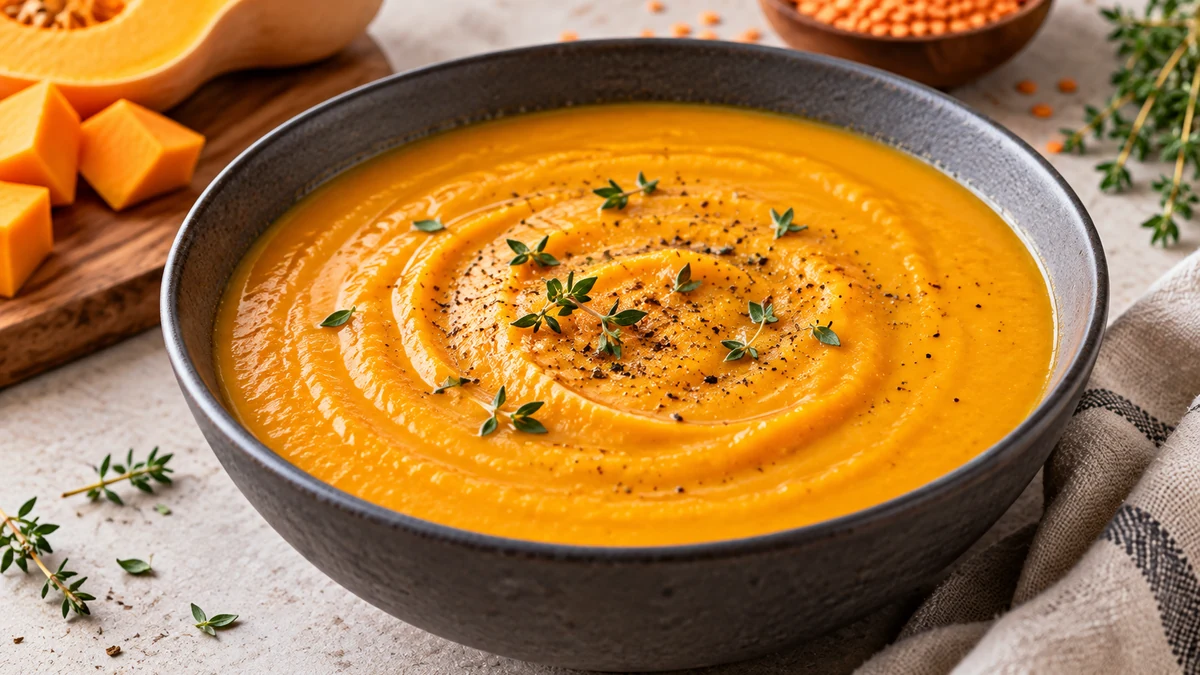
This soup is designed to be thick enough to coat a spoon but loose enough to pour into a bowl without holding its shape like mashed squash. After blending, draw a spoon through the pot: the path should close slowly rather than disappearing immediately. The red lentils continue absorbing liquid as the soup stands, so it will be thicker after 10 to 15 minutes and thicker again after refrigeration.
If you plan to make the soup ahead, stop slightly looser than your ideal serving consistency. When reheating, add broth or water a few tablespoons at a time until the texture returns. This is easier than trying to rescue a bowl that became overly thin from adding too much liquid during the first cook.
Why the Flavor Stays Savory
Butternut squash has natural sweetness, which is one reason squash soups can drift toward a flavor that feels more like a side dish than a full meal. Onion, garlic, thyme, cumin, black pepper, and lemon pull this version in a savory direction. The red lentils also give the soup a more substantial legume flavor once blended.
Keep sweeteners out of the base recipe. Maple syrup and brown sugar can work in other squash soups, but they are unnecessary here and can compete with the cottage cheese and lentils. If your particular squash tastes unusually sweet, an extra squeeze of lemon or a pinch of black pepper is usually a better adjustment.
Troubleshooting
The Soup Is Too Thick
Add warm broth or water one-quarter cup at a time and blend or whisk after each addition. Red lentils absorb a lot of liquid, and the amount of moisture in fresh squash also varies. It is normal for the soup to need a small adjustment after blending and again after refrigeration.
The Soup Is Too Thin
Return the pot to low heat and simmer uncovered for 5 to 10 minutes, stirring frequently so the lentils do not catch on the bottom. If the soup is only slightly thin, simply let it stand for 10 minutes before deciding; it often thickens on its own as the lentils settle.
The Cottage Cheese Looks Grainy
Keep blending. Cottage cheese usually needs more blending than cream because the curds must be broken down completely. An immersion blender works, but a high-speed countertop blender creates the smoothest finish. Avoid adding cold cottage cheese to a rapidly boiling pot; remove the soup from the heat first, then blend it in.
The Soup Tastes Too Sweet
Add acidity and savory seasoning before adding more salt. Stir in another teaspoon or two of lemon juice, then taste. A small pinch of cumin or black pepper can also help. Do not add large amounts of spice all at once because the blended soup magnifies strong flavors quickly.
The Soup Tastes Flat
Check salt first, then lemon. Low-sodium broth is useful for control, but different brands vary widely. Add a small pinch of salt, stir, and taste again. If the soup is properly salted but still dull, a little more lemon juice usually brings the squash, lentils, and dairy into focus.
Variations and Substitutions
Use full-fat cottage cheese: The soup will be slightly richer. The nutrition will differ from the values listed in the recipe card.
Use yellow split lentils: They can work, but cooking time may be longer. Simmer until completely soft before blending.
Add carrots: Replace up to 8 ounces of the squash with sliced carrots for a slightly earthier sweetness.
Make it spicier: Add 1/4 teaspoon cayenne or a pinch of red pepper flakes with the dry spices.
Use fresh herbs: Replace the dried thyme with about 1 tablespoon fresh thyme leaves added during the final 10 minutes of simmering.
Use chicken broth: If you do not need the soup to remain vegetarian, low-sodium chicken broth can replace the vegetable broth one-for-one.
A bowl of this high protein butternut squash soup is substantial enough for a light meal on its own, especially because the lentils and cottage cheese make it much more filling than a squash-and-broth purée. For extra texture, serve it with a simple green salad, toasted whole-grain bread, or roasted vegetables on the side.
Keep toppings modest if you want the soup itself to stay the focus. Fresh thyme, chopped parsley, cracked black pepper, or a spoonful of cottage cheese blended smooth with a splash of broth all work. Pumpkin seeds add crunch, but they are not included in the nutrition estimate. If you are comparing different protein-focused meal formats, our low calorie high protein meals guide has additional dinner ideas built around poultry, fish, beans, tofu, and yogurt.
Make-Ahead, Storage, and Freezing
This soup is a good make-ahead recipe because the blended texture holds up after chilling. Cool leftovers promptly, divide them into shallow covered containers, and refrigerate. The USDA recommends using most refrigerated leftovers within 3 to 4 days and reheating leftovers to 165°F. See the USDA leftovers and food safety guidance for the full recommendations.
For freezing, portion the cooled soup into freezer-safe containers, leaving a little headspace for expansion. Freeze for up to 2 to 3 months for best quality. Thaw overnight in the refrigerator when possible, then reheat gently on the stovetop. The soup will usually be thicker after freezing, so whisk in broth or water as it warms.
FAQs about High Protein Butternut Squash Soup
How much protein is in high protein butternut squash soup?
This recipe provides approximately 23 grams of protein per serving when divided into six equal portions. Most of that protein comes from the red lentils and cottage cheese. Different cottage cheese brands and serving sizes will change the exact total.
Can I taste the cottage cheese in the soup?
Not strongly. Once blended with the squash, lentils, broth, onion, garlic, and spices, cottage cheese mainly contributes creaminess and a mild tang. A high-speed blender makes the dairy flavor and texture especially subtle.
Do I need to roast the butternut squash first?
No. Roasting adds caramelized flavor, but it also adds another pan and more cooking time. In this one-pot version, the squash simmers directly with the lentils and aromatics, then everything is blended together. The thyme, cumin, garlic, and lemon keep the flavor from tasting flat.
Can I use frozen butternut squash?
Yes. Add frozen squash directly to the pot without thawing. The soup may return to a simmer more slowly, so add a few extra minutes as needed. Continue cooking until both the squash and lentils are completely tender before blending.
Can I make this soup without cottage cheese?
You can, but it will no longer have the same protein level or creamy texture. For a dairy-free soup, use a recipe designed around a different protein source rather than simply omitting the cottage cheese and keeping the same nutrition numbers.
Is high protein butternut squash soup vegetarian?
This version is vegetarian when made with vegetable broth. It contains dairy because of the cottage cheese. If you substitute chicken broth, it is no longer vegetarian.
Final Tips
For the best high protein butternut squash soup, cut the squash into small even cubes, rinse the red lentils well, and simmer until both ingredients are completely tender before blending. Blend the cottage cheese only after the pot comes off the heat, then adjust thickness gradually rather than pouring in a large amount of extra broth at once.
Taste at the end with three things in mind: salt, acidity, and texture. A small amount of lemon can make the savory flavors clearer, while a splash of broth can restore a silky consistency after the lentils thicken. The result is a creamy autumn soup that gets its protein from real ingredients and stays practical enough for meal prep.
Reviewed recipe options
Make this recipe fit me
Choose one of seven popular diet options. NutriMatch will confirm whether the recipe already fits, show a reviewed adaptation when available, or recommend recipes that match your choice.
Please choose a diet first.
Not available for this recipe
This recipe cannot currently be made Dairy-Free with a reviewed adaptation.
NutriMatch will not guess at substitutions. Try one of these recipes that is already reviewed for your choice.
Recipe details, product formulas, and cross-contact information can change. Confirm current labels and use professional guidance when medically necessary.
Not available for this recipe
This recipe cannot currently be made Gluten-Free with a reviewed adaptation.
NutriMatch will not guess at substitutions. Try one of these recipes that is already reviewed for your choice.
Recipe details, product formulas, and cross-contact information can change. Confirm current labels and use professional guidance when medically necessary.
Already a reviewed match
This recipe already fits High Protein.
No changes are needed based on its reviewed NutriMatch classification. Check the complete ingredients, product labels, and serving details for your own needs.
Recipe details, product formulas, and cross-contact information can change. Confirm current labels and use professional guidance when medically necessary.
Not available for this recipe
This recipe cannot currently be made Keto with a reviewed adaptation.
NutriMatch will not guess at substitutions. Try one of these recipes that is already reviewed for your choice.
Recipe details, product formulas, and cross-contact information can change. Confirm current labels and use professional guidance when medically necessary.
Not available for this recipe
This recipe cannot currently be made Low Carb with a reviewed adaptation.
NutriMatch will not guess at substitutions. Try one of these recipes that is already reviewed for your choice.
Recipe details, product formulas, and cross-contact information can change. Confirm current labels and use professional guidance when medically necessary.
Not available for this recipe
This recipe cannot currently be made Vegan with a reviewed adaptation.
NutriMatch will not guess at substitutions. Try one of these recipes that is already reviewed for your choice.
Recipe details, product formulas, and cross-contact information can change. Confirm current labels and use professional guidance when medically necessary.
Already a reviewed match
This recipe already fits Vegetarian.
No changes are needed based on its reviewed NutriMatch classification. Check the complete ingredients, product labels, and serving details for your own needs.
Recipe details, product formulas, and cross-contact information can change. Confirm current labels and use professional guidance when medically necessary.