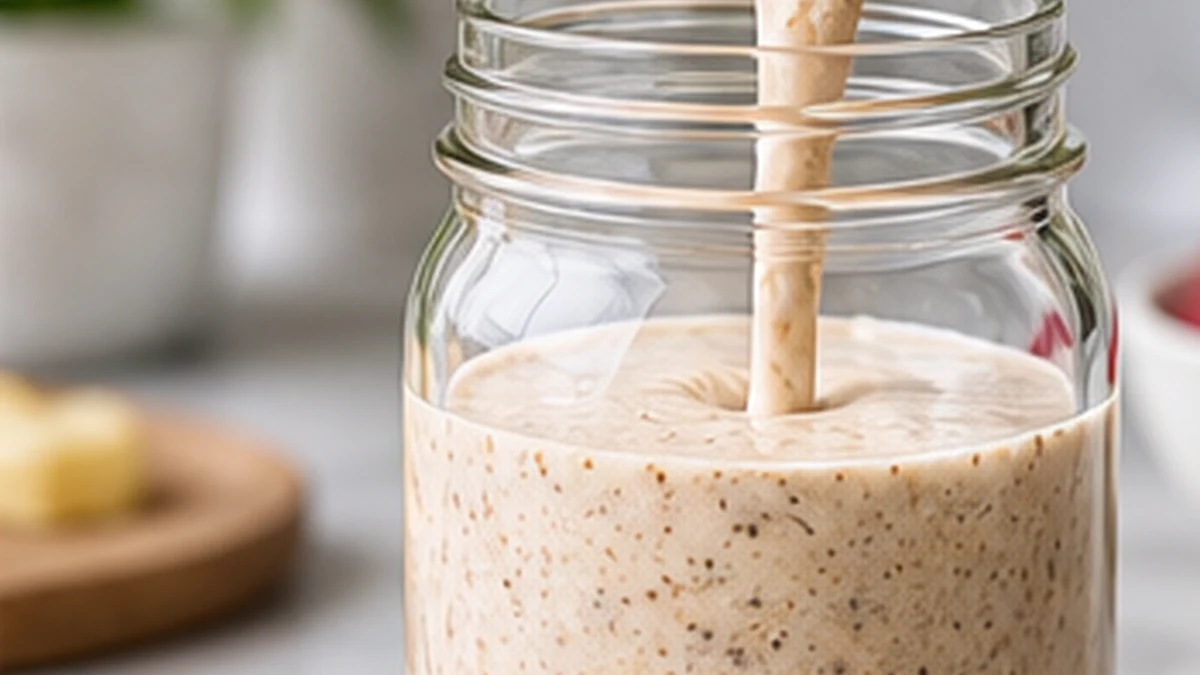
This high protein oatzempic recipe turns the viral oats-and-lime drink into a more substantial breakfast smoothie with plain Greek yogurt, skim milk, half a banana, a teaspoon of chia, and a touch of honey. It tastes mildly tangy and creamy rather than like watered-down oatmeal. If you want a berry-forward smoothie with different fiber sources, our high protein high fiber smoothie is a separate recipe built with raspberries, spinach, cottage cheese, and chia.
The entire batch is one large breakfast serving, estimated at about 435 calories, 32 grams of protein, and 7 grams of fiber. There is no protein powder and no claim that this drink acts like a prescription medication. The oats are the original trend connection; milk and yogurt provide most of the protein. The measured chia and honey are included in the nutrition estimate, not hidden as optional extras.
You need a blender, ten minutes, and ordinary refrigerated ingredients. Add milk first, then yogurt, oats, banana, lime juice, chia, honey, cinnamon, vanilla, and ice; blend until pourable, let stand briefly, and serve cold. This is a recipe for a real drink, not an invitation to skip meals or follow a restrictive viral challenge.
Table of Contents
What Is Oatzempic, and Why Add Protein?
Traditional “oatzempic” usually means rolled oats blended with water and lime juice. Its name is a social-media joke referencing Ozempic, not a medical description. The Cleveland Clinic explanation of oatzempic says it should not be considered a substitute for GLP-1 medication or a proven quick fix for weight loss. An oat drink is simply a food; the way it fits into a day of eating matters more than a viral name.
The plain oats-and-water version supplies some carbohydrate and fiber but relatively little protein. This version blends oats with milk and yogurt, making a more balanced breakfast for people who want a drink instead of a spoonable bowl. Even so, an individual smoothie cannot guarantee fullness, weight loss, or a particular response in blood sugar. Everyone has different energy needs and tolerances.
If you are planning other higher-protein meals, start with our high protein foods guide for a broader look at dairy, eggs, legumes, fish, and other sources. The purpose of this recipe is to make a useful oat-and-lime breakfast, not to turn one ingredient into a diet strategy.
Why This High Protein Oatzempic Recipe Works
More complete breakfast: Greek yogurt and skim milk contribute roughly four-fifths of the protein; oats and chia supply additional texture and fiber.
Still tastes like the trend: a measured tablespoon of lime juice keeps the classic tart oat-and-citrus flavor visible.
Reliable texture: milk goes into the blender first, so dry oats are less likely to stick underneath the blade.
No protein powder: the creamy consistency comes from cultured dairy and blended oats, not supplement powders.
Not excessively sweet: half a banana and one measured teaspoon of honey soften the lime without turning this into a dessert milkshake.
One measured serving: the recipe avoids mixing nutrition for a small glass with a photograph of a much larger drink.
This is naturally a thicker breakfast shake than the original oat-water drink. If you prefer a thinner consistency, add cold water after blending, one tablespoon at a time, rather than adding another full cup of milk and unintentionally changing the estimated calories and protein.
Ingredients for One High Protein Oatzempic Smoothie
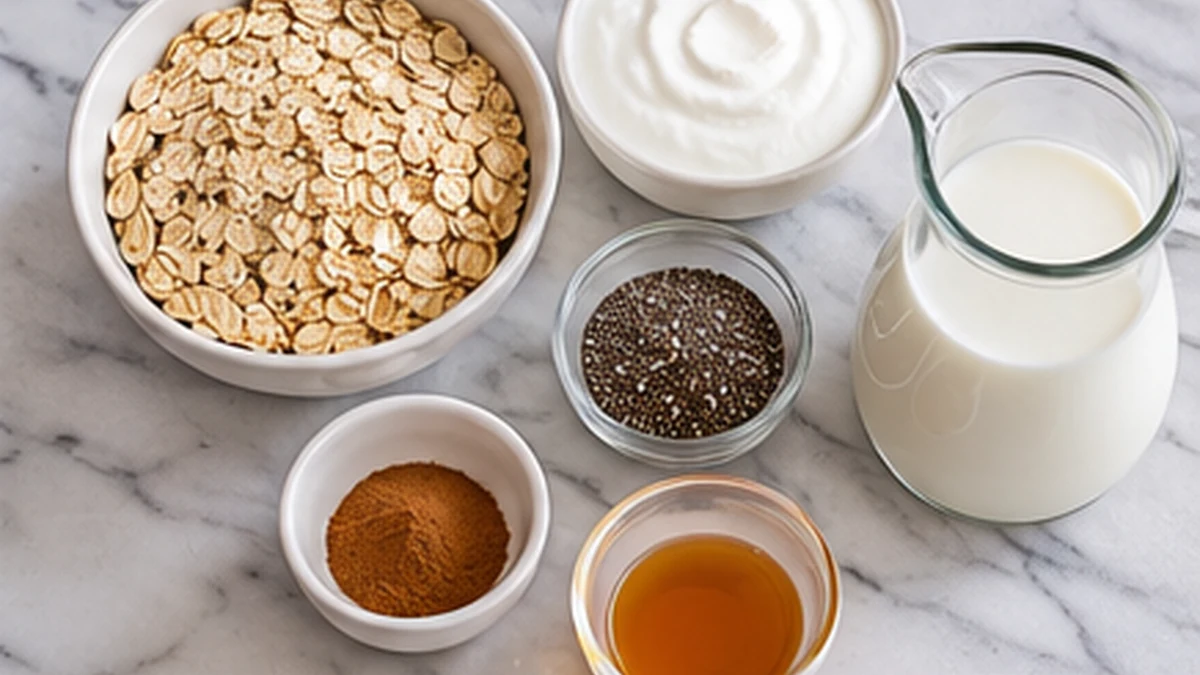
Use the exact amounts below for the listed nutrition estimate. Measure the oats dry; measure the banana flesh after peeling; and use plain nonfat Greek yogurt rather than flavored yogurt with added sugar. The small honey portion is intentional and counted.
Old-fashioned rolled oats: 1/2 cup (40 g), dry and unflavored.
Plain nonfat Greek yogurt: 3/4 cup (170 g), chilled.
Fat-free skim milk: 1 cup (240 mL; approximately 245 g), chilled.
Banana: 1/2 small ripe banana, about 55 g peeled.
Fresh lime juice: 1 tablespoon (15 mL); do not use a whole lime unless you want a much sharper drink.
Chia seeds: 1 level teaspoon (4 g), not a tablespoon.
Honey: 1 teaspoon (7 g), included in nutrition.
Cinnamon: 1/4 teaspoon ground cinnamon.
Vanilla: 1/4 teaspoon vanilla extract.
Ice: about 1/2 cup, adjusted for desired temperature; optional extra cold water to thin.
Rolled Oats: Which Type Blends Best?
Old-fashioned rolled oats are the simplest starting point because they soften and blend more readily than steel-cut oats. Quick oats can also work, although they thicken the drink faster and can create a smoother, more porridge-like texture after standing. Avoid flavored instant packets: their added sugar and sodium make the nutrition estimate unreliable and their flavors may clash with lime.
Do not confuse this blender drink with our high protein overnight oats. Those jars sit for hours and are eaten with a spoon, while this recipe is blended, poured, and consumed as a drink. For a second oat breakfast in an entirely different cinnamon profile, high protein horchata overnight oats offers a make-ahead alternative.
Why Greek Yogurt and Skim Milk?
Plain nonfat Greek yogurt provides most of the thickness and a substantial share of the protein, while skim milk helps the blender run smoothly without adding much fat. Standard dairy milk is the reference for this calculation. Replacing it with almond milk, oat milk, soy milk, or a branded ultra-filtered milk will change the result; some contain less protein and others more.
A yogurt labeled “Greek-style” may have a different protein content from strained Greek yogurt. Compare the package Nutrition Facts panel if reaching a specific protein target matters. When a brand lists less than about 9–10 grams protein per 100 grams, you may not reach the same estimate without changing the measured ingredients.
What the Lime, Banana, Chia and Honey Do
Lime supplies acidity, but much more than one tablespoon can make a dairy-based smoothie uncomfortably tart. The banana rounds out that sharpness and helps the oat mixture feel smooth. Chia adds a small amount of fiber and absorbs water as it stands; use just a teaspoon because the oats already thicken the drink. Honey is only one teaspoon, but it still contributes sugar and calories.
If you like cold, hydrated-seed drinks as a very different option, our basil seed lemon water uses soaked basil seeds and water instead of a dairy-and-oat breakfast. The preparation and nutrient profile are not interchangeable.
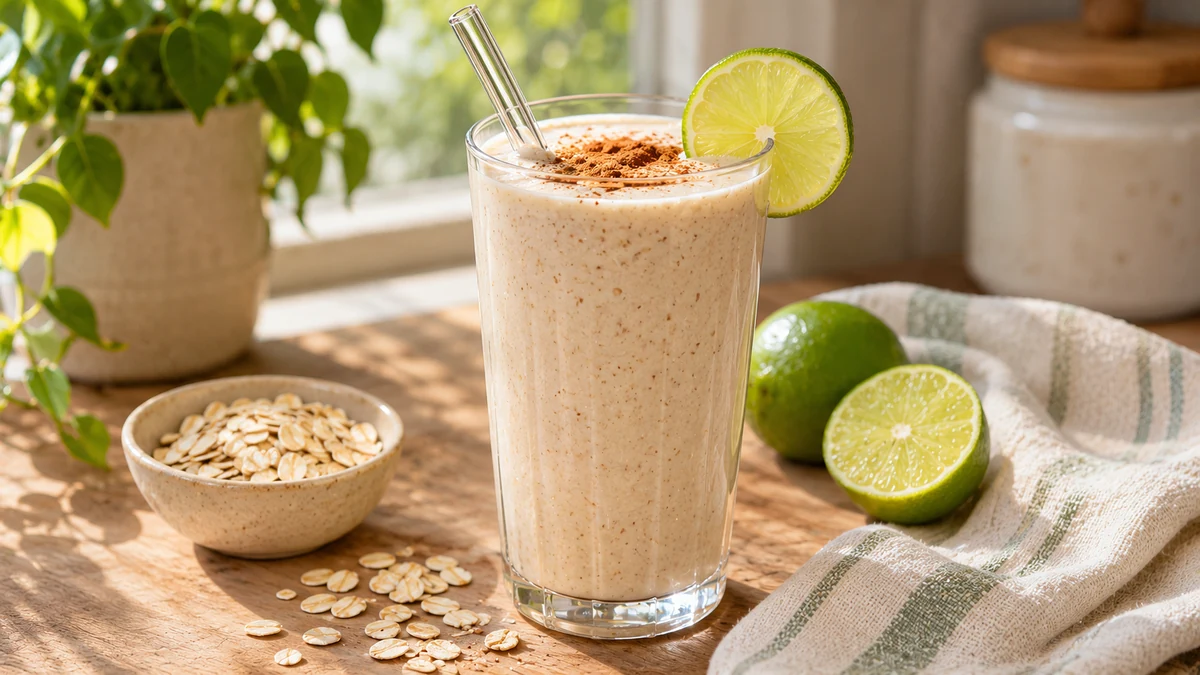
A creamy oat-and-lime breakfast smoothie made with rolled oats, nonfat Greek yogurt, skim milk, banana, chia and a touch of honey. Approximately 32 grams of protein in the full batch.
Total Time:10 minutes
Yield:1 large smoothie
Ingredients
Scale
1/2 cup (40 g) plain old-fashioned rolled oats, dry
3/4 cup (170 g) plain nonfat Greek yogurt, chilled
1 cup (240 mL; about 245 g) fat-free skim milk, chilled
1/2 small ripe banana (about 55 g peeled)
1 tablespoon (15 mL) fresh lime juice
1 teaspoon (4 g) chia seeds
1 teaspoon (7 g) honey
1/4 teaspoon ground cinnamon
1/4 teaspoon vanilla extract
1/2 cup ice, plus 1-2 tablespoons cold water only if needed to thin
Instructions
Measure 40 g dry rolled oats, 170 g plain nonfat Greek yogurt, 240 mL skim milk, 55 g banana, 15 mL fresh lime juice, 4 g chia and 7 g honey. Keep the milk and yogurt cold.
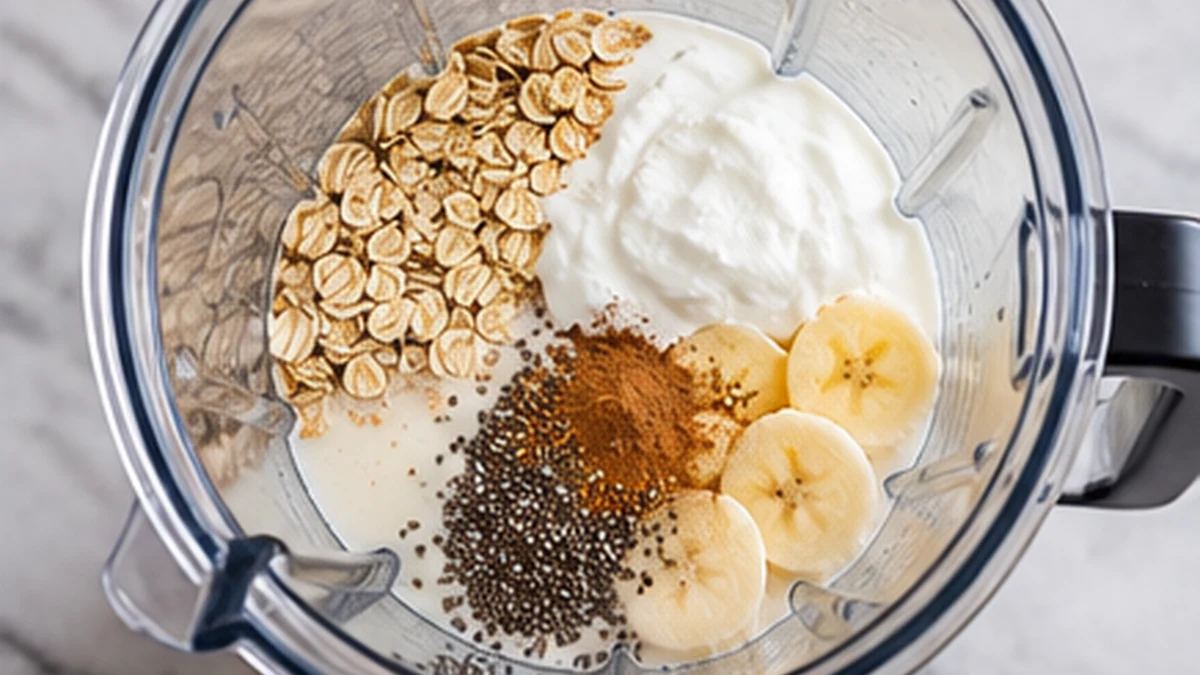
Pour the skim milk into a blender. Add Greek yogurt, oats, banana, lime juice, chia, honey, cinnamon and vanilla. Add the ice last and secure the lid.
Blend on low for about 15 seconds, then medium-high for 30 to 45 seconds until the mixture is smooth and pourable with no large oat flakes visible. Scrape the sides and reblend briefly if necessary.
Let stand for 2 to 3 minutes so the oat and chia particles hydrate. Blend again for a few seconds if needed. Thin with 1 to 2 tablespoons cold water only if it seems too thick.
Pour the whole mixture into one large serving glass and drink chilled. If split between two glasses, each has about half the stated nutrition.
Notes
The batch makes 1 large breakfast smoothie. Prep and blending plus a brief rest take about 10 minutes; no cooking is required.
Nutrition is estimated for the full measured batch with 40 g oats, 170 g nonfat Greek yogurt, 245 g skim milk, 55 g banana, 15 mL lime, 4 g chia and 7 g honey; brands vary.
Approximate full-batch nutrition: 435 calories, 32 g protein, 67 g carbohydrate, 7 g fiber and 5 g fat. Honey is included; this is not a low-sugar drink.
For gluten avoidance, choose oats specifically labeled gluten-free and check all packaged ingredients and shared equipment. The standard recipe contains dairy.
This is not equivalent to semaglutide or any GLP-1 medicine, and no specific weight-loss result is promised.
Refrigerate promptly at 40°F or below if preparing ahead; best quality within 24 hours. The drink thickens as oats and chia hydrate. Shake before serving.
If omitting honey, chia or banana or replacing dairy milk/yogurt, the stated nutrition no longer applies.
Author:Adam Moretti
Prep Time:10 minutes
Cook Time:0 minutes
Category:Breakfast
Method:No-Cook
Cuisine:American
Diet:High Protein, Vegetarian
Step-by-Step Instructions With Texture Cues
1. Measure the Ingredients Before Blending
Measure the dry oats into a small bowl, weigh the yogurt if possible, and pour one cup of cold skim milk. Peel half a small banana and squeeze exactly one tablespoon of lime juice. For consistent results, do not substitute a large banana or an unmeasured squeeze of honey; those changes noticeably affect sweetness and total carbohydrates.
If your rolled oats are particularly coarse, you can soak them in a few tablespoons taken from the measured milk for five minutes before blending. This is optional, not an additional ingredient. A very powerful blender may not need the soaking step at all.
2. Load the Blender in the Right Order
Pour in milk first, followed by Greek yogurt, oats, banana, lime juice, chia, honey, cinnamon, and vanilla. Add the ice last. Putting liquids below the oats makes blending easier and prevents dry flakes from sticking to the bottom. Ensure the lid is fastened before running the motor.
Blend on low for about 15 seconds, then increase the speed and blend for another 30–45 seconds, or until large oat flakes are no longer visible. Stop once to scrape down the sides if dry oats cling above the liquid line. The mixture should be creamy and pourable, not a spoon-standing pudding.
3. Rest Briefly, Then Pour
Let the blended smoothie stand for about two to three minutes. That gives the oats and small amount of chia time to hydrate and helps the texture become uniform. Blend again for a few seconds if the mixture separates or the surface looks uneven. Pour into one large glass or a jar with room for the full amount; the exact fluid-ounce yield depends on how much air your blender incorporates.
Taste before changing anything. If the drink seems too thick, add one or two tablespoons of cold water and blend again. If it seems too tart, choose a slightly riper banana next time rather than pouring in an unmeasured amount of honey. Serve cold, ideally soon after blending.
High Protein Oatzempic Recipe: Expected Flavor and Texture
Expect a creamy beige drink with very fine oat flecks and a gentle lime note. The cinnamon should be soft in the background, not dominant. It should flow easily through a wide drinking straw or straight from the rim. It is not supposed to taste identical to a milkshake, and it should not have the watery texture of the original oats-and-water trend.
If you want something with a noticeably heavier banana-and-peanut-butter character, our high calorie high protein smoothie for weight gain is designed for that entirely different goal and is substantially more calorie-dense. Keeping those two search intents separate matters more than using similar ingredients.
Troubleshooting: Fix the Common Problems
My Oatzempic Is Too Thick
Blended oats keep absorbing moisture after the blender stops. Add cold water in small amounts and blend briefly. If you accidentally used a full tablespoon of chia instead of one teaspoon, the result will be much thicker; consider eating it as a bowl or remaking the drink with the measured amount rather than pretending the nutrition has not changed.
The Smoothie Tastes Too Sour
Fresh lime fruit varies in acidity. Measure the juice, and do not add zest or an entire squeezed lime to the base recipe. For the next batch, begin with two teaspoons, taste, and add the third teaspoon only if you like the balance. If you add extra honey or fruit, recalculate the nutrition.
The Texture Is Gritty or Separates
Use rolled oats instead of steel-cut oats, blend longer in short bursts, and give the dry flakes a short pre-soak in some of the measured milk if necessary. If you leave the drink for an hour, stir or shake it before serving. A few visible oat flecks are normal, but large uncooked chunks mean the blender has not fully processed them.
It Tastes Too Much Like Yogurt
Choose a mild, plain Greek yogurt rather than a particularly tart brand. The banana and vanilla are meant to soften the cultured dairy flavor. Switching to sweetened vanilla yogurt would change the added sugar and possibly the protein; compare its label instead of assuming that every yogurt is equivalent.
Nutrition: How Much Protein and Fiber?
One full batch is estimated to provide about 435 calories, 32 g protein, 67 g total carbohydrate, 7 g fiber, and 5 g fat. These are ingredient-based estimates, not a laboratory analysis. The approximate sodium level is 170 mg and total sugar is around 31 g, much of it naturally present in dairy and banana; the measured teaspoon of honey contributes added sugar. The recipe is not advertised as low-sugar.
Calculations use representative ingredient data from USDA FoodData Central: 40 g dry rolled oats, 170 g plain nonfat Greek yogurt, 245 g skim milk, 55 g banana, 15 mL lime juice, 4 g chia, 7 g honey, and the listed spices. The estimated protein contributions are approximately 5 g oats, 17 g yogurt, 8 g milk and 2 g combined from the rest. Total nutritional values will vary with brands, especially yogurt and milk.
The whole recipe is a generous drink. If you pour it into two small glasses, each contains approximately half of every number: about 218 calories and 16 g protein. Do not report the nutrition for the entire batch as the nutrition for each of two glasses.
Can Oatzempic Help With Weight Loss?
The short answer is that drinking oat smoothies has not been shown to mimic weight-loss medications. The Southern Cross University analysis of the trend notes the absence of studies testing the specific “oatzempic drink” for weight loss, while acknowledging that oats contain fiber. A serving of this high-protein version supplies meaningful protein, but it is not a prescription treatment, a metabolic shortcut, or evidence that replacing a meal will cause a particular number of pounds to be lost.
Whether this drink fits an individual eating plan depends on total intake, other meals, hunger cues, activity, medications, and personal needs. Anyone using GLP-1 medication or managing diabetes, gastrointestinal disease, or another condition should follow their clinician’s individualized advice rather than treating a viral beverage as a medical replacement.
If you want a broader range of satisfying breakfasts rather than another viral drink, the fibermaxxing breakfast recipes collection includes measured warm bowls, beans, and yogurt parfaits. A drink is convenient, but a meal you chew may be more enjoyable for some mornings.
Useful Variations Without Confusing the Nutrition
More lime-forward: start with the measured tablespoon, then add only a few extra drops after tasting; acidity rises faster than you might expect.
Without honey: omit the teaspoon and expect a slightly tarter drink with roughly 20 fewer calories and about 6 g less total sugar.
No banana: replace it with a little extra ice and water; the smoothie will be less sweet and the nutrient estimate will change.
Lactose-free: use a lactose-free skim milk and a compatible high-protein yogurt, checking both labels.
More substantial: serve alongside a separate egg or toast rather than loading extra oats or nut butter into the drink and still quoting the base nutrition.
Gluten-free need: use specifically gluten-free labeled oats and confirm all other packaged ingredients are suitable; regular oats can experience cross-contact.
Oats do not naturally contain wheat gluten, but harvesting and processing can introduce cross-contact. The FDA gluten-free labeling guidance explains that oats can be labeled gluten-free when they meet the applicable requirements. For celiac disease or strict gluten avoidance, choose appropriately labeled oats, check your other products, and avoid shared equipment contaminated by wheat flour. Do not assume an arbitrary carton of oats is safe.
The standard recipe contains dairy, including yogurt and milk. It is vegetarian when made with the listed ingredients and honey, but it is not vegan or dairy-free. Chia and oats also add fiber, so people who are not accustomed to a fiber-rich breakfast may want to start with a smaller serving and increase gradually according to their own tolerance.
Make-Ahead, Refrigeration and Serving
For the best texture, measure oats and spices the night before and keep the milk, yogurt and banana chilled; blend just before drinking. If you need to prepare the whole smoothie ahead, seal it in a clean container and refrigerate at 40°F (4°C) or below immediately. The FoodSafety.gov food-safety guidance recommends keeping perishable foods cold and refrigerating promptly. For this homemade dairy smoothie, use within about 24 hours for best quality, shake before drinking, and discard it if it was left unrefrigerated too long.
Oats and chia gradually turn a pourable drink into a much thicker one, even while refrigerated. Add cold water and shake if the texture thickens; do not make it ahead by leaving dairy at room temperature. Freezing the finished drink is possible in an ice-cube tray for a later smoothie, but it will not thaw back into exactly the same freshly blended texture.
If you would rather prep a savory breakfast while keeping the oat smoothie for another day, high protein cottage cheese egg bake offers a baked option with different ingredients and storage considerations.
FAQs about High Protein Oatzempic Recipe
Does this taste like the original viral oatzempic drink?
Not exactly. The viral baseline is oats, water and lime. This one adds milk, Greek yogurt, banana, chia and honey for a creamier and higher-protein breakfast. The lime-and-oat flavor remains, but it is less watery and more substantial. Readers specifically wanting the original three-ingredient version should use the traditional formula rather than treat this as identical.
Is protein powder necessary?
No. The protein comes mainly from plain Greek yogurt and skim milk, with smaller contributions from the rolled oats, chia and banana. Always check brand labels, because Greek-style yogurts and nondairy drinks vary considerably in protein.
Can I use quick oats instead of old-fashioned rolled oats?
Yes, if the quick oats are plain and unflavored. The drink may become smoother and thicken faster after blending. Avoid steel-cut oats in this quick, uncooked blender method because their firm texture generally requires a different preparation.
Is this breakfast really 32 grams of protein?
That is the estimate for the entire measured batch using the representative nonfat Greek yogurt and skim milk amounts listed. Different brands and any milk substitution may lower or raise it. If the batch is split into two servings, each serving is estimated at about 16 grams.
Can I make it without chia?
Yes, but the finished drink will be a little thinner and its fiber, fat and calorie values will be lower. If you are following the standard recipe card, keep the measured teaspoon so the written estimate and images are consistent.
Can I drink oatzempic every morning to lose weight?
This drink is food, not a medically tested weight-loss program. Whether it fits a daily routine depends on the rest of your diet and individual needs. It cannot replace prescribed medication, and dramatic viral weight-loss claims should not be used as expectations.
Final Tips
Keep the recipe simple: measure dry oats, use plain high-protein yogurt and skim milk, limit the lime to one tablespoon, and blend long enough that the oat flakes disappear into a pourable texture. The teaspoon of chia and teaspoon of honey are small but real ingredients, and both are included in the nutrition figures.
For mornings when you want a full plate rather than a drink, our low calorie high protein meals guide collects different meal formats. The best use for this high protein oatzempic recipe is as a convenient oat-based breakfast option—not a cure, a medication substitute, or a claim that one viral beverage can determine weight loss.
Reviewed recipe options
Make this recipe fit me
Choose one of seven popular diet options. NutriMatch will confirm whether the recipe already fits, show a reviewed adaptation when available, or recommend recipes that match your choice.
Please choose a diet first.
Reviewed Dairy-Free adaptation
Dairy-Free High Protein Oatzempic Recipe (No Protein Powder)
Use the substitutions below to prepare a Dairy-Free version while keeping the rest of the recipe as close as possible to the original.
Ingredient swaps
3/4 cup (170 g) plain nonfat Greek yogurt, chilledUse 3/4 cup (170 g) unsweetened dairy-free Greek-style yogurt, chilled
1 cup (240 mL; about 245 g) fat-free skim milk, chilledUse 1 cup (240 mL; about 245 g) fat-free unsweetened soy milk, chilled
Instruction changes
Use an unsweetened dairy-free Greek-style yogurt in the same measured amount; choose a thick product for dips and batters.
Use the dairy-free milk in the same measured amount unless the product label recommends otherwise.
Check: Check packaged substitutes for milk ingredients and the cross-contact information you need.
Use these reviewed changes with the original ingredient quantities and instructions above. The original recipe card stays unchanged.
Recipe details, product formulas, and cross-contact information can change. Confirm current labels and use professional guidance when medically necessary.
Reviewed Gluten-Free adaptation
Gluten-Free High Protein Oatzempic Recipe (No Protein Powder)
Use the substitutions below to prepare a Gluten-Free version while keeping the rest of the recipe as close as possible to the original.
Ingredient swaps
1/2 cup (40 g) plain old-fashioned rolled oats, dryUse 1/2 cup (40 g) plain old-fashioned certified gluten-free oats, dry
Instruction changes
Use certified gluten-free oats in the same measured amount.
Check: If gluten cross-contact matters, choose oats specifically labeled or certified gluten-free.
Use these reviewed changes with the original ingredient quantities and instructions above. The original recipe card stays unchanged.
Recipe details, product formulas, and cross-contact information can change. Confirm current labels and use professional guidance when medically necessary.
Already a reviewed match
This recipe already fits High Protein.
No changes are needed based on its reviewed NutriMatch classification. Check the complete ingredients, product labels, and serving details for your own needs.
Recipe details, product formulas, and cross-contact information can change. Confirm current labels and use professional guidance when medically necessary.
Not available for this recipe
This recipe cannot currently be made Keto with a reviewed adaptation.
NutriMatch will not guess at substitutions. Try one of these recipes that is already reviewed for your choice.
Recipe details, product formulas, and cross-contact information can change. Confirm current labels and use professional guidance when medically necessary.
Not available for this recipe
This recipe cannot currently be made Low Carb with a reviewed adaptation.
NutriMatch will not guess at substitutions. Try one of these recipes that is already reviewed for your choice.
Recipe details, product formulas, and cross-contact information can change. Confirm current labels and use professional guidance when medically necessary.
Reviewed Vegan adaptation
Vegan High Protein Oatzempic Recipe (No Protein Powder)
Use the substitutions below to prepare a Vegan version while keeping the rest of the recipe as close as possible to the original.
Ingredient swaps
3/4 cup (170 g) plain nonfat Greek yogurt, chilledUse 3/4 cup (170 g) unsweetened vegan Greek-style yogurt, chilled
1 cup (240 mL; about 245 g) fat-free skim milk, chilledUse 1 cup (240 mL; about 245 g) fat-free unsweetened soy milk, chilled
1 teaspoon (7 g) honeyUse 1 teaspoon (7 g) maple syrup or agave nectar
Instruction changes
Use an unsweetened vegan Greek-style yogurt in the same measured amount; choose a thick product for dips and batters.
Use unsweetened soy milk in the same measured amount unless the recipe needs a different thickness.
Use maple syrup or agave in the same measured amount, then adjust sweetness to taste if needed.
Check: Check packaged substitutes, sauces, seasonings, and toppings for animal-derived ingredients. Check packaged ingredients and toppings for animal-derived ingredients if you follow a vegan diet.
Use these reviewed changes with the original ingredient quantities and instructions above. The original recipe card stays unchanged.
Recipe details, product formulas, and cross-contact information can change. Confirm current labels and use professional guidance when medically necessary.
Already a reviewed match
This recipe already fits Vegetarian.
No changes are needed based on its reviewed NutriMatch classification. Check the complete ingredients, product labels, and serving details for your own needs.
Recipe details, product formulas, and cross-contact information can change. Confirm current labels and use professional guidance when medically necessary.
These high protein cranberry cheesecake cups layer smooth cottage cheese and Greek yogurt filling, graham crumbs, and homemade cranberry-orange topping.…