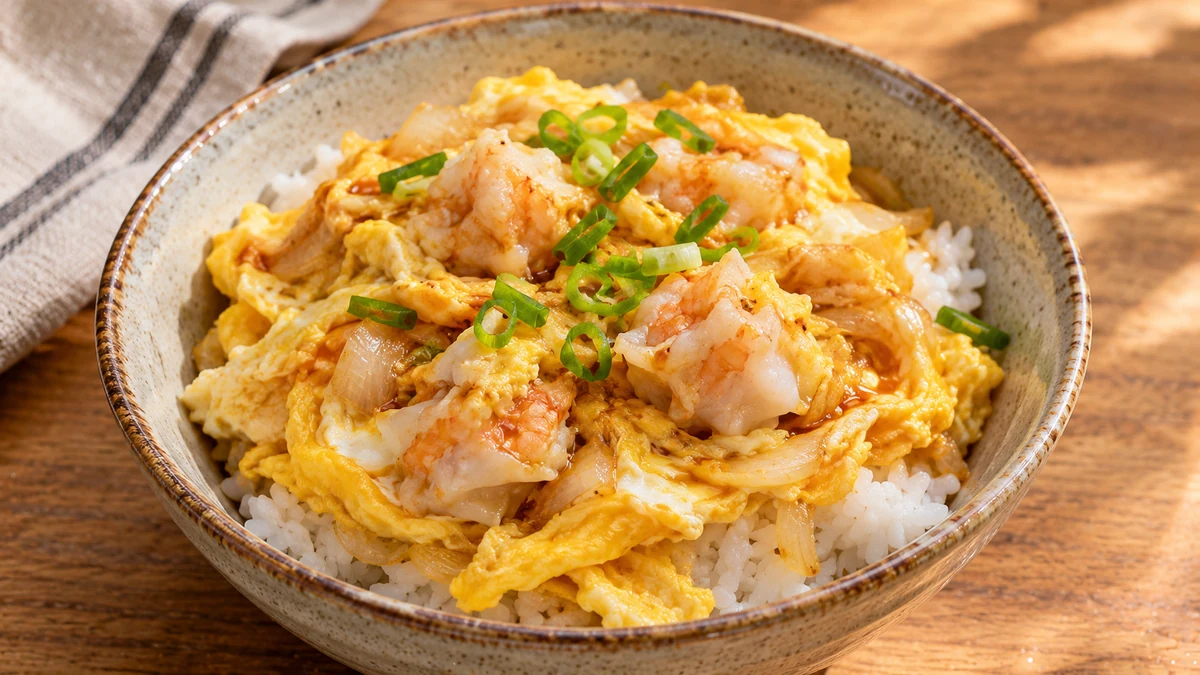
A shrimp shumai egg rice bowl turns a few frozen shrimp dumplings into a hot, savory meal with soft-set eggs, chopped onion, scallions, and cooked rice. Instead of steaming the dumplings and serving them as a separate appetizer, you warm them thoroughly, fold them through seasoned egg in one skillet, and spoon the mixture over rice. This version makes two moderate bowls in about 20 minutes when the rice is already cooked.
The idea follows a recent Japanese video from recipe creator Ryuji, which paired shrimp shumai, eggs, onion, and rice in a very short cooking demonstration. The original version uses its own seasoning ratios and serving size; this US-kitchen adaptation uses fully heated packaged shumai, less added salt, and two portions so the steps and nutrition are practical and reproducible. The exact frozen product matters, so follow its package directions first.
If you already make chicken fried rice meal prep, this is a different kind of rice bowl: there is no stir-frying a large pan of rice. The rice sits underneath a dumpling-and-egg topping, similar to the quick comfort-food bowls you might order for a light lunch.
Table of Contents
Why Make This Shrimp Shumai Egg Rice Bowl?
Freezer shortcut: six precooked frozen shrimp shumai replace the long process of filling and wrapping dumplings from scratch.
Eggs hold everything together: the beaten egg forms gentle curds around the dumplings and onion rather than a dry scrambled-egg topping.
Flexible rice base: freshly cooked or safely reheated refrigerated rice works; the topping cooks separately.
Small equipment list: a nonstick skillet, microwave or steamer, two bowls, and a spatula are enough.
Accurate label checking: frozen shrimp shumai varies hugely in fish, pork, egg, wheat, soy, and milk ingredients, so this recipe avoids unsupported free-from claims.
A meal, not an appetizer: splitting the topping over two rice portions gives a complete, moderate-size bowl without making six dumplings the entire dinner.
What Is a Shrimp Shumai Egg Rice Bowl?
Shumai (also written siu mai) are open-topped dumplings with a soft wrapper and savory filling. In U.S. freezer sections, packages labeled shrimp shumai may contain more than shrimp: some also include fish paste, pork fat, onions, soy, and wheat wrappers. Do not assume a package marked shrimp is seafood-only or suitable for a particular diet.
For this shrimp shumai egg rice bowl, the dumplings are a cooked ingredient inside the egg topping, not a garnish placed on top. A little tearing or breaking helps distribute the filling, while keeping a few recognizable pieces makes it clear what the dish is. The egg sets around them and gives the rice bowl a tender, almost omelet-like center.
The trend itself was highlighted on a November 2026 Japanese recipe tracker, which reported a Ryuji video published November 6. The general techniques—cooking shumai, scrambling egg, and assembling a donburi-style bowl—are not new. The recent hook is using packaged shumai in the egg rather than serving it on the side.
Ingredients You Need
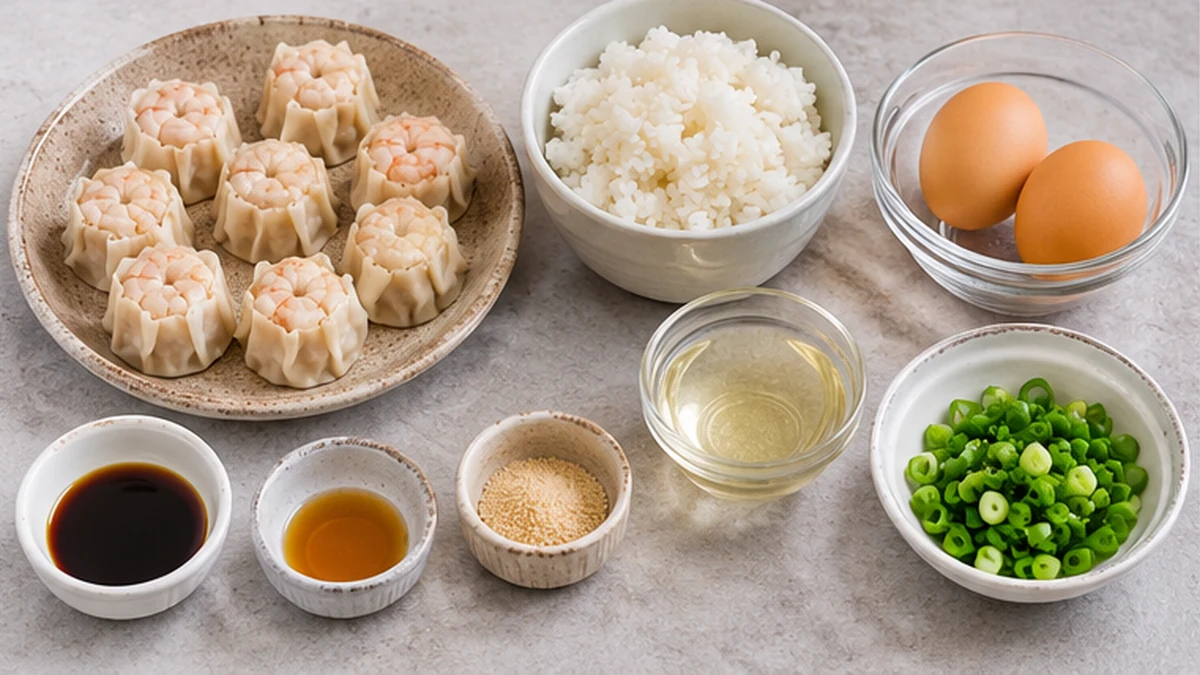
All shrimp shumai egg rice bowl amounts below are for two bowls. Use cooked rice, not dry uncooked rice, when you measure the measured 1 1/4-cup amount. Frozen shumai are sold in different sizes, so count pieces and check the package rather than estimating by weight alone.
6 frozen shrimp shumai: choose the fully cooked or precooked type that can be heated according to the manufacturer’s instructions. For a raw frozen product, cook it completely as the package directs before using it in the skillet.
2 large eggs: beaten until the whites and yolks are combined; this makes a generous egg topping that divides evenly.
1 1/4 cups (about 200 g) cooked white rice: jasmine, short-grain Japanese, or another rice you enjoy. Reheat refrigerated rice safely; the bowl is not designed to cook raw rice in the skillet.
2 tablespoons finely chopped yellow onion (about 30 g): cut it small enough to soften while the egg cooks.
1 teaspoon neutral cooking oil: canola or another neutral oil prevents sticking.
1/4 teaspoon garlic powder and a pinch of black pepper: optional-flavor style seasonings that do not add much sodium.
2 teaspoons reduced-sodium soy sauce: divided between the two bowls after cooking. Skip or reduce if the dumplings are already strongly seasoned.
2 scallions: thinly sliced, for a fresh finishing bite.
Choosing the Right Frozen Shrimp Shumai
Not every package has the same filling, sodium, cooking method, or nutrition. For example, one U.S. frozen shrimp shumai listing includes shrimp, fish, pork fat, wheat flour, soy components, egg whites, and dairy ingredients. Its label lists six pieces at about 290 calories and 510 mg sodium before you add rice or eggs. See the representative U.S. product information as an example, not as a required brand.
Look for a package that states whether the dumplings are precooked and gives complete directions for microwaving or steaming. Some brands instruct you to heat from frozen rather than thaw first. Follow the actual package. Do not leave frozen dumplings on a countertop to defrost; the FDA’s safe-handling guidance recommends thawing perishable foods under controlled conditions.
The 20-Minute Cooking Plan
Start the packaged shumai and rice heating first. While they cook, dice the onion, whisk the eggs, and slice the scallions. The skillet step is short because the shumai is already fully cooked and hot before it enters the egg. If your dumpling package needs 10 to 12 minutes of steaming, the total may run a few minutes longer. If you start with uncooked dry rice, add its full cooking time separately.
This shrimp shumai egg rice bowl uses medium to medium-low heat. A very hot wok is excellent for fried rice, but it sets the eggs too quickly here. You want the egg to settle around the shumai before you gently fold it into moist, firm curds.
Fully cook or reheat 6 frozen shrimp shumai according to the package directions until hot throughout. If the package says the shumai is raw, cook it fully before moving to the egg step. Do not thaw frozen dumplings on the counter.
Heat 1 1/4 cups of already cooked rice and divide it between two serving bowls. If reheating refrigerated leftover rice, heat it to 165°F (74°C).
Finely chop 2 tablespoons onion and slice 2 scallions. In a small bowl, whisk 2 eggs with 1/4 teaspoon garlic powder and a pinch of black pepper.
Heat 1 teaspoon oil in an 8- to 10-inch nonstick skillet over medium heat. Add onion and cook for 2 minutes, stirring, until just softened.
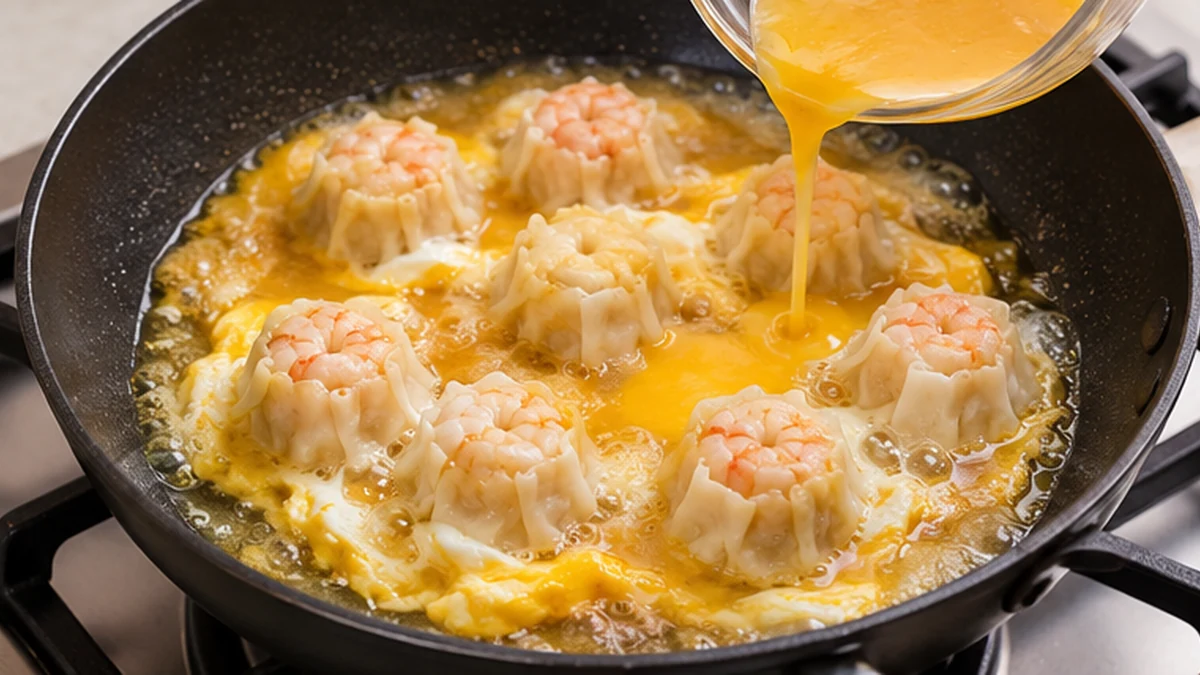
Arrange the hot shrimp shumai in one layer in the skillet. Pour the beaten eggs around and between them. Wait 20–30 seconds until the lower egg begins to set.
Use a spatula to break two or three dumplings into large pieces if desired. Gently fold the egg around the shumai over medium-low heat for about 2–3 minutes, covering briefly if necessary. Cook the egg dish to 160°F (71°C) with no liquid raw egg remaining.
Spoon half the egg-and-shumai topping over each bowl of hot rice. Drizzle each bowl with 1 teaspoon reduced-sodium soy sauce and finish with half the chopped scallions. Serve immediately.
Notes
The total time assumes cooked rice and a precooked, microwaveable shrimp shumai product; steaming or cooking a raw product may take longer.
Do not add extra salt by default. Shrimp shumai and soy sauce can be high in sodium.
Frozen shumai varies by brand and can contain shrimp, wheat, egg, fish, pork, soy, sesame or milk. Check your exact label before eating.
Nutrition is an estimate using a representative U.S. shrimp shumai label listing six pieces as 290 kcal, 10 g protein and 510 mg sodium, plus 200 g cooked white rice, two eggs, 30 g onion, one teaspoon neutral oil, two teaspoons reduced-sodium soy sauce, and scallions, divided between two bowls. Actual brands can differ considerably.
Use safe food handling: fully heat dumplings per the package, cook mixed egg dishes to 160°F, and reheat refrigerated leftovers to 165°F.
Author:Adam Moretti
Prep Time:7 minutes
Cook Time:13 minutes
Category:Lunch
Method:Stovetop
Cuisine:Japanese-inspired
Diet:Contains eggs and shellfish; check frozen shumai for other allergens
How to Make Shrimp Shumai Egg Rice Bowl
Step 1: Heat the Dumplings and Rice Safely
Heat six frozen shrimp shumai by the package method until completely cooked or reheated. Do not simply warm the exterior while leaving the center cool. Reheat 1 1/4 cups of cooked rice separately until hot; if the rice is a refrigerated leftover, use a thermometer to check it reaches 165°F (74°C). Divide the rice between two warm serving bowls.
Step 2: Prepare the Egg and Onion
Whisk the two eggs with garlic powder and black pepper. Finely chop 2 tablespoons onion, then thinly slice the scallions. Keep the soy sauce for serving rather than adding it all to the skillet: prepared shumai can already taste salty, and reducing excess liquid helps the eggs set.
Step 3: Soften the Onion
Set an 8- to 10-inch nonstick skillet over medium heat. Add the teaspoon of oil and chopped onion. Stir for about 2 minutes, until the onion loses its raw bite and looks slightly translucent. If it starts browning quickly, turn down the heat; you do not want burnt onion in a delicate egg topping.
Step 4: Add Shumai and Pour in Eggs
Arrange the hot, cooked shumai in one layer in the skillet. Pour the egg mixture around and between them. Wait 20 to 30 seconds for the lower egg to begin setting. Use a silicone spatula to cut two or three dumplings into large chunks if desired, then gently fold soft curds over and around the dumpling pieces. Avoid stirring vigorously, which can turn the filling into a paste.
Continue over medium-low heat for about 2 to 3 minutes, covering the pan briefly if the top takes longer to set. Because this is a mixed egg dish, check that the egg portion reaches 160°F (71°C); the FoodSafety.gov temperature chart lists 160°F for egg dishes. Do not leave a layer of uncooked liquid egg at the bottom.
Step 5: Finish and Serve
Spoon half the dumpling-and-egg mixture over each bowl of hot rice. Drizzle each with 1 teaspoon reduced-sodium soy sauce and scatter over the scallions. Serve right away while the egg is tender and the rice is hot. The sesame seeds sometimes shown on viral rice bowls are not required or included in the nutrition for this version.
What the Finished Bowl Should Look Like
Rice grains should be hot and separate rather than sitting in excess liquid.
The filling and wrapper of each shumai should be hot throughout, with a few distinct dumpling pieces still recognizable.
Eggs should be softly folded but fully set—not hard, browned, rubbery, or visibly raw.
The onion should be tender rather than crunchy, and the scallions should remain fresh because they go on at the end.
Soy sauce should season the surface lightly; the bowl should not be flooded or soupy.
Common Mistakes and How to Fix Them
The Dumplings Are Cold in the Middle
For a shrimp shumai egg rice bowl, this usually means the dumplings were added straight from the freezer to the fast-cooking egg. The egg can finish before the dumpling filling is safe and hot. Return the dumplings to a covered microwave-safe plate or steamer and complete their package cook time before combining them with the eggs. Do not rely on the two-minute skillet step to finish cooking a raw frozen dumpling.
The Eggs Turn Rubbery
In a shrimp shumai egg rice bowl, the pan may be too hot, the eggs may have been mixed too aggressively, or the mixture stayed on the heat after it reached a safe temperature. Lower the heat before pouring in the eggs, allow brief intervals to set, and gently fold rather than scramble hard. Use a thermometer to meet the 160°F egg-dish safety target without prolonged high heat.
The Bowl Tastes Too Salty
In this shrimp shumai egg rice bowl, packaged shumai and soy sauce both contribute sodium. Do not salt the egg mixture by default. Taste a heated shumai before deciding whether to use the full soy-sauce drizzle; a squeeze of lemon or plain scallions are alternatives for brightness, but adding them changes the flavor from the base recipe.
The Topping Falls Apart
A few broken dumplings are intentional, but finely mincing every shumai before cooking leaves the egg looking like mush. Leave most pieces whole until they are warmed in the pan, then cut only a few with a spatula. If the mixture still looks loose, reduce heat and let the eggs set undisturbed for another 20 to 30 seconds before folding.
Variations That Actually Work
Make One Large Bowl
You can serve the entire recipe as one very large rice bowl, closer to the original single-person presentation. That doubles the calories, sodium, protein, and other nutrition listed per serving here; the published values assume the recipe is divided into two bowls.
Try a Different Dumpling
Chicken, pork, or vegetable shumai can also be used, but only when their packages provide clear cooking directions. A different filling changes the recipe’s allergens and nutrition. A vegetable shumai does not make this dish vegan because the eggs remain; simply changing the dumpling wrapper is not enough to make it gluten free.
Use Brown Rice or Cauliflower Rice
Cooked brown rice is firmer and chewier than white rice; heat it safely, then use the same measured amount. Cauliflower rice produces a much lighter bowl but needs a separate skillet step to drive off water. Both alternatives change the listed carbohydrates and calories. For a completely different rice-focused preparation, see our beef broth bowls with rice.
Allergens and Food-Safety Notes
This recipe definitely contains egg and shrimp/shellfish. Depending on your shumai, it may also contain wheat, soy, fish, pork, sesame, or milk. Read the full ingredient and allergen statement of the exact product you buy. Do not tag the published version gluten-free, dairy-free, vegetarian, vegan, or shellfish-free just because the eggs and rice look simple.
Use clean utensils for handling frozen dumplings, and follow the cooking method stated on the bag. If the product is not fully cooked, cook it thoroughly before folding it into the eggs. FoodSafety.gov lists 160°F for egg dishes and 165°F for reheated leftovers; individual product labels may give additional cooking requirements. The mild, soft appearance of the eggs is not a substitute for a safe-temperature check.
For the best shrimp shumai egg rice bowl texture, make only the number of portions you will eat immediately: soft egg and dumpling wrappers lose their texture after sitting on rice. You can still prep by chopping the onion and scallions in advance, keeping the cooked rice safely refrigerated, and leaving frozen shumai in their original package until needed. Heat the dumplings and cook the eggs fresh when you are ready to eat.
If you do have a finished extra serving, place it in a shallow, covered container and refrigerate within two hours. Use within 3 to 4 days, but expect the wrapper and egg to soften. Reheat it until the center reaches 165°F; a covered microwave method with a short rest works better than high heat in a dry skillet. For another low-effort idea, see our quick and easy recipe collection.
Freezing the assembled bowl is possible for food safety if cooled promptly and sealed well, but it is not the preferred quality choice. The eggs may turn spongy and the wrappers may release water on thawing. Since frozen dumplings store so well on their own, keep those frozen and make the topping fresh instead.
Shrimp Shumai Egg Rice Bowl FAQs
Is shrimp shumai the same as shrimp dumplings?
Shumai is a kind of dumpling, usually with an open top and a soft wheat-based wrapper. Other shrimp dumplings, such as har gow or potstickers, have different wrappers and cooking methods. For this shrimp shumai egg rice bowl, choose shrimp shumai rather than substituting any random frozen dumpling without changing the method.
Can I cook shrimp shumai directly from frozen in the egg?
Do not rely on the brief egg step to cook frozen shumai. Heat or cook the dumplings according to the package first. A precooked product may need only a short microwave or steam cycle, while an uncooked one needs a full cook. Follow that product’s label and make sure the filling is hot throughout before adding it to the eggs.
Do I have to add MSG or salt?
No. Some Japanese versions use salt and an umami seasoning, but packaged shrimp shumai already contains seasoning and can be salty. This adaptation relies on the dumplings and a small soy-sauce drizzle. Add salt only after tasting the finished bowl, not automatically at the egg-mixing stage.
Is this a high-protein or gluten-free recipe?
Not automatically. The estimated protein is around 14–15 grams per moderate serving; we are not assigning the high-protein category to that amount. Most conventional frozen shumai uses a wheat wrapper, and some products contain dairy and soy. Check the exact package instead of trusting a general recipe label.
Final Tips
The best shrimp shumai egg rice bowl starts with completely heated dumplings, properly reheated rice, and gentle heat for the egg. Use the frozen product as a shortcut, not an excuse to skip the label instructions. Keep a few dumpling pieces intact, fold the egg gently until safely set, and add the scallions and soy sauce only at serving.
For an internet-trend recipe this simple, the useful details are the ones that prevent a disappointing bowl: count the dumplings, use cooked rice, skip unnecessary added salt, and know whether the package contains wheat, milk, fish, soy, or pork. With those decisions made, dinner is just a small skillet and two warm bowls away.
Reviewed recipe options
Make this recipe fit me
Choose one of seven popular diet options. NutriMatch will confirm whether the recipe already fits, show a reviewed adaptation when available, or recommend recipes that match your choice.
Please choose a diet first.
Not available for this recipe
This recipe cannot currently be made Dairy-Free with a reviewed adaptation.
NutriMatch will not guess at substitutions. Try one of these recipes that is already reviewed for your choice.
Recipe details, product formulas, and cross-contact information can change. Confirm current labels and use professional guidance when medically necessary.
Not available for this recipe
This recipe cannot currently be made Gluten-Free with a reviewed adaptation.
NutriMatch will not guess at substitutions. Try one of these recipes that is already reviewed for your choice.
Recipe details, product formulas, and cross-contact information can change. Confirm current labels and use professional guidance when medically necessary.
Not available for this recipe
This recipe cannot currently be made High Protein with a reviewed adaptation.
NutriMatch will not guess at substitutions. Try one of these recipes that is already reviewed for your choice.
Recipe details, product formulas, and cross-contact information can change. Confirm current labels and use professional guidance when medically necessary.
Not available for this recipe
This recipe cannot currently be made Keto with a reviewed adaptation.
NutriMatch will not guess at substitutions. Try one of these recipes that is already reviewed for your choice.
Recipe details, product formulas, and cross-contact information can change. Confirm current labels and use professional guidance when medically necessary.
Not available for this recipe
This recipe cannot currently be made Low Carb with a reviewed adaptation.
NutriMatch will not guess at substitutions. Try one of these recipes that is already reviewed for your choice.
Recipe details, product formulas, and cross-contact information can change. Confirm current labels and use professional guidance when medically necessary.
Not available for this recipe
This recipe cannot currently be made Vegan with a reviewed adaptation.
NutriMatch will not guess at substitutions. Try one of these recipes that is already reviewed for your choice.
Recipe details, product formulas, and cross-contact information can change. Confirm current labels and use professional guidance when medically necessary.
Not available for this recipe
This recipe cannot currently be made Vegetarian with a reviewed adaptation.
NutriMatch will not guess at substitutions. Try one of these recipes that is already reviewed for your choice.
Recipe details, product formulas, and cross-contact information can change. Confirm current labels and use professional guidance when medically necessary.