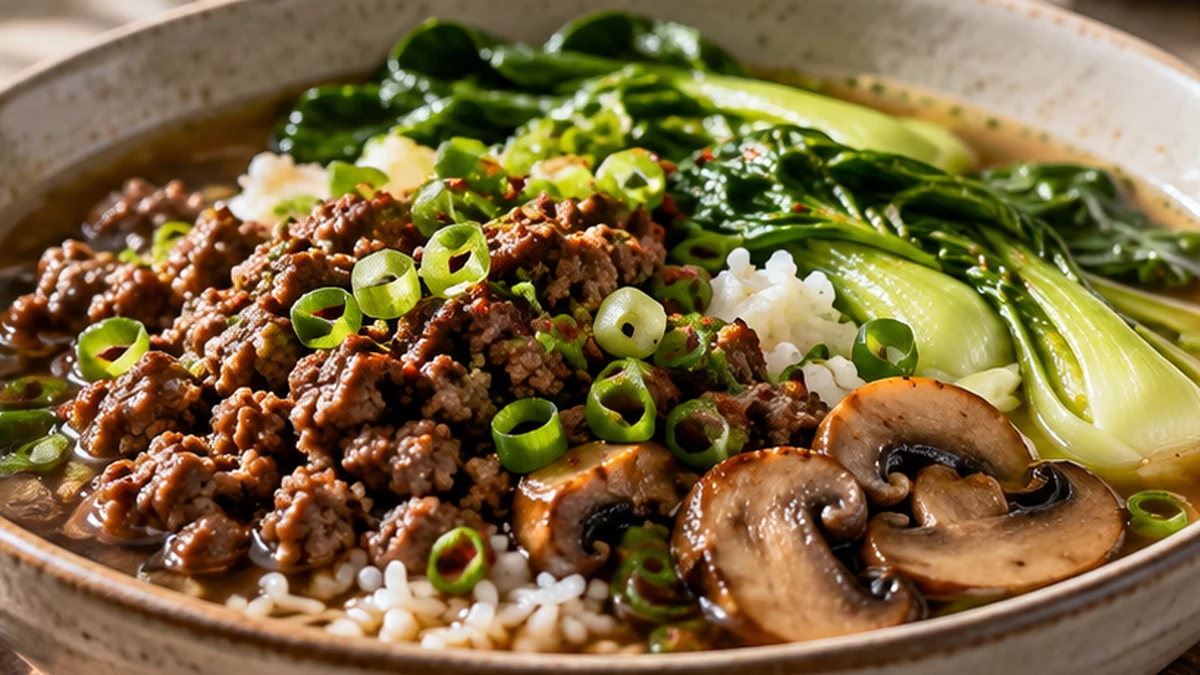
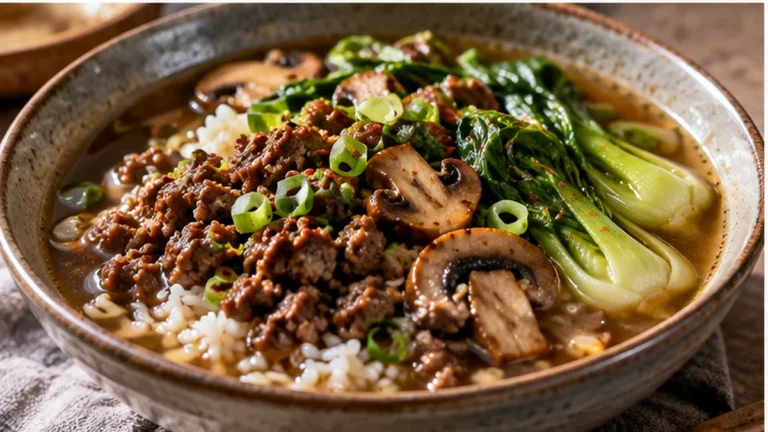
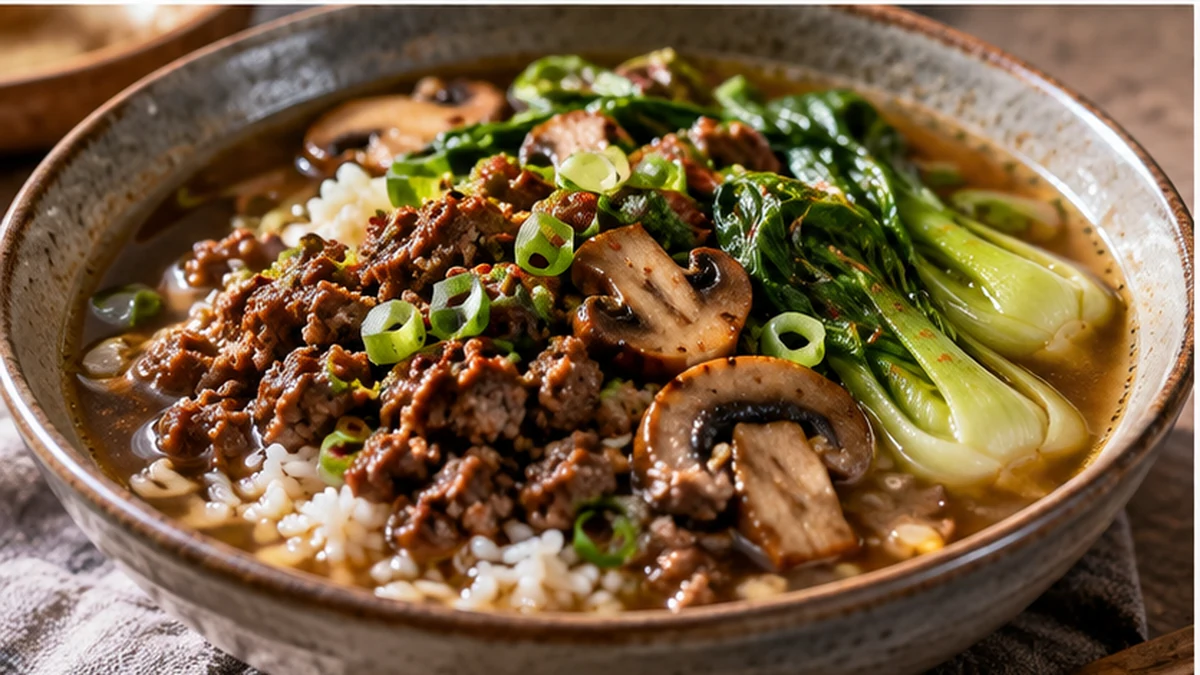
These beef broth bowls turn ground beef, jasmine rice, mushrooms, and bok choy into a warm weeknight dinner with a savory ginger-garlic broth. The beef is browned first for deeper flavor, then the vegetables and broth come together in the same skillet while the rice cooks separately.
The result lands somewhere between a rice bowl and a brothy noodle-shop dinner: enough broth to spoon around the rice, but plenty of beef and vegetables in every serving. It takes about 30 minutes, uses familiar supermarket ingredients, and is easy to adjust at the table with scallions, lime, or chili crisp.
Table of Contents
Why You’ll Love These Beef Broth Bowls
Ready in about 30 minutes, making it practical for weeknights.
Ground beef cooks quickly and gives the broth a rich, savory base.
Rice makes the bowl substantial without soaking up the broth as quickly as noodles.
Mushrooms and bok choy add vegetables without requiring a second pan.
The ginger-garlic broth is flavorful but simple enough to customize.
Components can be stored separately for easier meal prep and reheating.
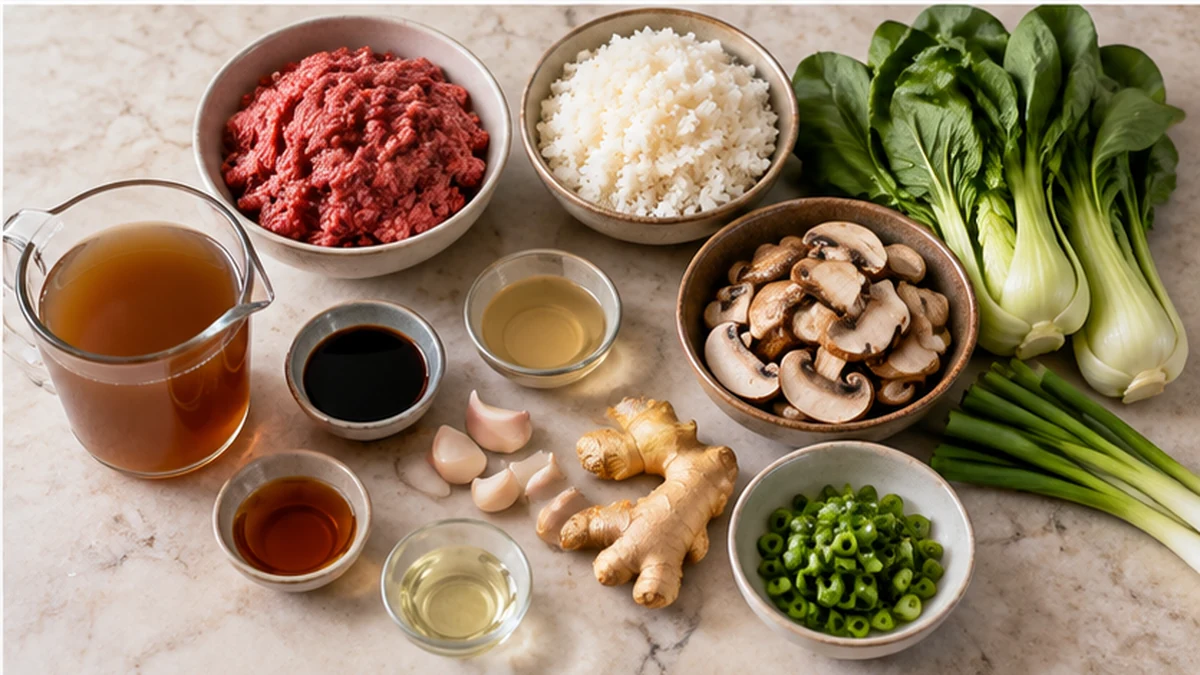
Ground beef: Use 90% lean ground beef for a good balance of browning and richness without leaving the bowl greasy. If your beef releases a large amount of fat, spoon off the excess before adding the aromatics.
Jasmine rice: Its soft texture works well with the broth. Long-grain white rice also works; cook it according to the package directions rather than forcing the same water ratio for every rice variety.
Beef broth: Low-sodium broth gives you more control because soy sauce also contributes salt. Taste the finished broth before adding extra salt.
Mushrooms and bok choy: Cremini mushrooms bring savory depth, while baby bok choy cooks quickly and keeps a little bite. Slice larger bok choy lengthwise or separate the stems from the leaves so the thicker pieces get a head start.
Ginger, garlic, and scallions: These aromatics keep the broth bright. Fresh ginger is worth using here because it is one of the main flavors rather than a background seasoning.
Soy sauce and rice vinegar: Soy sauce seasons the broth and beef; rice vinegar adds acidity so the bowl does not taste flat. Use low-sodium soy sauce if you prefer tighter control over sodium.
Savory 30-minute beef broth bowls with ground beef, jasmine rice, mushrooms, bok choy, ginger, garlic, and scallions.
Total Time:30 minutes
Yield:4 servings
Ingredients
Scale
1 cup uncooked jasmine rice, rinsed
1 1/2 cups water, or amount directed on rice package
1 pound 90% lean ground beef
8 ounces cremini mushrooms, sliced
3 baby bok choy, halved or quartered lengthwise
4 scallions, white and green parts separated and sliced
1 tablespoon freshly grated ginger
3 garlic cloves, minced
4 cups low-sodium beef broth
3 tablespoons low-sodium soy sauce
1 tablespoon unseasoned rice vinegar
1 teaspoon toasted sesame oil
1/4 teaspoon crushed red pepper flakes, optional
Lime wedges or chili crisp for serving, optional
Instructions
Cook the jasmine rice with the water according to the package directions. Remove from the heat and let it rest, covered, for 5 minutes.
Meanwhile, heat a large deep skillet over medium-high heat. Add the ground beef and cook for 6 to 8 minutes, breaking it into crumbles, until browned and the thickest portions reach 160°F on a food thermometer. Spoon off excess fat if needed.
Reduce the heat to medium. Add the mushrooms and white scallion parts. Cook for 3 minutes, stirring occasionally, until the mushrooms begin to soften.
Add the ginger, garlic, and optional red pepper flakes. Cook for 30 to 60 seconds, stirring, until fragrant.
Pour in the beef broth, soy sauce, and rice vinegar. Bring to a steady simmer, scraping up the browned bits from the bottom of the skillet.
Add the bok choy and simmer for 3 to 5 minutes, until the stems are crisp-tender and the leaves are wilted. Stir in the toasted sesame oil and taste before adding any extra seasoning.
Divide the rice among 4 bowls. Spoon the beef, mushrooms, bok choy, and hot broth around and over the rice. Top with the green scallion slices and serve with lime or chili crisp if desired.
Notes
Use low-sodium broth and soy sauce so you can control the final salt level.
Keep cooked rice separate from the broth until serving, especially for meal prep.
USDA recommends cooking ground beef to 160°F as measured with a food thermometer.
Refrigerate leftovers promptly in shallow containers and use within 3 to 4 days. Reheat leftovers to 165°F.
Nutrition is an estimate based on 90% lean ground beef, low-sodium beef broth, low-sodium soy sauce, jasmine rice, and four servings; brands can change the values.
Author:Adam Moretti
Prep Time:10 minutes
Cook Time:20 minutes
Category:Dinner
Method:Stovetop
Cuisine:American
Diet:High Protein
How to Make Beef Broth Bowls
1. Start the rice
Rinse 1 cup jasmine rice until the water is mostly clear. Cook it with 1 1/2 cups water according to the package directions, then let it rest covered for about 5 minutes. Starting the rice first keeps the whole meal inside the 30-minute window.
2. Brown the ground beef
Heat a large deep skillet over medium-high heat. Add the ground beef and spread it into an even layer. Let it make good contact with the pan before breaking it into small crumbles. Continue cooking until no raw sections remain and the beef reaches a safe internal temperature of 160°F when checked with a food thermometer. The USDA recommends 160°F for ground meats and notes that color alone is not a reliable safety test. See the USDA safe temperature chart.
3. Build the aromatic base
Lower the heat to medium. Add the white parts of the scallions, sliced mushrooms, ginger, and garlic. Cook for 3 to 4 minutes, stirring often. The mushrooms should begin to soften and the garlic should smell fragrant without browning hard.
4. Add the broth and bok choy
Pour in the low-sodium beef broth, soy sauce, and rice vinegar. Bring the mixture to a steady simmer. Add the bok choy and cook for 3 to 5 minutes, just until the stems are tender-crisp and the leaves wilt. Stir in the sesame oil after the heat is lowered so its toasted flavor stays noticeable.
5. Assemble the bowls
Divide the hot rice among four wide bowls. Spoon the beef, mushrooms, bok choy, and plenty of broth around and over the rice. Finish with the green scallion tops. Add lime wedges or a small spoonful of chili crisp at the table if you want more brightness or heat.
How to Get the Best Texture and Flavor
Give the beef enough room to brown. If the pan is too small, the meat releases moisture and steams. A 12-inch skillet or similarly wide sauté pan gives one pound of ground beef enough surface area to develop browned bits before the broth goes in.
Keep the rice and broth separate until serving. If the cooked rice sits in the broth for a long time, it keeps absorbing liquid and the bowl becomes thick rather than brothy. This matters even more for leftovers.
Add the bok choy near the end. The stems need only a few minutes and the leaves wilt quickly. Overcooking turns the leaves dull and makes the stems soft instead of crisp-tender.
Troubleshooting
My broth tastes too salty
Start with low-sodium broth and low-sodium soy sauce when possible. If the finished broth is still saltier than you want, dilute it with a small amount of hot water or unsalted broth. Do not add salt early simply because the broth tastes mild before the soy sauce has been mixed in.
The bowl tastes flat
Add acidity before adding more salt. An extra teaspoon of rice vinegar or a squeeze of lime can make the ginger, beef, and mushrooms taste more distinct. A few sliced scallion greens also add freshness at serving time.
The broth turned greasy
Ground beef varies in fat content. With beef fattier than 90% lean, spoon off excess rendered fat after browning and before adding the mushrooms and broth. Leave a small amount in the pan because it carries flavor, but the surface of the broth should not have a heavy oil layer.
Variations and Substitutions
Use noodles instead of rice: Cook ramen, rice noodles, or udon separately and divide them among the bowls before adding the broth. Cooking noodles directly in the broth can make it cloudy and reduces the amount of liquid available for serving.
Change the vegetables: Thinly sliced carrots, spinach, napa cabbage, or snow peas all fit the same flavor profile. Add quick-cooking greens at the end; firmer vegetables need a few extra minutes before the broth is added.
Make it spicier: Add crushed red pepper with the garlic or serve chili crisp on the side. Keeping the heat at the table makes one batch easier to serve to people with different spice preferences.
Make it more protein-focused: Divide the recipe into four generous servings and keep the full pound of beef. For another rice-based meal with a more explicitly protein-focused profile, try our high protein chicken fried rice meal prep.
Make-Ahead, Storage, and Reheating
For meal prep, store the cooked rice separately from the beef-and-broth mixture. That keeps the rice from swelling and absorbing the broth overnight. Divide both into shallow covered containers and refrigerate promptly.
USDA food-safety guidance says most cooked leftovers should be used within 3 to 4 days and reheated to 165°F. It also advises refrigerating perishable food within 2 hours of cooking, or within 1 hour when the temperature is above 90°F. Review USDA leftover and food-safety guidance.
To reheat, warm the broth mixture in a saucepan until steaming hot and reheat the rice separately with a splash of water. Combine them only when you are ready to eat. If the broth reduced during storage, add a little water or unsalted beef broth while reheating.
FAQs about Beef Broth Bowls
What are beef broth bowls?
Beef broth bowls are a flexible meal built around beef, a flavorful broth, vegetables, and a starch such as rice or noodles. This version uses ground beef, jasmine rice, mushrooms, and bok choy, so it cooks faster than a bowl based on long-simmered steak or roast.
Can I use steak instead of ground beef?
Yes. Thinly sliced sirloin or flank steak can work, but the cooking method changes. Sear the slices quickly, remove them from the pan, make the broth, and return the beef at the end so it does not become tough. Follow the appropriate USDA temperature guidance for the specific cut you use.
Can I make beef broth bowls without rice?
Yes. Use noodles, cauliflower rice, or simply increase the vegetables. The amount of broth can stay the same, although noodle versions may need extra broth because noodles absorb more liquid.
Can I freeze them?
The beef-and-broth portion freezes better than the fully assembled bowl. Freeze the cooled broth, beef, and mushrooms in an airtight container, then prepare fresh rice and bok choy when reheating for the best texture.
What toppings work well?
Scallions, lime wedges, sesame seeds, chili crisp, cilantro, or a small drizzle of toasted sesame oil all work. Add toppings after the bowl is assembled so their texture and aroma stay fresh.
Final Tips
The key to these beef broth bowls is sequencing: start the rice, brown the beef well, cook the aromatics briefly, and add the bok choy only after the broth is simmering. That gives you browned beef, tender vegetables, and enough clear broth to spoon around the rice instead of a thick one-pan mixture.
Taste the broth at the very end because the beef, broth, and soy sauce all contribute seasoning. Once the balance is right, serve immediately while the rice is hot and the bok choy still has a little structure.
Reviewed recipe options
Make this recipe fit me
Choose one of seven popular diet options. NutriMatch will confirm whether the recipe already fits, show a reviewed adaptation when available, or recommend recipes that match your choice.
Please choose a diet first.
Not available for this recipe
This recipe cannot currently be made Dairy-Free with a reviewed adaptation.
NutriMatch will not guess at substitutions. Try one of these recipes that is already reviewed for your choice.
Recipe details, product formulas, and cross-contact information can change. Confirm current labels and use professional guidance when medically necessary.
Not available for this recipe
This recipe cannot currently be made Gluten-Free with a reviewed adaptation.
NutriMatch will not guess at substitutions. Try one of these recipes that is already reviewed for your choice.
Recipe details, product formulas, and cross-contact information can change. Confirm current labels and use professional guidance when medically necessary.
Already a reviewed match
This recipe already fits High Protein.
No changes are needed based on its reviewed NutriMatch classification. Check the complete ingredients, product labels, and serving details for your own needs.
Recipe details, product formulas, and cross-contact information can change. Confirm current labels and use professional guidance when medically necessary.
Not available for this recipe
This recipe cannot currently be made Keto with a reviewed adaptation.
NutriMatch will not guess at substitutions. Try one of these recipes that is already reviewed for your choice.
Recipe details, product formulas, and cross-contact information can change. Confirm current labels and use professional guidance when medically necessary.
Not available for this recipe
This recipe cannot currently be made Low Carb with a reviewed adaptation.
NutriMatch will not guess at substitutions. Try one of these recipes that is already reviewed for your choice.
Recipe details, product formulas, and cross-contact information can change. Confirm current labels and use professional guidance when medically necessary.
Not available for this recipe
This recipe cannot currently be made Vegan with a reviewed adaptation.
NutriMatch will not guess at substitutions. Try one of these recipes that is already reviewed for your choice.
Recipe details, product formulas, and cross-contact information can change. Confirm current labels and use professional guidance when medically necessary.
Not available for this recipe
This recipe cannot currently be made Vegetarian with a reviewed adaptation.
NutriMatch will not guess at substitutions. Try one of these recipes that is already reviewed for your choice.
Recipe details, product formulas, and cross-contact information can change. Confirm current labels and use professional guidance when medically necessary.