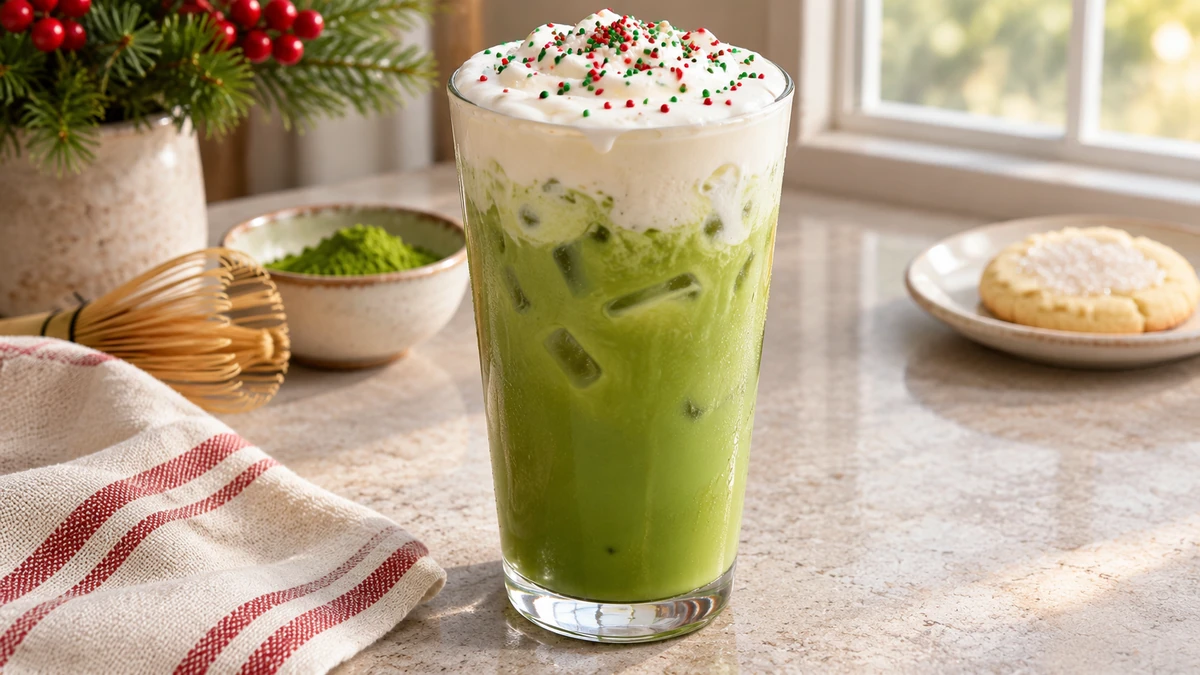
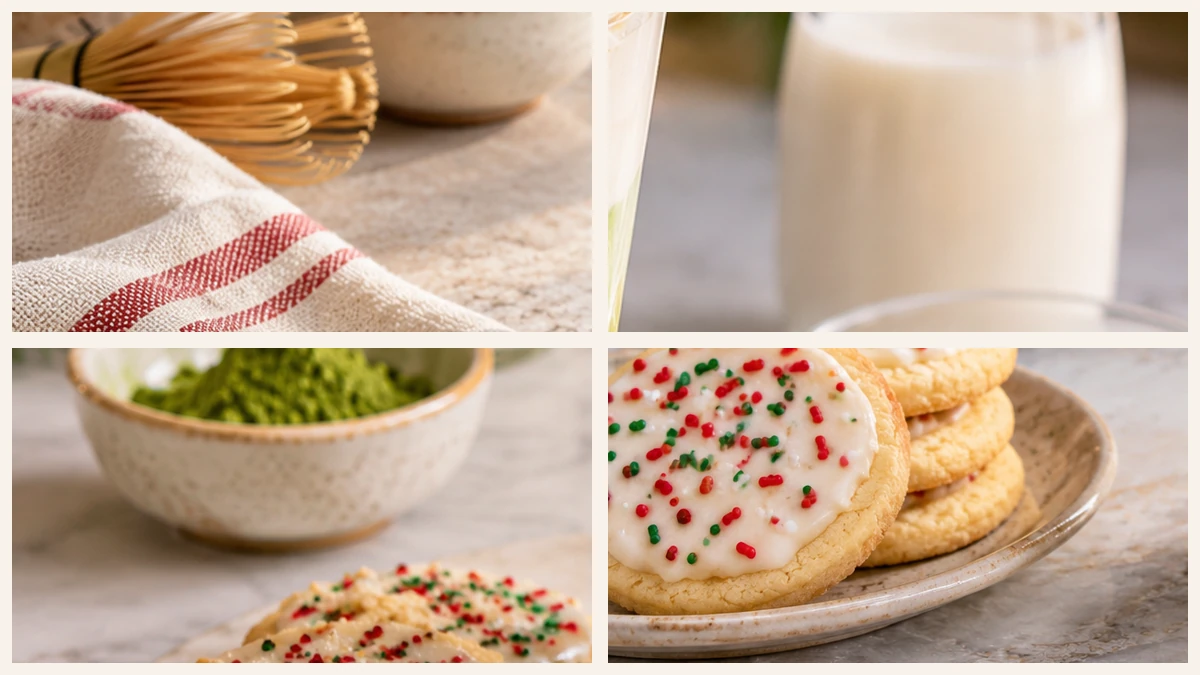
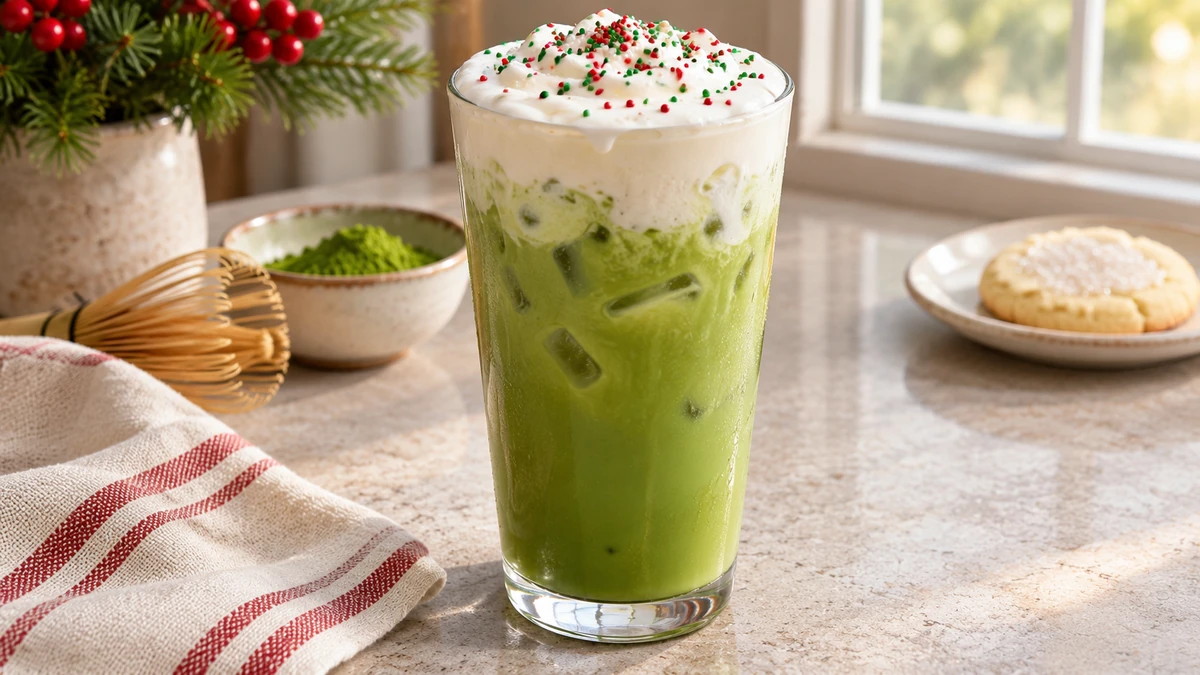
This iced sugar cookie cream matcha is a homemade take on the holiday Starbucks drink: an icy green matcha latte finished with creamy vanilla sugar-cookie cold foam and red-and-green sprinkles. The recipe makes one generous glass in about eight minutes, using plain matcha, milk, cream, sugar, and extracts instead of a specialty bottled sugar-cookie syrup.
The key is keeping the matcha and topping separate until serving. Whisk the matcha into warm water so it tastes smooth, then froth the chilled cookie-flavored cream only until it is airy and pourable. This is an independent copycat-style recipe, not Starbucks’ proprietary formula, and you can adjust its sweetness before assembling the drink.
Table of Contents
What Is Iced Sugar Cookie Cream Matcha?
Starbucks introduced its new Iced Sugar Cookie Cream Matcha on the U.S. holiday menu that arrived November 5, 2026. The company describes a creamy matcha beverage topped with sugar cookie cream cold foam and festive red and green sprinkles. It does not publicly provide its full shop recipe in that announcement, so the proportions here are practical homemade starting points rather than a claim of an exact copy.
The name matters: this is a matcha drink, not an espresso latte. Matcha is powdered green tea, so it gives the glass its color, earthy taste, and caffeine. Sugar-cookie flavor is concentrated mainly in the cold foam. The small amount of sugar mixed into the matcha base keeps the drink balanced without completely hiding the tea.
Why This Homemade Version Works
No store-bought sugar-cookie syrup is necessary: a quick sugar-and-water mixture, vanilla, and an optional tiny drop of almond extract give the foam bakery-style flavor.
A measured 1 1/2 teaspoons of matcha provides an identifiable tea taste beneath the sweeter topping.
Cold 2% milk makes a smooth matcha base, while a little heavy cream gives the foam enough body to stay near the top.
You can control the sweetness separately in the green base and white foam.
The drink is assembled over ice rather than blended, keeping the layers distinct and the texture sippable.
Only a handheld frother or small whisk is needed; no espresso machine is involved.
Ingredients for Sugar Cookie Cream Matcha
Matcha Powder
Use plain, unsweetened matcha powder, not a premixed matcha latte powder. Matcha blends can contain sugar or milk solids and would change both sweetness and nutrition. Sift 1 1/2 teaspoons (about 3 grams, depending on the brand) before whisking; fine powder disperses much more evenly than clumps tipped straight into cold milk.
Warm Water and Sugar for the Matcha
Two tablespoons of warm—not boiling—water make a concentrated, whiskable matcha mixture. The drink also uses 1 teaspoon of sugar in the green base. Dissolving it with the warm matcha helps avoid gritty crystals at the bottom. If your matcha is already sweetened, skip that sugar and read the package label before estimating nutrition.
Cold 2% Milk and Ice
Three-quarters of a cup of cold 2% milk gives the latte a mild, creamy base without making it as rich as the foam. Use about 3/4 cup of ice in a 16-ounce or larger glass. A larger amount of ice creates a taller, colder drink but does not increase the actual milk and matcha in the recipe.
Heavy Cream and Milk for the Cold Foam
For the topping, combine 2 tablespoons of very cold heavy whipping cream with 1 tablespoon of cold 2% milk. Heavy cream provides body; the extra milk keeps the finished foam pourable rather than stiff like frosting. A handheld frother is the easiest way to reach the right texture. For a different dairy-free topping technique, see our strawberry cold foam without heavy cream, which uses a lighter milk-based method.
Sugar, Vanilla, and Optional Almond Extract
Two teaspoons of granulated sugar dissolved in 2 teaspoons of warm water make a tiny syrup for the foam. Add 1/4 teaspoon vanilla extract, then at most one drop of almond extract if you like a bakery-style sugar-cookie note. Almond extract is powerful: measuring even 1/8 teaspoon can make one drink taste more like almond candy than a sugar cookie. Omit it entirely for an almond-free flavor profile.
Red and Green Sprinkles
A measured 1/2 teaspoon of red-and-green sprinkles supplies the festive look without building a sugar crust. Choose fine sprinkles that sit lightly on the foam. If you avoid gluten, nuts, or certain additives, check the labels on the sprinkles and extracts rather than assuming their formulas are suitable. A small sugar cookie on the side is optional and is not included in the nutrition estimate.
A homemade matcha latte with pourable sugar-cookie-flavored cold foam and red-and-green sprinkles. Vanilla and a tiny optional drop of almond extract replace bottled specialty syrup.
2 tablespoons cold heavy whipping cream, for the foam
1 tablespoon cold 2% dairy milk, for the foam
2 teaspoons granulated sugar, for the quick sugar-cookie syrup
2 teaspoons warm water, for the quick sugar-cookie syrup
1/4 teaspoon pure vanilla extract
1 drop almond extract, optional (do not use more)
1/2 teaspoon red-and-green sprinkles
1 small sugar cookie for serving, optional (not included in nutrition)
Instructions
Make the sugar-cookie flavoring: stir 2 teaspoons sugar into 2 teaspoons warm water until fully dissolved, then mix in vanilla and the optional single drop of almond extract. Set aside briefly to cool.
Sift the matcha into a small bowl. Add 2 tablespoons warm water and the remaining 1 teaspoon of sugar. Whisk for 20 to 30 seconds until mostly smooth and bright green.
Pour the cold heavy cream and 1 tablespoon cold 2% milk into a tall frothing container. Add the cooled flavoring and froth for 15 to 25 seconds until silky, aerated, and still pourable.
Fill a 16-ounce or larger glass with 3/4 cup ice. Add 3/4 cup cold 2% milk, followed by the whisked matcha, and stir gently to combine.
Pour the sugar-cookie cream foam slowly over the back of a spoon so it rests on top. Add 1/2 teaspoon festive sprinkles and serve immediately, with an optional cookie on the side.
Notes
Independent Starbucks-inspired homemade recipe, not an official Starbucks formula. The U.S. holiday drink was introduced in November 2026.
Use plain matcha, not sweetened matcha latte mix; otherwise reduce the sugar and recalculate nutrition.
One drop of almond extract is optional and strong. Omit for an almond-free flavor profile; check extract and topping labels when avoiding allergens.
The foam should pour. Stop frothing before it becomes stiff whipped cream.
For a dairy-free version use suitable plant milks and a plant-based whipping product; the nutrition values then change.
Nutrition estimate assumes 3/4 cup plus 1 tablespoon 2% milk, 2 tablespoons heavy cream, 3 teaspoons sugar, about 3 g matcha, and 1/2 teaspoon sprinkles. The optional cookie is excluded. Brand variation applies.
Keep milk and cream refrigerated at 40°F (4°C) or below. Serve immediately; fully assembled iced drinks do not store well.
Author:Adam Moretti
Prep Time:8 minutes
Cook Time:0 minutes
Category:Drinks
Method:No-Cook / Whisking and Frothing
Cuisine:American café-inspired
Diet:Vegetarian (contains dairy; toppings and extracts should be checked if specific restrictions apply)
How to Make Iced Sugar Cookie Cream Matcha
1. Dissolve the Homemade Sugar-Cookie Flavoring
Stir 2 teaspoons granulated sugar into 2 teaspoons warm water in a small cup until the liquid looks clear and no sugar grains remain. Add the vanilla and the optional single drop of almond extract. Set aside briefly while preparing the matcha. Using a dissolved sugar mixture instead of dry crystals lets the cold foam taste evenly sweet from the first sip.
2. Whisk the Matcha Smooth
Sift 1 1/2 teaspoons matcha into a wide mug or small bowl. Pour in 2 tablespoons warm water and add the remaining 1 teaspoon of sugar. Use a bamboo whisk, small kitchen whisk, or handheld frother for 20 to 30 seconds. The concentrate should be deep green and mostly free of powder clumps. Whisking dry powder directly into ice-cold milk usually leaves floating specks.
3. Froth the Cold Sugar-Cookie Cream
Add the cold heavy cream, 1 tablespoon cold milk, and cooled sugar-cookie flavoring to a narrow, tall container. Froth for about 15 to 25 seconds, checking every few seconds. Stop when the topping looks silky, a little thicker than pouring cream, and still flows off a spoon. Do not keep beating until it holds stiff peaks: that produces whipped cream rather than the soft cold foam this drink needs.
4. Build the Iced Matcha Base
Fill a tall glass with about 3/4 cup of ice. Pour in 3/4 cup cold 2% milk, then add the whisked matcha and stir just enough to combine. The base should be a uniform light-to-medium green with visible ice. Taste a small spoonful now if you want to check the tea strength; once the foam is on top, sweetness will be higher in the first few sips.
5. Add Foam and Sprinkles
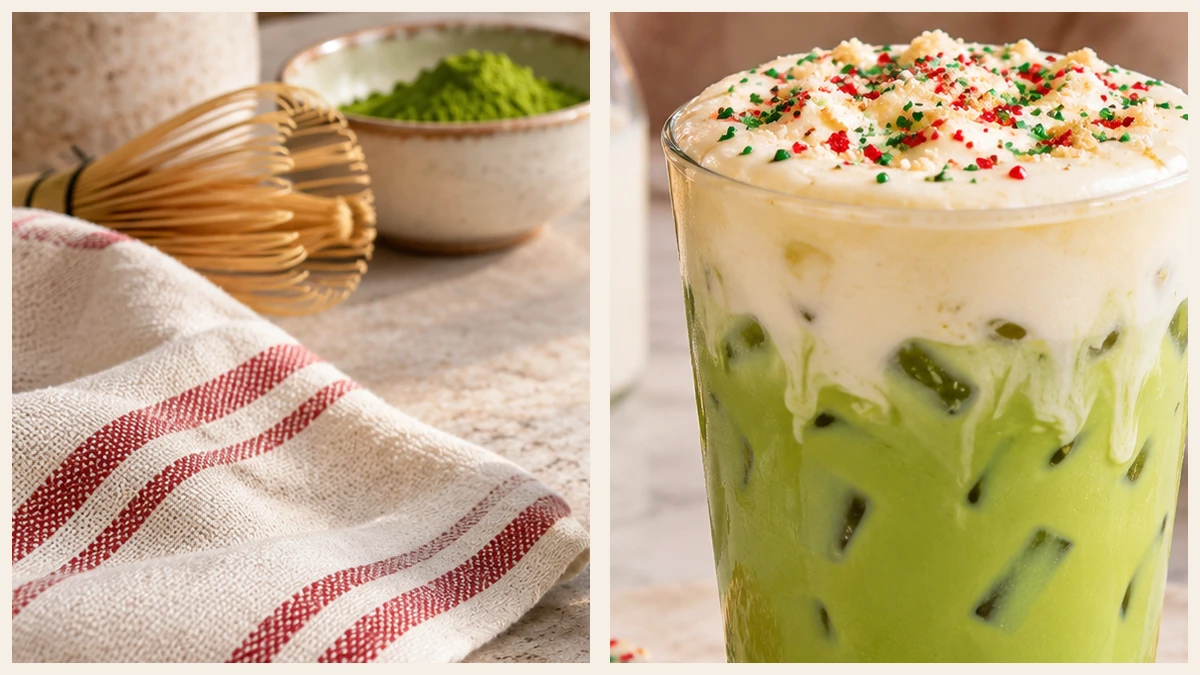
Slowly pour the foam over the back of a spoon held just above the surface of the iced matcha. The cream should settle as a distinct pale layer before gently spreading. Scatter 1/2 teaspoon red-and-green sprinkles over the top and serve right away with a straw or long spoon. If the layers blend together slightly, the flavor is still fine; the contrast is mostly visual.
Troubleshooting
Why Is My Matcha Clumpy?
The powder may be too coarse, or the water was added too quickly. Sift the dry matcha before whisking and start with only the measured warm water. If you do not own a bamboo whisk, mix the matcha and water in a narrow container with a milk frother. Do not add dry powder to an already icy glass; it is much harder to incorporate there.
Why Does the Foam Sink Immediately?
Foam made with warm ingredients collapses quickly. Chill the milk and cream, use a narrow frothing container, and work in short bursts. If the mixture stays completely liquid, froth for another five seconds. If it becomes stiff and lumpy, stop; you have gone beyond the pourable cold-foam stage. A spoon held close to the matcha surface helps the topping land gently.
Why Does It Taste Too Sweet?
The sugar is divided intentionally: 1 teaspoon in the matcha and 2 teaspoons in the foam. For a less sweet drink, omit the teaspoon in the matcha first so the cookie flavor remains concentrated in the topping. If you also reduce the foam sugar, the topping will taste more like plain cream. Packaged sugar-cookie syrups and premixed matcha powders may have substantial additional sugar, so do not substitute them one-for-one without tasting.
Why Does the Matcha Taste Bitter or Flat?
Harsh bitterness can come from a strong dose of powder, older matcha, or very hot water. Measure the powder carefully and whisk with warm—not boiling—water. If the drink tastes dull rather than bitter, it may be heavily diluted by melting ice; use cold milk, work quickly, and serve immediately. Avoid fixing bitterness only by adding more sugar.
Variations and Substitutions
Dairy-Free Sugar Cookie Matcha
Use unsweetened oat milk for the green matcha base, then replace the foam with a cold, frothable barista-style plant cream or a combination of plant-based whipping cream and oat milk. The foam may be thinner or have a different flavor, depending on the brand. Check the sugar-cookie flavorings and sprinkles for milk or other animal-derived ingredients if a vegan version matters to you. This substitution changes the nutrition substantially; do not reuse the dairy-based numbers below.
Lower-Sugar Version
Omit the 1 teaspoon of sugar in the matcha base, then reduce the foam sugar from 2 teaspoons to 1 teaspoon if desired. Vanilla becomes more noticeable when the total sweetness is lower. This is a modified version, not the recipe-card nutrition estimate. If you use a sugar-free syrup, follow its own serving directions because some products are intensely sweet.
With Bottled Sugar-Cookie Syrup
Replace the homemade foam flavoring—2 teaspoons sugar, 2 teaspoons water, vanilla, and optional almond extract—with approximately 2 teaspoons commercial sugar-cookie syrup. Start small, taste, and add more only if needed. Store-bought syrups vary in concentration and sugar content, so this swap needs its own label-based nutrition calculation.
How This Differs From a Sugar Cookie Latte
An iced sugar cookie latte is typically espresso and milk flavored with sugar-cookie syrup. This drink starts with matcha, which makes it green and gives it a distinct tea flavor. The sugar-cookie note is mainly in the cream foam. For coffee-based alternatives from this site, try the banana bread latte or the simpler vegan iced coffee. Neither requires matcha powder.
Make-Ahead and Storage
For the smoothest drink, prepare the matcha concentrate and cold foam close to serving time. If necessary, whisk the matcha with its water and sugar, place it in a covered container, and chill for up to 24 hours; whisk again before using because some powder may settle. You can also dissolve the sugar-cookie flavoring in advance and refrigerate it, separately, in a small covered jar.
Keep cream and milk at 40°F (4°C) or below and refrigerate perishable ingredients promptly. Prepare the foam just before serving, since it deflates during storage; the assembled, iced drink does not keep its layered texture. Do not leave dairy-based drinks sitting out for more than two hours, or one hour in temperatures above 90°F.
Nutrition and Ingredient Assumptions
The recipe-card estimate is for one drink made with 3/4 cup 2% dairy milk, 2 tablespoons heavy whipping cream, 1 additional tablespoon 2% milk, 3 teaspoons granulated sugar in total, about 3 grams plain matcha, and 1/2 teaspoon sprinkles. It includes vanilla and the negligible amount of optional almond extract, but excludes any sugar cookie served on the side. Ice and water add no meaningful calories.
Using USDA-style reference values for reduced-fat milk and heavy cream and typical sugar and sprinkle quantities, this works out to approximately 260 calories, 25 grams carbohydrate, 24 grams total sugar, 14 grams fat, and 7 grams protein per glass. These are calculated estimates, not laboratory measurements or Starbucks nutrition facts. Cream fat percentage, milk labels, matcha weight, and sprinkle brands can all change the totals. Review your actual product labels when precise tracking matters.
Iced Sugar Cookie Cream Matcha FAQs
Does iced sugar cookie cream matcha have coffee in it?
No. The standard drink described here uses matcha green tea powder instead of brewed coffee or espresso. Matcha naturally contains caffeine, but its caffeine content varies by product and amount used. The recipe calls for 1 1/2 teaspoons of plain matcha.
Is the Iced Sugar Cookie Cream Matcha a real Starbucks drink?
Yes. Starbucks listed it as a new drink on its U.S. holiday menu that launched November 5, 2026. This article provides an independent homemade interpretation based on the company’s publicly described matcha base, sugar-cookie cold foam, and sprinkles, not an official manufacturing formula.
Can I make sugar cookie cold foam without heavy cream?
Yes, but it will be lighter. Try cold skim or 1% milk with dissolved sugar and vanilla, or a barista-style plant milk with good frothing performance. The foam will not be identical to the cream-based topping. The technique in our no-heavy-cream cold foam recipe is a useful starting point.
Can I use a matcha latte mix?
You can, but first check whether the powder already contains sugar or powdered milk. Omit or reduce the base sugar accordingly. The taste and nutrition estimate in this recipe assume plain, unsweetened matcha powder, so a commercial mix is not an equivalent substitution.
What if I do not have a milk frother?
Whisk the foam ingredients vigorously in a chilled, narrow bowl until thickened but still pourable. A small French press can also aerate the mixture with repeated short pumps. A jar can work, but it tends to create coarser bubbles and may require a longer shake. Use a large enough vessel to leave room for expansion.
Can this be made vegan or gluten free?
A vegan variation needs plant milk and a suitable plant-based whipping cream, plus label checks for the flavorings and sprinkles. For gluten avoidance, matcha and plain dairy are not usually the concern, but packaged extracts, toppings, and flavored syrups still require label and cross-contact checks. Neither adaptation is automatically covered by the base recipe’s nutrition values.
Final Tips
The easiest way to improve homemade iced sugar cookie cream matcha is to perfect the layers: sift and whisk the matcha first, dissolve the sugar before it meets cold cream, then froth only until the topping flows easily. Use the measured sugar rather than guessing, because the foam is meant to taste sweeter than the tea beneath it.
Serve the drink over fresh ice, add a light scattering of holiday sprinkles, and drink it while the foam is still airy. If you are building a larger collection of fast homemade drinks, our quick and easy recipes page collects other short-prep options for busy days.
Reviewed recipe options
Make this recipe fit me
Choose one of seven popular diet options. NutriMatch will confirm whether the recipe already fits, show a reviewed adaptation when available, or recommend recipes that match your choice.
Please choose a diet first.
Not available for this recipe
This recipe cannot currently be made Dairy-Free with a reviewed adaptation.
NutriMatch will not guess at substitutions. Try one of these recipes that is already reviewed for your choice.
Recipe details, product formulas, and cross-contact information can change. Confirm current labels and use professional guidance when medically necessary.
Not available for this recipe
This recipe cannot currently be made Gluten-Free with a reviewed adaptation.
NutriMatch will not guess at substitutions. Try one of these recipes that is already reviewed for your choice.
Recipe details, product formulas, and cross-contact information can change. Confirm current labels and use professional guidance when medically necessary.
Not available for this recipe
This recipe cannot currently be made High Protein with a reviewed adaptation.
NutriMatch will not guess at substitutions. Try one of these recipes that is already reviewed for your choice.
Recipe details, product formulas, and cross-contact information can change. Confirm current labels and use professional guidance when medically necessary.
Not available for this recipe
This recipe cannot currently be made Keto with a reviewed adaptation.
NutriMatch will not guess at substitutions. Try one of these recipes that is already reviewed for your choice.
Recipe details, product formulas, and cross-contact information can change. Confirm current labels and use professional guidance when medically necessary.
Not available for this recipe
This recipe cannot currently be made Low Carb with a reviewed adaptation.
NutriMatch will not guess at substitutions. Try one of these recipes that is already reviewed for your choice.
Recipe details, product formulas, and cross-contact information can change. Confirm current labels and use professional guidance when medically necessary.
Not available for this recipe
This recipe cannot currently be made Vegan with a reviewed adaptation.
NutriMatch will not guess at substitutions. Try one of these recipes that is already reviewed for your choice.
Recipe details, product formulas, and cross-contact information can change. Confirm current labels and use professional guidance when medically necessary.
Already a reviewed match
This recipe already fits Vegetarian.
No changes are needed based on its reviewed NutriMatch classification. Check the complete ingredients, product labels, and serving details for your own needs.
Recipe details, product formulas, and cross-contact information can change. Confirm current labels and use professional guidance when medically necessary.