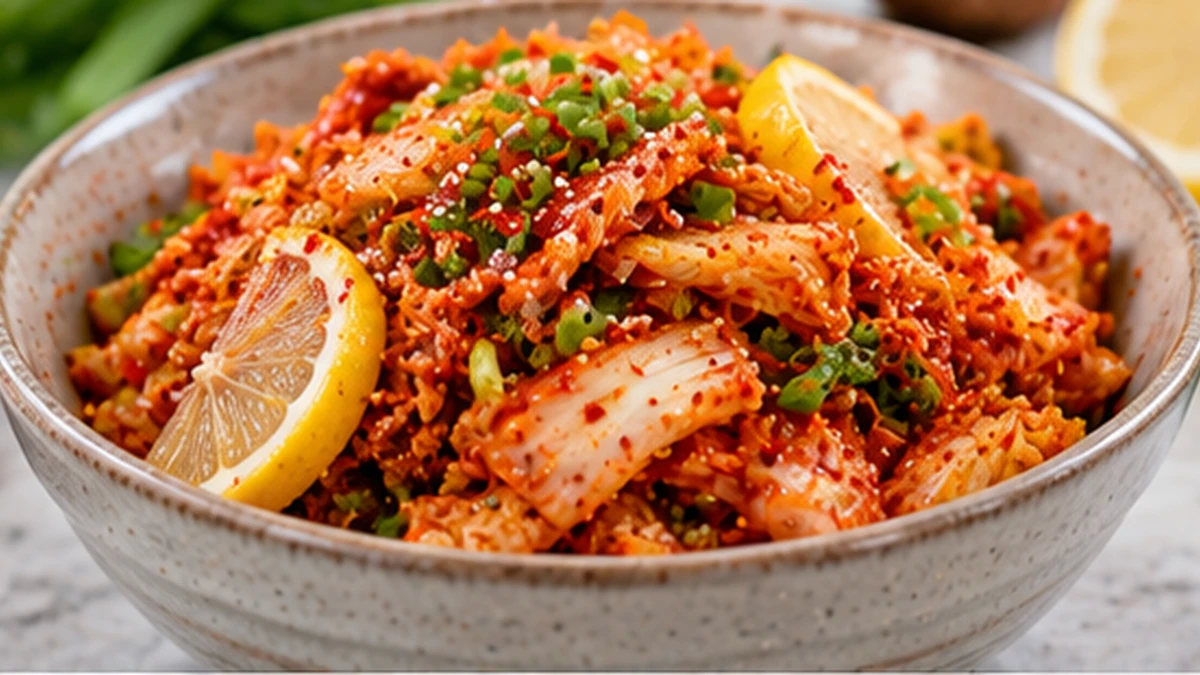
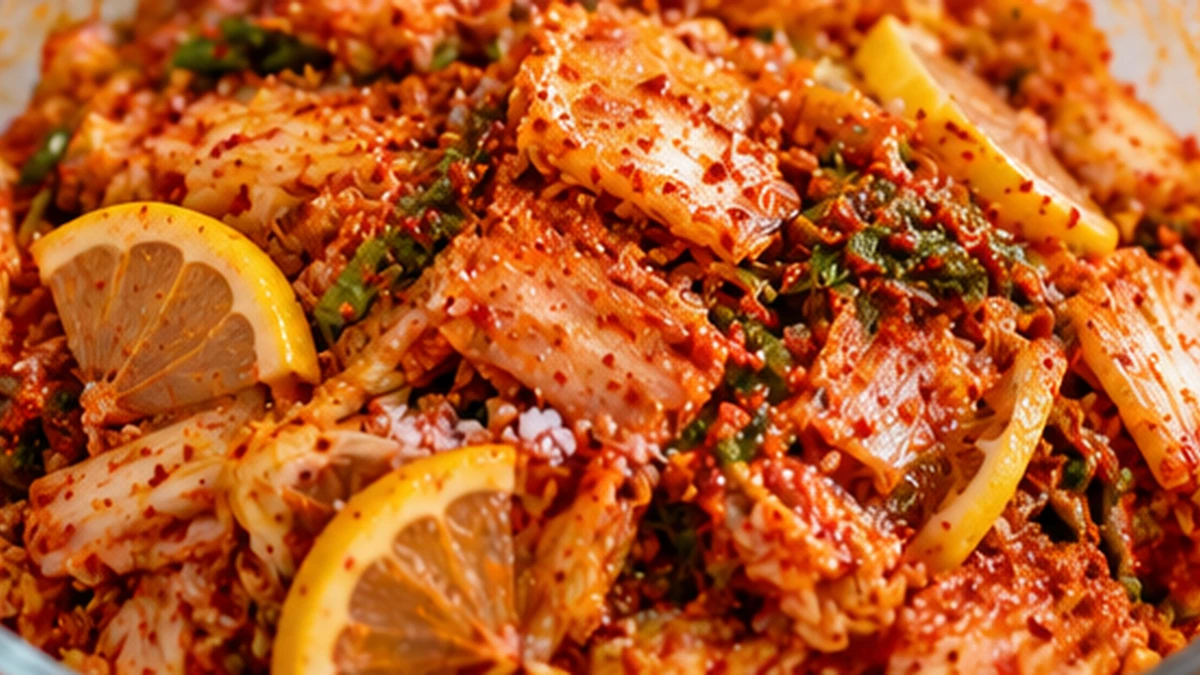
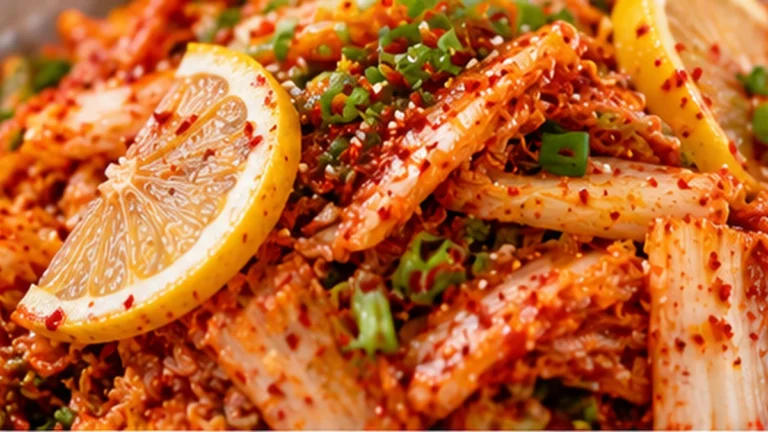
This lemon kimchi recipe makes a crunchy, spicy napa cabbage side dish with fresh lemon juice, thin lemon slices, Korean red pepper flakes, garlic, ginger, and scallions. It is ready in about 45 minutes, including a short salting period and a refrigerated rest. There is no fish sauce and no room-temperature fermentation. If you have half a cabbage left over after making one of our vegan cabbage recipes, this is a practical way to use it.
The result is a fresh, Korean-inspired salad rather than a jar of long-aged kimchi. The cabbage ribs stay crisp, the leaves become flexible, and the dressing is tart enough to stand up to a bowl of warm rice. The lemon is both seasoning and an edible accent: cut it thin enough that the peel does not dominate each bite. This original recipe is a development proposal, not a claim of kitchen testing.
Table of Contents
What Makes This Lemon Kimchi Recipe Different?
Traditional kimchi encompasses many preparations, including fermented vegetables and fresh dishes. Korean fresh cabbage kimchi, or geotjeori, is a useful reference for the idea of seasoning cabbage for immediate eating. See Maangchi’s explanation of fresh kimchi for cultural context. This version adds citrus and omits seafood ingredients; it is not presented as a traditional Korean formula.
Some recipes called lemon kimchi focus on preserving whole lemons with salt and chili. Others combine citrus with cabbage. Here the main vegetable is napa cabbage, while lemon provides a bright contrast to the pepper and aromatics. The lemon kimchi recipe is intended to accompany dinner today, not to develop fermentation bubbles over the next week.
Ingredients for the Lemon Kimchi Recipe
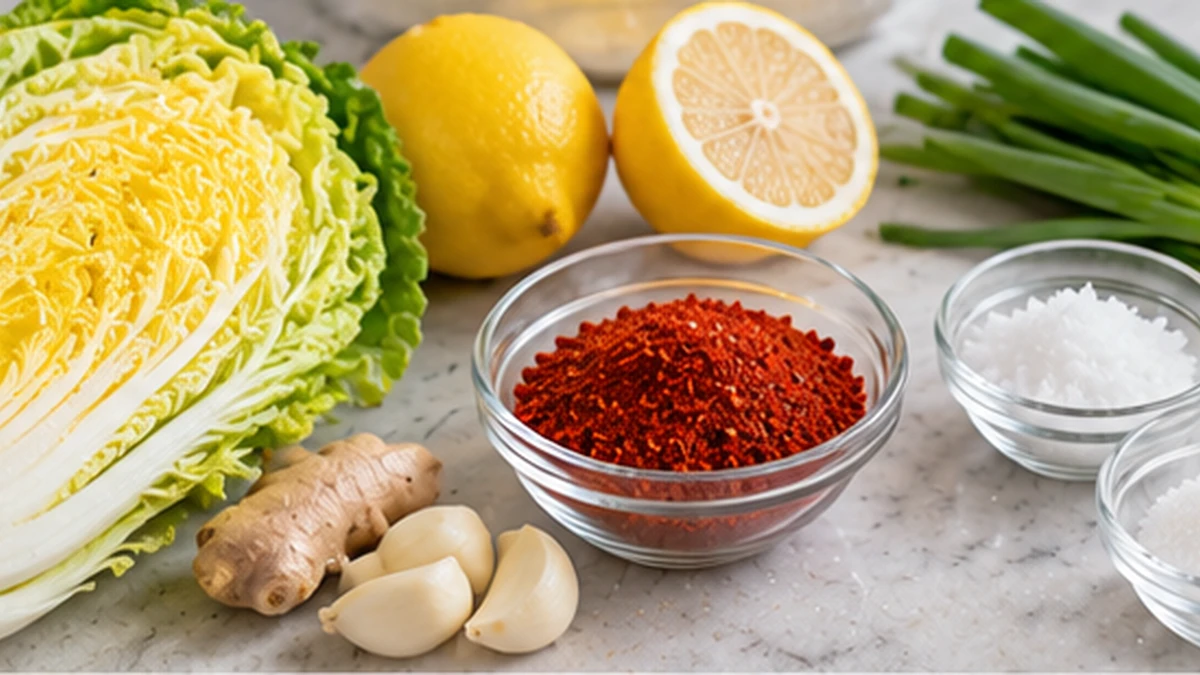
Napa cabbage — 500 g (about 1.1 lb), trimmed. Choose a firm head with pale ribs and crisp green or yellow leaves. Weigh the edible portion after removing damaged outer leaves and the core. The weight is more reliable than a cup measure because a loosely filled bowl of leaves contains much less cabbage than a tightly packed one.
Fine sea salt — 10 g (about 1¾ teaspoons, depending on crystal size). Weigh this ingredient if possible. It is used to soften the cabbage and draw out water, not as a validated fermentation salt concentration. This recipe retains the salt that remains on the leaves after draining; there is no second addition of salt in the dressing.
Fresh lemons — 30 g thin slices plus 2 tablespoons (30 g) juice. You may need two lemons. Select fruit with a sound, thin peel. Wash the outside under running water before cutting. Slice a portion into paper-thin half moons, remove the seeds, and squeeze the remaining fruit for juice. Thick pieces of white pith can taste bitter, even when coated in chili.
Gochugaru — 2 tablespoons (12 g). Korean red pepper flakes supply the color and fruity pepper flavor. Choose a medium-heat product rather than an extremely hot variety. The coarse flakes are different from cayenne and from American chili powder, which may contain cumin and other seasonings. A fine grind will create a smoother paste.
Garlic — 2 medium cloves (6 g); fresh ginger — 1 teaspoon finely grated (5 g). Grate both finely so the flavor spreads throughout the bowl. Large raw garlic pieces can overwhelm a bite of cabbage. Fresh ginger gives the dressing a clean, sharp finish without adding extra liquid.
Scallions — 3 (30 g); granulated sugar — 1 teaspoon (4 g). Slice the white and green parts of the scallions thinly. The small amount of sugar balances the citrus and chili; it is not a fermentation starter. The lemon kimchi recipe uses no oil or added water in its dressing. Moisture from the cabbage and lemon is enough to distribute the seasonings.
Equipment for the Lemon Kimchi Recipe
Set out a large mixing bowl, a colander, a small bowl for the dressing, a sharp knife, a cutting board, a kitchen scale, and a clean covered storage container. A citrus juicer is convenient but not essential. A glass or stainless steel bowl avoids staining some plastics. You can also use food-safe gloves to protect sensitive skin from the chili.
Before making this lemon kimchi recipe, wash your hands, clean the work surface, and keep the vegetables away from raw meat and seafood. Follow the FDA produce-cleaning guidance: rinse produce with running water rather than soap. Drain the washed leaves thoroughly before weighing and salting them.
How to Make This Lemon Kimchi Recipe
Step 1: Cut and Salt the Cabbage
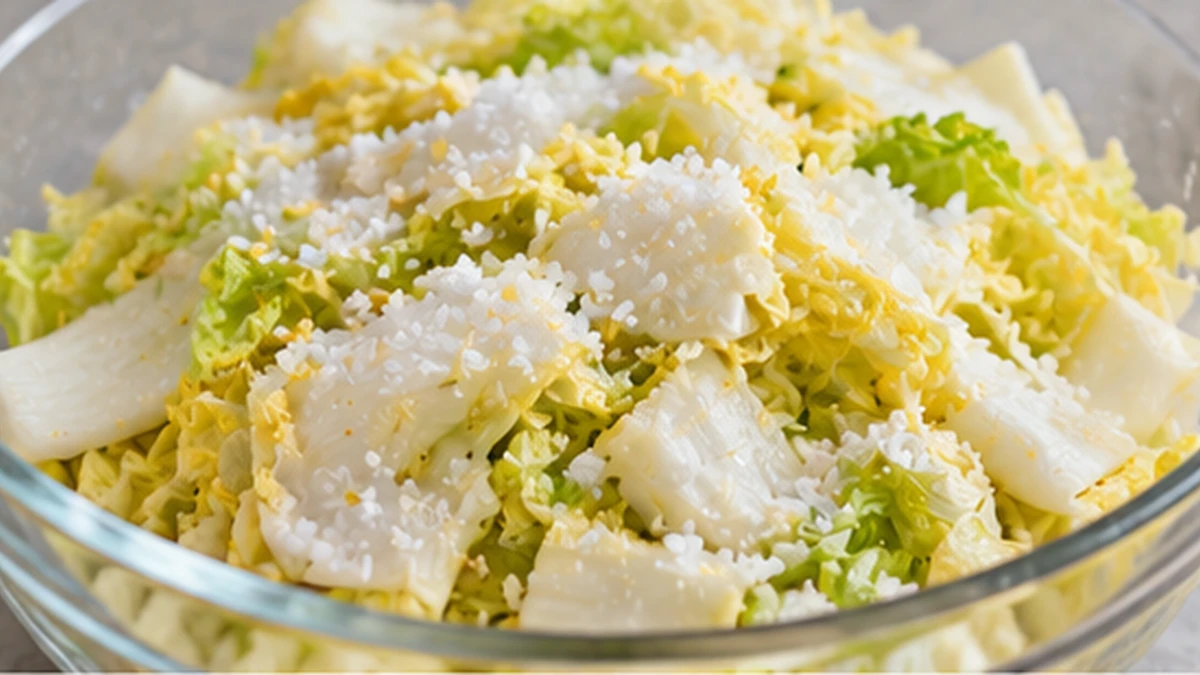
Cut the cabbage lengthwise into quarters, remove the tough core, and chop the leaves crosswise into roughly 1½-inch pieces. Separate any pieces that are still attached in thick clusters. Place them in the large bowl and sprinkle the measured salt over several layers rather than dumping it in one spot.
Toss gently and leave for 20 minutes, turning the cabbage once halfway through. The leaves should start to bend without snapping, while the thick white ribs retain a noticeable crunch. Liquid will collect in the bottom of the bowl. Tip everything into a colander and drain well; do not squeeze the leaves into a dry ball. This lemon kimchi recipe does not require an overnight brine.
Step 2: Prepare the Lemon and Chili Dressing
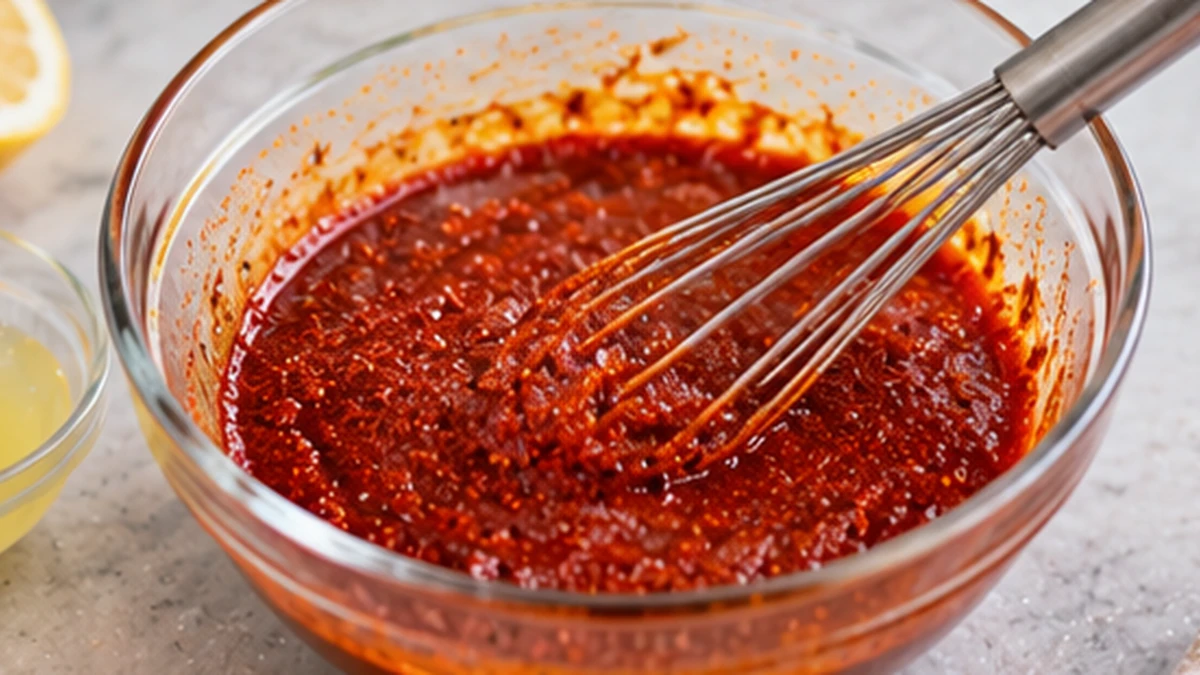
While the cabbage rests, cut the washed lemons and measure 30 g of thin, seedless half moons. Squeeze and measure two tablespoons of juice. In a small bowl, combine the juice, gochugaru, grated garlic, ginger, and sugar. Stir until the sugar dissolves and the pepper flakes absorb the liquid. Let the dressing stand for a few minutes while the cabbage finishes draining.
The mixture should look like a loose, brick-red paste rather than a watery marinade. If it appears very thick, continue stirring before deciding whether it needs adjustment: the moisture remaining on the cabbage will loosen it. In the lemon kimchi recipe, the citrus is the primary source of acidity, not a splash of vinegar added at the end.
Step 3: Coat the Cabbage and Add the Lemon
Return the drained cabbage to the clean mixing bowl. Add the dressing and sliced scallions. Lift the cabbage from the bottom and fold it over itself several times until most surfaces have a thin red coating. Add the lemon half moons last and fold gently so the pulp stays attached to the peel.
Check the bowl for pockets of unseasoned cabbage. The pale ribs will not necessarily turn as red as the thin leaves, and that is fine. Taste a small piece using a clean fork. If it is saltier than you prefer, serve a smaller portion with plain rice rather than adding more sugar to mask the salt. Record that adjustment for your next batch.
Step 4: Chill and Serve
Transfer the finished salad to a covered container and refrigerate for 10 minutes before serving. The short chill allows the pepper flakes to hydrate further without sacrificing the fresh crunch. Stir once before spooning into a serving bowl. The lemon kimchi recipe is complete at this point; do not leave the container on the counter to ferment.
Quick vegan Korean-inspired napa cabbage salad with lemon and gochugaru; not fermented.
Total Time:45 minutes (includes 20 minutes salting and 10 minutes chilling)
Yield:6 servings
Ingredients
Scale
500 g trimmed napa cabbage (about 1.1 lb)
10 g fine sea salt (about 1¾ teaspoons)
30 g very thin seedless lemon half moons
2 tablespoons fresh lemon juice (30 g)
2 tablespoons gochugaru (12 g)
2 medium garlic cloves, finely grated (6 g)
1 teaspoon fresh grated ginger (5 g)
3 scallions, thinly sliced (30 g)
1 teaspoon granulated sugar (4 g)
Instructions
Wash produce under running water, drain, trim and cut cabbage into 1½-inch pieces.
Toss cabbage with measured salt and rest 20 minutes, turning halfway through; drain well.
While cabbage rests, prepare thin lemon slices and whisk lemon juice, gochugaru, garlic, ginger and sugar.
Fold dressing and scallions into drained cabbage, then gently fold in lemon slices.
Cover and refrigerate 10 minutes. Stir and serve cold.
Notes
Fresh Korean-inspired salad, not fermented or shelf-stable. Refrigerate at 40°F or below and use within 3 days; discard if left out more than 2 hours (1 hour above 90°F).
Nutrition is approximate; sodium counts all added salt conservatively despite drainage.
Recipe development proposal, not physically kitchen-tested.
Author:Adam Moretti
Prep Time:15 minutes
Cook Time:0 minutes
Category:Side Dish
Method:No-Cook
Cuisine:Korean-inspired
Diet:Vegan
How to Balance the Lemon, Salt, and Heat
The best way to adjust this side dish is to change one variable at a time. A sour lemon and an unusually hot packet of gochugaru can make the same measured recipe taste quite different. For a milder batch next time, reduce the pepper flakes to one tablespoon. That changes the color as well as the heat, but the cabbage will still be seasoned.
If the lemon kimchi recipe tastes bitter, examine the lemon slices first. Seeds and thick pith are more likely to be the problem than the juice. Remove the slices from your portion if needed. Next time, choose thin-skinned fruit, trim thick end pieces, and use a sharp knife to make very thin slices. Meyer lemons offer a softer citrus flavor when available, but the result may be less tart.
Salt is difficult to predict after draining vegetables. The amount of water released and the amount of brine discarded both affect the finished concentration. Do not judge the final seasoning by licking the concentrated dressing alone. Taste a coated cabbage rib and a leaf together. If you are monitoring sodium, use the conservative nutrition estimate below rather than assuming all the salt was discarded.
Troubleshooting the Lemon Kimchi Recipe
The dressing is pooling at the bottom
A little liquid is expected. Excess water usually comes from cabbage that was not drained well after washing or salting. Lift the vegetables out of the excess liquid when serving. For the next batch, allow the salted cabbage to drain until the steady drip stops, and measure the lemon juice rather than pouring it directly over the leaves.
The leaves are limp instead of crisp
Overlong salting, very small pieces, and aggressive squeezing can damage the texture. Keep the pieces large enough to include a section of rib. Use a timer for the 20-minute salting step and fold rather than knead. The lemon kimchi recipe is designed around the contrast between a flexible leaf and a crisp stem.
The chili tastes dusty or harsh
Dry pepper flakes need a little moisture and time. Mix them with the juice before coating the cabbage rather than sprinkling them over the finished salad. If the flakes smell stale or have lost their red color, replace them. Avoid substituting the same volume of cayenne, which can produce a much hotter result.
Serving Ideas for Lemon Kimchi
A small scoop of this lemon kimchi recipe works beside plain steamed rice, grilled tofu, or roasted vegetables. Its bright acidity is especially useful with richer foods. For a plant-based dinner, explore our vegan dinner recipes and choose a mild main dish that leaves room for the chili flavor.
For a grain bowl, keep the hot grain and cold salad separate until serving. Add a protein such as tofu or cooked edamame to make the bowl more substantial. The kimchi itself is a vegetable side, not a high-protein main course. Our easy vegan dinner ideas can help with other components.
It also makes a sharp topping for a simple lentil stew, including our slow cooker lentil and vegetable stew. Add the cold topping to individual bowls rather than stirring it into the entire hot pot. For more warm pairings, browse our vegan soup recipes.
For a cold lunch, serve the lemon kimchi recipe alongside other fresh vegetables instead of mixing everything into one heavily dressed salad. Our raw vegan recipe ideas provide additional inspiration. If you are packing lunch, use a separate chilled container so the dressing does not soak the rest of the meal.
Storing the Lemon Kimchi Recipe Safely
Keep this lemon kimchi recipe covered in the refrigerator at 40°F (4°C) or below. For this untested fresh salad, a conservative use-within-three-days recommendation is appropriate; the texture is best on the day it is made. Use a clean utensil each time you take a portion. Do not return salad from a used dinner plate to the storage container.
Lemon juice and a salty taste do not establish that a recipe is shelf-stable. Follow the FDA refrigeration guidance and do not leave this perishable salad out for more than two hours, or one hour above 90°F. Discard it if it has been temperature-abused, even if it looks normal. Do not taste a suspect batch to determine whether it is safe.
Freezing is not recommended for this preparation because the cabbage loses much of its crispness when thawed. If you want to prepare ahead, wash and dry the cabbage, refrigerate it separately, and prepare the dressing in another covered container. Combine and salt the cabbage on the day of serving. This approach is about maintaining texture, not extending the storage life of cut produce.
Lemon Kimchi Recipe Nutrition
The lemon kimchi recipe yields six side portions. Most of the energy comes from the vegetables, chili, and small amount of sugar. Nutrition is estimated using typical raw ingredient composition, with USDA FoodData Central as a reference for produce. Pepper products and the weight of drained liquid can change the calculation. The sodium estimate conservatively counts all 10 g of added salt, even though some will be lost during draining.
There is no fish sauce, shrimp paste, meat, dairy, or egg in the specified ingredients. This makes the recipe vegan when the packaged seasonings contain no animal-derived additives. Check individual labels if you have an allergy or require certified gluten-free products. The recipe is not presented as a probiotic food: it is not deliberately fermented, and no live-culture count has been measured.
Lemon Kimchi Recipe FAQ
Can I use regular green cabbage?
Yes, as a variation. Slice it more thinly because the leaves are firmer and less delicate than napa cabbage. The 20-minute salting period may soften it less, so judge the texture rather than expecting identical results.
Can I make this lemon kimchi recipe without sugar?
You can omit the teaspoon of sugar for a sharper flavor. Taste the dressing on a cabbage leaf before serving. The sugar in this particular recipe is used for flavor balance, not to feed an intentional fermentation.
Do I eat the lemon peel?
The thin slices are edible if you enjoy their bitterness and have washed the fruit thoroughly. You can also leave them on the side of your plate after they have flavored the salad. Do not use thick wedges as a substitute for the thin slices mixed into the cabbage.
Can I ferment this lemon kimchi recipe?
Not using the instructions here. This is a refrigerator salad, not a validated fermentation procedure. If you want a fermented version, follow a dedicated, reliable fermentation recipe with its own measured salt, temperature, and handling instructions rather than leaving this salad at room temperature.
Is lemon kimchi the same as preserved lemons?
No. Preserved lemons are generally made to soften the peel through a longer curing process. This dish is mostly cabbage with citrus and chili, ready to eat the same day. The lemon pieces will retain their fresh texture and some natural bitterness.
Final Tips for a Crisp, Bright Side Dish
Use a scale for the cabbage and salt, cut the lemon thinly, drain the leaves well, and mix the chili with juice before tossing. Those four details make the lemon kimchi recipe easier to reproduce without unnecessary ingredients. Serve it cold with a simple main dish, and explore our vegan recipe collection for more plant-based meal ideas.
Reviewed recipe options
Make this recipe fit me
Choose one of seven popular diet options. NutriMatch will confirm whether the recipe already fits, show a reviewed adaptation when available, or recommend recipes that match your choice.
Please choose a diet first.
Already a reviewed match
This recipe already fits Dairy-Free.
No changes are needed based on its reviewed NutriMatch classification. Check the complete ingredients, product labels, and serving details for your own needs.
Recipe details, product formulas, and cross-contact information can change. Confirm current labels and use professional guidance when medically necessary.
Not available for this recipe
This recipe cannot currently be made Gluten-Free with a reviewed adaptation.
NutriMatch will not guess at substitutions. Try one of these recipes that is already reviewed for your choice.
Recipe details, product formulas, and cross-contact information can change. Confirm current labels and use professional guidance when medically necessary.
Not available for this recipe
This recipe cannot currently be made High Protein with a reviewed adaptation.
NutriMatch will not guess at substitutions. Try one of these recipes that is already reviewed for your choice.
Recipe details, product formulas, and cross-contact information can change. Confirm current labels and use professional guidance when medically necessary.
Not available for this recipe
This recipe cannot currently be made Keto with a reviewed adaptation.
NutriMatch will not guess at substitutions. Try one of these recipes that is already reviewed for your choice.
Recipe details, product formulas, and cross-contact information can change. Confirm current labels and use professional guidance when medically necessary.
Not available for this recipe
This recipe cannot currently be made Low Carb with a reviewed adaptation.
NutriMatch will not guess at substitutions. Try one of these recipes that is already reviewed for your choice.
Recipe details, product formulas, and cross-contact information can change. Confirm current labels and use professional guidance when medically necessary.
Already a reviewed match
This recipe already fits Vegan.
No changes are needed based on its reviewed NutriMatch classification. Check the complete ingredients, product labels, and serving details for your own needs.
Recipe details, product formulas, and cross-contact information can change. Confirm current labels and use professional guidance when medically necessary.
Already a reviewed match
This recipe already fits Vegetarian.
No changes are needed based on its reviewed NutriMatch classification. Check the complete ingredients, product labels, and serving details for your own needs.
Recipe details, product formulas, and cross-contact information can change. Confirm current labels and use professional guidance when medically necessary.