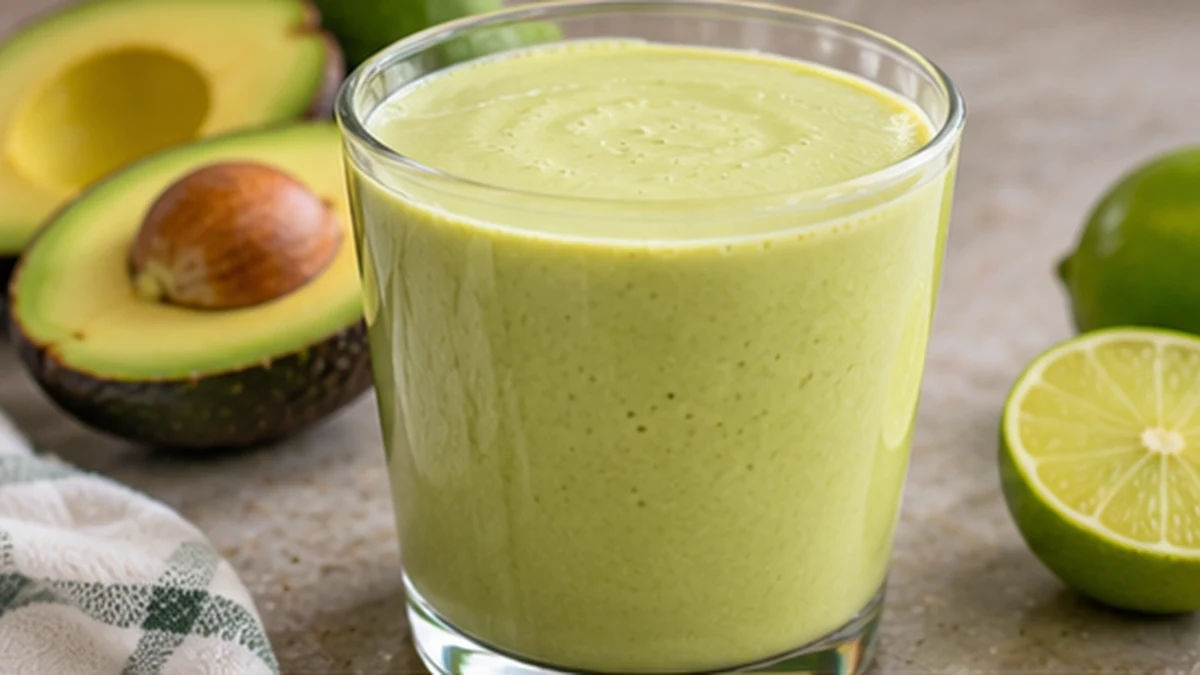
This savory coconut smoothie for weight gain is a creamy, unsweetened avocado and chickpea drink with coconut milk, tahini, and fresh lime. One generous serving provides approximately 480 calories, 13 grams of protein, and 14 grams of fiber, without banana, syrup, or added sugar. It takes about five minutes with ready-to-eat chickpeas. Think of a chilled, drinkable avocado hummus with a gentle coconut finish rather than a tropical fruit shake. If you prefer a sweeter start to the day, our dragon fruit smoothie bowl offers a different flavor profile.
The recipe is for adults looking for an energy-dense addition to their usual meals, especially if sweet shakes have become repetitive. It is not a treatment for unexplained weight loss, and a single drink cannot guarantee weight gain. The measured ingredients make it easier to adjust the portion and track what you are actually consuming. Everything goes into one blender, and the texture can be thinned without changing the calorie count.
Table of Contents
Why this savory coconut smoothie works
A good savory drink needs more than vegetables and water. If the goal is extra energy, a thin cucumber drink may not be substantial enough. This savory coconut smoothie gets its body from avocado and cooked chickpeas and its concentrated energy from coconut milk and sesame paste. Lime and a little salt keep the rich ingredients from tasting flat. For this savory coconut smoothie, no ice is necessary when the water and chickpeas are chilled.
Avocado: makes the drink creamy without needing banana or dairy.
Cooked chickpeas: add protein, carbohydrates and fiber while keeping the flavor mild.
Coconut milk and tahini: supply energy in a relatively small volume.
Lime and salt: balance richness with acidity and a distinctly savory finish.
The savory coconut smoothie belongs somewhere between a smoothie and a chilled soup. If you enjoy other blended savory foods, the ideas in our plant-based soup guide are a useful starting point for meals alongside this drink. Here, however, there is no cooking step and no broth to prepare.
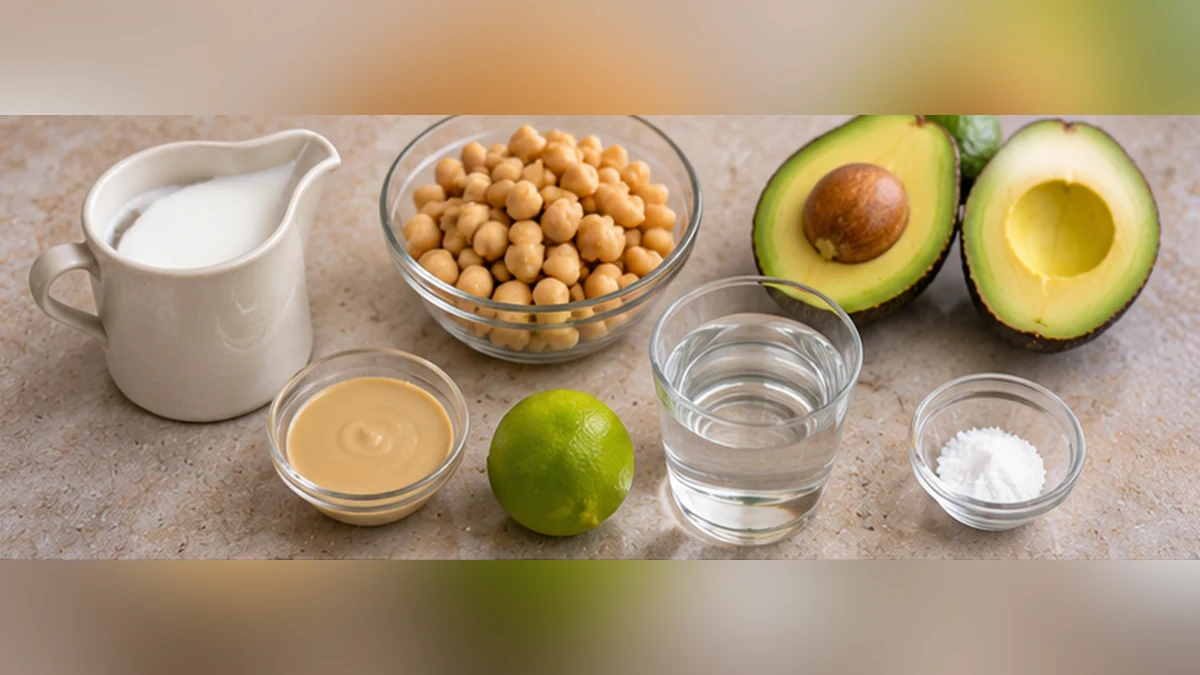
Savory coconut smoothie ingredients and exact measurements
1/2 cup (82 g) cooked unsalted chickpeas, drained and cooled
100 g ripe avocado flesh (about 2/3 cup cubed)
1/4 cup (60 mL) full-fat unsweetened canned coconut milk, stirred
1 tablespoon (15 g) unsalted tahini
1 tablespoon (15 mL) fresh lime juice
1/2 cup (120 mL) cold water, plus a little more if needed
1 small pinch fine salt (about 1/16 teaspoon; 0.4 g)
Choose coconut milk for the savory coconut smoothie
Use the unsweetened full-fat variety sold in cans for cooking. A refrigerated coconut beverage is much thinner and normally supplies fewer calories for the same volume. Sweetened cream of coconut is a different product altogether and would make the drink sweet. Full-fat canned coconut milk may separate during storage, so stir it until the thick and watery portions are evenly mixed before measuring. Measuring only the cream at the top will change both the nutrition and the thickness.
A quarter cup is enough to give the savory coconut smoothie a noticeable coconut flavor without making the entire glass taste like coconut cream. Check the label before calculating calories: brands and formulations vary. If your label uses a one-third-cup serving, multiply those values by three quarters to estimate the amount used here.
How to select the avocado and chickpeas
Choose an avocado that yields gently to pressure but is not mushy. Cut it open, remove the pit, and weigh the edible flesh rather than the whole fruit. Avocado sizes vary widely, so measuring 100 grams keeps the consistency much more predictable. Dark or damaged portions should be removed; do not use a spoiled fruit.
Chickpeas must already be cooked until soft. No-salt-added canned chickpeas are convenient: drain and rinse them well. Home-cooked chickpeas without salt are also suitable if they have been cooled safely. The nutrition estimate uses cooked unsalted chickpeas; canned versions may have a different moisture content and sodium value. Do not use uncooked dried chickpeas or dried chickpea flour in this no-cook recipe.
Tahini, lime, and seasoning
Tahini is a smooth sesame paste. Stir the jar first if the oil has risen to the surface. Choose a plain unsalted product instead of a seasoned tahini dressing. It adds a slightly nutty flavor and emulsifies well with avocado. The lime juice cuts through the fat; use freshly squeezed juice and remove any seeds. This pairing also suits savory sauces, such as the creamy preparations in our vegan Alfredo sauce recipe, although the flavor here is completely different.
The salt is intentionally modest. A pinch of fine salt is easier to disperse than coarse crystals. If your chickpeas or tahini are salted, start without the added salt and taste at the end. Do not rely on salt to hide bitter or rancid ingredients.
How to make a savory coconut smoothie
1. Prepare the blender and liquids
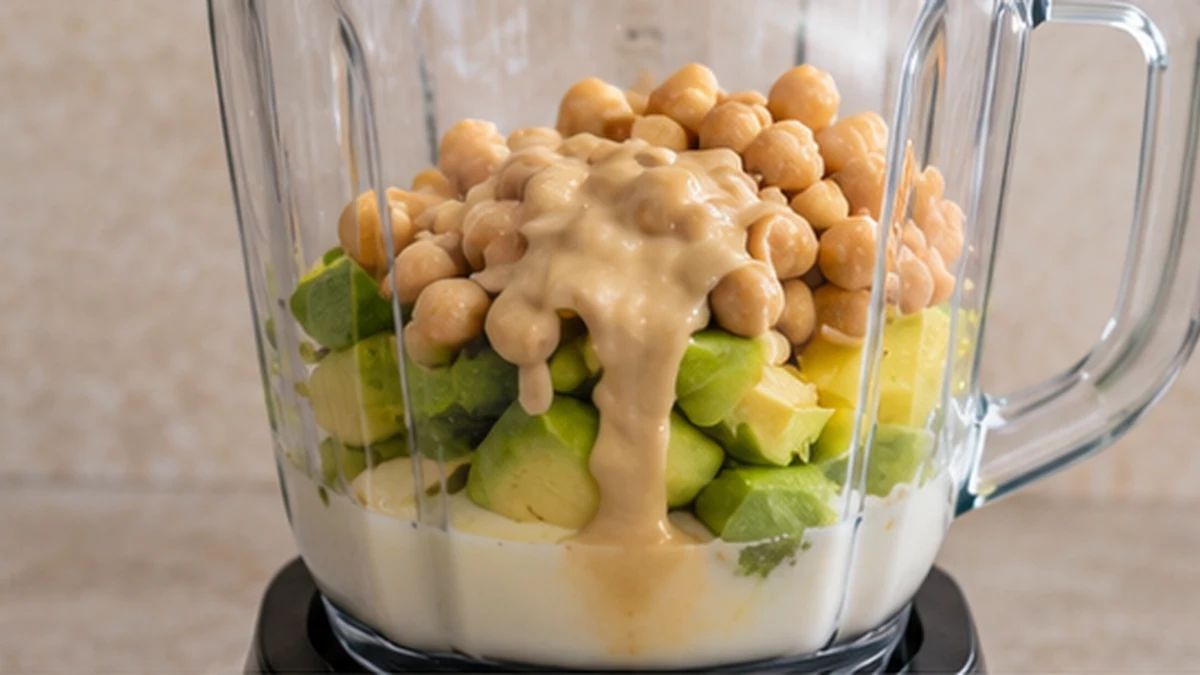
Wash the lime and avocado under running water before cutting. Drain and rinse the ready-to-eat chickpeas, then set out the measured ingredients. Add cold water and stirred coconut milk to a clean blender jar first. Starting with liquid helps the blades circulate the dense ingredients rather than trapping them at the bottom. A small personal blender may require a smaller jar or blending in two batches; follow its maximum-fill line.
2. Add the creamy ingredients
Add the avocado, cooked chickpeas, tahini, lime juice and the small pinch of salt. The order of the solids is not critical once the liquids are at the bottom. Scoop the tahini close to the center so it does not cling to the side. Secure the lid. If the avocado is particularly firm, cut it into smaller cubes before loading the blender.
3. Blend until completely smooth
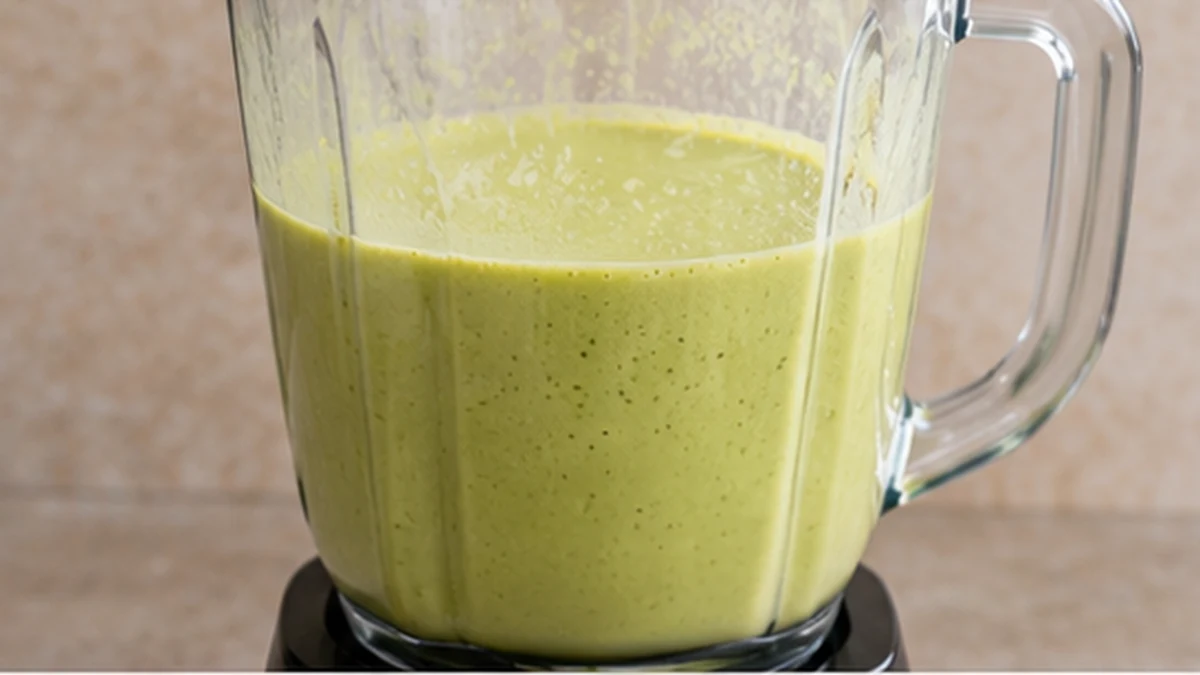
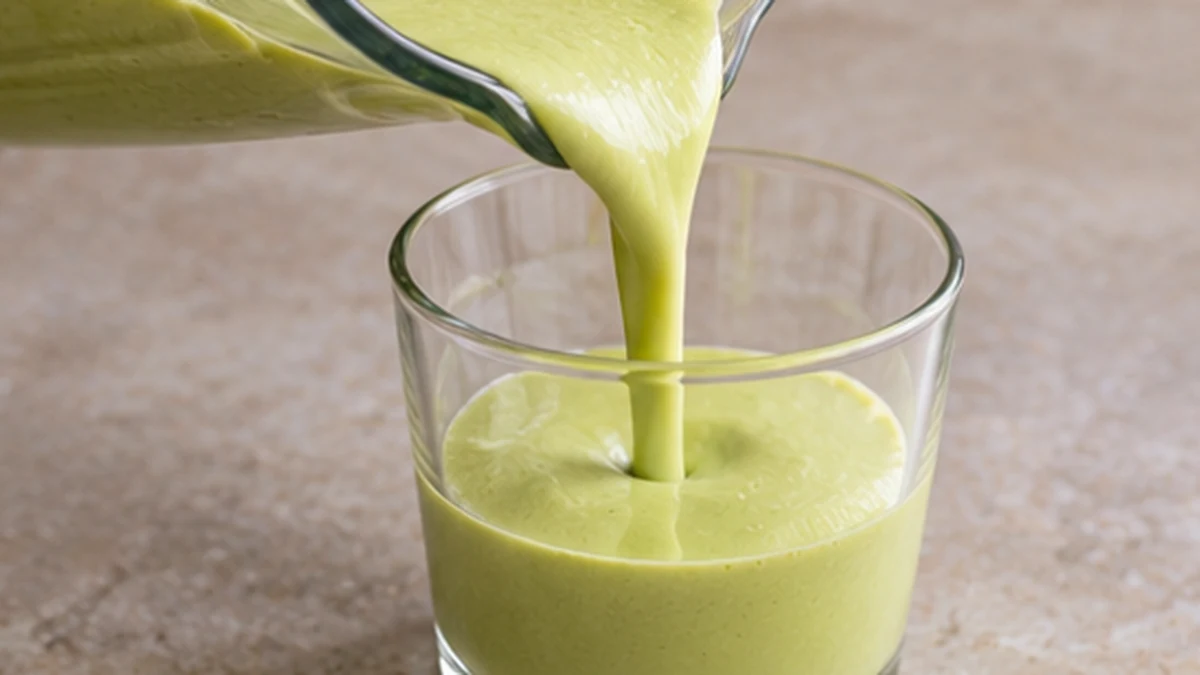
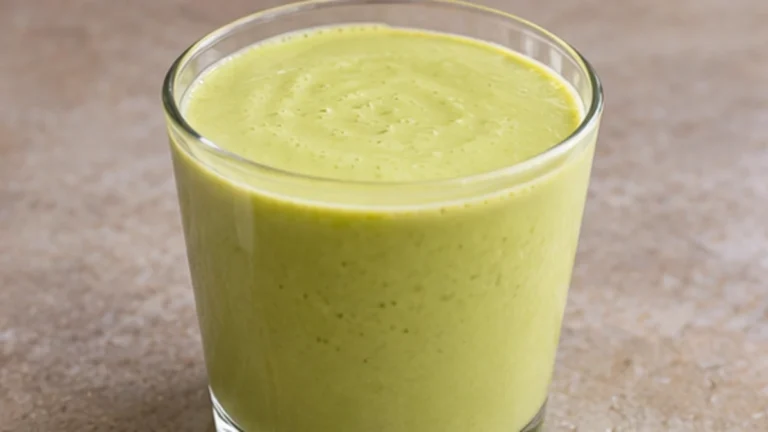
Start at low speed for about 10 seconds, then increase the speed and blend for 45 to 60 seconds. Stop the motor and scrape down the sides if needed. The savory coconut smoothie should look uniformly pale green, with no intact chickpeas or visible clumps of tahini. A few tiny flecks are normal; a sandy texture means it needs more blending or softer chickpeas. Never insert a utensil while the blender is running.
4. Adjust and serve
Taste a small spoonful. If the mixture is too thick to sip, add cold water one tablespoon at a time, then blend briefly. The target is a continuous ribbon when poured, not a stiff hummus-like mound. If it tastes overly rich, try a few extra drops of lime juice. Pour into a large glass and serve immediately. The recipe yields one large serving, roughly 12 to 14 fluid ounces depending on blending and dilution. A 16-ounce glass leaves enough room to pour comfortably.
A creamy, unsweetened blend of avocado, cooked chickpeas, canned coconut milk, tahini and lime. One substantial serving, approximately 480 calories.
Total Time:5 minutes
Yield:1 large smoothie
Ingredients
Scale
1/2 cup (82 g) cooked unsalted chickpeas, drained and cooled
100 g ripe avocado flesh (about 2/3 cup cubed)
1/4 cup (60 mL) full-fat unsweetened canned coconut milk, stirred
1 tablespoon (15 g) unsalted tahini
1 tablespoon (15 mL) fresh lime juice
1/2 cup (120 mL) cold water, plus a little more if needed
1 small pinch fine salt (about 1/16 teaspoon; 0.4 g)
Instructions
Wash the lime and avocado. Drain and rinse the cooked chickpeas. Stir the coconut milk and tahini until uniform; measure all ingredients.
Pour cold water and coconut milk into a clean blender. Add avocado, chickpeas, tahini, lime juice and salt.
Secure the lid. Blend on low for 10 seconds, then on high for 45–60 seconds, until smooth. Stop and scrape the sides if necessary.
Taste and add extra water a tablespoon at a time if needed. Blend briefly, pour into a glass and serve immediately.
Notes
Use fully cooked chickpeas, not dried or raw chickpeas.
Nutrition is estimated for one whole recipe using cooked unsalted chickpeas, 100 g avocado, 60 mL coconut milk (120 kcal per 80 mL), 15 g tahini, 15 mL lime juice and 0.4 g salt. Extra water has no calories. Labels and yield vary.
Contains sesame (tahini), coconut and chickpeas. Check ingredient labels for cross-contact.
Best fresh; refrigerate at 40°F or below and use within 24 hours for quality. Discard if left out more than two hours, or one hour above 90°F.
This is an energy-dense snack, not a complete meal replacement or a guarantee of weight gain.
Author:Adam Moretti
Prep Time:5 minutes
Cook Time:0 minutes
Category:Drink
Method:Blender / No-Cook
Cuisine:American
Diet:Vegan
Savory coconut smoothie calories and nutrition
The savory coconut smoothie provides about 480 calories per full recipe. These numbers are ingredient-based estimates, not laboratory measurements. The coconut milk example uses a representative unsweetened canned label with about 120 calories per one-third cup. The other foods use standard composition values for cooked chickpeas, raw avocado, plain tahini and lime juice. See the USDA FoodData Central database for food composition references and this USDA-sourced coconut milk label record for an example of how the packaged product is reported.
Avocado, 100 g: about 160 calories.
Cooked chickpeas, 82 g: about 135 calories.
Full-fat coconut milk, 60 mL: about 90 calories.
Tahini, 15 g: about 90 calories.
Lime juice, water, and salt: about 4 calories combined.
The estimated totals are 37 grams carbohydrate, 13 grams protein, 34 grams fat, 14 grams fiber, and about 6 grams total sugars. Saturated fat is approximately 12 grams. The sodium estimate assumes unsalted cooked chickpeas and tahini, the example coconut milk label, and 0.4 grams of added salt. Check the product labels if precise sodium or calorie intake matters. Extra water changes the volume but not the nutrient totals; extra tahini or avocado changes both.
Is this a high-protein smoothie?
Not particularly. Chickpeas and tahini provide useful protein, but much of the energy comes from fat. This savory coconut smoothie is designed as a calorie-containing drink rather than a concentrated protein supplement. If protein is your primary goal, browse the high-protein recipe collection and combine the drink with a suitable meal. An unsweetened soy beverage in place of part of the water can also contribute protein; the amount varies by brand and is not included in the base nutrition estimate.
A note about coconut and saturated fat
Full-fat coconut milk is convenient when extra calories are desired, but it contributes a substantial amount of saturated fat. The American Heart Association guidance on saturated fats favors an overall pattern that limits saturated fat and uses unsaturated fats in its place. Avocado and tahini contribute predominantly unsaturated fat. For frequent use, consider reducing the coconut milk and making up some energy with more tahini or avocado if that fits your dietary needs. This is a variation, not the nutrition shown on the recipe card.
How to use a savory coconut smoothie for weight gain
For adults who are trying to increase their weight, the useful feature of this recipe is its energy content, not any special fat-burning or muscle-building property. The NHS guidance on gradual weight gain suggests adding energy to an otherwise balanced eating pattern and using nourishing drinks between meals when helpful. A smoothie can contribute to that approach if it adds to the food you already eat rather than replacing an equally substantial meal.
You can drink the full serving of the savory coconut smoothie as an afternoon snack or divide it into two smaller portions. Half of the recipe provides roughly 240 calories. The fiber content is relatively high, which can make the drink filling. If that makes it hard to finish your regular meals, try a smaller portion instead of forcing the entire glass at once. People with individual dietary restrictions or digestive conditions may need a different recipe.
Keep regular meals varied. A lentil-based dinner, grains, vegetables, or other protein foods can complement the drink. For ideas beyond smoothies, our vegan dinner guide and vegetarian slow cooker meals offer different textures and ways to use legumes.
If you are losing weight without intending to, have persistent poor appetite, or cannot maintain your weight despite eating normally, consult a healthcare professional before relying on a calorie-rich drink. This recipe is not a complete meal replacement or a personalized nutrition plan. Weight changes depend on your overall intake, activity, health, and other factors.
Troubleshooting your savory coconut smoothie
The smoothie is too thick
Add cold water in one-tablespoon increments. This usually solves the problem without diluting the flavor much. Some blenders leave a pocket of thick mixture below the surface; stop and scrape it down before deciding how much extra liquid is necessary. If you want a soup-like consistency, add more water gradually and serve with a spoon instead of a straw.
The smoothie is gritty
Chickpeas with firm skins and underpowered blenders can leave particles. Make sure the beans are tender enough to crush between two fingers. Blend the liquid and chickpeas first if necessary, then add the remaining ingredients. For a particularly smooth version, remove the loose skins before blending. Straining is possible but removes some solids and makes the published nutrition estimate less representative.
The smoothie tastes bitter or too rich
Check the avocado and tahini separately. Fresh tahini may have a mild sesame bitterness, but rancid tahini or spoiled avocado should be discarded. A little extra lime can brighten a rich drink; adding water can soften a strong coconut flavor. Do not add sweetener automatically, since the point of this version is a savory alternative to sweet shakes.
Substitutions and flavor variations
The base savory coconut smoothie uses seven measured ingredients and contains no added garnish. If you want to customize the savory coconut smoothie, make only one or two changes initially so you can judge their effect on consistency. These options are not included in the base nutrition calculation or pictured as ingredients.
No tahini: try plain sunflower seed butter if appropriate for your allergies. Sesame is an allergen, and alternative products can also have cross-contact risks.
No chickpeas: try the same weight of soft cooked white beans. The flavor is mild, but protein, calories and texture will differ.
No lime: use an equal volume of lemon juice and adjust to taste.
More energy: an additional tablespoon of tahini contributes about 90 calories; it also thickens the mixture.
Herb version: blend in a small handful of cilantro or parsley for a greener, more soup-like drink.
If you enjoy savory plant-based meals that use cabbage or other vegetables, our vegan cabbage recipes can provide an alternative alongside a smoothie. The extra vegetables are not necessary in the drink itself, and adding a large volume of watery produce would change its calorie density.
Make-ahead, refrigeration, and serving
A freshly blended savory coconut smoothie is best because avocado can darken and the drink may thicken or separate as it sits. For advance preparation, measure the chickpeas, tahini and coconut milk separately and refrigerate them in clean covered containers. Cut the avocado just before blending. Follow the opened coconut milk package instructions for its remaining storage time.
If you need to save the finished savory coconut smoothie, refrigerate it promptly in a sealed container at 40°F (4°C) or colder. For best quality, drink it within 24 hours and stir or shake before serving. The FDA guidance on safe food storage advises refrigerating perishable food within two hours, or one hour in temperatures above 90°F (32°C). Discard the smoothie if it exceeds those limits; appearance alone cannot establish safety.
A cold insulated bag with ice packs is useful for transport. Freezing is possible, but the thawed avocado and coconut mixture may separate; thaw in the refrigerator and reblend before drinking. For a consistent texture and portion, preparing the drink fresh is simpler than freezing it.
Frequently asked questions
Can I make a savory coconut smoothie without banana?
Yes. This recipe is specifically designed without banana or any sweetener. Avocado and chickpeas supply the creamy texture, while lime and tahini give it a savory flavor.
Can coconut water replace coconut milk?
It can replace some liquid, but it is not an equivalent source of calories. Coconut water will produce a thinner, less rich drink. For the recipe as written, use canned coconut milk and plain cold water.
Is the recipe vegan and gluten-free?
The specified ingredients are plant-based and naturally free of gluten. Check the labels and preparation environment if you need to avoid gluten cross-contact or other allergens. Tahini contains sesame, and the recipe contains coconut and chickpeas.
Can I drink it every day?
That depends on your overall eating pattern and nutritional needs. The drink is relatively high in saturated fat and fiber, so it may not suit everyone as a daily addition. A dietitian can help determine suitable portions and alternatives if you are trying to gain weight for medical reasons.
How many calories are in half a serving?
About 240 calories, assuming you divide the blended recipe evenly. Additions such as more tahini or a different milk change the amount. Water alone does not add calories.
Can I make it with a regular blender?
Yes, as long as the chickpeas are soft and the jar is not overfilled. Begin with the liquid, blend in stages if needed, and add small amounts of water to help the mixture move freely.
Final tips for a creamy savory coconut smoothie
Use soft cooked chickpeas, weigh the avocado flesh, stir the coconut milk before measuring, and add cold water gradually. These four details matter more than buying a specialty blender. The result is a substantial, non-sweet drink that can complement ordinary meals. For the most accurate estimate of its calories and nutrients, use the same ingredient quantities and check your own product labels.
Reviewed recipe options
Make this recipe fit me
Choose one of seven popular diet options. NutriMatch will confirm whether the recipe already fits, show a reviewed adaptation when available, or recommend recipes that match your choice.
Please choose a diet first.
Already a reviewed match
This recipe already fits Dairy-Free.
No changes are needed based on its reviewed NutriMatch classification. Check the complete ingredients, product labels, and serving details for your own needs.
Recipe details, product formulas, and cross-contact information can change. Confirm current labels and use professional guidance when medically necessary.
Already a reviewed match
This recipe already fits Gluten-Free.
No changes are needed based on its reviewed NutriMatch classification. Check the complete ingredients, product labels, and serving details for your own needs.
Recipe details, product formulas, and cross-contact information can change. Confirm current labels and use professional guidance when medically necessary.
Not available for this recipe
This recipe cannot currently be made High Protein with a reviewed adaptation.
NutriMatch will not guess at substitutions. Try one of these recipes that is already reviewed for your choice.
Recipe details, product formulas, and cross-contact information can change. Confirm current labels and use professional guidance when medically necessary.
Not available for this recipe
This recipe cannot currently be made Keto with a reviewed adaptation.
NutriMatch will not guess at substitutions. Try one of these recipes that is already reviewed for your choice.
Recipe details, product formulas, and cross-contact information can change. Confirm current labels and use professional guidance when medically necessary.
Not available for this recipe
This recipe cannot currently be made Low Carb with a reviewed adaptation.
NutriMatch will not guess at substitutions. Try one of these recipes that is already reviewed for your choice.
Recipe details, product formulas, and cross-contact information can change. Confirm current labels and use professional guidance when medically necessary.
Already a reviewed match
This recipe already fits Vegan.
No changes are needed based on its reviewed NutriMatch classification. Check the complete ingredients, product labels, and serving details for your own needs.
Recipe details, product formulas, and cross-contact information can change. Confirm current labels and use professional guidance when medically necessary.
Already a reviewed match
This recipe already fits Vegetarian.
No changes are needed based on its reviewed NutriMatch classification. Check the complete ingredients, product labels, and serving details for your own needs.
Recipe details, product formulas, and cross-contact information can change. Confirm current labels and use professional guidance when medically necessary.