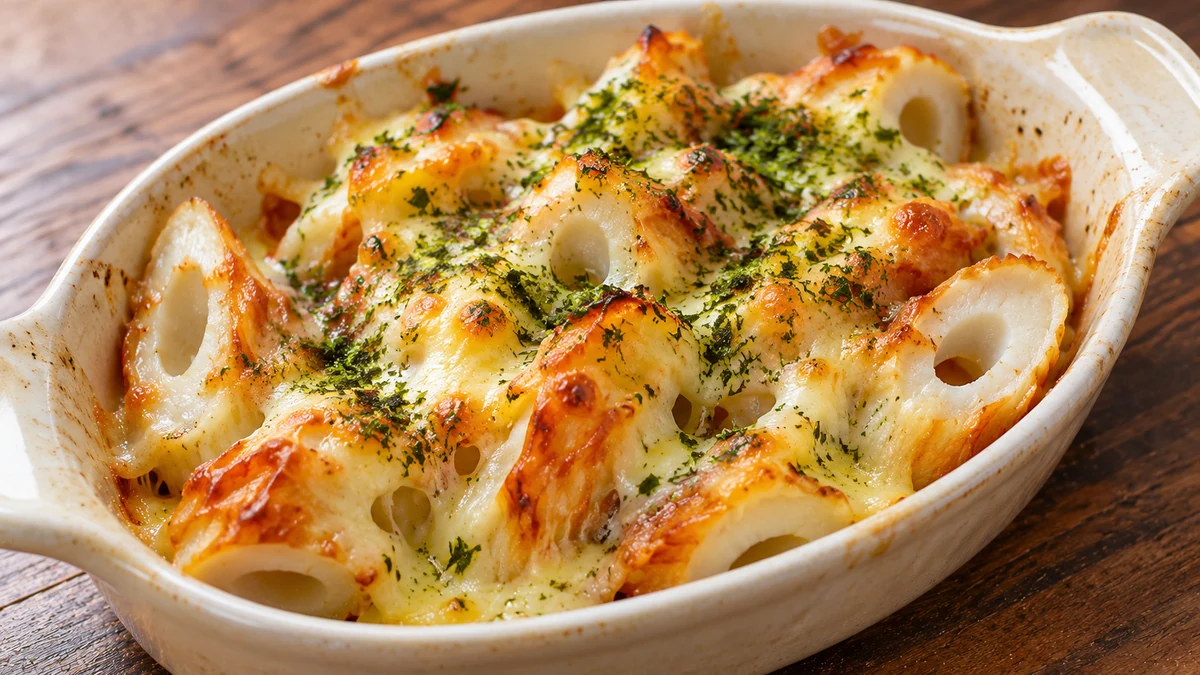
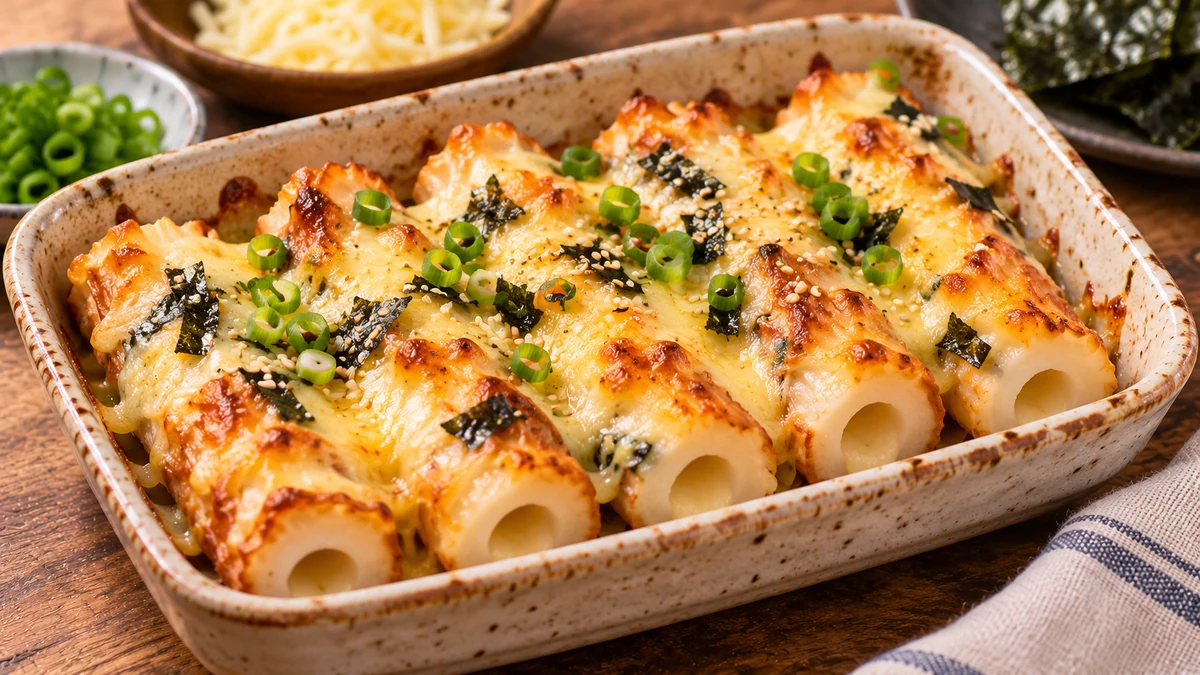
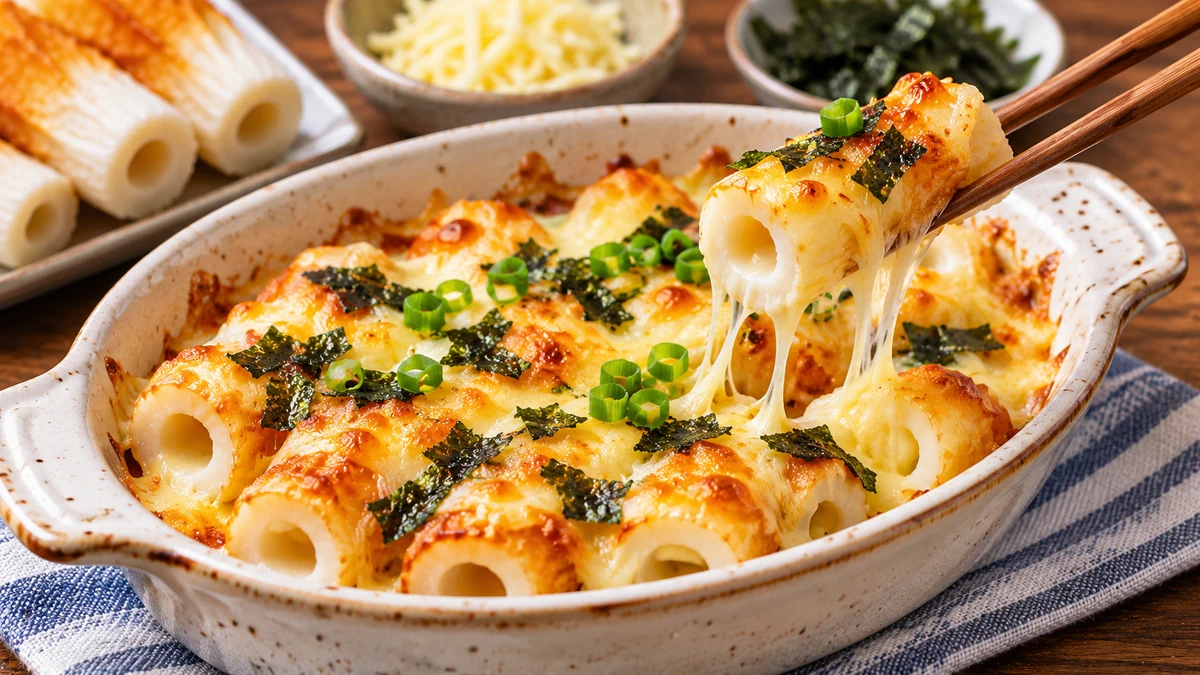
Chikuwa cheese gratin is an easy Japanese-inspired snack made with hollow fish-cake tubes, a little Japanese mayonnaise, fragrant aonori seaweed, and a blanket of melted cheese. It takes about 22 minutes from prep to serving and needs no pasta, cream sauce, or deep-frying. The chikuwa stays pleasantly springy while the cheese bubbles and turns golden on top.
This oven version uses five chikuwa tubes (about 160 g), 1 tablespoon mayonnaise, 2 teaspoons aonori, and 1/2 cup shredded mozzarella for two generous snack servings. You can bake the tubes whole for a dramatic, cheese-filled presentation, then cut them into bite-sized pieces for the table. The one ingredient worth shopping for specifically is chikuwa; an ordinary hot dog or imitation crab stick will not behave the same way.
Table of Contents
What Is Chikuwa Cheese Gratin?
Kikkoman’s chikuwa glossary describes chikuwa as a Japanese tube-shaped fish cake made by shaping seasoned fish paste around a skewer and steaming or roasting it. The center has an opening, the outside is lightly browned, and the bite is springy rather than flaky like a fish fillet. The hole makes it easy to tuck in cheese or other fillings.
In this chikuwa cheese gratin recipe, the term gratin describes the golden baked cheese topping, not a French-style potato casserole or flour-thickened béchamel. A light mayonnaise-and-aonori layer helps the cheese cling to the fish cake. Aonori is powdered or finely flaked green seaweed; it tastes briny and savory, not sharply fishy. Toasted sesame seeds and sliced scallions are optional finishing touches, not hidden ingredients required to make the dish work.
Why Chikuwa Cheese Gratin Is Trending
The November 2026 social-recipe rankings include a chikuwa, seaweed, and cheese preparation from a Japanese recipe publisher, with about 1.5 million tracked views during the reporting snapshot. That makes it a current social-video topic, but it does not establish American Google search volume or mean the technique was just invented. Similar toaster-oven chikuwa and aonori recipes existed before this wave; see this older Kurashiru fish-cake recipe for context.
Chikuwa Cheese Gratin Ingredients
Five ready-to-eat chikuwa tubes (about 5.6 oz / 160 g): look for refrigerated or frozen Japanese tube-shaped fish cakes. Thaw according to the label and check whether they require cooking before serving.
1 tablespoon (15 g) Japanese-style mayonnaise: gives the surface a thin, savory coating. Regular mayonnaise also works, though the tang may differ.
2 teaspoons aonori (about 2 g), divided: one teaspoon for the mayonnaise coating and another to finish the gratin after baking.
1/2 cup (56 g) shredded low-moisture, part-skim mozzarella: melts into strands without making the baking dish soupy. A mild melting cheese blend is another option.
1 tablespoon finely sliced scallions, optional: adds freshness after baking.
1 teaspoon toasted sesame seeds, optional: adds a little crunch; omit if sesame is an allergen.
Where to Buy Chikuwa in the United States
Look in the frozen fish-cake section of a Japanese market or a larger Asian grocery store, sometimes near oden ingredients, kamaboko, or surimi products. Packages may say chikuwa, grilled fish cake, or tube fish cake. Choose actual hollow tubes rather than flat fish cakes. A 160 g package is convenient here, but use the scale to measure the amount if your package contains larger or smaller sticks.
Read the ingredient and allergen panels each time you buy a different brand. Fish is inherent to chikuwa; some versions also include wheat starch, egg whites, soy protein, or sesame. The Kanetetsu product information illustrates how allergens can appear in a standard commercial chikuwa. This dish also includes dairy from mozzarella and egg in typical mayonnaise.
Aonori vs. Nori: Can You Substitute?
Aonori is usually sold as green seaweed flakes or powder, often used on okonomiyaki and fries. It disperses through mayonnaise evenly. If you only have sheets of roasted nori, crumble them very finely and use about 1 tablespoon loosely packed; the flavor is related, but the look will be darker and patchier. Do not mistake nori sheets for kombu, which is thick kelp used mainly for stock. Dried parsley changes the flavor and is not an equivalent seaweed substitute.
A 22-minute Japanese-inspired baked fish-cake snack with melty mozzarella, mayonnaise and savory aonori.
Total Time:22 minutes
Yield:2 snack servings
Ingredients
Scale
5 chikuwa fish-cake tubes (about 5.6 ounces / 160 g), thawed and ready to heat per package directions
1 tablespoon (15 g) Japanese-style mayonnaise
2 teaspoons (about 2 g) aonori green seaweed flakes, divided
1/2 cup (56 g) shredded low-moisture part-skim mozzarella cheese
1 tablespoon thinly sliced scallions, optional for garnish
1 teaspoon toasted sesame seeds, optional for garnish
Instructions
Preheat oven to 425°F (220°C), with a rack in the upper-middle position. Use a small nonstick or oven-safe ceramic baking dish. Thaw and prepare the chikuwa according to its package and pat dry.
Cut a shallow slit lengthwise along the top of each chikuwa tube without slicing it fully in half. Place the tubes snugly in the baking dish, slit-side up.
Mix the mayonnaise with 1 teaspoon of aonori. Spread a thin layer into the slits and over the tops of the chikuwa.
Scatter the shredded mozzarella evenly over the fish cakes, pushing some into the openings. Bake for about 8 to 10 minutes, until the cheese bubbles and has a few golden patches; follow the product cooking instructions if it is not ready to heat.
Rest for 2 minutes. Sprinkle with the remaining 1 teaspoon aonori and optional scallions and sesame seeds. Cut into halves or diagonal pieces if desired; serve warm.
Notes
Use actual hollow chikuwa tubes; imitation crab sticks will cook differently.
The oven timing assumes fully cooked or ready-to-heat chikuwa. If a package requires cooking, follow its directions instead.
Pat thawed fish cakes dry and use low-moisture cheese to keep the gratin from becoming watery.
Fish, dairy and usually egg are present; fish-cake brands can also contain wheat, soy or sesame. This is not automatically gluten free.
Nutrition is estimated for one of two portions using a representative 160 g chikuwa product; sodium and calories vary by brand.
Refrigerate leftovers promptly and reheat leftovers to 165°F; the best texture is immediately after baking.
Author:Adam Moretti
Prep Time:10 minutes
Resting:2 minutes
Cook Time:10 minutes
Category:Snack
Method:Oven
Cuisine:Japanese-inspired
Diet:Pescatarian
How to Make Chikuwa Cheese Gratin
1. Prepare the Baking Dish and Fish Cakes
Set a rack in the upper-middle position and preheat the oven to 425°F (220°C). Use a small nonstick or oven-safe ceramic baking dish. Check that the chikuwa is fully thawed and ready to heat according to its package. Blot visible surface moisture. Make a shallow lengthwise slit in each tube so the top can open slightly without cutting the tube all the way through.
2. Mix the Aonori Coating
Stir 1 tablespoon Japanese mayonnaise and 1 teaspoon aonori in a small bowl. Spread a little of this mixture along the slit and upper surface of each fish-cake tube. Keep the layer thin: a heavy coating leaves oil pooling at the bottom, slows browning, and can overwhelm the mild fish-cake flavor.
3. Add Cheese and Bake
Arrange the five prepared tubes snugly, slit-side up, in the dish. Scatter 1/2 cup shredded mozzarella evenly over and into the openings. Bake for approximately 8 to 10 minutes, until the cheese is melted, actively bubbling, and showing a few golden patches. Check earlier in a powerful convection oven. This timing assumes a fully cooked, ready-to-heat chikuwa product; follow the package cooking directions if yours is different.
4. Rest, Finish, and Serve
Rest for 2 minutes, then scatter over the remaining teaspoon of aonori. If using the optional scallions and sesame seeds, add them now. Cut the tubes into halves or diagonal bites with a clean knife, or lift out the whole tubes while the cheese is stretchy. Serve warm. The dish is richest right after baking; leaving it on a hot tray for a long time can make the edges chewy.
How to Tell When It Is Ready
Cheese: completely melted with small golden islands, not a dried-out brown crust.
Fish cake: hot through and still bouncy, not shriveled or splitting apart.
Bottom of dish: a little bubbling moisture is fine, but a deep oily pool indicates too much mayonnaise or cheese.
Seaweed: visible green flecks that smell pleasantly savory, not burnt or bitter.
These are texture and browning cues, not a food-safety substitute. Pre-cooked ready-to-eat chikuwa usually only needs reheating as directed by its manufacturer. If the product is sold uncooked, follow its specific directions and a suitable safe internal-temperature standard for fish. For leftovers, FoodSafety.gov recommends reheating to 165°F.
Chikuwa Cheese Gratin Troubleshooting
Why Is My Gratin Watery?
The likely causes are a wet or partly frozen fish cake, fresh mozzarella with high moisture, or too much mayonnaise. Thaw the tubes safely, pat them dry, and choose low-moisture shredded mozzarella. Do not add a splash of water or broth to the baking dish. If liquid remains after baking, let the dish rest briefly and lift the pieces out with tongs rather than stirring the watery sauce back over them.
Why Does the Cheese Brown Before the Fish Cake Is Hot?
Your oven rack may be too close to the heating element, or the cheese layer may be too thin. Move the dish down one level and cover loosely with foil for a few minutes if necessary. Frozen chikuwa should be thawed by the package method before it goes into this short-bake recipe. A thermometer or the manufacturer’s heating instructions provide better guidance than the surface color alone.
Why Did the Chikuwa Turn Rubbery?
Chikuwa is naturally elastic, but overbaking can make the surface dense and tough. Do not treat it like a raw fish fillet that needs prolonged roasting. Once the pre-cooked product is hot and the topping melts, remove the dish promptly. A shallow, close-fitting dish also keeps the pieces from drying out as quickly as widely spaced pieces on a large sheet pan.
Why Is the Seaweed Flavor Too Strong?
Aonori brands can vary in intensity. Begin with half the amount if you are unsure, and add more after baking. Mixing only one teaspoon into the mayonnaise prevents isolated piles of powder from scorching. Ordinary sheet nori is best chopped finely and scattered after heating rather than baked in thick strips under the cheese.
Variations and Practical Substitutions
Spicy finish: drizzle a small amount of chili crisp after baking. Check its oil and sodium content; it is not part of the nutrition estimate.
Parmesan topping: replace one-quarter of the mozzarella with a tablespoon of finely grated Parmesan for a saltier, sharper crust; reduce other salty toppings.
No Japanese mayonnaise: use ordinary mayonnaise at the same tablespoon measure. The finished snack may be slightly tangier.
Nori-sheet version: finely shred roasted nori and add it after baking instead of aonori. Do not use unprocessed kelp.
Cheese-stuffed version: press a few mozzarella shreds into the tube openings before adding the rest to the top. Keep total cheese at 56 g.
Toaster-oven version: use an oven-safe small tray, watch closely for burning, and follow your appliance’s safety guidance because the food sits near the heating element.
If you cannot find chikuwa, another cooked fish cake can still make a tasty cheesy snack, but it will not have the same hollow center or bouncy bite. Use a name that reflects the substitute instead of presenting an imitation-crab version as authentic chikuwa. For a completely different Japanese-inspired, meat-free texture experiment, see our frozen konnyaku beef tongue-style recipe.
How to Serve Chikuwa Cheese Gratin
Serve chikuwa cheese gratin as a warm starter with cucumber spears, sliced radishes, or a simple vinegar-dressed salad. The rich cheese tastes better next to something crisp and acidic. For sharing, cut each tube into two or three pieces so diners can pick up a small portion without dragging a long strand of cheese across the platter. Set the baking dish on a trivet and warn guests it will stay very hot.
This is not a keto or gluten-free recipe by default: chikuwa often contains added starch, and some brands use wheat. If you are assembling a mixed appetizer spread, keep diet-specific offerings separate and consider our keto appetizers for independently verified low-carb options. For a heartier smoked party bite, smoked dragon eggs use a completely different meat-and-egg method.
Storage, Reheating, and Food Safety
Chikuwa cheese gratin contains a perishable fish product, even though the chikuwa is processed and often sold already cooked. Store it exactly as the package instructs. Refrigerate leftover gratin in a covered, shallow container at 40°F or below within two hours of baking (one hour when the surrounding temperature is over 90°F). Plan to eat leftovers within 3 to 4 days; when in doubt about the fish-cake package date or prior thawing, use the stricter package instructions.
Reheat leftovers in a 350°F oven until the center reaches 165°F; the exact minutes vary with portion thickness and your dish. A microwave is possible but makes the cheese and fish cake softer. Freezing the finished gratin is not ideal, because the cheese may separate and the chikuwa becomes more rubbery after thawing. For the best texture, prepare and bake a fresh small batch rather than storing several ready-made trays.
Nutrition and Allergen Notes
One of two chikuwa cheese gratin servings is estimated at approximately 230 calories, 16 g protein, 14 g carbohydrate, 12 g fat, and 920 mg sodium, including the small optional sesame and scallion garnish. The estimate uses 160 g chikuwa at roughly 110 calories and 870 mg sodium per 100 g, plus 15 g mayonnaise, 56 g part-skim mozzarella, 2 g aonori, and the listed garnishes. A published nutrition-label example for one chikuwa brand illustrates those product values; actual brands can be different.
The high sodium estimate is not a typo: seasoned fish cakes and cheese can contribute salt before any table seasoning. Check your package’s label and recalculate if precise nutrition matters. The recipe contains fish, milk, and usually egg from mayonnaise. Chikuwa may also contain wheat, soy, or sesame, depending on the manufacturer. Never assume it is gluten free solely because it is made primarily with fish; our gluten-free recipe guide explains why checking packaged ingredients and cross-contact matters.
Chikuwa Cheese Gratin FAQs
Is chikuwa already cooked when you buy it?
Many commercially sold Japanese chikuwa products are steamed or roasted during manufacture and sold ready to heat. Some frozen products may have different preparation requirements. Read the package, not just the recipe title, before using a short oven method. If your product requires full cooking, follow the manufacturer’s directions.
Can I use American mozzarella instead of Japanese cheese?
Yes. Low-moisture, part-skim mozzarella is a practical U.S. grocery-store choice because it melts well without releasing too much liquid. A mild pre-shredded cheese blend can work too, though some packaged shreds melt less smoothly. Use the same measured weight if you want the same yield.
Is chikuwa cheese gratin gluten free?
Not automatically. The fish cake may contain wheat starch or other wheat-derived ingredients, even when the topping has no flour. Only call your particular version gluten free after checking each packaged ingredient and preventing cross-contact. This article is not labeled gluten free for that reason.
Can I make chikuwa cheese gratin in an air fryer?
A small oven-safe pan can work in an air fryer, but its strong moving heat can brown cheese much faster. Start at a lower setting, around 375°F, check after 4 minutes, and follow the chikuwa package directions. Avoid loose seaweed flakes in the basket where they could blow into the heating element.
Can I prepare it ahead of time?
You can thaw and dry the chikuwa according to package directions, measure the cheese, and combine mayonnaise with the first teaspoon of aonori in advance. Refrigerate them separately. Assemble just before baking so the fish cake does not sit under a wet topping for hours. Serve shortly after baking for the best cheese pull.
Final Tips
Choose real hollow chikuwa tubes, check the package instructions, pat them dry, and keep the mayonnaise layer light. Bake just until the cheese melts and browns, then finish with the remaining aonori after the dish comes out. These details make chikuwa cheese gratin a quick, practical Japanese-inspired snack with a clear ingredient list and no unnecessary cream sauce.
Reviewed recipe options
Make this recipe fit me
Choose one of seven popular diet options. NutriMatch will confirm whether the recipe already fits, show a reviewed adaptation when available, or recommend recipes that match your choice.
Please choose a diet first.
Not available for this recipe
This recipe cannot currently be made Dairy-Free with a reviewed adaptation.
NutriMatch will not guess at substitutions. Try one of these recipes that is already reviewed for your choice.
Recipe details, product formulas, and cross-contact information can change. Confirm current labels and use professional guidance when medically necessary.
Not available for this recipe
This recipe cannot currently be made Gluten-Free with a reviewed adaptation.
NutriMatch will not guess at substitutions. Try one of these recipes that is already reviewed for your choice.
Recipe details, product formulas, and cross-contact information can change. Confirm current labels and use professional guidance when medically necessary.
Not available for this recipe
This recipe cannot currently be made High Protein with a reviewed adaptation.
NutriMatch will not guess at substitutions. Try one of these recipes that is already reviewed for your choice.
Recipe details, product formulas, and cross-contact information can change. Confirm current labels and use professional guidance when medically necessary.
Not available for this recipe
This recipe cannot currently be made Keto with a reviewed adaptation.
NutriMatch will not guess at substitutions. Try one of these recipes that is already reviewed for your choice.
Recipe details, product formulas, and cross-contact information can change. Confirm current labels and use professional guidance when medically necessary.
Not available for this recipe
This recipe cannot currently be made Low Carb with a reviewed adaptation.
NutriMatch will not guess at substitutions. Try one of these recipes that is already reviewed for your choice.
Recipe details, product formulas, and cross-contact information can change. Confirm current labels and use professional guidance when medically necessary.
Not available for this recipe
This recipe cannot currently be made Vegan with a reviewed adaptation.
NutriMatch will not guess at substitutions. Try one of these recipes that is already reviewed for your choice.
Recipe details, product formulas, and cross-contact information can change. Confirm current labels and use professional guidance when medically necessary.
Not available for this recipe
This recipe cannot currently be made Vegetarian with a reviewed adaptation.
NutriMatch will not guess at substitutions. Try one of these recipes that is already reviewed for your choice.
Recipe details, product formulas, and cross-contact information can change. Confirm current labels and use professional guidance when medically necessary.