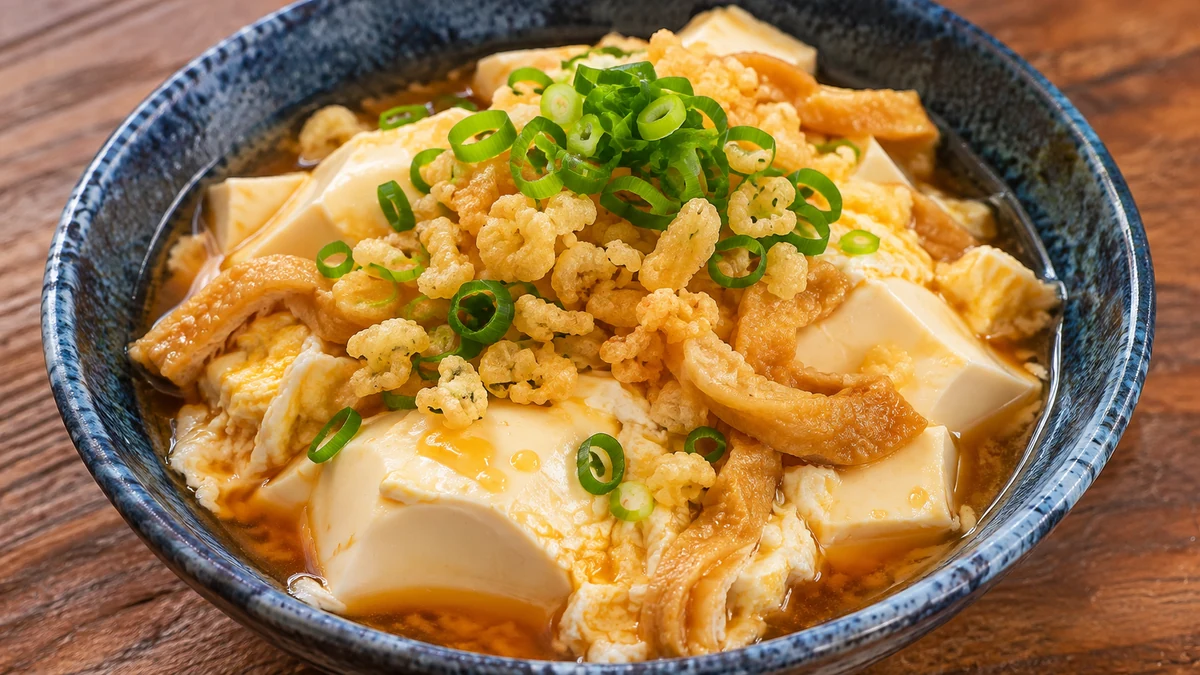
Tanuki tofu recipe is a quick Japanese-inspired bowl of delicate, warm tofu in a lightly sweet soy broth, finished with crunchy tempura bits (tenkasu), scallions, and cooked egg. Unlike crispy pan-fried tofu, the tofu itself remains silky. The contrast comes from adding the fried tempura crumbs right before serving. This version makes two satisfying small bowls in about 22 minutes.
This tanuki tofu recipe uses a short list of ingredients and one covered skillet. A little aburaage (thin Japanese fried-tofu pouch) brings a chewy, savory layer, while soft tofu takes on the seasoning without needing a long simmer. You can serve the bowls as a substantial side or spoon them over freshly cooked rice for a more filling meal; rice is not included in the nutrition estimate below.
A Japanese social-video trend tracker recorded a Nov. 10, 2026 tanuki tofu clip with roughly 722,000 views. The style of tofu topped with tenkasu, however, long predates that video; for instance, a Japanese tanuki egg tofu preparation published in 2020 used tofu, egg, seasoned sauce, tempura bits, and scallions. This article is our independent U.S.-kitchen adaptation, not a claim to reproduce the creator’s exact recipe.
Table of Contents
What Is Tanuki Tofu?
In Japanese food names, tanuki often signals a topping of tenkasu, also sold as agedama: small, crispy pieces of fried tempura batter. They provide richness and crunch without requiring you to batter or deep-fry the tofu itself. The related dish tanuki udon follows the same naming idea, swapping the main ingredient from tofu to noodles.
You may see chilled tanuki tofu, warm tofu with a soy-based sauce, or a tofu-and-egg bowl. There is no single universal version. One Japanese tofu rice-bowl recipe simmers firm tofu in diluted noodle sauce and adds tempura crumbs at the end. Our recipe uses silken tofu, a quick soy-and-sugar broth, and fully cooked eggs. The aburaage is a nod to the ingredients listed in the recent viral clip, while the tenkasu supplies the signature contrast.
Why This Tanuki Tofu Recipe Works
Silken tofu stays tender. Gentle heat warms it through without turning it rubbery or making it fall apart.
Aburaage adds texture. Thin strips absorb the sweet-salty broth and give each spoonful a second tofu texture.
Fully cooked eggs make it more substantial. Each bowl gets one egg, cooked until the white and yolk are set.
Tenkasu is added last. It stays crunchy on the surface rather than turning soggy in the simmering liquid.
The base needs no specialty bottled sauce. Water, reduced-sodium soy sauce, and a little sugar stand in for a quick, accessible seasoning liquid.
In this tanuki tofu recipe, the key is temperature, not force. Keep the broth at a gentle simmer after adding tofu, then cook the eggs covered. A hard boil can shred soft tofu into tiny pieces and reduce the liquid too quickly. You want recognizable scoops of tofu surrounded by a shallow pool of sauce, not a rapidly bubbling soup.
Ingredients for Warm Tanuki Tofu
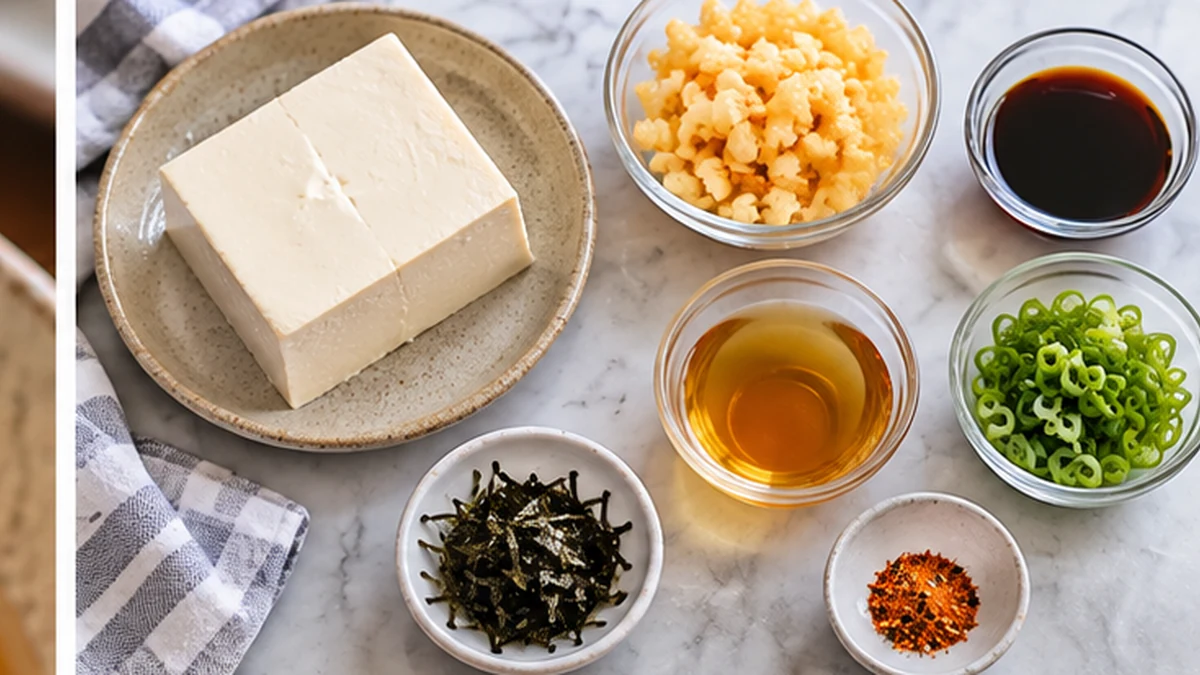
For this tanuki tofu recipe, the photo shows the central ingredients and optional nori/chili garnishes. Eggs and aburaage are in the measured recipe card even though they are not visible in this cropped ingredient photo. The amounts below yield two bowls; choose plain products without fish-based flavoring if you want the vegetarian version described here.
Silken tofu — 1 package (14 oz / 396 g): A soft or silken style gives the characteristic spoonable texture. Drain gently; do not press it like firm tofu.
Aburaage — 2 small sheets (about 1.4 oz / 40 g): Thin fried tofu pouches add a pleasant chew. Look for them refrigerated or frozen at Asian grocery stores, and check the label for added seasonings.
Large eggs — 2: One for each portion. This recipe cooks them fully rather than leaving the yolks raw.
Reduced-sodium soy sauce — 1 tablespoon: Adjust only after the liquid has warmed because aburaage and tenkasu can also be salty.
Water — 3/4 cup (180 ml): Enough to warm tofu and gently set the eggs in a small covered pan.
Granulated sugar — 1 teaspoon: Balances the soy rather than making the bowl sweet.
Plain tenkasu/agedama — 3 tablespoons (about 20 g): Tempura batter bits are the essential crunchy topping. Check the label; many contain wheat and some contain egg or fish-derived seasonings.
Scallions — 2: Thinly slice the green and white portions for a fresh finish.
Optional: a pinch of shichimi togarashi (Japanese seven-spice) or thin nori strips. They are for garnishing only and are not included in the nutrition calculation.
What If I Cannot Find Aburaage or Tenkasu?
Aburaage is useful but optional in a tanuki tofu recipe. If you cannot find it, add another 3 to 4 ounces of tofu or simply make the recipe with one texture of tofu; the ingredient totals and nutrition will change. Avoid substituting raw, unprepared bean curd skin without checking its cooking instructions, because it behaves differently from ready-to-eat fried-tofu pouches.
Tenkasu is much more important to the identity of the dish. Asian markets sometimes stock it near tempura mixes or Japanese noodles. As an emergency texture substitute, lightly toast a tablespoon or two of plain panko in a dry skillet until golden. It will be tasty but is a variation, not authentic agedama. Do not add the panko until the moment of serving.
How to Make Tanuki Tofu Step by Step
To make this tanuki tofu recipe, use a small nonstick or well-seasoned skillet with a lid, about 8 to 10 inches wide. A wide pan needs more liquid to keep the tofu partly immersed, while a very deep pot makes it harder to divide the egg and tofu evenly. The actual time can vary by the pan, starting temperature of the tofu, and size of the eggs.
1. Prepare the tofu and toppings. Open and gently drain the tofu. Slice the aburaage into 1/2-inch-wide strips and the scallions into thin rings. Keep the tenkasu dry in a separate bowl.
2. Season the broth. In the covered skillet, combine the 3/4 cup water, 1 tablespoon reduced-sodium soy sauce, and 1 teaspoon sugar. Bring to a gentle simmer over medium heat, stirring to dissolve the sugar.
3. Warm the tofu. Carefully slide the block into the liquid, then use a large spoon to divide it into 6 to 8 generous pieces. Add the aburaage strips around it. Simmer, uncovered, for 3 to 4 minutes over medium-low heat without vigorous stirring.
4. Add the eggs. Make two open spaces near the center and crack one egg into each. Cover and cook gently for approximately 6 to 8 minutes, until the whites and yolks are firm. For egg-containing dishes, the FDA recommends a safe internal temperature of 160°F (71°C). Avoid serving raw yolks in this version.
5. Divide and finish. Spoon half the tofu, aburaage, egg, and broth into each warm bowl. Scatter the measured tenkasu and scallions on top immediately before serving. Add optional shichimi or nori only if using.
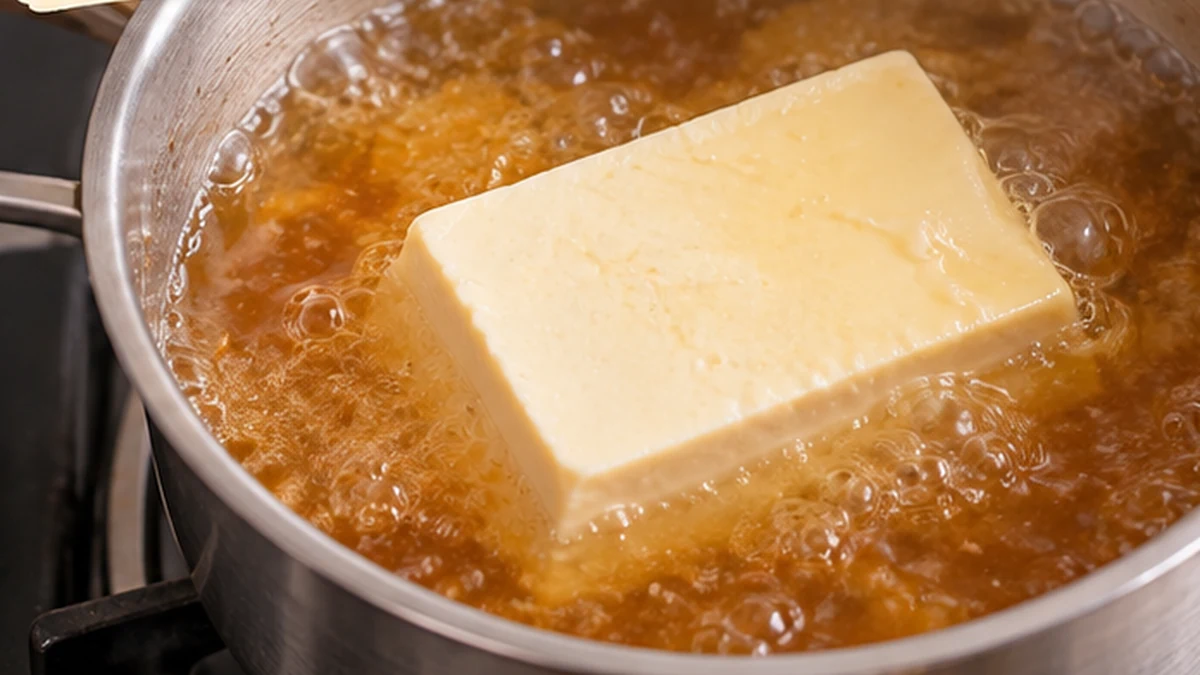
The process image shows the very beginning of the simmer, when the tofu is being warmed in seasoned liquid; the aburaage and eggs are added and cooked as explained in the numbered steps. The final golden topping belongs on the plated bowl, not in the pan while it boils.
Tanuki Tofu Recipe Card
For this tanuki tofu recipe, use the measurements in the card as the master version. The broth is deliberately shallow; if the pan is larger than 10 inches and the liquid evaporates too quickly, add warm water 1 tablespoon at a time. The goal is to warm the tofu and cook the egg thoroughly without washing out the seasoning.
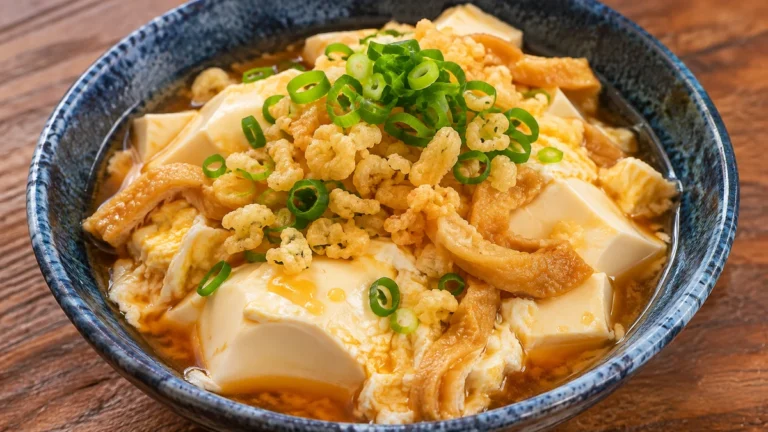
Two warm bowls of silken Japanese-style tofu, aburaage, fully cooked eggs, and a light sweet-soy broth. Topped just before serving with crisp tenkasu and scallions.
2 small aburaage fried-tofu sheets (about 1.4 oz / 40 g), sliced into strips
2 large eggs
3/4 cup (180 ml) water
1 tablespoon reduced-sodium soy sauce
1 teaspoon granulated sugar
3 tablespoons plain tenkasu/agedama (about 20 g), for topping
2 scallions, finely sliced
Optional garnish: a small pinch of shichimi togarashi and/or thin nori strips (not included in nutrition estimate)
Instructions
Prepare all components: carefully drain the silken tofu; slice the aburaage into 1/2-inch strips and the scallions into rings. Keep the tenkasu dry and separate.
In a covered 8- to 10-inch skillet or shallow saucepan, stir together water, reduced-sodium soy sauce, and sugar. Bring to a gentle simmer over medium heat.
Slide the block of tofu into the pan and use a large spoon to divide it gently into 6 to 8 substantial pieces. Add the aburaage around the pieces. Reduce heat to medium-low and simmer gently, uncovered, for 3 to 4 minutes.
Make two spaces in the simmering pan and crack in one egg per space. Cover and cook about 6 to 8 minutes, or until both the whites and yolks are firm and the egg dish reaches 160°F (71°C). Avoid a hard boil.
Divide tofu, aburaage, cooked eggs, and broth evenly between two warm bowls. Sprinkle each with half the tenkasu and sliced scallions immediately before eating. Add optional nori or shichimi if desired.
Notes
The featured version is vegetarian only when the packaged aburaage, tempura crumbs, and sauces contain no fish-derived seasonings. It contains soy and eggs, and most brands of soy sauce or tenkasu contain wheat.
Keep tenkasu separate until serving; it will lose its crunch in hot broth. Tofu itself should remain soft, not crispy.
Rice is not included in the nutrition estimate. Serve each bowl over a small amount of cooked rice if you want a larger meal, and recalculate the nutrition.
Tenkasu and aburaage vary substantially by brand. Nutrition values are estimates per one of two bowls, not laboratory-tested.
For safety, cook eggs until yolks and whites are firm; FDA guidance for egg dishes is 160°F (71°C).
Store leftover cooked tofu and egg promptly in a covered shallow container at 40°F or below for no more than 3 to 4 days. Keep tenkasu separate.
Author:Adam Moretti
Prep Time:8 minutes
Cook Time:14 minutes
Category:Side Dish
Method:Stovetop Simmer
Cuisine:Japanese-inspired
Diet:Vegetarian when ingredients have no fish seasonings; contains soy, eggs and usually wheat
How to Keep the Tempura Bits Crispy
Tenkasu softens quickly as soon as it touches hot liquid. That is normal, but you can control the texture: spoon the tofu into bowls first, add most of the broth around the edges, and sprinkle the crumbs over the higher pieces of tofu. Leave the bowl uncovered and serve immediately. If you expect a delay before eating, put the crumbs in a tiny separate dish and let everyone add their own at the table.
Do not toast commercial tenkasu in an oily pan to “refresh” it unless the package suggests that method. Many brands are already fried and will burn quickly. Store unused crumbs tightly sealed in a cool, dry place as directed on the package; discard any that smell stale or rancid.
Serving Ideas: Snack, Side, or Rice Bowl
On its own, this is a warm tofu-and-egg bowl that works as a light lunch or side. For a fuller meal, spoon a serving over 1/2 to 3/4 cup hot rice and serve with sliced cucumber or a simple green salad. Adding rice raises calories and carbohydrates; the recipe card covers only the tofu bowl, not optional rice or vegetables.
If you are exploring other Japanese-inspired dishes on Healthy American Bites, the Yakiniku Chicken Chashu offers a richer chicken dinner, while the Shrimp Shumai Egg Rice Bowl is another quick warm bowl built around an easy shortcut. For a completely different plant-based texture experiment, read our Frozen Konnyaku Beef-Tongue-Style Recipe. These are separate recipes with different techniques and search intent.
Make-Ahead, Storage, and Reheating
This tanuki tofu recipe tastes best as soon as the toppings go on. For meal prep, cook the tofu and eggs first, cool them promptly, and refrigerate the broth and tofu in a shallow covered container. Keep tenkasu, scallions, and any nori separate so they do not lose their texture. Following USDA leftover guidance, refrigerate promptly at or below 40°F, never leave perishable food at room temperature longer than two hours, and use the cooked portion within 3 to 4 days.
Reheat the cooked tofu and egg portion gently until thoroughly hot, ideally to 165°F for leftovers, using a small covered pan with a splash of water. Soft tofu can crack during stirring, so shake the pan gently instead of aggressively mixing. Avoid freezing the finished dish: tofu becomes spongier after freezing and eggs may change texture. Add fresh tenkasu and scallions only after reheating.
Common Mistakes and Easy Fixes
The tofu fell apart: The broth was boiling vigorously or the pieces were stirred too much. Use a gentle simmer and a wide spoon; a few broken edges are fine.
The sauce tastes too salty: Soy sauce or seasoned aburaage may be saltier than expected. Add a tablespoon of water, then taste. Use reduced-sodium sauce next time.
The topping is soggy: Tenkasu went into the pan or sat too long after plating. Reserve it until you are ready to eat.
The egg is still runny: Keep the lid on and continue gently cooking until the whites and yolk are firm. A thermometer can help verify 160°F for the dish.
The broth vanished: The pan was too large or too hot. Add warm water in small splashes and lower the heat.
The meal feels too small: This recipe is two light bowls. Add a cooked grain or a vegetable side, but include those additions in your own nutrition totals.
Nutrition and Allergen Notes
The following estimate for this tanuki tofu recipe is for one of two bowls made from the full package of silken tofu, two eggs, about 40 g aburaage, about 20 g tenkasu, soy sauce, sugar, and scallions: approximately 310 calories, 21 g protein, 12 g carbohydrate, and 19 g fat. Depending on the brand, the aburaage and tempura bits can change calories, fat, and especially sodium substantially. Nutrition figures are calculated estimates, not laboratory measurements or claims of weight-loss benefits.
This recipe contains soy and egg. Regular soy sauce and most tenkasu also contain wheat; some packaged tempura crumbs or fried-tofu products have additional allergens, fish-based seasonings, or cross-contact warnings. Read every package. Because eggs are part of the base recipe, this version is not vegan. We deliberately do not assign gluten-free, soy-free, egg-free, or other free-from tags without product-specific verification.
Tanuki Tofu Recipe FAQs
Is tanuki tofu actually crispy tofu?
No. In a classic tanuki-style preparation, the tofu stays soft. The crunchy element is the tenkasu or agedama scattered over it. If you fry the tofu first, you will make a different dish. That might still taste good, but it changes the contrast that makes this bowl interesting.
Can I make tanuki tofu without egg?
Yes. Omit the two eggs and simmer the tofu and aburaage as directed. That reduces the protein and calories. To make the bowl vegan, also verify that the tenkasu, aburaage, soy sauce, and any seasoning contain no animal-derived ingredients or fish stock.
Can I use firm tofu instead of silken tofu?
Yes, but the bowl will be less spoonable and more chewy. Firm tofu holds its shape well and may be easier for first-time cooks; use the same weight. Extra-firm tofu makes the biggest texture change and generally needs a slightly longer gentle simmer to warm through.
Is the viral recipe the same as this one?
No. The recent Japanese video lists tofu, aburaage, scallions, egg, soy sauce, and sugar, while traditional versions of tanuki tofu often emphasize tempura crumbs. Our U.S.-kitchen version combines the two ideas, specifies ingredient weights, and cooks the eggs completely for safer everyday preparation. We have not claimed that this exact formula was shown in the video.
Do I need a special Japanese pot?
No. A small lidded skillet or saucepan works well. A Japanese donabe looks attractive at the table but is not essential. Use a gentle simmer and enough liquid to warm the tofu without burning the soy-sugar mixture.
Final Thoughts
This tanuki tofu recipe is most enjoyable when it respects the contrast: soft tofu, fully cooked egg, lightly sweet soy broth, chewy fried-tofu strips, and freshly scattered crunchy tempura bits. It is a fast, adaptable dish for home cooks who want to try a Japanese flavor idea without deep-frying anything. Start with the measured version, keep the tenkasu separate until the last second, and treat the optional rice and seasonings as additions rather than silently changing the recipe.
Reviewed recipe options
Make this recipe fit me
Choose one of seven popular diet options. NutriMatch will confirm whether the recipe already fits, show a reviewed adaptation when available, or recommend recipes that match your choice.
Please choose a diet first.
Not available for this recipe
This recipe cannot currently be made Dairy-Free with a reviewed adaptation.
NutriMatch will not guess at substitutions. Try one of these recipes that is already reviewed for your choice.
Recipe details, product formulas, and cross-contact information can change. Confirm current labels and use professional guidance when medically necessary.
Not available for this recipe
This recipe cannot currently be made Gluten-Free with a reviewed adaptation.
NutriMatch will not guess at substitutions. Try one of these recipes that is already reviewed for your choice.
Recipe details, product formulas, and cross-contact information can change. Confirm current labels and use professional guidance when medically necessary.
Not available for this recipe
This recipe cannot currently be made High Protein with a reviewed adaptation.
NutriMatch will not guess at substitutions. Try one of these recipes that is already reviewed for your choice.
Recipe details, product formulas, and cross-contact information can change. Confirm current labels and use professional guidance when medically necessary.
Not available for this recipe
This recipe cannot currently be made Keto with a reviewed adaptation.
NutriMatch will not guess at substitutions. Try one of these recipes that is already reviewed for your choice.
Recipe details, product formulas, and cross-contact information can change. Confirm current labels and use professional guidance when medically necessary.
Not available for this recipe
This recipe cannot currently be made Low Carb with a reviewed adaptation.
NutriMatch will not guess at substitutions. Try one of these recipes that is already reviewed for your choice.
Recipe details, product formulas, and cross-contact information can change. Confirm current labels and use professional guidance when medically necessary.
Not available for this recipe
This recipe cannot currently be made Vegan with a reviewed adaptation.
NutriMatch will not guess at substitutions. Try one of these recipes that is already reviewed for your choice.
Recipe details, product formulas, and cross-contact information can change. Confirm current labels and use professional guidance when medically necessary.
Already a reviewed match
This recipe already fits Vegetarian.
No changes are needed based on its reviewed NutriMatch classification. Check the complete ingredients, product labels, and serving details for your own needs.
Recipe details, product formulas, and cross-contact information can change. Confirm current labels and use professional guidance when medically necessary.
A homemade holiday Frappuccino inspired by Starbucks’ announced Merry Berry drink: creamy white chocolate, strawberry purée, raspberry syrup, and whipped…