
Blog
US Dietary Guidelines for Women Over 40 (2025–2030)

The US dietary guidelines for women over 40 are best understood as a practical application of the final Dietary Guidelines for Americans, 2025–2030. The federal document does not create a separate official category called “women over 40.” Instead, it gives guidance for adults across the lifespan and includes additional sections for young adulthood, pregnancy, lactation, and older adulthood.
That distinction matters. Women in their 40s, 50s, and beyond can share many nutrition priorities, but needs are not identical at every age or life stage. Menstrual status, pregnancy, lactation, activity level, medical conditions, medications, and total calorie needs can all change which nutrients deserve extra attention. This guide keeps the federal recommendations intact, then explains how they may apply to women over 40 without turning them into a separate government rule.
The 2025–2030 guidelines emphasize whole, nutrient-dense foods, a protein target of 1.2–1.6 grams per kilogram of body weight per day adjusted for individual calorie needs, less highly processed food, tighter added-sugar guidance, whole grains, vegetables, fruits, healthy fats, and appropriate dairy or fortified alternatives. The final edition is dated January 2026, but its official name remains 2025–2030.
Table of Contents
What the Federal Guidelines Actually Say About Women
The final federal guidance includes specific notes for women at several life stages. During young adulthood, it highlights reproductive health and places particular emphasis on healthy fats, iron, and folate for women. During pregnancy, iron, folate, and iodine receive special attention, along with diverse nutrient-dense foods and discussion of a prenatal vitamin with a health professional. During lactation, the guidance highlights adequate energy and nutrients such as vitamin B12, omega-3 fats, folate, and vitamin A.
For older adults, the same guidelines note that calorie needs can decline while requirements for key nutrients remain stable or rise. Protein, vitamin B12, vitamin D, and calcium are singled out as important nutrients to prioritize. This is especially relevant when applying the US dietary guidelines for women over 40 to women moving through midlife and into older adulthood.
The practical message is not to follow a special “40+ diet.” It is to build meals from nutrient-dense foods while paying closer attention to nutrients whose importance or recommended intake can change with age or reproductive stage.
Protein Becomes a More Visible Priority
One of the clearest changes in the 2025–2030 edition is the recommended protein range of 1.2–1.6 g/kg/day, with adjustment for individual calorie needs. The guidelines also encourage including protein foods at meals rather than treating protein as something to “catch up on” at the end of the day.
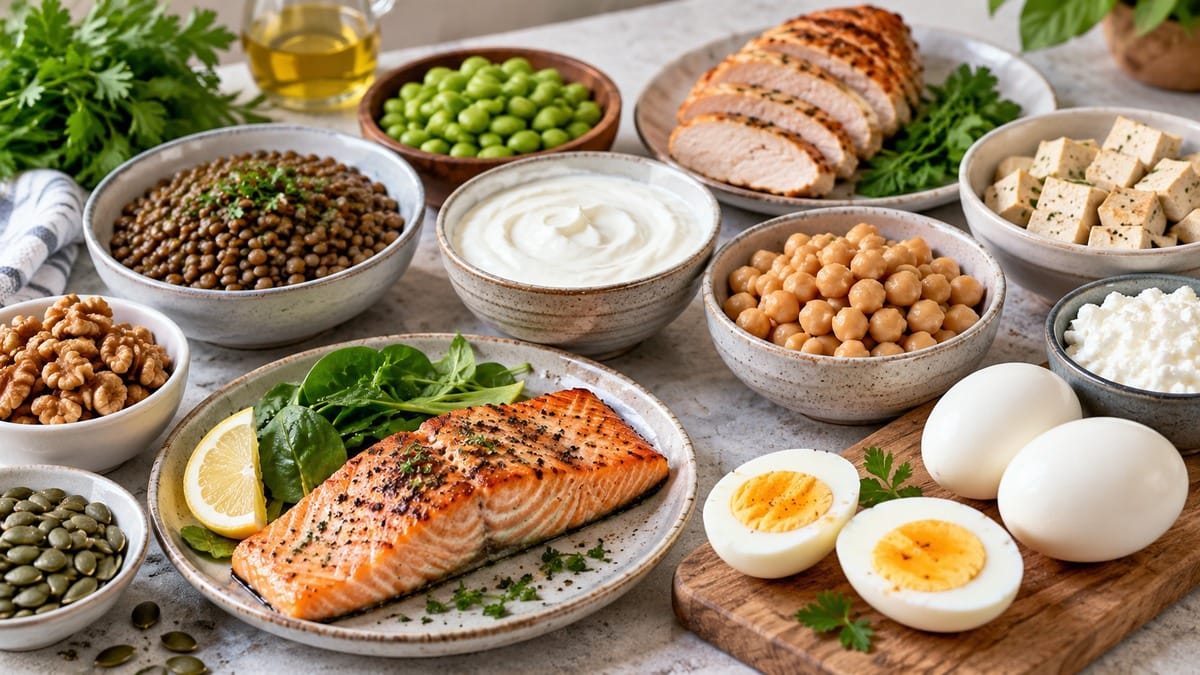
Protein sources named in the federal guidance include eggs, seafood, poultry, red meat, dairy, beans, peas, lentils, legumes, nuts, seeds, and soy. That makes the recommendation flexible enough to support mixed, vegetarian, or plant-forward eating patterns. The key is variety and nutrient density rather than relying mainly on bars, shakes, or highly processed protein products.
For women over 40, this emphasis is useful because later-life guidance specifically links adequate protein with preserving muscle mass and strength. That does not mean every meal needs to be extremely high in protein. A more practical approach is to include a meaningful protein food at breakfast, lunch, and dinner and let the total intake accumulate across the day.
If you want a deeper explanation of the new federal protein language, our guide to high-protein eating in the US Dietary Guidelines covers the target, food sources, and common misconceptions.
Calcium and Vitamin D Matter More as Midlife Advances
The federal guidelines identify calcium and vitamin D as nutrients that deserve attention in older adulthood. NIH dietary reference values add useful age-specific context: women ages 19–50 have a calcium RDA of 1,000 mg per day, while women ages 51–70 have an RDA of 1,200 mg. For vitamin D, the RDA is 600 IU (15 mcg) per day for adults ages 19–70 and 800 IU (20 mcg) after age 70.
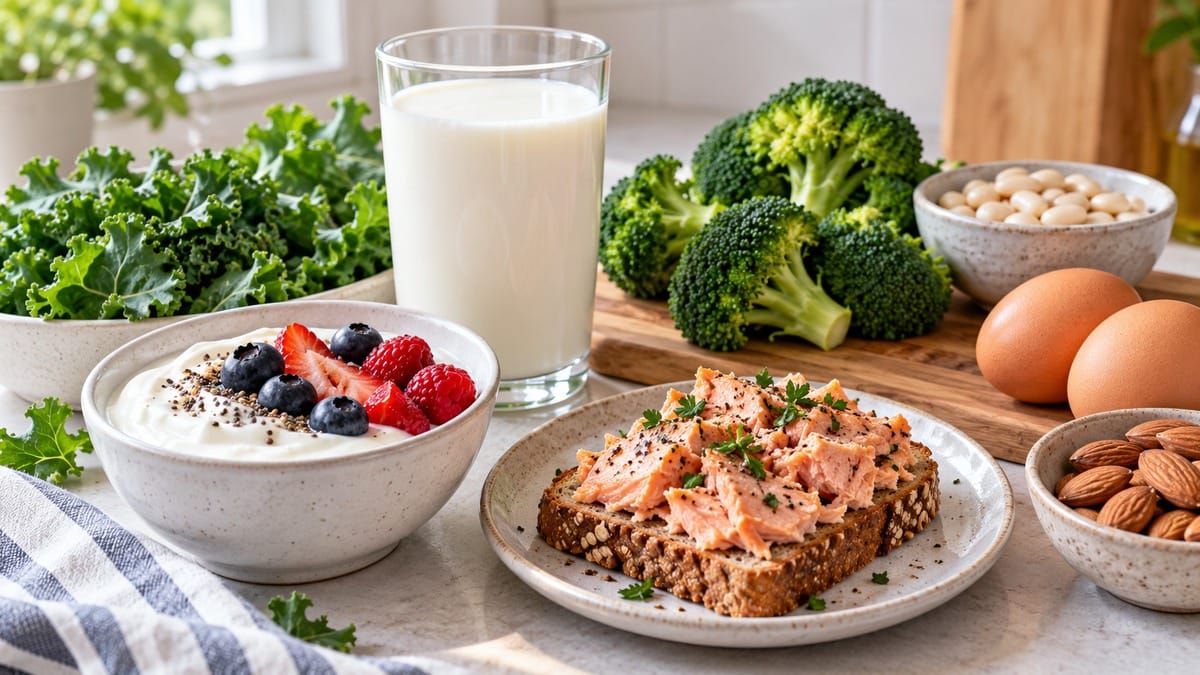
Food sources of calcium include milk, yogurt, cheese, calcium-fortified plant beverages, some calcium-set tofu, canned sardines or salmon with edible bones, kale, broccoli, and bok choy. Vitamin D is naturally present in fewer foods, with fatty fish among the most useful food sources; fortified milk and some fortified alternatives can also contribute.
This is one place where age matters more than the phrase “women over 40” might suggest. The calcium RDA changes at age 51, not 40. So a 42-year-old and a 62-year-old should not assume that every nutrient target is identical simply because both fall under the same article title.
Supplements are not automatically necessary. The federal guidance and NIH fact sheets both support using food first where possible and discussing supplements with a health professional when intake, absorption, medical history, or medications make that appropriate.
Iron Needs Can Shift Around Midlife
Iron is another nutrient where age and reproductive status matter. NIH lists an iron RDA of 18 mg per day for adult women ages 19–50 and 8 mg per day for adults age 51 and older. Pregnancy has a much higher target of 27 mg per day. Those values are population reference intakes, not instructions to self-prescribe iron supplements.
Food sources include lean meat, seafood, poultry, iron-fortified grains, beans, lentils, spinach, peas, nuts, and some dried fruits. Vitamin C-rich foods can improve absorption of nonheme iron from plant foods. Because iron supplements can interact with medications and excessive intake can be harmful, it is better to use laboratory testing and professional guidance when deficiency is a concern rather than guessing.
The final Dietary Guidelines also emphasize folate for reproductive health and for women who may become pregnant. For a woman over 40 who is still capable of pregnancy, that guidance remains relevant even though she does not fit neatly into a separate federal “over 40” category.
Added Sugar and Highly Processed Foods: Two Major 2025–2030 Changes
The new guidelines take a more direct approach to added sugar. Instead of carrying forward the older headline limit of less than 10% of daily calories, the final 2025–2030 edition says that no amount of added sugars or non-nutritive sweeteners is recommended as part of a healthy diet and that one meal should contain no more than 10 grams of added sugars.
That does not mean naturally occurring sugar in fruit or plain dairy is treated the same way. The guidance distinguishes added sugars from sugars naturally present in nutrient-dense foods. Our separate guide to added sugar in the US nutrition guidelines explains that change in more detail.
The final edition also directly recommends reducing highly processed foods, especially salty or sweet packaged, prepared, and ready-to-eat foods that add refined carbohydrates, added sugars, excess sodium, unhealthy fats, or certain additives. This is more precise than saying all packaged or processed foods are bad. Frozen vegetables, canned beans, plain yogurt, and other useful staples can still fit a nutrient-dense eating pattern.
Our guide to processed foods and the US Dietary Guidelines looks at the terminology and practical swaps in more detail.
Whole Grains, Vegetables, Fruit, and Healthy Fats Still Belong on the Plate
The stronger protein message does not replace vegetables, fruit, whole grains, or healthy fats. The official serving framework for a 2,000-calorie pattern still includes vegetables, fruits, whole grains, dairy, protein foods, and fats. Exact amounts change with calorie needs, which is why the federal serving guide should be treated as a reference framework rather than a rigid menu.
For everyday meals, a simple pattern works well: choose a protein food, add vegetables or fruit, include a whole-grain or other fiber-rich carbohydrate when it fits the meal, and use a modest amount of an unsaturated fat such as olive oil, nuts, seeds, or avocado. This mirrors the structure of the federal guidelines without requiring calorie counting at every meal.
For women in midlife, fiber-rich plant foods can also make meals more filling and help diversify nutrient intake. Beans, lentils, vegetables, berries, whole grains, nuts, and seeds can contribute fiber alongside minerals and other nutrients. The goal is not a “perfect plate” but a repeatable pattern built mostly from foods that contribute meaningful nutrition.
Sodium and Saturated Fat Limits Still Apply
The 2025–2030 edition keeps familiar guardrails for sodium and saturated fat. For the general population age 14 and older, sodium should remain below 2,300 mg per day. Saturated fat should generally provide no more than 10% of daily calories.
Those limits matter because the new guidelines did not abandon numerical nutrition targets in favor of food quality alone. The final framework combines both approaches: prioritize whole, nutrient-dense foods while still paying attention to a few nutrients that can become excessive in common eating patterns.
Practical ways to reduce sodium include comparing labels on breads, sauces, canned foods, deli meats, and prepared meals; rinsing canned beans; and using herbs, spices, citrus, garlic, and vinegar for flavor. For saturated fat, the broader pattern matters more than a single food. Using olive oil, nuts, seeds, avocado, and seafood regularly can help diversify fat sources.
Pregnancy and Lactation Need Their Own Layer of Guidance
Some women over 40 may be pregnant, planning pregnancy, or breastfeeding. In those cases, the general adult advice is only the starting point. The final federal guidelines specifically emphasize iron, folate, and iodine during pregnancy and encourage discussion of a daily prenatal vitamin with a health professional. They also highlight low-mercury omega-3-rich seafood such as salmon, sardines, and trout.
During lactation, energy and nutrient needs rise to support milk production and maternal health. The federal guidance highlights vitamin B12-rich protein foods, omega-3-rich seafood, folate-rich legumes, and vitamin A-rich vegetables, with supplements considered when needed under professional guidance.
That is another reason not to treat the phrase US dietary guidelines for women over 40 as a single fixed prescription. Life stage can matter as much as chronological age.
A Practical Day Without Turning the Guidelines Into a Diet Plan
The federal guidelines do not require a specific breakfast, lunch, or dinner. A practical day can simply distribute nutrient-dense foods across meals. Breakfast might include plain Greek yogurt with berries, nuts, and oats, or eggs with vegetables and whole-grain toast. Lunch could combine beans or chicken with a large salad and whole grains. Dinner might include salmon, lentils, or tofu with vegetables and a grain or starchy vegetable.
Snacks can serve a purpose when needed rather than filling a rule: fruit with yogurt, vegetables with hummus, nuts with fruit, or a small protein-rich option can all fit. Water and unsweetened beverages remain the simplest default drinks.
The most useful way to apply the 2025–2030 recommendations is to improve the overall pattern rather than chase individual “superfoods.” A meal built from minimally processed ingredients can still be simple, affordable, and familiar.
FAQs about US Dietary Guidelines for Women Over 40
Are there official US dietary guidelines specifically for women over 40?
No. The federal Dietary Guidelines for Americans do not define “women over 40” as its own life-stage category. This article applies the 2025–2030 adult and life-stage recommendations to common midlife nutrition questions.
How much protein do the 2025–2030 guidelines recommend?
The final guidelines list a target of 1.2–1.6 grams of protein per kilogram of body weight per day, adjusted as needed for individual calorie requirements. That is a general federal target, not a personalized prescription.
Do calcium needs increase after age 40?
Not automatically at age 40. NIH lists 1,000 mg per day for women ages 19–50 and 1,200 mg per day for women ages 51–70. Age 51, rather than 40, is the point where the calcium RDA increases for women.
Does iron need change after menopause?
Population reference values change with age: NIH lists 18 mg per day for women ages 19–50 and 8 mg per day for adults age 51 and older. Individual needs can differ, so suspected deficiency should be evaluated rather than self-treated with high-dose supplements.
Should women over 40 avoid carbohydrates?
No. The federal guidelines continue to include whole grains, vegetables, fruits, beans, and other carbohydrate-containing foods. The stronger warning is aimed at refined carbohydrates and highly processed foods, not all carbohydrates.
Do the guidelines recommend supplements for every woman over 40?
No. The guidelines prioritize nutrient-dense foods. Supplements may be appropriate in specific situations—such as pregnancy, inadequate intake, absorption problems, dietary restrictions, or clinician-diagnosed deficiency—but they are not a universal requirement for every woman over 40.
Final Takeaway
The most accurate way to use the US dietary guidelines for women over 40 is to keep the official 2025–2030 framework intact while recognizing that age and life stage can change nutrient priorities. Protein receives more emphasis than in the previous edition, highly processed foods and added sugars are addressed more directly, and whole foods remain the foundation of the pattern.
For women moving through midlife, calcium, vitamin D, iron, folate, and vitamin B12 may deserve different levels of attention depending on age, menstrual status, pregnancy or lactation, dietary pattern, medications, and health history. The federal guidelines provide the broad structure; individual needs still belong with a qualified health professional when medical conditions or deficiencies are involved.
For the full set of changes, see our updated pillar guide to the US Dietary Guidelines 2025–2030. The official source is maintained by USDA and HHS through ODPHP, with the complete current resources available at RealFood.gov.

Trending recipe
Sheet Pan Harvest Chicken with Pan-Juice Toast
Sheet pan harvest chicken roasts crisp-skinned thighs with sweet potatoes, Brussels sprouts, apples, and sourdough pan-juice toast for a cozy…
View recipe →
Trending recipe
Banana Bread Banana Pudding
Banana bread banana pudding layers soft banana bread cubes, homemade vanilla pudding, fresh bananas, and whipped cream into an easy…
View recipe →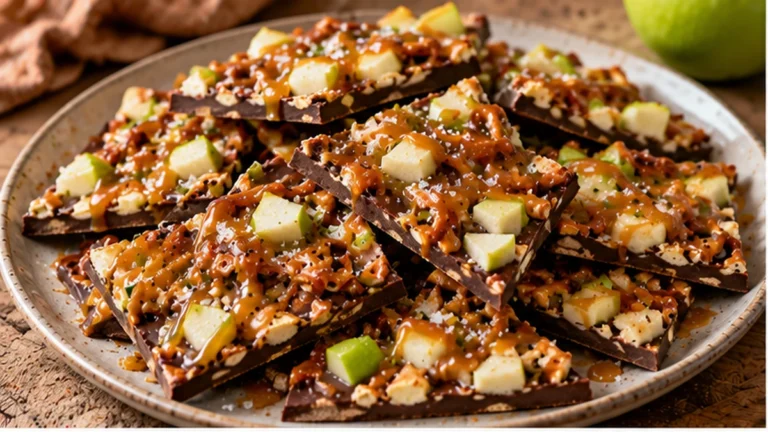
Trending recipe
Caramel Apple Bark
Caramel apple bark layers semisweet chocolate, salty pretzels, crisp Granny Smith apple, and chewy caramel into an easy no-bake fall…
View recipe →