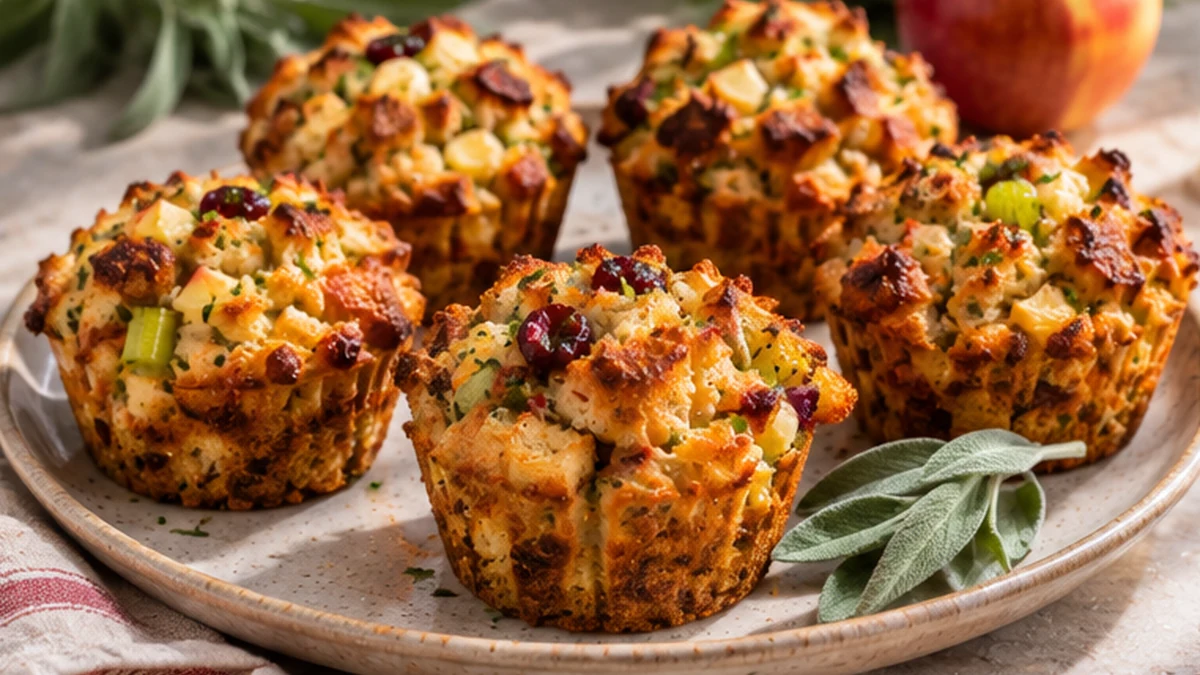
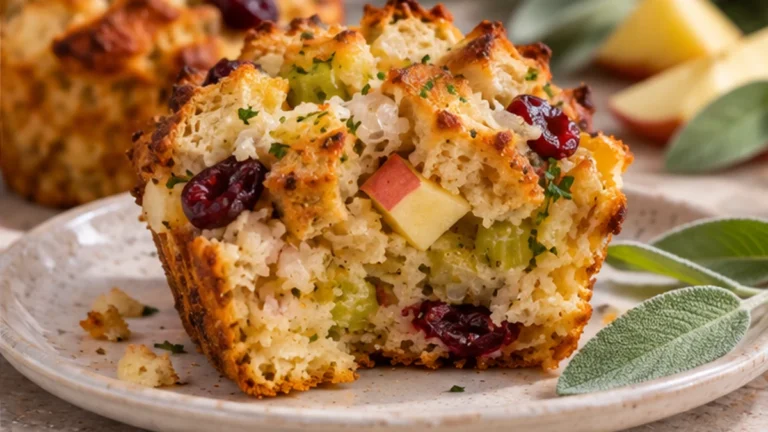
Gluten free stuffing muffins give you the best part of Thanksgiving dressing in individually baked cups: crisp golden edges, soft savory bread in the middle, fresh sage, celery, apple, and a few tart-sweet cranberries. Unlike a large casserole, each portion gets a little extra browning, and you can serve the muffins without scooping from a communal pan. For the broader holiday ingredient checks, start with our gluten free recipes guide.
This apple-and-sage version uses gluten-free bread that has been dried first, three eggs to bind the cubes, and a measured amount of gluten-free vegetable broth so the centers stay moist without becoming gummy. The recipe yields twelve standard muffin-sized sides. If you are planning a mixed-diet holiday menu, our gluten-free recipe collection and dinner recipe collection can help you choose the main course and other sides.
Table of Contents
Why Make Gluten Free Stuffing Muffins?
Each muffin has more browned surface area than a scoop of pan-baked stuffing.
The apple and dried cranberries add small sweet-tart accents without turning the side into dessert.
A three-egg binder helps gluten-free bread cubes hold together when portions are lifted.
The flavor comes from onions, celery, garlic, fresh sage, thyme, and parsley.
You can dry the bread and chop the vegetables a day ahead.
Individual portions work well on a holiday buffet when serving utensils need to stay separate.
One 12-cup muffin pan gives predictable portions for a group.
Ingredients for Gluten Free Stuffing Muffins
Gluten-Free Bread: The Most Important Choice
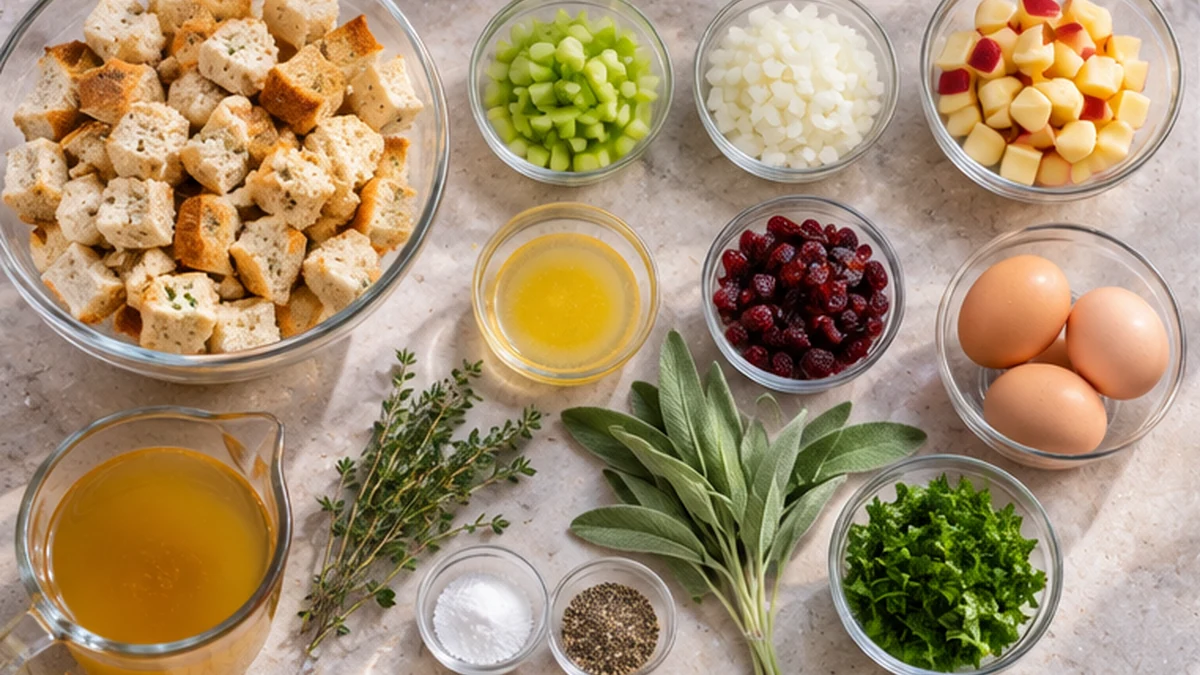
For gluten free stuffing muffins, use 8 cups (about 360 g) cubed, gluten-free sandwich bread, cut into roughly ½-inch pieces. Choose a loaf labeled gluten-free and read the current ingredients; many GF breads contain egg, dairy, or soy, even though they avoid wheat. A slightly sturdy sandwich bread works better than a delicate sweet loaf. For another illustration of how much the flour or bread choice matters, see our gluten-free pie crust guide.
Aromatics, Apple, and Fresh Herbs
Use one medium onion (about 1 cup diced), 1 cup finely chopped celery, 2 garlic cloves, and 1 small crisp apple cut into small cubes. Fresh sage is the signature flavor, with fresh thyme and parsley for balance. Keep the apple pieces about ¼ inch so they soften during baking without falling out of the portions. For an entirely different apple-forward holiday bake, there is the miso salted caramel apple crisp.
Use 2 tablespoons unsalted butter and 1 tablespoon olive oil for the skillet. They give the vegetables enough fat to soften without frying. Add ⅓ cup dried cranberries, which provide bright pockets of flavor; choose a product with an ingredient list suitable for your household. Sweetened dried cranberries are common and are included in the nutrition estimate, but the sweetness stays moderate when divided across twelve muffins.
Broth, Eggs, and Seasoning
Choose 1½ cups low-sodium vegetable broth labeled gluten-free, 3 large eggs, ½ teaspoon fine salt, and ¼ teaspoon ground black pepper. Use the full amount of broth only if the bread absorbs it without turning into paste. If your loaf is unusually soft or dense, begin with 1¼ cups and add the rest gradually. For a holiday dinner requiring a separate gluten-free main course, our gluten-free chicken meatballs with ricotta are one practical option.
The recipe is vegetarian when you use vegetable broth, but not vegan because it includes eggs and butter. Swapping those items requires a different binding formula and changes the nutrition. To build a fully plant-based menu, see the vegan dinner recipes guide; do not describe this exact stuffing as vegan.
Gluten Free Stuffing Muffins Recipe Card
This is a twelve-portion muffin-pan recipe. The times account for drying the bread, softening the vegetables, oven baking, and a short rest before lifting the cups. If you prefer preparing a gluten-free soup alongside it, the vegan soup recipes roundup includes a range of vegetable and bean-based options.
Individual, crisp-edged gluten-free holiday stuffing cups made from dried bread cubes, onion, celery, apple, fresh sage, broth, eggs, and cranberries.
Total Time:85 minutes
Yield:12 stuffing muffins (12 side servings)
Ingredients
Scale
8 cups (about 360 g) gluten-free sandwich bread, cut into 1/2-inch cubes and dried
2 tablespoons (28 g) unsalted butter, plus a little for greasing the pan
1 tablespoon (15 ml) olive oil
1 medium yellow onion, finely diced (about 1 cup or 150 g)
2 celery stalks, finely diced (about 1 cup or 120 g)
1 small crisp apple, cored and diced into 1/4-inch pieces (about 130 g)
2 garlic cloves, minced
2 tablespoons chopped fresh sage
1 tablespoon chopped fresh thyme leaves
2 tablespoons chopped flat-leaf parsley
1/3 cup (about 45 g) sweetened dried cranberries
3 large eggs
1 1/2 cups (360 ml) low-sodium vegetable broth labeled gluten-free, divided (use only as much as bread needs)
1/2 teaspoon fine salt, adjusted for the saltiness of the bread and broth
1/4 teaspoon ground black pepper
Instructions
Preheat the oven to 300°F (150°C). Spread the gluten-free bread cubes on a sheet pan and bake for approximately 10 minutes, stirring once, until dry on the outside. Remove the pan and raise the oven to 375°F (190°C).
While the bread dries, heat the butter and olive oil in a skillet over medium heat. Cook the onion and celery for about 6 minutes until softened; add the diced apple for 2 minutes more.
Add garlic, sage, thyme, parsley, salt, and pepper to the skillet. Stir 30 to 60 seconds until fragrant; remove from the heat.
Place dried bread in a large bowl. Fold in the vegetables and dried cranberries.
In a second bowl, whisk the 3 eggs with 1 1/4 cups gluten-free vegetable broth. Pour over the bread mixture and fold gently. Rest 2 minutes; add the remaining 1/4 cup broth a tablespoon or two at a time only if the cubes need it. The mixture should hold together without dripping liquid.
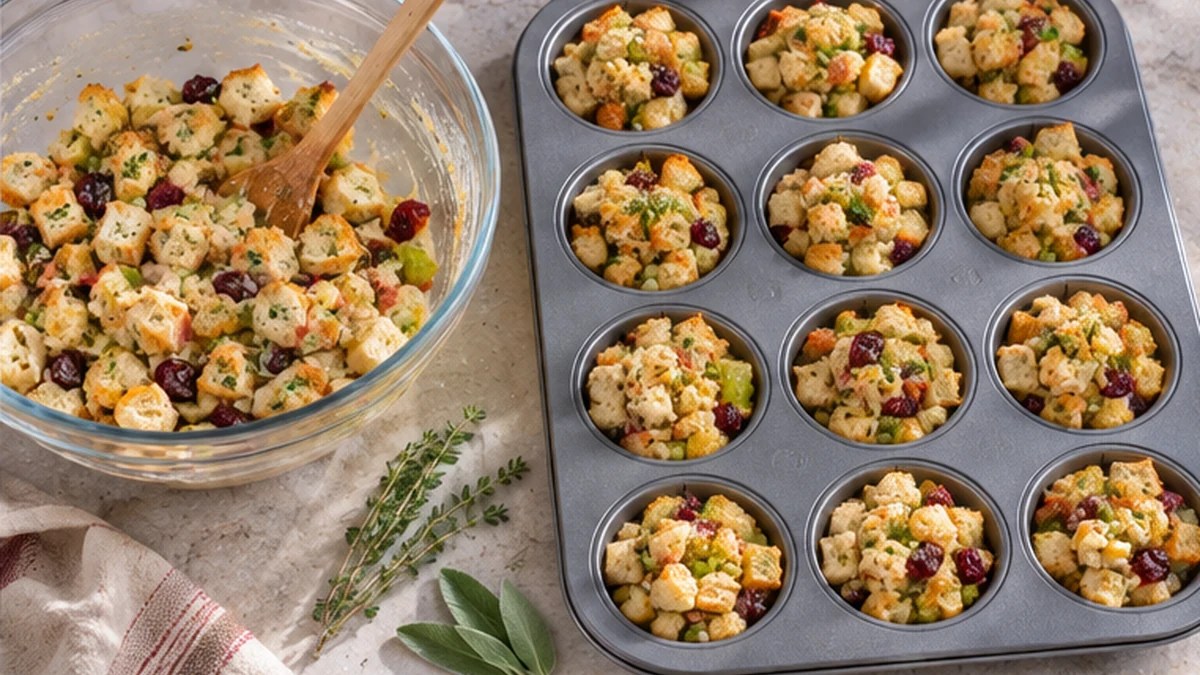
Thoroughly grease all 12 wells of a standard muffin tin, including the edges. Divide the mixture evenly and press firmly enough that each portion holds together.
Bake at 375°F (190°C) for about 28 to 32 minutes until the tops are golden and crisp and the centers reach at least 160°F (71°C) on a food thermometer.
Cool in the pan for 10 minutes. Loosen the sides with a small spatula, carefully lift out the stuffing muffins, and serve warm.
Notes
Use bread specifically labeled gluten-free and check the current labels of vegetable broth, dried cranberries, and other packaged ingredients.
Some gluten-free loaves are more absorbent than others. Begin with 1 1/4 cups broth; add up to the remaining 1/4 cup only if needed.
Three eggs are part of the binding formula. Do not remove them without a separately balanced egg-free recipe.
These cups are vegetarian only when the broth is vegetable-based. They contain eggs and butter, and bread labels may list other allergens.
Make ahead by drying the bread and prepping vegetables a day early, but add egg and broth close to baking.
Refrigerate leftovers promptly for 3 to 4 days and reheat the center to 165°F (74°C). Freeze cooled muffins for about 2 months for best texture.
Nutrition is an estimate for one of twelve muffins; it assumes a representative gluten-free sandwich loaf (360 g total), three large eggs, low-sodium broth, 45 g sweetened dried cranberries, butter and olive oil. Product labels vary widely, especially sodium and fiber.
Author:Adam Moretti
Prep Time:25 minutes
Resting:10 minutes
Cook Time:50 minutes
Category:Side Dish
Method:Oven and Stovetop
Cuisine:American
Diet:Gluten Free, Vegetarian
How to Make Gluten Free Stuffing Muffins
1. Dry the Bread Cubes
Preheat the oven to 300°F (150°C). Spread the bread cubes in one layer on a rimmed baking sheet and bake for about 10 minutes, stirring once. They should feel dry and lightly crisp rather than toasted dark brown. Remove the sheet and raise the oven to 375°F (190°C). A dry bread base is also what keeps the muffins from collapsing when lifted. If you need another make-ahead side without bread, browse our gluten-free collection for alternatives.
2. Soften the Onion, Celery, Apple, and Herbs
While the bread dries, melt the butter with the olive oil in a skillet over medium heat. Add the diced onion and celery and cook for about 6 minutes, stirring until they look translucent and are no longer crunchy. Add the apple and cook for another 2 minutes. Stir in the garlic, chopped sage, thyme, parsley, salt, and pepper for 30 to 60 seconds until fragrant. Take the skillet off the heat so the herbs do not burn.
3. Moisten and Bind the Bread
To keep gluten free stuffing muffins cohesive, transfer the dry bread to a large bowl and gently fold in the cooked vegetable mixture and dried cranberries. Whisk the three eggs separately with 1¼ cups of the broth, then drizzle this over the bread while turning the cubes with a wide spoon. Wait two minutes and test a handful: it should hold together when gently squeezed, without dripping liquid. Add up to the final ¼ cup of broth only if needed.
4. Fill the Muffin Pan and Bake
Grease all twelve wells of a standard muffin tin thoroughly, especially around the rim. Divide the mixture evenly and press each mound down firmly enough to make it cohesive, without crushing every bread cube. Bake at 375°F for about 28 to 32 minutes, until the tops are browned and crisp and the centers are set. Because the recipe contains eggs, check an interior muffin with a food thermometer and aim for 160°F (71°C), consistent with FoodSafety.gov guidance for egg dishes.
5. Rest, Unmold, and Serve
Let the muffins stand in the pan for 10 minutes, then loosen their edges with a small offset spatula or butter knife. Lift them out gently and serve warm. If a muffin sticks, give it another minute to set instead of pulling it by its top.
Gluten Free Stuffing Muffins Troubleshooting
Why Are My Muffins Soggy?
The usual culprit is wet bread or too much broth. Bake the cubes until their surfaces are dry, and add the liquid in stages rather than automatically pouring everything at once. When different gluten-free loaves absorb water at different rates, a short two-minute pause helps you judge the mixture.
Why Do They Fall Apart When Lifted?
Use three large eggs rather than reducing the binder, press the mixture firmly into the wells, and let it rest after baking. Larger-than-half-inch cubes can also make a cup less stable. If you want an especially tight texture, cut the cubes a little smaller; do not pulverize them into crumbs, or the dish will lose its stuffing character.
Why Are They Dry in the Middle?
If the cubes are extremely stale or the mix has too little liquid, the finished centers can crumble. Before filling the pan, squeeze a handful: it should hold as a soft clump. Add an extra tablespoon or two of broth if needed, never a large pour.
Make-Ahead Gluten Free Stuffing Muffins for Thanksgiving
One day ahead, cube and dry the bread, then cool and keep it in a sealed container. Chop the onion, celery, and apple separately; refrigerate the vegetables, with the apple protected from browning. On the day, sauté the vegetables, mix the stuffing, and bake.
Storing Gluten Free Stuffing Muffins
Refrigerate leftover stuffing muffins within two hours in a shallow covered container at 40°F or below. Use them within 3 to 4 days. Reheat the center of leftover muffins to 165°F (74°C) and use a 350°F oven to restore some surface crispness. These times and temperatures follow FoodSafety.gov leftover guidance. If you need a chilled beverage for serving with reheated leftovers, our cranberry lemon drop mocktail can be prepared separately.
For longer storage, freeze fully cooled muffins individually on a tray and pack them in a sealed freezer bag; aim for about 2 months for best texture. Defrost overnight in the refrigerator, then reheat thoroughly. Bread-based stuffing does soften after freezing, so a brief oven finish helps. For a freezer-friendly main dish, our gluten-free crock pot recipes include several batch-cooking options.
Gluten Free Stuffing Muffins: Labels and Cross-Contact
If someone at your table has celiac disease, do not rely on a recipe name alone. Check the bread, vegetable broth, dried cranberries, dried or blended seasonings, and any pan spray for current ingredients and labeling. The FDA gluten-free labeling rule describes the U.S. requirements for products labeled gluten-free, including an unavoidable gluten threshold below 20 ppm. Our gluten-free recipes guide explains these label-checking basics across other dishes.
Use clean cutting boards, mixing bowls, baking sheets, and muffin pans, and keep ordinary wheat bread crumbs away from the preparation area. Do not share a toaster tray still covered with wheat crumbs. For people avoiding multiple allergens, note that this recipe contains eggs and butter and the purchased gluten-free bread may contain soy, dairy, or nuts. The gluten-and-dairy-free desserts collection is useful when choosing a separate dessert with different allergen needs.
Gluten Free Stuffing Muffins Variations and Swaps
Omit Dried Cranberries for a Classic Savory Batch
Leave out the cranberries if you prefer a more traditional onion-and-sage stuffing flavor. The apple remains subtle after baking, or you can also omit it and add an extra half cup of diced celery. Both changes affect the nutrition estimate slightly.
Use Chicken Broth Only if Vegetarian Is Not Required
Gluten-free low-sodium chicken broth can replace vegetable broth, but then the recipe is no longer vegetarian. Check the package for gluten-related ingredients just as carefully. If you are planning a chicken-centered meal, our chicken stew crock pot pairs with vegetable sides, although its reviewed gluten-free substitutions should also be followed.
Dairy-Free Is a Separate Substitution
For dairy-free guests, replace the butter with an extra two tablespoons of olive oil and select a gluten-free bread without milk ingredients. The eggs remain, so it is not vegan. This changes the per-serving fat and saturated fat calculations.
Do Not Substitute Cornbread Blindly
Gluten-free cornbread has a different crumb structure, often a different sugar level, and can break apart faster than sandwich bread after broth is added. A cornbread version needs a separately balanced liquid amount and is not guaranteed by the measurements here. Likewise, adding sausage would change the cooking procedure, nutrition, and vegetarian classification.
What to Serve with Gluten Free Stuffing Muffins
These stuffing cups belong beside a roasted main and vegetables, not on a breakfast plate. For a gluten-free protein option, chicken meatballs with ricotta bring a tender oven-baked main; for a comforting bean-based option, gluten-free pizza beans take much less time. Use separate oven racks and serving utensils if cross-contact matters.
A soup-and-side dinner can be just as practical: choose a bowl from our vegan soup recipes or the vegan pumpkin soup with coconut milk. These combinations let you reuse the same herbs and vegetables without putting another bread dish on the plate. Check all packaged soup ingredients if serving someone with celiac disease.
Gluten Free Stuffing Muffins Nutrition and Portions
One of twelve evenly divided stuffing muffins is estimated to provide about 165 calories, 4.5 g protein, 24 g carbohydrates, and 6 g total fat. These values assume roughly 360 g packaged gluten-free sandwich bread, three large eggs, low-sodium vegetable broth, sweetened dried cranberries, a small apple, butter, and olive oil. Exact bread and broth labels can move the sodium, fiber, and calories considerably. USDA FoodData Central provides general-food nutrient data; for bread and broth use your actual package label.
These are holiday side portions, not full meals. If you serve two muffins per person instead of one, double the per-serving numbers; butter, gravy, turkey, or other toppings are not included. A vegetarian menu can pair one muffin with a bean or lentil main, while people who need a meat-free menu throughout can explore our plant-based dinner collection for an entirely different main course.
Gluten Free Stuffing Muffins FAQs
Can I Make Gluten Free Stuffing Muffins the Night Before?
Yes. Dry the bread and prepare the vegetables in advance; for the best texture, add the eggs and broth shortly before filling the pan. Finished cups can also be refrigerated and reheated to 165°F. For another make-ahead autumn bake that keeps well separately, see our gluten-free apple cider donut bread.
Are Stuffing Muffins the Same as Cornbread Muffins?
No. Stuffing muffins are savory portions of dressing made from bread cubes, aromatics, eggs, and broth, pressed into a muffin tin to bake. Cornbread muffins are a flour-and-cornmeal batter that rises as it cooks. This recipe is not formulated as a cornbread muffin and should not be converted to one with a direct ingredient swap.
Final Tips for Gluten Free Stuffing Muffins
The method succeeds when the bread cubes are dry before mixing, the vegetables are soft, and the egg-broth mixture dampens rather than floods the stuffing. Pack the wells firmly and give the muffins ten minutes to set before serving. For another autumn course that does not compete for the same baking pan, the vegan pumpkin soup is a useful choice.
Reviewed recipe options
Make this recipe fit me
Choose one of seven popular diet options. NutriMatch will confirm whether the recipe already fits, show a reviewed adaptation when available, or recommend recipes that match your choice.
Please choose a diet first.
Reviewed Dairy-Free adaptation
Dairy-Free Gluten Free Stuffing Muffins (Crispy Apple and Sage)
Use the substitutions below to prepare a Dairy-Free version while keeping the rest of the recipe as close as possible to the original.
Ingredient swaps
2 tablespoons (28 g) unsalted butter, plus a little for greasing the panUse 2 tablespoons (28 g) dairy-free butter alternative, plus a little for greasing the pan
Instruction changes
Use a dairy-free butter alternative in the same measured amount; browning and water content can vary by brand.
Check: Check packaged substitutes for milk ingredients and the cross-contact information you need.
Use these reviewed changes with the original ingredient quantities and instructions above. The original recipe card stays unchanged.
Recipe details, product formulas, and cross-contact information can change. Confirm current labels and use professional guidance when medically necessary.
Already a reviewed match
This recipe already fits Gluten-Free.
No changes are needed based on its reviewed NutriMatch classification. Check the complete ingredients, product labels, and serving details for your own needs.
Recipe details, product formulas, and cross-contact information can change. Confirm current labels and use professional guidance when medically necessary.
Not available for this recipe
This recipe cannot currently be made High Protein with a reviewed adaptation.
NutriMatch will not guess at substitutions. Try one of these recipes that is already reviewed for your choice.
Recipe details, product formulas, and cross-contact information can change. Confirm current labels and use professional guidance when medically necessary.
Not available for this recipe
This recipe cannot currently be made Keto with a reviewed adaptation.
NutriMatch will not guess at substitutions. Try one of these recipes that is already reviewed for your choice.
Recipe details, product formulas, and cross-contact information can change. Confirm current labels and use professional guidance when medically necessary.
Not available for this recipe
This recipe cannot currently be made Low Carb with a reviewed adaptation.
NutriMatch will not guess at substitutions. Try one of these recipes that is already reviewed for your choice.
Recipe details, product formulas, and cross-contact information can change. Confirm current labels and use professional guidance when medically necessary.
Not available for this recipe
This recipe cannot currently be made Vegan with a reviewed adaptation.
NutriMatch will not guess at substitutions. Try one of these recipes that is already reviewed for your choice.
Recipe details, product formulas, and cross-contact information can change. Confirm current labels and use professional guidance when medically necessary.
Already a reviewed match
This recipe already fits Vegetarian.
No changes are needed based on its reviewed NutriMatch classification. Check the complete ingredients, product labels, and serving details for your own needs.
Recipe details, product formulas, and cross-contact information can change. Confirm current labels and use professional guidance when medically necessary.