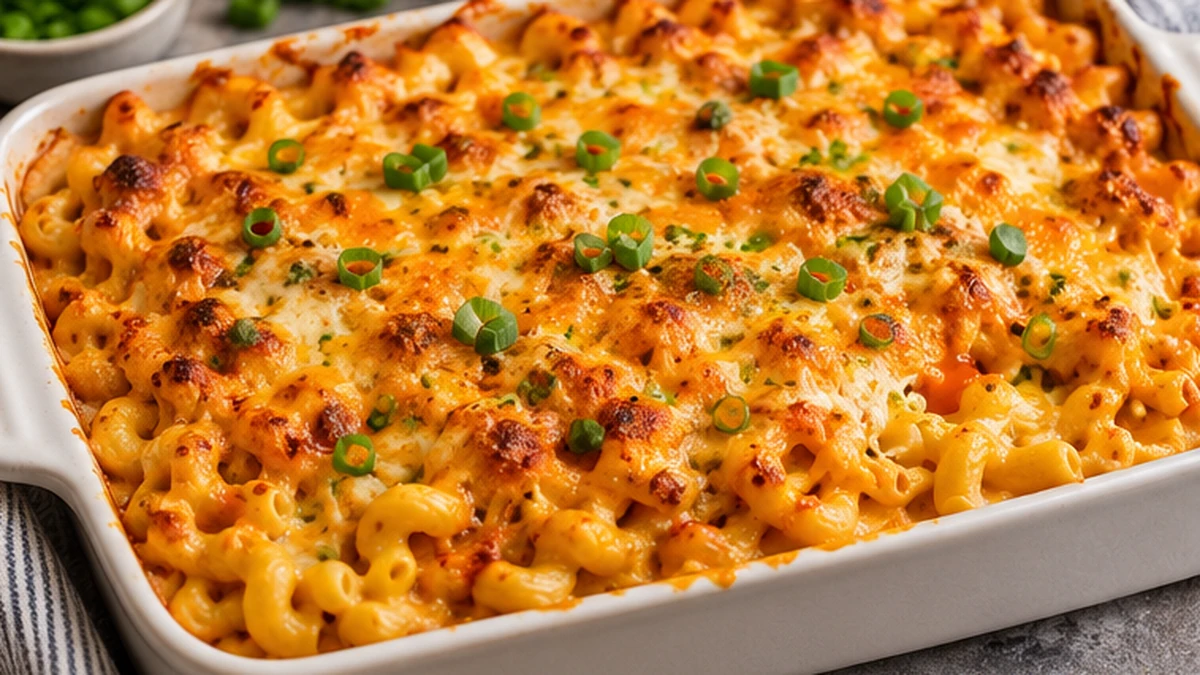
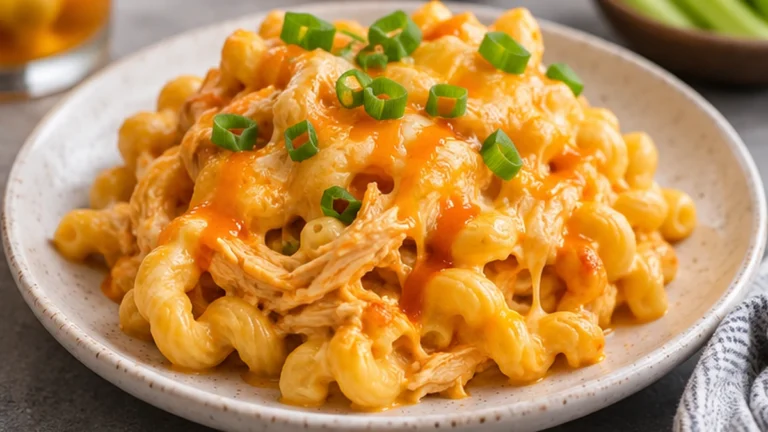
Tini Buffalo chicken mac and cheese brings the creamy, multi-cheese feel of viral baked macaroni to a Buffalo-chicken dinner. Cavatappi pasta, fully cooked shredded chicken, mozzarella, Colby Jack, and sharp cheddar are folded into a smooth sauce with enough Buffalo heat to taste lively without overwhelming the cheese.
This is an independent Tini-inspired version, not an official Tini Younger recipe. It is designed around convenient cooked chicken, one saucepan of sauce, and a short oven finish. The result should be saucy through the middle, lightly golden on top, and easy to scoop into eight portions. For another multi-cheese dish without Buffalo sauce or chicken, compare our Chick-fil-A mac and cheese copycat, which uses a different cheese blend and traditional elbow pasta.
Table of Contents
Why Tini Buffalo Chicken Mac and Cheese Works
Evaporated milk adds body to the cheese sauce without requiring heavy cream.
Cavatappi curves hold the sauce and stand up to the brief oven finish.
Mozzarella provides stretch, Colby Jack melts smoothly, and sharp cheddar brings pronounced flavor.
Cooked chicken keeps the dinner manageable on a weeknight.
Buffalo sauce is divided between the chicken and cheese sauce for even flavor.
Pasta is cooked slightly under al dente so it does not turn soft while baking.
The key is temperature control. A flour-and-butter roux stabilizes the dairy, but shredded cheese can still turn grainy if it is boiled. Once the milk mixture thickens, turn the heat low or remove the pan from the burner before folding in the cheese. Reserve some cheese for the top instead of melting every ounce into the saucepan.
Ingredients You’ll Need
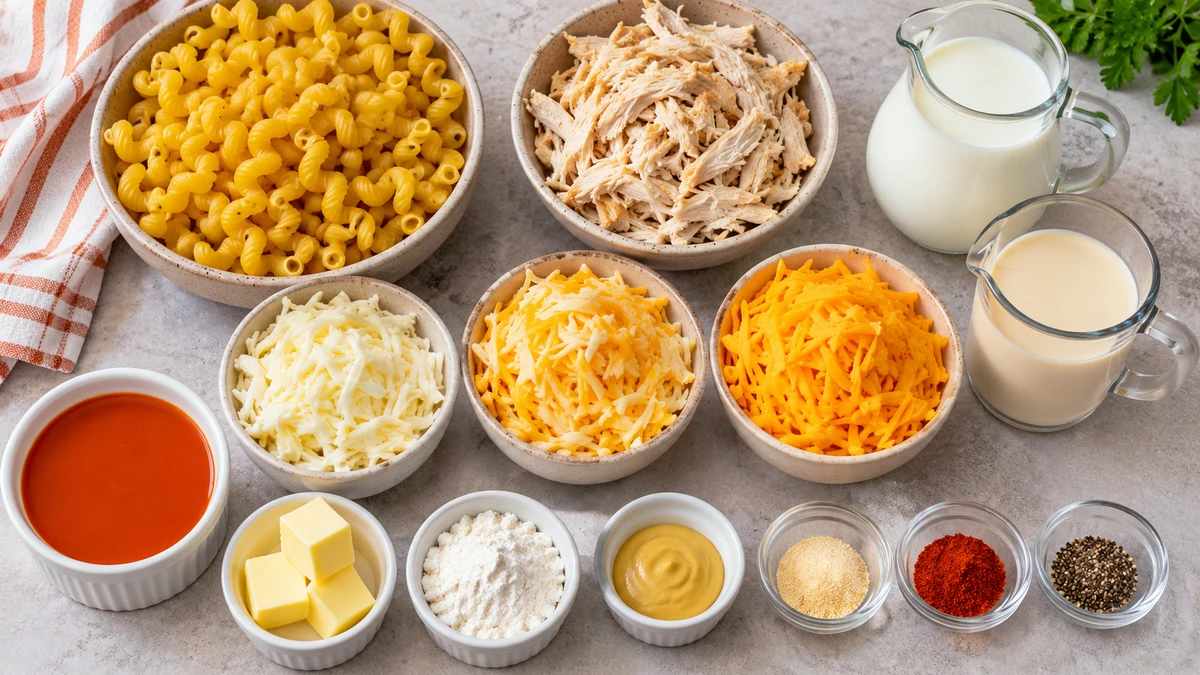
Cavatappi pasta: Use 12 ounces dry pasta. Its corkscrew shape leaves plenty of surface for sauce; shells or elbows are fine alternatives. Whatever shape you choose, stop boiling it about two minutes before the package’s al dente time. The pasta will finish absorbing sauce in the oven.
Cooked shredded chicken: Measure 2½ loosely packed cups of fully cooked chicken breast or a mix of white and dark meat. Plain rotisserie chicken is convenient, but check how salty it is before seasoning the dish. Do not use raw chicken in the casserole; this recipe assumes the chicken is already fully cooked. Because Tini Buffalo chicken mac and cheese uses already-cooked poultry, you only need to heat the assembled casserole thoroughly rather than cook raw chicken inside the cheese sauce.
Three cheeses: You need 6 ounces low-moisture mozzarella, 6 ounces Colby Jack, and 4 ounces sharp cheddar. Shred from blocks if possible. Packaged shreds can work, but their anti-caking starches sometimes produce a slightly less fluid sauce. Keep roughly one quarter of the combined cheese for the top.
The dairy and roux: Two tablespoons butter and two tablespoons all-purpose flour form the base. One 12-fluid-ounce can evaporated milk supplies a concentrated milky texture, while 1½ cups 2% milk loosen the sauce. Evaporated milk is unsweetened; sweetened condensed milk is not a substitute.
Buffalo sauce and seasonings: Use ⅓ cup prepared Buffalo wing sauce in total, plus Dijon mustard, garlic powder, smoked paprika, black pepper, and salt only as needed. Buffalo wing sauces vary considerably in heat, salt, and butter content, so taste yours before adding extra salt. The recipe uses 2 tablespoons on the chicken and the remainder in the sauce.
How Spicy Is This Recipe?
This is a medium-mild baked pasta when made with a standard Buffalo wing sauce; the generous amount of milk and cheese softens the sharpness. If serving people who prefer little heat, start with 3 tablespoons total Buffalo sauce, then offer more at the table. To increase the heat, add hot sauce after baking rather than a large extra splash to the cheese sauce, which can thin its texture. For a milder Tini Buffalo chicken mac and cheese, keep the extra hot sauce separate so each person can adjust their own portion.
Tini Buffalo Chicken Mac and Cheese Recipe
The recipe card below contains the complete measured ingredient list, timing, and step-by-step method. Read the sauce tips immediately after the card before you begin: keeping the dairy below a boil is the most important detail.
Creamy baked cavatappi with fully cooked shredded Buffalo chicken, three melted cheeses, and a smooth evaporated-milk sauce. An independent, Tini-inspired comfort-food casserole.
2 tablespoons unsalted butter, plus a little for the baking dish
2 tablespoons all-purpose flour
1 (12-fluid-ounce) can unsweetened evaporated milk
1 1/2 cups 2% milk, plus more as needed
1/3 cup prepared Buffalo wing sauce, divided
1 tablespoon Dijon mustard
1 teaspoon garlic powder
1/2 teaspoon smoked paprika
1/4 teaspoon ground black pepper
Fine salt, to taste, after checking the sauce
2 tablespoons sliced green onions, optional garnish
Instructions
Preheat the oven to 350°F. Lightly grease a 9-by-13-inch baking dish. Reserve about one quarter of the combined shredded cheeses for the topping.
Bring a pot of water to a boil. Cook cavatappi about 2 minutes shy of the package’s al dente time. Drain well; do not rinse. Toss the fully cooked shredded chicken with 2 tablespoons Buffalo sauce.
Melt butter in a wide saucepan over medium-low heat. Whisk in the flour and cook for 1 minute, stirring, without browning.
Gradually whisk in evaporated milk and then the 2% milk. Simmer gently, stirring, until the base lightly coats a spoon. Avoid a vigorous boil.
Reduce heat to the lowest setting or remove from the burner. Stir in Dijon, garlic powder, smoked paprika, black pepper, and the remaining Buffalo sauce.
Add the cheeses reserved for the sauce one handful at a time, stirring until smooth. Taste before adding any salt. If the sauce is very thick, add a tablespoon or two of warm milk.
Fold the drained pasta and Buffalo-coated cooked chicken into the cheese sauce. Transfer to the prepared dish, spread evenly, and scatter the reserved cheese on top.
Bake uncovered for about 20 to 25 minutes, until bubbly and lightly golden; confirm the center reaches 165°F with a food thermometer. If the top browns before the center is hot, cover loosely with foil.
Rest for 5 minutes, add optional sliced green onions, and serve warm.
Notes
Tini-inspired only: this is not an official Tini Younger recipe.
Use cooked chicken. If preparing raw chicken separately, cook poultry to 165°F before shredding.
For the smoothest sauce, add freshly shredded cheese off high heat and never boil after adding cheese.
For milder flavor, begin with 3 tablespoons total Buffalo sauce and serve extra on the side.
Timing is approximately 20 minutes prep, 35 minutes cook (including sauce, pasta, and baking), plus 5 minutes resting; total 60 minutes.
Nutrition is estimated per 1/8 of the entire prepared bake from typical ingredient values; specific brands and sauce sodium vary considerably.
Refrigerate leftovers promptly at 40°F or below for 3 to 4 days; reheat to 165°F.
Author:Adam Moretti
Prep Time:20 minutes
Resting:5 minutes
Cook Time:35 minutes
Category:Main Dish
Method:Baked
Cuisine:American
Diet:Omnivore
How to Make It, Step by Step
1. Prepare the oven, pasta, and chicken
Heat the oven to 350°F and lightly grease a 9-by-13-inch baking dish. Bring a large pot of water to a boil. Cook the dry cavatappi two minutes less than the package’s al dente guidance, then drain well; do not rinse. While it cooks, toss the cooked shredded chicken with 2 tablespoons Buffalo sauce so every bite gets a little tang. Slightly firm pasta helps Tini Buffalo chicken mac and cheese keep its shape during the oven finish instead of turning mushy.
If your pasta finishes before the sauce, drain it and toss gently with a spoonful of the warm milk mixture later. Do not leave the noodles sitting in hot water. For a baked dish, pasta that is slightly firm in the center at this stage is preferable to perfectly soft pasta.
2. Make a light roux
Melt the butter in a broad, heavy saucepan over medium-low heat. Whisk in the flour and stir for about a minute until the paste is smooth and smells lightly toasty but has not browned. Add the evaporated milk slowly, whisking continuously, then add the 2% milk. Bring the mixture to a gentle simmer, stirring until it coats a spoon.
If you see a few small lumps, keep whisking before adding cheese; the flour needs to disperse evenly. Avoid a hard boil. The base will still look thinner than finished mac and cheese, because the cheese and pasta will thicken it further.
3. Melt the cheeses and add Buffalo flavor
Turn the burner to its lowest setting or take the saucepan off the heat. Stir in Dijon, garlic powder, smoked paprika, black pepper, and the remaining Buffalo sauce. Add the reserved-for-sauce cheese a handful at a time, stirring until smooth before the next addition. Taste before adding salt: cheese and wing sauce may supply enough already.
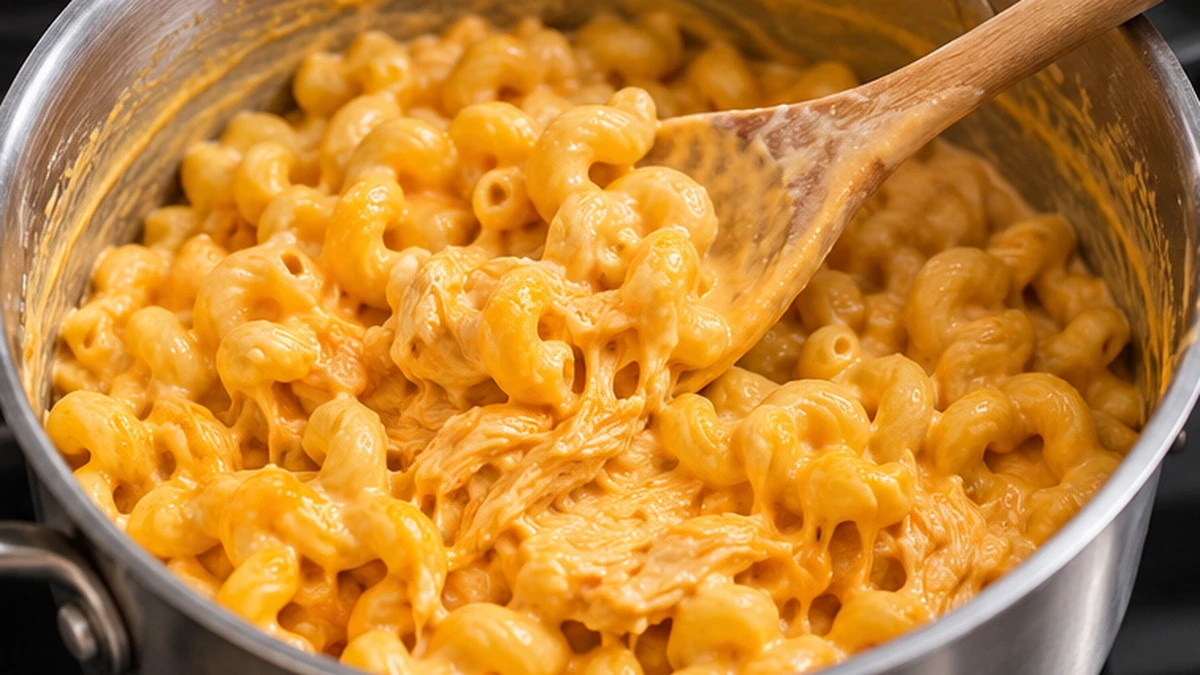
The sauce should fall from a spoon in a thick ribbon rather than form stringy clumps or greasy puddles. If it becomes too thick, stir in warm milk one tablespoon at a time. If it looks oily, remove it from the heat and whisk in a little warm milk to bring it back together.
4. Combine the pasta and chicken
Fold the drained pasta and Buffalo-coated chicken into the warm sauce until the pasta’s twists and the chicken shreds are evenly coated. There should be a visible layer of sauce around the noodles; a dry-looking mixture will bake up dry. Transfer to the greased baking dish, spread evenly, and scatter the reserved cheese over the surface. At this stage, Tini Buffalo chicken mac and cheese should look a little more saucy than the texture you want on the plate because the noodles will absorb liquid as they bake.
5. Bake, check the temperature, and rest
Bake uncovered for roughly 20 to 25 minutes, until the edges bubble and the top has some golden spots. For a chicken casserole, check the center with a food thermometer and continue heating until it reaches 165°F. Let the dish stand for 5 minutes before serving so the sauce settles slightly and portions scoop more cleanly.
If the center is hot but the top is pale, a short broil can add color; watch it continuously, because cheese can darken quickly. The thermometer, not the browned appearance alone, determines whether the casserole is thoroughly heated. See FoodSafety.gov’s safe temperature chart for casserole guidance.
How to Tell When It’s Just Right
Look for three signs: small bubbles along the edges, a moist center that still moves slightly when the pan is nudged, and cheese on top that has melted without forming a hard crust. Cavatappi should remain distinct and tender, not dissolve into the sauce. The resting period gives you a creamier spoonful than cutting into the bake immediately.
If the surface is deeply brown before the center reaches temperature, cover loosely with foil and continue heating. If the top looks dry but the center is safely heated, add a spoonful of warm milk to an individual serving rather than pouring liquid over the entire finished dish.
Troubleshooting the Cheese Sauce and Texture
Why did my cheese sauce turn grainy?
High heat is the usual culprit. Cheese proteins tighten when they are boiled, especially with sharp aged cheddar. The practical fix is to build the milk-and-roux base first, reduce the heat, then melt cheese slowly. Grating your cheese finely helps. A splash of warm milk and gentle whisking sometimes improves a sauce that has just begun to separate, but a badly broken sauce may not fully recover.
Why is the casserole dry after baking?
The pasta may have been cooked too long, the oven time too extended, or the sauce too thick before assembly. A baked pasta needs slightly more sauce than a stovetop version because noodles absorb moisture in the oven. Pull the bake when the center is at temperature, not when the surface looks completely dry.
Why does it taste too salty or too spicy?
Buffalo sauce, seasoned rotisserie chicken, and cheese all bring sodium. Use plain cooked chicken when possible, taste before adding salt, and choose a wing sauce with a heat level you know. If you accidentally overdo the Buffalo sauce, add a little extra milk and cooked pasta to rebalance the dish; avoid claiming a pinch of sugar can remove salt. To keep Tini Buffalo chicken mac and cheese balanced, remember that the finished seasoning depends on both the bottled sauce and how heavily the chicken was seasoned.
Tini Buffalo Chicken Mac and Cheese Variations
Different pasta: Use medium shells, elbows, or rotini; weigh 12 ounces dry and shorten the initial boil.
Cheese swaps: Monterey Jack can replace Colby Jack. Keep at least one good-melting cheese and avoid replacing the whole blend with very aged cheddar.
More vegetables: Fold in about 1 cup cooked, well-drained broccoli or cauliflower; reduce the chicken slightly if the pan becomes crowded.
Lower heat: Use 3 tablespoons mild Buffalo sauce in total and add the rest at the table.
Gluten-free adaptation: Use a reliable gluten-free short pasta and a suitable gluten-free flour blend; verify labels for Buffalo sauce, Dijon, spices, and cross-contact. Texture and nutrition will change.
Different chicken: Use cooked shredded turkey or leftover roasted chicken; the original nutrition estimate no longer applies.
If you want a cold pasta lunch rather than a rich casserole, try our high-protein pasta salad with chicken. Its yogurt-based dressing and fresh vegetables make it a substantially different meal, not a lighter version of this cheese bake.
What to Serve Alongside It
This is a rich main dish, so contrast works better than another creamy side. Try a crisp green salad with lemon vinaigrette, roasted green beans, steamed broccoli, or crunchy celery and carrot sticks. The fresh vegetables balance the cheese and wing-sauce tang, and they are easy to prepare while the casserole bakes. For a different, veggie-forward dinner later in the week, try our high-protein chicken broccoli casserole, which skips the pasta and uses a lighter dairy-based sauce.
For a Buffalo-flavored appetizer on another occasion, our high-protein Buffalo chicken dip uses a different format and is easier to serve with vegetables at a gathering.
Make-Ahead, Storage, and Reheating
Prep ahead: Cook the chicken in advance, shred the cheese, and measure dry ingredients. You can also assemble the casserole, cover it, and refrigerate it promptly. Bake a chilled casserole until the center reaches 165°F; the clock time may be longer than for a freshly assembled dish. If you want another chicken-and-pasta meal with a one-skillet preparation, our chicken Parmesan meatballs and orzo offers a tomato-based alternative for meal planning.
Refrigerate: Divide leftovers into shallow containers and refrigerate within two hours. Keep at 40°F or below and use within 3 to 4 days. Do not leave the full baking dish on the counter until it is completely cold. The official FoodSafety.gov storage chart gives 3 to 4 days for cooked poultry leftovers. Since Tini Buffalo chicken mac and cheese contains cooked chicken and dairy, handle leftovers as perishable food rather than leaving a casserole out for guests to graze on.
Reheat: Put a serving in a microwave-safe dish with a tablespoon or two of milk; cover loosely, heat in intervals, and stir so the center heats evenly. Or cover a small oven dish with foil and warm at 325°F. In either case, reheat leftovers to 165°F. Heat only the portion you need for the best texture. The USDA FSIS reheating guidance recommends heating leftovers to 165°F and stirring microwave-heated food for even temperatures.
Freeze: You can freeze tightly packed individual portions for about 2 to 3 months for best quality, but thawed cheese sauce may become grainier and pasta softer. Freeze soon after cooling safely, thaw in the refrigerator, then add a little milk when reheating. For a holiday or party, making the sauce and cooking the pasta fresh produces a better result than relying on a frozen assembled bake.
Tini Buffalo Chicken Mac and Cheese FAQs
Is this the official Tini Buffalo chicken mac and cheese recipe?
No. This is an original home-kitchen, Tini-inspired take on the viral baked mac-and-cheese style, with cooked Buffalo chicken and our own cheese proportions. It is not presented as Tini Younger’s official recipe or as a reproduction of an exact published formula.
Can I use rotisserie chicken?
Yes. Shred 2½ cups of fully cooked rotisserie chicken, remove bones and skin if desired, and toss it with Buffalo sauce. Because rotisserie chicken is often seasoned already, add salt only after tasting the finished cheese sauce.
Do I have to use evaporated milk?
Evaporated milk helps produce the concentrated, creamy base used here. If you substitute regular milk, the sauce will be thinner; simmer the milk-and-roux base a little longer before adding cheese. Do not use sweetened condensed milk, which contains added sugar and is not interchangeable.
Can I make Tini Buffalo chicken mac and cheese without an oven?
Yes, as a stovetop adaptation. Cook the pasta until al dente, fold it into the completed cheese sauce with the cooked chicken, and serve immediately. Skip the reserved cheese topping and bake step; the result will be creamier and will not have the toasted top that defines this casserole.
Should I use Buffalo hot sauce or Buffalo wing sauce?
A prepared Buffalo wing sauce is easier to balance here because many versions already contain a buttery component. Straight cayenne hot sauce may be thinner, hotter, and more acidic. If that is what you have, begin with less than the recipe quantity and adjust after tasting.
How do I keep baked mac and cheese creamy for a potluck?
Undercook the pasta slightly, keep the cheese sauce on the loose side, and avoid baking it early just to keep it warm for hours. Transport and hold hot food safely at 140°F or above; if it cools, refrigerate promptly and reheat thoroughly before serving. A spoonful of warm milk can help restore texture in individual portions.
Final Tips for a Better Bake
The small decisions matter more than extra ingredients: weigh the cheese, use fully cooked chicken, stop the pasta short of tender, stir cheese into a hot but nonboiling sauce, and bake only until the casserole is safely heated through. Treat Buffalo sauce as a seasoning you can adjust, not a liquid that should overwhelm the base. For a successful Tini Buffalo chicken mac and cheese bake, prioritize those techniques over adding more cheese or increasing the Buffalo sauce.
With those details in place, this Tini Buffalo chicken mac and cheese comes out creamy in the center, pleasantly tangy, and golden at the edges. Serve it hot with a crisp vegetable side, then refrigerate any leftovers promptly for an easy second meal. If you are planning more protein-focused dinners, browse our high-protein foods guide for a broader set of meals and serving ideas.
Reviewed recipe options
Make this recipe fit me
Choose one of seven popular diet options. NutriMatch will confirm whether the recipe already fits, show a reviewed adaptation when available, or recommend recipes that match your choice.
Please choose a diet first.
Not available for this recipe
This recipe cannot currently be made Dairy-Free with a reviewed adaptation.
NutriMatch will not guess at substitutions. Try one of these recipes that is already reviewed for your choice.
Recipe details, product formulas, and cross-contact information can change. Confirm current labels and use professional guidance when medically necessary.
Not available for this recipe
This recipe cannot currently be made Gluten-Free with a reviewed adaptation.
NutriMatch will not guess at substitutions. Try one of these recipes that is already reviewed for your choice.
Recipe details, product formulas, and cross-contact information can change. Confirm current labels and use professional guidance when medically necessary.
Already a reviewed match
This recipe already fits High Protein.
No changes are needed based on its reviewed NutriMatch classification. Check the complete ingredients, product labels, and serving details for your own needs.
Recipe details, product formulas, and cross-contact information can change. Confirm current labels and use professional guidance when medically necessary.
Not available for this recipe
This recipe cannot currently be made Keto with a reviewed adaptation.
NutriMatch will not guess at substitutions. Try one of these recipes that is already reviewed for your choice.
Recipe details, product formulas, and cross-contact information can change. Confirm current labels and use professional guidance when medically necessary.
Not available for this recipe
This recipe cannot currently be made Low Carb with a reviewed adaptation.
NutriMatch will not guess at substitutions. Try one of these recipes that is already reviewed for your choice.
Recipe details, product formulas, and cross-contact information can change. Confirm current labels and use professional guidance when medically necessary.
Not available for this recipe
This recipe cannot currently be made Vegan with a reviewed adaptation.
NutriMatch will not guess at substitutions. Try one of these recipes that is already reviewed for your choice.
Recipe details, product formulas, and cross-contact information can change. Confirm current labels and use professional guidance when medically necessary.
Not available for this recipe
This recipe cannot currently be made Vegetarian with a reviewed adaptation.
NutriMatch will not guess at substitutions. Try one of these recipes that is already reviewed for your choice.
Recipe details, product formulas, and cross-contact information can change. Confirm current labels and use professional guidance when medically necessary.