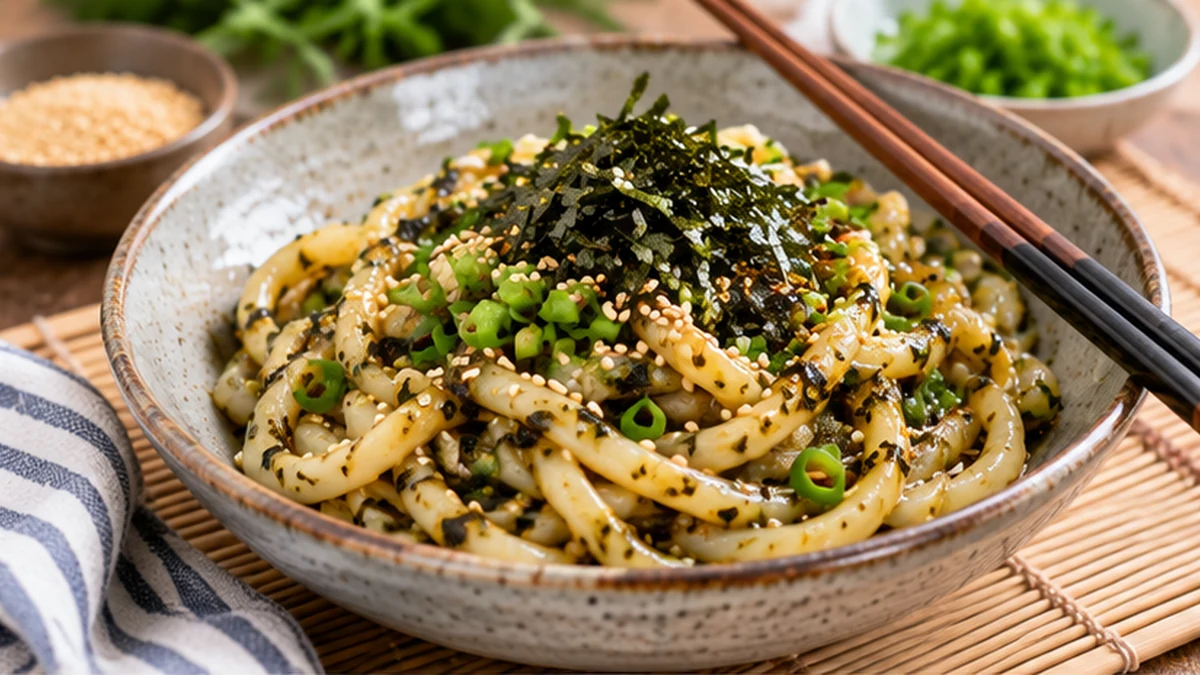
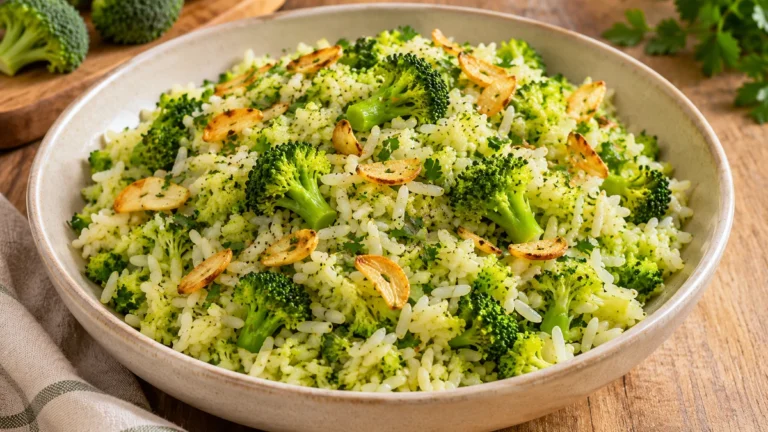
Viral seaweed udon noodles are thick, chewy Japanese-style wheat noodles coated in a glossy nori-sesame sauce. This 15-minute, stovetop version uses plain roasted nori, white miso, reduced-sodium soy sauce, and hot noodle water to create a light coating without cream, raw eggs, or a packet of seasoning. The result tastes savory and toasty rather than fishy. If you enjoy internet-famous chewy noodles, compare the very different dough method in our carrot button noodles recipe.
The trick is to crumble the nori finely, whisk the flavorings before the noodles finish cooking, and loosen the sauce with a small amount of hot water. The finished bowl should look glossy, with flecks of seaweed on every strand, not a puddle at the bottom. You can serve these viral seaweed udon noodles as a fast plant-based dinner or make them a side for a larger meal; our dinner recipe collection has more options for other nights.
This is an independent, Japanese-inspired home adaptation of the broader viral seaweed-pasta idea, not a claim to reproduce one creator’s precise video. It swaps thin spaghetti for thicker udon and uses a vegan miso-sesame emulsion instead of egg yolk or Parmesan. The quick and easy recipe collection is a good companion when you need meals with similarly short cook times.
Table of Contents
Why Viral Seaweed Udon Noodles Work
Thick udon strands hold a light sesame-nori sauce without needing dairy or a blended puree.
Finely crumbled roasted nori disperses across the noodles instead of forming wet clumps.
White miso provides a rounded savory background; reduced-sodium soy sauce adds salt in a measurable way.
Hot noodle water turns the sesame oil and miso mixture into a loose, glossy coating.
The ingredient list is vegan when you choose plain vegan udon, nori, miso, and soy sauce without fish-based additives.
A 15-minute method makes the recipe practical for a lunch break or busy weeknight.
What Is the Viral Seaweed Noodle Trend?
Recent seaweed-pasta videos feature roasted nori blended, crushed, or crumbled into a sauce for pasta. Some versions use egg yolk, grated cheese, butter, or seafood; others keep the ingredients simpler. A November 2026 recipe from i am a food blog, for example, uses spaghetti, egg yolks and Parmesan, so it is not the same as this dish. Our viral seaweed udon noodles version uses frozen udon and stays entirely plant-based.
Ingredients for Nori Sesame Udon
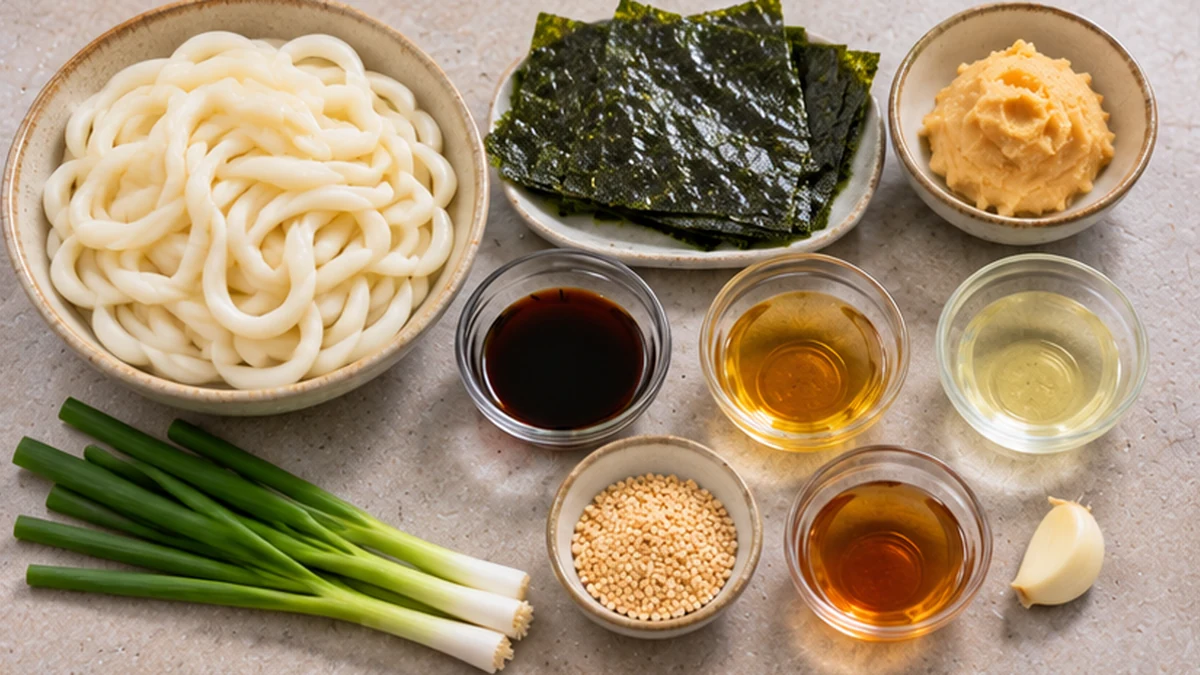
The list is short, but brand labels matter. Udon and soy sauce often contain wheat; miso typically contains soy; toasted sesame oil and sesame seeds contain sesame. Start with the quantities in the recipe card rather than pouring in extra soy sauce. If you are looking for a wheat-free noodle technique instead, our homemade gluten free egg noodles use a separate dough and contain eggs, so they are not a direct vegan replacement.
Frozen Plain Udon
Use two 7-ounce (200 g) portions of plain frozen udon, not noodle soup kits with flavor packets. Frozen udon usually releases into separate strands after a short simmer and has a satisfying elastic bite. Shelf-stable udon can work if its package instructs a similar cook time, but sodium and nutrition vary considerably. Our gluten free pasta guide explains why changing the noodle base often changes texture and cooking water behavior.
Plain Roasted Nori
Choose three regular sheets of plain roasted nori (about 7–8 g total), the same general kind used for sushi rolls. Avoid sweetened, spicy, or oily snack sheets because their seasonings can overpower the sauce. Nori is different from kombu, the thick kelp often used for broth; our Japanese daikon chicken hot pot uses kombu to flavor liquid, but this udon recipe needs brittle sheets that crumble easily.
White Miso and Reduced-Sodium Soy Sauce
Two teaspoons of light or white miso give a mellow fermented flavor. Two teaspoons of reduced-sodium soy sauce are enough to sharpen it, because miso and commercial udon can already contain salt. Check that the miso is plain and not a seafood-enriched dashi-miso product if making a vegan meal. The sushi with Algerian sauce recipe also uses nori, but it demonstrates a completely different savory-sauce combination and contains fish.
Sesame Oil, Acid, Garlic and a Little Sweetness
Toasted sesame oil is the aromatic fat in this recipe; it only takes one tablespoon for two servings. Two teaspoons rice vinegar brighten the sauce, one grated garlic clove adds bite, and one teaspoon maple syrup rounds out its salty edge. The sweetness is subtle, not dessert-like. Avoid substituting an entire tablespoon of honey if you are maintaining a vegan version, and measure rather than guessing because small changes are obvious in a short sauce.
Scallions and Sesame Seeds
Finish with two thinly sliced scallions and two teaspoons toasted sesame seeds. Keep most scallions raw for a crisp contrast to the chewy noodles; reserve the darker green tops for the final garnish. If you want another quick vegetable dish alongside the udon, our ribbon carrot salad has a similar bright crunch, although its default dressing includes honey and needs a plant-based sweetener for a vegan plate.
Recipe at a Glance
Yield: 2 generous bowls (one half of the cooked batch per serving).
Prep: 10 minutes to measure, crumble nori, mince garlic, and slice scallions.
Cook: about 5 minutes for frozen udon and a brief stovetop toss.
Total: 15 minutes, depending on the frozen udon package.
Sauce texture: shiny strands with visible nori flecks, never dry or soupy.
Heat: mild unless you add the optional pinch of chili flakes.
Thick frozen udon noodles tossed in a glossy, vegan roasted-nori, miso and sesame sauce with scallions. A 15-minute Japanese-inspired weeknight meal.
Total Time:15 minutes
Yield:2 servings (2 bowls)
Ingredients
Scale
2 (7-ounce / 200 g) portions plain frozen udon noodles (14 ounces / 400 g total; no seasoning packets)
3 full-size plain roasted nori sheets (about 7–8 g total), finely crumbled
2 teaspoons (12 g) white miso paste (plain, vegan; no fish-based dashi)
2 teaspoons (10 mL) reduced-sodium soy sauce
1 tablespoon (15 mL) toasted sesame oil
2 teaspoons (10 mL) unseasoned rice vinegar
1 teaspoon (7 g) pure maple syrup
1 medium garlic clove (about 3 g), finely grated
Up to 1/3 cup (80 mL) hot udon cooking water, added gradually
2 scallions (about 30 g), thinly sliced, divided
2 teaspoons (6 g) toasted sesame seeds
Optional: 1/4 teaspoon red pepper flakes (not included in nutrition estimate)
Instructions
Finely crumble the roasted nori sheets into pea-size pieces or smaller. Thinly slice the scallions and grate the garlic. Put a medium pot of water on to boil.
In a large heatproof bowl whisk together the crumbled nori, white miso, reduced-sodium soy sauce, sesame oil, rice vinegar, maple syrup, and grated garlic. It will look thick at first; do not add cold water.
Add the frozen plain udon to the boiling water and cook according to the package, typically 1 to 3 minutes, stirring gently only after the strands begin to loosen. Before draining, reserve at least 1/3 cup hot cooking water.
Whisk 2 tablespoons hot udon water into the nori-miso mixture until smooth enough to pour. If necessary, add another tablespoon at a time; do not add the entire reserved amount unless needed.
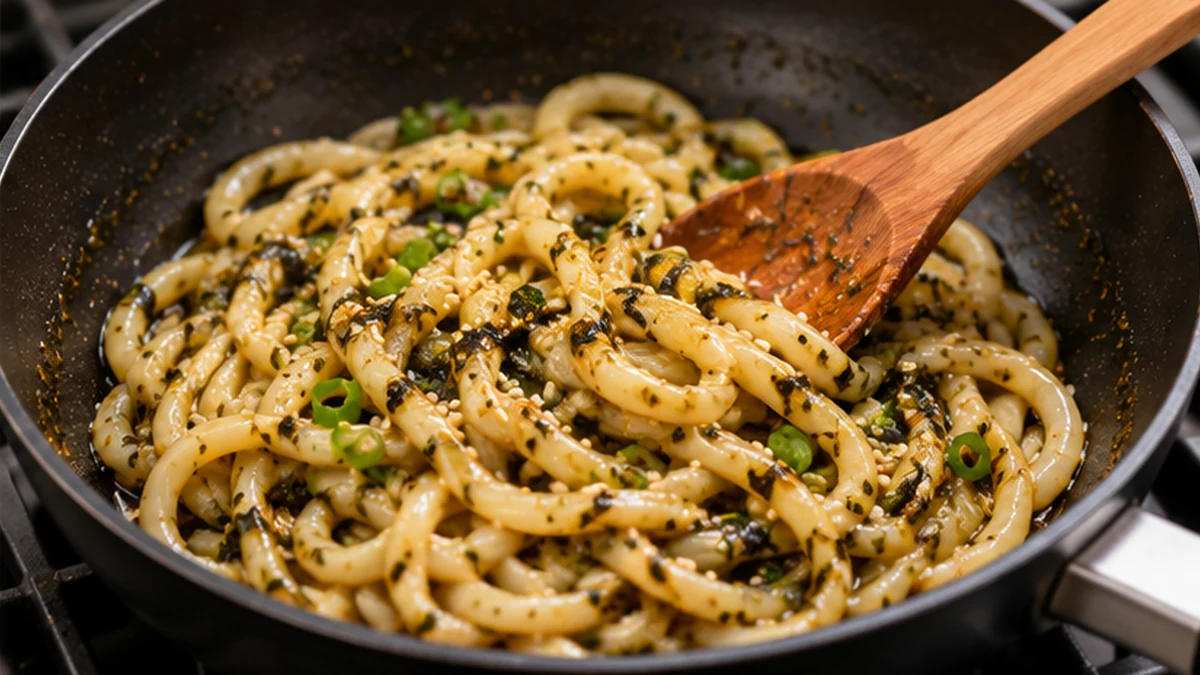
Drain the udon, transfer to a warm nonstick skillet or the warm, empty pot over low heat, and toss with the sauce for 30 to 60 seconds until the strands are glossy and evenly speckled with nori. Remove from heat.
Fold in most scallion whites and pale greens. Divide into 2 bowls and top with remaining scallions, sesame seeds, and optional red pepper flakes. Serve immediately.
Notes
Total time assumes plain frozen udon that cooks in 1 to 3 minutes; dried udon needs longer. Check the package directions.
For vegan preparation, check all udon, miso, and sauces for fish-stock or other animal ingredients. This version contains wheat, soy, and sesame and is not gluten-free.
Use regular plain roasted nori, not kombu or kelp; seaweed varieties differ in iodine content and flavor.
Start with just 2 tablespoons of reserved hot noodle water. Too much water gives thin sauce; extra hot water can be stirred in gradually to fix thick sauce.
Nutrition is an estimate for one-half batch using representative plain frozen udon and seasoning values. The sodium and calories of udon and miso vary widely by brand; read the actual labels.
For safety, refrigerate leftovers within 2 hours at 40°F or colder and use within 3 to 4 days; noodle texture is best the day made. Do not freeze the finished dish if texture is the priority.
Author:Adam Moretti
Prep Time:10 minutes
Cook Time:5 minutes
Category:Main Course
Method:Stovetop
Cuisine:Japanese-Inspired
Diet:Vegan (check all packaged ingredients); contains wheat, soy, and sesame
How to Make Viral Seaweed Udon Noodles
1. Crumble the Nori Very Fine
Tear the three sheets into small pieces, then rub them between dry fingertips or pulse briefly in a clean, dry mini chopper. Aim for loose flakes no bigger than a small pea. Large intact strips turn leathery after they hit liquid and gather around a few strands instead of coating the entire bowl. If you have made homemade sushi rolls, this is the same seaweed in a different form: flavoring, not wrapping.
2. Whisk a Concentrated Sauce
In a large heatproof bowl combine nori flakes, white miso, reduced-sodium soy sauce, toasted sesame oil, rice vinegar, maple syrup, and grated garlic. The mixture will look paste-like and uneven; do not try to dilute it with cold tap water. Hot water from the udon pot will soften the miso and help the seaweed distribute. Keep a flexible spatula or tongs close by so the noodles can be tossed as soon as they are tender.
3. Cook the Udon Just Until It Loosens
Bring a medium saucepan of water to a boil and add the frozen noodles. Follow the brand instructions—many frozen portions separate and heat through in roughly 1 to 3 minutes. Stir carefully with chopsticks or tongs; do not boil them for ten minutes in pursuit of extra softness. Overcooked udon loses its springiness, just as the carrot dough in our chewy carrot button noodles becomes waterlogged when boiled too long.
4. Use Hot Noodle Water to Make It Glossy
Before draining, scoop out one-third cup of the hot cooking water. Start by whisking two tablespoons into the concentrated nori mixture until the miso dissolves. Add another tablespoon if it still looks like a paste. The starch released by udon can help the mixture cling, but the brand and cooking method affect how much starch is available; add only enough water to make a pourable coating. Do not blindly add the entire third cup.
5. Toss Briefly Over Low Heat
Drain the noodles and add them to a nonstick skillet over low heat or back to the warm, drained pot. Pour in the sauce and toss for 30 to 60 seconds until every strand looks evenly coated. Keep the temperature gentle so the sesame aroma stays pleasant and the nori does not stick to the pan. This gentle finish is different from stir-frying rice hard in a hot wok, as in our high protein chicken fried rice meal prep recipe.
6. Finish and Serve Immediately
Turn off the heat. Fold in the white and pale-green scallion slices, then divide the noodles between two warm bowls. Sprinkle on the remaining scallions and toasted sesame seeds. Add a tiny pinch of red pepper flakes if you like heat. Taste before adding anything salty. The sauce should lightly cling and shine; if it sits as a thick lump, loosen with one more tablespoon of hot water.
How to Tell the Sauce Is Right
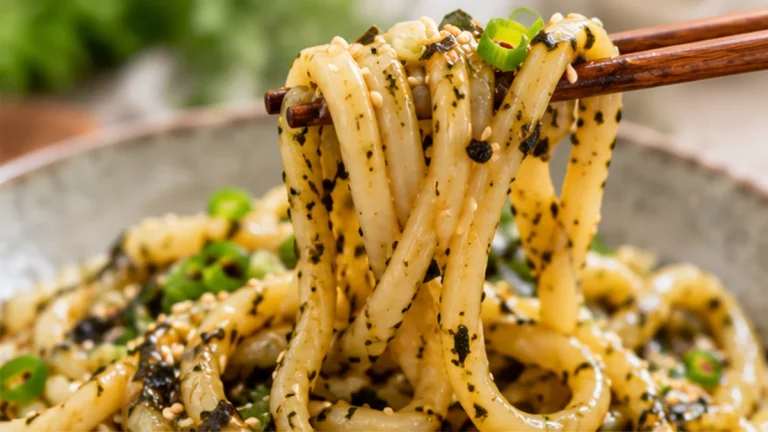
When viral seaweed udon noodles are correctly balanced, you can see small black-green nori pieces distributed through the pale, thick strands and a light sheen from sesame oil. Each forkful should taste nutty and savory first, with gentle acidity from rice vinegar. If the noodles taste aggressively salty, the solution is not more nori or soy; use a little extra plain cooked udon or a tablespoon of water. For a contrasting spicy noodle dinner, compare the serving approach in our peanut butter ramen with chicken and edamame.
Troubleshooting the Most Common Problems
The Nori Forms Sticky Clumps
This usually happens when large nori pieces land in hot water without being dispersed through a seasoning base. Break the sheets finely and combine them with the oil, miso, and soy before adding hot water. If a few clumps remain, use tongs to separate them while tossing. In recipes where nori is a wrapper, like our salmon sushi with Algerian-style sauce, keeping sheets intact is useful; for sauce, that is the opposite of what you want.
The Noodles Taste Too Strongly of the Sea
First check the product: plain roasted nori has a relatively mild toasted aroma, while kelp, wakame, and highly seasoned seaweed snacks have different flavor profiles. Do not replace three nori sheets with three sheets of kombu. To soften a batch that tastes too concentrated, add more plain udon, a small splash of cooking water, or a little rice vinegar. Next time reduce the nori to two sheets without increasing soy sauce.
The Sauce Is Bitter, Greasy, or Flat
Garlic scorches easily and toasted sesame oil loses its delicate aroma when heated hard for too long. Work on low heat and finish promptly. If the result feels greasy, reduce sesame oil from one tablespoon to two teaspoons next time and lean on hot noodle water for shine. If it tastes flat, a tiny extra dash of vinegar may help before any extra sodium. Our quick-and-easy dinner collection includes other sauces where acid is the final balancing step.
Ingredient Swaps and Variations
For a spicy version: add 1/4 teaspoon red pepper flakes at the table, or a little vegan chili oil without seafood ingredients. Taste before adding more; the nori-sesame flavor should remain noticeable.
To add protein: serve with pan-seared tofu or steamed edamame, seasoning them separately and updating the nutrition if you track it. Avoid adding the egg or seafood from some viral nori-pasta versions if you want the recipe to remain vegan. A reader who prefers a meat-based pairing can explore yakiniku chicken chashu as a separate non-vegan recipe; it is not part of this recipe card.
To change the noodles: use plain wheat ramen or spaghetti only if that is what you have. The timing, water absorption, and calorie count change; this is specifically a viral seaweed udon noodles recipe, built around thick udon. For a dedicated gluten-free option, the process for gluten-free pasta dough shows why a replacement needs more than a one-for-one swap. Do not assume this recipe is gluten-free with standard soy sauce and udon.
Can You Prepare the Sauce Ahead?
For viral seaweed udon noodles, you can crumble nori and measure the seasonings earlier in the day, but for the best texture whisk the water into the sauce only just before serving. Keep the dry nori airtight and the miso mixture chilled in a separate closed container if prepared in advance. Fully assembled noodles absorb sauce as they rest and lose their initial shine. If you are batch-cooking several dishes, our complete recipe index helps you choose foods that tolerate make-ahead storage better.
Refrigerate leftover cooked noodles in shallow covered containers within two hours of preparation (one hour when above 90°F). Keep the refrigerator at or below 40°F and use refrigerated leftovers within three to four days. These limits follow the USDA guidance on leftovers; they are general food-safety windows, not a promise that udon texture will remain perfect for four days. For quality, plan to eat this dish the next day.
To reheat viral seaweed udon noodles, place them in a covered skillet with one or two tablespoons water and warm gently, stirring until heated through. Fresh scallions and sesame are best added after reheating. Freezing the finished dish is technically possible, but it often gives soft noodles and dull nori flavor, so it is not recommended for texture. If you need a reliable longer-term meal prep plan, look at our chicken fried rice meal prep as a different preparation with its own storage guidance.
Seaweed, Allergens, and Sensible Portions
These viral seaweed udon noodles contain wheat, soy, and sesame with the specified ingredients. Check all packages, including the udon, miso and soy sauce, and review cross-contact information if allergies are relevant. The FDA allergen-label guide identifies wheat, soybeans, and sesame among the nine major food allergens. Do not label a wheat-udon dish gluten-free merely because nori is gluten-free by itself.
Seaweed also contributes iodine, but content varies greatly by species and product. Use the specified modest amount of plain nori, not an equal quantity of kelp or kombu powder. The NIH iodine reference describes wide variability among seaweed products; this is a culinary recipe, not advice to use seaweed to treat or prevent thyroid problems. If you need an iodine restriction, ask your clinician about your specific product and eating pattern.
For this viral seaweed udon noodles recipe, a practical portion is half the batch with the sauce spread evenly between the bowls. Udon products are particularly variable in sodium, so the estimate below assumes plain frozen udon rather than a seasoned soup kit. Packaged label values should override generic databases. USDA FoodData Central can help estimate basic ingredients, but it cannot replace your exact udon or miso package label.
Viral Seaweed Udon Noodles FAQs
Are viral seaweed udon noodles vegan?
Yes, these viral seaweed udon noodles are vegan if you buy plain wheat udon, plain nori, white miso, and soy sauce without fish-based stock or other animal ingredients. Some Japanese-style ready sauces contain bonito or fish extracts, so read labels. The same caution applies when comparing different recipes from our dinner ideas page; the category here reflects the recipe actually written, not every possible substitution.
Can I use seaweed snacks instead of nori sheets?
Use plain unseasoned roasted seaweed snacks only if you know their weight and ingredients. Small snack packets often contain oil and salt and are not the same size as a full sushi nori sheet. Start with about 7–8 g plain roasted nori total, then taste. Sweet or spicy snack varieties can make the udon unexpectedly salty or sugary. Avoid exchanging it for kombu.
Can I make viral seaweed udon noodles without miso?
Yes, but the result loses some rounded savoriness. Substitute a small spoon of tahini and water as described above, and taste before adding extra soy sauce. Do not substitute stock powder with unknown fish ingredients if keeping the dish vegan. If the sauce becomes too thick, a little hot noodle water is usually enough to restore a glossy coating.
Is this an authentic Japanese udon recipe?
No. These viral seaweed udon noodles are a modern Japanese-inspired interpretation combining familiar ingredients: udon, nori, miso, sesame, and soy. It is not presented as a traditional regional preparation. If you want a different Japanese-inspired cooking format, the daikon chicken hot pot uses kombu broth rather than a nori sauce and includes meat.
What should I serve with seaweed udon?
For a plant-based meal, add quick-seared tofu, edamame, cucumbers, or a light salad with a vegan dressing. If you want something crisp, the ribbon carrot salad, made with maple syrup instead of its usual honey, works well. You can also keep the noodles as a modest side for a more substantial meal from our lunch ideas, but remember most linked recipes have their own dietary tags.
Final Tips for a Better Bowl
The best viral seaweed udon noodles start with plain roasted nori, measured miso and soy sauce, and thick udon cooked just until tender. Reserve cooking water before draining, then toss over low heat for less than a minute so the noodles stay springy and evenly glossy. Serve immediately with scallions and sesame. For another quick Asian-inspired recipe with a distinctly different method, visit our chicken fried rice meal prep, or browse all Healthy American Bites recipes for your next cooking project.
Reviewed recipe options
Make this recipe fit me
Choose one of seven popular diet options. NutriMatch will confirm whether the recipe already fits, show a reviewed adaptation when available, or recommend recipes that match your choice.
Please choose a diet first.
Already a reviewed match
This recipe already fits Dairy-Free.
No changes are needed based on its reviewed NutriMatch classification. Check the complete ingredients, product labels, and serving details for your own needs.
Recipe details, product formulas, and cross-contact information can change. Confirm current labels and use professional guidance when medically necessary.
Not available for this recipe
This recipe cannot currently be made Gluten-Free with a reviewed adaptation.
NutriMatch will not guess at substitutions. Try one of these recipes that is already reviewed for your choice.
Recipe details, product formulas, and cross-contact information can change. Confirm current labels and use professional guidance when medically necessary.
Not available for this recipe
This recipe cannot currently be made High Protein with a reviewed adaptation.
NutriMatch will not guess at substitutions. Try one of these recipes that is already reviewed for your choice.
Recipe details, product formulas, and cross-contact information can change. Confirm current labels and use professional guidance when medically necessary.
Not available for this recipe
This recipe cannot currently be made Keto with a reviewed adaptation.
NutriMatch will not guess at substitutions. Try one of these recipes that is already reviewed for your choice.
Recipe details, product formulas, and cross-contact information can change. Confirm current labels and use professional guidance when medically necessary.
Not available for this recipe
This recipe cannot currently be made Low Carb with a reviewed adaptation.
NutriMatch will not guess at substitutions. Try one of these recipes that is already reviewed for your choice.
Recipe details, product formulas, and cross-contact information can change. Confirm current labels and use professional guidance when medically necessary.
Already a reviewed match
This recipe already fits Vegan.
No changes are needed based on its reviewed NutriMatch classification. Check the complete ingredients, product labels, and serving details for your own needs.
Recipe details, product formulas, and cross-contact information can change. Confirm current labels and use professional guidance when medically necessary.
Already a reviewed match
This recipe already fits Vegetarian.
No changes are needed based on its reviewed NutriMatch classification. Check the complete ingredients, product labels, and serving details for your own needs.
Recipe details, product formulas, and cross-contact information can change. Confirm current labels and use professional guidance when medically necessary.
Freeze and pan-sear konnyaku for a chewy vegan Japanese-inspired appetizer with bright scallion-sesame sauce. Includes prep, troubleshooting, and nutrition.