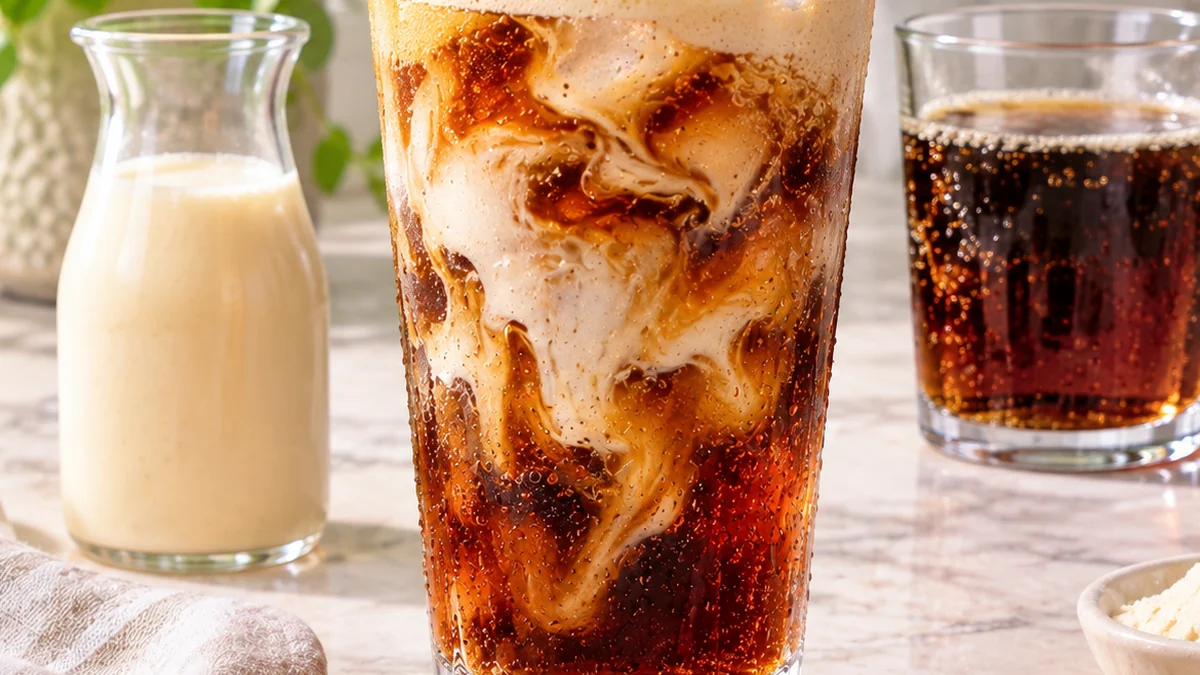
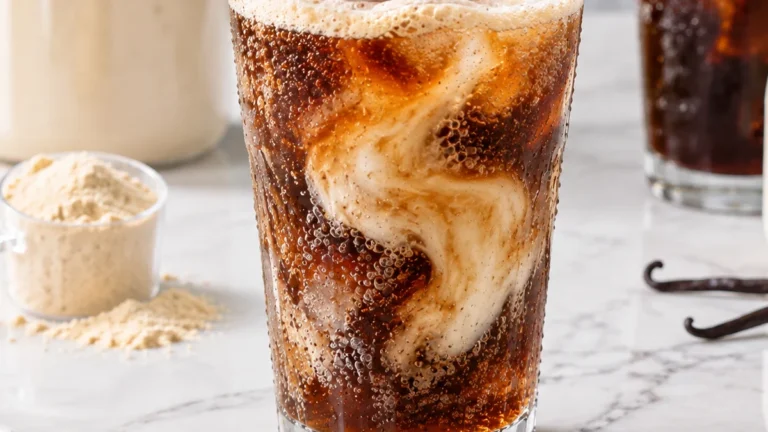
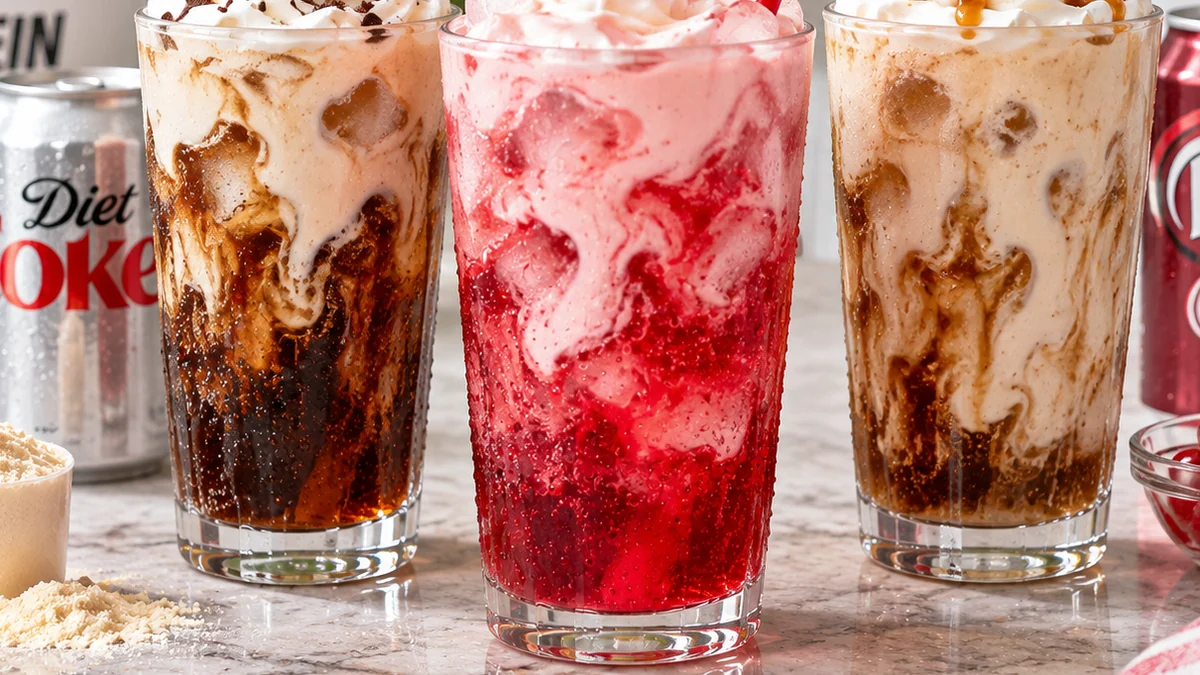
This protein soda recipe takes two cold ingredients—diet cola and a ready-to-drink vanilla protein shake—and turns them into a fizzy, creamy, dirty-soda-style drink in about three minutes. The original viral version is often called Protein Diet Coke. It tastes like a lightly vanilla-flavored cola float, with no ice cream or blender required.
The useful trick is pouring slowly: add ice, pour the soda partway, wait for the bubbles to settle, then add the vanilla shake along the side of the glass. The shake supplies the protein; Diet Coke does not. You can use the same assembly method with Dr Pepper Zero Sugar or root beer. For another unexpected soda combination, see our Pickle Dr Pepper recipe, which uses brine instead of protein milk.
Table of Contents
Why This Protein Soda Recipe Works
Only two main ingredients and three minutes of hands-on preparation.
A chilled vanilla protein shake adds a creamy texture and most of the nutrition.
Cola, ice, and slow pouring help preserve carbonation instead of making an overflowing glass.
No powdered protein goes directly into carbonated liquid, so clumps are easier to avoid.
The same technique works with several zero-sugar sodas, but each has a different flavor and caffeine profile.
Nutrition is transparent: use the label of your particular protein shake rather than assuming every brand has the same calories or protein.
This is a fun drink variation, not a weight-loss treatment or a replacement for a balanced diet. The trend has circulated since 2024, and it has also appeared in discussions of high-protein drinks. For a completely different drink format, try our loaded tea without Herbalife recipe, which does not rely on a protein shake.
Protein Soda vs. Protein Diet Coke: What Is the Difference?
“Protein soda” is a broad phrase. It can mean a homemade soda mixed with a protein shake, but it can also describe a commercially manufactured, ready-to-drink sparkling protein beverage. This article is specifically about the homemade creamy version, where a protein shake is poured into cola. The narrower phrase “protein Diet Coke recipe” points to one familiar combination: Diet Coke and a vanilla protein shake.
The wider term fits an article that covers cola, Dr Pepper, and cream-soda variations together; the narrower name belongs in the introduction and in a clearly labeled recipe section. A separate second article for the same two-ingredient drink would simply duplicate the search intent.
Ingredients for This Protein Soda Recipe
1 cup (8 fluid ounces) cold Diet Coke: Use a can or bottle that has been refrigerated first. Eight ounces are enough to keep the drink soda-forward; you do not need to use a whole 12-ounce can. The remaining soda can be consumed separately.
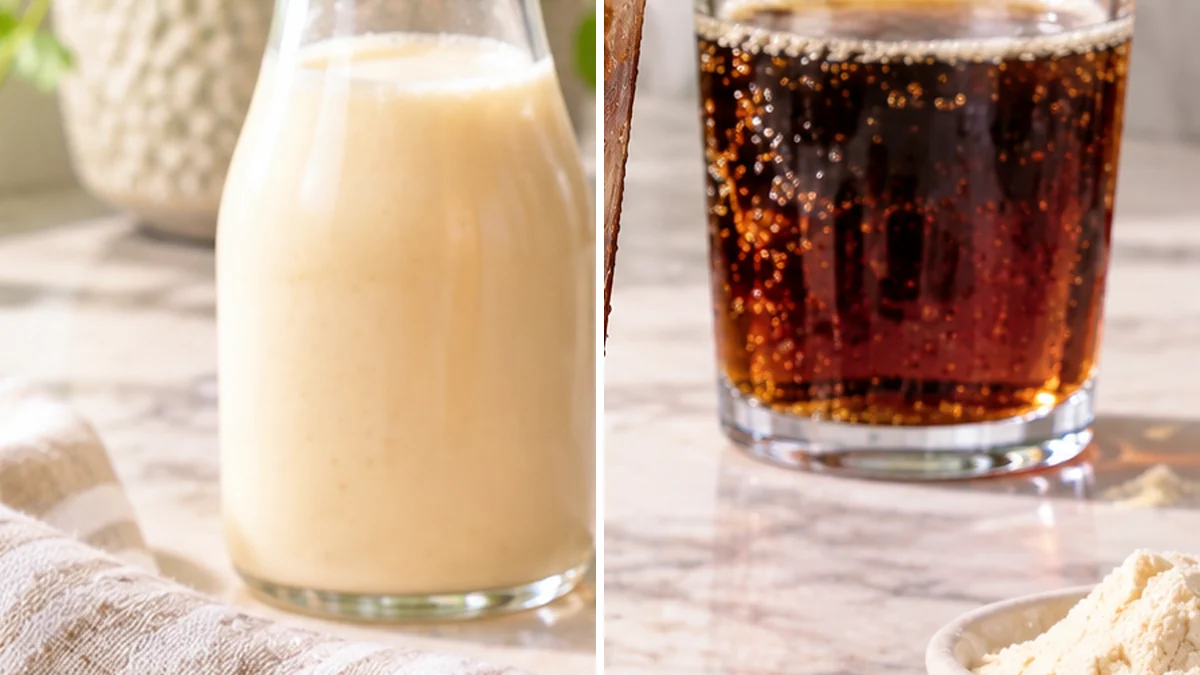
1/2 cup (4 fluid ounces) chilled ready-to-drink vanilla protein shake: Choose a premixed shake intended for drinking, such as a product with milk or another protein base. Its vanilla flavor rounds out the cola and adds the protein. Do not substitute a scoop of dry powder in equal volume; powder requires its own mixing directions and may foam or clump in soda.
1 cup ice: Ice chills and dilutes the drink slightly. Choose a tall 16- to 20-ounce glass with extra headroom for bubbles. Optional: a few drops of vanilla extract after the drink settles, though the original two-ingredient flavor needs nothing more.
The recipe card below models a shake with approximately 160 calories and 30 grams of protein per 11.5-fluid-ounce bottle, of which this drink uses 4 fluid ounces. That makes roughly 56 calories and 10 grams of protein per glass from the shake, plus zero calories from Diet Coke; brands and serving sizes vary. The numbers are an illustrative label-based estimate, not laboratory-tested nutrition. A representative label is the Premier Protein Vanilla shake; always check the container you actually use.
How to Make Protein Diet Coke
For a smooth protein soda recipe, keep both liquids cold and work over a sink or tray for the first attempt. The video-style dramatic pour looks entertaining, but it can trigger a large foam cap and waste half the drink. You want gentle fizz, not a shaken milkshake.
The viral two-ingredient creamy protein soda made with chilled Diet Coke and a ready-to-drink vanilla protein shake.
Total Time:3 minutes
Yield:1 drink
Ingredients
Scale
1 cup (8 fl oz / 240 ml) Diet Coke, well chilled
1/2 cup (4 fl oz / 120 ml) ready-to-drink vanilla protein shake, well chilled
1 cup ice cubes
Instructions
Fill a tall 16- to 20-ounce glass with the ice.
Slowly pour the chilled Diet Coke down the inside wall of the glass; pause 10 to 20 seconds for the bubbles to settle.
Measure 1/2 cup chilled vanilla ready-to-drink protein shake and add it gradually along the inside of the glass.
Stir once or twice very gently if desired. Serve immediately while fizzy.
Notes
Use a prepared, drinkable shake rather than adding dry protein powder directly to soda.
The nutrition example assumes a shake labeled 160 calories and 30 g protein per 11.5 fl oz bottle. Four fluid ounces supply about 56 calories and 10 g protein; actual brands and serving sizes vary.
To change flavors, use Dr Pepper Zero Sugar, zero-sugar root beer, or zero-sugar orange soda in place of Diet Coke.
Do not shake the soda and protein together. Pour slowly to avoid overflow.
Not a weight-loss remedy. Check package labels for caffeine, allergens, and sweeteners.
For a representative reference product, see https://www.premierprotein.com/products/vanilla-protein-shake (160 calories and 30 g protein per 11.5-fl-oz shake as listed when reviewed); package labels change.
Author:Adam Moretti
Prep Time:3 minutes
Cook Time:0 minutes
Category:Drinks
Method:No-Cook
Cuisine:American
Diet:Vegetarian
Step-by-Step Tips for a Creamier Drink
1. Chill Everything First
Refrigerate the Diet Coke and vanilla shake for at least an hour if they are not already cold. A warm shake will foam and separate more obviously when it meets cold soda. A cold glass is helpful, but not required; ice does most of the work.
2. Use a Tall Glass and Add Ice
Drop the ice in before the soda. Choose a glass that has substantially more space than the 12 fluid ounces of liquid you will add. Because you are combining a carbonated drink with a thicker protein milk, leaving space prevents an overflow.
3. Pour Diet Coke Slowly
Pour the cola down the inside wall rather than directly onto a tall pile of ice. Let the fizz settle for 10 to 20 seconds. The result should still be bubbly, not flat. Do not shake the soda or place both liquids together in a cocktail shaker.
4. Add the Protein Shake in a Thin Stream
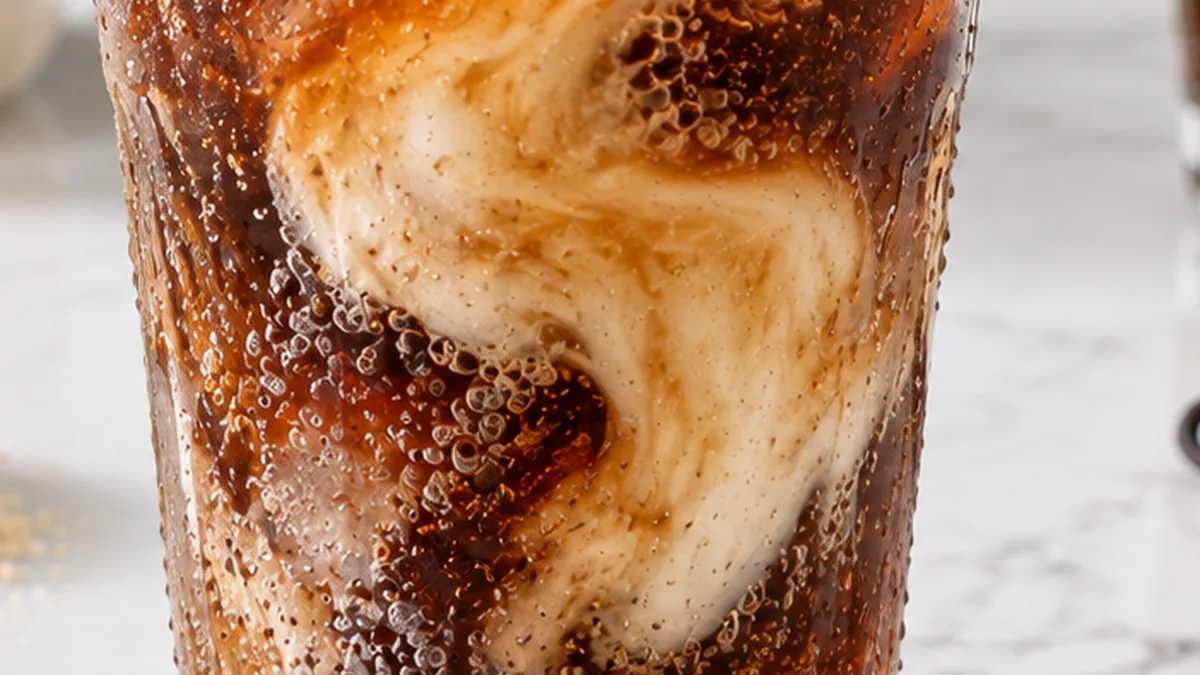
Measure 1/2 cup of the chilled shake and pour it slowly along the side of the glass. It will form pale ribbons through the cola before mixing. Stir only once or twice with a long spoon, or leave the marbling for the first sip. Serve promptly: carbonation fades, and the mixture can form layers as it stands.
Protein Soda Recipe Variations: Dr Pepper, Root Beer, and Orange
All three versions use the same proportions as the base protein soda recipe: 1 cup of cold zero-sugar soda, 1/2 cup vanilla ready-to-drink protein shake, and ice. They change the flavor, not the fundamental method. Use the nutrition on the chosen soda and shake labels; do not copy the base recipe nutrition if you change them.
Protein Dr Pepper
Replace Diet Coke with 1 cup Dr Pepper Zero Sugar for a deeper cherry-spice profile. Pour slowly over ice and add the vanilla shake last. This is the closest option to a creamy cherry-cola float. If you already enjoy unusual Dr Pepper combinations, the site also has a pickle Dr Pepper trend recipe—very different flavors, but the same quick format.
Protein Root Beer Float
Use 1 cup zero-sugar root beer with vanilla protein shake. Root beer already has a vanilla-spice character, so this variation tastes the most like a root beer float. Do not add ice cream to the base recipe if you want the nutrition estimate to remain comparable.
Protein Orange Cream Soda
Use 1 cup cold zero-sugar orange soda, then add the vanilla shake slowly. It produces a creamsicle-style flavor; it may foam more than cola depending on the brand. Check the ingredient list and use a different flavor if the drink curdles or the texture seems unpleasant.
What Can Go Wrong With a Protein Soda Recipe?
It Foams Over
The most common problem is a too-small glass, room-temperature ingredients, or dumping a full shake into highly carbonated soda. Use a larger glass, chill both drinks, pour slowly, and pause between steps. A small foamy layer is normal; a volcano is not necessary for the recipe.
The Drink Separates or Looks Grainy
Milk proteins and carbonated acidic soda do not always stay perfectly blended. Some shakes look smooth while others develop small flecks. Refrigerate both components and serve immediately; if the mixture separates or tastes unpleasant, try a different compatible prepared shake rather than assuming mixing harder will solve it. Check the product label for storage instructions. The same principle of quick service matters for other homemade chilled drinks, including our strawberry cold foam.
It Tastes Too Sweet
Choose a more cola-forward ratio: increase soda by 2 fluid ounces rather than adding syrup. Vanilla shakes can be sweet on their own even when their nutrition labels show little added sugar. Chocolate or caramel protein drinks change the flavor substantially and may overpower the cola.
It Tastes Flat
Open the soda only when you are ready to assemble. The bubbles start disappearing as soon as you pour, and extra stirring speeds the process. Unlike a coffee jelly in a bottle, this is not intended for make-ahead storage. Drinks with a different fruit syrup, like our blueberry coffee recipe, also need their own storage instructions.
How Much Protein Is Actually in This Protein Soda Recipe?
The protein comes almost entirely from the shake. For example, a ready-to-drink shake labeled as 30 grams of protein per 11.5-ounce bottle delivers around 10 grams of protein when you use 4 ounces. That is less than the protein in the entire bottle. If you pour the whole bottle into soda, the calories, protein, and liquid volume all increase.
Read the protein and calories on your product label and calculate based on the portion used. A shake containing 20 grams per bottle produces a different total from a shake containing 30 or 42 grams. Diet Coke itself contributes no meaningful protein. For a separate high-protein drink without carbonation, browse our high-calorie high-protein smoothie, which has a completely different purpose and macronutrient profile. Another quick option is our high-protein overnight oats when you want a meal rather than a fizzy beverage.
Is Protein Soda Healthy?
Protein soda can fit into a varied eating pattern as an occasional drink, but “high protein” does not automatically mean better for everyone. The shake may contain sweeteners, dairy, gums, or other additives; the soda may contain caffeine. Someone sensitive to caffeine, lactose, or certain sweeteners should check the labels and choose accordingly. There is no evidence that adding protein shake to Diet Coke produces a special fat-burning effect.
Healthline describes Protein Diet Coke as a social-media spinoff of dirty soda, and registered-dietitian commentary focuses on the ingredients rather than promising weight loss. See Healthline’s reporting on the trend and MyFitnessPal’s dietitian perspective. More protein is not always necessary, and an ordinary meal or snack might be a more useful choice depending on individual needs.
For a genuinely different cold coffee option, try our vegan iced coffee. For a sweeter dessert-style drink, the cookies and cream latte is closer to a coffeehouse treat. Neither should be presented as the same recipe or with the same nutrition.
Protein Soda Recipe Storage, Make-Ahead, and Serving
Mix only what you plan to drink now. When the soda and shake are combined, carbonation falls and the texture changes. Refrigerate the unopened shake according to its package; if it is shelf-stable, chill it before use but follow the label after opening. Do not leave a dairy-containing prepared drink out at room temperature for extended periods. See FDA cold food safety advice for general refrigeration guidance.
You can pre-chill the glass and set out a measuring cup, but do not prepare a full pitcher hours in advance. If you are preparing several portions for a party, measure each drink individually so the proportions stay consistent and guests can choose their preferred soda.
FAQs About Protein Soda
What is the best soda for a protein soda recipe?
Diet Coke and a vanilla ready-to-drink protein shake are the familiar viral starting point. Dr Pepper Zero Sugar gives a spicy cherry-like twist, while zero-sugar root beer creates a more traditional float flavor. Choose the soda you already like, since the vanilla shake will not hide a flavor you dislike.
Can I use protein powder instead of a shake?
It is not a direct one-for-one substitute. Dry protein powder can clump when added to fizzy liquid and can create excessive foam. If you want to use powder, mix it completely with a small amount of still liquid first according to its package directions, then test a small amount with soda; the outcome and nutrition will differ from this ready-to-drink recipe.
Does Protein Diet Coke taste like a root beer float?
It has a somewhat similar creamy, fizzy character, but it is not identical to a float made with ice cream. If you specifically want a root beer float flavor, use the zero-sugar root beer variation with vanilla shake.
Can I make protein soda without caffeine?
Yes. Choose a caffeine-free soda and a protein shake without added caffeine. Verify both product labels; some specialty shakes include coffee or other stimulating ingredients.
Can I make the drink ahead of time?
It is best served immediately. The carbonation fades and the milk-and-soda mixture can separate. Keep the components cold and separate until you are ready to serve.
How much protein does a glass have?
It depends on the protein content and volume of your shake. In the illustrative recipe card, four fluid ounces of a shake labeled 30 grams per 11.5-ounce bottle provide approximately 10 grams of protein. Your package may have different values.
Is this the same as canned sparkling protein soda?
No. This recipe mixes cola with a creamy ready-to-drink shake. Commercial sparkling protein sodas are manufactured beverages with different ingredients, textures, and nutritional profiles. Do not assume the two products are interchangeable.
Final Tips
The best protein soda recipe is simple: 8 fluid ounces of very cold cola, 4 fluid ounces of vanilla protein shake, a tall glass of ice, and patience while pouring. Taste it fresh, and treat the flavor variations as experiments rather than as separate recipes that require their own near-duplicate articles.
Try the Diet Coke version first, then decide whether you prefer Dr Pepper Zero Sugar, root beer, or orange soda. The appeal is the creamy fizz; the amount of protein is determined by the shake you actually pour. For another unusual, social-media-style drink, our cloud coffee offers a different kind of texture without blending protein milk into soda.
Reviewed recipe options
Make this recipe fit me
Choose one of seven popular diet options. NutriMatch will confirm whether the recipe already fits, show a reviewed adaptation when available, or recommend recipes that match your choice.
Please choose a diet first.
Not available for this recipe
This recipe cannot currently be made Dairy-Free with a reviewed adaptation.
NutriMatch will not guess at substitutions. Try one of these recipes that is already reviewed for your choice.
Recipe details, product formulas, and cross-contact information can change. Confirm current labels and use professional guidance when medically necessary.
Not available for this recipe
This recipe cannot currently be made Gluten-Free with a reviewed adaptation.
NutriMatch will not guess at substitutions. Try one of these recipes that is already reviewed for your choice.
Recipe details, product formulas, and cross-contact information can change. Confirm current labels and use professional guidance when medically necessary.
Not available for this recipe
This recipe cannot currently be made High Protein with a reviewed adaptation.
NutriMatch will not guess at substitutions. Try one of these recipes that is already reviewed for your choice.
Recipe details, product formulas, and cross-contact information can change. Confirm current labels and use professional guidance when medically necessary.
Not available for this recipe
This recipe cannot currently be made Keto with a reviewed adaptation.
NutriMatch will not guess at substitutions. Try one of these recipes that is already reviewed for your choice.
Recipe details, product formulas, and cross-contact information can change. Confirm current labels and use professional guidance when medically necessary.
Not available for this recipe
This recipe cannot currently be made Low Carb with a reviewed adaptation.
NutriMatch will not guess at substitutions. Try one of these recipes that is already reviewed for your choice.
Recipe details, product formulas, and cross-contact information can change. Confirm current labels and use professional guidance when medically necessary.
Not available for this recipe
This recipe cannot currently be made Vegan with a reviewed adaptation.
NutriMatch will not guess at substitutions. Try one of these recipes that is already reviewed for your choice.
Recipe details, product formulas, and cross-contact information can change. Confirm current labels and use professional guidance when medically necessary.
Already a reviewed match
This recipe already fits Vegetarian.
No changes are needed based on its reviewed NutriMatch classification. Check the complete ingredients, product labels, and serving details for your own needs.
Recipe details, product formulas, and cross-contact information can change. Confirm current labels and use professional guidance when medically necessary.