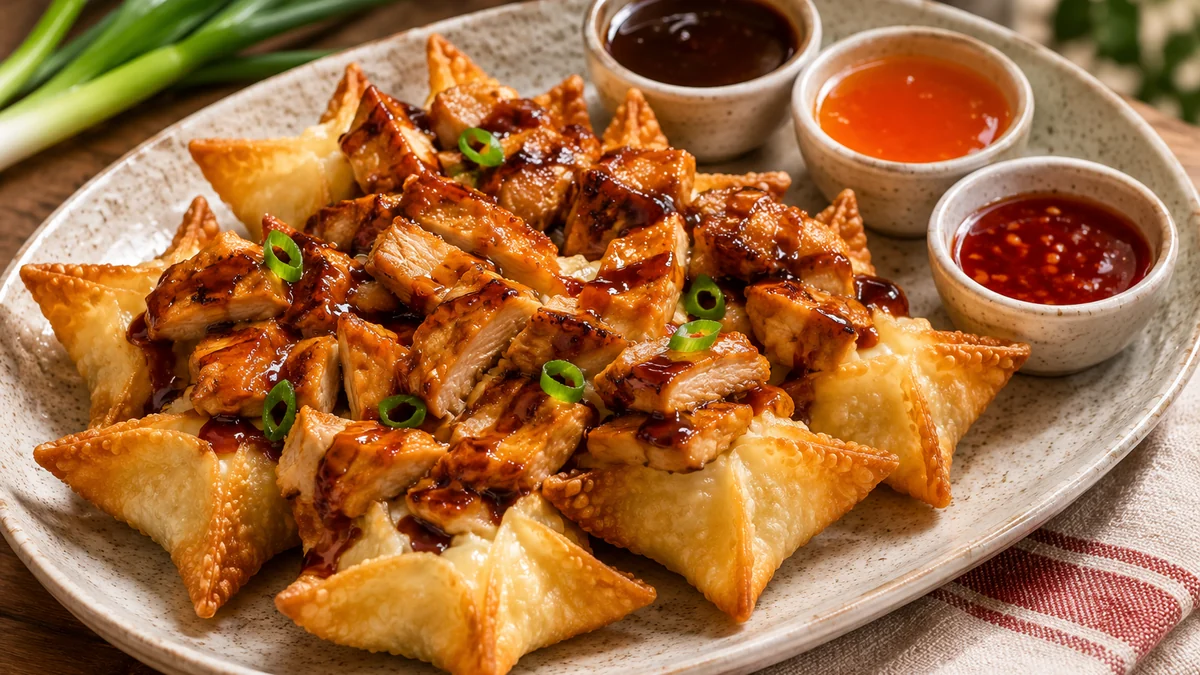
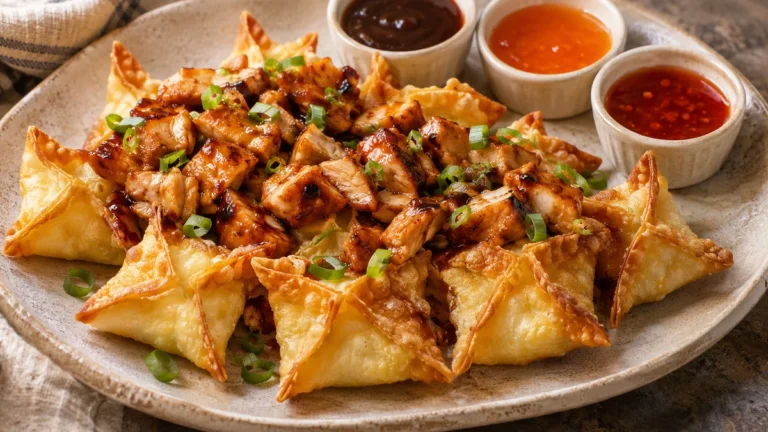
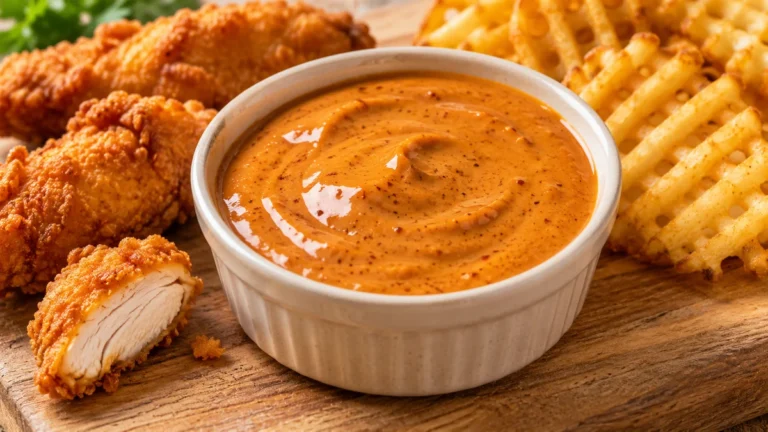
These rangoon nachos are a homemade take on Panda Express’s new digital-menu mashup: crisp cream cheese rangoons piled with sliced teriyaki chicken, with teriyaki, sweet-and-sour, and chili sauces for dipping or drizzling. The base is a filled wonton, not a tortilla chip, and this recipe makes 12 rangoons with enough chicken for four appetizer servings. If your party wants a creamy chicken dip instead, our high-protein Buffalo chicken dip is a completely different, scoopable appetizer.
The rangoon nachos idea is practical to recreate at home: use square refrigerated wonton wrappers, a measured cream cheese filling, a quick stovetop chicken glaze, and three small sauce dishes. There is no imitation crab in this version. The technique follows the chain’s cream cheese rangoon plus teriyaki chicken concept, not the older viral crab-rangoon-nacho recipes where crab filling is sandwiched between flat wonton chips.
In November 2026, Allrecipes reported the limited-time Panda Express menu item in Teriyaki Chicken and BBQ Brisket versions, with six cream cheese rangoons per restaurant order and sauce packets on the side. Delivery menus also describe six cream cheese rangoons topped with teriyaki chicken. This rangoon nachos article is an independent inspired-by recipe; it is not affiliated with Panda Express and does not claim to know the chain’s proprietary recipe or to have taste-tested its new menu item.
Table of Contents
What Are Panda Express Rangoon Nachos?
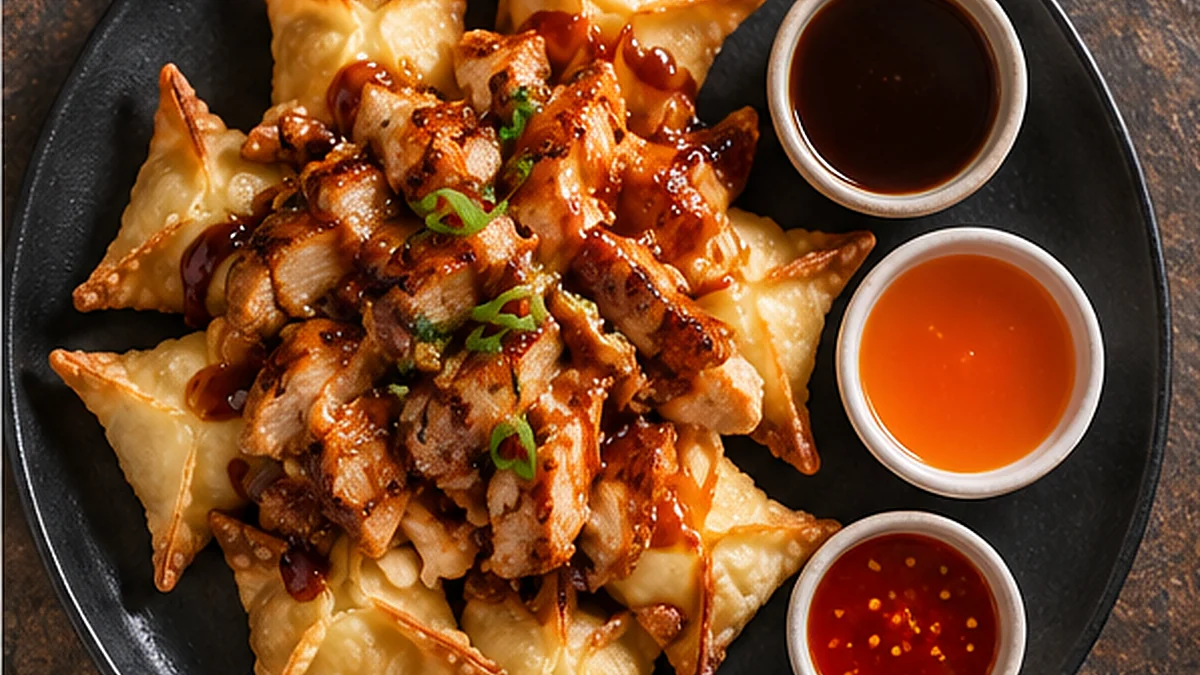
Rangoon nachos turn a takeout appetizer into a shareable loaded platter. Instead of standard nacho chips, you start with a dozen small, fried cream cheese wontons shaped like four-pointed stars. Warm, bite-size pieces of chicken go on top; a little glossy teriyaki glaze gives them that sweet-savory shine. Serve sweet-and-sour and chili sauce in separate bowls so guests can choose how much they want.
The restaurant’s new rangoon nachos version is a different thing from the spring-and-summer 2026 crab rangoon nachos trend. Those earlier recipes often used a filling made with imitation crab and cream cheese, flattened between two wrappers, then deep-fried into triangular chips. These rangoon nachos use individually filled cream cheese rangoons with teriyaki chicken added afterward. If you want the brand-new fast-food item, that distinction is the whole point.
There is also a beef-topped restaurant option, but the rangoon nachos recipe here is the Teriyaki Chicken Rangoon Nachos version. For another sweet-savory chicken idea with a different texture, try our teriyaki chicken meatloaf bites; they bake in a muffin tin instead of using fried wontons.
Rangoon Nachos Recipe at a Glance
What you make: 12 crispy cream cheese rangoons with teriyaki chicken and two additional dipping sauces.
Servings: 4 appetizer servings; each gets 3 rangoons and one-quarter of the chicken and sauces.
Prep: about 25 minutes to mix, fold, cut chicken, and organize sauces.
Cook: about 25 minutes total in a skillet and small frying pot; total: about 50 minutes.
Method: stovetop frying and searing; use a thermometer for both the frying oil and chicken.
Best texture: serve within 5 minutes after assembling to keep the crisp wontons from softening.
For a fast shortcut, you can start with 12 store-bought frozen cream cheese rangoons and prepare only the chicken and sauces. That changes the calories and cooking instructions for the wontons, so follow the package instead of the frying times below. The complete homemade method is worth keeping when you want the filling and the wrap-to-filling ratio under your control.
Why This Copycat Method Works
One wrapper per rangoon. Bringing four corners upward gives a crisp, recognizable star shape without having to make flat fried triangles.
A modest filling amount. About 2 teaspoons of softened cream cheese mixture is enough to taste creamy while leaving a secure dry rim for sealing.
Thigh meat stays tender. Bite-size boneless chicken thighs brown easily in a wide skillet and tolerate a short glaze finish better than very thin breast strips.
Glaze is cooked separately. The sauce is mixed before the raw chicken goes near it, then simmered and thickened separately for safe, glossy glazing.
Wet sauces stay at the side. Everyone can dip or drizzle at the table, and the nachos do not go limp before the first serving.
No extra cheese blanket. Melted shredded cheese is not part of this product concept. The creaminess is inside the fried wontons.
For these rangoon nachos, the home-friendly teriyaki flavor is based on soy sauce, ginger, garlic, sugar, and an acidic note. It is different from the gochujang-forward sauce on our Korean BBQ turkey meatball bowls, where the glaze coats oven-baked meatballs and is designed for rice and edamame.
Ingredients and Exact Measurements
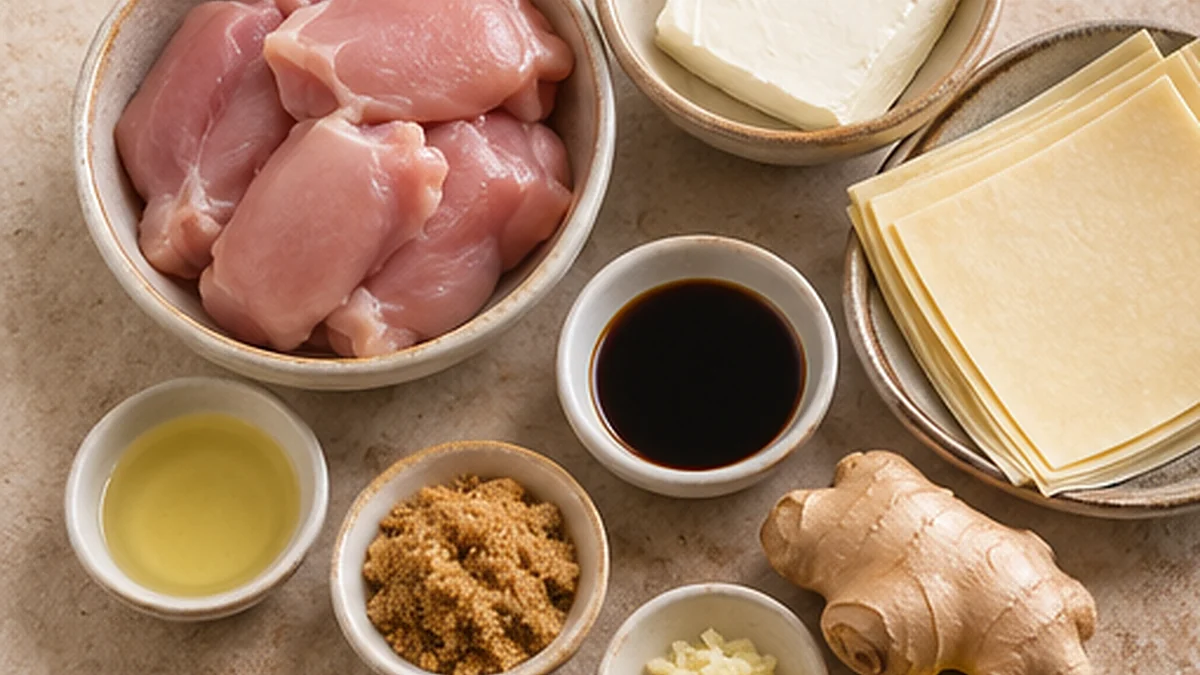
The rangoon nachos ingredient list is divided into three jobs: the cream cheese rangoons, the chicken and teriyaki glaze, and the finishing sauces. Measure the glaze before cooking. A little extra water can rescue a sauce that reduces too quickly; adding extra honey cannot fix a sauce that is already too sweet.
For the Cream Cheese Rangoons
12 square refrigerated wonton wrappers (about 3½ inches each). Choose pliable wrappers that are not dried around the edges; do not use spring-roll sheets.
4 ounces (113 g) full-fat cream cheese, softened. Softened means spreadable, not melted. Keep it chilled until you begin assembling.
1 scallion, finely sliced (about 1 tablespoon for the filling). Use the pale green and white parts.
¼ teaspoon garlic powder and a pinch of fine salt. A salty cream cheese brand may need no added salt.
2 cups (480 ml) neutral frying oil, or enough for 1½ inches in a small heavy pot. The full 2 cups do not become part of the food. The nutrition estimate assumes approximately 2 tablespoons are absorbed by the completed batch, which is uncertain.
For the Teriyaki Chicken
1 pound (454 g) boneless, skinless chicken thighs, trimmed and cut into roughly 1-inch pieces.
2 tablespoons reduced-sodium soy sauce (30 ml). This is not gluten-free unless you use an appropriate certified substitute.
1 tablespoon honey (21 g) and 1 tablespoon packed light brown sugar (12 g). The combination makes a glaze that clings without requiring a bottled teriyaki mix.
1 tablespoon unseasoned rice vinegar (15 ml) and 2 tablespoons water (30 ml).
1 teaspoon neutral cooking oil for the chicken skillet.
For Serving
2 tablespoons prepared sweet-and-sour sauce (30 g), served separately.
1 tablespoon prepared chili sauce (15 g), served separately; choose the heat level you like.
2 scallions, thinly sliced for a fresh finishing garnish.
Homemade teriyaki glaze from the chicken recipe, partly coating the chicken and partly served as a third dipping option.
Sauce labels vary dramatically in sugar, sodium, and allergens. If you substitute a commercial bottled teriyaki sauce, skip the soy-honey-brown-sugar glaze ingredients and use about one-third cup (80 ml) of your preferred sauce instead. That is a convenient variation, not what the nutrition figures below were calculated from.
How to Make Rangoon Nachos Step by Step
1. Mix the Cream Cheese Filling
Stir softened cream cheese with the first scallion, garlic powder, and the tiniest pinch of salt. A spoon should leave a smooth groove without the mixture running. If the cream cheese has become very loose, refrigerate it for 5 to 10 minutes before folding. Loose filling leaks into the oil more easily; cold, rock-hard filling is difficult to portion evenly.
Keep unused wrappers under a barely damp clean kitchen towel. They dry surprisingly quickly, especially around the corners. If the wrappers are already cracked when opened, use a fresh package. The seal will be the weakest point in every rangoon, so fresh pliable pastry matters more than forcing a larger amount of filling inside.
2. Fold 12 Four-Corner Rangoons
Put one wrapper on the work surface with its edges square to you. Place about 2 level teaspoons of filling in the center. Moisten a narrow border around all four edges with water using a fingertip or small brush. Bring all four corners toward the center and pinch the seams together so the wrapper makes four triangular points. Press each seam shut from the filling outward, pushing out obvious air pockets. Do not overfill; the cream cheese expands as it heats.
Place the sealed rangoons on parchment with a little space between them. A tight seam matters more than perfectly equal star points. If a piece opens while you are shaping it, dab a little more water on the exposed seam and pinch until it stays closed. Do not place a cracked rangoon in hot oil expecting frying to seal it for you.
3. Fry the Wontons Until Golden
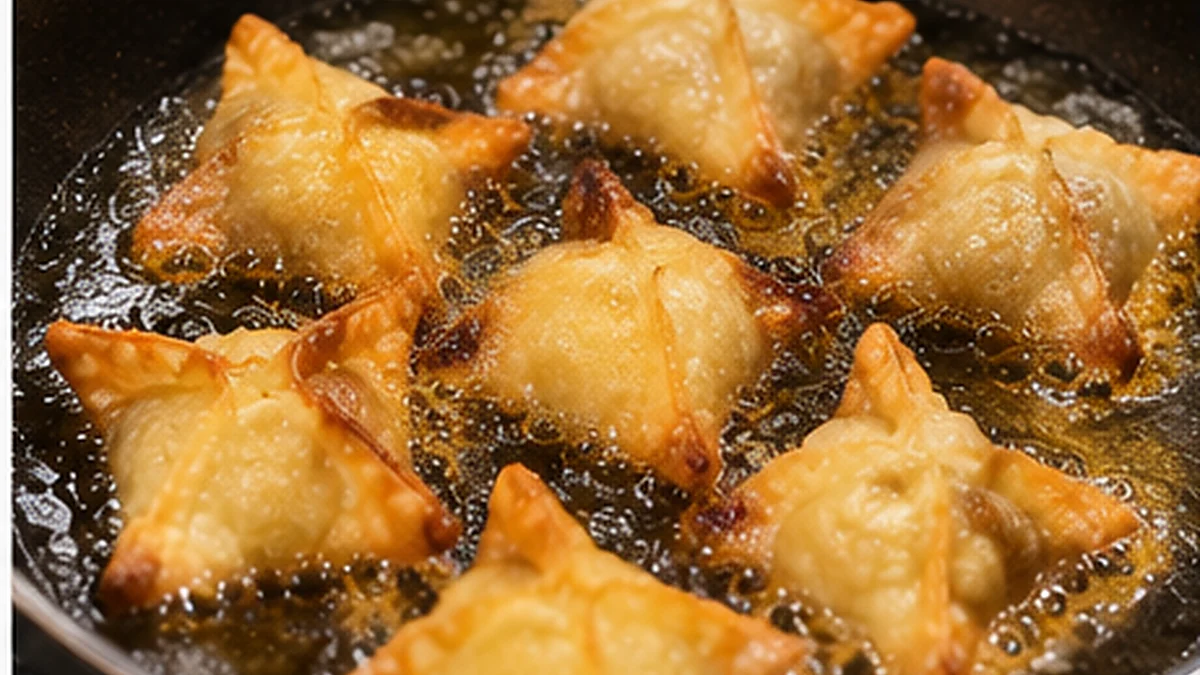
Heat about 1½ inches of oil in a small, heavy-sided pot to 350°F (175°C). Work in batches of 3 to 4, lowering each piece gently with a spider or slotted spoon. Fry for approximately 2 to 3 minutes total, turning carefully once if the exposed corners color unevenly. The wrapper should become golden, blistered, and crisp, while the sealed cream cheese center heats through. Watch the color rather than assuming every pot holds the same temperature.
Move the cooked rangoons to a wire rack over a tray, not into a covered bowl. A paper towel can catch initial drips, but a rack allows steam to escape all around the pastry. Return the oil to 350°F between batches; overcrowding drops the temperature and gives you pale, greasy wrappers. Keep a pan lid nearby for a cooking-oil emergency and never add water to a grease fire.
4. Prepare the Teriyaki Sauce Separately
In a small bowl, whisk soy sauce, honey, brown sugar, rice vinegar, water, ginger, garlic, and cornstarch until the cornstarch disappears. Pour the mixture into a small saucepan before it comes into contact with raw chicken. Bring to a gentle simmer and whisk for roughly 2 minutes, until glossy and slightly thickened. Remove from the heat. Set aside 1 tablespoon in a clean dipping bowl; the rest will coat the cooked chicken.
The texture should be thick enough to leave a thin line on the back of a spoon, not a solid candy glaze. If it becomes syrupy, whisk in 1 to 2 teaspoons of water while warm. If it seems thin, simmer another 30 to 60 seconds. Cornstarch thickening is strongest near a simmer, so give it time before deciding you need more starch.
5. Sear the Chicken and Coat It in Glaze
Pat the diced chicken dry. Heat 1 teaspoon neutral oil in a wide nonstick or well-seasoned skillet over medium-high heat. Spread the pieces in one layer and let them brown for 3 to 4 minutes without constant stirring. Turn and cook another 4 to 6 minutes, reducing the heat if the edges darken too quickly. Check that the largest piece reaches 165°F (74°C) with an instant-read thermometer, then reduce the heat to low.
Add the remaining warm teriyaki sauce to the fully cooked chicken and toss for about 30 seconds until every piece has a shiny, thin coating. Do not pour a lot of liquid into the pan or leave the chicken boiling in sauce; the crisp rangoon base is designed to carry glazed pieces rather than a pool of glaze. Remove the skillet from the heat as soon as the coating clings.
6. Build the Nacho Platter Immediately
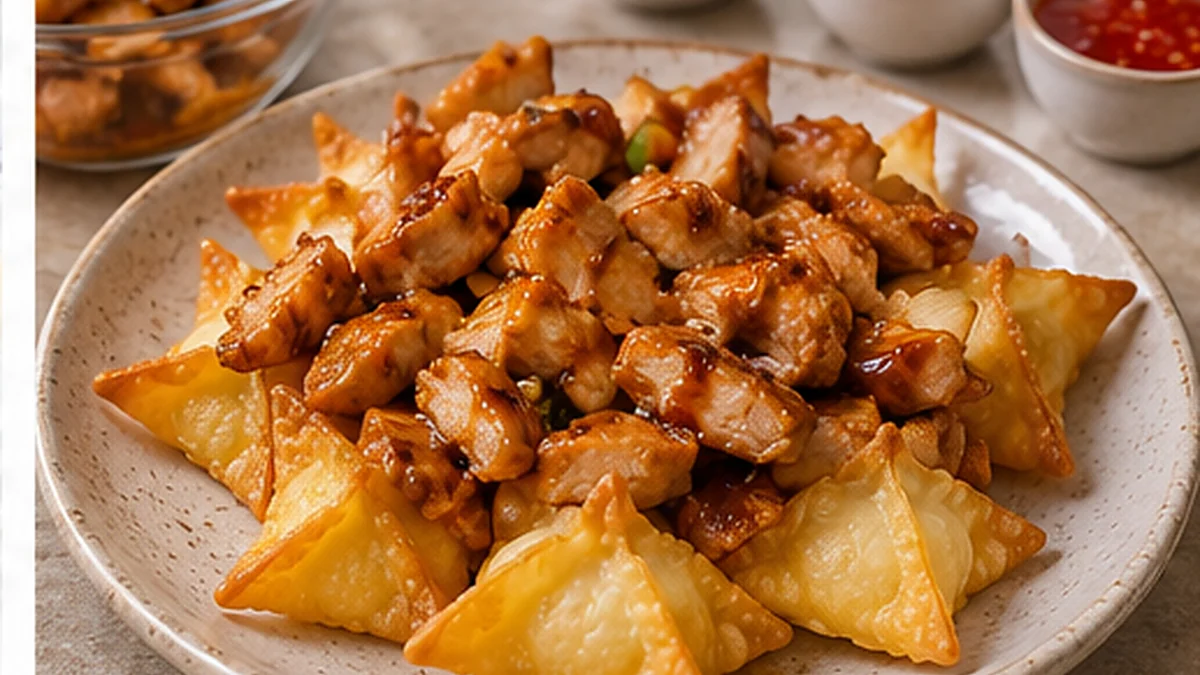
Arrange all 12 crisp cream cheese rangoons on a large shallow plate. Spoon the teriyaki chicken over the middle, leaving a few golden wrapper corners visible so people can lift each piece. Scatter with the remaining scallions. Place the reserved teriyaki glaze, prepared sweet-and-sour sauce, and prepared chili sauce in three separate small bowls. Add only a very light drizzle over the top if serving immediately; otherwise let each person dip.
Do not assemble the platter while you finish another dish. Fried wontons soften when they sit under a hot, moist topping. If your guests are arriving later, keep the crisp rangoons on a rack and the chicken separate until just before serving. That last-minute assembly is the main difference between a genuinely crunchy rangoon nachos platter and soggy stuffed wontons.
Teriyaki Chicken Rangoon Nachos Recipe Card
Use the card for the exact batch quantities, timing, and one-fourth-batch nutrition estimate. Each serving is three filled rangoons topped with a quarter of the chicken, glaze, and measured dips. The bottled sauces are included in the estimate, but additional unmeasured sauces are not.
Crisp four-point cream cheese wontons piled with bite-size homemade teriyaki chicken, served with sweet-and-sour and chili sauces. Independent inspired-by version of the newly announced Panda Express menu item.
2 tablespoons (30 g) prepared sweet-and-sour sauce, for serving
1 tablespoon (15 g) prepared chili sauce, for serving
2 scallions, thinly sliced, for topping
Instructions
Combine softened cream cheese, 1 finely sliced scallion, garlic powder, and a tiny pinch of salt if needed.
Place roughly 2 level teaspoons of filling in the center of each of 12 wonton wrappers. Moisten the edges and bring all four corners together into a star, firmly pinching every seam and removing air pockets.
Heat 1½ inches of neutral frying oil to 350°F (175°C) in a heavy small pot. Fry the rangoons in small batches of 3 to 4 for about 2 to 3 minutes total until golden, turning as needed. Drain on a wire rack. Return the oil to 350°F between batches.
Separately whisk soy sauce, honey, brown sugar, rice vinegar, 2 tablespoons water, ginger, garlic, and cornstarch. Simmer in a small saucepan for about 2 minutes until glossy. Reserve 1 tablespoon in a clean dipping bowl; keep the remainder for chicken.
Pat chicken pieces dry. Heat 1 teaspoon oil in a wide skillet over medium-high heat, sear 3 to 4 minutes on one side and another 4 to 6 minutes after turning, until the largest piece reaches 165°F (74°C).
Reduce to low heat. Toss fully cooked chicken in the remaining cooked teriyaki glaze for about 30 seconds, then remove from the heat.
Arrange 12 rangoons on a platter, spoon over the chicken, and garnish with the remaining 2 scallions. Serve with the reserved teriyaki glaze, 2 tablespoons sweet-and-sour sauce, and 1 tablespoon chili sauce in three small bowls. Serve immediately.
Notes
Independent inspired-by homemade version; not affiliated with or endorsed by Panda Express and not presented as its proprietary formula or a taste-tested match.
This recipe makes four appetizer servings: three rangoons, a quarter of the glazed chicken, and a quarter of the measured dips per person.
Allow 25 minutes active prep and about 25 minutes cooking with small frying batches, or roughly 50 minutes total. More batches can take longer.
Do not reuse marinade that touched raw chicken as a finishing sauce. The teriyaki sauce here is prepared and cooked separately.
Cook chicken to 165°F (74°C), refrigerate leftover components promptly and separately, and reheat cooked chicken to 165°F.
Nutrition is an ingredient-based estimate including a representative 2 tablespoons oil retained across 12 fried rangoons and the entire 3 tablespoons of measured prepared dipping sauces. Actual oil absorption, labels and extra dipping sauce vary.
Standard ingredients contain milk, wheat and soy; check wrappers and sauce labels for egg, sesame or other allergens.
Author:Adam Moretti
Prep Time:25 minutes
Cook Time:25 minutes
Category:Appetizer
Method:Stovetop / Deep Fry
Cuisine:American-Chinese Inspired
Diet:No specific diet
How to Keep Rangoon Nachos Crisp Instead of Soggy
Treat rangoon nachos differently from a sheet pan of melted-cheese nachos. You are not trying to bake the topping onto the base. Frying creates delicate air pockets in the wonton pastry, and a generous hot liquid topping immediately defeats that crispness. The chicken should be cooked through and glazed until shiny, then drained of any extra pan liquid before it touches the wontons.
With rangoon nachos, serve dips in bowls. A tiny drizzle is fine for a plated photograph, but leaving the sauces at the side is better for an actual gathering. Layer the chicken centrally rather than completely hiding every rangoon. The exposed edges let guests pick up individual pieces without scooping an entire tower with a fork.
If you want a different type of crunchy party bite that can be cooked without a frying pot, our air-fryer keto fried pickle balls use chopped pickles and cream cheese with a breaded exterior. Their coating and cooking method do not directly replace wonton wrappers in this recipe.
Three Common Mistakes and How to Fix Them
The Filling Leaks Into the Oil
Usually the wrapper edge was dry, the rangoon was overfilled, or a seam was not pinched all the way shut. Remove leaking pieces with a slotted spoon and skim any loose bits from the pot so they do not burn. On the next batch, reduce the filling to 2 level teaspoons and seal each corner carefully. Do not use flour paste unless you are making a separate version of the recipe and adjusting the ingredients accordingly.
The Wontons Are Oily Rather Than Crisp
If the oil is too cool, the wrappers absorb more fat before they become crisp. If the pot is crowded, the temperature falls quickly. Use an oil thermometer and return to about 350°F before each small batch. A wide paper-towel pile traps steam; a wire rack leaves the underside drier. The calorie estimate assumes a particular amount of retained frying oil, but the real amount changes with oil temperature and draining.
The Teriyaki Chicken Is Too Sticky or Too Salty
A sweet glaze will darken quickly at high heat. Cook the chicken first and toss it with sauce only at the end. If the sauce tastes sharp or salty, do not add more soy sauce; use a teaspoon or two of water to loosen the concentrated glaze. Reduced-sodium soy sauce helps, but sweetness and sodium differ by brand. For a separate ginger-garlic chicken option without fried wontons, see our yakiniku chicken chashu recipe.
Can You Bake or Air Fry the Rangoons?
Yes, but the result is a variation rather than the classic fried texture. Brush 12 well-sealed rangoons lightly with oil, set them on a parchment-lined baking tray, and bake at 400°F (205°C) for about 10 to 14 minutes, turning the pan as needed, until golden and crisp. The points brown faster than the center, so check at 10 minutes. The filling must be heated through; do not judge doneness only from a browned tip.
For an air fryer, mist both sides lightly with oil and cook in a single layer at 350°F (175°C) for about 7 to 10 minutes, checking halfway. Machine capacities differ, and two batches may be necessary. Total elapsed time could therefore be longer than the stove method. These oven and air-fryer alternatives were not used for the primary nutrition estimate; less absorbed oil would generally lower calories.
We use a completely different air-fryer seasoning approach in our pizza McShaker fries copycat: the fries are coated with dry pizza seasoning after crisping, while these rangoons hold a creamy filling and should be topped only at serving time.
Easy Ingredient Swaps Without Changing the Main Idea
Chicken breast: Swap pound for pound and reduce skillet time as needed, always checking for 165°F. Breast generally cooks faster and can dry out if simmered in sauce.
Frozen cream cheese rangoons: Use 12 and follow the package oven/air-fryer directions. This is the fastest shortcut, but ingredients and nutrition vary.
Bottled teriyaki: Replace the homemade glaze with roughly one-third cup bottled sauce. Taste before adding more, because bottled sauces are already seasoned.
Heat: Keep the primary platter mild and let guests add the optional chili sauce to their own portions.
Gluten-free: Regular wonton wrappers and soy sauce contain wheat; a truly gluten-free alternative needs verified gluten-free wrappers and sauce and will behave differently when fried.
No dairy: Dairy-free cream cheese alternatives may separate or leak more when heated. They are not a direct, reliably tested swap for the listed full-fat cream cheese.
A beef version of rangoon nachos can follow the same platter logic with thoroughly cooked chopped brisket and a matching sauce, which echoes the restaurant’s second menu option. Because brisket cooking time and sodium depend on whether it is homemade or purchased cooked, that would be a separate variation rather than a second recipe card here. Do not accidentally put beef into the chicken recipe’s nutrition numbers.
What to Serve With Rangoon Nachos
For a small party, four portions of rangoon nachos can be the appetizer before a lighter main. A crisp cucumber salad, steamed vegetables, or an unsweetened cold drink contrasts with the salty-sweet chicken and rich cream cheese. If you make a whole finger-food spread, offer a few non-fried options as well so the table is not built entirely around hot, rich appetizers.
Think about the sauce placement at a party. Put the three dips on a tray next to the platter rather than balancing the bowls on top of the fried wontons. Label spicy chili sauce in words if children or spice-sensitive guests will be serving themselves. Nothing about this dish requires a hot-chili topping unless people want it.
Make-Ahead, Storage, and Reheating
The best rangoon nachos make-ahead plan is to prepare the components, not the finished nachos. Shape the uncooked wontons and place them in one layer in a tightly covered container in the refrigerator for a short same-day hold. Keep raw chicken refrigerated separately and cook it shortly before serving. Mix the teriyaki sauce in advance only in a clean container that has not touched raw poultry.
After cooking, refrigerate the chicken and any leftover filled rangoons promptly in separate shallow containers. According to the FoodSafety.gov cold storage chart, cooked poultry leftovers are generally kept 3 to 4 days in a refrigerator at 40°F or below. This time assumes safe cooling and refrigeration. Assembled leftovers lose their crisp texture even when they remain safe to eat.
Reheat cooked chicken to 165°F (74°C), preferably in a covered skillet with a teaspoon of water. Recrisp refrigerated rangoons in an air fryer at 350°F for a few minutes, checking frequently so the corners do not scorch and the filling becomes hot throughout. Assemble fresh with cold sauces only after both components are thoroughly heated. Do not refry oil-soaked leftovers and do not leave the assembled food out at room temperature for hours.
The FoodSafety.gov safe-temperature chart gives 165°F as the safe minimum for chicken and reheated leftovers. Use a food thermometer rather than color alone. For another batch-friendly cooked chicken preparation, our chicken Parmesan meatballs and orzo is designed to be served as a separate warm dinner.
Nutrition and Allergen Notes
For these rangoon nachos, our estimate is about 445 calories per appetizer serving (three rangoons and one-quarter of the chicken, sauces, and garnishes). The figures are calculated from typical ingredient-label and USDA FoodData Central values, using 4 ounces cream cheese, 12 commercial wonton wrappers, 1 pound boneless skinless chicken thighs, 1 teaspoon pan oil, approximately 2 tablespoons frying oil retained by the batch, homemade glaze ingredients, and 3 tablespoons of bottled dipping sauces in total. The actual frying-oil uptake and wrapper brands can change calories and fat considerably.
These are not the chain’s nutrition values. Panda Express publishes separate figures for its cream cheese rangoons and teriyaki chicken but not a complete verified nutritional profile for our homemade platter. Our recipe contains milk, wheat, and soy in its standard form; depending on the wrapper and sauce brands, it may also contain egg or other allergens. Check packaging if allergies matter. We do not label this recipe keto, gluten-free, vegan, or high protein by dietary classification.
Rangoon Nachos: Frequently Asked Questions
Do Panda Express rangoon nachos contain crab?
The new Panda Express Teriyaki Chicken Rangoon Nachos are described as cream cheese rangoons topped with chicken—not crab rangoons. The older online crab rangoon nachos trend often uses imitation crab in the filling. This homemade recipe deliberately uses cream cheese, scallion, and garlic powder in its rangoons, with no crab or imitation crab.
Are rangoon nachos the same as regular nachos?
No. Traditional nachos use tortilla chips with toppings such as melted cheese, beans, or meat. Rangoon nachos use filled fried wontons as the base. That creates a creamier bite inside every crispy shell, so pouring hot sauce over the platter too early changes the texture much more noticeably than it would on a standard chip platter.
How many rangoons are in a Panda Express order?
Reports and digital ordering descriptions for the new item indicate six cream cheese rangoons in one restaurant order. This rangoon nachos home recipe makes 12 rangoons and divides them into four appetizer servings of three each. To mimic two restaurant orders, use the whole batch and divide it between two platters instead of changing the ingredient ratios.
Can I make rangoon nachos without deep frying?
Yes. Baking or air frying filled wontons is a practical alternative, although the shells have a different texture and color than the fried version. Use a light oil coating, give the wontons space, and check often. If you buy pre-cooked frozen rangoons, follow the manufacturer’s instructions instead of using the raw-wrapper times in this article.
What sauces go with teriyaki chicken rangoon nachos?
Teriyaki, sweet-and-sour, and chili sauces make the clearest match for the reported restaurant concept. The homemade chicken glaze here supplies the teriyaki component; the other two sauces are measured store-bought dips. Add them to separate bowls rather than pouring all three over the platter so you can adjust the sweetness and heat.
Can I use rotisserie chicken?
Yes, for convenience. Use about 2½ to 3 cups of chopped fully cooked chicken instead of raw chicken thighs, warm it thoroughly in a skillet, and coat it with the separately cooked homemade glaze. Seasoning and calories will change because store-bought rotisserie chicken may contain salt and added fat. Reheat leftovers to 165°F.
How do I stop the rangoons opening when frying?
Use fresh flexible wrappers, no more than roughly two teaspoons of filling per wrapper, and a thin, continuous band of water along the edges. Press every seam firmly and push out visible air pockets. Fry only a few at a time so each piece has room to move, and do not drop sealed seams roughly against a sharp utensil.
Is this an exact Panda Express copycat?
No. It is an independent inspired-by recreation based on the menu concept publicly described in November 2026. Panda Express has not provided a full proprietary recipe for the new item. Ingredients, cooking oil, glaze sweetness, portion sizes, and final flavor can differ from the restaurant order. The advantage of the home version is that every step and quantity is explicit.
Final Tips for Serving the Best Rangoon Nachos
Build the platter only when everyone is ready. A crisp, drained rangoon; bite-size chicken with a thin glaze; and sauces kept alongside make the dish easy to share without hiding its most important texture. If you are cooking for a larger crowd, double the recipe but fry in several small batches and count the added frying time honestly.
These rangoon nachos are meant to capture the immediate appeal of a newly released menu mashup, not to turn a fried appetizer into a diet claim. For another trendy, easy-to-share chicken dish, see our crispy buldak tacos, or browse all our recipes for something built around a different cooking method.
Reviewed recipe options
Make this recipe fit me
Choose one of seven popular diet options. NutriMatch will confirm whether the recipe already fits, show a reviewed adaptation when available, or recommend recipes that match your choice.
Please choose a diet first.
Reviewed Dairy-Free adaptation
Dairy-Free Panda Express Rangoon Nachos Copycat (Teriyaki Chicken)
Use the substitutions below to prepare a Dairy-Free version while keeping the rest of the recipe as close as possible to the original.
Use the dairy-free cream-cheese alternative in the same measured amount; chill mixtures if the substitute is softer than dairy cream cheese.
Check: Check packaged substitutes for milk ingredients and the cross-contact information you need.
Use these reviewed changes with the original ingredient quantities and instructions above. The original recipe card stays unchanged.
Recipe details, product formulas, and cross-contact information can change. Confirm current labels and use professional guidance when medically necessary.
Reviewed Gluten-Free adaptation
Gluten-Free Panda Express Rangoon Nachos Copycat (Teriyaki Chicken)
Use the substitutions below to prepare a Gluten-Free version while keeping the rest of the recipe as close as possible to the original.
Use gluten-free tamari wherever soy sauce is added; check the label because formulas vary.
Check: When strict gluten avoidance is required, verify packaged sauces, seasonings, broths, and cross-contact information.
Use these reviewed changes with the original ingredient quantities and instructions above. The original recipe card stays unchanged.
Recipe details, product formulas, and cross-contact information can change. Confirm current labels and use professional guidance when medically necessary.
Not available for this recipe
This recipe cannot currently be made High Protein with a reviewed adaptation.
NutriMatch will not guess at substitutions. Try one of these recipes that is already reviewed for your choice.
Recipe details, product formulas, and cross-contact information can change. Confirm current labels and use professional guidance when medically necessary.
Not available for this recipe
This recipe cannot currently be made Keto with a reviewed adaptation.
NutriMatch will not guess at substitutions. Try one of these recipes that is already reviewed for your choice.
Recipe details, product formulas, and cross-contact information can change. Confirm current labels and use professional guidance when medically necessary.
Not available for this recipe
This recipe cannot currently be made Low Carb with a reviewed adaptation.
NutriMatch will not guess at substitutions. Try one of these recipes that is already reviewed for your choice.
Recipe details, product formulas, and cross-contact information can change. Confirm current labels and use professional guidance when medically necessary.
Not available for this recipe
This recipe cannot currently be made Vegan with a reviewed adaptation.
NutriMatch will not guess at substitutions. Try one of these recipes that is already reviewed for your choice.
Recipe details, product formulas, and cross-contact information can change. Confirm current labels and use professional guidance when medically necessary.
Not available for this recipe
This recipe cannot currently be made Vegetarian with a reviewed adaptation.
NutriMatch will not guess at substitutions. Try one of these recipes that is already reviewed for your choice.
Recipe details, product formulas, and cross-contact information can change. Confirm current labels and use professional guidance when medically necessary.
A thick, loaded Jimmy John’s holiday-inspired Griswold Family Chaos Cookie with chocolate chips, festive candies, pretzels, toasted marshmallows, peppermint and…