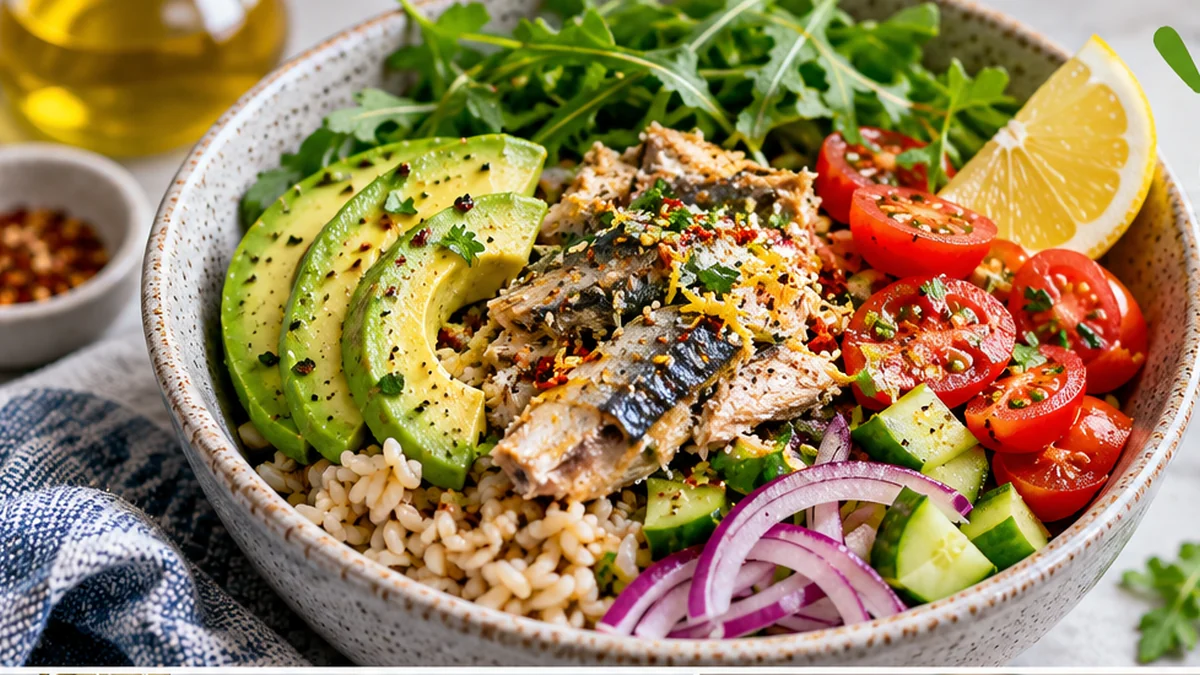
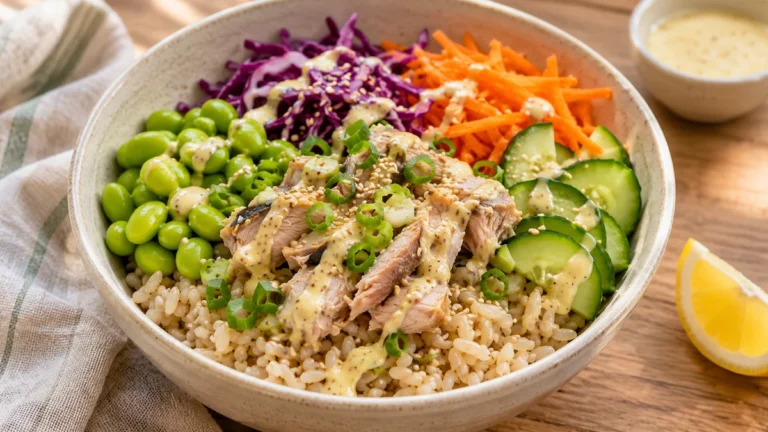
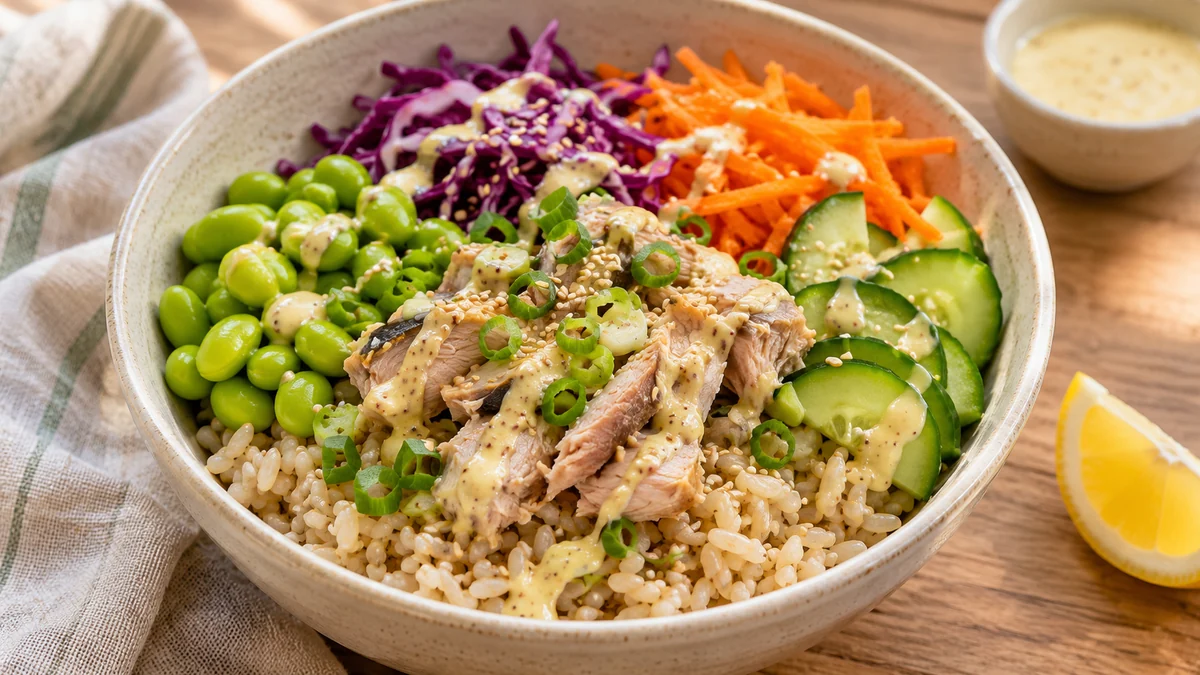
A sardine rice bowl turns a pantry tin of fish into a colorful lunch with warm brown rice, crunchy vegetables, edamame, and a lemony yogurt dressing. This version is inspired by the “sardinemaxxing” conversation, but it is a practical meal rather than a challenge to eat sardines every day. If you want an even faster fish lunch without rice, our sardine avocado toast uses the same pantry staple in an entirely different format.
Use two cans of water-packed sardines for two generous bowls, then divide the cooked rice, warm edamame, cucumber, shredded carrot, cabbage, avocado, and tomatoes evenly. The dressing needs just Greek yogurt, lemon, Dijon, and a little olive oil. The estimated nutrition is about 600 calories and 40 grams of protein per bowl, with the full ingredient assumptions explained below.
The key is contrast: keep the rice warm, the vegetables crisp, the fish in visible pieces, and the dressing cool. You can prep most components ahead, but open the sardines and cut the avocado shortly before serving. The stated 25-minute time assumes you start with already cooked brown rice or a plain ready-to-heat pouch; cooking dry brown rice from scratch takes longer.
Table of Contents
Why This Sardine Rice Bowl Works
A whole tin of sardines in each bowl contributes most of the protein without requiring another cooked meat or fish.
Edamame adds another protein source plus texture, color, and fiber.
Brown rice provides a warm base, while cucumber, carrots, and cabbage keep the bowl crunchy.
Lemon, parsley, and a small amount of red onion balance the savory taste of canned fish.
The yogurt-Dijon dressing is creamy but stays bright; it is spooned on just before serving.
The recipe uses canned fish and cooked rice rather than demanding that you pan-fry delicate sardines.
To see how fish fits into meals alongside dairy, beans, tofu, and meat, the high protein foods guide explains protein sources and everyday combinations. Here the estimate comes from a specific canned-fish label and measured portions, not from an exaggerated health promise.
What Is Sardinemaxxing?
“Sardinemaxxing” is a social-media name for eating more sardines, often because the fish is shelf-stable and protein-rich. It does not describe a formal diet, and the name should not be taken as advice to eat sardines at every meal. This bowl uses one can of sardines per serving as part of a mixed plate with grains, vegetables, legumes, and dressing.
The FDA/EPA fish guidance lists sardines among its “Best Choices” for lower mercury. That is useful perspective, but it does not mean unlimited consumption or that everyone has the same dietary needs. Sodium also varies widely by brand, especially with flavored tins. Enjoy sardines as one option in a varied rotation of foods.
Ingredients for the Sardine Rice Bowl
The following amounts make two main-meal bowls. Measure the cooked rice after cooking, and use shelled edamame that has been fully cooked according to its package directions. All optional garnishes are excluded from the nutrition estimate unless noted otherwise.
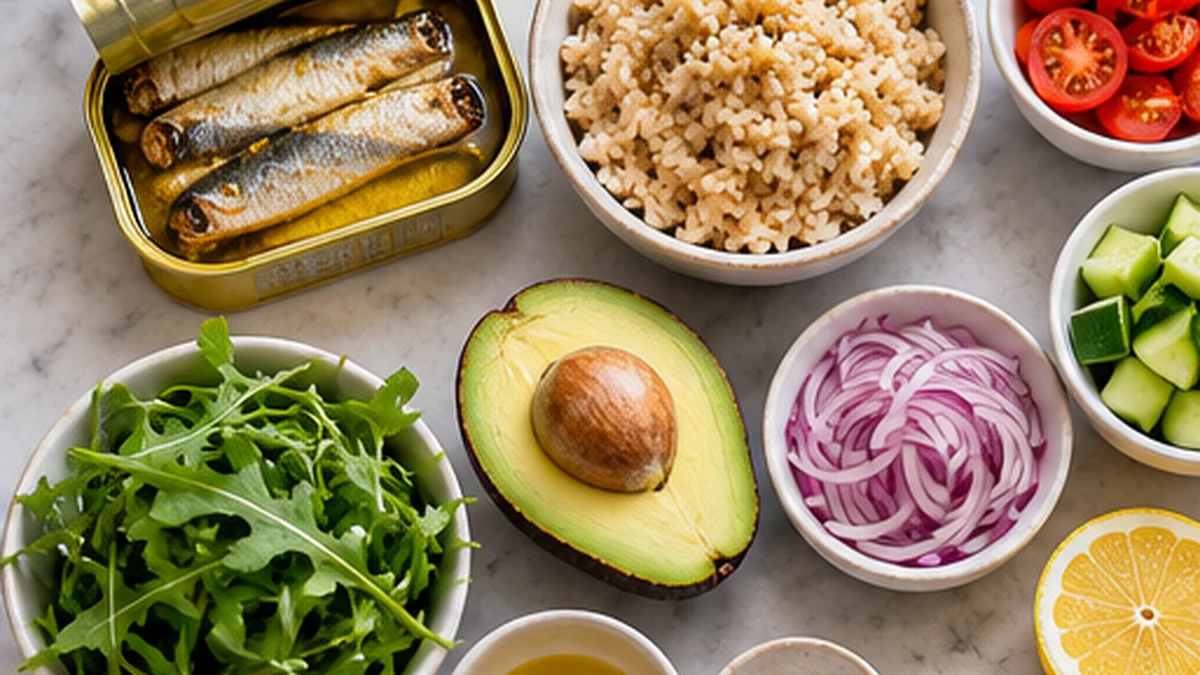
Sardines: 2 (4.4-ounce) cans sardines packed in water, about 3 ounces (85 g) drained fish from each tin; do not use the packing liquid.
Rice: 1 1/2 cups (about 300 g) cooked brown rice, plain and unsalted.
Edamame: 1 cup (about 155 g) cooked, shelled edamame.
Crisp vegetables: 1 cup sliced cucumber, 1 medium shredded carrot, 1/2 cup shredded red cabbage, and 1/2 cup halved cherry tomatoes.
Other produce: 1/2 medium avocado, 2 tablespoons thinly sliced red onion, 1 cup loosely packed arugula, 2 sliced scallions, and 1 tablespoon chopped parsley.
Finish: 2 teaspoons toasted sesame seeds, 1 teaspoon rinsed capers, 1/2 teaspoon finely grated lemon zest, and freshly ground black pepper. Lemon wedges to serve are optional.
The Canned Sardines Make the Difference
For the nutrition calculation, the reference is Wild Planet sardines in water: its label lists 140 calories, 18 grams of protein, and 280 milligrams of sodium per drained 3-ounce serving. Other water-packed sardines can differ in weight and salt level. Oil-packed fish can also work, but draining it does not make its fat and calorie values identical to water-packed fish. Check the label on the specific can you buy.
Soft bones and skin in canned sardines are edible, although you can choose a boneless variety if you prefer. Open the can carefully, drain off the liquid, and lift out the fish gently. Keep some pieces relatively large; mashing everything into a smooth paste would make the finished bowl less interesting.
Use Brown Rice That Is Already Cooked
Using cooked brown rice saves time and keeps this recipe practical for lunch. If you start with dry rice, cook it according to the package instructions and add that separate cooking time. For another meal that depends on the texture of cooked rice, see our high protein chicken fried rice meal prep; that recipe deliberately fries chilled rice, while this one simply warms the rice before assembly.
Leftover cooked rice must have been cooled promptly and stored in the refrigerator. Reheat it until steaming hot all the way through and do not leave cooked rice at room temperature while you prepare the rest of the meal. Never rely on smell to decide whether mishandled rice is safe.
Edamame and Crunchy Vegetables
Edamame brings green color and additional protein. Use shelled edamame, not the fibrous whole pods, and cook frozen beans as directed on their package. If you like the bean-and-vegetable combination in a no-fish meal, our high protein vegan dense bean salad uses edamame with other legumes in a different lunch format.
Slice the cucumber into half-moons, grate the carrot, cut the cabbage into thin shreds, and halve the tomatoes. That gives each bite a mixture of soft rice, tender fish, and crisp produce. Use only half an avocado for the two-bowl batch, so the creamy topping does not overwhelm the fish or dressing.
How to Make the Lemon-Yogurt Dressing
The dressing is intentionally lemon-forward rather than sweet or heavily spicy. Reserve 1 teaspoon of the measured lemon juice for the sardines. Whisk the yogurt with the remaining 2 teaspoons lemon juice, Dijon, olive oil, rice vinegar, and black pepper until smooth, then fold in half the measured lemon zest. If you prefer a slightly thinner drizzle, whisk in 1 to 2 teaspoons cold water. Taste before adding salt; the sardines, mustard, and capers already supply sodium. For a different yogurt-sauce approach on a chicken-and-vegetable plate, compare our high protein low calorie lunch bowl.
The yogurt is part of the measured recipe, so replacing it with mayonnaise, tahini, or a nondairy sauce changes calories, fat, protein, and allergens. For the estimated numbers in this article, stick with plain nonfat Greek yogurt and the listed amounts.
1 cup (about 155 g) cooked shelled edamame, prepared according to package
1 cup (about 104 g) cucumber, sliced into half-moons
1 medium carrot (about 61 g), shredded
1/2 cup (about 45 g) thinly shredded red cabbage
1/2 medium avocado (about 75 g flesh), sliced
1/2 cup (about 75 g) cherry tomatoes, halved
2 tablespoons (about 20 g) thinly sliced red onion
1 cup (about 20 g) loosely packed arugula
2 scallions (about 30 g), sliced
1/2 cup (about 113 g) plain nonfat Greek yogurt
1 tablespoon (15 ml) fresh lemon juice
1 teaspoon Dijon mustard
1 teaspoon (5 ml) extra-virgin olive oil
1 tablespoon (15 ml) unseasoned rice vinegar
2 teaspoons (about 6 g) toasted sesame seeds
1 teaspoon (about 3 g) rinsed capers, chopped
1/2 teaspoon finely grated lemon zest
1 tablespoon chopped fresh parsley
Freshly ground black pepper, to taste
Optional lemon wedges for serving (not included in nutrition)
Instructions
Warm the already cooked brown rice in a covered skillet with a spoonful of water for 3 to 4 minutes, stirring until steaming hot throughout. Cook or reheat the shelled edamame following its package directions. Divide rice and edamame between two serving bowls.
Reserve 1 teaspoon lemon juice for the fish. Whisk Greek yogurt with the remaining 2 teaspoons lemon juice, Dijon mustard, olive oil, rice vinegar, and several grinds of pepper in a small bowl. Stir in half of the lemon zest. If needed, thin with 1 to 2 teaspoons water.
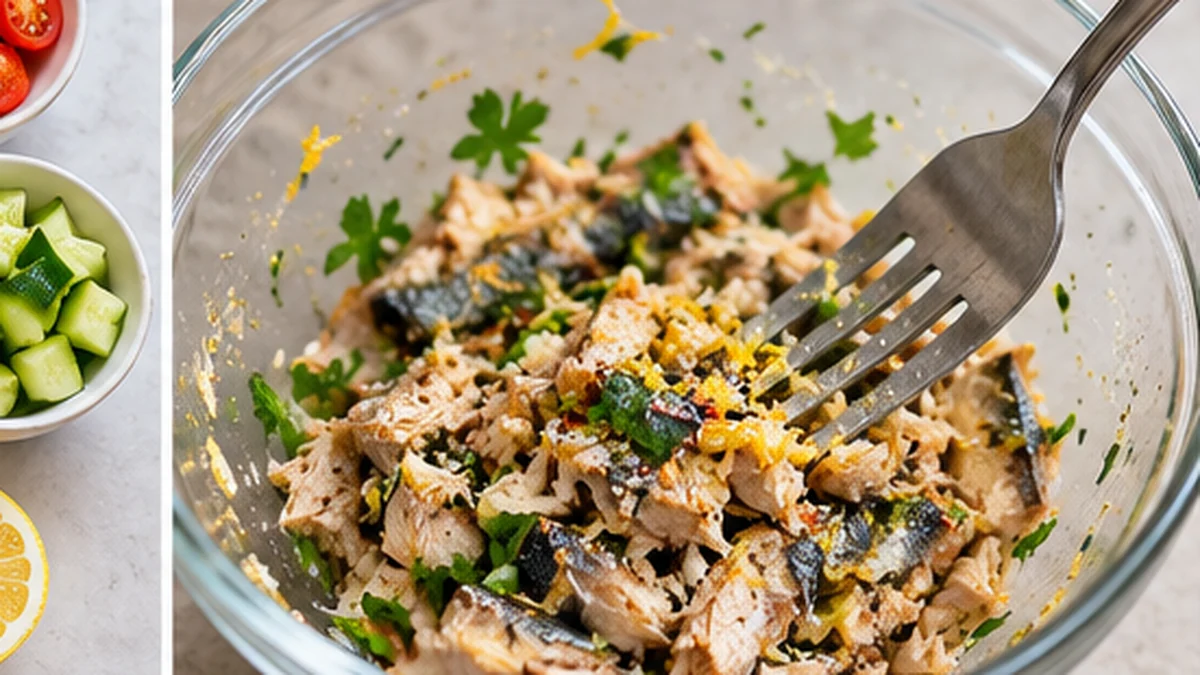
Drain the sardines. In a shallow bowl, gently break them into a few large flakes with a fork. Fold in parsley, chopped capers, half of the sliced red onion, the reserved teaspoon of lemon juice, and the remaining lemon zest. Avoid crushing the fish to a paste.
Thinly slice the cucumber and red cabbage; shred carrot; halve tomatoes; slice avocado and scallions. Divide cucumber, carrot, cabbage, tomatoes, arugula, and avocado between the bowls.
Top each bowl with the sardines and remaining red onion. Spoon on equal amounts of lemon-yogurt dressing, then scatter sesame seeds and scallions. Finish with black pepper and optional lemon wedges. Serve while the rice is warm.
Notes
Prep time 15 minutes plus 10 minutes for warming/finishing = 25 minutes total. The recipe assumes already cooked brown rice; cooking uncooked rice takes additional time.
For the sardine reference, Wild Planet wild sardines in water (4.4-oz tin; 3-oz/85-g drained serving) list 140 calories, 18 g protein, 8 g fat and 280 mg sodium per can; other brands vary. Bones/skin may be present and are normally soft and edible.
Nutrition is an estimated one-half batch using 300 g cooked brown rice, 155 g cooked shelled edamame, 75 g avocado flesh, 113 g nonfat Greek yogurt, vegetables, oils and seeds as measured; drained fish weight and product labels can change totals.
Contains fish, soy (edamame), dairy (Greek yogurt), and sesame. Verify labels of packaged ingredients if gluten cross-contact matters; the recipe is not automatically guaranteed gluten-free.
Refrigerate cooked rice and other perishable ingredients promptly at 40 F (4 C) or below. Do not leave cooked rice or opened fish out more than 2 hours (1 hour above 90 F).
For meal prep, refrigerate components separately, cut avocado and open sardines near serving, and keep the dressing chilled. Do not freeze a completely assembled bowl.
Extra toppings or swapping in oil-packed fish, mayo, tahini, white rice, or a different sauce will change the stated nutrition.
Author:Adam Moretti
Prep Time:15 minutes
Cook Time:10 minutes
Category:Main Course
Method:Stovetop
Cuisine:American
Diet:High Protein
How to Make a Sardine Rice Bowl Step by Step
1. Warm the Rice and Edamame
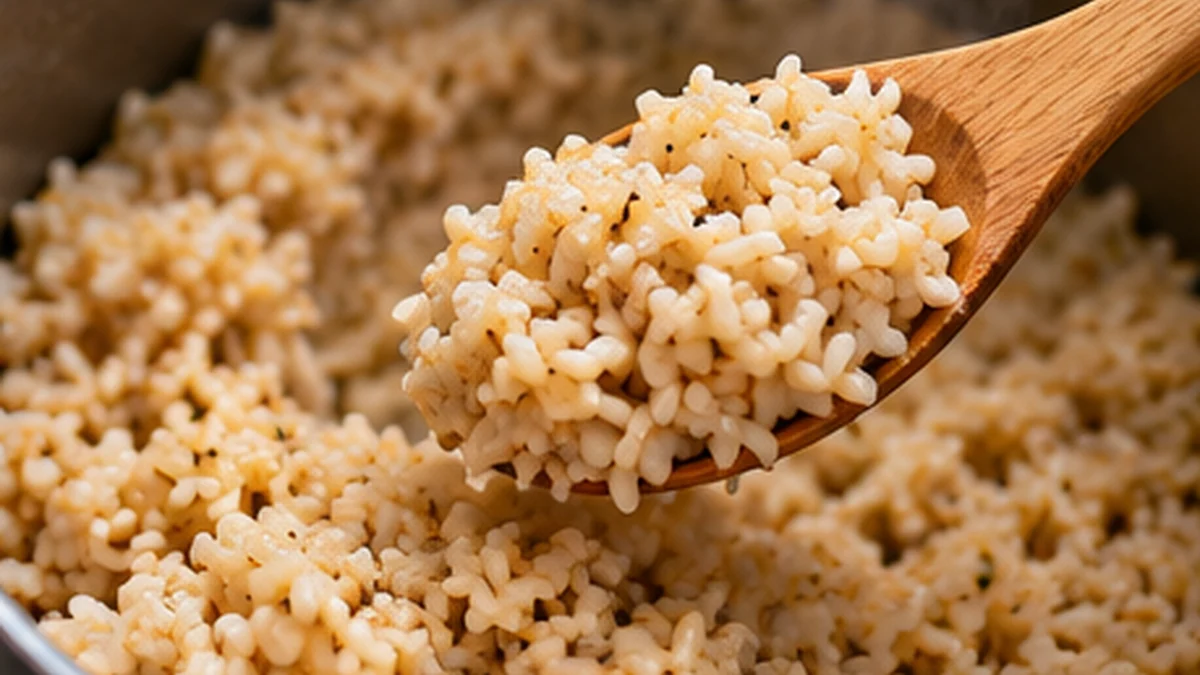
Heat the already cooked rice in a covered skillet with a tablespoon of water over medium-low heat for about 3 to 4 minutes, stirring once or twice, until it is hot throughout. Heat the cooked shelled edamame in a second small pan or microwave-safe bowl according to its package instructions. If your rice is a ready-to-heat pouch, follow its package timing and handling directions instead of reheating it in a skillet.
Keep the rice fluffy rather than pressing it into a dense layer. The bowl should begin with warm, separate grains, not a crunchy fried-rice crust. If the rice clumps, break it up gently with a fork while warm and avoid adding extra oil unless you intend to recalculate the nutrition.
2. Mix the Sardines With Lemon and Herbs
Drain both cans, then gently transfer the sardines to a shallow bowl. Add the parsley, rinsed chopped capers, half of the thinly sliced red onion, the reserved teaspoon of lemon juice, and the remaining half of the lemon zest. Use a fork to separate a few large pieces without turning the fish into a mash. If the sardines are already seasoned, taste before adding any other spices.
This small step distributes acidity and herbs without hiding the sardine flavor. If you are trying canned sardines for the first time, start with a smaller bite alongside rice and cucumber; the vegetables and lemon make the overall flavor less intense.
3. Prepare the Vegetables
Cut the cucumber, carrot, cabbage, tomatoes, avocado, and scallions while the rice heats. If you are prepping in advance, keep the avocado whole until assembly. Thin, even slices matter more than decorative shapes: narrow cabbage shreds and thin onion slices mix better with the rice and are less sharp in a single bite.
For extra-tangy onion, briefly toss the sliced red onion in a teaspoon of the measured rice vinegar while you prepare the rest. Do not add extra sugar or salt. Reserve the rest of the measured vinegar for the dressing, so the recipe amounts stay consistent.
4. Build Two Bowls and Finish
Divide the warm brown rice evenly between two wide bowls, followed by the warm edamame. Arrange cucumber, carrot, cabbage, tomato, and arugula in separate small sections. Spoon the sardines across the middle, then add the avocado. Drizzle with half the yogurt dressing on each bowl; finish with sesame seeds, scallions, and black pepper. Serve immediately.
If you are serving someone who dislikes cold toppings on warm rice, bring the sliced vegetables to cool room temperature for a few minutes just before eating, but do not leave prepared food unrefrigerated for extended periods. Keep the dressing chilled until it is added.
What the Finished Bowl Should Look and Taste Like
The rice is warm and separated rather than wet or sticky.
The sardines remain in recognizable flakes with some skin visible, not broken into fine crumbs.
The cucumber and cabbage stay crisp and the edamame is tender.
The dressing is spoonable and tangy, with no heavy sweetness or watery separation.
The whole bowl tastes savory and bright; add lemon before adding more salt.
The sardine rice bowl is a layered plate, not a sushi roll. If the combination of fish and rice makes you want a different seafood project, our salmon sushi with Algerian-style sauce has its own cooked-fish instructions and very different preparation. Do not substitute its fish-cooking times into this canned-fish recipe.
Troubleshooting Common Problems
The Sardines Taste Too Strong
Drain the fish completely and increase the lemon, parsley, cucumber, or red onion before increasing the dressing quantity. Choose water-packed sardines with a simple ingredient list rather than strongly seasoned tins. Do not use bulging, leaking, or otherwise damaged cans; do not try to disguise questionable canned seafood with extra dressing.
My Rice Bowl Is Too Wet
Shake water from the cucumber, drain the sardines, and use only the stated dressing quantity. If the cooked rice is very moist, gently warm it uncovered for a minute to release steam before assembling. Avoid dressing the entire bowl hours ahead because water from vegetables will soften the rice.
The Dressing Is Too Thick or Too Tart
Add a teaspoon of cold water to thin a very thick yogurt dressing. If it tastes too tart, use a little less lemon next time rather than stirring in lots of sugar. Different Greek yogurt brands vary in tanginess and thickness, so choose one you like eating plain.
My Bowl Is Not Warm Enough
Heat the cooked rice and edamame thoroughly before you add the cold toppings, and choose wide but not icy-cold serving bowls. Keep the sardines at room temperature only briefly during assembly; there is no need to fry them. If you prefer fully warm meals, replace the cold vegetable salad with lightly steamed vegetables, noting that this changes the texture.
Variations That Change the Flavor Without Copying the Same Bowl
Ginger-sesame version: Replace the lemon-yogurt dressing with a measured ginger-lime dressing and use chopped cilantro. That is a different flavor profile from the sesame-glazed turkey meatballs in our Korean BBQ turkey meatball bowls, though both use rice and edamame. Be sure to recalculate nutrition for a new dressing.
More vegetables: Add thin radishes, chopped romaine, sliced bell pepper, or cooked broccoli. Keep the sardine portion fixed if you want to preserve the core protein estimate; additional vegetables will still alter the nutrition slightly.
Less rice: Use 3/4 cup cooked rice for the entire batch and add more nonstarchy vegetables. This reduces the carbohydrate and calorie totals, so the figures shown for the standard bowl no longer apply.
Dairy-free version: Replace the yogurt dressing with lemon, olive oil, vinegar, and herbs. The fish-and-vegetable base still works, but the yogurt replacement changes the protein, fat, and allergen profile. Do not tag the standard recipe as dairy-free.
Different fish: Canned salmon can work, but is a variation rather than the exact sardine rice bowl. Different canned fish has its own serving weight, sodium, and nutrient profile; use the product label instead of copying these estimates.
Gluten-free preparation: Rice, fresh vegetables, and plain sardines can fit a gluten-free meal, but check all packaged components, especially mustard, seasoned rice, and any alternative sauce. Our gluten free recipes guide explains label checking and cross-contact in more detail. The base recipe is not an assurance for someone who needs strictly verified gluten-free ingredients.
Make-Ahead, Storage, and Lunch Packing
You can cook and chill the rice, cook the edamame, shred the cabbage and carrot, and whisk the yogurt dressing ahead. Store each component covered in the refrigerator at 40°F (4°C) or below. Pack the cucumber, tomatoes, and sauce separately to preserve crunch. Open the sardine tins just before eating when practical, rather than assembling a fish-and-rice bowl several days ahead.
FoodSafety.gov advises promptly chilling perishable food and not leaving it at room temperature for more than two hours (one hour in heat above 90°F). This is especially relevant for cooked rice and fish. For a portable lunch plan built around multiple meals rather than one recipe, browse our lunch recipes collection.
For the best eating quality, use prepped vegetable components within 2 to 3 days and keep avocado whole until you are ready to eat. Once canned sardines are opened, move any unused fish to a covered food-safe container and refrigerate promptly; follow the product label and eat soon. Do not freeze a fully assembled bowl with yogurt sauce, lettuce, cucumber, and avocado, as the texture will suffer.
Need more short lunches rather than a week of the same sardine bowl? Our quick and easy recipe collection groups other reviewed fast meals. When packing any bowl for work, use an insulated bag with a cold pack if it cannot remain refrigerated until lunchtime.
Nutrition: What Is Counted in Each Bowl?
The estimate below is for one of two complete bowls, including fish, brown rice, edamame, all vegetables, half the measured dressing, avocado, seeds, and capers. It uses one drained 85 g serving of water-packed sardines per bowl (140 calories and 18 g protein on the Wild Planet reference label), 150 g cooked brown rice, about 77.5 g cooked edamame, and the specified quantities of other ingredients. It does not include optional extra lemon wedges or unlisted toppings.
Brown-rice estimates use the USDA reference for cooked brown rice, accessible through USDA FoodData Central. Food labels, actual drained fish weight, yogurt brands, and cooked rice moisture can shift the results. Sodium particularly depends on which sardine and Dijon products you use. This is an ingredient-based estimate, not a laboratory nutrition test.
A standard bowl is estimated at about 600 calories, 40 g protein, 62 g carbohydrates, 12 g fiber, and 22 g fat. If you reduce the rice, double the avocado, change the sardine packing oil, or make a different sauce, calculate a new serving estimate rather than copying the original numbers.
FAQs about Sardine Rice Bowl
Can I eat canned sardines without cooking them?
Yes. Properly processed shelf-stable canned sardines are ready to eat as sold. Drain the can and use the fish in the bowl; the recipe heats the rice and edamame, not the sardines. Do not use bulging, leaking, or otherwise damaged cans, and follow the label for storage.
Do I need to remove the sardine bones?
Usually not. Canned sardine bones are typically soft and edible. If their texture bothers you, choose a skinless, boneless product, then check the package label because portions and nutrition can differ.
Is this recipe a healthy way to try sardinemaxxing?
It is a way to include sardines in one mixed meal, not a prescription or a challenge. The FDA/EPA includes sardines in its lower-mercury fish choices, and a varied diet still matters. People with fish allergies should avoid sardines entirely.
Can I use white rice instead of brown rice?
Yes. Use the same cooked weight or volume and follow safe chilling and reheating practices. White rice has a different fiber and nutrient profile, so the nutrition shown for brown rice is not interchangeable.
Can I make it without soy or dairy?
You can omit the edamame and use another vegetable or bean, and replace the Greek yogurt dressing with lemon and olive oil. However, those changes modify the protein content and allergen profile significantly. The standard recipe contains fish, soy, milk, and sesame.
Can I prepare the entire bowl for tomorrow?
It is better to pack the rice, edamame, vegetables, sardines, and dressing in separate covered compartments and assemble shortly before eating. If you open the fish ahead of time, refrigerate it promptly and follow its storage guidance. Keep prepared food cold during transport.
Does the “sardinemaxxing” name mean I should eat sardines daily?
No. It is a social-media label rather than a nutrition recommendation. Fish variety, portion sizes, dietary needs, and sodium intake matter more than repeating a single trendy ingredient every day.
Final Tips for a Better Bowl
For the best sardine rice bowl, keep the rice warm, the vegetables cool, and the dressing separate until the last minute. Use good canned sardines that you enjoy eating plain and check their label for drained serving size and sodium. A little lemon, parsley, and fresh crunch will usually improve the bowl more than another spoonful of sauce.
If you want more protein-focused meal choices, the high protein recipe collection offers a range of other lunches and dinners. You can also use NutriMatch to find reviewed recipes by meal type, cooking time, calories, and protein rather than relying on a single viral-food trend.
Reviewed recipe options
Make this recipe fit me
Choose one of seven popular diet options. NutriMatch will confirm whether the recipe already fits, show a reviewed adaptation when available, or recommend recipes that match your choice.
Use the substitutions below to prepare a Dairy-Free version while keeping the rest of the recipe as close as possible to the original.
Ingredient swaps
1/2 cup (about 113 g) plain nonfat Greek yogurtUse 1/2 cup (about 113 g) unsweetened dairy-free Greek-style yogurt
Instruction changes
Use an unsweetened dairy-free Greek-style yogurt in the same measured amount; choose a thick product for dips and batters.
Check: Check packaged substitutes for milk ingredients and the cross-contact information you need.
Use these reviewed changes with the original ingredient quantities and instructions above. The original recipe card stays unchanged.
Recipe details, product formulas, and cross-contact information can change. Confirm current labels and use professional guidance when medically necessary.
Not available for this recipe
This recipe cannot currently be made Gluten-Free with a reviewed adaptation.
NutriMatch will not guess at substitutions. Try one of these recipes that is already reviewed for your choice.
Recipe details, product formulas, and cross-contact information can change. Confirm current labels and use professional guidance when medically necessary.
Already a reviewed match
This recipe already fits High Protein.
No changes are needed based on its reviewed NutriMatch classification. Check the complete ingredients, product labels, and serving details for your own needs.
Recipe details, product formulas, and cross-contact information can change. Confirm current labels and use professional guidance when medically necessary.
Not available for this recipe
This recipe cannot currently be made Keto with a reviewed adaptation.
NutriMatch will not guess at substitutions. Try one of these recipes that is already reviewed for your choice.
Recipe details, product formulas, and cross-contact information can change. Confirm current labels and use professional guidance when medically necessary.
Not available for this recipe
This recipe cannot currently be made Low Carb with a reviewed adaptation.
NutriMatch will not guess at substitutions. Try one of these recipes that is already reviewed for your choice.
Recipe details, product formulas, and cross-contact information can change. Confirm current labels and use professional guidance when medically necessary.
Not available for this recipe
This recipe cannot currently be made Vegan with a reviewed adaptation.
NutriMatch will not guess at substitutions. Try one of these recipes that is already reviewed for your choice.
Recipe details, product formulas, and cross-contact information can change. Confirm current labels and use professional guidance when medically necessary.
Not available for this recipe
This recipe cannot currently be made Vegetarian with a reviewed adaptation.
NutriMatch will not guess at substitutions. Try one of these recipes that is already reviewed for your choice.
Recipe details, product formulas, and cross-contact information can change. Confirm current labels and use professional guidance when medically necessary.
These high protein cranberry cheesecake cups layer smooth cottage cheese and Greek yogurt filling, graham crumbs, and homemade cranberry-orange topping.…