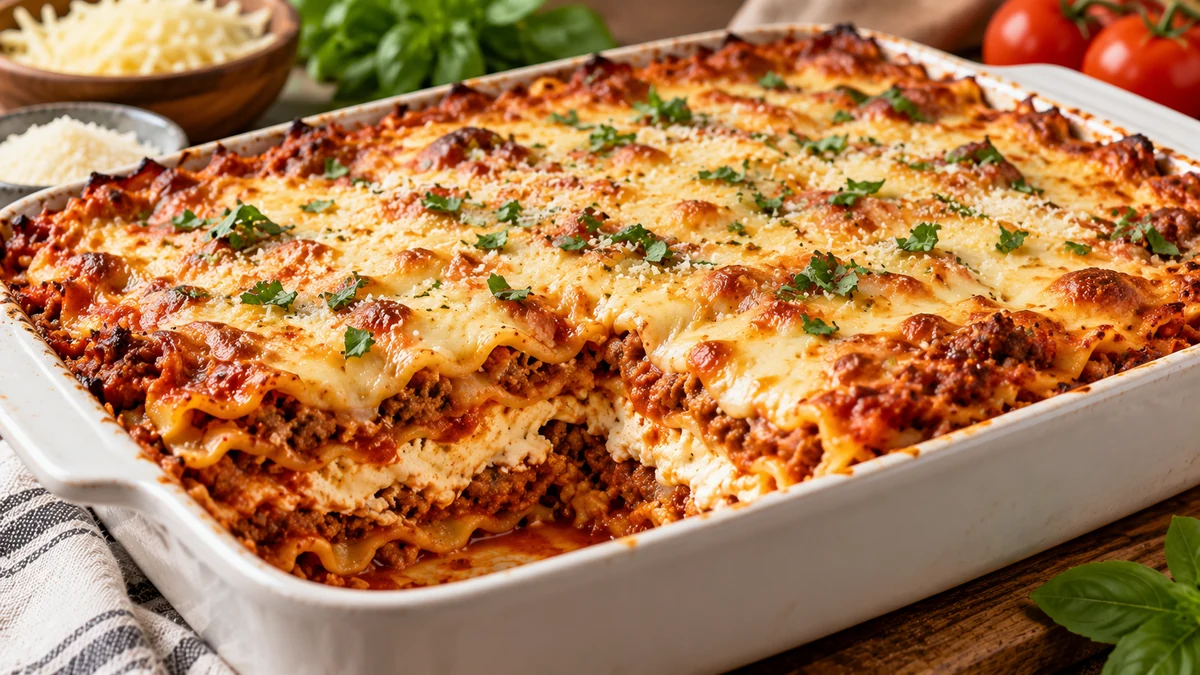
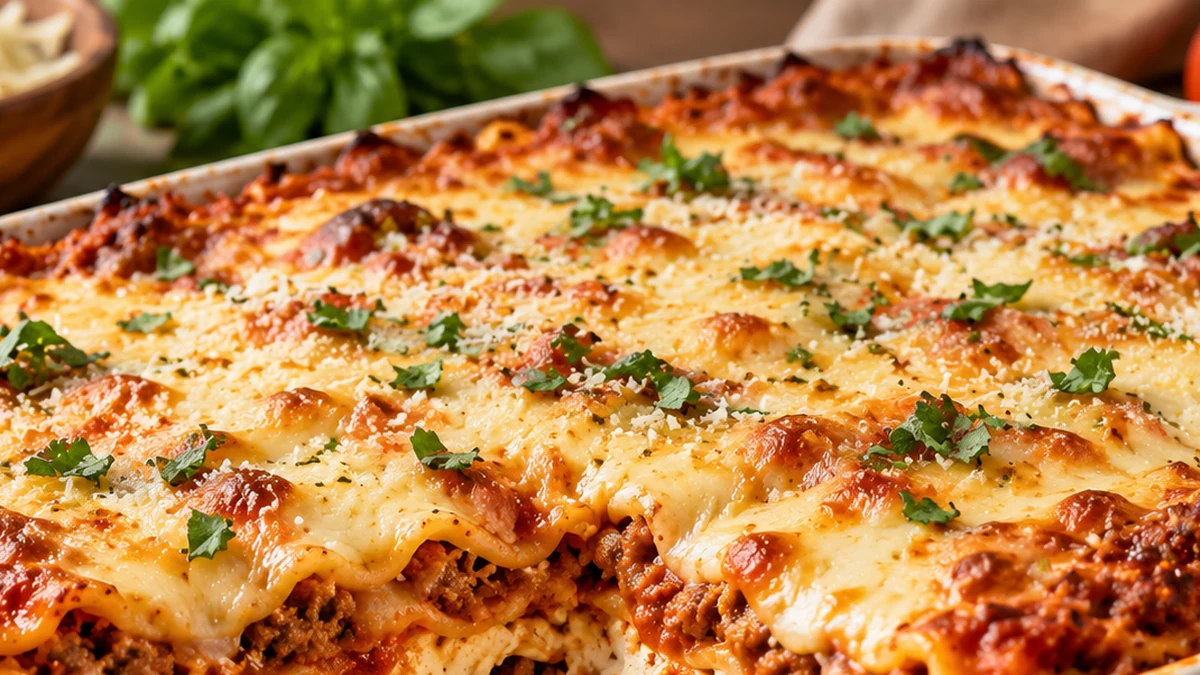
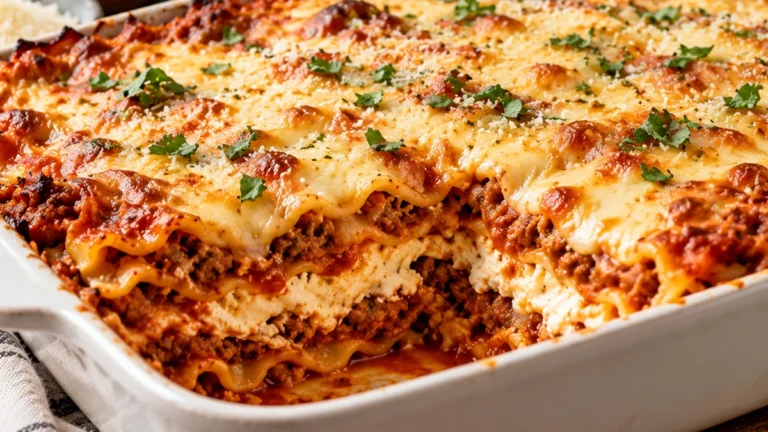
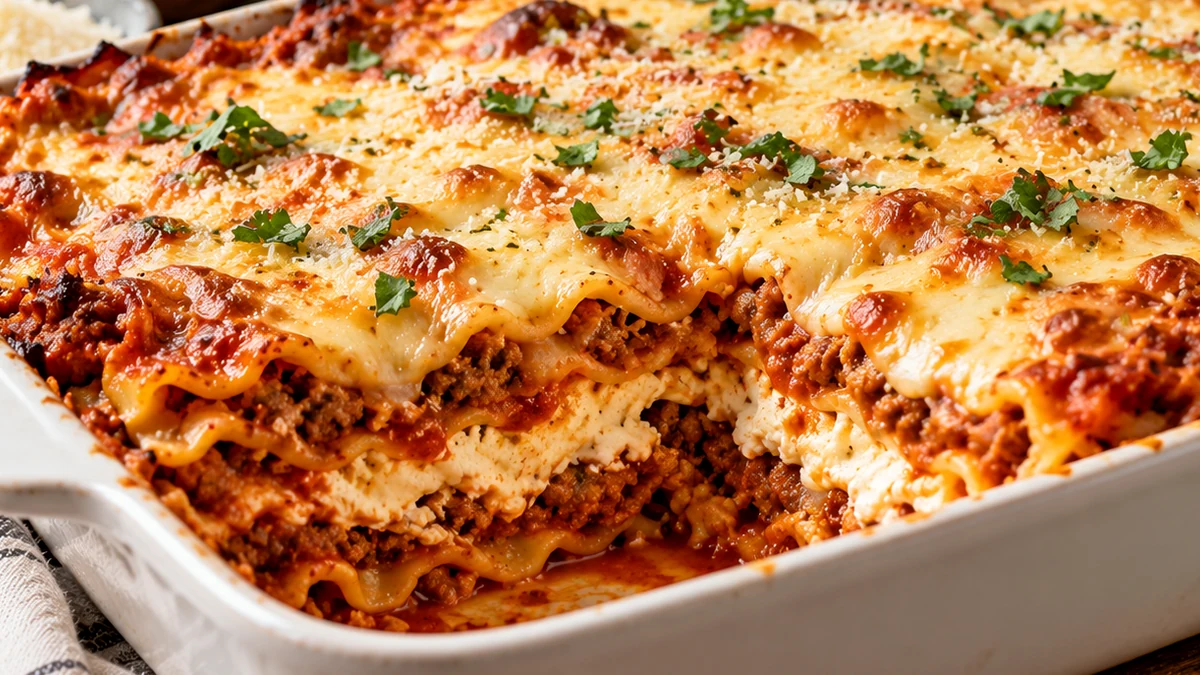
This high protein lasagna with cottage cheese keeps the comfort-food structure of classic beef lasagna while deliberately stacking lean ground beef, cottage cheese, mozzarella, Parmesan, and pasta into a more protein-forward dinner. One eighth of the pan provides an estimated 43 grams of protein, with familiar tomato, garlic, basil, and browned-cheese flavor instead of a “diet” texture.
The recipe uses oven-ready noodles and a blended cottage-cheese filling, so there is no separate pot of boiling pasta and no visible curds in the finished layers. If you like protein-focused pasta bakes, our high protein baked ziti with cottage cheese is the meatless option; this lasagna is the beefier, sliceable version for a family dinner or freezer meal.
Table of Contents
Why You’ll Love This High Protein Lasagna with Cottage Cheese
About 43 grams of protein per serving from lean beef, cottage cheese, mozzarella, Parmesan, egg, and pasta.
Oven-ready noodles remove the separate boiling step and keep assembly practical.
Blended cottage cheese creates a smooth ricotta-style layer instead of noticeable curds.
A thick meat sauce helps the lasagna hold clean layers after a short rest.
The 9×13-inch pan makes eight substantial servings for family dinners or meal prep.
The baked lasagna reheats well and can be frozen in individual portions.
The flavor stays classic: beef, tomato, garlic, Italian herbs, mozzarella, and Parmesan.
What Makes This Lasagna High in Protein?
The protein comes from several ingredients rather than one oversized meat portion. One and a half pounds of 93% lean ground beef contribute the largest share. A full 24-ounce container of 2% cottage cheese adds a second concentrated source, while part-skim mozzarella, Parmesan, egg, and the noodles contribute additional protein throughout the pan.
Dividing the finished lasagna into eight servings keeps the portions dinner-sized while bringing the estimate to roughly 43 grams of protein per serving. Brand labels vary, especially for cottage cheese, mozzarella, marinara, and lasagna noodles, so treat the nutrition panel as a practical estimate rather than a laboratory value. For more everyday protein ideas, see our high protein foods guide.
Ingredients You’ll Need
Lean Ground Beef
Use 1 1/2 pounds of 93% lean ground beef. It gives the sauce enough richness to taste like traditional lasagna without flooding the pan with rendered fat. Brown it thoroughly before adding the marinara, and use a food thermometer when needed rather than relying only on color.
Cottage Cheese
Two-percent cottage cheese gives the filling body and protein without making it dry. Blend the cottage cheese with the egg, Parmesan, garlic powder, and a little Italian seasoning until mostly smooth. Once baked between sauce and noodles, the texture is much closer to a creamy ricotta layer than a bowl of cottage cheese.
Oven-Ready Lasagna Noodles
Nine oven-ready lasagna noodles keep the recipe streamlined. They need enough moisture around them to soften, which is why the meat sauce should remain saucy rather than being reduced until dry. Check the package instructions because noodle thickness and pan coverage vary by brand.
Mozzarella and Parmesan
Part-skim mozzarella supplies stretch, browning, and additional protein. Parmesan brings a sharper salty flavor, so a smaller amount goes a long way. Reserve enough mozzarella for the top so the lasagna finishes with a browned, bubbly surface.
Marinara, Onion, Garlic, and Spinach
Use a 24-ounce jar of marinara with a flavor you already like, because it carries much of the finished seasoning. Onion and garlic deepen the meat sauce, while chopped spinach folds into the sauce for color and volume. The spinach is optional, but it disappears into the layers more cleanly than large pieces of watery vegetables.
Classic beef lasagna made more protein-forward with 93% lean ground beef, blended cottage cheese, mozzarella, Parmesan, spinach, marinara, and oven-ready noodles. Each of eight servings provides an estimated 43 grams of protein.
Optional: chopped fresh basil or parsley for serving
Instructions
Preheat the oven to 375°F. Lightly coat a 9×13-inch baking dish with nonstick cooking spray or a thin film of olive oil.
Heat the olive oil in a large skillet over medium-high heat. Add the onion and cook for 4 to 5 minutes, until softened. Add the ground beef and cook for 7 to 9 minutes, breaking it into small crumbles, until browned and the thickest crumbles reach 160°F.
Add the garlic and cook for 30 seconds. Stir in the marinara, tomato paste, 1 1/2 teaspoons Italian seasoning, 1/4 teaspoon black pepper, and spinach. Simmer for 5 to 7 minutes, until the spinach is wilted and the sauce is slightly thickened but still loose enough to coat the noodles.
Add the cottage cheese, egg, garlic powder, remaining 1/2 teaspoon Italian seasoning, remaining 1/4 teaspoon black pepper, and 1/4 cup Parmesan to a blender or food processor. Blend for 20 to 30 seconds, just until mostly smooth.
Spread about 1 cup of the meat sauce in the bottom of the baking dish. Arrange 3 oven-ready noodles over the sauce. Spread one third of the cottage-cheese mixture over the noodles, followed by about one quarter of the remaining meat sauce and 1/2 cup mozzarella.
Repeat the layers twice more with noodles, cottage-cheese mixture, meat sauce, and mozzarella. Finish with the remaining meat sauce, the remaining 1/2 cup mozzarella, and the remaining 1/4 cup Parmesan.
Cover the dish tightly with foil and bake for 35 minutes. Remove the foil and bake for 15 to 20 minutes more, until the edges are bubbling, the noodles are tender, and the cheese is browned in spots.
Let the lasagna rest for at least 15 minutes before slicing into 8 equal pieces. Garnish with basil or parsley if desired.
Notes
Nutrition is estimated for one eighth of the pan and does not include optional herbs or extra toppings.
The estimate assumes 93% lean ground beef, 2% cottage cheese, part-skim mozzarella, Parmesan, nine oven-ready noodles, and a 24-ounce jar of marinara.
Cook raw ground beef to a safe minimum internal temperature of 160°F as measured with a food thermometer.
Oven-ready noodle brands vary. If your package calls for extra liquid, follow the package instructions and keep the meat sauce loose enough to hydrate the noodles.
Refrigerate leftovers promptly and use within 3 to 4 days. Reheat leftovers to 165°F before serving.
This recipe is not gluten free as written because standard lasagna noodles contain wheat.
Author:Adam Moretti
Prep Time:20 minutes
Cook Time:60 minutes
Category:Dinner
Method:Baking
Cuisine:Italian-American
Diet:High Protein
How to Make High Protein Lasagna with Cottage Cheese
1. Brown the Beef and Aromatics
Heat the olive oil in a large skillet over medium-high heat. Add the onion and cook until it begins to soften, then add the ground beef. Break the meat into small crumbles and cook until browned. Stir in the garlic during the final minute so it becomes fragrant without scorching.
2. Build a Thick, Saucy Meat Layer
Add the marinara, tomato paste, Italian seasoning, black pepper, and chopped spinach. Simmer for several minutes until the spinach wilts and the sauce thickens slightly. Do not reduce it until dry; oven-ready noodles need moisture while they bake.
3. Blend the Cottage Cheese Filling
Blend the cottage cheese, egg, half of the Parmesan, garlic powder, and a pinch of black pepper just until smooth. You are not trying to whip air into the mixture. The goal is simply to break down the curds so the filling spreads evenly over the noodles.
4. Layer the Lasagna
Spread a thin layer of meat sauce across the bottom of a 9×13-inch baking dish. Add three noodles, one third of the cottage-cheese mixture, another layer of meat sauce, and mozzarella. Repeat until you have three noodle layers. Finish with the remaining meat sauce, mozzarella, and Parmesan.
5. Bake Covered, Then Uncover
Cover the dish tightly with foil and bake at 375°F for 35 minutes. Keeping the pan covered traps enough steam to soften the oven-ready noodles. Remove the foil and bake for another 15 to 20 minutes, until the edges are bubbling and the cheese is browned in spots.
6. Rest Before Slicing
Let the lasagna rest for at least 15 minutes before cutting. This is not wasted time: the sauce, cheese, and noodles settle as the pan cools slightly, which makes the layers much easier to slice cleanly. Cutting immediately can make even a properly baked lasagna look loose.
How This Differs from High Protein Dumpling Lasagna
Healthy American Bites already has a high protein dumpling lasagna built around ground chicken, napa cabbage, mushrooms, ginger, scallions, and wonton wrappers. That recipe follows an Asian-style dumpling flavor profile and uses wrapper layers rather than classic pasta sheets.
This version targets a different search and dinner intent: Italian-American meat sauce, standard lasagna noodles, cottage cheese, mozzarella, and Parmesan. The recipes share the layered-casserole format, but the ingredients, flavor profile, and expected eating experience are different enough that they should not compete as duplicate recipes.
Tips for Clean Layers and Better Texture
Do not over-reduce the meat sauce; oven-ready noodles need moisture to soften.
Blend the cottage cheese only until smooth. Over-blending can make the filling looser than necessary.
Cover the pan tightly for the first bake so steam stays inside the casserole.
Rest the lasagna for at least 15 minutes before slicing.
Use low-moisture part-skim mozzarella rather than very wet fresh mozzarella for cleaner layers.
If your marinara is unusually thick, stir 1/4 cup water into the sauce before layering.
Place the baking dish on a sheet pan if it is filled close to the rim.
Cottage Cheese vs. Ricotta in Lasagna
Cottage cheese contains more moisture and visible curds than ricotta, but blending changes the eating experience significantly. In this recipe, the blended filling spreads in a thin layer and bakes with egg and Parmesan, so it sets instead of remaining watery. The flavor is mild enough that the beef, tomato, mozzarella, and herbs stay dominant.
Ricotta can be substituted, but the nutrition and texture will change. Because this recipe is specifically designed around cottage cheese for both protein and moisture, the published nutrition estimate applies only to the listed version.
Meal Prep, Storage, and Freezing
Let leftovers cool promptly, then divide the lasagna into covered containers. FoodSafety.gov lists cooked meat or poultry leftovers for 3 to 4 days in the refrigerator at 40°F or below. For longer storage, freeze individual slices once fully cooled so you can reheat only what you need. See the FoodSafety.gov cold storage chart for the current guidance.
For reheating, cover a slice so the edges do not dry out before the center is hot. A microwave is fastest for individual portions, while a covered oven-safe dish gives a firmer edge. Reheat leftovers to 165°F before serving. If freezing the full casserole, thaw it in the refrigerator before reheating for more even results.
Nutrition Notes
One eighth of the pan is estimated at about 500 calories, 43 grams of protein, 36 grams of carbohydrate, 18 grams of fat, and roughly 4 to 5 grams of fiber. The estimate assumes 93% lean ground beef, 2% cottage cheese, part-skim mozzarella, Parmesan, nine oven-ready lasagna noodles, and a standard marinara.
Sodium can vary substantially because marinara, cottage cheese, mozzarella, Parmesan, and noodles are packaged foods. If sodium matters to you, compare labels and choose lower-sodium products where practical rather than relying only on the estimate below.
Frequently Asked Questions
Can I taste the cottage cheese?
The cottage cheese flavor is mild after baking, especially because it is blended with egg and Parmesan and layered between meat sauce and mozzarella. The finished texture is smoother than unblended cottage cheese and closer to a creamy ricotta-style filling.
Can I use regular lasagna noodles?
Yes. Boil them according to the package directions until just flexible, drain well, and assemble the lasagna with the same filling and sauce. Because boiled noodles bring more moisture into the pan, you may not need to keep the sauce quite as loose.
Can I use ground turkey instead of beef?
Yes. Lean ground turkey works, but the flavor is milder and the nutrition estimate will change. Cook ground poultry to 165°F, while USDA guidance for raw ground beef is 160°F. The USDA safe-temperature guidance lists the current minimum internal temperatures.
Can I assemble this lasagna ahead?
Yes. Assemble the pan, cover it tightly, and refrigerate it for up to 24 hours before baking. Because the noodles will begin absorbing moisture while the pan sits, make sure the sauce is not overly thick. Add a few extra minutes of covered baking time if the lasagna goes into the oven cold from the refrigerator.
Can I freeze it?
Yes. The lasagna freezes well after baking. Cool it, cut it into portions, wrap or seal the pieces tightly, and freeze. For best texture, thaw portions overnight in the refrigerator before reheating.
Is this lasagna gluten free?
No. Standard lasagna noodles contain wheat. If you need a gluten-free lasagna, use a tested gluten-free noodle product and verify every packaged ingredient, but that is a separate adaptation and is not the version reviewed in this recipe card.
Final Tips
For the best high protein lasagna with cottage cheese, keep the meat sauce moist enough for oven-ready noodles, blend the cottage cheese until smooth, cover the pan for the first stage of baking, and give the finished lasagna time to rest. Those four details matter more than adding extra cheese.
This version is designed as a classic, protein-forward beef lasagna rather than a low-carb or gluten-free recipe. If you want a meatless cottage-cheese pasta bake, use our high protein baked ziti; for a make-ahead breakfast built around cottage cheese, try the high protein cottage cheese egg bake.
Reviewed recipe options
Make this recipe fit me
Choose one of seven popular diet options. NutriMatch will confirm whether the recipe already fits, show a reviewed adaptation when available, or recommend recipes that match your choice.
Please choose a diet first.
Not available for this recipe
This recipe cannot currently be made Dairy-Free with a reviewed adaptation.
NutriMatch will not guess at substitutions. Try one of these recipes that is already reviewed for your choice.
Recipe details, product formulas, and cross-contact information can change. Confirm current labels and use professional guidance when medically necessary.
Not available for this recipe
This recipe cannot currently be made Gluten-Free with a reviewed adaptation.
NutriMatch will not guess at substitutions. Try one of these recipes that is already reviewed for your choice.
Recipe details, product formulas, and cross-contact information can change. Confirm current labels and use professional guidance when medically necessary.
Already a reviewed match
This recipe already fits High Protein.
No changes are needed based on its reviewed NutriMatch classification. Check the complete ingredients, product labels, and serving details for your own needs.
Recipe details, product formulas, and cross-contact information can change. Confirm current labels and use professional guidance when medically necessary.
Not available for this recipe
This recipe cannot currently be made Keto with a reviewed adaptation.
NutriMatch will not guess at substitutions. Try one of these recipes that is already reviewed for your choice.
Recipe details, product formulas, and cross-contact information can change. Confirm current labels and use professional guidance when medically necessary.
Not available for this recipe
This recipe cannot currently be made Low Carb with a reviewed adaptation.
NutriMatch will not guess at substitutions. Try one of these recipes that is already reviewed for your choice.
Recipe details, product formulas, and cross-contact information can change. Confirm current labels and use professional guidance when medically necessary.
Not available for this recipe
This recipe cannot currently be made Vegan with a reviewed adaptation.
NutriMatch will not guess at substitutions. Try one of these recipes that is already reviewed for your choice.
Recipe details, product formulas, and cross-contact information can change. Confirm current labels and use professional guidance when medically necessary.
Not available for this recipe
This recipe cannot currently be made Vegetarian with a reviewed adaptation.
NutriMatch will not guess at substitutions. Try one of these recipes that is already reviewed for your choice.
Recipe details, product formulas, and cross-contact information can change. Confirm current labels and use professional guidance when medically necessary.